How the Democratic and Republican party platforms differ

This piece presents a comparative analysis of the Democratic and Republican party platforms. The platforms, being polar opposites, address pressing political issues through their respective conservative and liberal views. They distinctly differ on social issues such as marriage, reproduction, abortion, schools, immigration, religion, and sexuality. The post emphasizes exploring these platforms for better-informed voting decisions during the 2024 national elections.

updated December 5, 2023

I’ve written about how the Democratic and Republican parties differ in views on healthcare by reviewing specific points in the party platforms. In this post, I’m going to step away from looking at specifics and share my general observations about the platforms themselves.

A party platform is a set of principles, goals, and strategies designed to address pressing political issues. Each party’s platform is broken down into “planks,” or declarations that speak to each specific issue.

Teach Democracy

I’m mostly highlighting differences because the platforms are as different as the parties are-one conservative, and one liberal. They both claim to love America and democracy and want to defend, preserve, and improve our way of life. But the way they want to do so is as different as RED is from BLUE.

I intend for these posts to be non-partisan but because I’m sharing my own observations this one may look more like an opinion. I’m using these posts for my own education as well as yours, so we can be better informed and inspired voters.

I have been a registered voter since I was 18, being one of the first to benefit from the 26th Amendment that changed the voting age from 21 years to 18 years.

I have been registered with both major parties and have voted for candidates in both parties, so I have no allegiance to either one. If these observations seem biased, it is strictly unintentional. So let’s take a look.

Note: I chose the photos for illustration, they are not affiliated with either party.

When were the platforms written?

Usually, platforms are written or revised on the years the parties meet for the convention that nominates the presidential candidate.

Republicans

The Republicans last did that in 2016 when Donald Trump was nominated and won the election. In 2020 when he ran for reelection during the COVID pandemic, they deferred writing a new platform citing

“strict restrictions on gatherings and meetings, and out of concern for the safety of convention attendees and our hosts;” and “in appreciation of the fact that it did not want a small contingent of delegates formulating a new platform without the breadth of perspectives within the ever-growing Republican movement.”

It went on to state

“The RNC enthusiastically supports President Trump and the Republican Party and will continue to enthusiastically support the President’s America-first agenda.”

RESOLVED, That the 2020 Republican National Convention will adjourn without adopting a new platform until the 2024 Republican National Convention.”

The RNC also passed a resolution in 2022 “reaffirming” its commitment to the platform”.

Democrats

In 2020 the Democrats held a convention, conducted mostly virtually, and wrote a new party platform. Their candidate Joe Biden won the presidential election. According to their website,

“Every four years, Democrats from across the country join together to craft our party’s platform. The platform is created to uplift working people and write out the values that will guide our party for years to come.”

The platform was considered by the 2020 Platform Committee at its meeting on July 27, 2020, and was approved by the Democratic National Convention on August 18, 2020.

How long are the party platforms?

The Democrats take first place for length. As a PDF document, 86 pages are devoted to text. There are 11 sections, most of which are also divided into different categories.

The Republican document is brief in comparison, 58 pages, divided into 6 sections.

How do the party platforms differ?

The platforms read and sound different in tone and emphasis. I think the Democratic platform can be likened to a “campaign speech” while the Republican document sounds more like a “state of the union” message.

Democrats – the party of change

  • “Campaign speech”
  • Action-oriented
  • Problem specific
  • Future directed
  • Diversity, inclusivity
Photo by Markus Spiske on Pexels.com

Republicans- the party of stability

  • “State of the union”
  • Policy-oriented
  • Maintain the status quo
  • General concepts
  • Build on the past
  • Conformity, consistency

Photo by Tara Winstead on Pexels.com

What do the platforms say about the other party?

Both of the platforms comment on the other party unfavorably multiple times.

Written in 2016 during the presidency of Democrat Barack Obama, the Republican platform was repeatedly critical of the Affordable Care Act, or ACA, otherwise known as ObamaCare, as well as other aspects of President Obama’s administration.

The President (Obama) and the Democratic Party have dismantled Americans’ system of healthcare. They have replaced it with a costly and complicated scheme that limits choices and takes away our freedoms.

The President and the Democratic party have abandoned their promise of being accountable to the American people.

Written in 2020, the Democratic platform opened with scathing criticism of President Trump’s management of the pandemic and continued throughout the document on other issues.

The bill has come due on the Trump Administration’s hollowing out of our public institutions: the sidelining of experts, the rejection of science, the underinvestment in research, and the gross corruption and abuses of power.

President Trump’s dereliction of duty has caused the deaths of tens of thousands of Americans, the loss of tens of millions of American jobs, and lasting harm to our children’s education and future.

Most of the criticisms are then followed by how or what their party and candidate will do differently.

What do the platforms say about social issues?

You don’t have to read the platforms to know that Democrats and Republicans differ drastically on social issues such as marriage, reproduction, abortion, schools, immigration, religion, and sexuality. The aftermath of the recent (2022) Supreme Court decision that overturned Roe vs. Wade shows that pointedly. These differences are spelled out in the platforms but each party approaches them from different angles, not categorizing them the same way.

I will devote additional posts to these topics. On some of them, one platform says more than the other so the content will not exactly parallel. I’ll do my best to lay out both sides but encourage you to do your homework and review the entire platform.

exploring the HEART of healthcare politics

Please follow the above links to the party platforms and bookmark them for easy reference. The next year will be caucuses, primaries, and party conventions with the platforms updated. The process culminates on the next national election day, Tuesday, November 5, 2024.

I’d love for you to follow this blog and follow me on social media.

I share information and inspiration to help you transform challenges into opportunities for learning and growth.

Add your name to the subscribe box to be notified of new posts by email. Click the link to read the post and browse other content. It’s that simple. No spam.

I enjoy seeing who is new to Watercress Words. When you subscribe, I will visit your blog or website. Thanks and see you next time.

See you at the polls.

Dr Aletha

Photo by cottonbro on Pexels.com

Celebrate Life, Liberty, and the Pursuit of Health Care

Every July 4th, Americans celebrate Independence Day, marking the founding of a nation with complex systems, including healthcare. The U.S. healthcare system combines public and private efforts, with significant government funding. Essential programs like Medicare and Medicaid serve millions, underscoring the commitment of healthcare professionals. Celebrating this system’s evolution reflects the nation’s founding principles.

Every year on July 4th we celebrate Independence Day- the day the original 13 American colonies established an independent country.

They established a government, military, educational system, highway system, public works, and healthcare system.

We Americans may pride ourselves on not having “socialized” medicine or “national healthcare”, but we do have  a health care system that is a combination of public and private funding and administration. And even private healthcare must comply with a myriad of local, state, and federal laws and regulations.

Celebrate healthcare professionals

I believe we have one of the best healthcare systems in the world  because of the people who work in healthcare- the people who devote years to education and training and who work tirelessly 365 days a year, 24 hours a day to make and keep us well.  Their commitment, compassion, dedication and competence benefits all of us and deserves our gratitude.

Statue of Liberty
Lady Liberty lifting her torch in New York harbor-photo by Dr. Aletha

According to recent statistics, the United States government accounts for-

40% of healthcare  spending, totaling $1.3 trillion yearly

United States government healthcare covers 100 million individuals through 4 federal agencies

  • Department of Health and Human Services
  • Department of Defense
  • Veterans Administration
  • Department of Homeland Security

(JAMA (Journal of the American Medical Association), June 21, 2016)

Government-sponsored healthcare programs

The Affordable Care Act, aka Obamacare

The  United States Congress passed the Patient Protection and Affordable Care Act (ACA) in 2010 to guarantee basic health insurance to all citizens.  During the last presidential campaign, President Trump vowed to “repeal and replace” this law but although it has been modified, it is still active

Healthcare for military service members, veterans,and their families

During the American Revolution the fledgling government extended health care benefits to the soldiers and veterans of that war; that system evolved into the current military health care system which covers service members and the Veterans’ Administration system for veterans.

a Veterans Administration clinic
a Veterans Administration clinic (photo by Dr. Aletha)
American soldiers serving in Afghanistan

Medicare and Medicaid

Two other government healthcare programs- Medicare and Medicaid are over 50 years old. 

Medicaid provides insurance coverage for adults and children who are unemployed or low income.  

Medicare covers disabled children and adults  and persons 65 years and older.

  • Together these programs cover at least 30% of Americans.
  • Together they comprise 25% of all federal spending.
  • Together they pay 40% of total U.S. health care spending.

An infographic from the Kaiser Family Foundation and JAMA explains this further.

You may not be eligible for either of these programs now, but chances are eventually you or someone close to you will.

  • Anyone can become disabled from a serious illness or freak accident.
  • You or your spouse may lose your job and your employer sponsored health insurance.
  • Your child may have a disability that will prevent them from working when they grow up.
  • We may all live long enough to qualify for Medicare on the basis of age alone.  Your parents or grandparents are near or already at Medicare age.
ELDERLY COUPLE -189282_1280
Senior adults age 65 and older use Medicare.

It’s important to understand how Medicare works, since it’s not automatic; even if you qualify, you need to sign up to be covered (with a few exceptions). The rules are summarized here. Or consider an easy to understand book here. 

Federal healthcare agencies

  • Food and Drug Administration- FDA
  • Centers for Disease Control and Prevention- CDC
  • National Institutes of Health- NIH
  • Occupational Safety and Health administration-OSHA
  • Drug Enforcement Agency-DEA
medication capsules
The FDA regulates the development and sale of medications and medical devices and the DEA regulates dangerous and controlled drugs.

LIFE, LIBERTY AND THE PURSUIT OF HEALTHCARE

Federal healthcare laws

  • The Affordable Care Act- ACA
  • Health Insurance Portability and Accountability Act-HIPPA
  • Emergency Medical Treatment and Labor Act- EMTALA
  • Americans with Disabilities Act-ADA
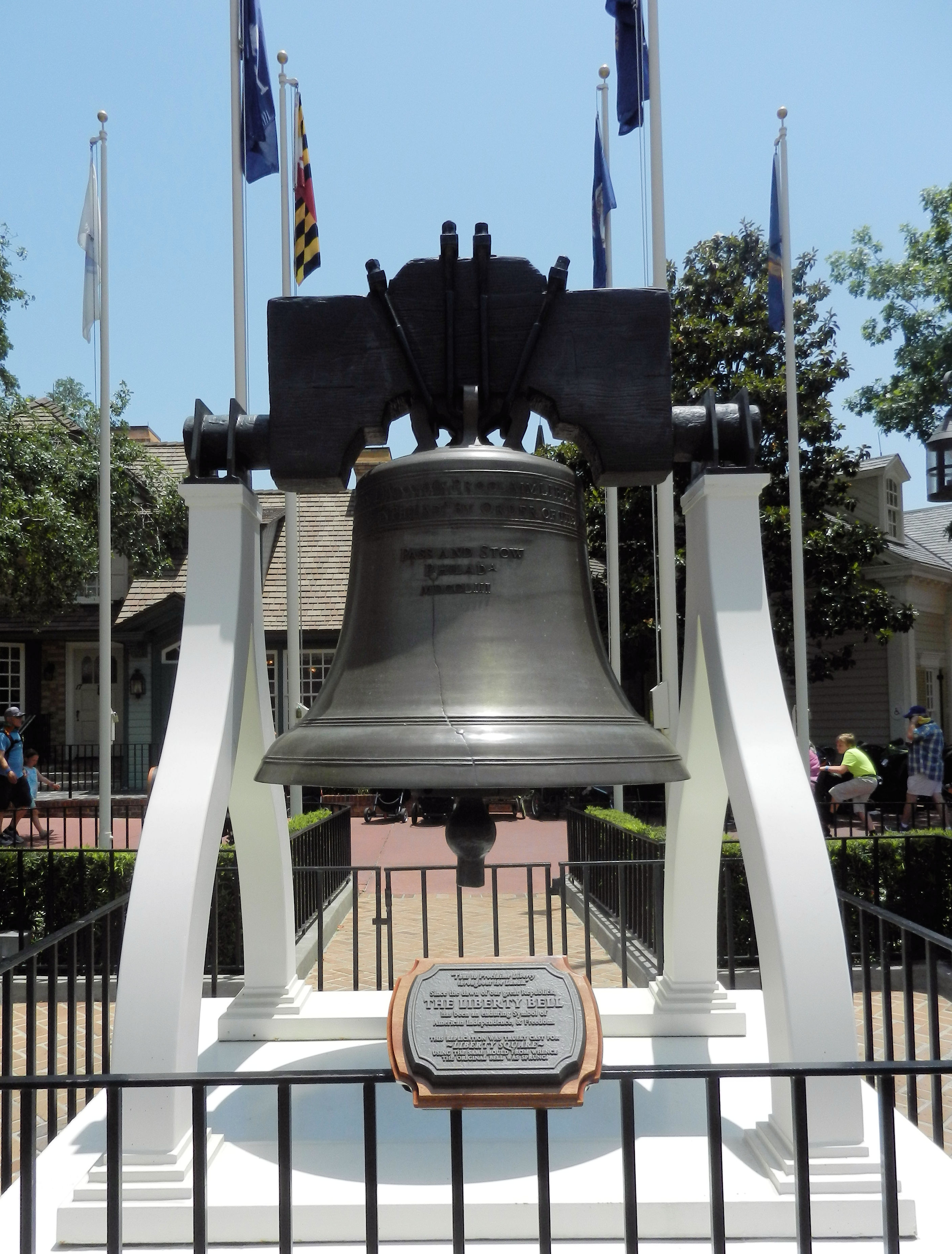
Liberty Bell -replica
I took this photo of a replica of the Liberty Bell at Walt Disney World, Florida

Let Freedom Ring

In the Declaration of Independence, the founders of the United States created a nation based on the “self-evident truths”  of  “Life ,Liberty, and the pursuit of Happiness” and to promote “Safety and Happiness” . 

In the Constitution they vowed to “promote the general Welfare” .

I wonder if they envisioned their new government would spend so much time and money providing and regulating health care -most of which was not available or even imagined at that time? 

Let’s celebrate!

woman holding a sprakler
Let’s celebrate! This photo and featured image from stock photo site- Lightstock.com (affiliate)

Exploring the HEART of Health

I’d love for you to follow this blog and follow me on social media.

I share information and inspiration to help you transform challenges into opportunities for learning and growth.

Add your name to the subscribe box to be notified of new posts by email. Click the link to read the post and browse other content. It’s that simple. No spam.

I enjoy seeing who is new to Watercress Words. When you subscribe, I will visit your blog or website. Thanks and see you next time.

a woman in a red, white, and blue shirt

Me, years ago, showing my patriotic spirit by posing in red, white, and blue

Dr. Aletha