The Republican Party-“Affordable high quality healthcare”

We must recover the traditional patient-physician relationship based on mutual trust, informed consent, and confidentiality.

To simplify the system for both patients and providers, we will reduce mandates and enable insurers and providers of care to increase healthcare options and contain costs.

I’ve started a series of blog posts that review each major party’s platform on healthcare and related issues. I take this information directly from the website of each party’s platform and include the link so you can read the complete document.

We’ve already looked at the parties’ views on gun violence and control. This post will look at health insurance. This is not a commentary or an opinion piece, you can find that elsewhere. This is information for your decision.

Every office holder or candidate may or may not fully subscribe to their party’s platform. Whether you are registered as a Republican, Democrat, Independent, or some other party, ultimately you will vote for a person. Do your research and learn what that person stands for.

Note: the photos are for illustration, are not affiliated with the party platform, and are not intended to influence your opinion.

The Republican Party Platform

This party platform was adopted in 2016, reffirmed in 2020, with plans for a new platform in 2024.

Restoring Patient Control and Preserving Quality in Healthcare

Any honest agenda for improving healthcare must start with repeal of the dishonestly named Affordable Care Act of 2010: Obamacare. It weighs like the dead hand of the past upon American medicine.

It imposed a Euro-style bureaucracy to manage its unworkable, budget-busting, conflicting provisions. It has driven up prices for all consumers. Their insurance premiums have dramatically increased while their deductibles have risen about eight times faster than wages in the last ten years.

It drove up drug prices by levying a $27 billion tax on manufacturers and importers and, through mandated price cuts for drugs under Medicare and Medicaid, forced pharmaceutical companies to raise prices for everyone else.

Its “silver plans,” the most common option on the government insurance exchanges, limit people’s access to their own doctor through narrow networks and restrict drug coverage, forcing many patients to pay for extremely costly medicines for their chronic diseases.

We agree with the four dissenting judges of the Supreme Court:

“In our view, the entire Act before us is invalid in its entirety.”

four Supreme Court justices

It must be removed and replaced with an approach based on genuine competition, patient choice, excellent care, wellness, and timely access to treatment.

an open paper planner lying on a laptop keyboard; the words HEALTH INSURANCE are spelled out with small tiles on the planner
Photo by Olya Kobruseva on Pexels.com

Congress to repeal the Affordable Care Act

To that end, a Republican president, on the first day in office, will use legitimate waiver authority under the law to halt its advance and then, with the unanimous support of Congressional Republicans, will sign its repeal.

The Supreme Court upheld Obamacare based on Congress’ power to tax. It is time to repeal Obamacare and give America a much-needed tax cut.

 Our goal is to ensure that all Americans have improved access to affordable, high-quality healthcare, including those struggling with mental illness.

a female physician talking to a male patient
FROM LIGHTSTOCK.COM, AFFILIATE LINK

In its place we must combine what worked best in the past with changes needed for the future.

We must recover the traditional patient-physician relationship based on mutual trust, informed consent, and confidentiality.

To simplify the system for both patients and providers, we will reduce mandates and enable insurers and providers of care to increase healthcare options and contain costs.

State regulation of insurance markets

We will return to the states their historic role of regulating local insurance markets, limit federal requirements on both private insurance and Medicaid, and call on state officials to reconsider the costly medical mandates, imposed under their own laws, that price millions of low-income families out of the insurance market.

Medicaid block grants

To guarantee first-rate care for the needy, we propose to block grant Medicaid and other payments and to assist all patients, including those with pre-existing conditions, to obtain coverage in a robust consumer market.

Flexible and portable health plans

We believe that individuals with preexisting conditions who maintain continuous coverage should be protected from discrimination.

Today’s highly mobile workforce needs portability of insurance coverage that can go with them from job to job. The need to maintain coverage should not dictate where families have to live and work.

shallow focus of woman and 2 men working in a call center
Photo by Mikhail Nilov on Pexels.com

We propose to end tax discrimination against the individual purchase of insurance and allow consumers to buy insurance across state lines. In light of that, we propose repealing the 1945 McCarran-Ferguson Act which protects insurance companies from anti-trust litigation.

We look to the growth of Health Savings Accounts and Health Reimbursement Accounts that empower patientand advance choice in healthcare.

exploring the HEART of healthcare

I appreciate your interest in the politics of healthcare, an issue that is vital to all of us every day. These proposals will become more focussed and debated as election day approaches; the national election is Tuesday November 8, 2022. Please exercise your right to vote, I intend to.

Medical stethoscope and heart on a textured background

Dr Aletha

Dr. Aletha

REVENANTS-The Odyssey Home: a book review

Most people know and understand what war does to countries- changing boundaries, toppling governments, destroying infrastructure, wasting the land, bankrupting economies. Revanants speaks to the human cost for communities, families, and individuals-driving families apart, killing dreams, interrupting plans, wounding bodies and emotions, and destroying hope. On a global scale, war may be justified but in Revenants it is futile, wreaking havoc on these people’s lives.

REVENANTS-The Odyssey Home

By Scott Kauffman
Published by Moonshine Cove Publishing, LLC, 2015

When I started this book I didn’t know what revenant means; the author waits until chapter 33 to tell us.

“A revenant can be someone long forgotten and now remembered,or someone returning after a long absence; it can also mean a ghost.”

Note: the photos in this post are from my private collection and are not affiliated with the author or the book

The ghost in this case is a nameless disabled World War I veteran who never came home to his family. The main character, a 15 year old girl Betsy, sets out to learn his name, and thus to get him home before he becomes a literal ghost.

World War I happened in Europe from 1914 to 1918 although the United States didn’t enter until 1917. This story is set in 1973, a time when there were still many living WWI veterans who were by then in their 70’s and 80’s. In 1973 the United States was embroiled in another war, the Vietnam war.

My husband served in the Army in Vietnam and we have studied that war extensively, so we were surprised to learn the character Nathan, Betsy’s older brother, is based on a real person, who was the uncle of Mr. Kaufman’s late wife.

Captain Richard M Rees

Captain Richard M Rees was killed in action and awarded the Distinguished Service Cross on December 15, 1973 while performing duties as a member of a Joint Casualty Resolution Center (JCRC) team in South Vietnam, as agreed to at the Paris Peace Talks. The unarmed team came under attack in an area near Saigon while searching for the remains of an Army crewman who was presumed to have died when his helicopter was shot down in a rice paddy nearby. The site was thought to be secure and authorized, but later the Vietcong denied having been notified of the team’s activities.

rice paddy with people in asian hats and a water buffaclo
a rice paddy in Vietnam

Three days after the American delegate to the Paris peace talks threw Nathan’s blood-stained jacket across the negotiation table and the day after the honor guard lowered his casket into the frozen earth at the cemetery, his Christmas box came. The doorbell rang and I ran stocking-footed downstairs where Mom slumped against the front door crumpled faced and still dressed in her flannel nightgown, the night’s snow wisping over her pale legs, Nathan’s box on the porch behind the postman who knelt beside her.

Betsy, in the book

After Nathan is killed in action in Vietnam, Betsy, her younger brother, and their heartbroken parents cope with his loss in differing ways. Betsy’s grief leads her to become a candy striper volunteer at a local VA (Veterans Administration) hospital, where her life intersects with an elderly wounded veteran in a complex and compelling way.

soldiers at a remote military base
My husband Raymond, upper left, served at LZ Cindy (landing zone), near the village of TraBong

Into this mystery, Scott Kaufman inserts a menagerie of other characters- a head nurse with a secret, an assortment of wounded veterans, a pot dealing hospital orderly, and a conniving politician with a longsuffering wife. He weaves a complex story through which their lives intersect. And often collide.

Most people know and understand what war does to countries- changing boundaries, toppling governments, destroying infrastructure, wasting the land, bankrupting economies. Revanants speaks to the human cost for communities, families, and individuals-driving families apart, killing dreams, interrupting plans, wounding bodies and emotions, and destroying hope. On a global scale, war may be justified but in Revenants it is futile, wreaking havoc on these people’s lives.

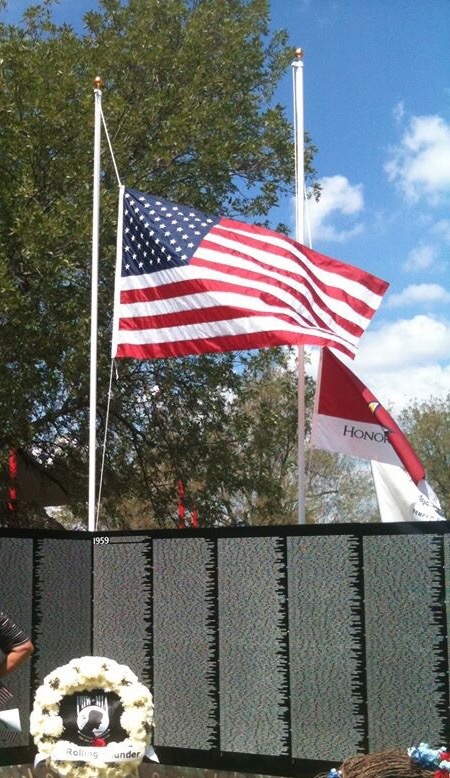
American flag waving at a Vietnam Veterans Wall replica
Vietnam Veterans Memorial Wall replica

The narrative reads as if it had been written in the 1970s with the vernacular and historical references of that era (which I can attest to since I lived it). The author bluntly expresses his disdain for wars and the governments that wage them. This may offend some readers, as may the way he portrays and refers to ethnic characters, especially the lone Black character (referred to as a Negro, as would have been the acceptable word in 1973). While this sounds offensive to 21st century ears, it helps create the setting for the events and enhance the impact of the book’s message.

So with that caveat, I recommend this book to anyone wanting to learn about and understand that difficult era in our history, through which many of us spent our youth. The WWI veterans are all long deceased and the Vietnam vets are now in their 70s. We can only hope they will eventually find the respect and peace that the “Great War” veterans were denied.

The author, Scott Kauffman

Scott Kauffman is an attorney in Irvine, California where he focuses practice on white collar crime and tax litigation with his clients providing him endless story fodder. He wrote a legal suspense novel IN DEEPEST CONSEQUENCES and just this year released SAVING THOMAS. He graduated from Ohio University in Athens, Ohio and was in the upper ten percent of his class at Lewis and Clark Law School in Portland, Oregon .

As a NetGalley reviewer, I received a digital copy of this book and agreed to write a review.

NETGALLEY MEMBER PROFESSIONAL READER

exploring the HEART of remembrance

Thanks for reading my review of this book and for remembering and appreciating the sacrifices of real veterans and their families. If you’ve never visited a military memorial or museum, I encourage you to do so. Whereever you live, there is likely one near by. I took the cover photo on this post, it is a replica of the Vietnam Veterans memorial statue in Washington, DC.

Raymond published a book about his combat experience in Vietnam. You can read it on any Amazon Kindle E-reader or a free Kindle app on any device.

Battle for Tra Bong Vietnam: Events and Aftermath