Fluoride and Food Stamps: Why You Should Care About the Debate

HHS Secretary Robert Kennedy Jr. recently met with Oklahoma Governor Kevin Stitt to unveil a health initiative aiming to improve state health outcomes. The plan, which targets public water fluoridation and restricts SNAP purchases of sugary items, faced immediate backlash from local physicians advocating for evidence-based healthcare and better nutritional support for low-income families. In this post I give you my viewpoint.

Oklahoma, where the wind comes sweepin’ down the plain,

Oklahoma!, by Oscar Hammerstein II

You’ve probably heard my state song. It’s from a famous Broadway musical that was made into a movie, both titled Oklahoma!.

This past week HHS Secretary Robert Kennedy Jr. swept into Oklahoma City to meet with Governor Kevin Stitt to discuss his plan to “Make Oklahoma Healthy Again.” As Secretary, Kennedy’s job is to promote President Trump’s plan to “Make America Healthy Again.”

Maybe he should have scheduled a visit with Oklahoma physicians. They showed up anyway and did not exactly agree with Kennedy’s and Stitt’s priorities-fluoride in the water supply, red food dyes, and how recipients can use SNAP money (food stamps).

I’m sharing an article from Oklahoma Voice about it and what the Oklahoma State Medical Association (OSMA) posted on its website.

You may not live in Oklahoma but something similar is likely to happen in your state if it hasn’t already. I’ll conclude this post with my take on what both sides say.

Governor reveals  ‘Make Oklahoma Healthy Again’ plan with RFK  for bans on soda, red dye

By: Janelle Stecklein – June 26, 2025 1:57 pm

republished from Oklahoma Voice

OKLAHOMA CITY — In a move quickly panned by licensed health care providers, Gov. Kevin Stitt announced Thursday that he planned to “Make Oklahoma Healthy Again” by urging state agencies to stop supporting public water fluoridation, removing red food dyes from school and prison meals, and by asking the federal government to approve a request that bans food stamp recipients from purchasing soda and candy.

Stitt’s pledge came minutes after Robert F. Kennedy Jr., the nation’s secretary of Health and Human Services, criticized the state for having the 47th worst health outcomes during a raucous “MOHA” kickoff rally that drew hundreds of people to the state Capitol.
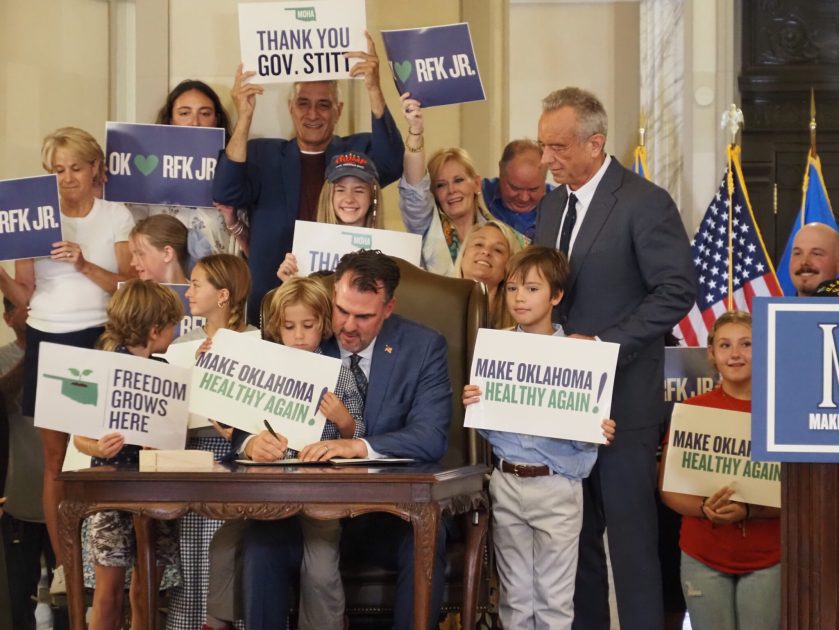
Gov. Kevin Stitt, center, pens his name during a ceremonial signing of an executive order to “Make Oklahoma Healthy Again,” as Robert F. Kennedy Jr., right, the nation’s secretary of health, and other supporters look on Thursday, June 26, 2025. (Photo by Janelle Stecklein/Oklahoma Voice)

Make Oklahoma Eat Healthy

Oklahoma has become the latest conservative state to submit a waiver to the U.S. Department of Agriculture that seeks to ban the state’s Supplemental Nutrition Assistance Program recipients from using their benefits to buy sodas, candies and other confectionery items, Stitt said. Tax dollars will no longer “continue to fund foods that are making people sick,” he said.

State officials will also work with the U.S. Department of Agriculture to find more ways to promote healthy eating and to make food stamp funding go further. 

“Eating healthy foods today is going to reduce health care spending and dietary related illnesses later on in life,” Stitt said.

Fluoride and Dyes

The Republican governor also said he’s instructed the Oklahoma State Department of Health to stop recommending fluoride in public water.

“Cities and water districts, they can still choose to do what they want, based on their constituents and the science, but it’s no longer going to be a recommendation for the state health department,” Stitt said.

And Stitt said he’s instructed all state agencies that provide meals to Oklahomans to discontinue their use of artificial dyes. He also plans to convene an advisory counsel to recommend other changes that can improve health outcomes across the state.
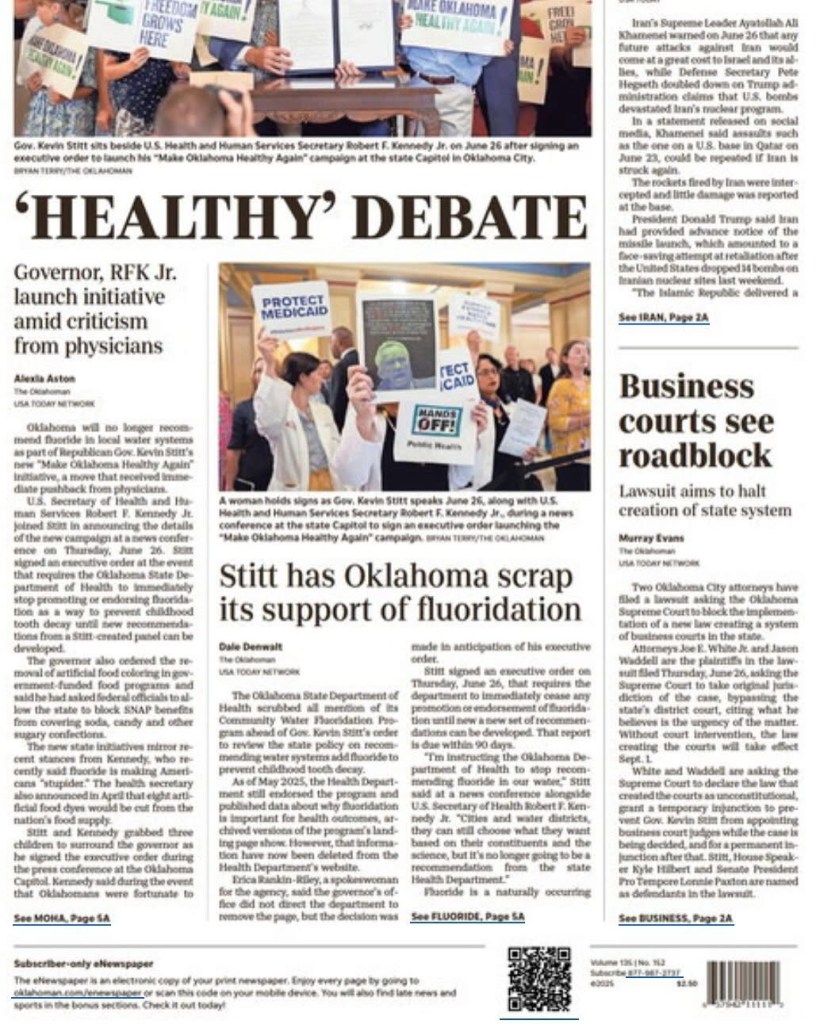
SCREENSHOT OF LOCAL NEWSPAPER COVERAGE, SOURCE NOT IDENTIFIED

Oklahoma’s Physicians Go to OKC

Stitt’s plans immediately faced criticism from licensed medical providers who showed up en masse at the rally, holding signs reading “Support Evidence-Based Health Care”, “Encourage Immunizations,” and “Protect Medicaid.” 

Dr. Steven Crawford, chair of the Oklahoma Alliance for Healthy Families, said it would be “disastrous” for children’s health to remove fluoride from water.

“We do know that appropriate public water fluoridation prevents cavities,” he said. “And how do you help children get better nutrition when they don’t have adequate dentition or teeth to be able to eat the food? So I am so sad that the governor is advocating removing appropriate fluoride from public water.”

it would be “disastrous” for children’s health to remove fluoride from water…appropriate public water fluoridation prevents cavities. And how do you help children get better nutrition when they don’t have adequate dentition or teeth to eat the food?

Dr. Steven Crawford, Family Physician,Professor Emeritus,
Senior Associate Dean, Office of Healthcare Innovation and Policy , University of Oklahoma College of Medicine

Crawford said fluoridation of public water and immunizations are two of the major health benefits over the past century and have been critical to improving the state’s and nation’s health outcomes.

He said removing candy and sugary drinks from the list of approved food stamp items isn’t inappropriate, but Stitt neglected to mention that many recipients already don’t get enough resources to buy healthy foods.

The governor also didn’t discuss increasing food stamp funding to ensure children are getting adequate nutrition, particularly during the summer months when they are not eating at school, he said.

Secretary Kennedy avoids vaccine mention

Kennedy, who participated in a staged, ceremonial executive order signing with Stitt, praised the governor’s actions. 

“I am so gratified by these actions that are being taken by Gov. Stitt to make Oklahoma healthy again,” Kennedy said.

Spectators heckled Kennedy throughout his speech that focused on America’s soaring rates of obesity, diabetes, and autism, declines in the nation’s fertility rates, and a drop in American teenage boys’ testosterone levels.

Kennedy, who has been criticized as being a vaccine skeptic, did not mention immunizations during his address.

At one point, a state trooper was seen escorting two bystanders from the crowd after one began shouting something unintelligible at Kennedy. A spokesperson for the Oklahoma Highway Patrol did not respond to a request for comment about the encounter.

Kennedy said when people ask him if he’s taking soda and sugary drinks away from Americans, he tells them that they should have the right to drink a bottle of soda.

“We live in a country where we have individual freedom,” he said. 

The federal government just should not be paying for it, he said.

“We’re paying for them at the front end by buying soda for the poorest Americans, and then we’re paying for it (on) the back end with this diabetes, for Medicaid and Medicare,” Kennedy said. “And it doesn’t make any sense. We are poisoning the American people.”

He said electing leaders like Stitt will change the way we do things in the U.S. to give American children a better chance of growing up healthy.

This story is republished under Creative Commons license CC BY-NC-ND 4.0.

“Solutions not Slogans” from Oklahoma Doctors

Many of the physicians who attended the event are members of the OSMA, the Oklahoma State Medical Association. (I am a Life Member of the OSMA).

The event was not announced in advance, but with short notice they left their practices for the day to attend the meeting. They also offered their own solutions for “making Oklahoma’s citizens healthy.”

“We agree that Oklahoma’s health needs must be addressed, but we don’t need Washington slogans. We need real solutions and Oklahoma policymakers who are willing to stand up for Oklahoma patients,”

Oklahoma State Medical Association President Sumit Nanda, M.D.
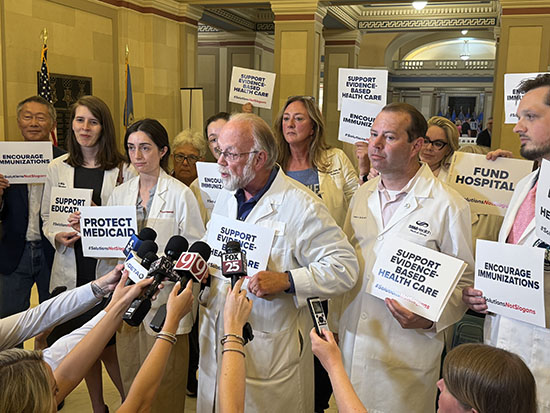
Physicians advocate for evidence-based healthcare, hospital funding, immunizations, and Medicaid; from Facebook

“Primary care is the front line of better health—and that includes science-backed public health efforts like vaccines, preventive care, and chronic disease management.

When we ignore evidence, devalue education, and politicize science, we don’t just fall behind—we fail our people.”

Oklahoma Academy of Family Physicians President Rachel Franklin, M.D., FAAFP

Five Practical Ways to Make Oklahoma Healthy

from the OSMA website

  1. Invest in health care infrastructure and education by funding hospitals in rural and urban parts of the state, increasing educational opportunities for doctors and dentists, and growing incentives for them to practice in underserved areas.
  2. Educate Oklahomans about the importance of science-based preventive health care, including wellness visits, dental visits, immunizations, and fluoridation of public water.
  3. Put Oklahoma tax dollars back in Oklahoma by restoring the DOGE funding cuts to health care.
  4. Stop insurance company overreach. When insurance companies delay or deny care recommended by a doctor or dentist, patients pay the price.
  5. Protect Oklahoma’s children and most vulnerable patients by ensuring Medicaid is fully funded.

“where health comes sweepin’down the plain”

These issues and ideas are not unique to Oklahoma. All states need these practical solutions to promote healthy lifestyles and provide optimal medical care when needed.

Contrary to what RFK and others say, physicians are not “keeping patients sick” just to make money. Quite the contrary. Physicians are frustrated because their efforts to prevent illness are often not supported by insurance companies, businesses, the government, and sometimes patients themselves.

Physicians know that food intake plays a major role in promoting health and preventing disease. But trying to micromanage people’s diets by limiting their choices may not be the most efficient and effective way to do so.

Limiting SNAP recipients’ choices seems punitive, not helpful. And I wonder how it will be enforced. What counts as “soda” and what exactly is “candy”? Fruit juice is as high in sugar as soft drinks. Limiting a single source of excess sugar is unlikely to make much difference overall. Perhaps they should provide incentives for buying fresh produce.

The governor didn’t say to ban fluoride in the drinking water, but forbids the state health department from recommending it. If the health department can’t endorse something as basic as fluoride to prevent cavities, then why even exist? And maybe that’s the point.

“Healthcare should be backed by science and carried out by healthcare providers with their patients. Preventive care, immunizations and regular wellness checks are vital in protecting an individual’s health.

Dr. Steven Crawford, Chairman of the Oklahoma Alliance for Healthy Families.

Oklahoma doctors will continue advocating for the health and healthcare of our citizens and I hope the physicians in your area do the same.

Please learn about healthcare issues in your state. Feel inspired to do your part to keep your family and community healthy. I use these sources for state and national healthcare news.

KFF Health News

Health Care-News From The States

Exploring the HEART of Health

Here’s the link to listen to Oklahoma!, my state song.

Oklahoma State Song and Anthem

I appreciate your time reading this post and invite you to follow this blog and me on social media.

I share information and inspiration to help you transform challenges into opportunities for learning and growth.

Add your name to the subscribe box to be notified of new posts by email. Click the link to read the post and browse other content. It’s that simple. No spam.

I enjoy seeing who is new to Watercress Words. When you subscribe, I will visit your blog or website. Thanks and see you next time.

Dr. Aletha

Find my other posts on this topic, or any others you need information about.

You can watch the movie Oklahoma! on Amazon Prime at this link

Can Kennedy’s HHS Restructuring End Chronic Disease?

In this post I look at Secretary of Health Robert Kennedy Jr’s plans to cut 10,000 jobs and close five regional offices in the Department of Health and Human Services (HHS) to tackle the “chronic disease epidemic”. The restructuring intends to reduce HHS’s budget by $1.8 billion while facing significant criticism from Democrats about the potential public health impact.

Secretary of Health Robert Kennedy Jr. and President Trump have established a goal of eliminating the “chronic disease epidemic.” To do so, the Secretary has ordered a massive reduction in the budget and workforce of HHS, the Department of Health and Human Services.

What is Chronic Disease?

Chronic diseases are defined broadly as conditions that last 1 year or more and require ongoing medical attention or limit activities of daily living or both.

Centers for Disease Control and Prevention

What is an Epidemic?

In the 21st century, epidemics of infectious diseases have threatened humans. Severe acute respiratory syndrome (SARS), avian influenza, and HIV/AIDS have supported the reality of this threat. 

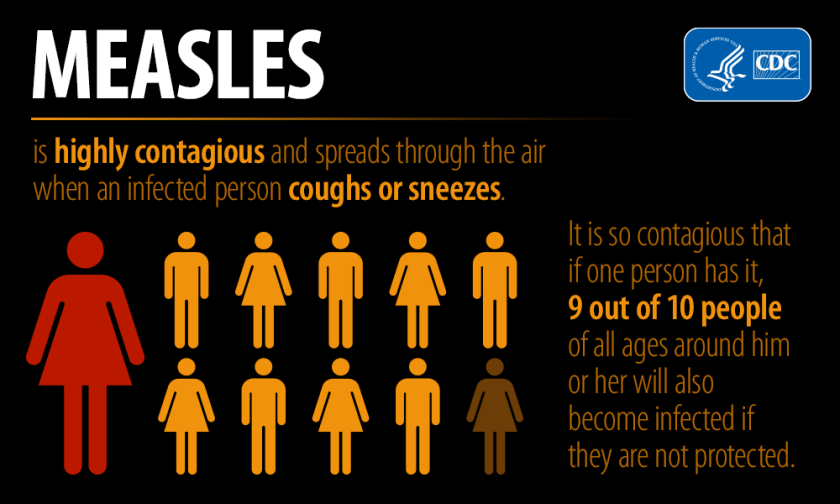
Measles is highly contagious and spreads through the air when an infected person coughs or sneezes.

Late in the 20th century, epidemic was applied to noninfectious diseases, such as cancer epidemics or epidemics of obesity. Using epidemic for noninfectious causes refers to a disease that affects many people, with a recent and substantial increase in cases.

For nonmedical events, journalists use the term epidemic for anything that adversely affects large numbers of persons or objects and propagates like a disease, such as crack cocaine, computer viruses, or severe weather.

Reference: Martin P, Martin-Granel E. 2,500-year Evolution of the Term Epidemic. Emerging Infectious Diseases. 2006;12(6):976-980. doi:10.3201/eid1206.051263.

Here is the Secretary’s plan for HHS to address the “epidemic” he believes exists.

U.S. Department of Health and Human Services to slash 10,000 jobs, close 5 regional offices

By Jennifer Shutt, States Newsroom, March 27, 2025 | 12:26 pm ET

WASHINGTON — The Trump administration announced a sweeping plan Thursday to restructure the Department of Health and Human Services by cutting an additional 10,000 workers and closing down half of its 10 regional offices.

The overhaul will affect many of the agencies that make up HHS, including the Food and Drug Administration, Centers for Disease Control and Prevention, National Institutes of Health, and the Centers for Medicare and Medicaid Services.

HHS overall will be downsized from a full-time workforce of 82,000 to 62,000, including those who took early retirement or a buyout offer.

HHS Secretary Robert F. Kennedy, Jr. released a written statement along with the announcement, saying the changes would benefit Americans.

“We aren’t just reducing bureaucratic sprawl.

We are realigning the organization with its core mission and our new priorities in reversing the chronic disease epidemic,” Kennedy said. “This Department will do more — a lot more — at a lower cost to the taxpayer.”  

The U.S. Senate voted to confirm Kennedy as the nation’s top public health official in mid-February.

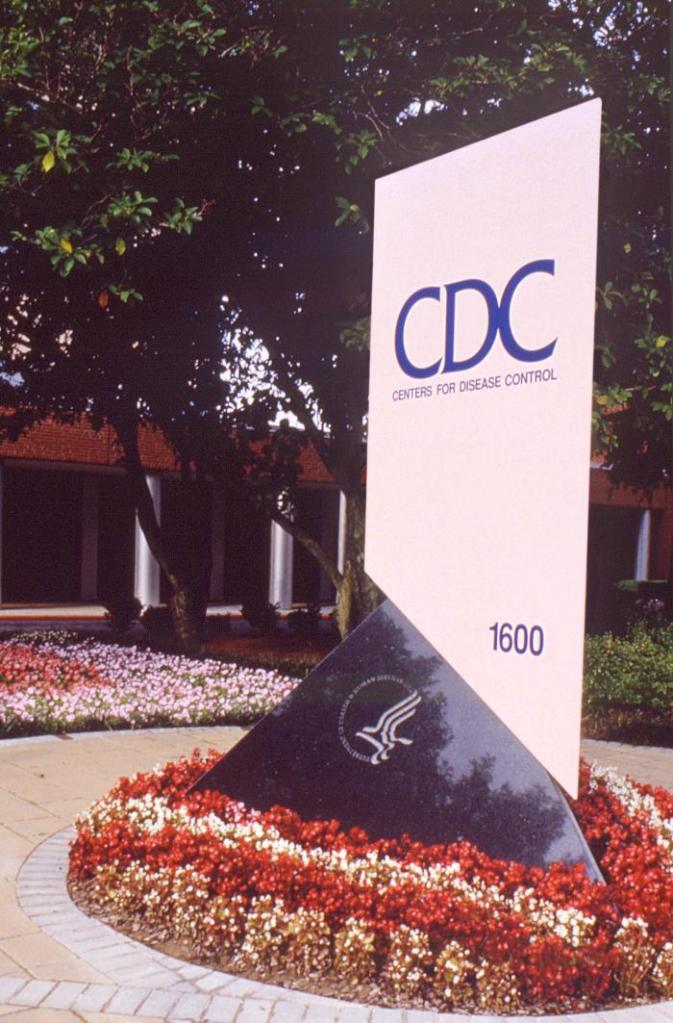
James H. Shannon Building (Building One), NIH campus, Bethesda, MD

Congressional reaction

Democrats immediately reacted with deep concern.

Senate Appropriations Committee ranking member Patty Murray, D-Wash., said that she was “stunned at the lack of thought about what they are doing to the American public and their health.”

Murray said the committee, which controls about one-third of all federal spending, “absolutely” has an oversight role to play in tracking HHS actions.

Wisconsin Sen. Tammy Baldwin, the top Democrat on the Appropriations subcommittee that funds HHS, said she believes HHS has overstepped its authority and expects the panel will look into its actions.

“These individuals who are going to be terminated under this plan play vital roles in the health of Wisconsinites and people nationally,” Baldwin said. “And I believe that they do not have the authority, the Trump administration does not have the authority to do this wholesale reorganization without working with Congress.”

Maryland Democratic Sen. Angela Alsobrooks, whose constituents in suburban Washington likely hold many of the jobs in question, wrote in a statement the HHS’ restructuring plans are “dangerous and deadly.”

“I warned America that confirming RFK Jr. would be a mistake,” Alsobrooks wrote. “His blatant distrust of science and disregard for research and advancement makes him completely unqualified.”

Cuts across department

The announcement says reorganizing HHS will cut its $1.7 trillion annual budget by about $1.8 billion, in part, by lowering overall staff levels.

Staffing cuts will be spread out over HHS and several of the agencies it oversees. The restructuring plans to eliminate

  • 3,500 full-time workers at the FDA,
  • 2,400 employees at the CDC,
  • 1,200 staff at the NIH and
  • 300 workers at the Centers for Medicare and Medicaid Services.
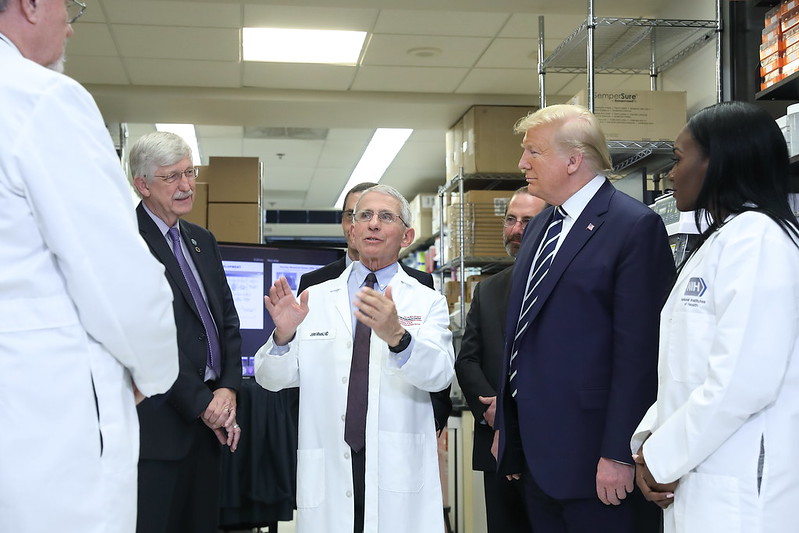
President Donald Trump visited NIH on March 3, 2020 and toured the National Institute of Allergy and Infectious Diseases’ Vaccine Research Center (VRC) to learn about research on a vaccine for the novel coronavirus SARS-CoV-2. public domain photo from flickr

“The consolidation and cuts are designed not only to save money, but to make the organization more efficient and more responsive to Americans’ needs, and to implement the Make America Healthy Again goal of ending the chronic disease epidemic,” according to a fact sheet.

Senate Health, Education, Labor and Pensions, or HELP, Committee Chairman Bill Cassidy, R-La., wrote in a statement that he looks “forward to hearing how this reorganization furthers these goals.”

“I am interested in HHS working better, such as lifesaving drug approval more rapidly, and Medicare service improved,” Cassidy wrote.

Regional offices, divisions affected

HHS did not immediately respond to a request from States Newsroom about which five of its 10 regional offices would shutter or when those closures would take effect.

Its website shows the offices are located in Boston; New York City; Philadelphia; Atlanta; Chicago; Dallas; Kansas City, Missouri; Denver; San Francisco; and Seattle.

HHS plans to reduce its divisions from 28 to 15 while also establishing the Administration for a Healthy America, or AHA.

That new entity will combine the Office of the Assistant Secretary for Health, Health Resources and Services Administration, Substance Abuse and Mental Health Services Administration, Agency for Toxic Substances and Disease Registry and National Institute for Occupational Safety and Health.

That change will “improve coordination of health resources for low-income Americans and will focus on areas including, Primary Care, Maternal and Child Health, Mental Health, Environmental Health, HIV/AIDS, and Workforce development.

Transferring SAMHSA to AHA will increase operational efficiency and assure programs are carried out because it will break down artificial divisions between similar programs,” according to the announcement.

HHS will roll the Administration for Strategic Preparedness and Response into the CDC.

The department plans to create a new assistant secretary for enforcement, who will be responsible for work within the Departmental Appeals Board, Office of Medicare Hearings and Appeals and Office for Civil Rights.

House speaker says HHS is ‘bloated’

U.S. House Speaker Mike Johnson, R-La., posted on social media that he fully backed the changes in store for HHS.

​​”HHS is one of the most bureaucratic and bloated government agencies,” Johnson wrote. “@SecKennedy is bringing new, much-needed ideas to the department by returning HHS to its core mission while maintaining the critical programs it provides Americans.”

Advocates shared Democrats’ concern about the staff cutbacks.

Stella Dantas, president of the American College of Obstetricians and Gynecologists, released a statement saying the organization was “alarmed by the sudden termination of thousands of dedicated HHS employees, whose absence compounds the loss of thousands of fellow employees who have already been forced to leave U.S. health agencies.”

“Thanks to collaboration with HHS, ACOG has been able to contribute to advances in the provision of maternal health care, broadened coverage of critical preventive care, increased adoption of vaccines, raised awareness of fetal alcohol syndrome, strengthened STI prevention efforts, and more,” Dantas wrote. “This attack on public health—and HHS’ ability to advance it—will hurt people across the United States every single day.”

Originally Published on News From The States

All States Newsroom content is free to republish, as per our policy

https://www.newsfromthestates.com/article/us-department-health-and-human-services-slash-10000-jobs-close-5-regional-offices

Is there an “epidemic of chronic disease”?

When I practiced medicine, I and other professionals treated “chronic disease” daily. The number of people who live with a specific chronic disease varies, but the number and percentage of the population who have a chronic disease doesn’t seem to change much.

While we will always work to eliminate chronic disease, that will likely be impossible, at least soon. But improved treatments and lifestyle changes do help people with chronic diseases live longer, and healthier.

Key prevention points from the CDC

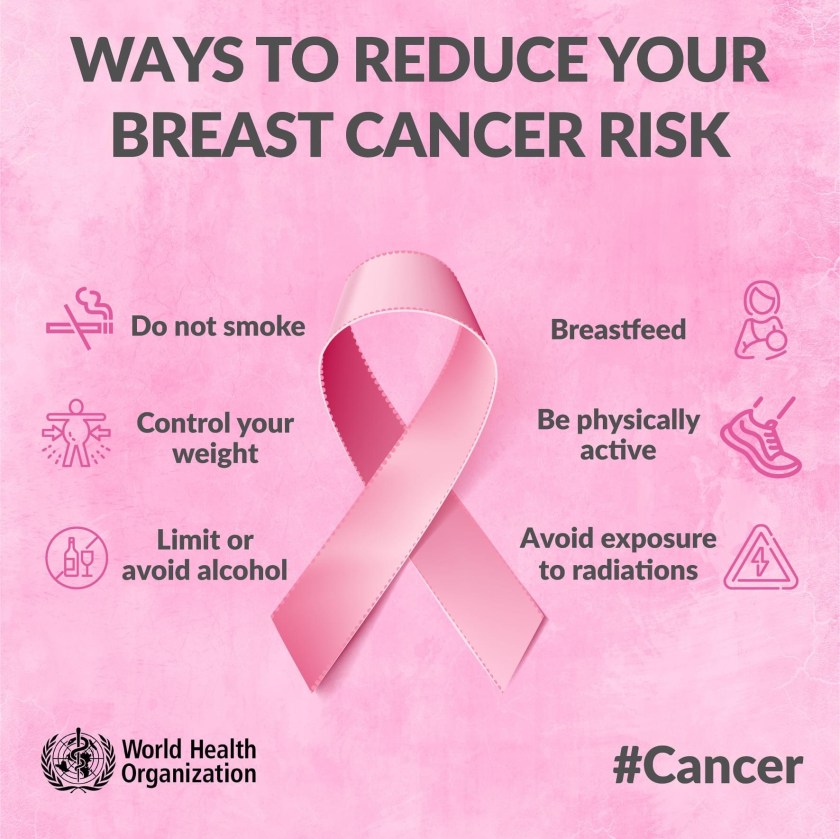
  • Most chronic diseases are caused by a short list of risk factors: tobacco use, poor nutrition, physical inactivity, and excessive alcohol use.
    • By avoiding these risks and getting good preventive care, you can improve your chance of staying well, feeling good, and living longer.
examples of ways to reduce the risk of a chronic disease, breast cancer.
Cover Image

The cover image is from the CDC website. It represents hypertension, high blood pressure, one of the most prevalent chronic medical conditions.

Exploring the HEART of Health

I appreciate your time reading this post and invite you to follow this blog and me on social media.

I share information and inspiration to help you transform challenges into opportunities for learning and growth.

Add your name to the subscribe box to be notified of new posts by email. Click the link to read the post and browse other content. It’s that simple. No spam.

I enjoy seeing who is new to Watercress Words. When you subscribe, I will visit your blog or website. Thanks and see you next time.

Dr. Aletha