Why you should get ready to die while you live -a book review

“The reason obituaries are so dull to read is that they are so dull to write and that’s precisely why I’m writing my own: To save my family the drudgery in an otherwise stressful time.”

Besides attending church on Sundays, I routinely read the local Sunday newspaper. I never miss the comics, Ask Amy advice column, restaurant reviews, and the obituaries. Sometimes I find an obit of someone I know or know of. But even if I don’t, I usually read one or two.

Sometimes the person’s life is so remarkable I’m surprised I’d never heard of them. Sometimes it’s so intriguing I wish I had known them. That is the case with a recent one, particularly because it was written by the deceased man himself.

I’m sharing this obituary with you with names deleted to protect privacy and some sections paraphrased. I think you will agree this is a man worth knowing.

David B.

“The reason obituaries are so dull to read is that they are so dull to write and that’s precisely why I’m writing my own: To save my family the drudgery in an otherwise stressful time. Following the standard format of obits I’ll start with I was born in 1948. I enjoyed being an only child until my two sisters came along. After that I learned to be an only child with two sisters.

I have to stop here and mention that when my kidneys failed in my forties, my youngest sister unselfishly agreed to transplant one of hers. When it came time much later for another transplant my older sister conveniently developed cancer rendering her ineligible. Fortunately our son jumped at the chance and eagerly agreed to step up for which I was profoundly grateful.”

After high school he “moved on to blast my way through a five year architectural degree in only seven years.” He co-founded an architectural firm which grew into one of the ten largest firms in the U.S. for several years.

“I’m kind of proud of that.”

Following retirement he served as Vice-President of the national board of the American Kidney Fund as well as President of the local chapter. He was President of the state chapter of an architects institute and served on the boards of local arts commissions.

“There is some other stuff but these are the highlights.”

He admitted that the best thing he did was marrying his wife.

“I loved her dearly. She was my lover, partner, confidant and best friend. If not for her, I would have been writing this many years earlier.”

Together they had two wonderful daughters. One is a physcian and the other “spends most of her time helping keep women out of prison”. About his son he pined , “He has yet to have any kids which is regrettable because the gene pool would be greatly improved by his contribution.”

“I guess all that’s left is to say goodbye to the many friends I’ve made over the last seven decades. I’ve kept up with some but lost track of many. Suffice to say that if I wasn’t dead, I’d miss them all.”

Not surprisingly, he requested that in lieu of flowers friends consider donations to two local non-profits-a soup kitchen/food bank and an organization that helps children of incarcerated parents.
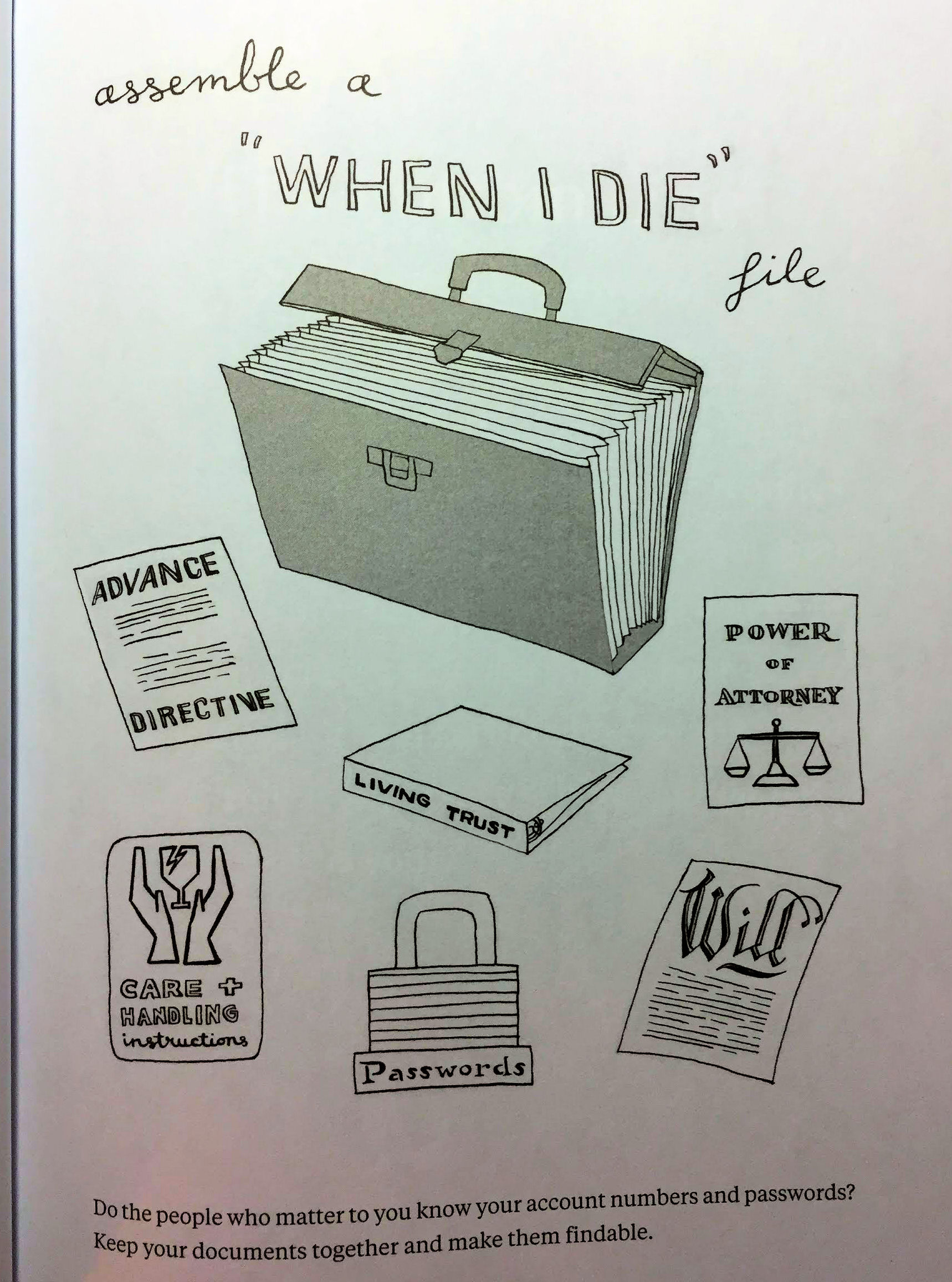
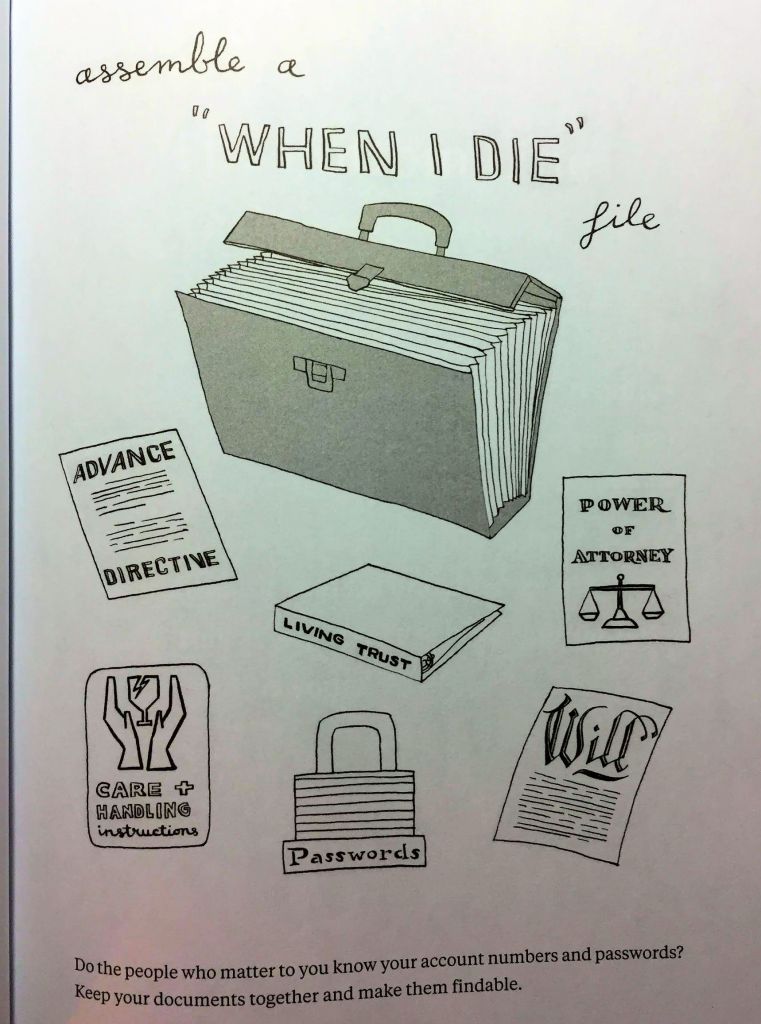
assemble a "when I die" file
a screenshot from the book

How to prepare for the end

I suspect that David prepared for death in other ways besides writing his obituary. He probably wrote a will, arranged burial or cremation, and closed his social media accounts. He likely had a living will or health care proxy. He sounds like a man who navigated his life well and managed his death equally well.

Planning for death seems straight forward but there are numerous details that most of us will miss without help. That’s why I reviewed and recommend a book that walks us through the process.

The book consists of 5 sections that mimic the progression from life to illness to death. Even as a physician, I was surprised at the claim that only 10% to 20% of us will die without warning. The rest of us will know we have something that will likely take our life. And even if we don’t, we all know we will die eventually, although we tend to think and act as if it’s a well kept secret, and maybe it is. The sections are

  • PLANNING AHEAD
  • DEALING WITH ILLNESS
  • HELP ALONG THE WAY
  • WHEN DEATH IS CLOSE
  • AFTER
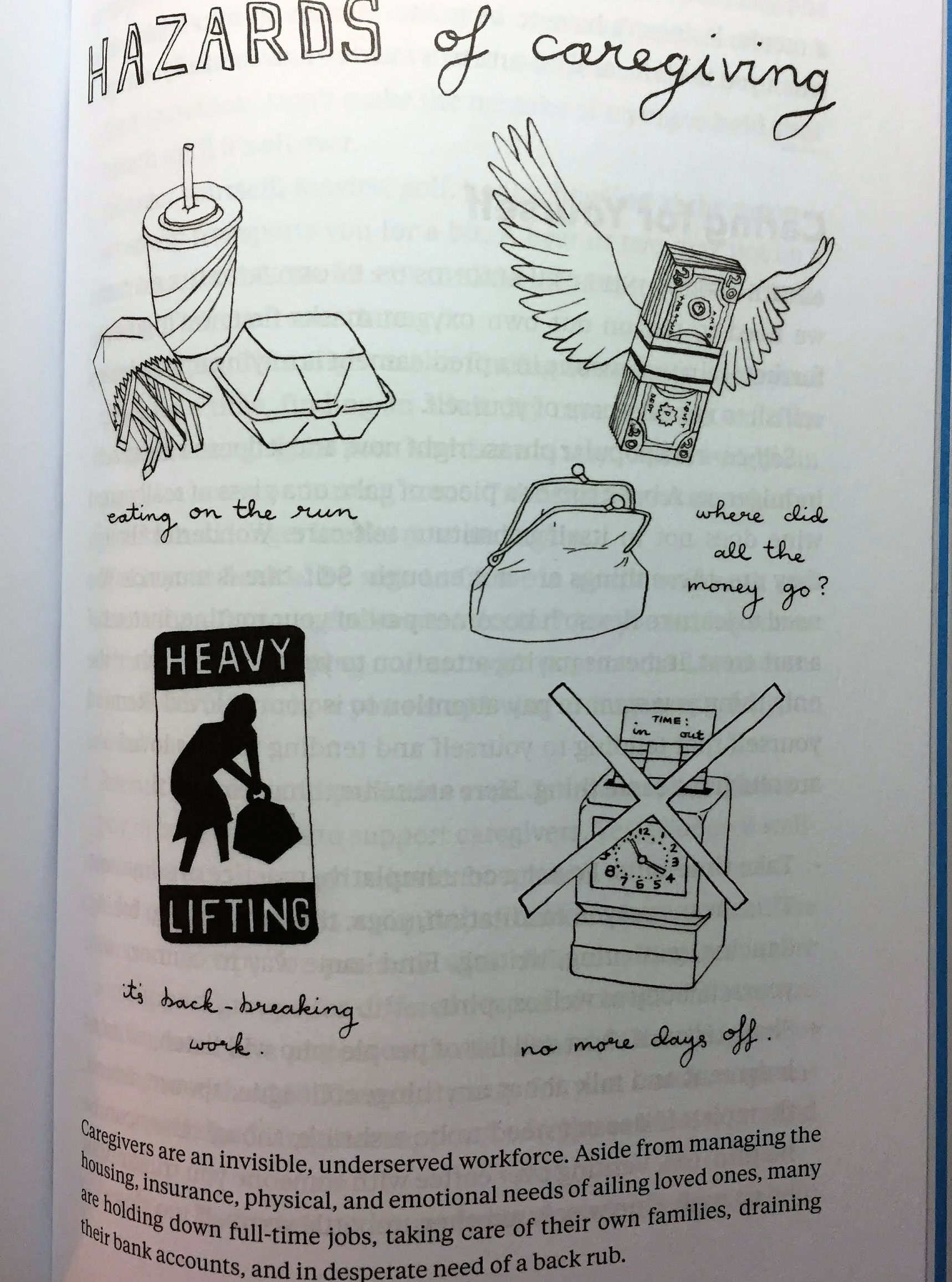
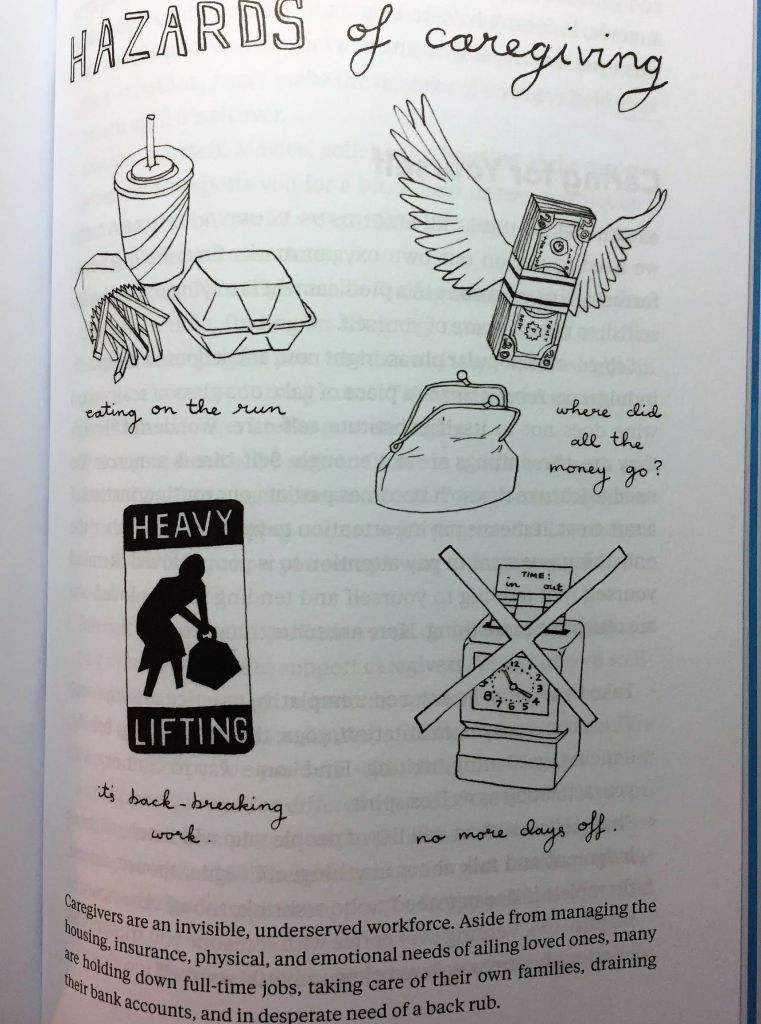
Hazards of caregiving

Chapter titles offer discussion about issues such as

  • Yes, There’s Paperwork.
  • Can I Afford to Die?
  • I’m Sick
  • Love, Sex, and Relationships
  • Hospital Hacks
  • Care for the Caregiver
  • It’s Your Body and Your Funeral
  • Grief
  • How to write a Eulogy and an Obituary
  • Celebrating a Life
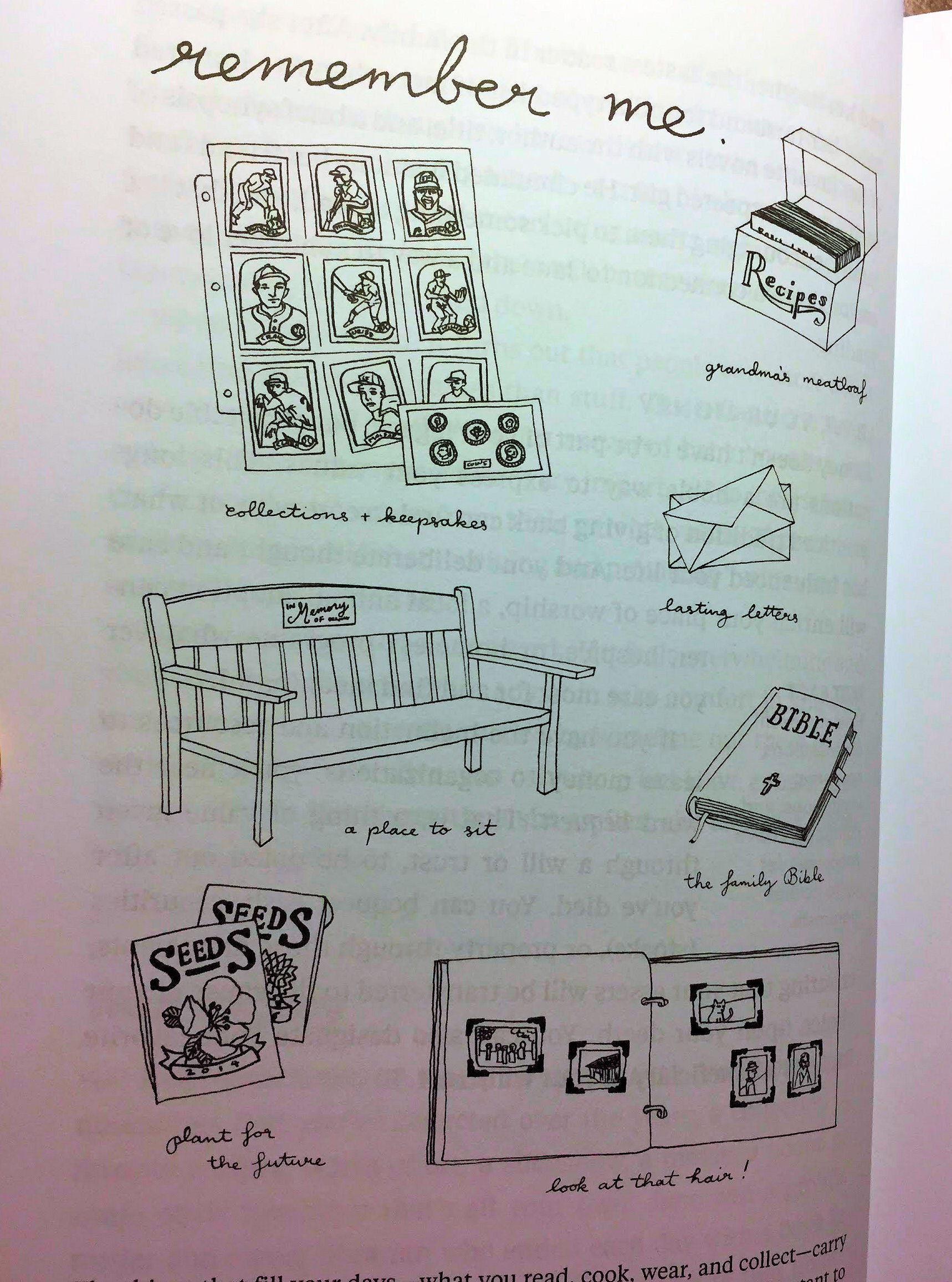
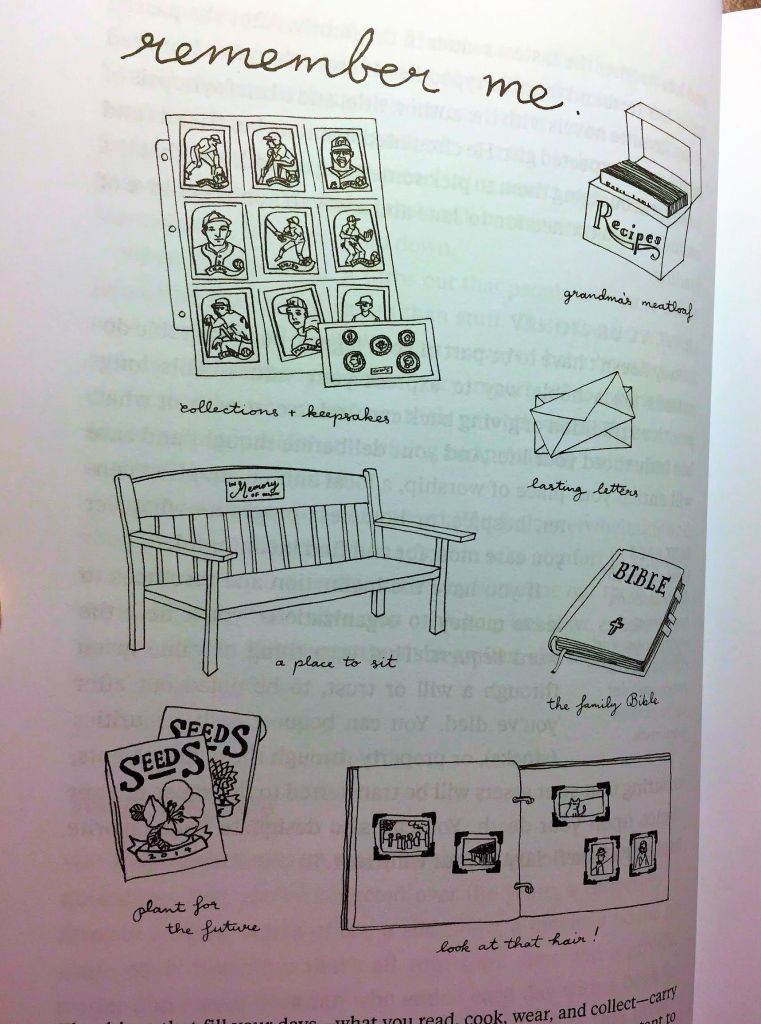
REmember me-collections and keepsakes
I think David’s family has many precious memories of his life.

We should all read this book

As much as I hope you don’t need it right now, unfortunately you do need it right now. So whatever stage of living, or dying, you or a loved one may be in, you will find something helpful here.

Follow this book’s authors on Facebook

exploring the HEART of life and death

Dr. Aletha

A Beginner’s Guide to the End-a book review

A Beginner’s Guide to the End by B.J. Miller and Shoshana Berger offers practical advice for navigating life and death. Combining personal experiences and practical information, it covers essential topics such as planning ahead, dealing with illness, and understanding grief. The book serves as a helpful resource for anyone facing mortality.

A Beginner’s Guide to the End:

How to Live Life to the Full and Die a Good Death

by B.J. Miller, M.D. and Shoshana Berger

This book’s tag line sums up the content of this book perfectly. I have reviewed other books about death on this blog; they were more biographical, philosophical, and spiritual and touched less on the practical. This book is on the other end of the spectrum; more practical, but also philosophical ,and spiritual. ( And I mean spiritual in a broad sense, not necessarily religious.)

The book begins with a brief biographical section where each author shares their reason for writing a book about death. Dr. Miller, a palliative care physician, had a life-threatening injury. He writes,

I got close enough to see something of death and come back from the ledge, only to realize that it’s in and around us all the time.

Ms. Berger, an editorial director, took care of her dying father. She wrote,

I remember those years as being full of anxiety and grief but also as a time of drawing closer.

an illustration from the book

How the book unfolds

The book consists of 5 sections that mimic the progression from life to illness to death. Even as a physician, I was surprised at the claim that only 10% to 20% of us will die without warning. The rest of us will know we have something that will likely take our life. And even if we don’t, we all know we will die eventually, although we tend to think and act as if it’s a well kept secret, and maybe it is.

The sections are as follows

  • PLANNING AHEAD
  • DEALING WITH ILLNESS
  • HELP ALONG THE WAY
  • WHEN DEATH IS CLOSE
  • AFTER

Although you could read the book straight through, you might want to skip to sections you need at whatever stage you are in. Chapter titles clearly tell you what to expect from their content. Here are some examples-

  • Yes, There’s Paperwork.
  • Can I Afford to Die?
  • I’m Sick
  • Love, Sex, and Relationships
  • Hospital Hacks
  • Care for the Caregiver
  • It’s Your Body and Your Funeral
  • Grief
  • How to write a Eulogy and an Obituary
  • Celebrating a Life

There are no photographs, charts, graphs, or info graphics, but scattered throughout are illustrative sketches that convey helpful information in a non threatening way. I have used some screenshots of a few of them to illustrate this post.

The authors conclude the book with Last Words, Acknowledgments, Resources (an extensive list), Notes, and Index.

Read this book

As much as I hope you don’t need it right now, unfortunately you do need it right now. So whatever stage of living, or dying, you or a loved one may be in, you will find something helpful here.
Find the book at your local library like I did, or get it from one of these book sellers; this would be a good book to keep on hand. (These affiliate links pay a commission to support this blog, while you pay nothing extra. )

This book was also released as

A Beginner’s Guide to the End: Practical Advice for Living Life and Facing Death

Living life to the fullest while also facing death with grace is what this book is all about.

Exploring the HEART of Health

I’d love for you to follow this blog and follow me on social media.

I share information and inspiration to help you transform challenges into opportunities for learning and growth.

Add your name to the subscribe box to be notified of new posts by email. Click the link to read the post and browse other content. It’s that simple. No spam.

I enjoy seeing who is new to Watercress Words. When you subscribe, I will visit your blog or website. Thanks and see you next time.

Dr. Aletha