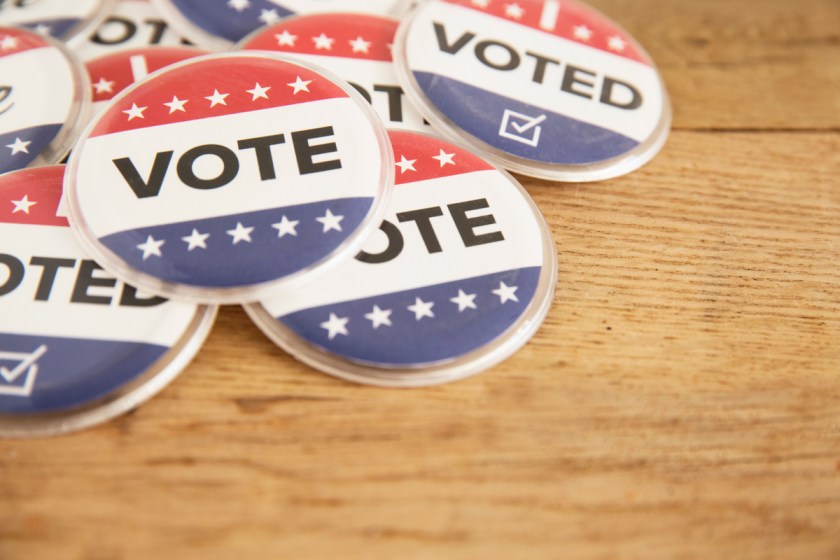
In his 2023 State of the Union Address, President Joe Biden highlighted significant progress in fighting the pandemic. His approach emphasized vaccine accessibility, minimizing spread, safely reopening business and schools, and srotecting the most vulnerable.
Thank you for reading this post. Please follow this blog and me on social media.
I share information and inspiration to help you transform challenges into opportunities for learning and growth.
Add your name to the subscribe box to be notified of new posts by email. Click the link to read the post and browse other content. It’s that simple. No spam.
I enjoy seeing who is new to Watercress Words. When you subscribe, I will visit your blog or website. Thanks and see you next time.
This post reviews healthcare during Donald Trump’s first presidential term, detailing his achievements from 2016 to 2020 , including his response to the COVID-19 pandemic.
updated June 25, 2026
This post looks back at healthcare under the first Trump administration from 2016 to 2020.
I originally wrote this post in 2020 during the Presidential campaign between incumbent Donald Trump, Republican, and Joe Biden, Democrat. Joe Biden won that election.
In 2024 Trump again ran for President against the incumbent Biden, who unexpectedly dropped out of the race in the summer. His Vice President Kamala Harris became the Democratic candidate.
Donald Trump won reelection with 50% of the popular votes to 48.4% for Kamala Harris. The electoral count was 312 to 226. (per the Associated Press). (The last President to serve two non-consecutive terms was Grover Cleveland in 1893. )
Healthcare 2008-2016
Due to the SARS-CoV-2 pandemic, health was a major topic in both global and national news. And health was s a major issue in this year’s United States presidential election in November 2020.
Health care was a major issue in the 2008 election and proved to be momentous. In his campaign, the Democratic candidate, Barack Obama, promised health care reform and as President he delivered with the passage of the Affordable Care Act, (ACA) the first time Americans have had universal health care.
The ACA sparked heated debate in the 2016 election with the Democratic candidate pledging to build upon it and Republican candidate vowing to dismantle it .
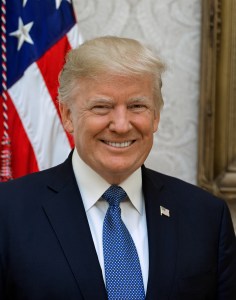
Official portrait of President Donald J. Trump, Friday, October 6, 2017. (Official White House photo by Shealah Craighead)
The Presidential pathway from USA.gov
President Donald J. Trump Achievements
This information was adapted from a Trump-affiliated site that is no longer active.
The Trump Administration
expanded access to Association Health Plans (AHPs) allowing small business to pool risk across states.
launched a program to provide the HIV prevention drug PrEP to uninsured patients for free.
issued guidance expanding options for individuals with chronic conditions. High deductible plans can now cover products such as insulin, inhalers and statins pre-deductible.
issued a rule allowing health care workers to refuse to provide services like abortion, sterilization or assisted suicide, if they cite a religious or conscientious objection.
announced the launch of a new COVID-19 Uninsured Program Portal in an effort to cover testing and treatment for uninsured individuals.
As part of the landmark Tax Cuts and Jobs Act President Trump repealed the individual mandate, which forced people to buy expensive insurance and taxed those who couldn’t afford it.
The mandate disproportionately hurt the poor: 80% of those affected made less than $50,000.
As President, Mr. Trump
took executive action to strengthen Medicare and reform the Medicare program to stop hospitals from overcharging seniors on their drugs.
pressured China to close dangerous loopholes that allowed Chinese fentanyl manufacturers to legally ship the compound worldwide, much of which ended up in the U.S.
created a bipartisan opioid commission that issued 56 recommendations to help defeat the opioid crisis.
invoked the Defense Production Act, giving power to allocate health care supplies and increase production of necessary products to counter COVID-19.
worked with Congress to stop surprise medical billing.
As President, Mr. Trump signed
the bipartisan Tobacco-Free Youth Act to raise the nationwide age for purchasing tobacco and vaping products to 21 years old.
the Families First Coronavirus Response Act, expanding the SNAP and WIC programs by adding $500 million, helping pregnant women and those who lost their jobs due to COVID-19.
an executive order to modernize flu vaccines and help protect more Americans by promoting new technologies to improve vaccine manufacturing and effectiveness.
a bill to extend Veterans Choice Health Care Law.
an executive order that increased price and quality transparency in American health care.
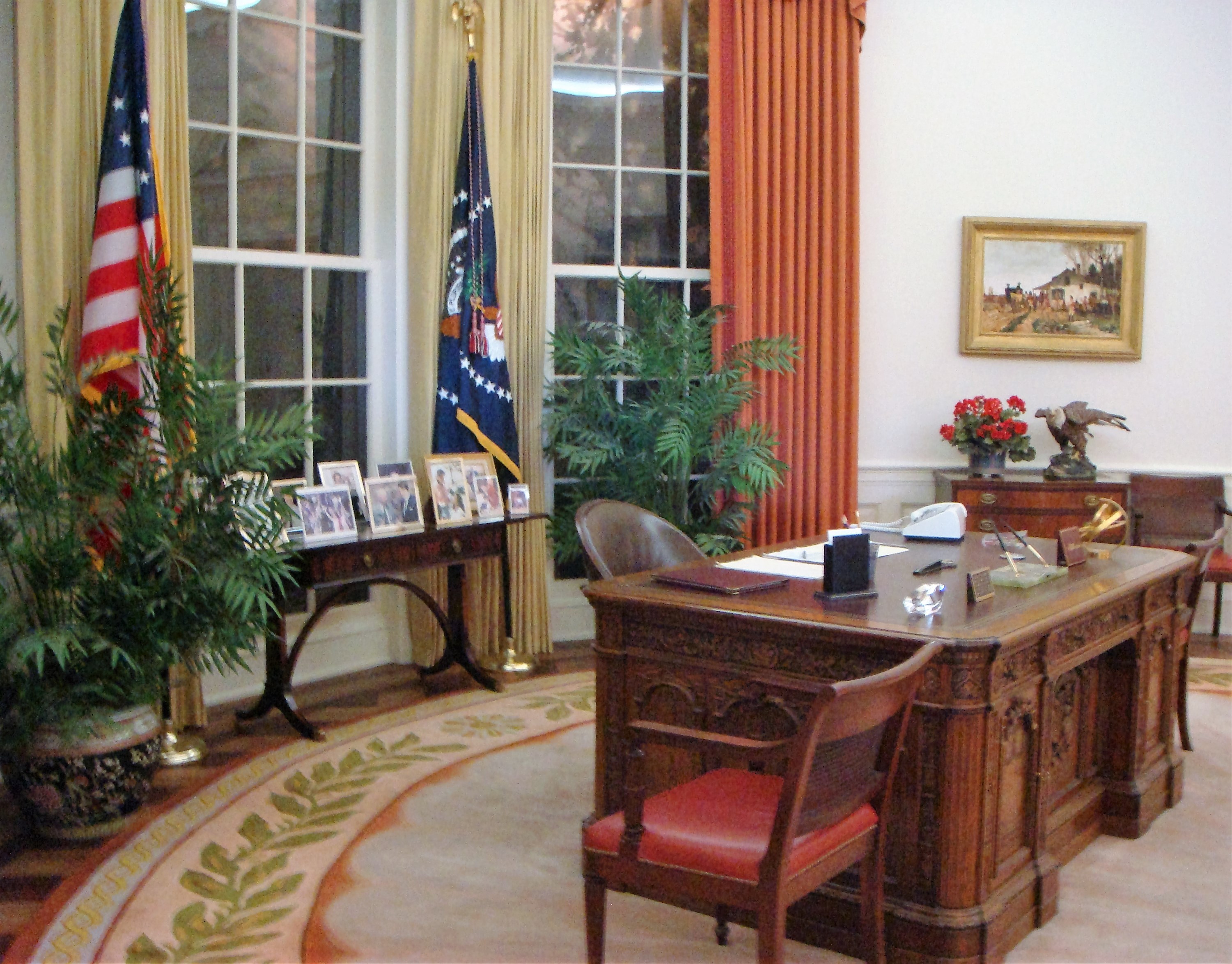
replica of the Oval Office at the Reagan Presidential Library, photo by Dr. Aletha
THE TRUMP ADMINISTRATION’S ACTIONS TO COMBAT THE CORONAVIRUS
President Trump established a Coronavirus Task Force which advised him on the medical and scientific facts, research, and treatment of COVID-19.Vice President Mike Pence chaired the task force.
January 6, 2020- the CDC issued a level 1 travel notice for Wuhan China, established a coronavirus incident management system for information about the virus, and two weeks later activated its emergency operations center.
January 27- The White House Coronavirus Task Force started meeting to monitor the virus and provide updates to the President. The CDC issued a level lll travel health notice to avoid all nonessential travel to China.
January 30-WHO declared coronavirus disease 2019, COVID-19, a global health emergency. (not in the timeline as written)
On January 31, the Trump Administration declared the coronavirus a public health emergency, announced Chinese travel restrictions, and suspended entry into the United States for foreign nationals who pose a risk of transmitting the coronavirus.
February 4- In his State of the Union Address, Mr Trump vowed to “take all necessary steps” to protect Americans from the coronavirus.
February 7- He told reporters that the CDC is working with China on the coronavirus.
February 24- The Trump Administration requested $2.5 billion from Congress to combat the spread of the coronavirus. On March 6 he signed an $48.3 billion bill to provide funds to federal, state, and local agencies, and $500 million in Medicare telehealth waivers. He requested a payroll tax cut bill from Congress.
March 31- Trump issued “30 Days To Slow The Spread” guidance to mitigate the outbreak of coronavirus.
April 2-Mr. Trump invoked the Defense Production Act to direct 3M to produce more N95 respirator masks and to help several companies-ResMed, General Electric, Medtronic- get the supplies needed to make ventilators.
April 3-Mr. Trump signed a Presidential Memorandum blocking the export of N95 and other respirator masks, surgical masks, PPE gloves, and surgical gloves to ensure they are available in the U.S.; he directed FEMA to send Ochsner ( Medical Center in Louisiana) surgical gowns.
April 6- In a phone call, he discussed potential coronavirus therapies with CEOs of pharmaceutical and biotech companies.
April 12- The United States, Russia, and OPEC agreed to cut oil production and stabilize the oil market, a deal that Mr.Trump “brokered.”
April 14-President Trump halted funding to WHO, while a review of its “mismanagement” of the coronavirus outbreak is conducted. (quotation marks added)
April 16-He announced new, phased “opening up America again” guidelines, spoke with the Opening Up America Again Congressional group, and spoke with the Governors about re-opening.
By April 17, the President had declared major disaster declarations for all states and territories, a first in U.S. history
April 22- Mr. Trump signed a Presidential Proclamation suspending immigration to the U.S. for 60 days due to “the impact of foreign workers on the labor market, in an environment of high unemployment.”
By April 27, President Trump had spoken with many foreign leaders, including those of India, Italy, China, Turkey, Russia, Kenya, South Africa, Poland, Pakistan, Qatar, Ecuador, Britain, and France.
He also spoke to Republican Senators, former Vice President Joe Biden, and the state Governors.
He attended meetings with multiple business leaders including those in health insurance, tourism, retail, wholesale, supply chain distributors,and banking.
He spoke by phone with owners of groceries, restaurants, and other small businesses.
He also spoke to leaders in mental health, faith, tribal affairs, and nonprofits, including the Salvation Army and the Red Cross.
He met with energy execs from Phillis 66, Devon, Occidental, Chevron, Exxon Mobil, and other companies to discuss coronavirus’ effect on the energy industry.
Mr. Trump spoke to the commissioners of major league sports organizations-MLB, NFL, and NBA, recognizing the teams’ and players’ work in their communities to combat coronavirus.
He met with military families, coronavirus survivors, and front line healthcare workers.
April 24- The President signed the Paycheck Protection Program ( PPP) and Health Care Enhancement Act into law
$323 billion-for the PPP
$75 billion-for health care providers
$25 billion- for coronavirus testing
April 24-President Trump spoke with three other Presidents.
April 24:“Vice President Pence & members of the coronavirus held a conference call with Governors to discuss increasing testing capacity.”
On April 27, the White House coronavirus task force appeared in a Rose Garden
Exploring the HEART of health
Thank you for reading this post. Please follow this blog and me on social media.
I share information and inspiration to help you transform challenges into opportunities for learning and growth.
Add your name to the subscribe box to be notified of new posts by email. Click the link to read the post and browse other content. It’s that simple. No spam.
I enjoy seeing who is new to Watercress Words. When you subscribe, I will visit your blog or website. Thanks and see you next time.
This photo is from the media site Lightstock.com, an affiliate which pays this blog a commission for purchases made from this link