Health, wellbeing, or longevity need not be difficult, expensive, or complicated. The concept of the Seven Dimensions of Wellness highlights the integration of social, emotional, spiritual, environmental, occupational, intellectual, and physical aspects to achieve overall health and wellness.
He proposed health is not just the opposite of un-health, disease, illness, or infirmity- and I agree.
I have seen this proven in the lives of countless patients.
I have treated patients who did not have a diagnosed disease, but yet did not feel or act healthy. Other patients who had a long list of ailments still managed to live active, healthy lives.
“Health is a state of complete physical, mental and social well-being and not merely the absence of disease or infirmity.”
I recently discovered a definition of health that includes those points but goes even further. I found it on a college website but have since learned many institutions use same concept. It’s called
The Seven Dimensions of Wellness
This program considers aspects of life which not only impact physical and mental health but also determine our sense of overall well-being, or the lack of.
Social Wellness- relating to and connecting with other people in our world.
This includes family, friends, co-workers, neighbors, even strangers.
Loneliness is a significant health problem: it contributes to ill health, and even the risk of dying prematurely.
The New York Times health writer Jane Brody reviewed medical studies that show
Emotional Wellness- understanding our feelings and coping with life challenges.
Emotionally well people understand that feeling angry, sad, fearful or stressed will happen, and don’t let those feelings cripple them. They use times of hope, love, joy and happiness to build a reserve for difficult times.
Spiritual Wellness – what brings, peace, harmony, and purpose to our lives.
Our sense of ethics, morals, right, and wrong is usually based on what we believe to be true and meaningful, and likely involves faith and support for an organized belief system or religion.
Without belief in something, our lives can drift aimlessly and we can fall into restlessness, doubt our purpose, and lose hope for the future.
Environmental Wellness – how you feel about where you live and work.
Whether it’s your own home, your neighborhood, city, country, or the world, your environment can make you feel safe and protected, or uncomfortable and insecure, depending on the quality of the air, water, and physical surroundings.
Where you live often determines your access to basic services and goods necessary for health and wellness, including
doctor’s and dentist’s offices
hospitals
pharmacies
grocery stores that sell nutritious food
as well as access to schools, church, jobs, entertainment.
Environment may even change our genetic makeup. According to an article shared at Smithsonian.com
“A team of researchers from Northwestern University led by anthropology professor Thom McDade have shown that DNA can also be modified by your environment during childhood. What’s more, the authors conclude in the journal Proceedings of the National Academy of Sciences, those modifications can affect how or when you develop certain illnesses during adulthood.”
Occupational Wellness- finding personal fulfillment from our jobs or our chosen career.
Feeling that we are contributing to the society we live in, whether it’s through employment, voluntary service, or nurturing a family unit can give us a sense of accomplishment and self-worth.
When you realize we often spend the majority of our waking hours at work, you see why work has a major impact on our health. In my medical practice, I frequently encounter patients with job problems that impact their health. This includes
physical demands, exposure to dangerous substances, environments, and situations
time demands, shift work, long hours, lack of time off
job insecurity due to uncertain employer stability, unclear job expectations, inadequate training
interpersonal conflicts with supervisors, other employees, clients, customers
These can lead to
physical injuries
fatigue, sleep deprivation
feelings of stress, anxiety, depression
Read about how a bad work environment may be worse than being unemployed in this CNN report.
Intellectual Wellness- opening our minds to new ideas and experiences to increase our knowledge and skills
Whether through formal education in a school or through individual learning pursuits, keeping our minds active seems to be a key to remaining fit and active as we age, and may even slow or prevent the onset of dementia.,
“THE SPIRIT OF LEARNING IS A LASTING FRONTIER.”
Physical Wellness- the ability to maintain a healthy quality of life that allows us to get through our daily activities without undue fatigue or physical stress.
These dimensions of health aren’t linear so much as they are circular-one leads to another. Addressing our physical health makes the other 6 easier to accomplish. So consider
weight management
physical activity
avoiding substances like tobacco, alcohol, illicit drugs
The World Health Organization later expanded their health definition .
They wrote, “To reach a state of complete physical, mental and social well-being, an individual must be able
to identify and to realize aspirations,
to satisfy needs, and
to change or cope with the environment.
Health is a resource for everyday life, not the objective of living.
Health is a positive concept emphasizing social and personal resources, as well as physical capacities.”
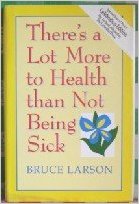
I encourage you to read Rev. Larson’s book; it’s vintage but still challenging and inspirational.
Improving YOUR Wellness Begins Now
Now think about which of the 7 dimensions you need to work on, devote more attention to, or change, to reach your optimal state of wellness.
I’m certainly going to look harder at my own life to see where I need to make changes. Here are some questions to consider.
When was the last time I read a book about something I didn’t already know about?
How can I make more time for social activities with friends and family?
Is my job a source of intellectual stimulation and satisfaction, or does it drain my emotional and physical energy?
What new goals will help me achieve the health i want?
Are there habits I need to change to improve my physical well-being-lose weight, quit smoking, eat more nutritious foods?
Do I make time for goal setting, self-assessment, meditation, nurturing and practicing my faith?
Who do I need to forgive, and what situations do I need to lay aside and move on?
Exploring the HEART of Health
Thank you for reading this post. Please follow this blog and me on social media.
I share information and inspiration to help you transform challenges into opportunities for learning and growth.
Add your name to the subscribe box to be notified of new posts by email. Click the link to read the post and browse other content. It’s that simple. No spam.
I enjoy seeing who is new to Watercress Words. When you subscribe, I will visit your blog or website. Thanks and see you next time.
As a family physician, I explore the HEART of HEALTH in my work, recreation, community, and through writing. My blog, Watercress Words, informs and inspires us to live in health. I believe we can turn our health challenges into healthy opportunities. When we do, we can share the HEART of health with our families, communities, and the world. Come explore and share with me.
View all posts by Aletha Cress Oglesby, M.D.
5 thoughts on “7 Ways to Improve Your Well-being”
Hello, this is one of my features for WTJR 09.25. Thanks for sharing with us!










Hello, this is one of my features for WTJR 09.25. Thanks for sharing with us!
LikeLiked by 1 person
Thank you Melynda, I’m pleased. Not just because my post is being featured, but because we all need reminders to make our well-being a priority.
LikeLike
Excellent post! All of those things are so vital when it comes to good health. Thank you for sharing at #BloggingGrandmothersLinkParty.
LikeLike
Thanks for reading, I’m glad to know it’s helpful.
LikeLike