
Do you leave a visit with your doctor knowing exactly what she said and what to do next? Or do you leave clueless or confused?
Whichever the case, connecting with your doctor is essential to communicating with your doctor. That’s why I wrote this post.
3 keys to effective communication with your doctor
This post addresses practical aspects of exchanging information with doctors- remember, exchange means giving something and receiving something in return.
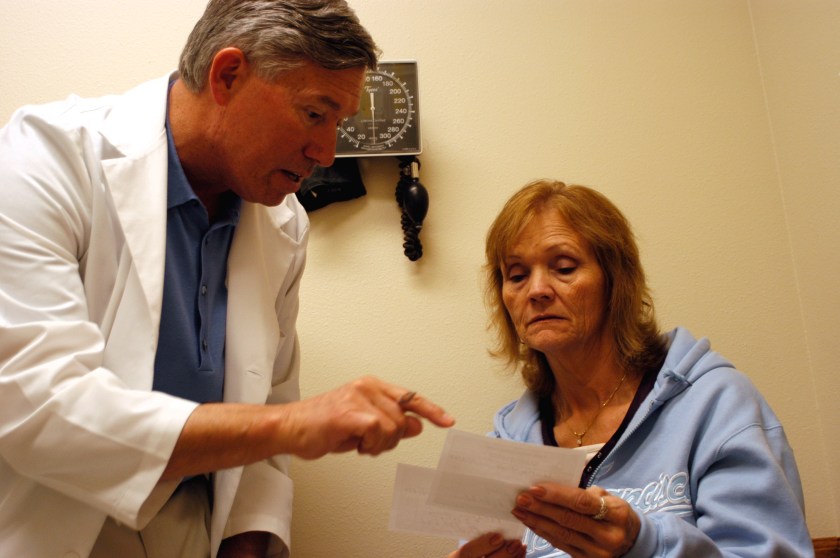
Ask questions
Doctors want to give patients the information they need and most of the time believe they have done so. We are surprised when patients come back and say we didn’t explain their problem and its treatment, or they didn’t understand what we told them about it. I think this happens for 2 reasons.
- We doctors tell patients what we think is important, but it may not be what you the patient or family consider most important.
- After patients hear part of what we say, they get saturated and don’t hear the rest, especially when it is emotionally charged.
That’s why it is so important for patients and families to ask questions; don’t just rely on what the doctors volunteer. What is important to them may not be what is most important to you. The more specific questions you ask, the more detailed the information you receive will be.
one question you should always ask at each visit
“What is the most important problem today, and what is the next step in treating it?”
The most important problem that the doctor finds may not be what you thought. If you came with multiple problems, the most important may not be the one that seemed most urgent to you.
and the answer you need to know at each visit
For example, you may go to an emergency facility for an injury that caused a cut on your leg that needs stitches. This is an urgent problem that needs to be treated. But the doctor finds that you have high blood pressure that you didn’t know about.
High blood pressure can lead to heart failure and stroke if left untreated. So the doctor will instruct you to see your primary care doctor for follow-up of the blood pressure, as well as the gash in your leg.
For your long-term health, high blood pressure is your most important problem today.
Otherwise these unexpected problems can get lost if you and the doctor only communicate about the urgent problem and what happens next with it.
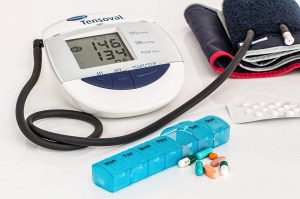
questions, questions, questions
You will get more helpful information from your doctor if your questions are as specific as you can ask; always inquire about how tests and procedures will affect your treatment and recovery. Here are some examples-
- What did the x-ray show and what does it mean for my problem?
- What was the blood test result and will it change my treatment?
- How will this procedure change my condition?
- What needs to happen before we move to the next step?
Write important things down.
Questions that you want to ask. Information that the doctors need. Answers to the questions. Refer to it each time you speak with the doctors.
Questions after a hospital stay
When you or a loved one is in the hospital, your main concern is going home. When the time comes to be discharged, it is just as important to ask questions and understand the plan as during the illness.
I have had patients return to my office after a hospital stay unable to give me any information about their illness and care. Important information to know include
- What problems were treated during this admission and how did they change?
- What will we need to do at home to continue the recovery?
- When do we need to see a doctor and which doctor do we see?
- What medications will I need to be on when I go home?
Hospitals must give patients and their families written instructions for aftercare when discharged. And with electronic medical records, doctors have easier access to their patients’ hospital records.
Understanding your doctor– medical jargon may not be the problem
Doctors are being encouraged and taught to use “plain language” when talking to patients, meaning limiting the use of medical jargon. I agree that a string of highly technical terms makes communication harder.
But simply using plain words does not guarantee understanding. Whatever terms you use to exchange information must be understood by both persons. And that is not always the case.
Here’s an example.
If a doctor says that you or a relative has had a Myocardial infarction, do you know that that means a Heart attack?
But, do you know exactly what heart attack means? Probably not.

So, if the doctor says “heart attack” without adding any additional information, you should ask
- “I understand a heart attack to mean ________. Is this correct?”
- “I do not understand what a heart attack is. Please explain.”
Learning the language
How many new things have you learned in the past 5 years? Each had a vocabulary and instructions that you learned and now use regularly. Think of your first computer, smartphone, tablet, camera, or even a coffee maker. You make the effort to learn what is important to you .
Learn about your and your family’s medical issues; even if you don’t understand it completely, your doctor will appreciate that you are trying.
Besides doctors, you have nurses, pharmacists, dieticians, physical therapists, social workers who can answer questions. Ask for referrals to community resources.
There are helpful resources on the Internet so anyone with a laptop, tablet, or smartphone can access medical information anywhere anytime. Just be sure you are using reliable sources.
Learn the basics of medical terminology here-access it online or download the PDF
Understanding Medical Words: A Tutorial from the National Library of Medicine
This tutorial teaches you about medical words. You’ll learn how parts of medical words are put together. You’ll also find quizzes to check what you’ve learned.
Find the meaning of medical words and terms here
A.D.A.M. Medical Encyclopedia
The information provided herein should not be used during any medical emergency or for the diagnosis or treatment of any medical condition. A licensed physician should be consulted for diagnosis and treatment of any and all medical conditions. Call 911 for all medical emergencies.

Also on this topic, my previous post
Tips for Talking to Your Doctor
exploring the HEART of HEALTH communication
I’d love for you to follow this blog. I share information and inspiration to help you transform challenges into opportunities for learning and growth.
Add your name to the subscribe box to be notified of new posts by email. Click the link to read the post and browse other content. It’s that simple. No spam.
I enjoy seeing who is new to Watercress Words. When you subscribe, I will visit your blog or website. Thanks and see you next time.
Dr. Aletha
- About Dr. Aletha
- How to Use this Site
- Make Your Life Easier
- Search by Category
- Share the HEART of health
- my Reader Rewards Club
- RoboForm Password Manager
Cover photo
The cover photo is from LIGHTSTOCK.COM, a stock photo site, an affiliate link.
Use these links to share the heart of health wherever you connect.


 watercress words by Dr Aletha