Honoring Memorial Day: Understanding the Poppy Symbolism

Memorial Day is more than just the unofficial start of summer – it is a day to honor the brave men and women who died defending our freedom. The poppy, symbolizing this remembrance, is tied to the iconic war poem “In Flanders Fields” by Lt. Col. John McCrae, a Canadian physician deeply affected by the tragedies of war.

updated May 25, 2025

In the United States, we observe the unofficial start of summer at the end of May as a “holiday” weekend. However, Memorial Day is the day Americans set aside to honor those brave men and women who lost their lives while defending our freedom.

As the daughter and wife of United States military veterans, I appreciate all the other families of our country’s veterans. With sadness and appreciation, I remember men and women who left home to serve our nation and never returned.

Presidential Proclamation

“Memorial Day is a sacred day of remembrance, reverence, and gratitude for the brave patriots who have laid down their lives in service to our great Nation.  Throughout our history, brave men and women have been called to defend the cause of liberty on foreign shores in defense of our homeland. 

Their noble sacrifices are marked by flag-draped coffins and the silent sorrows of those left behind.  We must never forget those who have given everything for our country.” continue reading

The American Legion Auxiliary adopted the poppy as a symbol of this remembrance.
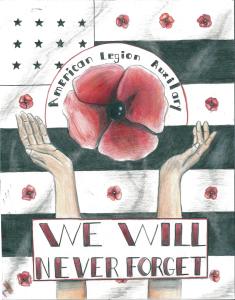
We will never forget.
used by permission

Why a poppy?

In the battlefields of Belgium during World War I, poppies grew wild amid the ravages of war. The overturned soils of battle covered the poppy seeds, allowing them to grow and forever reminding us of the bloodshed of war.

Out of this conflict and the poppies came a poem, which has become synonymous with remembrance and honor.

In Flanders Fields

 This now iconic poem was written by a Canadian physician, Lt. Col. John McCrae.

Dr.McCrae was an English and math teacher, and poet before he attended medical school. He moved to England and was practicing there when World War I broke out, and he was called to serve as a brigade surgeon.

I suspect that as a physician, he was deeply pained by treating the wounded, and losing the ones he could not save.

“In April 1915, McCrae was stationed in the trenches near Ypres, Belgium, in an area known as Flanders, during the bloody Second Battle of Ypres.

In the midst of the tragic warfare, McCrae’s friend, twenty-two-year-old Lieutenant Alexis Helmer, was killed by artillery fire and buried in a makeshift grave.

The following day, McCrae, after seeing the field of makeshift graves blooming with wild poppies, wrote his famous poem “In Flanders Field,” which would be the second to last poem he would ever write.”

poets.org
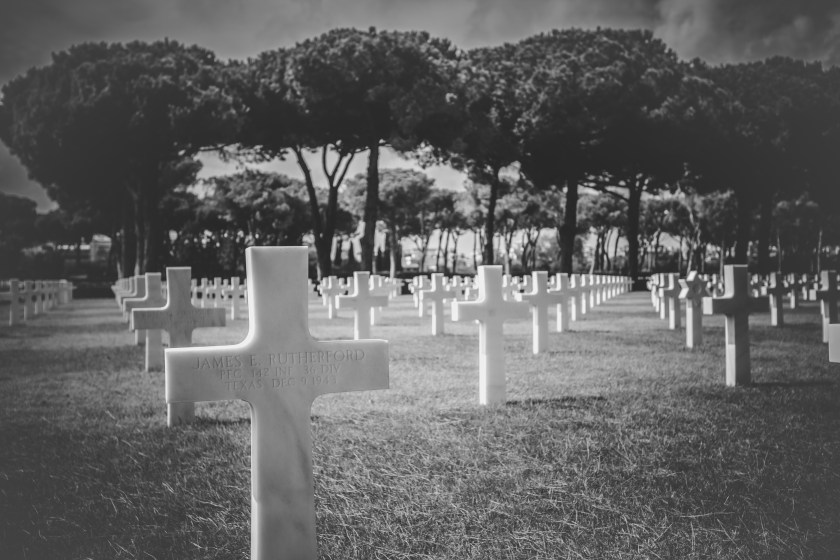
simple cross grave markers in a cemetery

In Flanders Fields

In Flanders fields the poppies blow
Between the crosses, row on row, 
That mark our place, and in the sky, 
The larks, still bravely singing, fly, 
Scarce heard amid the guns below. 

We are the dead; short days ago
We lived, felt dawn, saw sunset glow, 
Loved and were loved, and now we lie
In Flanders fields. 

Take up our quarrel with the foe! 
To you from failing hands we throw
The torch; be yours to hold it high! 
If ye break faith with us who die
We shall not sleep, though poppies grow
In Flanders fields.

This poem is in the public domain.

join us in prayer that Almighty God may comfort those who mourn, grant protection to all who serve, and bring blessed peace to the world.

President Donald Trump, Presidential Proclamation 2025

How to observe Memorial Day

The United Services Organization, known as the USO, offers these and other suggestions for observing Memorial Day. Why not try one this year and make it an annual occurrence in your family.

  • Walk through a veterans cemetery or designated veterans area of a civilian cemetery
  • Participate in a Memorial Day walk or race
  • Attend or watch virtually a Memorial Day parade
  • Visit in person or virtually a war or veterans memorial
  • Talk to family members about your relatives who have served our country, especially those who lost their lives in service

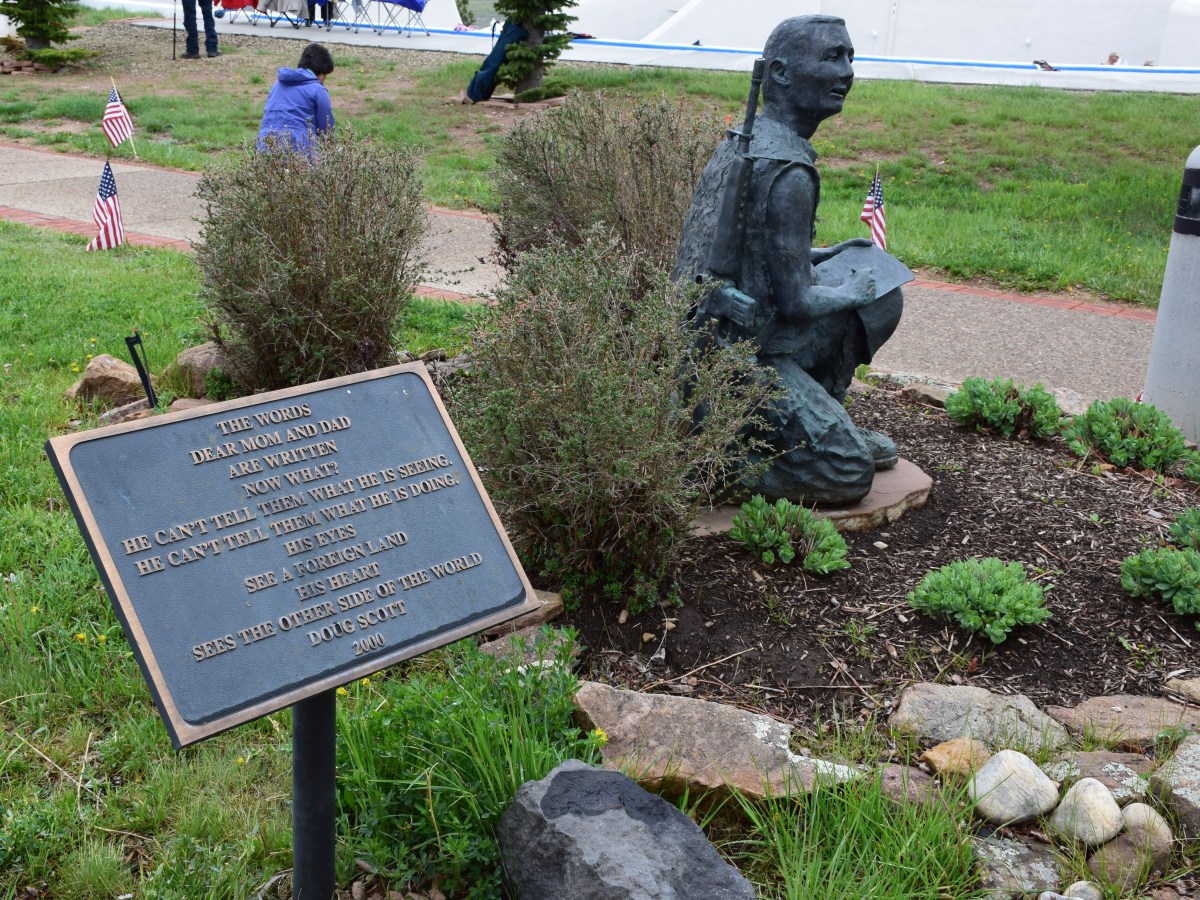
On year I visited the Vietnam Veterans Memorial in New Mexico on Memorial Day. Here is my story.
Exploring the HEART of service and sacrifice

I’d love for you to follow this blog. I share information and inspiration to help you transform challenges into opportunities for learning and growth.

Add your name to the subscribe box to be notified of new posts by email. Click the link to read the post and browse other content. It’s that simple. No spam.

I enjoy seeing who is new to Watercress Words. When you subscribe, I will visit your blog or website. Thanks and see you next time.

Dr. Aletha

Remembering the Oklahoma City bombing April 19, 1995

April 19  is the anniversary of the 1995 bombing of the Alfred P. Murrah Federal Building, in Oklahoma City, Oklahoma, which remains the deadliest domestic “homegrown” terrorist incident in the United States.

I lived there in the 1970s while in medical school and residency at the University of Oklahoma Medical Center and visit frequently. These are my memories of that day.

I will never forget April 19, 1995

On April 19, 1995 I was seeing patients in my family practice office in Tulsa Oklahoma when my medical assistant told me a bomb had exploded in Oklahoma City, 90 miles away. We didn’t have computers, smartphones, or internet so I turned on a radio and heard news reports that shocked and saddened me.

A massive bomb had exploded at the Federal building in downtown Oklahoma City , something I thought only happened overseas. Who would bomb a building in Oklahoma?  we all asked ourselves. Several employees heard from friends or relatives who lived in or near OKC, as we call it; some said they felt their homes shake several miles away from the blast site.

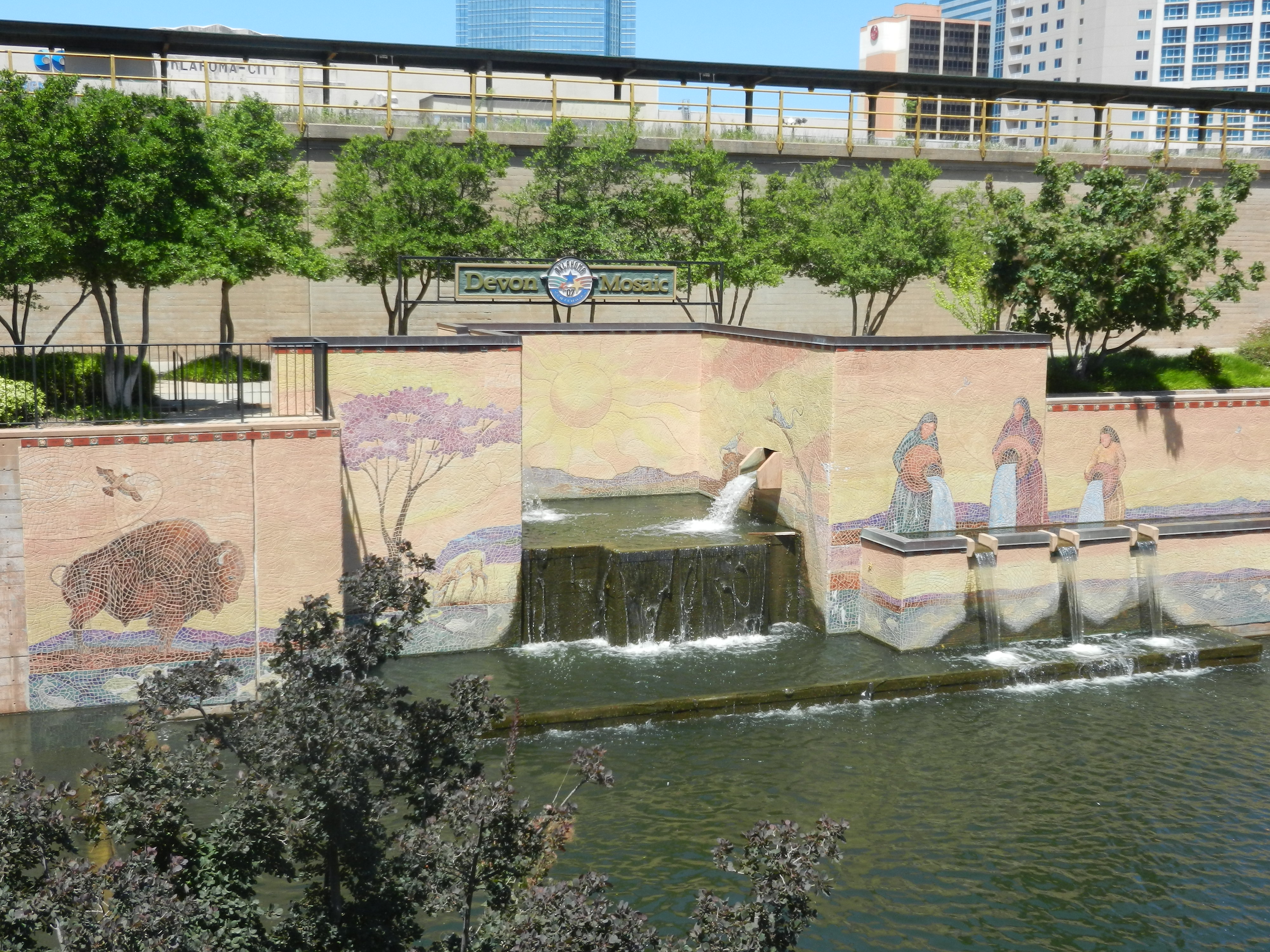
Oklahoma mural
A mural representing Oklahoma culture decorates downtown Oklahoma City today

As I drove home from work that afternoon I encountered a traffic jam on a usually easy drive; I assumed a car wreck was  tying up traffic. Instead, the cars of people trying to get into the local Red Cross blood donation facility created the backup; when I finally drove past I saw a long line of people waiting to enter.

I picked up my 10-year-old son from school and realized the teachers had not told the students. I explained to him what had happened, as well as you can explain something so horrible to a child.

He looked at me and said, “Mom, the 5th graders went to Oklahoma City today.” I remembered seeing the charter bus parked at the school that morning for the annual field trip to the science museum in OKC. Since I knew the museum was not downtown, I assured him the children from his school were safe.

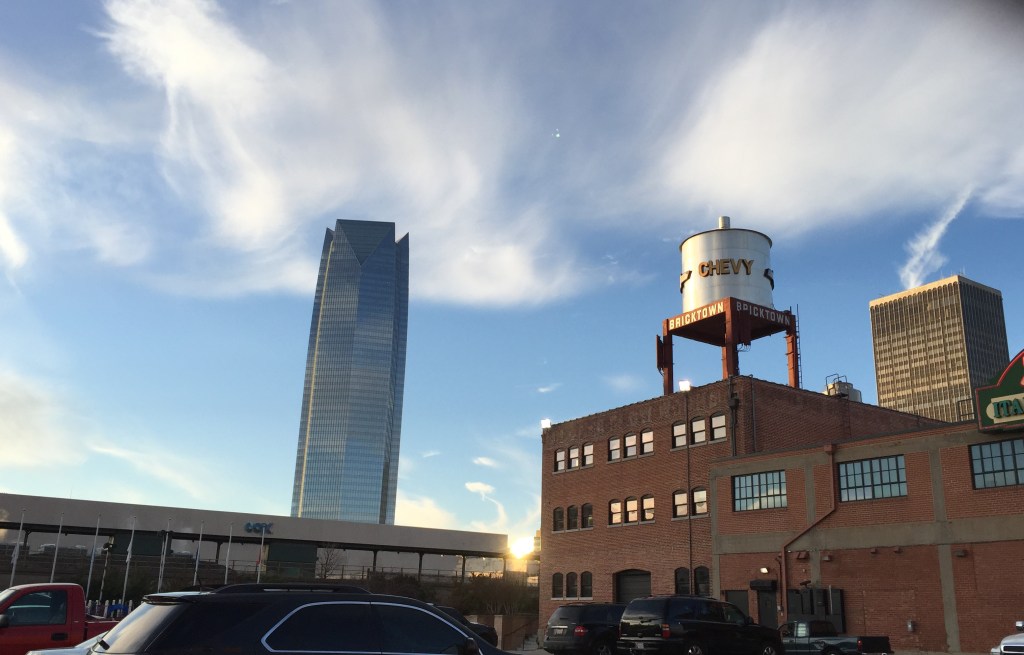
Bricktown in Oklahoma City
Bricktown area of OKC with Cox Convention Center and Devon Energy Center tower behind
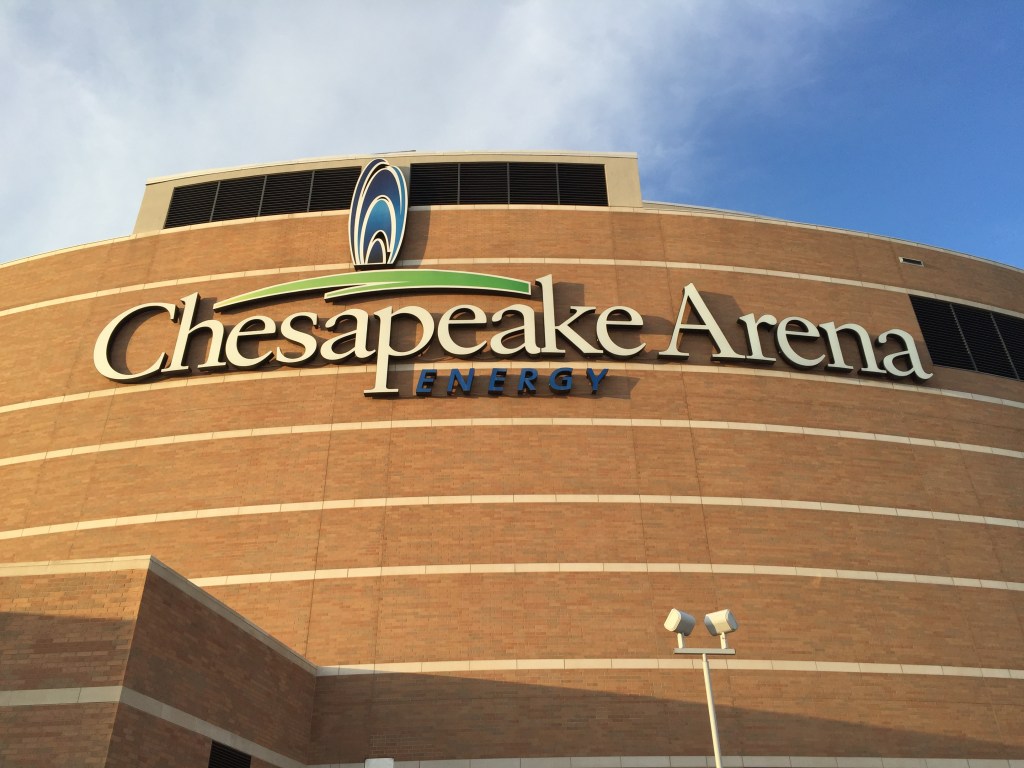
Chesapeake Arena
Chesapeake Arena, home of our popular Thunder Basketball team

The day after, April 20, 1995

They next morning as usual I turned on the television to watch the morning news while I dressed for work. I can’t believe now that I wondered if there would be any news of the bombing on national television; it had dominated our local news the evening before.

I turned to the Today show and found that it was broadcasting from OKC, as were all the major networks, and devoted the entire broadcast to the bombing. I think that was my first inkling what a momentous event it was.

They interviewed a doctor from St Anthony Hospital, just down the street from the Murrah Building- he was one of my medical school professors. I couldn’t believe someone I knew was on national television.

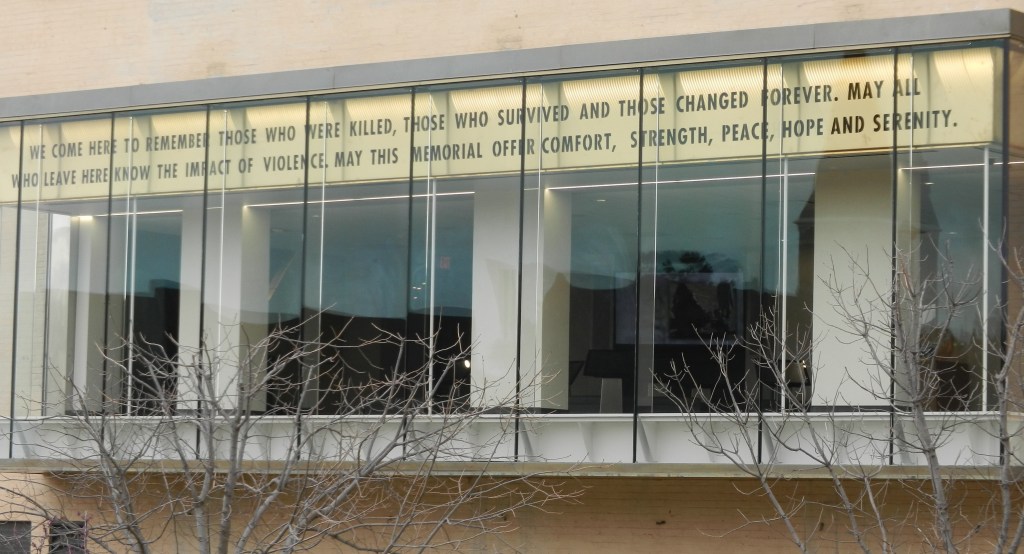
window at the museum
window from the museum overlooking the outdoor memorial
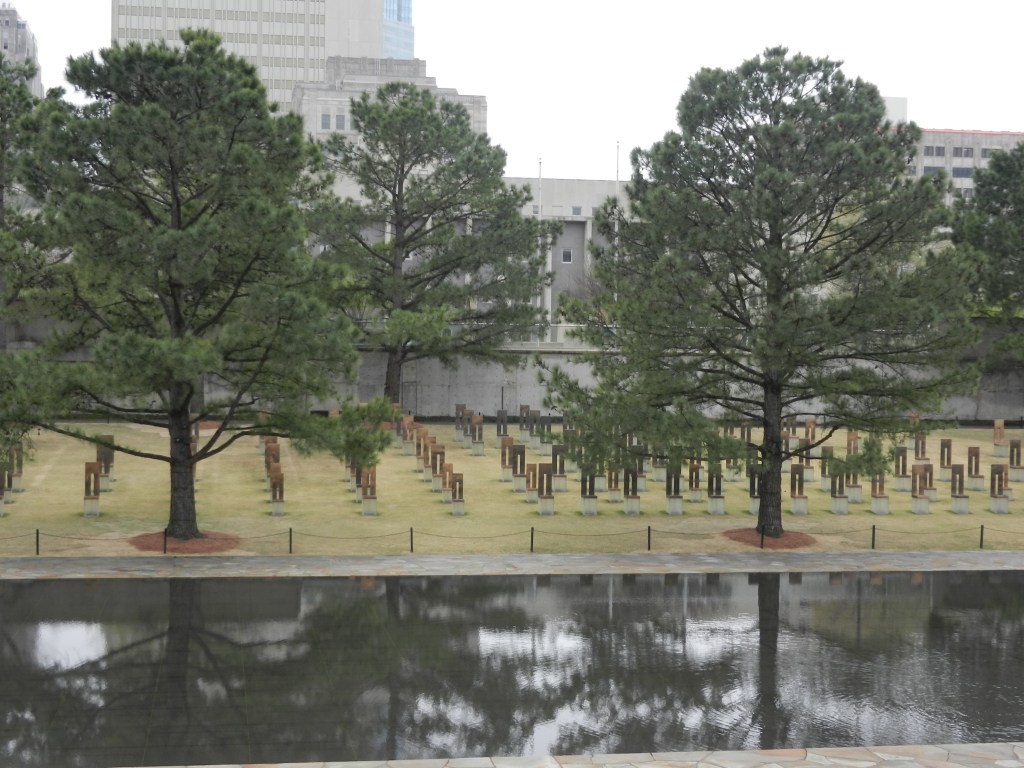
Memorial pool and chairs
Field of Empty Chairs beside the Reflecting Pool – Each gold chair represents a deceased victim.

The following months

In the following days, weeks and months we learned all the details about the bombing- the perpetrators, the victims, the rescuers, the survivors.

168 Oklahomans lost their lives there that day, including 19 children.

My first visit to the bombing site

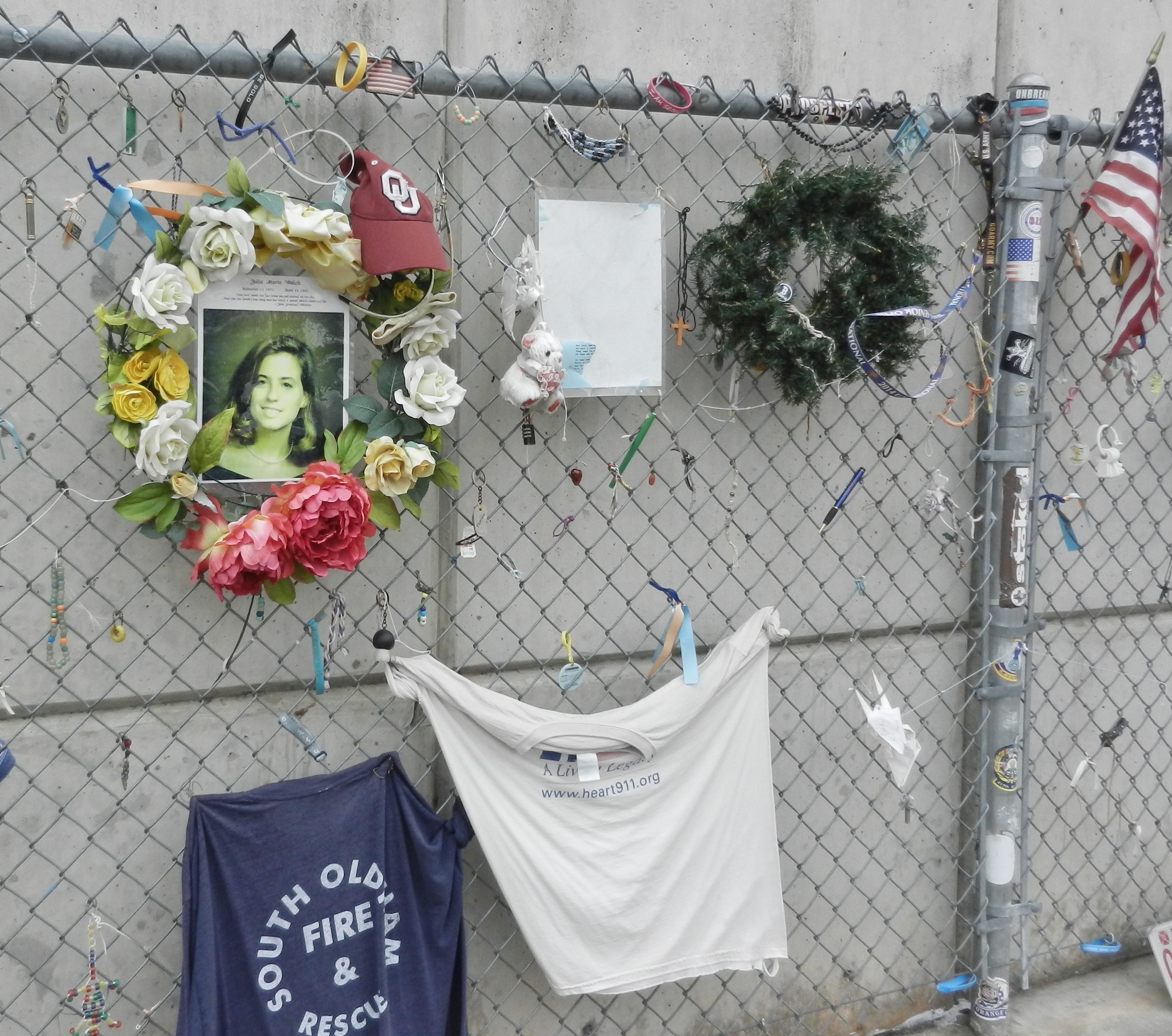
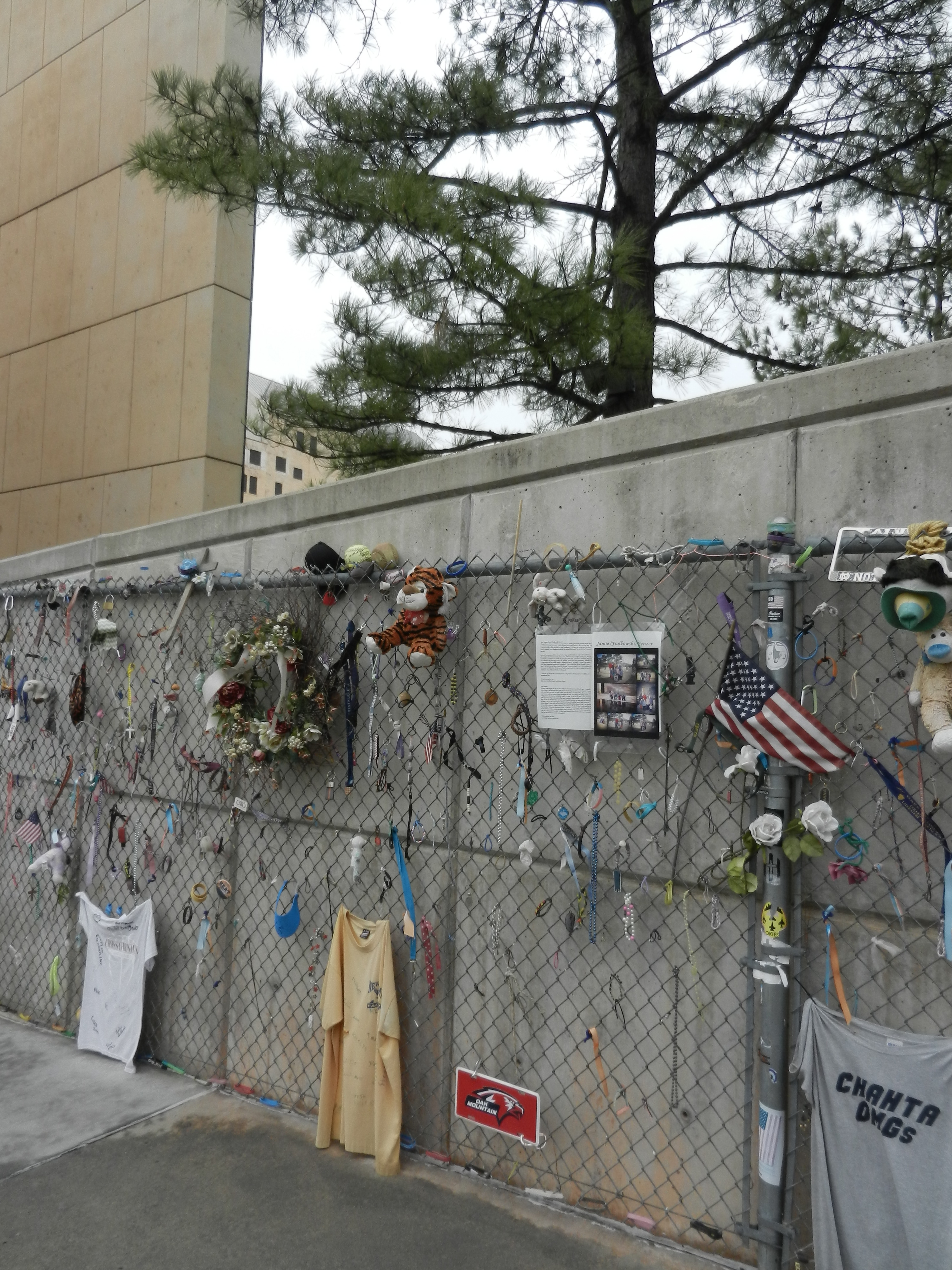
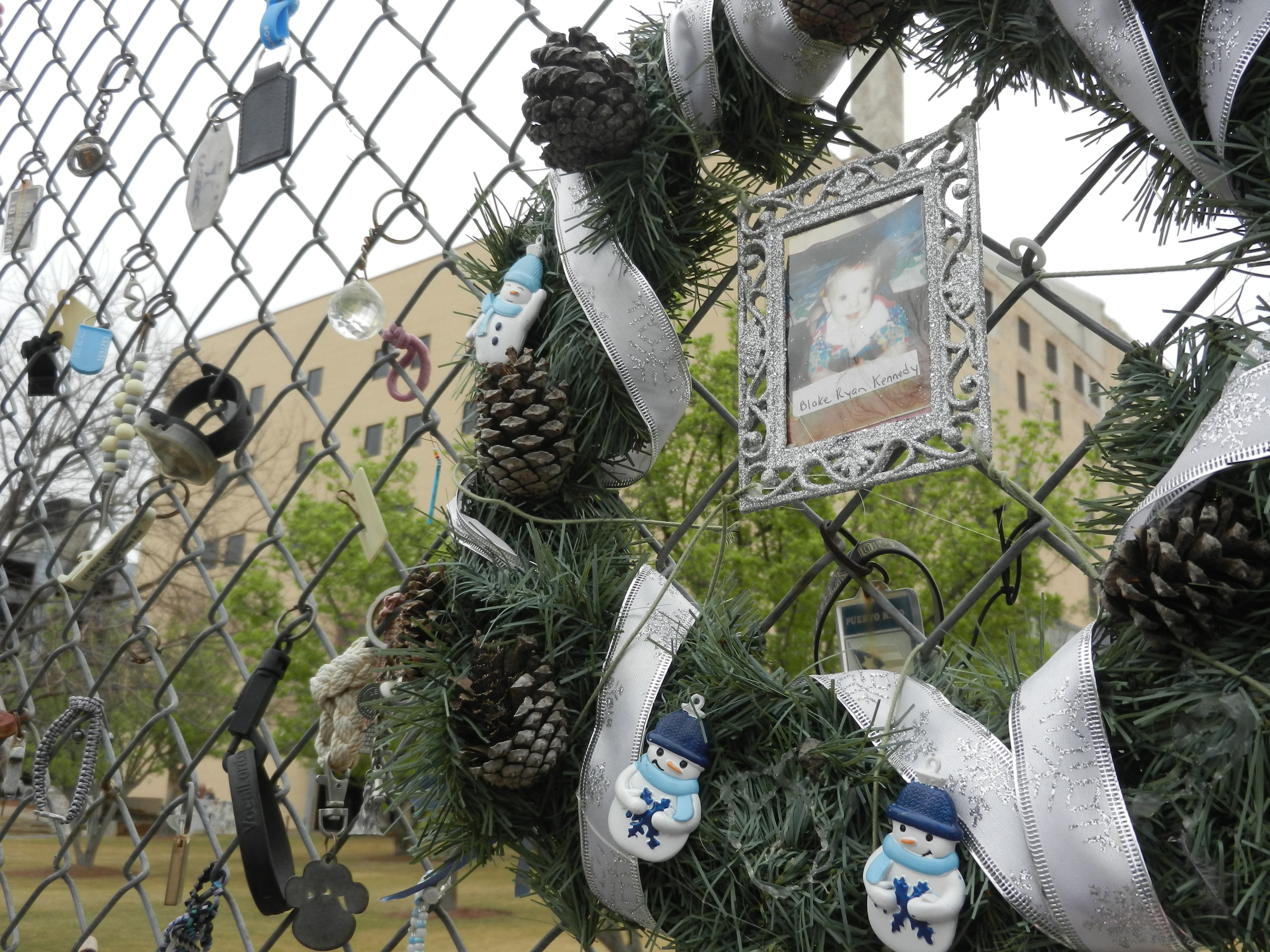
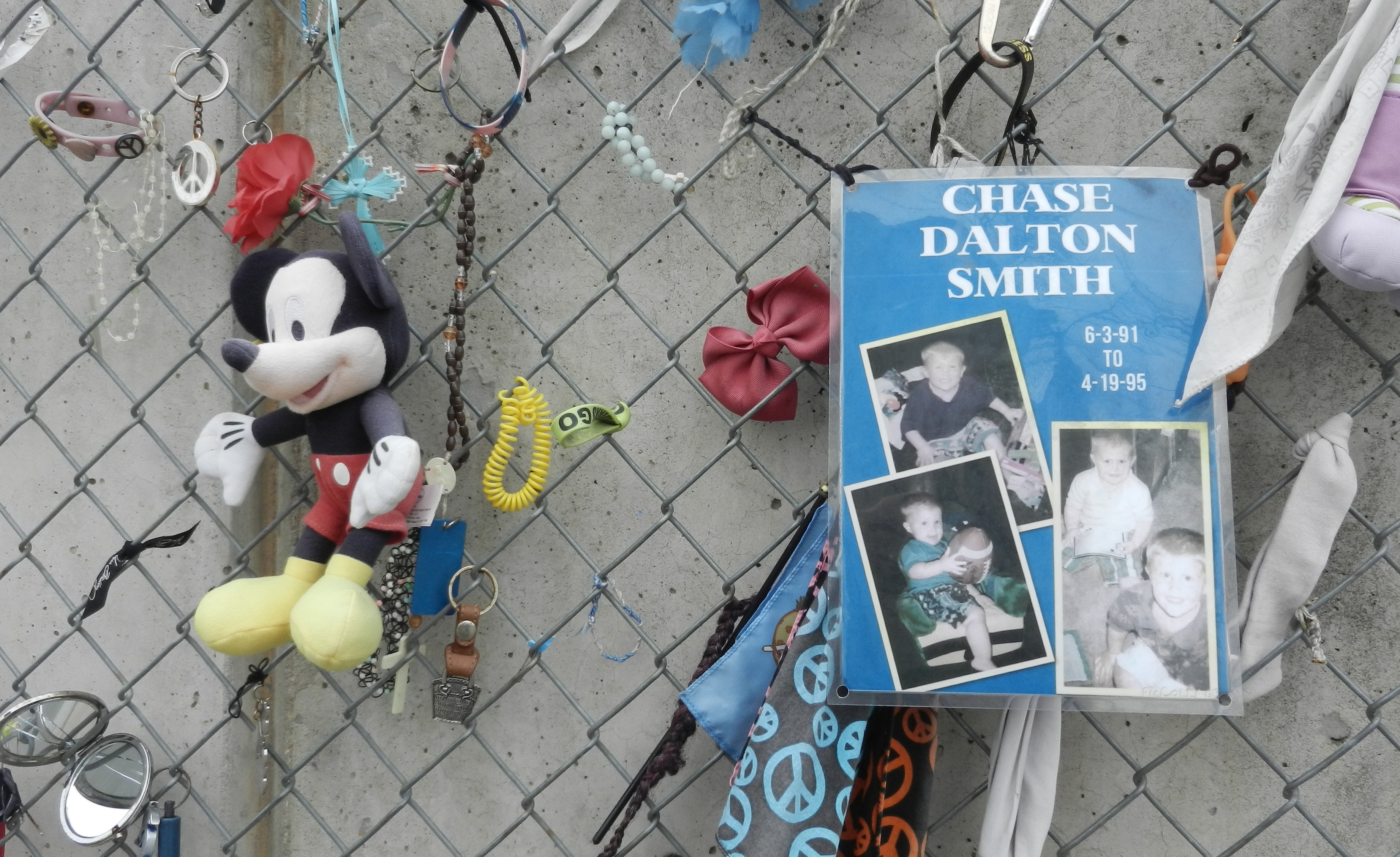
My husband and I visited the site after the building was imploded, when the grounds were fenced off.  The fence had become a makeshift memorial, as people left mementos of all kinds- dolls, stuffed animals, photos, pictures, flowers, crafts, flags, shirts, and letters.  We visited again when the official memorial  and the museum were established on April 19, 2000.

2016-03-07 12.05.50
2016-03-07 12.08.17
2016-03-07 12.12.19
2016-03-07 12.11.04

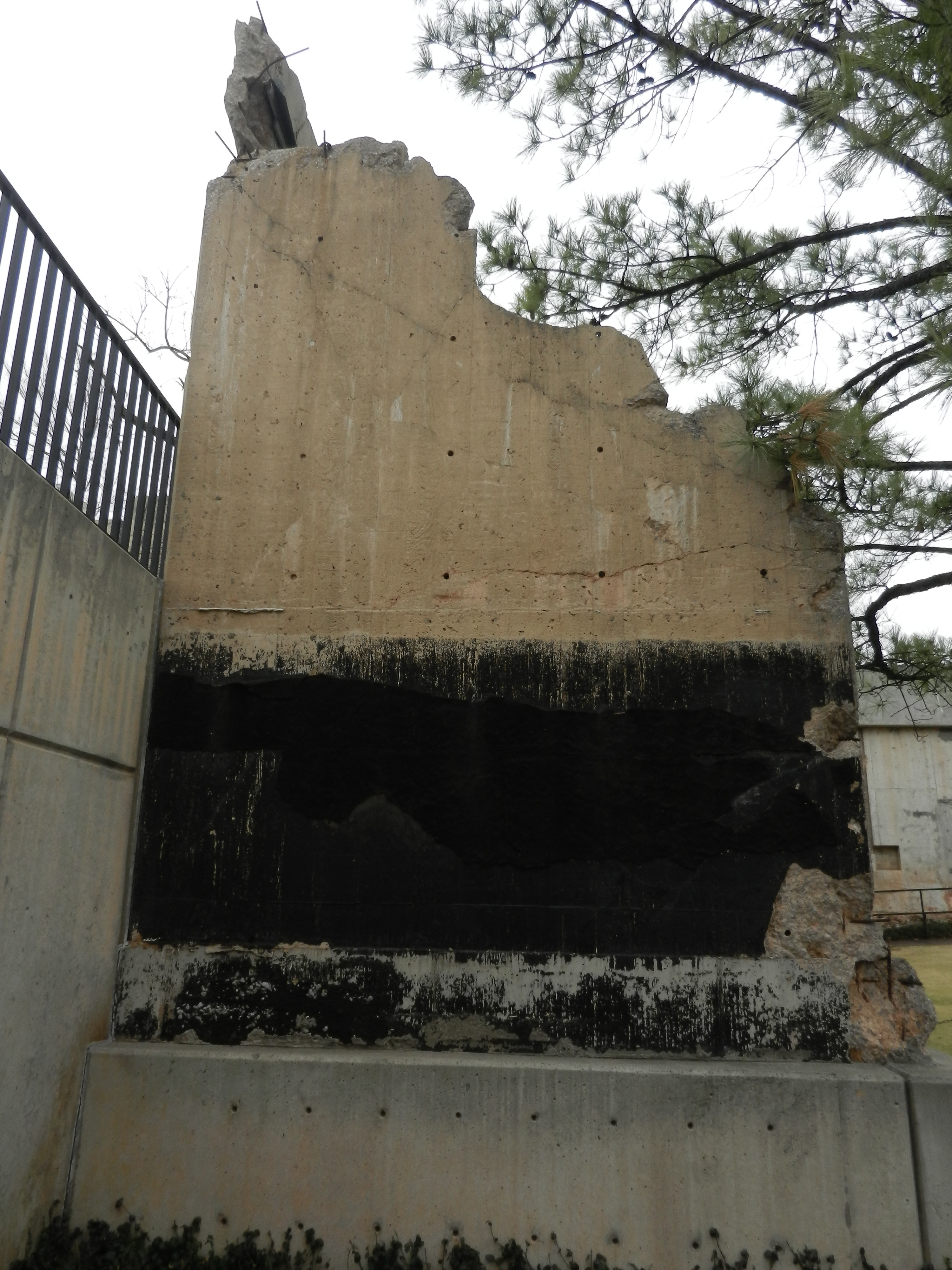
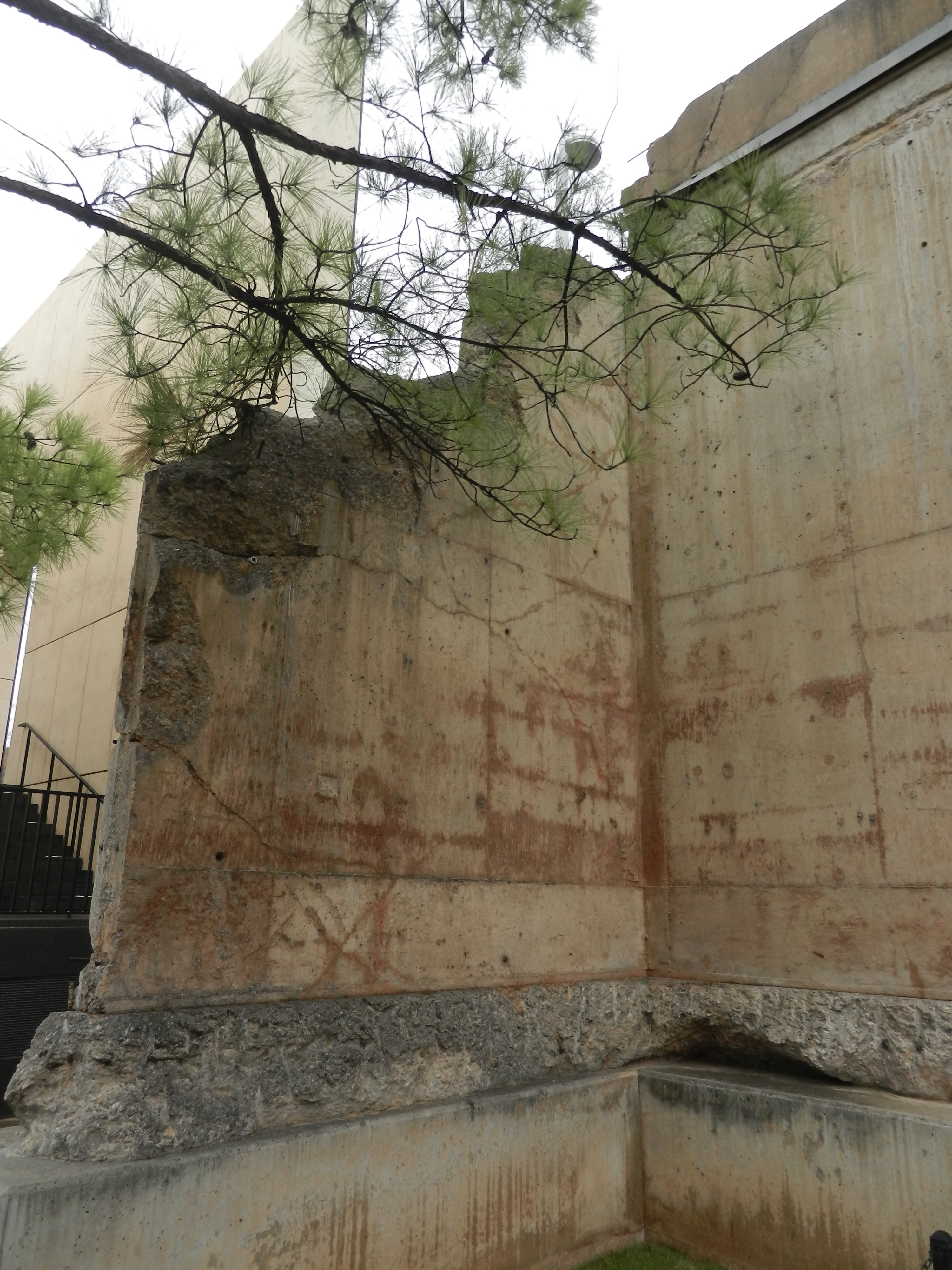
a long section of the original fence has been left intact, as well as parts of the original federal building wall.

sections of damaged wall

Until 9/11, it was the deadliest act of terrorism on United States soil.

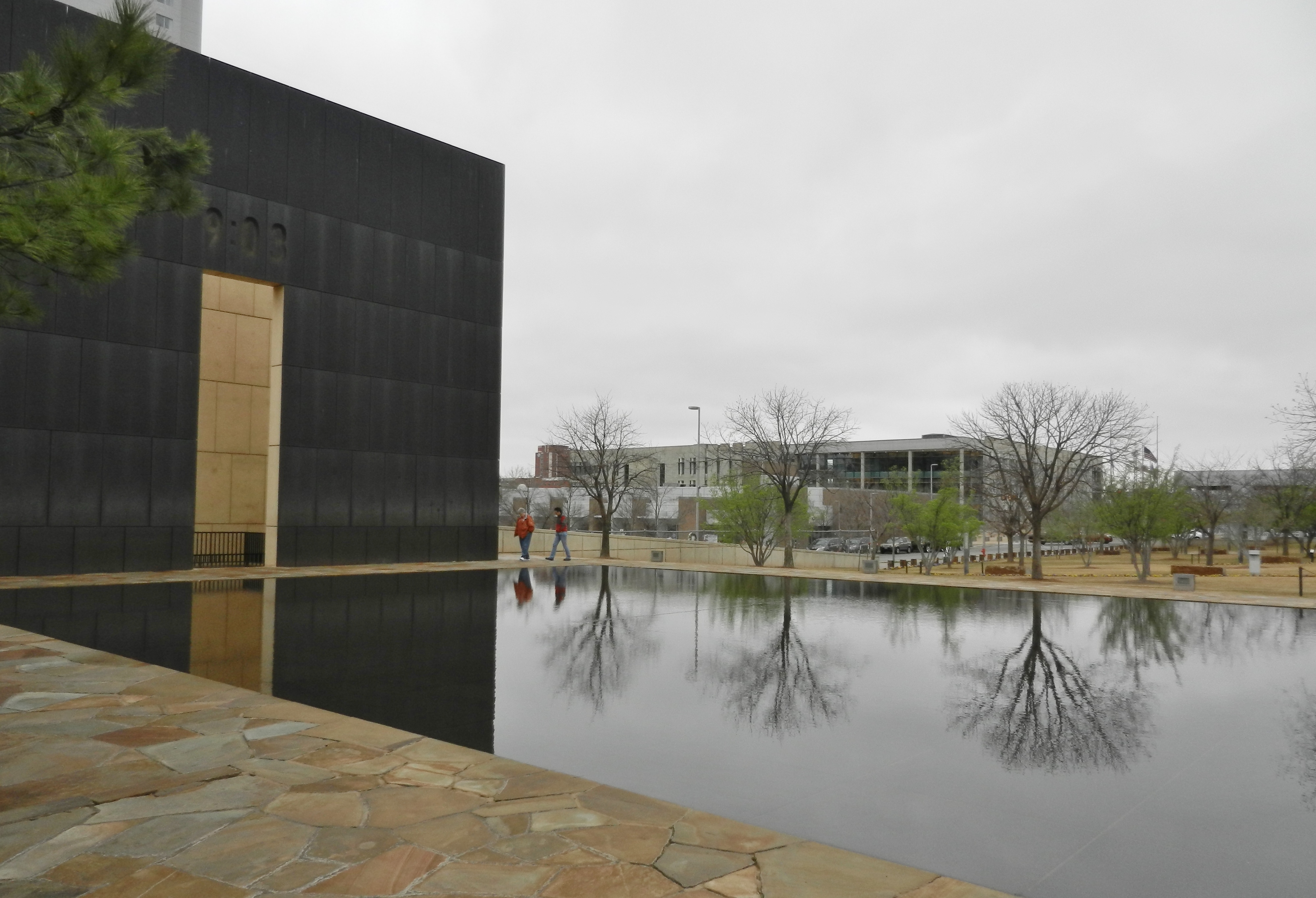
OKC memorial and federal building in the distance
The West Gate of Time. the Reflecting Pool  and looking  northwest toward the new federal building in the distance

Remembering April 19, 1995

That day in Oklahoma City showed the best in our state and our country as people, some with no training, risked their lives to help rescue people who were injured and trapped inside. Firefighters and police came from all over the United States to help. People donated food and first aid supplies.

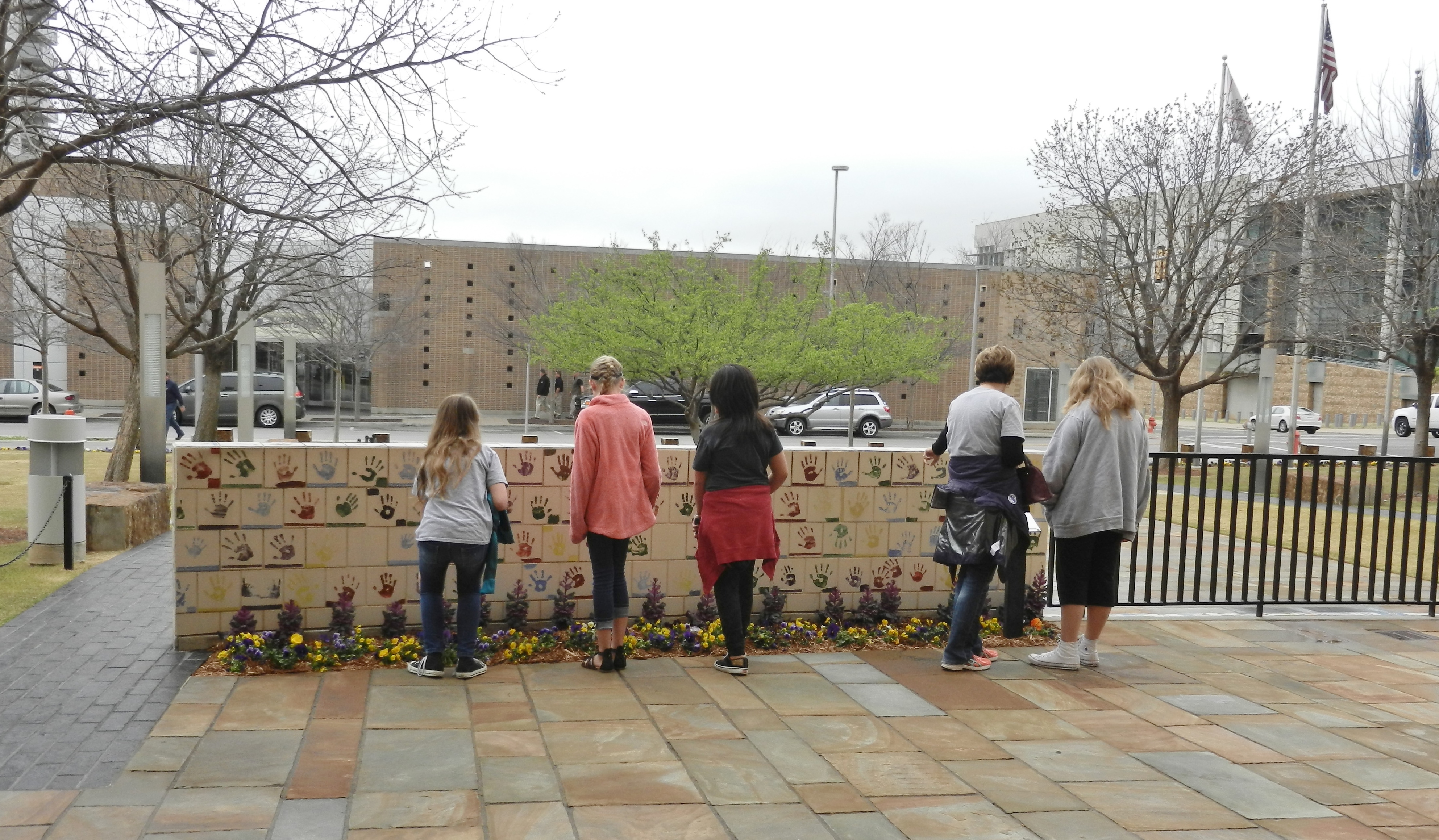
children and adults visiting a wall decorated with handprints
Schools regularly bring students to visit the memorial and museum; these are visiting the children’s area
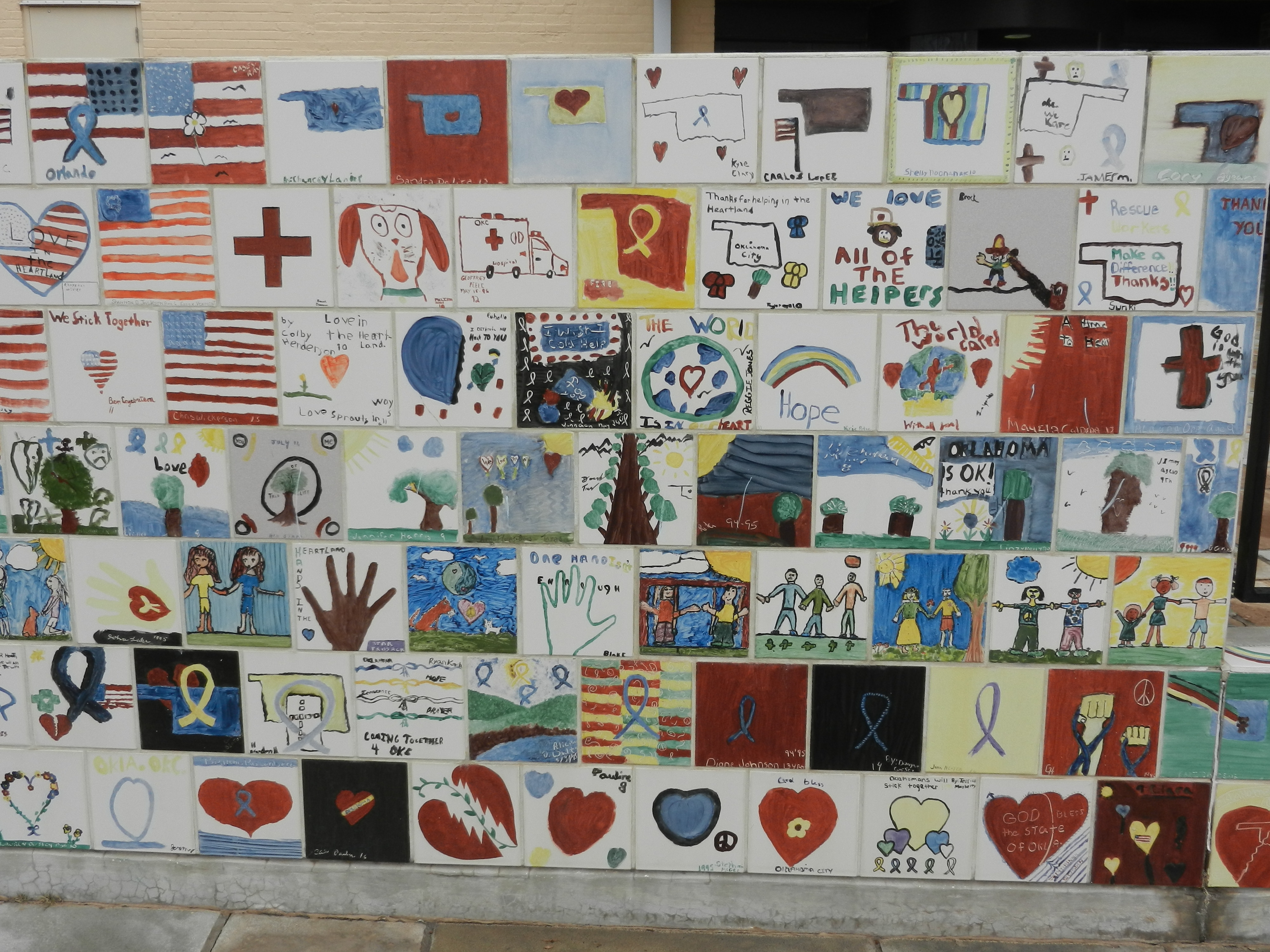
colorful hand painted tiles from children
Hand-painted tiles by children were sent to the city as a show of support and sympathy.

I was proud to be an Oklahoman then and now, and still grieve for the lives we lost that day.

The Survivor Tree
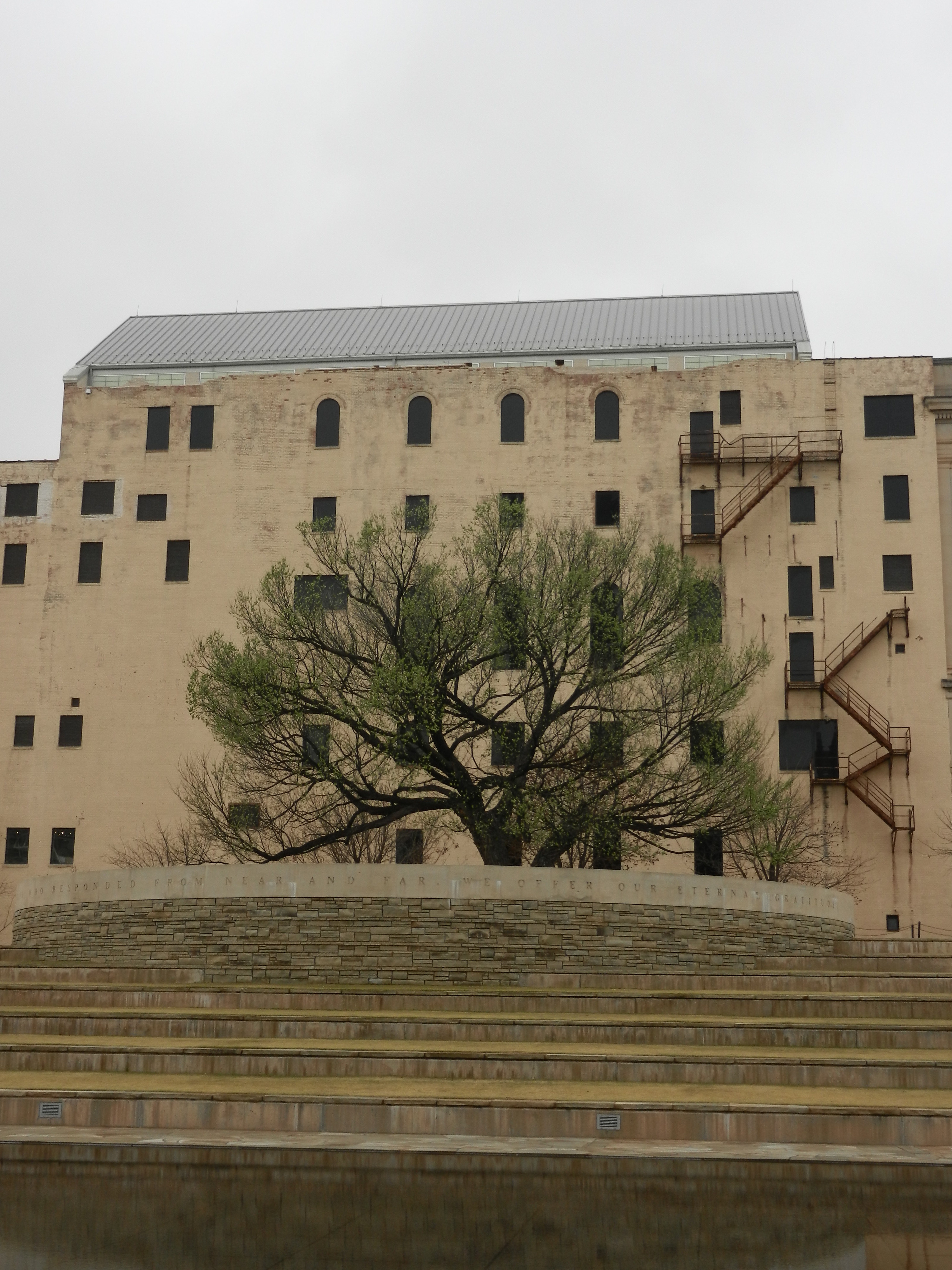
The Survivor Tree, an American Elm, survived the blast

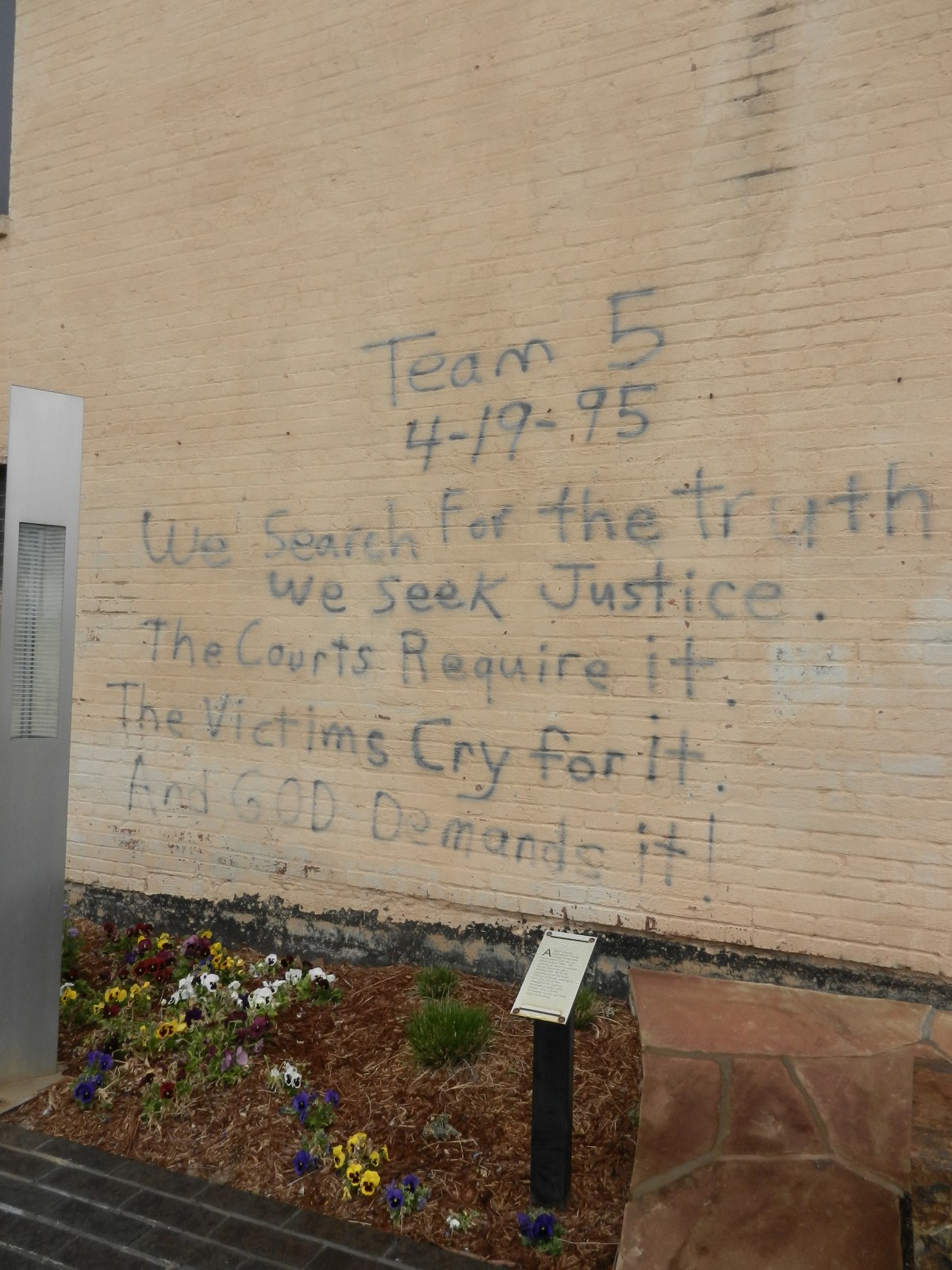
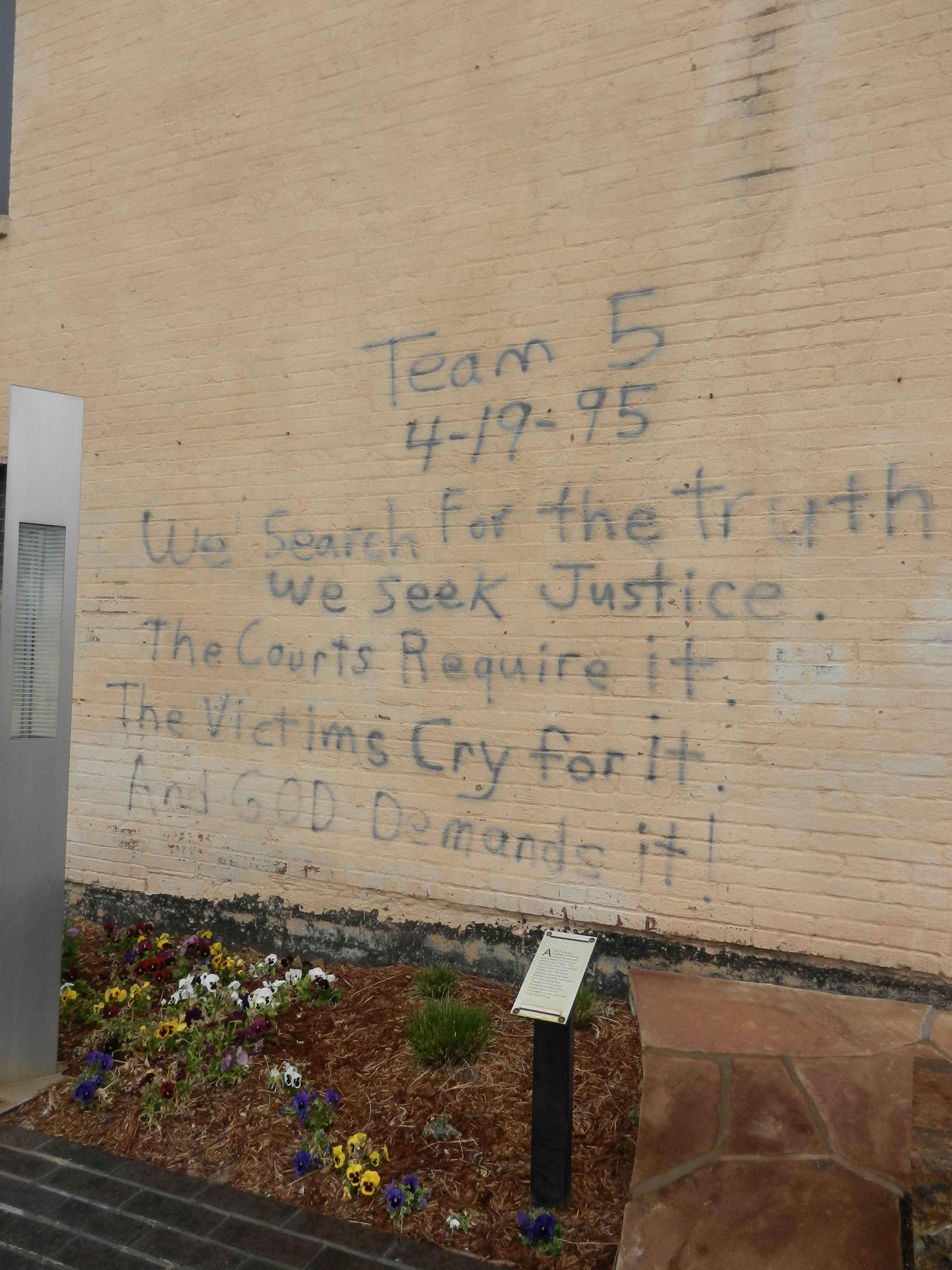
"We search for the Truth" written on a wall.
On the wall of the Journal Record Building which was also damaged by the blast; the museum now occupies part of it.
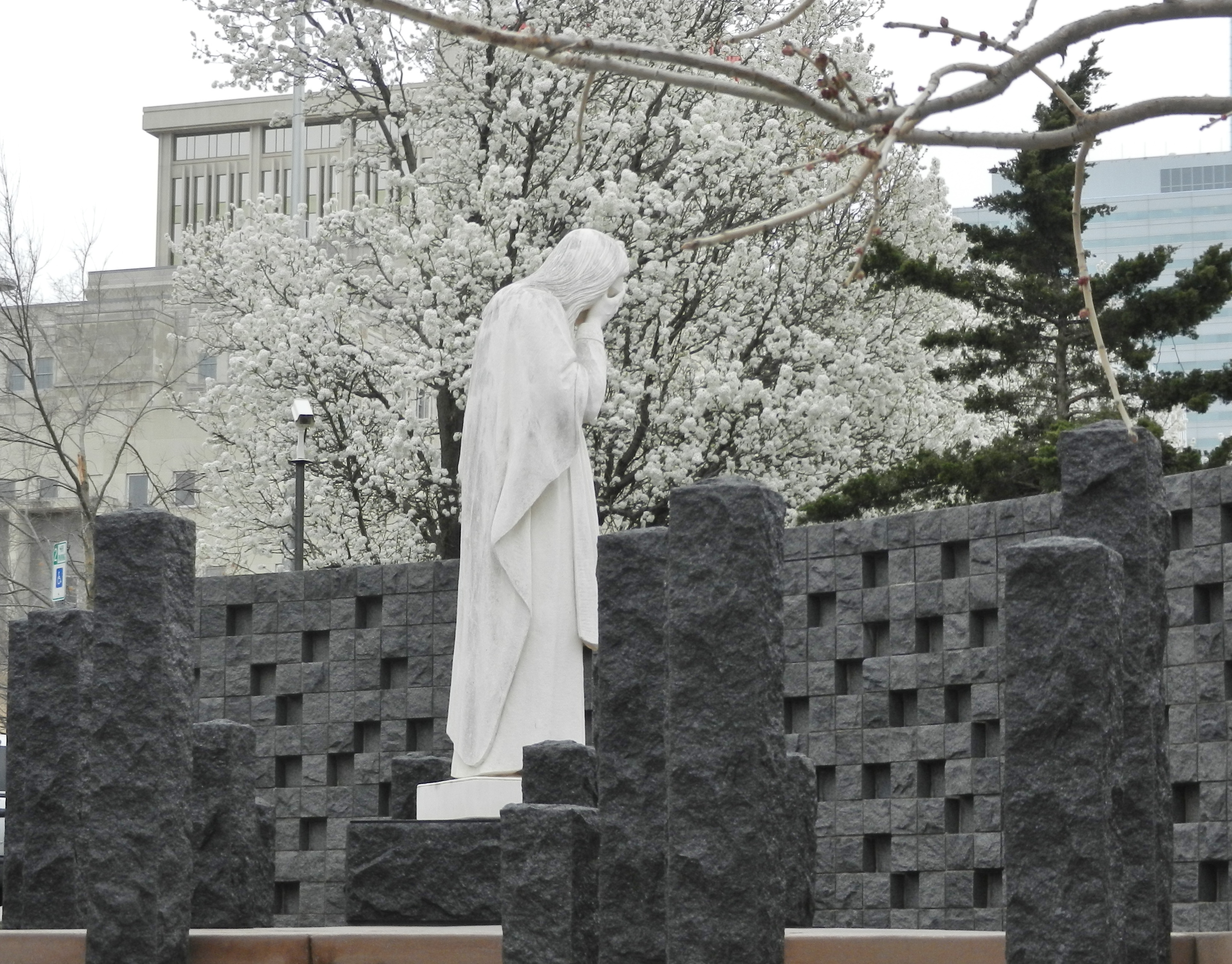
statue of Christ with head bowed
statue of a grieving Christ, in the courtyard of a church across the street from the memorial

The Oklahoma City National Memorial and Museum

The Oklahoma City National Memorial and Museum is privately funded. The memorial is free and open to the public. Admission is charged to tour the museum. According to the website-

“The Oklahoma City National Memorial Foundation is a private 501(c)(3) organization which owns and operates the Oklahoma City National Memorial & Museum. The Foundation is the caretaker of both the Outdoor Symbolic Memorial and the Memorial Museum. It does not receive any annual operating funds from the federal, state or local government. Museum admissions, store sales, the Memorial Marathon, private fundraising and earnings from an endowment allow the Memorial and Museum to be self-sustaining.”


exploring the HEART of remembering

Thank you for joining me to remember and honor those injured and killed in the Murrah Building and the heroes who rescued them.

                                               Dr. Aletha