Why Americans Are Fed Up with Health Insurers

In this post I share a report from a health news site on the anger towards the health insurance industry, highlighted by the murder of Brian Thompson, CEO of UnitedHealthcare. It traces historical resentment towards insurers. Despite dissatisfaction in the system, many Americans express overall satisfaction with their personal care, complicating calls for significant changes.

Like you, I was shocked and saddened by the brutal murder of a man on a street in Manhattan, singled out because he was CEO of a major health insurance company.

And like you, I have been frustrated and angered with the health insurance industry, both as a practicing physician and as a patient.

This article reviews the reasons behind frustration and anger and how they might or might not be addressed.

Rage Has Long Shadowed American Health Care. It’s Rarely Produced Big Change.

This article first appeared on KFF Health News and is republished here under a Creative Commons license.

written by Noam N. Levey, December 18, 2024

Among the biggest-grossing films in America in February 2002 were a war drama about American troops in Somalia (“Black Hawk Down”), an Arnold Schwarzenegger action movie (“Collateral Damage”), and a future Oscar winner about a brilliant mathematician struggling with schizophrenia (“A Beautiful Mind”).

But none of these films topped the box office that month. That title went to “John Q.,” a movie about health insurance.

Or, more precisely, a story about a desperate father — played by Denzel Washington — who takes a hospital emergency room hostage at gunpoint when his HMO refuses to cover a heart transplant for his young son.

John Q.’s violent quest for justice was, of course, fictional. And even in the film, no one ends up dead.

Tragically, that wasn’t the case on the streets of New York City on Dec. 4 when a gunman fatally shot Brian Thompson, CEO of health insurance giant UnitedHealthcare.

Why Americans hate their healthcare

But there was nothing new about the anger at health insurers that Thompson’s shooting unleashed online — and which suspect Luigi Mangione expressed in a document he allegedly wrote.

In fact, eruptions of public rage have shadowed the American health care system for decades.

In the late 1990s and early 2000s, as “John Q.” was hitting movie screens, Americans were revolting against HMOs, whose practice of denying care to plan members to pad their bottom lines made them public enemy No. 1.

Just a few years later, health insurers stoked new ire for rescinding coverage after people were diagnosed with expensive illnesses like cancer. More recently, insurers’ widening use of cumbersome prior authorization procedures that slow patients’ access to care has provoked yet another round of fury.

The cycle of outrage periodically turns on others in the health care industry as well. Exorbitant bills and aggressive collection tactics, such as garnishing patients’ wages, are sapping public trust in hospitals and other medical providers.

And drug companies — perennial poster children for greed and profiteering — have enraged Americans since at least the 1950s, when new “wonder drugs” like steroids were fueling a growing industry.

When Sen. Estes Kefauver, a Tennessee Democrat who had led an investigation of the Mafia, convened hearings in 1959 to probe high prescription prices, his committee received mountains of mail from Americans who reported being fleeced by drugmakers. One retired rail worker told of having to spend more than a third of his retirement income on medicines for himself and his wife.

What Americans want from healthcare

All this public outcry has occasionally sparked change. President Barack Obama and congressional Democrats leveraged anger at spiking insurance premiums in California to get the Affordable Care Act over the finish line in 2010, a landmark achievement that expanded health coverage to millions of Americans.

But more often, cycles of rage have been so much sound and fury, producing only modest reforms. In some cases, public anger has yielded more headaches for patients.

The HMO backlash in the late 1990s and early 2000s, for example, prompted employers — from whom about half of Americans get their health coverage — to embrace high-deductible health plans.

Many employers saw these plans as a way to hold down costs if they couldn’t limit patients’ choice of medical providers through HMOs. These deductibles, which can reach thousands of dollars a year, are driving tens of millions of Americans into debt.

To many on the left who have long argued for a single-payer, government-run health system, the obstacle to more meaningful relief has been the political power of the same industries — health insurers, drug companies, hospitals — that fuel patient anger.

These industries have indeed proven adept at resisting change that threatened their bottom lines. They’ve also benefited from a paradox in how Americans think about their health care.

Patients may get angry. They may even lose faith in the system. This year, public views of health care quality fell to the lowest point since Gallup began asking about it in 2001, with 44% of Americans rating quality as excellent or good, down from a high of 62%.

Yet more than 70% said their own health care is excellent or good.

There is much debate about what accounts for this paradox. Are Americans just grateful to have the health protections they do? Are they satisfied because most don’t have to use the health care system on a regular basis?

Do they simply like their doctor, in the way that voters routinely say they like their own member of Congress but hate Washington politicians? Or do they worry that no matter how frustrating the current system can be, any change risks making the situation worse?

The answer is probably a bit of all of this. Together, such sentiments represent a major challenge for those who hope the current wave of anger at health insurers will drive big improvements.

Will meaningful change happen?

Could that change? Maybe. These are volatile and unpredictable political times. And the pressure of big medical bills is real. Medical debt, in particular, is exacting a fearsome toll on millions of Americans, KFF Health News’ reporting has shown.

But to drive change, advocates looking to harness public anger at the health care industry probably need to rethink their favored solutions. Old ideas like “Medicare for All,” long cherished on the left, or a deregulated health care market, long championed by the right, haven’t swayed Americans so far, no matter how angry they’ve been.

I don’t know when we’ll see meaningful alternatives. One thing that’s almost certainly on the way: Hollywood’s spin on the death of a health insurance executive gunned down in Midtown Manhattan.

KFF Health News is a national newsroom that produces in-depth journalism about health issues and is one of the core operating programs at KFF—an independent source of health policy research, polling, and journalism. Learn more about KFF.

Subscribe to KFF Health News’ free Morning Briefing.

end note

I had forgotten about the movie John Q, but I remember it now. Denzel Washington’s convincing and sympathetic portrayal of a father trying to save his son’s life is moving. I’m going to watch it again (it’s on Amazon Prime and probably other venues; affiliate link).

Exploring the HEART of Health

I’d love for you to follow this blog. I share information and inspiration to help you transform challenges into opportunities for learning and growth.

Add your name to the subscribe box to be notified of new posts by email. Click the link to read the post and browse other content. It’s that simple. No spam.

I enjoy seeing who is new to Watercress Words. When you subscribe, I will visit your blog or website. Thanks and see you next time.

Medical stethoscope and heart on a textured background

Dr Aletha

Trump’s Key Health Appointments: HHS, FDA, CDC Leadership Changes

President-elect Trump has appointed key figures for health leadership, including Robert Kennedy Jr. as Secretary of Health and Human Services. Three physicians—Dr. Marty Makary for the FDA, Dr. Dave Weldon for the CDC, and Dr. Janette Nesheiwat as Surgeon General—were also nominated. However, their nominations faced changes and withdrawals.

updated May 25, 2025

President-elect Trump has been busy appointing people to his cabinet and other key leadership positions. He has chosen Robert Kennedy, Jr. to serve in his cabinet as Secretary of the Department of Health and Human Services. HHS is a vast department overseeing multiple areas of health and wellness with a $2.86 trillion budget for 2024.

I’m sharing an article by journalists Jennifer Shutt and Ariana Figueroa,
about three other appointees to key health positions.

Except for Kennedy, these appointees are physicians . I am not familiar with any of them. They appear to have well-established medical careers and solid credentials. I plan to explore their views more thoroughly after reading this article.

3 BRANCHES OF U.S. GOVERNMENT-legislative, executive, judicial
3 BRANCHES OF U.S. GOVERNMENT, FROM usa.gov, public domain

Trump unveils his lineup for FDA, CDC and surgeon general

Oklahoma Voice, November 25, 2024

WASHINGTON — President-elect Donald Trump will appoint three physicians for key government health roles.

Former Florida Congressman Dave Weldon will be tapped to lead the Centers for Disease Control and Prevention, Dr. Marty Makary will be nominated for commissioner of the Food and Drug Administration and Fox News medical contributor Dr. Janette Nesheiwat was put forward as the next Surgeon General.

All three positions require Senate confirmation.

Dr. Makary-Food and Drug Administration

The Food and Drug Administration is responsible for protecting the public health by ensuring the safety, efficacy, and security of human and veterinary drugs, biological products, and medical devices;

and by ensuring the safety of our nation’s food supply, cosmetics, and products that emit radiation.

FDA website

Trump wrote in his announcement for Makary that he would “work under the leadership of Robert F. Kennedy Jr. to, among other things, properly evaluate harmful chemicals poisoning our Nation’s food supply and drugs and biologics being given to our Nation’s youth so that we can finally address the Childhood Chronic Disease Epidemic.”

Makary is a surgeon at Johns Hopkins Hospital in Maryland. His biography says he “has published over 250 peer-reviewed scientific articles and has served on several editorial boards.”

“Dr. Makary served in leadership at the World Health Organization Patient Safety Program and has been elected to the National Academy of Medicine.

Clinically, Dr. Makary is the chief of Islet Transplant Surgery at Johns Hopkins. He received the Nobility in Science Award from the National Pancreas Foundation and has been a visiting professor at over 25 medical schools.”

Makary wrote an op-ed published by The Wall Street Journal in February 2021, sharing his prediction that the COVID-19 pandemic would mostly be over by April 2021.

“Some medical experts privately agreed with my prediction that there may be very little COVID-19 by April but suggested that I not talk publicly about herd immunity because people might become complacent and fail to take precautions or might decline the vaccine,” Makary wrote at the time.

“But scientists shouldn’t try to manipulate the public by hiding the truth. As we encourage everyone to get a vaccine, we also need to reopen schools and society to limit the damage of closures and prolonged isolation. Contingency planning for an open economy by April can deliver hope to those in despair and to those who have made large personal sacrifices.”

In prepared remarks to the House Select Subcommittee on the Covid Pandemic in May 2023, he wrote that

“Nothing speaks more to the intellectual dishonesty of public health leaders than their complete dismissal of natural immunity. They never talked about it.”

Trump wrote in his statement announcing Makary as his pick for FDA that he would “course-correct and refocus the Agency.”

Dr. Martin Adel Makary, was confirmed on March 25, 2025 by the U.S. Senate as the 27th Commissioner of Food and Drugs. In this role, Dr. Makary oversees the full breadth of the FDA portfolio and execution of the Federal Food, Drug, and Cosmetic Act and other applicable laws.Apr 8, 2025

Centers for Disease Control and Prevention (CDC) activated its Emergency Operations Center (EOC) to coordinate with the World Health Organization (WHO), federal, state and local public health partners, and clinicians in response to the coronavirus disease 2019 (COVID-19) outbreak. CDC is closely monitoring the situation and working 24/7 to provide updates.
Centers for Disease Control and Prevention (CDC) activated its Emergency Operations Center (EOC) to coordinate with the World Health Organization (WHO), federal, state and local public health partners, and clinicians in response to the coronavirus disease 2019 (COVID-19) outbreak. CDC is closely monitoring the situation and working 24/7 to provide updates
credit James Gathany, public domain

Dr. Weldon-Centers for Disease Control and Prevention

CDC works 24/7 to protect America from health, safety and security threats, both foreign and in the U.S. Whether diseases start at home or abroad, are chronic or acute, curable or preventable, human error or deliberate attack, CDC fights disease and supports communities and citizens to do the same.

CDC website

Weldon was instrumental in codifying into law the “Weldon Patent Ban,” which makes a permanent prohibition on patenting human embryos, something that Trump noted in his statement.

“Dave has successfully worked with the CDC to enact a ban on patents for human embryos,” Trump said in a statement.

In 2011, the ban was signed into law by former President Barack Obama in the America Invents Act, and made permanent after Weldon left Congress. His colleagues named it after him because of his advocacy on the issue.

“In addition to being a Medical Doctor for 40 years, and an Army Veteran, Dave has been a respected conservative leader on fiscal and social issues,” Trump said in a statement.

Weldon, 71, served in Congress from 1995 until 2009, when he retired. He is a former physician and if confirmed by the Senate, will now head a roughly $17 billion agency that is tasked with responding to emerging health threats.

update

President Trump withdrew Dr.Weldon’s nomination.

As of May 21, 2025, the director of the Centers for Disease Control and Prevention (CDC) is Susan Monarez, PhD. She was nominated by President Trump in March 2025 and confirmed by the Senate in April 2025. 

Dr. Neshwiwat-Surgeon General

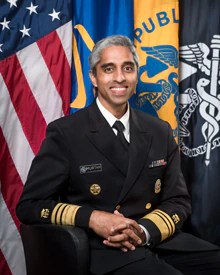
The U.S. Surgeon General is the Nation’s Doctor, providing Americans with the best scientific information available on how to improve their health and reduce the risk of illness and injury.

The Surgeon General oversees the U.S. Public Health Service (USPHS) Commissioned Corps, an elite group of over 6,000 uniformed officers who are public health professionals.

The USPHS mission is to protect, promote, and advance the health of our nation.

Trump wrote in his nomination for Nesheiwat that she “is a fierce advocate and strong communicator for preventive medicine and public health.”

“She is committed to ensuring that Americans have access to affordable, quality healthcare, and believes in empowering individuals to take charge of their health to live longer, healthier lives,” Trump added. 

According to her biography, Nesheiwat graduated from the University of Arkansas for Medical Sciences and is a double board-certified medical doctor practicing in New York.

She “brings a refreshingly no-nonsense attitude to the latest medical news, breaking down everything you need to know to keep you- and your family- healthy at all times,” (her website).

Nesheiwat is the medical director at CityMD, a network of urgent care centers in New York and New Jersey. 

update

As of May 25, 2025, Dr. Nesheiwat’s nomination has been withdrawn.

In her place is Dr.Casey Means. Dr. Means is a physician, health entrepreneur, and author who is known for her work on the “Make America Healthy Again” initiative. She has also been a vocal critic of traditional medicine and has promoted alternative health treatments. 

This story is republished under Creative Commons license CC BY-NC-ND 4.0.

Oklahoma Voice is part of States Newsroom, a nonprofit news network supported by grants and a coalition of donors as a 501c(3) public charity. Oklahoma Voice maintains editorial independence. Contact Editor Janelle Stecklein for questions: info@oklahomavoice.com. Follow Oklahoma Voice on Facebook and X.

Exploring the HEART of Health

I’d love for you to follow this blog. I share information and inspiration to help you transform challenges into opportunities for learning and growth.

Add your name to the subscribe box to be notified of new posts by email. Click the link to read the post and browse other content. It’s that simple. No spam.

I enjoy seeing who is new to Watercress Words. When you subscribe, I will visit your blog or website. Thanks and see you next time.

Dr. Aletha

Visit my online bookshop at Bookshop.org

Bookshop.org is an online bookstore that financially supports local, independent bookstores.

We believe bookstores are essential to a healthy culture and they are dedicated to the common good.

Bookshop.org donates a portion of every sale to independent bookstores.