Women Physicians Have Changed the Face of Medicine

As of September 2026, 55% of U.S. medical school graduates are women, predicting a future of at least half female physicians. The post highlights Dr. Elizabeth Blackwell, the first woman to graduate from a U.S. medical school in 1849, and other pioneering women like Dr. Rebecca Lee Crumpler and Dr. Virginia Apgar, who significantly contributed to medicine.

Updated September 4, 2026

By the most recent statistics published by KFF, 55% of United States medical school graduates are women. If that trend continues, eventually at least half of all practicing physicians in the United States will be women.

class reunion
My medical school graduating class at our 30th reunion; the original class was larger, 150 students, but the percentage of women was the same as in this photo. (I’m in the pink dress)

(This post contains commission earning affiliate links to help fund this blog)

Dr. Elizabeth Blackwell-Trailblazer and Reformer

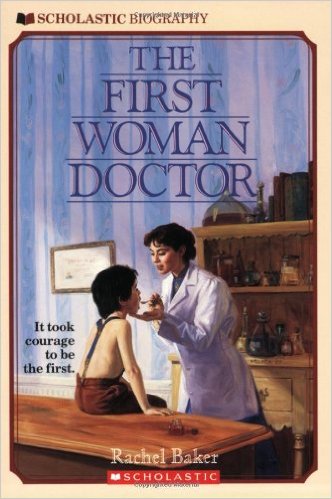
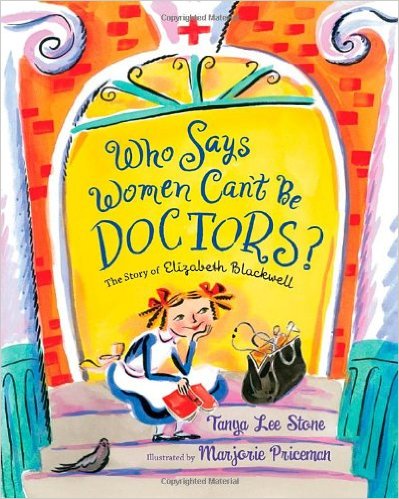
The first woman graduate of a United States medical school was born in Bristol, England in 1821. (Thank you, UK readers). Elizabeth Blackwell came to this country as a child and originally had no interest in medicine. But when a dying friend told her, “I would have been spared suffering if a woman had been my doctor”, she found her calling.

She was denied admission to multiple medical schools. The Geneva Medical College of New York submitted her application to the student body for a vote, and, as a joke, they voted to admit her. Well, the joke was on them as she enrolled, completed medical school and graduated in 1849.

Read more detail about How Elizabeth Blackwell became the first woman doctor in the United States

With her sister, Emily Blackwell , who also graduated from medical school, and a German physician, Marie Zakrzewska, they opened and ran the New York Infirmary for Women and Children in 1857.

Dr. Emily Blackwell  managed the Infirmary for 40 years. Dr. Marie Zakrzewska moved to Boston when she founded the New England Hospital for Women and Children, which trained women physicians and cared for the poor.

Due to failing health, Dr. Elizabeth Blackwell retired from practice in the 1870s.

The Physicians Mom Group (PMG) declared Dr. Blackwell’s birthday February 3 as National Women Physicians Day. This day celebrates all the significant contributions that women physicians make daily, none of which would have been possible without Elizabeth Blackwell.

Dr. Blackwell embodied the ABC characteristics of extraordinary women physicians-

Attentive, Brave, Compassionate

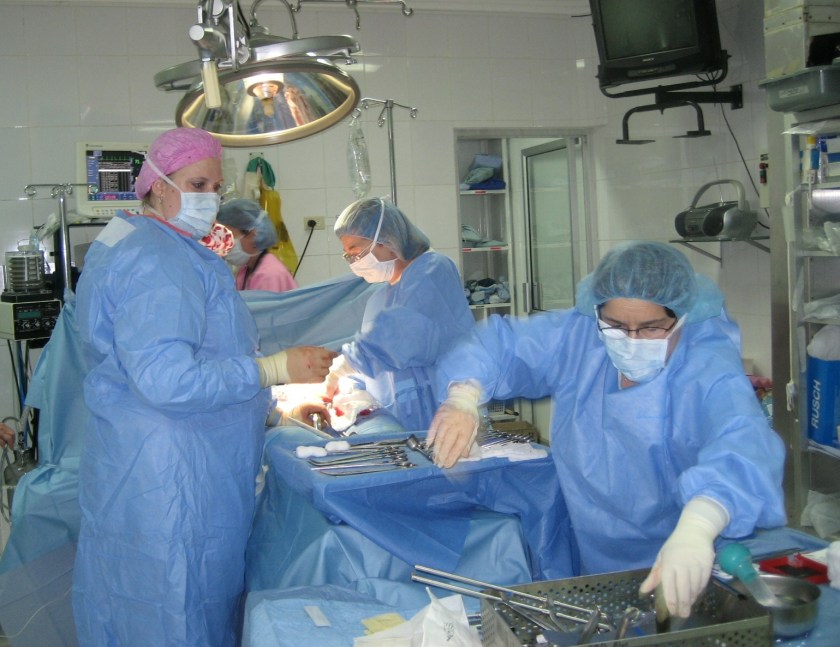
doctors in surgery
Women physicians providing free medical care in a mission hospital

Women physician members of CMDA providing medical care in Ecuador

Dr.Rebecca Lee Crumpler-Challenging Prejudice

Prior to founding her hospital, Dr.Zakrzewska served as professor at the New England Female Medical College. That school produced another notable women physician, Dr. Rebecca Lee Crumpler.

Dr. Crumpler graduated in 1864, becoming the first African-American woman to earn the M.D. in the United States.  After practicing in Boston, she moved to Virginia where she and other black physicians cared for freed slaves, who otherwise would have had no access to medical care.

In 1883 Dr. Crumpler wrote a book of medical advice for women and children, titled Book of Medical Discourses, one of the earliest medical publications by an African American.

Dr. Virginia Apgar-Teacher and Innovator

More recently, a woman physician’s work has impacted the lives of countless babies and their families. If you have had a baby, or been born within the past 60 years, you benefited from the work of Virginia Apgar, M.D.

She was neither an obstetrician or a pediatrician, but an anesthesiologist. As she observed deliveries of infants she proposed a scale to rate how well a newborn was adapting to life outside the mother.

crying baby
courtesy Pixabay

She considered 5 factors:

  1. heart rate
  2. respiratory (breathing) rate,
  3. muscle tone,
  4. reflexes, and
  5. color-pink (warm) or blue(cold)

And assigned each a score- 0, 1, or 2, at 1 minute of age, and again at 5 minutes.

So a newborn had a potential score as low as 0 and as high as 10.

The higher the score, referred to as the Apgar score, the more likely the baby was healthy and would do well. The lower the score meant the baby was in trouble and needed intensive medical attention.

After testing the rating scale over several years, doctors started using it routinely; so for the past 50-60 years, almost all babies have been “graded” with an Apgar score at birth. The Apgar score is used widely throughout the world.

Dr. Apgar, who played violin and cello in her college orchestra, was appointed the first full professor of medicine at Columbia University and was a director for the March of Dimes.

The National Library of Medicine profiles
these and many other women physicians at

 Changing the Face of Medicine –

celebrating America’s women physicians.

Exploring the HEART of health

I appreciate your time reading this post and invite you to follow this blog and me on social media.

I share information and inspiration to help you transform challenges into opportunities for learning and growth.

Add your name to the subscribe box to be notified of new posts by email. Click the link to read the post and browse other content. It’s that simple. No spam.

I enjoy seeing who is new to Watercress Words. When you subscribe, I will visit your blog or website. Thanks and see you next time.

Dr. Aletha

Doctor bloggers you need to know

Doctor bloggers-from food to freud to finances- they write about it; meet them here #WhiteCostPinkApron#FreudandFashion#DrLinda#2pedsinapod#alertandoriented

This post has several affiliate links, for your convenience and to support this blog. thank you!

In a previous series, I recommended several physician-written health blogs. In this post, I revisit some of those sites and introduce you to a few more I have discovered.

White Coat Pink Apron– good food for busy people

White Coat, Pink Apron web site

Dr. Diana, a Boston allergy specialist, blogs about food and shares recipes that are

“quick, easy, generally toddler-friendly, and sometimes Armenian, that anyone can make.”

In this post she shares two recipes for fish, salmon and cod, that adhere to the Paleo concept- no grains ,no beans, no dairy, and no sugar.

LEMON ROASTED SALMON AND KALE

dinner plate with fish, green beans and rice
illustration only, not actual recipe

Alert and Oriented.com

Dr. Michel Accad continues to blog about health care policies and economics, the doctor-patient relationship, and medical history, philosophy, and ethics.

According to Dr. Accad, human health is uninsurable; our bodies are not machines so cannot be evaluated objectively. He argues that health insurance is an income subsidy that helps sick people pay for medical care. In this thought provoking post, he explains why

Health insurance is not insurance

He has also published a book,

Moving Mountains: A Socratic Challenge to the Theory and Practice of Population Medicine

“This book will be of great interest to any reader concerned about healthcare. It will be of particular appeal to medical and public health students, as well as to healthcare professionals, including academics open to a challenging perspective.” Amazon

2 peds in a pod– (peds meaning pediatricians)

Practical pediatrics for parents on the go

Dr. Julie Kardos and Dr. Naline Lai practice pediatrics together and co-author this blog about infant, child, and adolescent  health issues. Including  “Essentials of Life- eat, sleep, drink, pee, poop, love”

Here they explain how to read food packaging labels accurately.

Deception in Packaging: Navigating the Nutrition Information Highway

Family of 4 sitting at a dining table.
Read food packing labels carefully to create nutritious meals.

Freud and Fashion

by psychiatrist Vania Manipod, DO

…BECAUSE IT’S STYLISH TO TALK ABOUT MENTAL HEALTH, ESPECIALLY HOW WE MAINTAIN OUR OWN.

sketch of clothes, shoes, pants
because it’s fashionable to talk about mental health

Dr. Manipod is active on several social media sites as well as her blog. As a psychiatrist, she focuses on mental health, for both patients and other physicians.

She offers Advice on How To Cope With Burnout,  advice she tries to take herself.

And in an interview post she discusses

how a New York woman fights the stigma of mental illness

Dr.Linda-

Just a family doctor speaking up from the frontlines of medicine

Dr. Linda Girgis, M.D. has published a  fiction book, Pandemic Rising

Pandemic RISING- a book

“The year is 2025 and there is a war of worlds in full swing: pathogens versus humanity. In the antibiotic-resistance era, people are living in a petri dish of toxic microbes. Unfortunately, humanity lost its most powerful weapons, antibiotics, when previous generations of doctors prescribed them indiscriminately. Additionally, the efficacy of vaccines waned when people refused these fortresses based on mythological beliefs. Across the globe, tens of thousands are dying while scientists and doctors race to find a cure and vaccine for these super-bugs. Will the medical community of scientists and doctors succeed in developing new ammunition? Or will humanity die off in the battle against the new world order of infectious diseases and pandemics?” Amazon

On her blog, she shares a poignant story about a terminally ill patient with an unshakable will to live in this post-

A Lesson a Patient Taught Me about Defying Death 

angel statue in a cemetery
photo source- Lightstock.com

Please visit at least one of these doctor bloggers, and leave them a comment. They will appreciate  the support and you may learn something new.

Previous posts about  doctor bloggers

10 health blogs you should read- a pair of docs and more

10 health blogs you should read- a family (doc) reunion

10 health blogs you should read- blogs by docs

10 health blogs you should read- 3 blogs by 3 docs