How to survive an active shooter

Shootings in the United States have resulted in numerous casualties across diverse demographics. An active shooter poses a significant threat, necessitating preparedness. The recommended response includes three strategies: RUN to safety, HIDE if escape is impossible, and FIGHT as a last resort. Prioritizing personal and collective safety is crucial.

updated April 18, 2025

It has been almost three years since I wrote this post, but the situation has not changed. Shootings still happen at schools, universities, homes, and businesses regularly. And our communities seem powerless to stop them.

Within the past year there have been shootings causing injuries and fatalities in a church, a grocery, an elementary school, a holiday celebration, and a medical office.

Among the dead are employees, customers, grade school age children, teachers, physicians, a receptionist, a patient and spouse.

Ethnically they were Caucasian, Black, Asian, and Hispanic. Men and women, boys and girls. And these are just the ones that I remember reading about.

What is an active shooter?

An active shooter is an individual actively engaged in killing or attempting to kill people in a populated area, 

Active Shooter Resources-FBI

We are all at risk. Although we trust the police to repond and rush to our aid, they won’t save everyone. We must know what to do to save ourselves and those around us.

Safety professionals offer these guidelines that we should learn and remember. In the panic of the moment it will be difficult to think through a rational plan to survive. Be prepared every day; that may be the day you need it.

How to survive

RUN

  1. Wherever you are, always know where the exits are, preferably ones you can easily and quickly reach; locate at least 2 if possible in case one becomes inaccessible.  
  2. Your first response to a threat should be escape; run to the nearest exit as soon as safely possible; go, even if others are not willing to go with you.
  3. Leave your stuff behind. Run with empty hands up and visible.
  4. Listen to police and answer their questions, try to give them accurate information about what is happening. Get away to a safe place and stay out of the responders’ way.

HIDE

  1. If escape is not possible, then hide, preferably in a locked room. Push heavy furniture against the door.
  2. Silence your cell phone when hiding. If you can, call 911 but don’t speak if you might be heard by the shooter; just leave the line open so the dispatcher can hear.

FIGHT

  1. If neither escape or hiding is possible, then engage the shooter, try to disable the person with the gun.
  2. If you’ve been hiding, make a plan to defend yourself. If you are with other people, work together.
  3. Aim to control the weapon; work together to disable the shooter with anything you can use as a weapon. Attack the shooter verbally, yelling.

A coordinated ambush can incapacitate the attacker. You are fighting for your life-don’t fight fair.

Active Shooter Resources-FBI

This video from the FBI website graphically shows what to do when confronted with an active shooter situation, then details each step. Well worth watching.

Exploring the HEART of health and safety

Funerals for two physician victims of shootings happened in my city. We need action to end this vicious cycle of violence that has become another pandemic.

Note that these guidelines should coordinate with protocols in place at your school, church, or workplace. Your primary goal should always be your own safety, and that of others if possible.

photos of 2 men and 2 women who were victims of a mass shooting

Exploring the HEART of Health

I’d love for you to follow this blog. I share information and inspiration to help you transform challenges into opportunities for learning and growth.

Add your name to the subscribe box to be notified of new posts by email. Click the link to read the post and browse other content. It’s that simple. No spam.

I enjoy seeing who is new to Watercress Words. When you subscribe, I will visit your blog or website. Thanks and see you next time.

Medical stethoscope and heart on a textured background

Dr Aletha

please help support this blog; consider starting with the cost of a beverage

Choose an amount

$5.00
$25.00
$50.00

Or whatever works for you

$

I welcome and appreciate your support, it helps fund this blog and share the HEART of health all over the world.

Excess funds are donated to health related charities.
Dr. Aletha

Donate

Food Without Fear- a book about food allergy

The book “Food Without Fear” by Dr. Ruchi Gupta addresses food allergies, intolerances, and sensitivities. It covers topics such as the food reaction spectrum, the top food allergens, and managing food allergies in different settings. It also provides comprehensive resources and explores using epinephrine in allergy emergencies. The book aims to help individuals understand and manage their relationship with food.

FOOD WITHOUT FEAR

Identify, Prevent, and Treat Food Allergies, Intolerances, and Sensitivities

by Ruchi Gupta, MD, MPH with Kristin Loberg

What do you know about food allergy?

Can you answer correctly these true/false questions about food allergy ?

  1. Food allergies and intolerances develop only in childhood.
  2. Food allergies are rare, occurring in only 1% of people in the US.
  3. Women should avoid eating peanuts in pregnancy.
  4. Food allergies are more common in cities than in rural areas.
  5. Reactions to food may change over one’s lifetime.

The answers are at the end of this post, but the answers to these and many other questions about food allergies are in Dr. Gupta’s comprehensive book about the “food reaction spectrum.”

If you or someone in your family has problems eating certain foods, or think you may, then this book, along with your personal physician, can help you sort out what, why, and how to deal with it.

Ruchi Gupta, M.D.- author

Dr. Ruchi Gupta, a board-certified pediatrician, developed a special interest in allergic disease because of her many patients with food allergies as well as her own child. She directs the Center for Food Allergy and Asthma Research in Chicago where she and her team study and treat patients with food allergies and intolerances.

Even if you don’t have food-related problems you may in the future as they can develop at any time in life. We all need food to live but sometimes food becomes our enemy, making us sick rather than well.

Understanding the “food reaction spectrum”

Dr. Gupta explains the “food reaction spectrum”. We may tend to call any adverse reaction to food ( or any other substance) an allergy but most are not.

An allergy activates the immune system, such as antibodies, which then trigger the symptoms. An intolerance (sometimes incorrectly called a sensitivity) does not involve the immune system. These are the only two recognized terms to describe adverse food reactions. Some foods can cause both allergy and intolerance.

Adverse food reactions may occur immediately or very soon after ingestion. These include

  • hives
  • swelling
  • itching
  • diarrhea

Other reactions can be delayed for hours or even days-

  • headache
  • rash
  • brain fog
  • bloating/gas

The Top 9 Food Allergens

Peanuts, tree nuts, milk, egg, shellfish, finfish, soy, wheat, sesame

Common offenders for food intolerances

Dairy, gluten, caffeine, salicylates, amines, sulfites, fructose, alcohol, monosodium glutamate-MSG, food dyes

Other conditions can be caused or aggravated by certain foods such as celiac disease, Crohn’s disease, and irritable bowel syndrome.

What you will learn in Food Without Fear

Dr. Gupta divided the book into two parts.

Part 1 helps you determine “Where are you on the Food Reaction Spectrum?”

Part 2 , Finding Food Freedom, explores understanding food manufacturing and processing by reading labels.

She touches on the role of our genome and microbiome (bacteria that live in our gut) and the role of inflammation in autoimmune disease.

Each chapter ends with a one-page summary of Fearless Facts.,

If you check this book out from a library, you may want to buy it for future reference as it has an exhaustive list of resources. I learned more about food allergy from this book and believe you will also.

LISTEN TO AN EXCERPT

Appendix A-The Parent’s Playbook

How to manage your child’s food allergies at school from infancy through college, including a plan for a food allergy emergency

Appendix B contains an extensive list of resources including

  • Medical organizations
  • Government websites
  • Hospitals and medical centers
  • Advocacy and support groups, foundations
  • Apps

Appendix C is a Sample Food Log; use this to record food intake and reactions

Dr. Gupta also wrote

The Food Allergy Experience .

“A source of reliable information and sound advice to help parents, caregivers, friends, relatives, health care providers, and teachers better understand how food allergies impact all aspects of a child’s life. Beyond statistics, The Food Allergy Experience provides tools for generating greater awareness including inspiring quotes, useful tips, and light-hearted comics, which put a positive and more realistic face on food allergies.

The Food Allergy Experience also provides a comprehensive resource section with information about relevant organizations, a handy checklist, and a sample letter to inform people about a child’s specific food allergy. As daunting as food allergies might seem, researchers are making breakthroughs every day as they search for cures.” source-Amazon

The answers to the questions are
  1. False
  2. False
  3. False
  4. True
  5. True

Did you answer correctly, or did you learn something new?

In this video, Dr. Gupta discusses using epinephrine in case of an allergy emergency.

exploring the HEART of food allergy

I’d love for you to follow this blog. I share information and inspiration to help you transform challenges into opportunities for learning and growth.

Add your name to the subscribe box to be notified of new posts by email. Click the link to read the post and browse other content. It’s that simple. No spam.

I enjoy seeing who is new to Watercress Words. When you subscribe, I will visit your blog or website. Thanks and see you next time.

Dr. Aletha
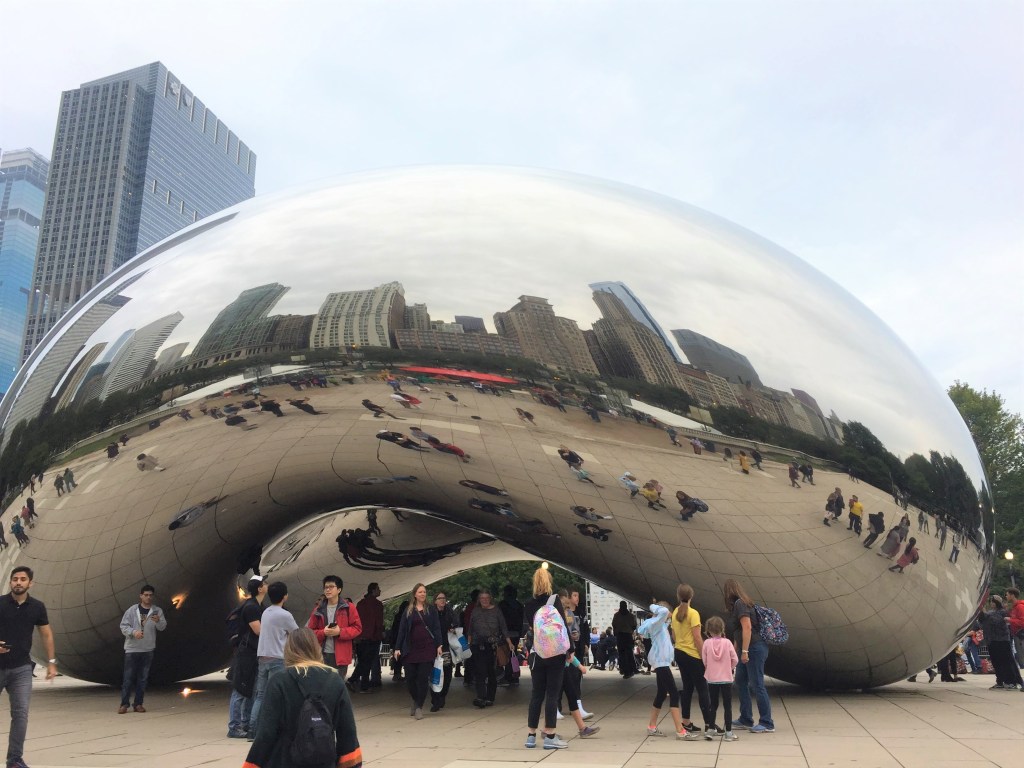
the Bean sculpture in Chicago
I took this photo of THE BEAN in downtown Chicago.

Affectionately called “The Bean,” Anish Kapoor’s Cloud Gate has become synonymous with the Chicago experience.