
Birds, just like people, can get the flu. Another name for bird flu is avian influenza. The viruses that cause bird flu normally only infect birds, including chickens, other poultry, and wild birds such as ducks. But sometimes the viruses can infect other animals and, in rare cases, people.
Bird flu is a subgroup of uncommon influenza A viruses that cause respiratory illness. These viruses are different from the influenza A viruses that cause seasonal flu.
People rarely get bird flu. When they do, it’s usually because they were in contact with infected birds or animals. Most bird flu infections in people have been caused by bird flu viruses called H5N1 and H7N9.
The H5N1 has been infecting birds and dairy cows in the United States for several months and has caused illness in several persons. Unfortunately, there has now been one confirmed death, as reported in this article by Greg LaRose.
Nation’s first ‘severe’ avian flu patient dies in Louisiana
by Greg LaRose, Oklahoma Voice
January 7, 2025
The Louisiana patient who contracted what officials said was the nation’s first “severe” case of avian influenza has died, the state health department said Monday.The person who contracted the H5N1 strain of highly pathogenic bird flu in southwest Louisiana had been hospitalized since mid-December.
The patient was over age 65 and had an underlying medical condition, according to the Louisiana Department of Health. They contracted the virus from exposure to a combination of a non-commercial backyard flock and wild birds, officials have said.
State health workers have conducted an “extensive public health investigation” and identified no additional H5N1 cases nor evidence of person-to-person transmission, LDH said in a news release. The patient has been the only human case of H5N1 reported in Louisiana.
There have been 66 human cases of avian influenza confirmed in a total of 10 states, according to the U.S. Centers for Disease Control and Prevention. California has the most cases with 37, followed by Washington with 11 and Colorado with 10.
H5N1 infects birds and poultry. It can be passed on to humans who work in close contact with sick and dead birds. Human cases reported in other states have mostly been linked to dairy workers where the virus has been spread to cattle.

The virus can cause severe breathing problems and death in birds. Similar, severe flu-like symptoms can appear in humans, though the risk for public health is considered generally low.
More than 12,400 persons in the U.S. who believed they were exposed to avian influenza have been monitored, according to the Centers for Disease Control and Prevention. Of that number, 560 have been tested for H5NI, resulting in confirmation of the 63 cases.
State health officials say the best way for families to protect themselves from H5N1 is to avoid sources of exposure, such as direct contact with wild birds or other animals that might be infected.
Experts also advise against eating uncooked or undercooked food. Cooking poultry, eggs and other animal products to the proper temperature helps lower the risk from any possible contaminants.
For anyone who works on poultry or dairy farms, health officials suggest talking to a health care provider about getting a seasonal flu vaccination. It will not prevent infection with avian influenza viruses, but it can reduce the risk of coinfection with avian and flu viruses.
Sick birds or animals should be reported to the U.S. Department of Agriculture at 1-866-536-7593 or the Louisiana Department of Agriculture and Forestry Diagnostic Lab at 318-927-3441. (In other states contact your local agriculture or wildlife department for instructions.)
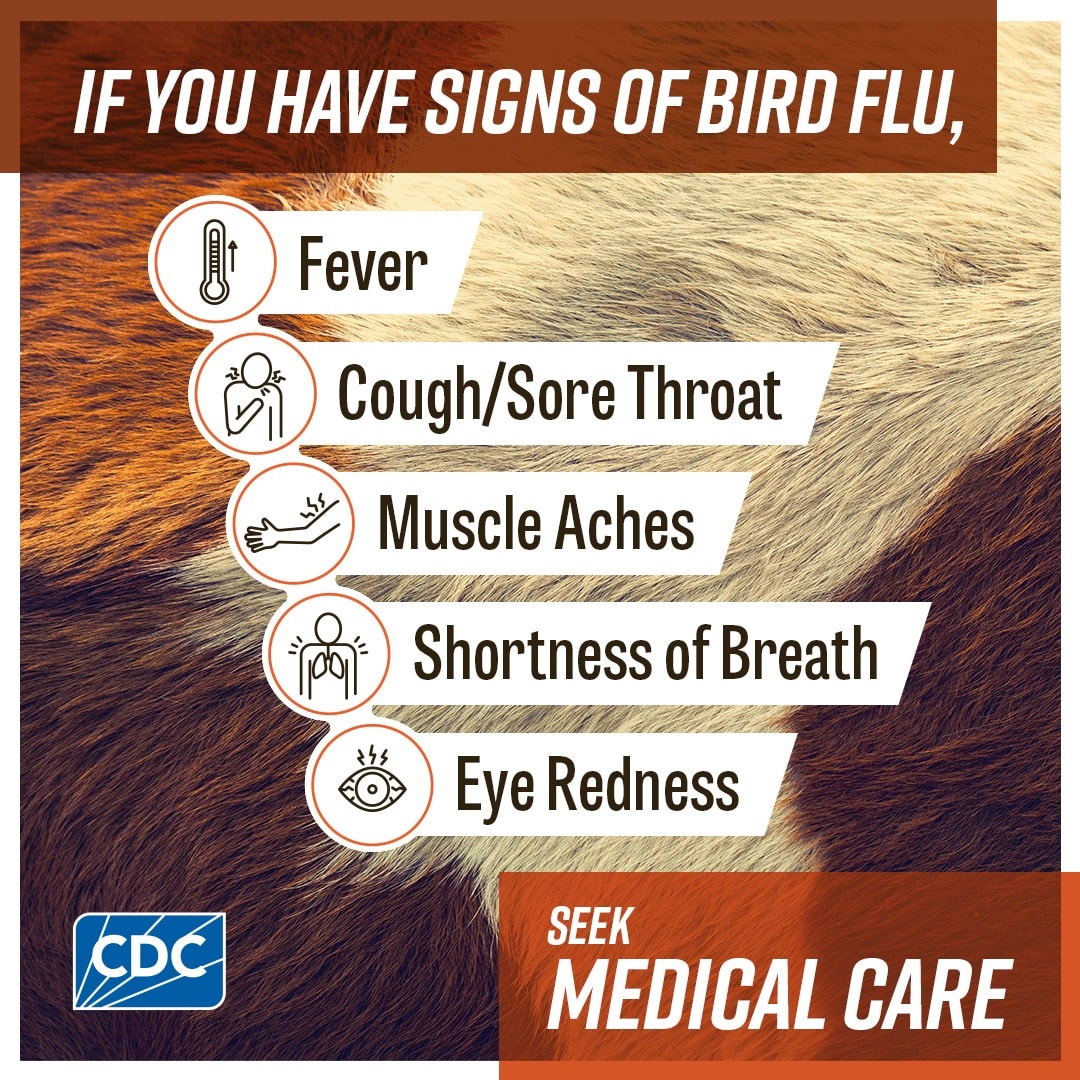
Persons who suspect they were exposed to sick or dead birds or other animals or work on a farm where avian influenza has been detected should watch for respiratory symptoms or conjunctivitis (pink eye).
If you develop such symptoms within 10 days after exposure to sick or dead animals, officials urge you to tell your health care provider you have been in contact with sick animals and are concerned about avian influenza. This information will help them give you appropriate advice on testing and treatment.
Anyone who suspects they are infected with avian flu should stay away from others while symptomatic.
This story is republished under Creative Commons license CC BY-NC-ND 4.0.
Oklahoma Voice is part of States Newsroom, a nonprofit news network supported by grants and a coalition of donors as a 501c(3) public charity. Oklahoma Voice maintains editorial independence. Contact Editor Janelle Stecklein for questions: info@oklahomavoice.com.
H5 Bird Flu: Current Situation from the CDC
While the current public health risk is low, CDC is watching the situation carefully and working with states to monitor people with animal exposures. There is no known person-to-person spread.
CDC is using its flu surveillance systems to monitor for H5 bird flu activity in people. The surveillance systems show no indicators of unusual influenza activity in people, including avian influenza A(H5).
Exploring the HEART of Health
I’d love for you to follow this blog. I share information and inspiration to help you transform challenges into opportunities for learning and growth.
Add your name to the subscribe box to be notified of new posts by email. Click the link to read the post and browse other content. It’s that simple. No spam.
I enjoy seeing who is new to Watercress Words. When you subscribe, I will visit your blog or website. Thanks and see you next time.
Dr. Aletha

Bird Flu Testing in Dairy: USDA’s New Strategy to Prevent Infection
Birds, just like people, can get the flu. Another name for bird flu is avian influenza. The viruses that cause bird flu normally only infect birds, including chickens, other poultry, and wild birds such as ducks. Bird flu can also infect many other animals, including dogs, cats, certain wild and zoo animals, and livestock such…
Keep reading


 watercress words by Dr Aletha