Learn how vaccines are made and how they work. Review the concept of herd immunity and why it’s so important. Recognize the reasons behind vaccine hesitancy and why it matters and may enable the spread of disease.
Recently I started listening to podcasts from AXIOS, an online news source, and have especially enjoyed their coverage of science in general and specifically the COVID-19 pandemic.
They produced 5 short videos explaining the coronavirus vaccine that I found informative and want to share with you . Each is less than 5 minutes so in about 25 minutes you will learn much about the vaccine and hopefully be more confident in your decision to get vaccinated yourself, as I and my husband have been.
Here’s the intro from AXIOS and a link to the page where you can access all 5 videos. Below I have given you an outline so you know a little of what is in each episode, but I do recommend you listen to all of them in order. They are even appropriate for kids.
(The cover photo is a scanning electron microscope image of SARS-CoV-2 (orange)—also known as 2019-nCoV, the virus that causes COVID-19—isolated from a patient in the U.S., emerging from the surface of cells (green) cultured in the lab. Credit: National Institute of Allergy and Infectious Diseases-Rocky Mountain Laboratories, NIH)
Vaccines have been used for centuries to fight disease but hesitancy and disinformation about them are spreading, jeopardizing the global fight against measles, COVID-19 and other diseases.
Axios’ science and health journalists will help you understand vaccines — how they work, how they’re tested and distributed, and where vaccine technology is headed.
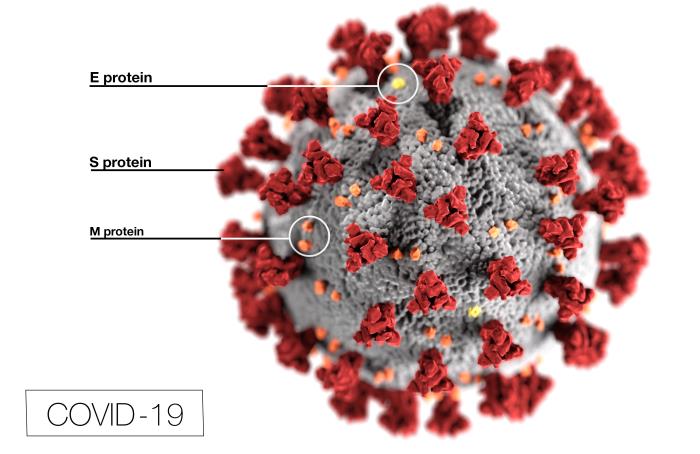
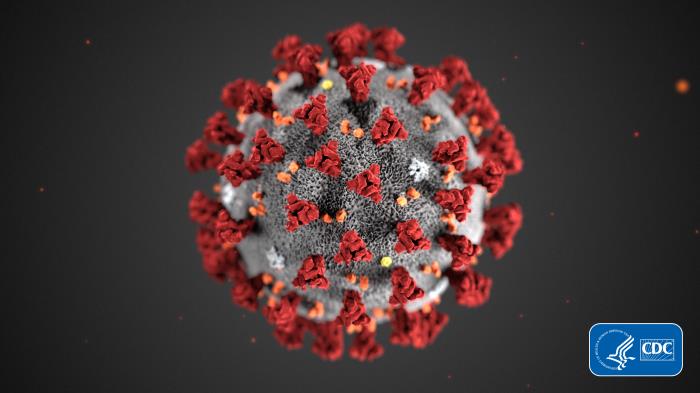
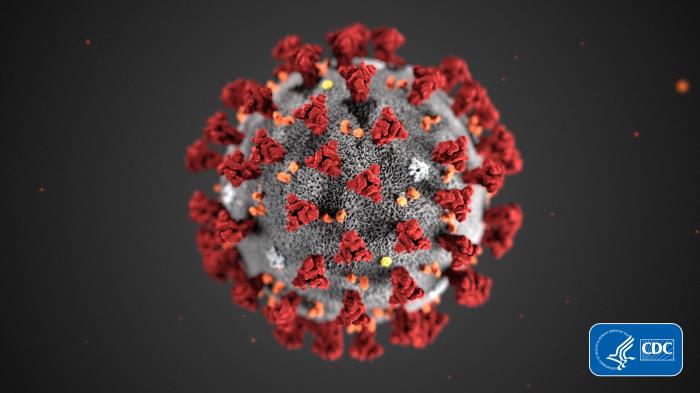
This illustration, created at the Centers for Disease Control and Prevention (CDC), reveals ultrastructural morphology exhibited by coronaviruses. Note the spikes that adorn the outer surface of the virus, which impart the look of a corona surrounding the virion, when viewed electron microscopically. In this view, the protein particles E, S, and M, also located on the outer surface of the particle, have all been labeled as well. A novel coronavirus, named Severe Acute Respiratory Syndrome coronavirus 2 (SARS-CoV-2), was identified as the cause of an outbreak of respiratory illness first detected in Wuhan, China in 2019. The illness caused by this virus has been named coronavirus disease 2019 (COVID-19). CDC/ Alissa Eckert, MS; Dan Higgins, MAMS, public domain
1. Vaccine basics
Learn how vaccines are made and how they work. Understand the immune system-T cells and antibodies.
Review the concept of herd immunity and why it’s so important.
These patients’ samples were to be tested for SARS-CoV-2 antibodies, using the Centers for Disease Control and Prevention (CDC) serologic test. CDC/ James Gathany, PUBLIC DOMAIN
2. Study and testing of vaccines
Find out why the research and development of vaccines costs $100 of millions. See the 3 phases of the process and why this one progressed faster than ever before.
President Joe Biden visited NIH on February 11, 2020, where he met with leading researchers at the Vaccine Research Center to learn more about the groundbreaking fundamental research that enabled the development of the Moderna and Pfizer COVID-19 vaccines.Credit: NIH/Chiachi Chang; PUBLIC DOMAIN
3. Distribution of vaccines
Understand why vaccine distribution differs from other drugs-including the manufacturing, selling, buying, and transporting.
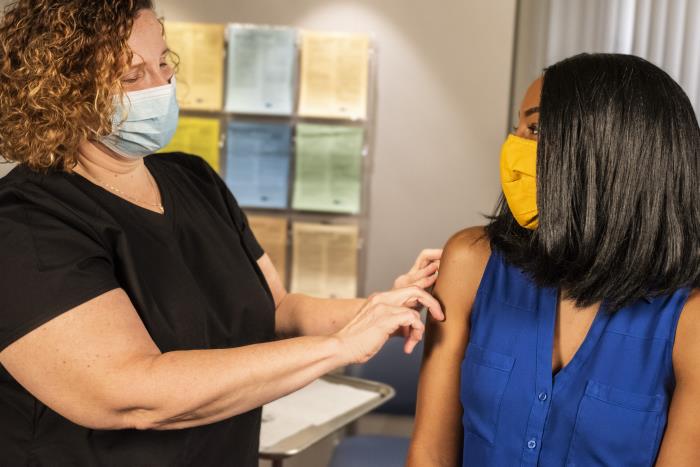
In this 2020 photograph, captured inside a clinical setting, a health care provider places a bandage on the injection site of a patient, who just received an influenza vaccine. The best way to prevent seasonal flu is to get vaccinated every year. Centers for Disease Control and Prevention (CDC) recommends everyone 6-months of age and older get a flu vaccine every season. CDC/ Robert Denty, public domain
4. Misinformation about vaccines
Recognize the reasons behind vaccine hesitancy and why it matters and may enable the spread of disease.
5. Next generation vaccines
Explore how scientists are using the power of genetics to create new and better vaccines. Appreciate why vaccines can change our approach to disease prevention.
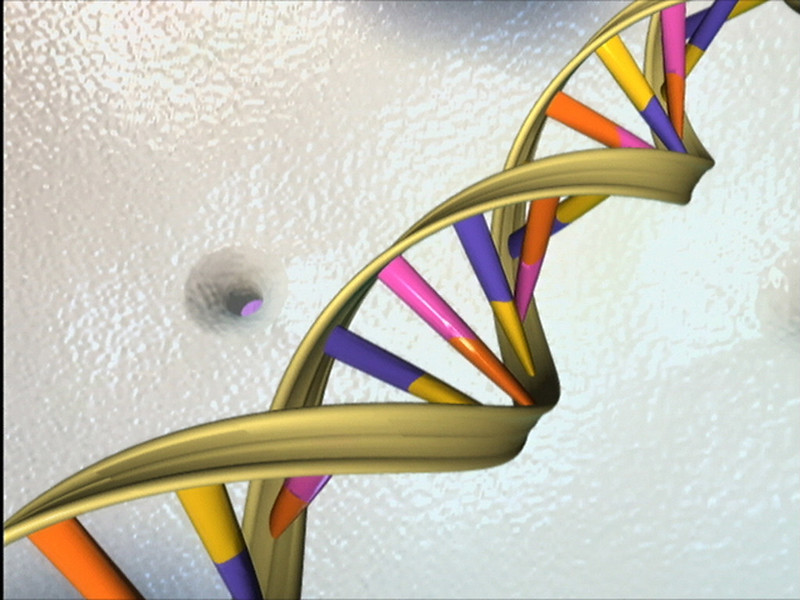
DNA Double Helix
Credit: National Human Genome Research Institute, National Institutes of Health. Please link to www.genome.gov when possible. PUBLIC DOMAIN
Exploring the HEART of ending the COVID-19 pandemic
Dr. Aletha
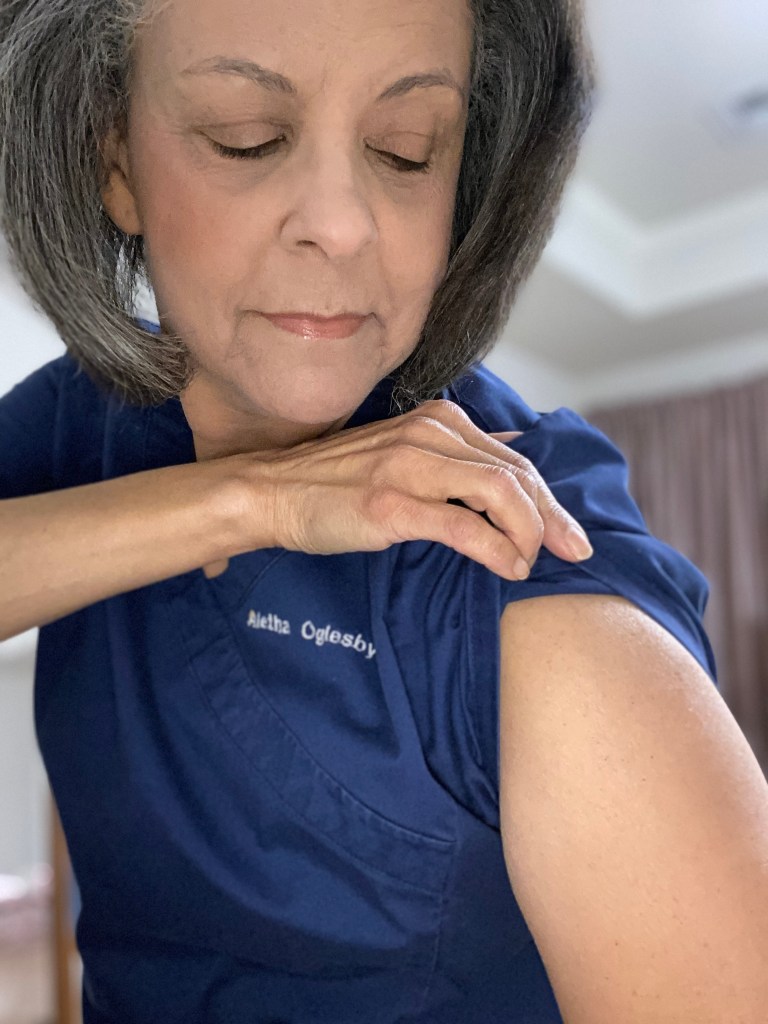
Three days after my first vaccination the soreness in my arm was almost gone, and I had no redness or swelling. After the second shot, minimal soreness. No other side effects to report. I feel fortunate.
Use these links to share the heart of health wherever you connect.
In his 2023 State of the Union Address, President Joe Biden highlighted significant progress in fighting the pandemic. His approach emphasized vaccine accessibility, minimizing spread, safely reopening business and schools, and srotecting the most vulnerable.
update June 30, 2026
On March 11,2021 President Biden addressed the country about the current progress of ending the COVID-19 pandemic. He said
I carry a card in my pocket with the number of Americans who have died from COVID to date. It’s on the back of my schedule. As of now, the total deaths in America: 527,726.
He announced the country will have enough vaccine for every adult to be vaccinated by the end of May 2021.
Concerning current vaccination progress, we have vaccinated 65% of people over age 65 and 70% of people over age 70. About schools, he said
with the passage of the American Rescue Plan — I thank the House and Senate for passing it — and my…. plan to vaccinate teachers and school staff….. we can accelerate the massive, nationwide effort to reopen our schools safely and meet my goal… of opening the majority of K-8 schools in my first 100 days in office. This is going to be the number one priority of my new Secretary of Education, Miguel Cardona.
In his 2023 State of the Union Address, President Joe Biden said,
let’s recognize how far we came in the fight against the pandemic itself.
While the virus is not gone, thanks to the resilience of the American people and the ingenuity of medicine, we’ve broken the COVID grip on us.
COVID deaths are down by 90 percent. We’ve saved millions of lives and opened up our country — we opened our country back up.
And soon, we’ll end the public health emergency.
But we will remember the toll and pain that will never go away for so many. More than 1 million Americans have lost their lives to COVID.
Families grieving. Children orphaned. Empty chairs at the dining room table.
We remember them, and we remain vigilant.
Thanks to usnews.com for publishing the complete transcript of his speech at this link.
(This report was available at whitehouse.gov but is no longer active.)
President Biden, Vice President Harris, and their science and healthcare teams developed a plan with 7 goals to end the pandemic and prevent others. . Here is a list of the 7 goals with a few of the points of each goal.
1. Restore trust with the American people.
establishes a federal COVID-19 response team to coordinate efforts
regular public briefings led by science experts
track and make data available to the public by the CDC
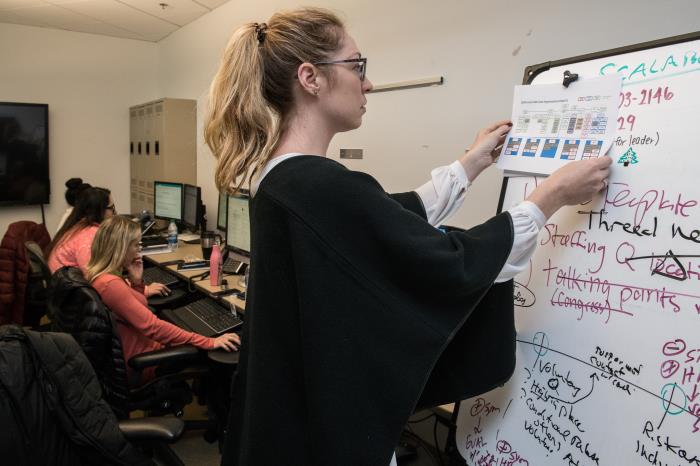
Centers for Disease Control and Prevention (CDC) activated its Emergency Operations Center (EOC) to coordinate with the World Health Organization (WHO), federal, state and local public health partners, and clinicians in response to the coronavirus disease 2019 (COVID-19) outbreak. CDC is closely monitoring the situation and working 24/7 to provide updates credit James Gathany, public domain
2.Mount a safe, effective, and comprehensive vaccination campaign.
increase the production of vaccines
give states clearer projections on vaccine availability
partner with states to create more vaccine centers
launch a national campaign to educate and encourage Americans on vaccine
3. Mitigate spread through expanding masking, testing, data, treatments,health care workforce, and clear public health standards.
asking Americans to wear masks for 100 days (note-this adds to any state or local recommendations or mandates on mask use)
require masks on public transportation
the CDC develop guidelines to help schools and businesses to reopen
create programs to develop new treatments for COVID-19
Mask use required on airplanes, trains, and other public transportation
4.Immediately expand emergency relief and exercise the Defence Production Act.
increase emergency funding to the states for pandemic costs, including for PPE and use of National Guard
invoke the Defense Production Act to increase the supply of PPE, and testing and vaccination supplies
5. Safely reopen schools, businesses, and travel while protecting workers.
develop a national strategy to reopen most schools within 100 days
federal agencies to issue updated guidance on protection for workers
asks Congress to provide financial aid to schools, universities, and daycares (cost in the billions)
6. Protect those most at risk and advance equity, including across racial, ethnic and rural/urban lines.
establishes an equity task force to address disparities based on race, ethnicity, and geography
create a U.S. Public Health Workforce to help with testing and vaccinations in their communities
7. Restore U.S. leadership globally and build better preparedness for future threats.
rejoin the World Health Organization
increase humanitarian aid and support efforts to fight COVID-19 around the world
asks for Congressional support to establish a national center to prepare for future biological threats
photo from the Lightstock collection (affiliate link)
Life After the Pandemic
Did you expect to live during a pandemic? Probably not, I know I didn’t expect to not only live but practice medicine while a contagious virus spread through the world.
In what ways was your daily life impacted by the pandemic and how did you cope with those challenges?
What did you learn that might help you in a future medical crisis, either public or private?
If you or your family have persistent health challenges due to COVID, are you finding sources for help and support? What else might help you toward regaining health and wholeness?
Resources for Dealing with Post-COVID Health Issues
Thank you for reading this post. Please follow this blog and me on social media.
I share information and inspiration to help you transform challenges into opportunities for learning and growth.
Add your name to the subscribe box to be notified of new posts by email. Click the link to read the post and browse other content. It’s that simple. No spam.
I enjoy seeing who is new to Watercress Words. When you subscribe, I will visit your blog or website. Thanks and see you next time.