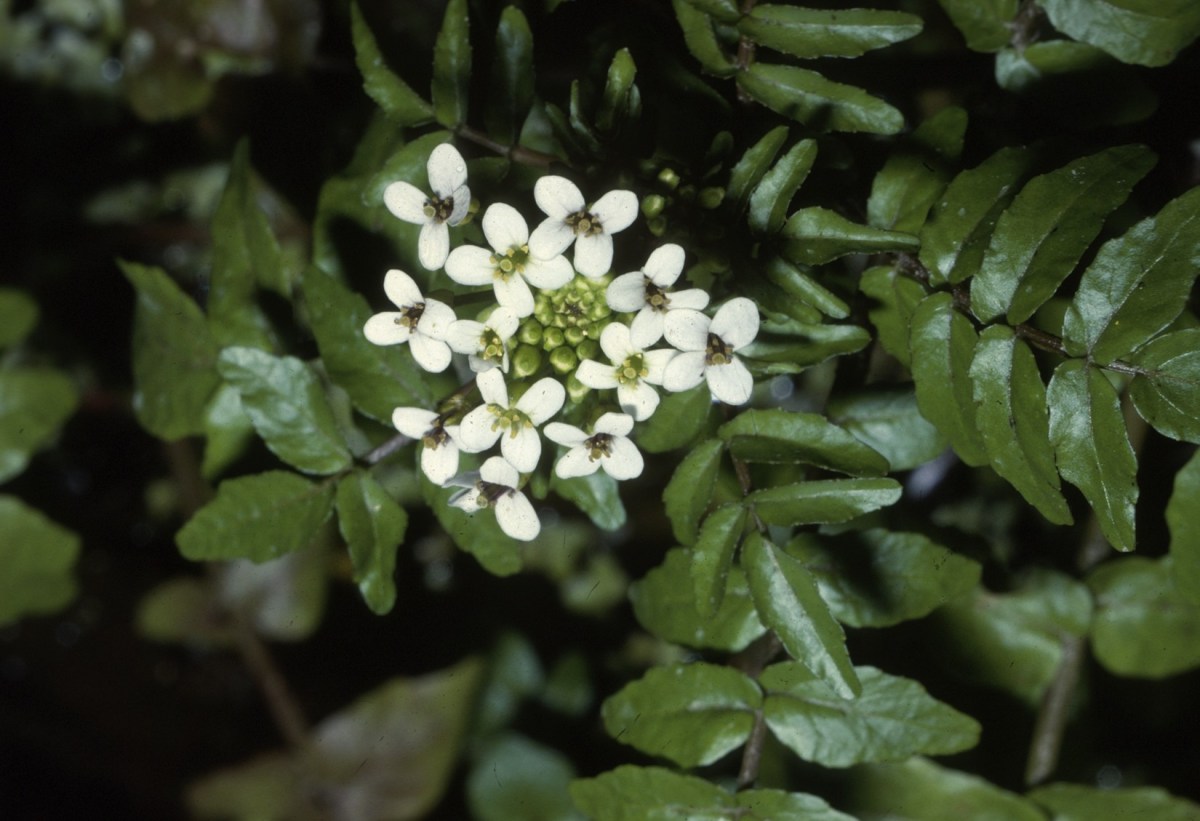
Despite this blog’s name, you may be surprised to learn it isn’t about watercress, at least not exactly. I didn’t anticipate anyone would think it is nor did I plan to write about watercress other than to explain the name. (Which I will come back to later.)
But I’ve discovered that people find this blog by searching for watercress information (something else I didn’t anticipate) and ask questions about watercress. When I started researching watercress, I knew it is worth sharing about.
This post starts a series about watercress; I’ll post every few weeks so please follow and explore the HEART of watercress with me; and I’ll still write about other topics. Why not sign up now?
So, what is watercress?
First,botanists call it Nasturtium officinale, although also known by others-Rorippa nasturtium-aquaticum (L.) Hayek, Nasturtium nasturtium-aquaticum, (L.) H. Karst., Sisymbrium nasturtium-aquaticum L., Nasturtium officinale var. siifolium (Rchb.) W.D.J. Koch, .
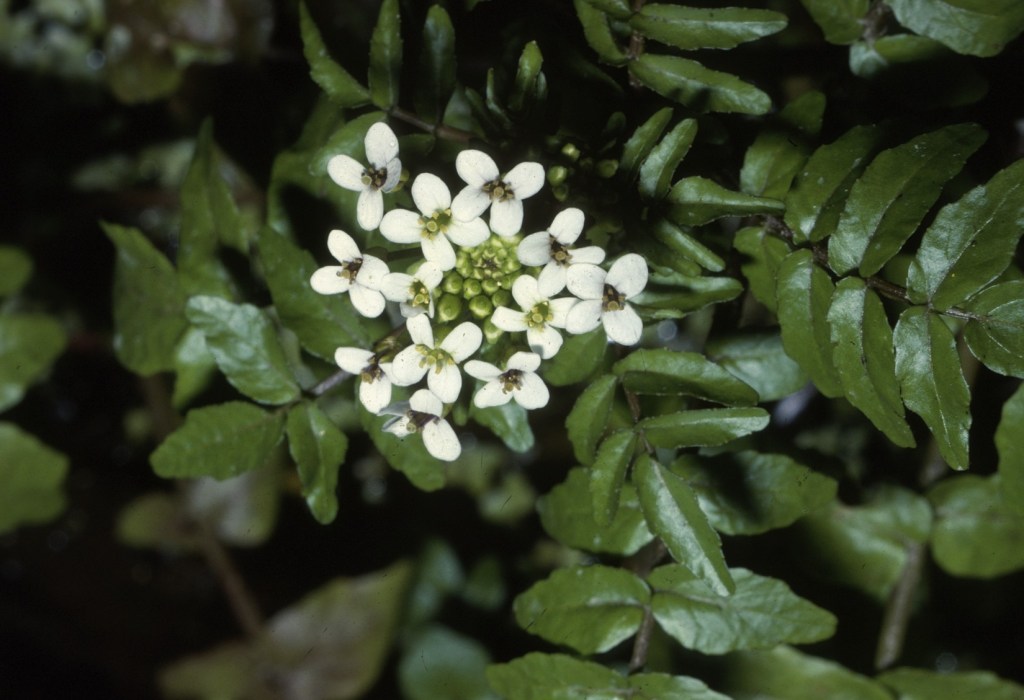
. Northeast National Technical Center, Chester.
To a horticulturist, watercress is
- a flowering plant
- an aquatic, water-loving plant
- a green perennial plant
- native to Eurasia and Asia
- a plant introduced to North and South America, Australia,New Zealand, Europe, and South Africa
- considered “noxious and invasive” through most of the United States
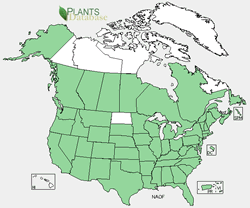
Nasturtium officinale range map. USDA PLANTS Database.
To the taxonomist, watercress is
| KINGDOM | Plant |
| SUBKINGDOM | Vascular plant |
| SUPERDIVISION | Seed plant |
| DIVISION | Flowering plant |
| CLASS | Dicotyledon |
| SUBCLASS | Dilleniindae |
| ORDER | Capparales |
| FAMILY | Cruciferae-Mustard |
| GENUS | Nasturtium -yellowcress |
| SPECIES | Nasturtium officinale |
To a chemist, watercress
creates “the myrosinase-glucosinolate bomb.”
The pungent, spicy, and/or peppery taste of members of the Mustard family is due to a defense system known as the glucosinolate-myrosinase system.
When the plants’ tissue is damaged, two compounds within the plant tissues, glucosinolate and myrosinase, break down and produce several bioactive mustard oils . This arrangement is thought to be active against herbivores, fungi, viral and bacterial pathogens, nematodes, and even other plants.
Thus, the distinctive flavors of many members of the Mustard family are due to the types and amounts of hydrolyzed glucosinolate products released.
To a wildlife biologist, watercress
serves as a food source for ducks, muskrats, and deer who eat the leaves of watercress, and the plants serve as shelter for small aquatic life. Yellowed leaves of watercress are consumed by aquatic herbivores such as caddis flies, amphipods, and snails due to the low levels of glucosinolate and myrosinase in the leaf tissues.

Britton, N.L., and A. Brown. 1913. An illustrated flora of the northern United States, Canada and the British Possessions. 3 vols.
Charles Scribner’s Sons, New York. Vol. 2: 162. Provided by Kentucky Native Plant Society. Scanned by Omnitek Inc
To a microbiologist, watercress
collected from the wild should be washed carefully prior to eating to avoid accidental ingestion of microscopic parasites, such as the protozoan Giardia, that may be present in untreated water .
To a nutritionist, watercress
contains significant amounts of iron, calcium and folic acid, in addition to vitamins A and C. Many health benefits are attributed to eating watercress , such as that it acts as a mild stimulant, a source of phytochemicals and antioxidants, a diuretic, an expectorant, and a digestive aid. It may also have cancer-suppressing properties, and is widely believed to help defend against lung cancer.
And to you , watercress is …..?
exploring the HEART of watercress
Thanks for joining me for this overview of the many facets of watercress. In future posts I will explore the nutritional and medicinal uses of watercress, including how to use it as a tasty and healthy food. In the meantime, use the references I’ve listed below to explore watercress until then.
Thanks for joining me, I’m glad you’re here.
Dr. Aletha Cress Oglesby
So, obviously this blog is named water-cress, because it’s part of my name. And because as I briefly mentioned above, watercress has health benefits-and so does this blog! So, it seems to fit. What do you think?
I appreciate the use of photos and graphics available in the public domain from The Plants Database of the United States Department of Agriculture, the USDA.
What is the USDA ?
According the the website, the United States Department of Agriculture focusses on food, agriculture, natural resources, rural development, nutrition, and related issues.
An act of Congress established it in 1962 and President Abraham Lincoln signed it into law, calling it “The People’s Department”, because then half of all Americans lived on farms.
But through our work on food, agriculture, economic development, science, natural resource conservation and a host of issues, USDA still fulfills Lincoln’s vision – touching the lives of every American, every day.
USDA website
President Biden appointed Thomas J. Vilsack Secretary of Agriculture, a job he formerly held under President Obama. Prior to his service as Secretary , Mr. Vilsack served on the board fof Feeding America, a nationwide network of more than 200 food banks that feed more than 46 million people through food pantries, soup kitchens, shelters, and other community-based agencies.

Watercress: Nutrition and Recipes from The Book of Greens
This article explores the health benefits and culinary uses of watercress, a nutrient-rich green, alongside the cookbook “The Book of Greens” by Jenn Louis and Kathleen Squires. It highlights various greens, recipes, and cooking techniques while emphasizing the nutritional value and historical significance of watercress.
Keep reading





 watercress words by Dr Aletha