Keith Wheeler- a Cross and a Collarbone

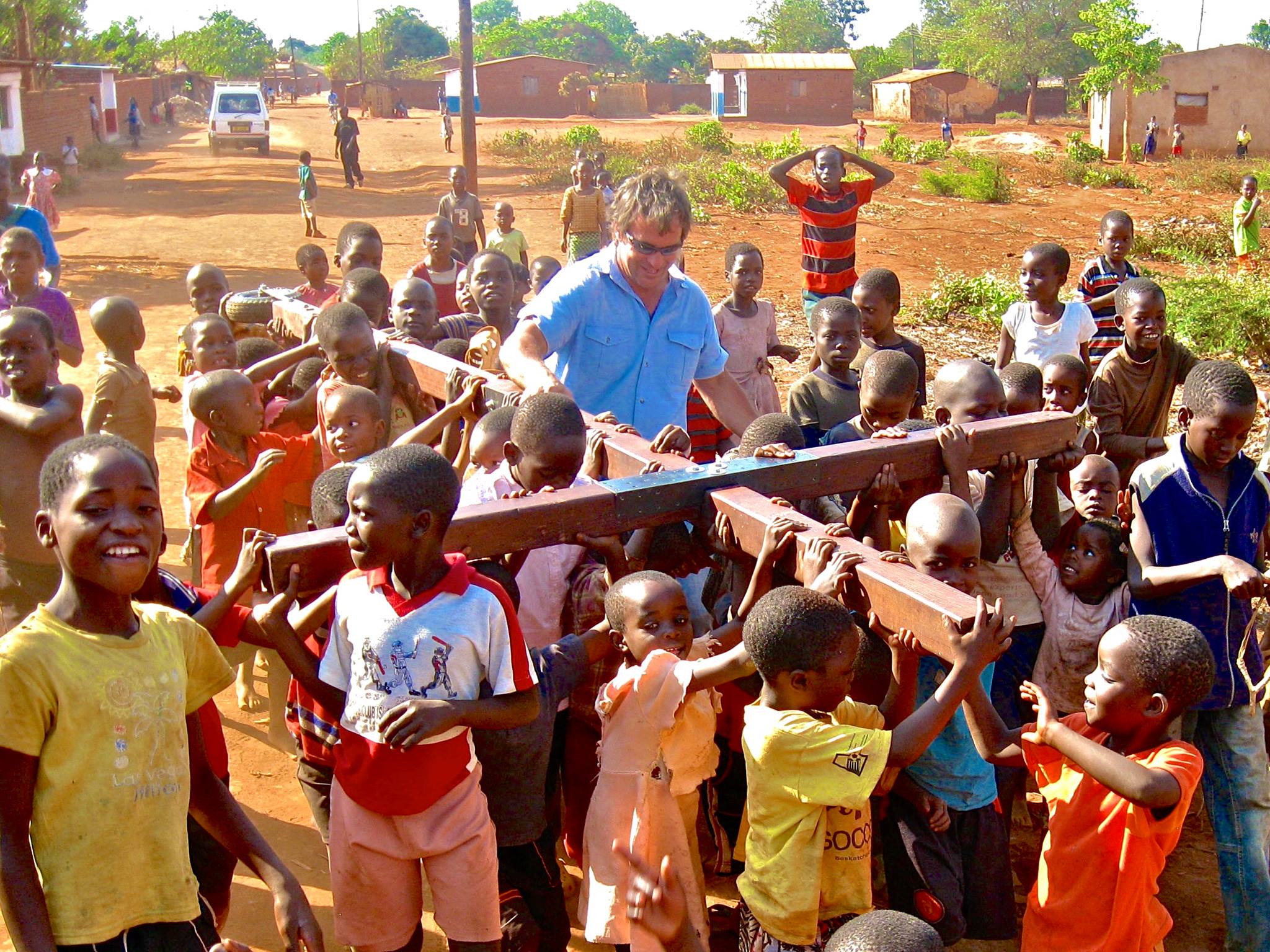
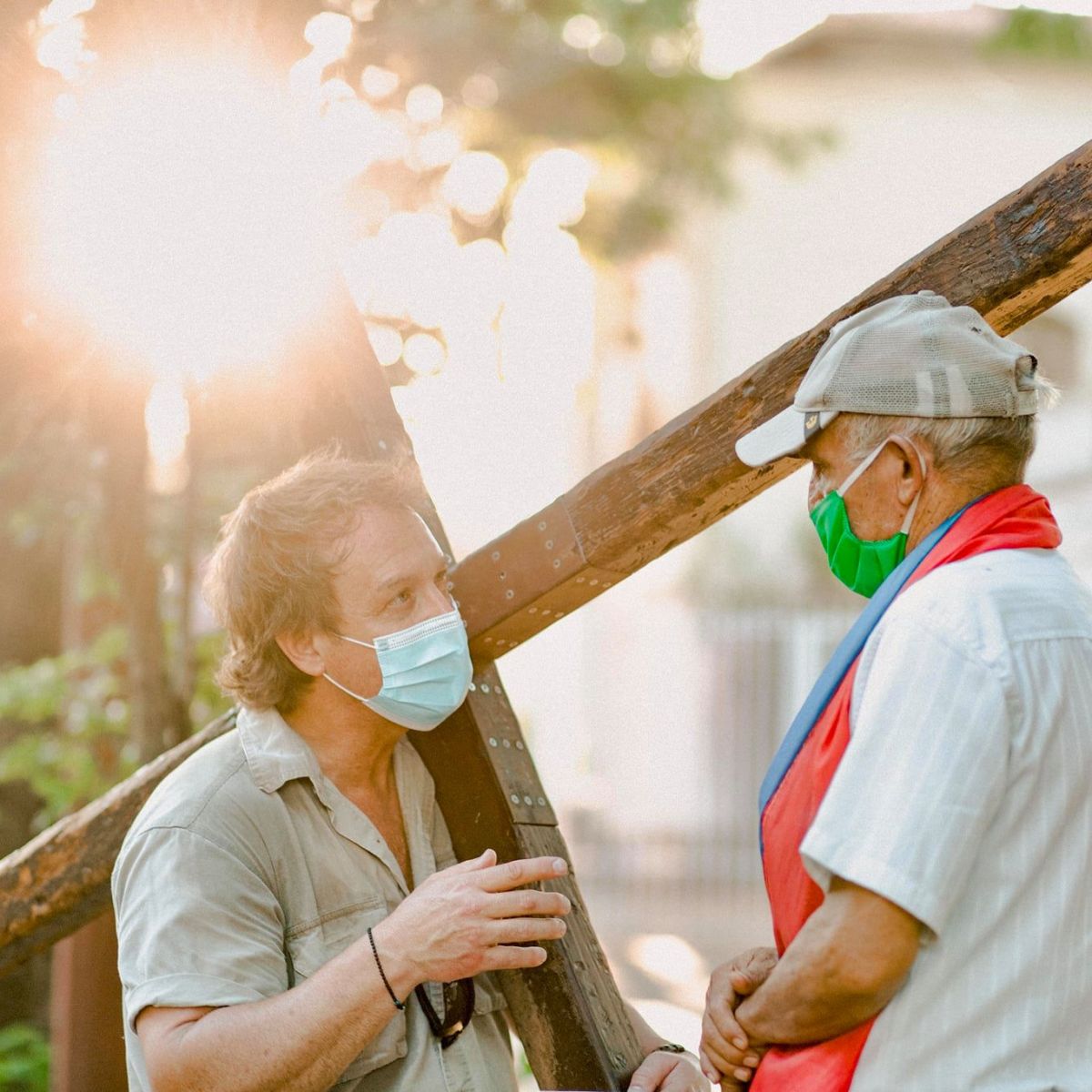
Keith walks around doing what he simply calls “serving God, loving people.” He started in Tulsa, Oklahoma on Good Friday 1985 and thought it was going to be a one-time event. But he felt God wanted him to continue carrying the cross around the surrounding towns, then the rest of Oklahoma, and on into surrounding states. And then he just kept walking- and carrying the cross.

The clavicles are long thin bones that lie at the base of the neck, sitting just beneath the collars of a shirt, thus the common name, collarbones. They connect the sternum or breastbone to the shoulders on either side, thus creating a T or alternately a CROSS on the front of the chest.

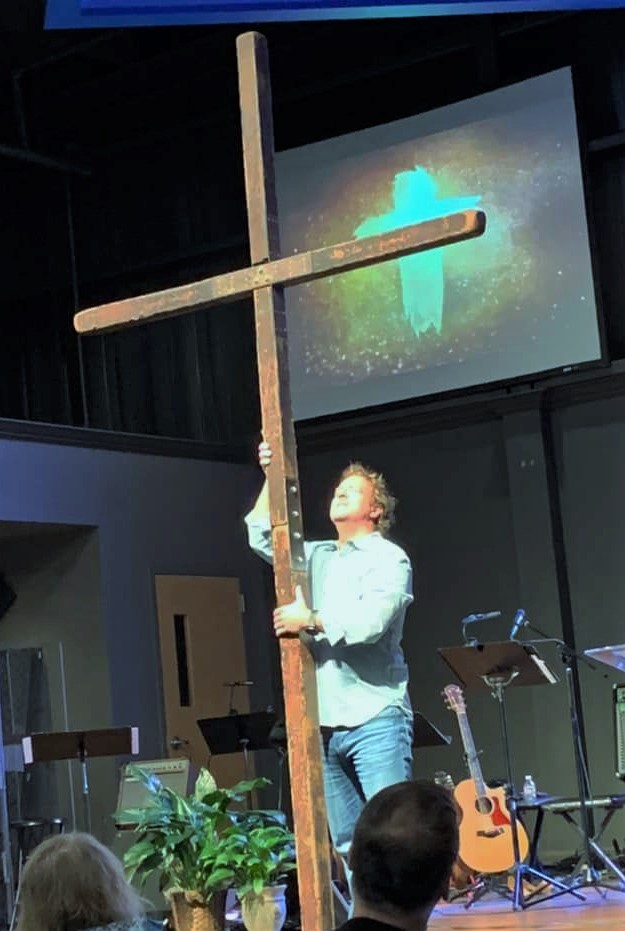
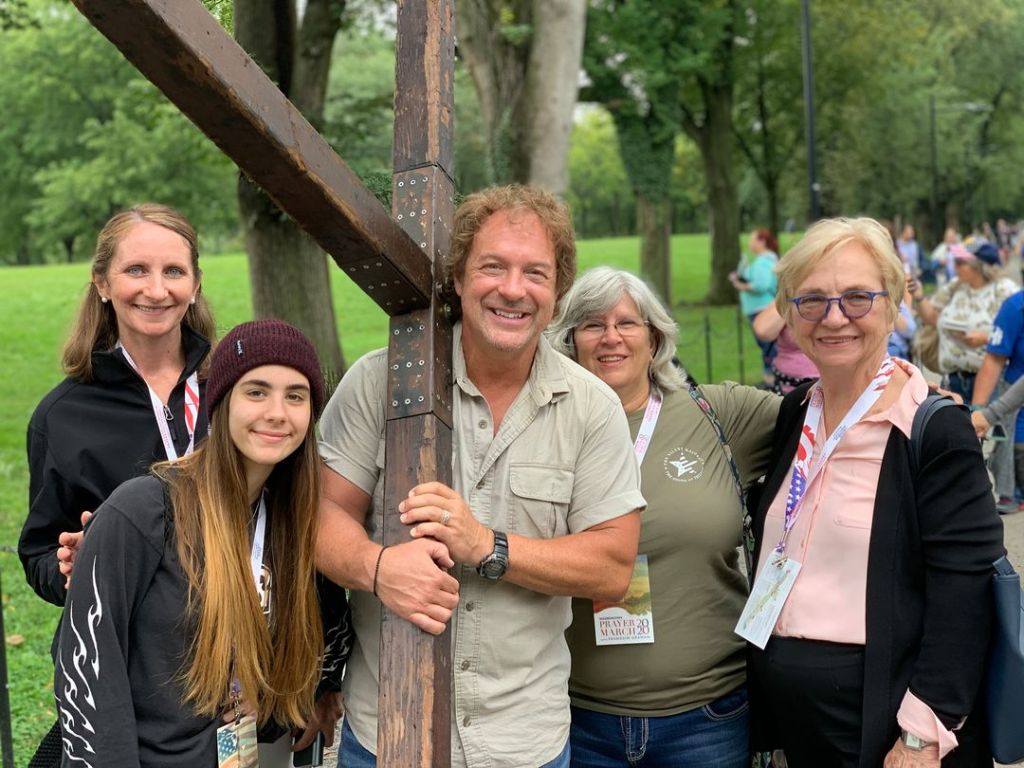
Keith and his 12 foot cross
The clavicles are 2 thin curved bones at the top of the chest that attach to the breast bone in the center forming a CROSS.

Keith Wheeler has a groove in his collarbone. I do too, a result of breaking mine when I was 8 years old. Keith’s isn’t due to trauma, at least not accidental. Keith’s notch is from carrying a literal cross across his shoulder.

On my collarbone I have a funny groove. I have about 1.5 inches(3.8 cm) of bone growth from bearing the weight of the cross on my shoulder all these years. That’s what the wood of the cross has done to my body. Yet, when we take up HIS cross it also shapes us – it shapes our heart, our attitudes, our actions…even the expressions on our faces!

Keith’s Facebook post

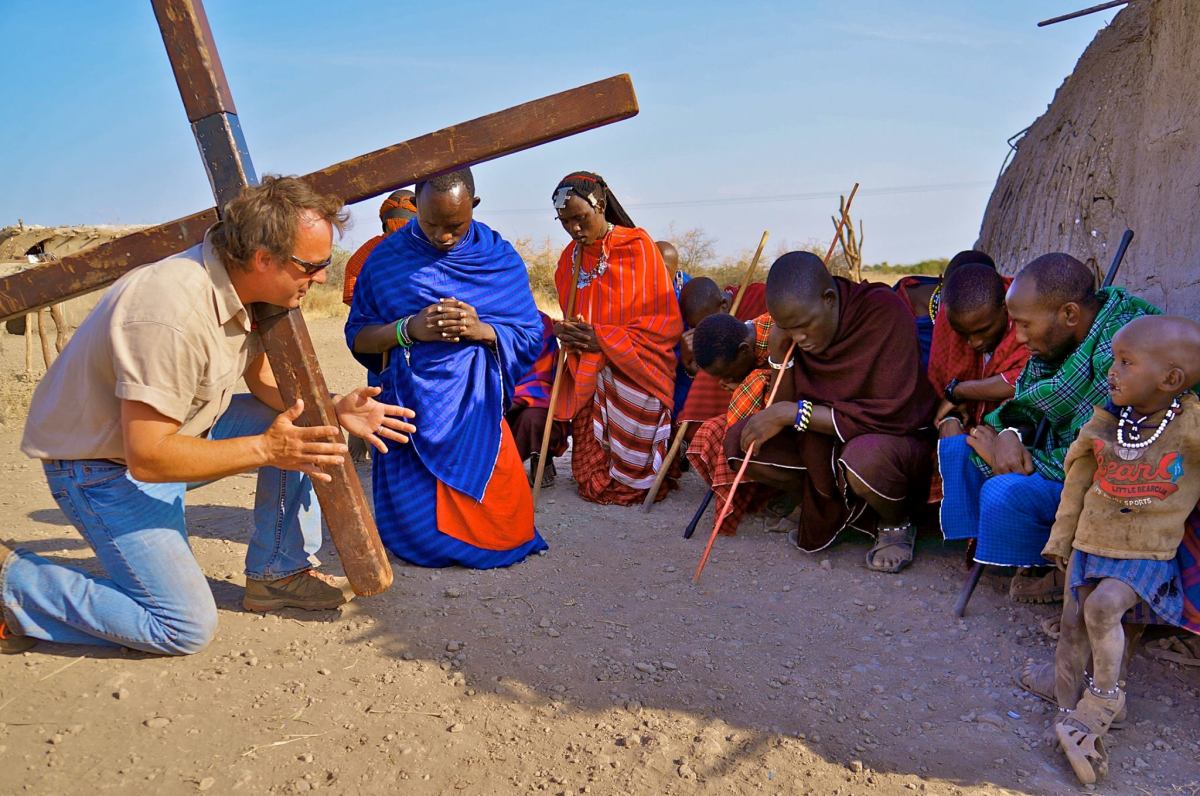
Since 1985, Keith has walked around the world-literally; he has covered over 27,000 miles on all 7 continents. It’s hard to know how many countries, since names and boundaries change, but it’s at least 180. And on every step he has taken, he has carried a 90 pounds, 12 feet by 6 feet cross draped over his shoulder.

Keith Wheeler
Keith in Saudia Arabia

But it really isn’t about the cross. Keith walks around doing what he simply calls “serving God, loving people.” He started in Tulsa, Oklahoma on Good Friday 1985 and thought it was going to be a one-time event. But he felt God wanted him to continue carrying the cross around the surrounding towns, then the rest of Oklahoma, and on into surrounding states. And then he just kept walking- and carrying the cross.

Carrying the cross on Lewis Avenue in Tulsa by the Praying Hands statue at ORU

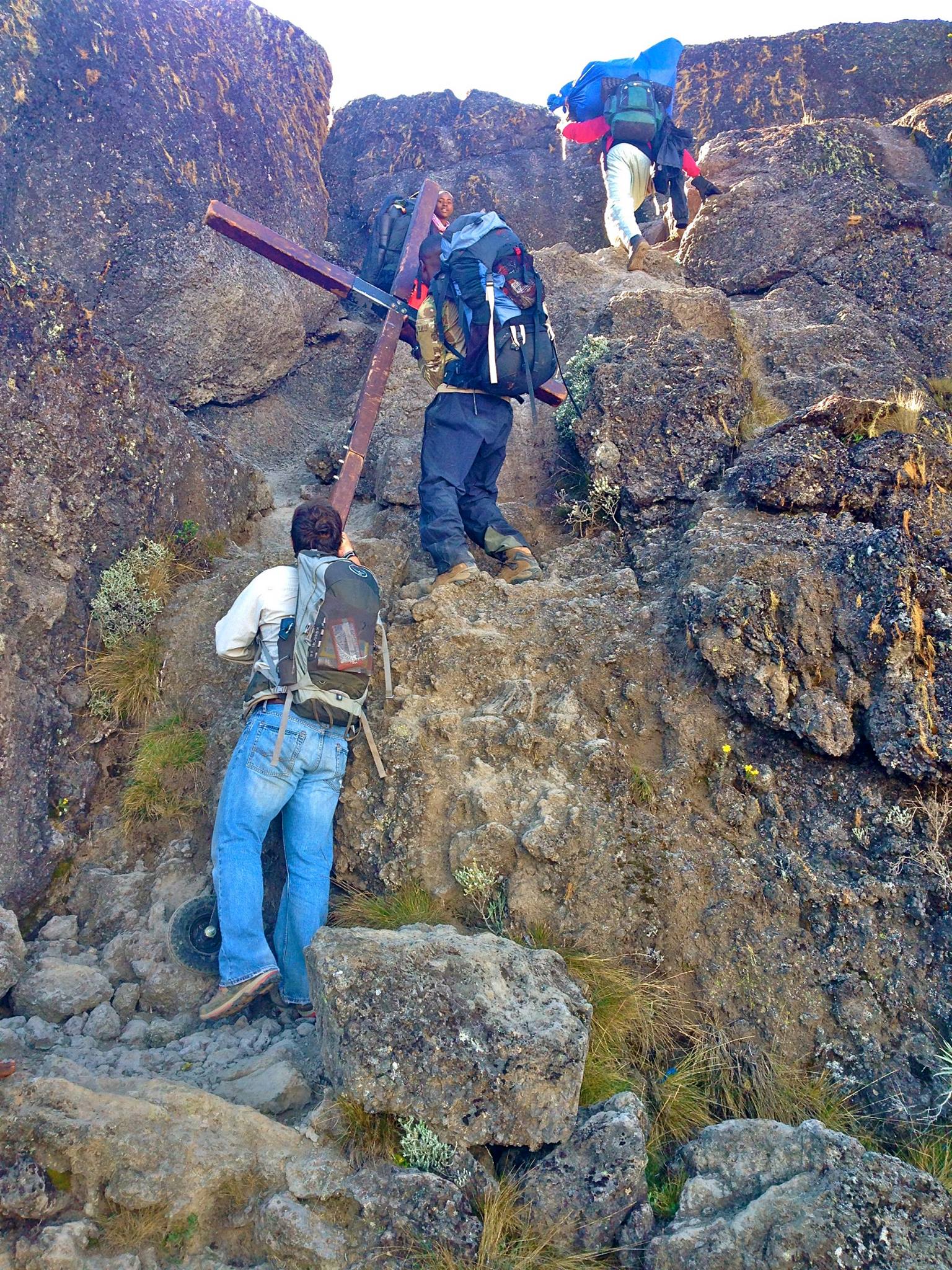
He has carried 3 crosses. The first cross was lost by an unnamed airline. He retired the second cross after 22 years, having carried it up Mt. Kilimanjaro; it now sits in his study. He currently carries his third cross. He takes it apart to pack it in a ski bag, protected by padding. There is a wheel on the end of the cross, not to protect him, but to protect the cross; he tried other ways, but nothing kept it from getting damaged as it dragged on the ground.

Keith Wheeler went to Tulsa to attend seminary at Oral Roberts University, ORU, without knowing it is a seminary, or as he decided to call it, a cemetery. He wasn’t sure what he wanted to do with his life, so he tried several things-youth pastor, radio announcer, gym teacher, coach. He even trained to enter the Olympics as a pole vaulter. (He laughingly says it isn’t hard to be the best at something few people try.)

A television preacher he was listening to said he believed God wanted someone to go to South Africa and carry a cross, but no one had been willing to go. Years later, one night Keith was alone in his room and in his heart felt God tell him to carry a cross in Tulsa on Good Friday.He thought this surely couldn’t be God, but felt these words burning in his heart,

“Anyone can carry a cross–think about Simon of Cyrene; he carried Jesus’ cross. Anyone can die on a cross–think about the two thieves on either side of Jesus. Only One, however, could die for the sins of the world… and that was because of love. I want you to take the cross and identify that message of love along the roadsides of this world.”

at the site of Typhoon Yolanda in the Philippines that killed 6000 people and displaced 4 million.

Keith points out that only once in the Bible did Jesus tell someone to be “born again” (John 3:3). But on multiple occasions, he said his followers must take up a cross and follow him.

Whoever does not take up their cross and follow me is not worthy of me.

Matthew 10:38 NIV

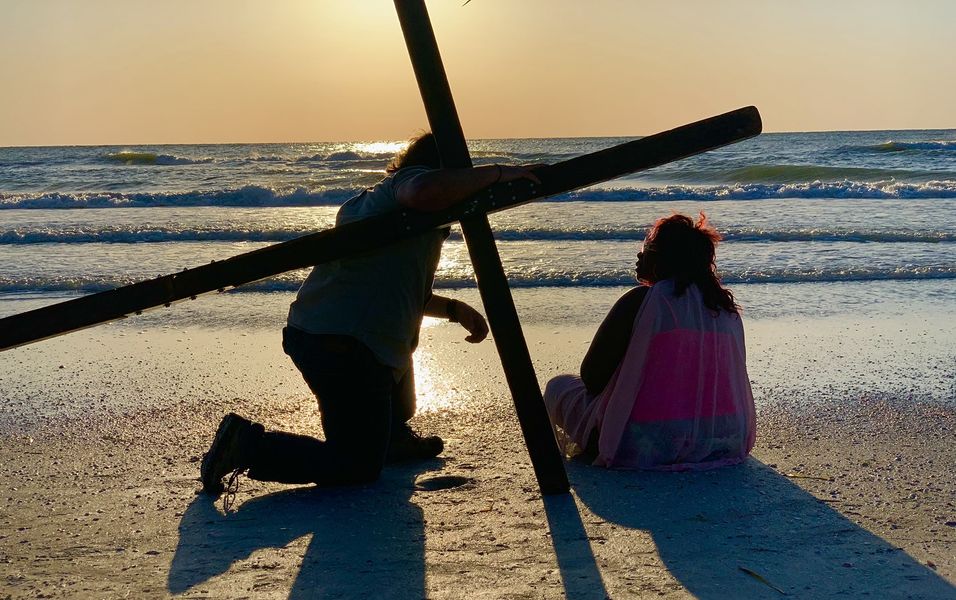
So, he did, and still does- in Tulsa, where I saw him one morning as I drove to work, and all over the world. When he travels, Keith never knows where he will sleep or what he will eat. He depends on God and the “kindness of strangers.”

He has suffered physical injuries-broken ribs and a punctured lung. He has been arrested, jailed, beaten, and put in front of a firing squad.

an encounter with the policia

Once while walking in the dark in Uganda, he fell into a pit, and quickly realized it was a sewer full of human waste. It was too deep for him to climb out -until he realized he could climb out using the cross.

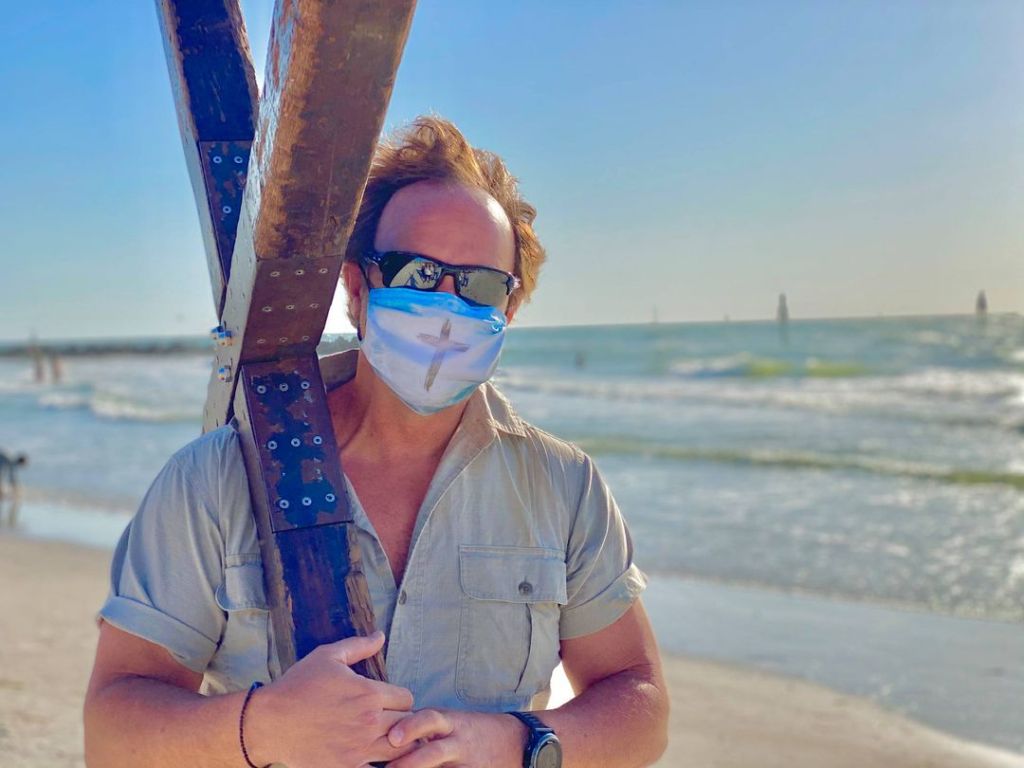
a COVID time-out

Nothing had ever stopped Keith from travelling and walking-that is until the world was plunged into a viral pandemic in 2020. From January to March he walked in Tuvalu, the Northwest Territories Canada, Brazil, and Paraguay but after returning to Tulsa in March of 2020 Keith did not leave the country for 9 months, instead walking in Oklahoma and other states.

In March 2021 when it was possible to travel internationally again he went to Paraguay. On the way home he began feeling unwell, and “developed the sniffles.”

On March 21, 2021, he was diagnosed with COVID-19.

To be continued..

In part 2 of this post, I’ll share from a conversation I had with Keith before he and his wife Nicole left for Paraguay right before Thanksgiving 2021. It’s hard to “interview” Keith because he doesn’t like to talk about himself. He prefers to talk about the “heart of Jesus” (John 13:23). But in our chat, he shared with me how COVID affected his health, ministry, and mission.

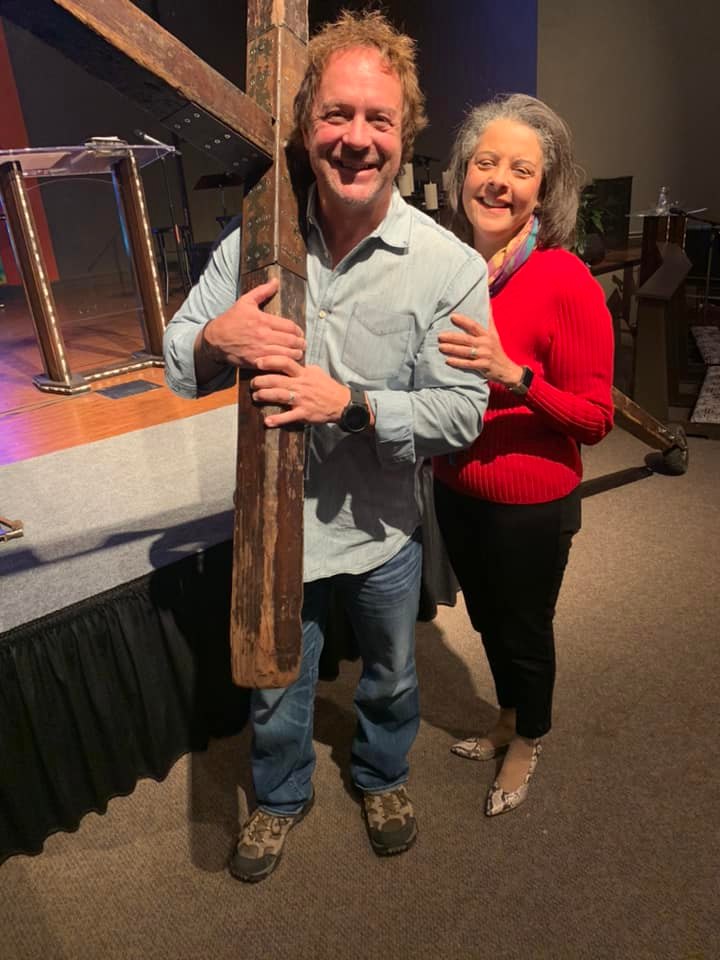
Nicole and Keith Wheeler
Nicole and Keith Wheeler, “carrying the cross around the world”

Until then, please visit Keith’s website, and follow him on social media, and watch some of his videos on YouTube. I’ve used several photos from the Wheelers’ collection, used with their permission here. Find many more on his site and social media.

No one pays Keith and Nicole to do this, and they rely on the generosity of friends for funds to travel. In appreciation for using his story, I have made a donation to his ministry. If you feel so inclined consider helping them at this link or here

Checks made payable to:
Keith Wheeler Ministries
PO Box 702706
Tulsa, OK 74170

Exploring the HEART of health around the world

I appreciate your time reading this post and invite you to follow this blog and me on social media.

I share information and inspiration to help you transform challenges into opportunities for learning and growth.

Add your name to the subscribe box to be notified of new posts by email. Click the link to read the post and browse other content. It’s that simple. No spam.

I enjoy seeing who is new to Watercress Words. When you subscribe, I will visit your blog or website. Thanks and see you next time.

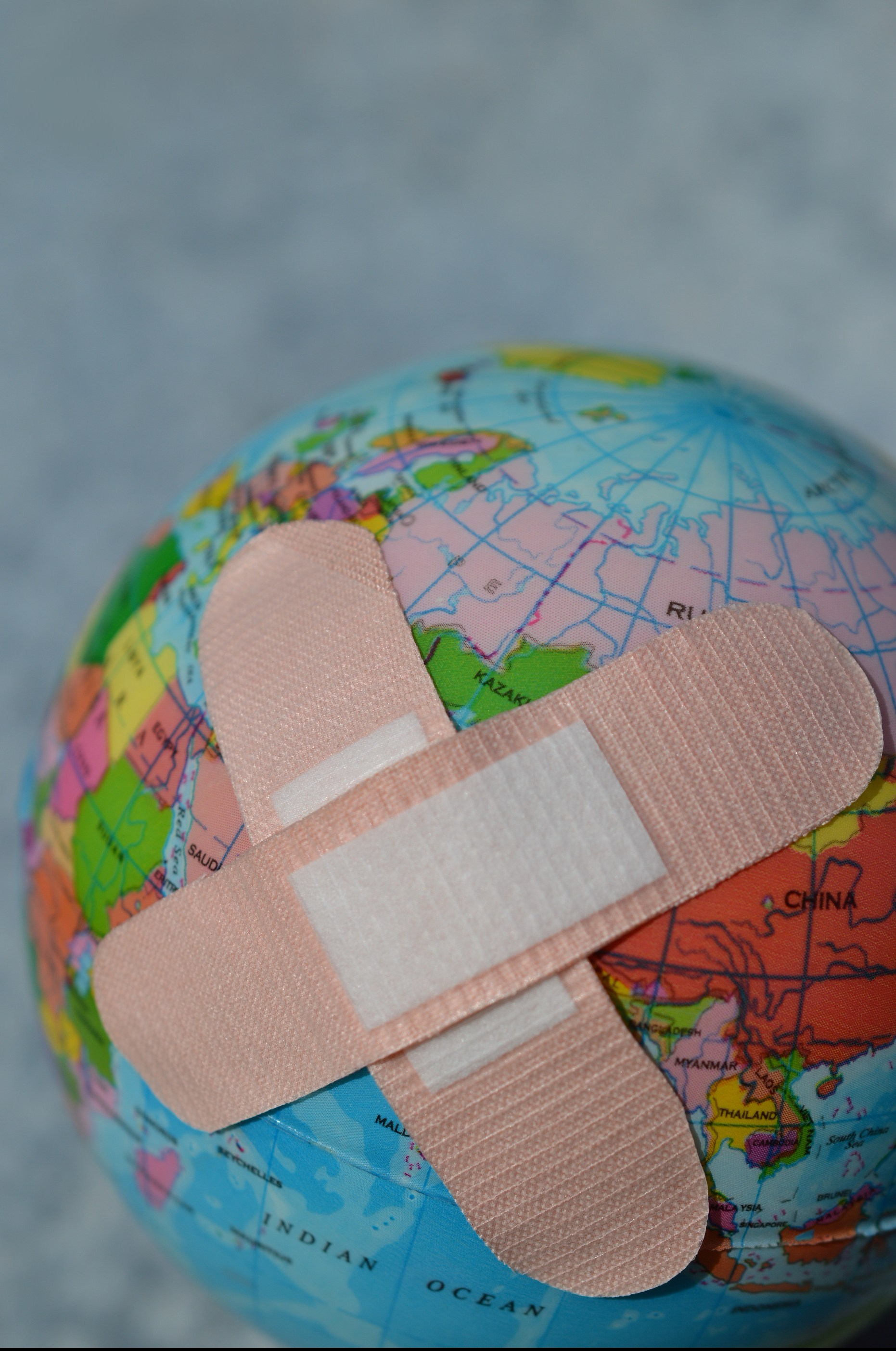
a world globe with two crossed bandaids

Doctor Aletha

Keith Wheeler-a Cross and COVID

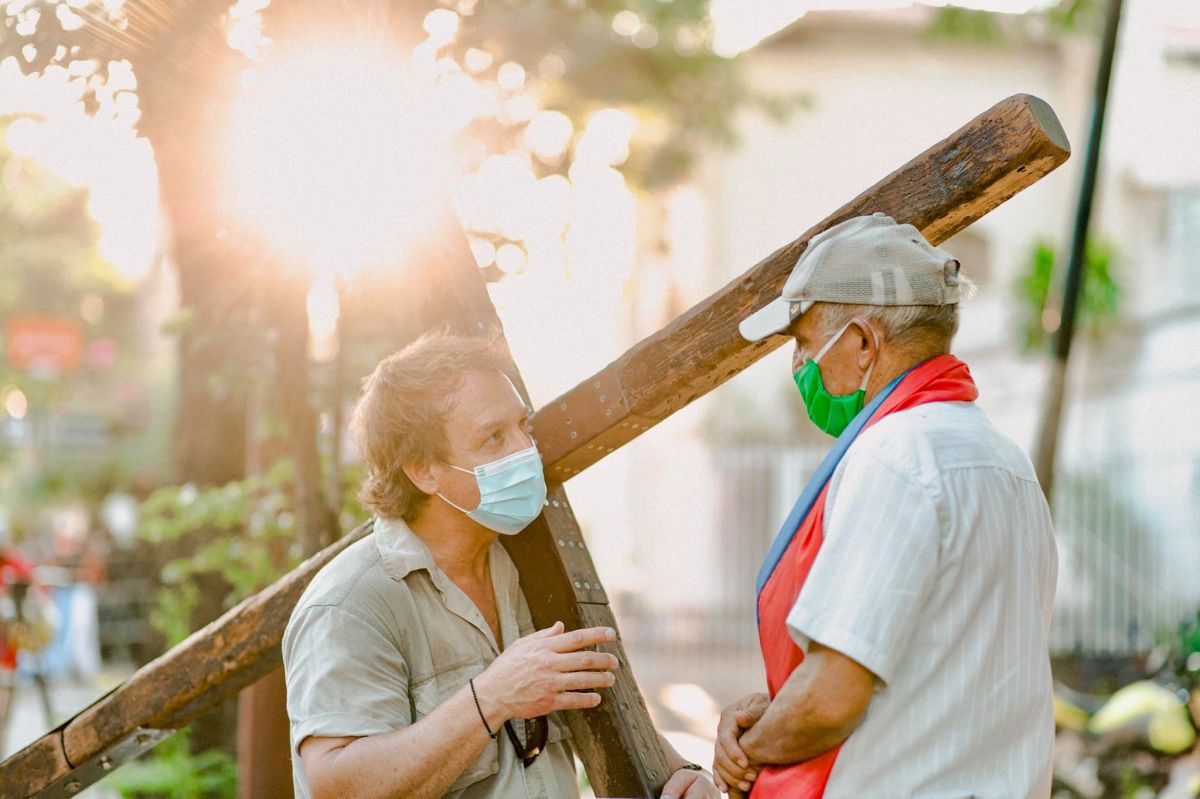
No, I wasn’t mad at God, I know that bad things happen to everyone. Jesus said that whoever wants to save their life should lose it, (Luke 9:24) so I know that either way I would be with Him. Jesus is my hope, my confidence, and peace, in all my life, including COVID.

Keep reading

Keith Wheeler-Peacemaker Through Conflict

Keith Wheeler embarked on a remarkable journey, walking over 26,000 miles and visiting more than 200 countries, carrying a 90-pound cross to share God’s love. Amid the COVID-19 pandemic and social unrest, he adapted, spreading hope through social media and in his community. Keith’s thought-provoking reflections and unwavering faith offer a unique perspective on current…

Keep reading

Pearls, pigs, Pickles, and Zits

Pig tries his best to navigate a world that is often unfair, unfriendly, confusing and conflicting, and his friends do their best to help him muddle through. But as Stephan wrote, their efforts often fail, at least in their eyes.

If my local newspaper quit publishing comic strips I would probably still read it, but I wouldn’t enjoy it nearly as much.

Cartoons share information in a unique and effective way; in just a few words and/or pictures, the artist can convey ideas and emotions that make us laugh, cringe, seethe, evaluate, examine, and change , often without feeling diminished or threatened.

I’ve read the “funny papers” since I was a child, and if you follow me on Facebook you know I post a cartoon there weekly, a “Friday Funny”. Through the years I’ve had several favorites-Peanuts, Garfield, The Far Side, Calvin and Hobbs, Doonesbury, -some no longer in production. But I’ve found new ones that I like and read regularly.

One is Zits, by Jerry Scott and Jim Borgman, a strip about Connie and Walt Duncan , parents of a teenage son Jeremy. Jeremy is a typical teenager, sometimes endearing, sometimes maddening. His parents are health care professionals, Connie a child psychologist and Walt an orthodontist. Years ago, when my husband and I still had a teen son in our home, I would almost believe the writers listened in on our conversations since some days I read my own words in the strip.

I assume the title refers to the frequency that teen boys suffer from “zits”, a slang term for the skin condition, acne. Almost all teenagers develop acne; when severe it can cause significant distress; girls have it too, and sometimes it continues into early adulthood.

Now my husband and I identify more with Brian Crane’s Pickles, a strip featuring a senior couple Earl and Opal Pickles, who are enjoying retirement and grand-parenthood. But sometimes the Pickles find the senior years not so golden; the strip portrays their coping with the inevitable losses of advancing age in a bittersweet way.

My current favorite is Pearls Before Swine, a comic strip written and illustrated by Stephan Pastis. It chronicles the daily lives of an “ensemble cast of suburban anthropomorphic animals”: Pig, Rat, Zebra, Goat, and a fraternity of crocodiles, as well as a number of supporting characters.

Before becoming a cartoonist, Stephan Pastis was a lawyer. On his blog FAQs he explains the name of his strip this way

Q) Where does the title of the strip come from?
A) Matthew 7:6: “Give not that which is holy unto the dogs, neither cast ye your pearls before swine.” (KJV) In the case of the strip, Rat thinks every thing he says is wise, and that it is wasted upon dumb Pig.

Pig tries his best to navigate a world that is often unfair, unfriendly, confusing and conflicting, and his friends do their best to help him muddle through. But as Stephan wrote, their efforts often fail, at least in their eyes.

“Pearls before swine”

Did you know that phrase is in the Bible? Jesus said it in the Sermon on the Mount preaching to a large group on a mountain, according to Matthew, but Luke recorded it as several shorter talks. It contains some of the most well known, often quoted, frequently preached words in the Bible and to me summarizes Jesus’ message to this world . Like cartoons, these three Bible chapters convey much information and inspiration in short, colorful phrases whose meaning is not always readily apparent.

Here is the verse in context, in modern language , the New International Version.

Judging Others

“Do not judge, or you too will be judged. For in the same way you judge others, you will be judged, and with the measure you use, it will be measured to you.

“Why do you look at the speck of sawdust in your brother’s eye and pay no attention to the plank in your own eye? How can you say to your brother, ‘Let me take the speck out of your eye,’ when all the time there is a plank in your own eye? 

You hypocrite, first take the plank out of your own eye, and then you will see clearly to remove the speck from your brother’s eye.

“Do not give dogs what is sacred; do not throw your pearls to pigs. If you do, they may trample them under their feet, and turn and tear you to pieces.”

Matthew 7:1-6, NIV

Holy Bible, New International Version®, NIV® Copyright ©1973, 1978, 1984, 2011 by Biblica, Inc.® Used by permission. All rights reserved worldwide.

(In many Bibles, words attributed to Jesus are printed in red letters.)

specks and planks

I understand the part about the eye. As a family physician I see patients complaining of a foreign body in their eye. If you’ve ever had something in your eye, you know how distressing it can be. When I examine the eye, I usually find a tiny speck, sometimes so small I need magnification to see it. It may be a speck of dust, wood shaving, or even metal. After applying a topical anesthetic (deadening eyedrop) I can easily remove the speck. The patient usually is shocked at how small it is, because to them it felt like a “plank”.

a drawing of a human eyeball
A foreign body, speck, may get stuck on the CORNEA and feel like a plank in the eye.

pearls

A pearl is a “concretion formed around a grain of sand or other foreign body within the shell of certain mollusks.” Doesn’t sound appealing but when we display them around our necks, ears, wrists, or fingers, they are treated as fine jewelry. Thus, the word “pearl” has become synonomous with something valuable, costly, precious, desirable.

a white pearl ring with diamond highlights
Photo by Marta Branco on Pexels.com

There are also several medical terms using pearl.

  • an epithelial pearl-a rounded mass of keratin found in found in some skin cancers
  • a drug pearl- a medication dispensed as a pearl-like capsule
  • pearl disease-tuberculosis (TB) in the chest or abdomen consisting of small rounded lesions

But the medical definition that most fits the meaning of this verse is one that all doctors learn early in their training- a clinical pearl.

Clinical pearls are small bits of free standing clinically relevant information based on experience or observation

Medical Teacher

Usually clinical pearls are shared verbally, then preserved and shared as informal written notes (when I was in medical school) although now disseminated electronically. Often our professors would impart these to us during hospital rounds as we examined and discussed patients; we understood these pearls to be valuable knowledge we would not get from textbooks alone, wisdom they gained from years of study and experience.

Physicians based much of the early treatment of COVID-19 in the 2020 pandemic on clinical pearls, since as a novel disease, there were no textbooks or journal articles to use as reference. Internationally, through social media and email, doctors began sharing their experiences treating COVID patients until the information found its way into mainstream medical journals.

planks, specks, pearls, and pigs

Rather than telling you what I think these verses mean, or telling you what I think you should think they mean, I offer some questions to help you decide that they mean to you.

  1. What measure (or standard as used in the NLT version) do I use to judge (evaluate or examine) other people? Do I apply the same standard to myself, or do I want others to?
  2. What planks (logs in the NLT) are in my eye that I need to remove to see others more clearly?
  3. What specks bother me about others? Should I offer to remove them, and if so, how should I?
  4. What pearls do I “wear” that others might want or need? How do I decide to whom and when to offer pearls? How do I react when my pearls are trampled?
before you leave, here’s another post based on Matthew 7, featuring a poem by Robert Frost

Choosing the road to life and wellness

Despite Frost’s assertion that his poem was a joke, multiple commentaries dissect it extensively and assign all kinds of meaning to it, suggesting that we do believe that our choices matter in life, whether relationships, finances, education, or health.

exploring the HEART of faith, hope, and love

I’m hope you enjoyed exploring these Bible verses with me today, and before you leave I hope you will read some of the other posts about the Sermon.

Please look for these cartoons in your newspaper, online, or in one of their books using the affiliate links above. Affiliate commissions help me continue sharing the HEART of health here and with organizations that do so around the world to those who need it the most yet lack access the most .

Dr. Aletha