After You Hear It’s Cancer-a book review

“After You Hear It’s Cancer” by Dr. Lori Leifer and John Leifer offers a comprehensive guide for navigating cancer diagnosis and treatment. Drawing on personal experiences, the authors provide practical advice on various stages of cancer care, including diagnosis, treatment, and post-treatment challenges, along with resources for support and advocacy.

updated November 7, 2025

This information is current as of the date of original publication or update. It may have changed by the time you read this. I invite you to fact-check what you read here.

This information is not intended for diagnosis or treatment. Before making health decisions, discuss with your physician or other qualified healthcare provider to decide what is right for you.

After You Hear It’s Cancer

A Guide to Navigating the Difficult Journey Ahead

By John Leifer with Lori Lindstrom Leifer, MD

available on Amazon, read a sample at this affiliate link

Dr. Lori and John Leifer

Dr. Lori Leifer, a radiation oncologist, was well qualified to author a book about cancer. As a physician who treats cancer with radiation, she has extensive training and experience managing patients diagnosed with this devastating disease.

(Note: the photos and graphics are for illustration and are not associated with the book. The book links are affiliate links for possible compensation to this blog.)

However, her professional knowledge expanded to a new level when she found a lump that turned out to be cancer. Then she and her husband, John faced the daunting task of confronting cancer as a patient and the patient’s spouse.
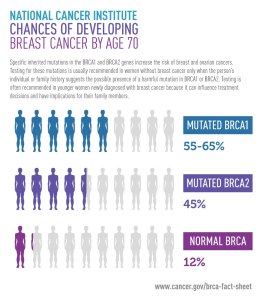
chance of developing breast cancer by age 70-National Cancer Institute
Source: National Cancer Institute (NCI)

They turned this life-changing experience into another chance to help the people she has spent her career caring for. Together, they wrote this book offering personal and professional guidance to help cancer patients navigate the journey.

Joining them are other families dealing with cancer who candidly share their experiences and what they have learned along the way, both positive and negative.

Cancer- the difficult journey

The Liefers’ guidance follows the same path as cancer patients. First, there is a diagnosis, followed by a review and planning of treatment options.

Then there is the active treatment phase, which involves some combination of surgery, radiation, and chemotherapy.

Finally, there is life after the treatments. Each phase has its own issues to navigate, which they explain with specific and understandable advice.

A mammography on left and a Magnetic resonance image (MRI) on right. Breast imaging technology has changed over the years. Note MRI’s enhancement ability to confirm diagnosis.
Mitchell D. Schnall, M.D., Ph.D. University Of Pennsylvania
Creator:Unknown Photographer, Public domain

Navigating the journey

In part I, Diagnosis and Treatment Planning, they review how doctors diagnose and stage cancer, and how that influences treatment. They discuss when and why to get a second opinion, how genetic testing can help, selecting doctors and facilities, and considering a clinical trial.

This image shows a triple-negative breast cancer cell (MDA-MB-231) in metaphase during cell division. Tubulin in red; mitochondria in green; chromosomes in blue. A better understanding of how mitochondria play roles in tumor cell division may provide new therapeutic targeting strategies to stop tumor cell growth.National Cancer Institute \ Univ. of Pittsburgh Cancer Institute
Creator:Wei Qian-public domain

Part II, During Active Treatment, they discuss the practical aspects of paying for cancer care and how caregivers fit into the treatment plan.

Other vital topics include pain control, managing side effects, and the importance of nutrition and exercise. They also review why and why not to consider complementary therapies.

There are different subtypes of women’s breast cancer. Knowing which subtype is important for guiding treatment and predicting survival. This graphic was created for the Annual Report to the Nation on the Status of Cancer, 1975-2011, published in 2015. Source:
National Cancer Institute (NCI), public domain

In part III, After Initial Treatments Are Over, they acknowledge the challenge of cancer survivors and what to consider when treatment is ineffective. Sometimes patients and families must face “difficult decisions,” with guidance on when to stop curative treatment and use hospice care.

Guidance

All throughout the book, the Leifers recommend “asking questions”. Each section concludes with a list of specific questions to ask.

The book ends with a list of Resources, including advocacy and support groups, websites on cancer treatment and research, foundations and other nonprofits, government websites, and professional associations.

Some of these are

Recommended for “those who hear its cancer, their families, and friends

I recommend this book to families navigating this “difficult journey.” Those wanting to understand and support friends and co-workers with cancer will find the advice useful.

Since cancer is common and can strike any family, everyone should consider reading it proactively.

Finally, this general approach to diagnosing, treating, and living with a serious illness can be applied to other serious or life-threatening diseases

About the authors

I received a complimentary digital copy of this book from NetGalley in exchange for a review. The book was published in 2015 by Rowman and Littlefield.

The University of Kansas Cancer Center shares Dr. Leifer’s story at this link, Doctor Becomes Breast Cancer Survivor.

John Leifer is a senior health care executive, consultant, academic, and writer, including four novels. He is also an accomplished photographer.

Exploring the HEART of health

I thank NetGalley and the publishers for asking me to review this book, especially the Leifers for sharing their story.

I’d love for you to follow this blog. I share information and inspiration to help you turn health challenges into health opportunities.

Add your name to the subscribe box to be notified of new posts by email. Click the link to read the post and browse other content. It’s that simple. No spam.

I enjoy seeing who is new to Watercress Words. When you subscribe, I will visit your blog or website. Thanks and see you next time.

Dr. Aletha

The Leifers’ books are available from Bookshop.org. Visit my online shop at this link.

Bookshop.org is an online bookstore that financially supports local, independent bookstores.

We believe bookstores are essential to a healthy culture and they are dedicated to the common good.

Bookshop.org donates a portion of every sale to independent bookstores.

Celebrating Life after Cancer

Celebration of Life Mural-The mural was created to honor those surviving the disease of cancer. The mural’s tiles are inscribed by cancer survivors and represent the continuous flow of life.

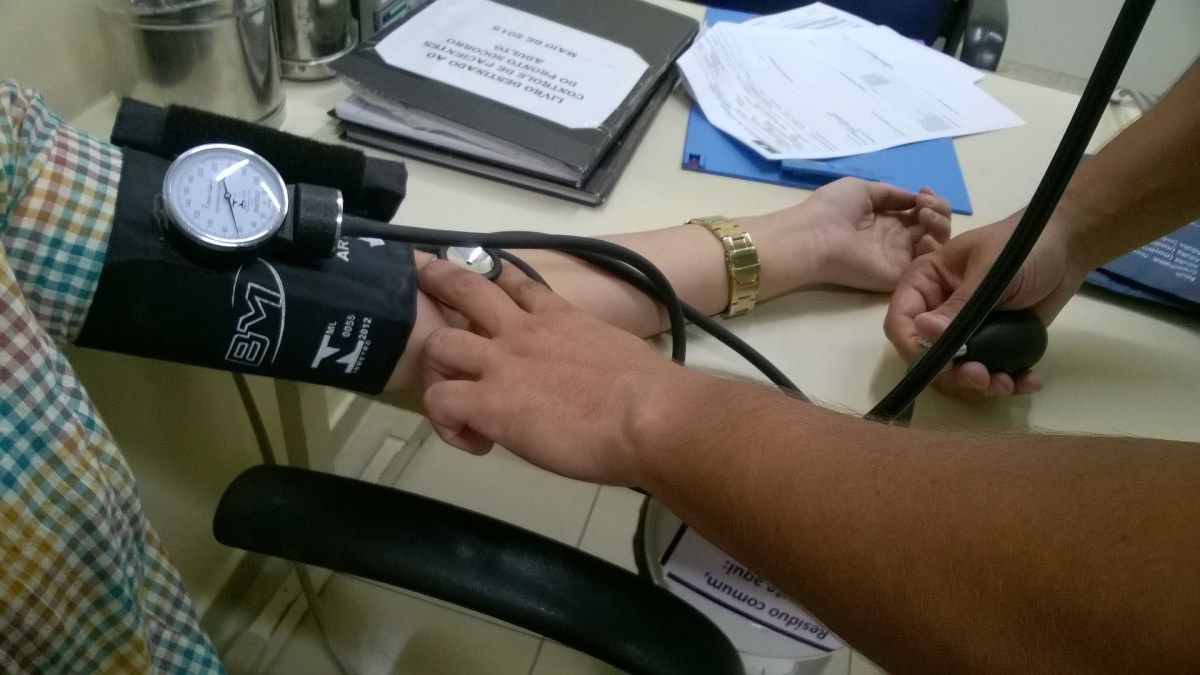
Screening medical tests- desirable or distracting?

Screening tests can help identify diseases early but pose challenges for both doctors and patients. Physicians often struggle with balancing test explanations and patient care, while patients face costs and inconvenience. The effectiveness of screening depends on its accuracy, patient benefit, and alignment with individual health goals.

This post has been updated July 2025

Both doctors and patients have mixed emotions about tests done to screen for disease. We, as physicians, want to help patients stay healthy, prevent disease, and treat problems early and effectively.

However, the time spent explaining, ordering, performing, and reviewing these tests means less time available to manage patients’ existing medical problems.

I agree with Dr. William Zinn, a family physician in Boston, who wrote

“Keeping track of the ever-increasing health maintenance requirements and cancer screening sometimes make it hard to remember why the patient came to the office in the first place.”

JAMA, January 7, 2020

For patients the issues are similar. While they want to stay healthy, prevent disease, and get treated promptly, they don’t like the inconvenience, time away from work, cost, and sometimes discomfort the tests require.

What are screening tests?

A screening medical test is done to uncover a disease or disorder in a person who may or may not be at risk for it and who otherwise feels well and has a normal exam. Suppose we are considering screening a group of people for disease X. Let’s start by dividing them into 3 groups.

  • Those with no symptoms, feel fine, at average risk of health condition X.
  • Those with no symptoms, feel fine, at increased or high risk of condition X.
  • Those who have symptoms suggestive of condition X, or have had other testing that suggests they might have it

Screening for X in groups 1 and 2 might be appropriate, based on medical guidelines, physician judgement, and patient preference. For group 3, with symptoms of condition X, testing would be considered diagnostic; a doctor would test for X, and possibly other conditions that the symptoms suggest.

Diagnostic vs Screening

That might seem like a picky difference, but there are several implications for both doctors and patients.

Documentation- The medical record must document accurately the reason a test is being ordered and done. This is necessary for billing because inaccurate coding can make doctors and clinics liable for fraud. Also, the government and other payers are starting to judge doctors’ quality of care based on medical record audits of care given or not given, and why.

Interpretation and Follow-up-A test is rarely interpreted in isolation. The history and exam together with the test determine if further testing or treatment is needed.

Reimbursement– Most if not all insurances, including Medicare, reimburse differently based on whether a test is diagnostic or screening. And this usually determines how much the patient pays for each. Screening tests are usually covered 100% while diagnostic testing may require a deductible or copay .

A Country Doctor Writes blog explains this dilemma in detail –

But because in the inscrutable wisdom of the Obama Affordable Care Act, it was decided that screening colonoscopies done on people with no symptoms whatsoever are a freebie, whereas colonoscopies done when patients have symptoms of colon cancer are subject to severe financial penalties.

HANS DUVEFELT, MD

This link at FamilyDoctor.org helps explain

Health Insurance: Understanding What It Covers

Cervical cancer screening frequency also now takes into account a woman’s HPV, human papilloma virus, status. Go here to learn

When should a woman begin cervical cancer screening, and how often should she be screened?

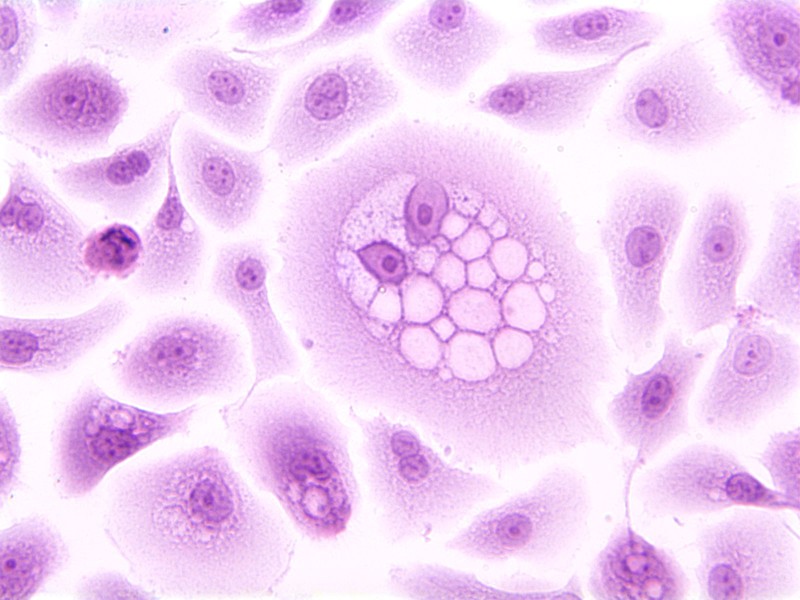
a microscope image of a cell infected with HPV

A koilocyte is a squamous epithelial cell that has undergone structural changes as a result of infection by human papillomavirus (HPV). This image of a koilocyte shows human ectocervical cells (HEC) expressing HPV-16 E5 oncoprotein, and immortalized with HPV-16 E6 and E7 oncoproteins. Formation of koilocytes requires cooperation between HPV E5 and E6 oncoproteins. The cell culture is stained with hematoxylin and eosin (H&E).National Cancer Institute \ Georgetown Lombardi Comprehensive Cancer Center, Ewa Krawczyk, public domain

Does disease screening make a difference?

Screening tests don’t prevent disease although they may be helpful for health maintenance or improvement. They may prevent progression or complications of a disease, but don’t prevent its onset.

They may not prevent death from the disease, although we like to believe they do. Screening may diagnose the disease before symptoms develop, so the patient lives longer with the disease, but not affect the eventual outcome.

Colon cancer is occurring at younger ages so the age to begin screening is now under age 50. Doctors can offer patients an option that is more accurate than the stool blood test and less invasive than colonoscopy.

Stool DNA testing looks for certain DNA or gene changes in cells that can get into the stool from polyps (pre-cancerous growths) or cancer cells.  It may also check for blood in the stool.

For this test, people use an at-home kit to collect a stool sample and mail it to a lab. Cologuard® is the name of the stool DNA test that is currently FDA-approved. This stool test needs to be done every 3 years.

When should we offer screening tests?

If there is a clear benefit to patients from an effective treatment available to make a difference in the disease course or

If knowledge of the condition helps the patient and family make choices about managing the condition’s likely course or the need for family members to be screened

If the test is reliable enough to identify most people with the disease without falsely identifying people who don’t have it. The scientific terms for this are sensitivity and specificity.

When the benefits clearly outweigh the risks and costs.

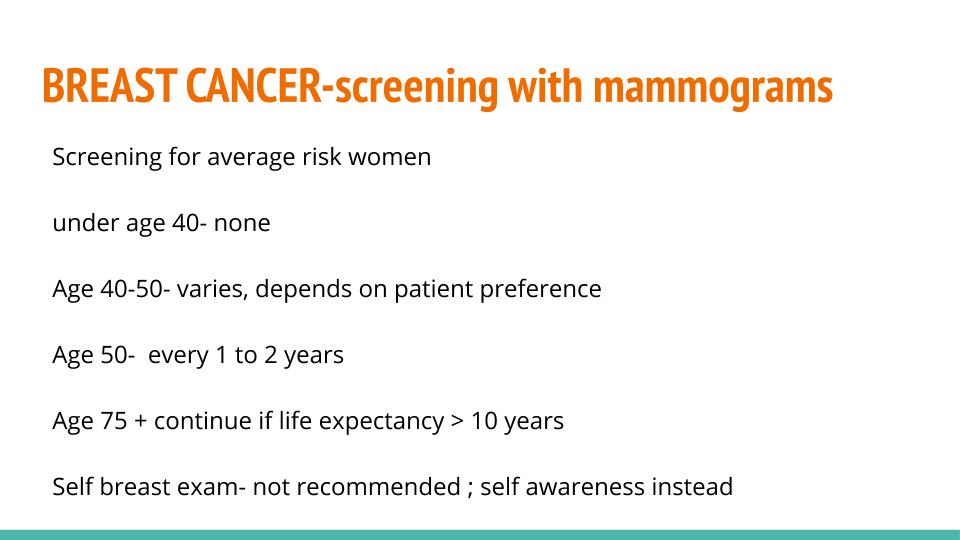
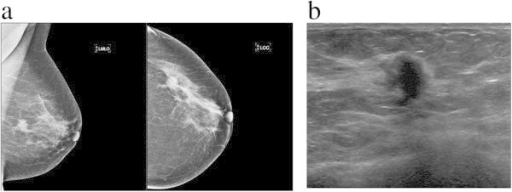
a mammogram image
a mammogram revealing a breast cancer image source- National Library of Medicine, Open-i

How to decide on screening for yourself

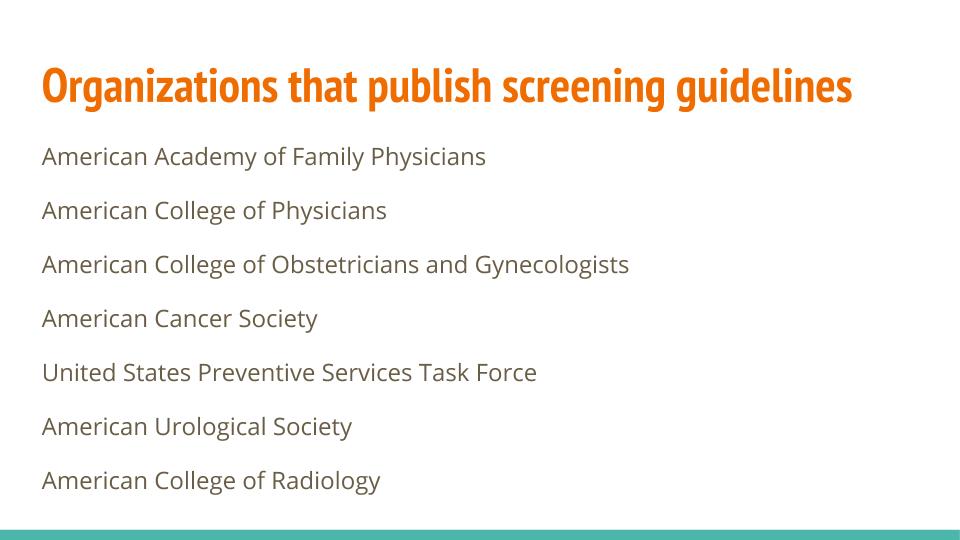
These are just some of the factors involved in deciding when to undergo screening tests. To make an intelligent decision about your own screening, you need a physician who reviews your past and current medical history, your family history, and your health goals.

Then the doctor can make recommendations based on your needs and desires with the help of expert guidelines published by medical organizations that carefully review the medical literature.

Help your doctor help you by scheduling a health maintenance visit rather than bringing it up when you are there sick or for chronic care. These discussions deserve your physician’s full attention.

from the National Institutes of Health.

To Screen or Not to Screen

¿Hacer o no hacer pruebas de detección?

Exploring the HEART of health maintenance

I’d love for you to follow this blog. I share information and inspiration to help you turn health challenges into health opportunities.

Add your name to the subscribe box to be notified of new posts by email. Click the link to read the post and browse other content. It’s that simple. No spam.

I enjoy seeing who is new to Watercress Words. When you subscribe, I will visit your blog or website. Thanks and see you next time.

Dr. Aletha

RoboForm Password Manager. What I use to manage passwords.

Go to this link to try RoboForm Free;

if you like it you can upgrade to RoboForm Everywhere version with all the features

With Roboform, you will have one less thing to feel stressed about. (affiliate link)