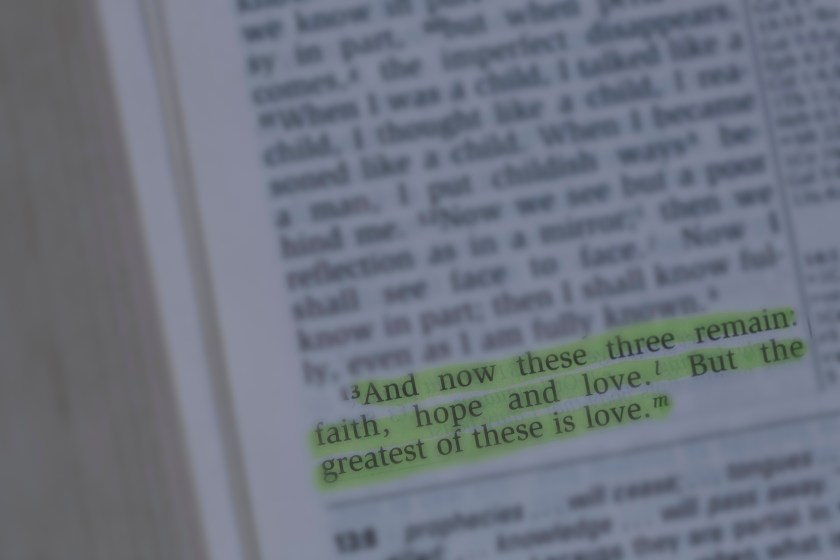
The mistake we should never make is to be generous with judgment and stingy with love. The people around us are starving for love and we need to unlock our pantry and see to it that everybody gets a belly full.
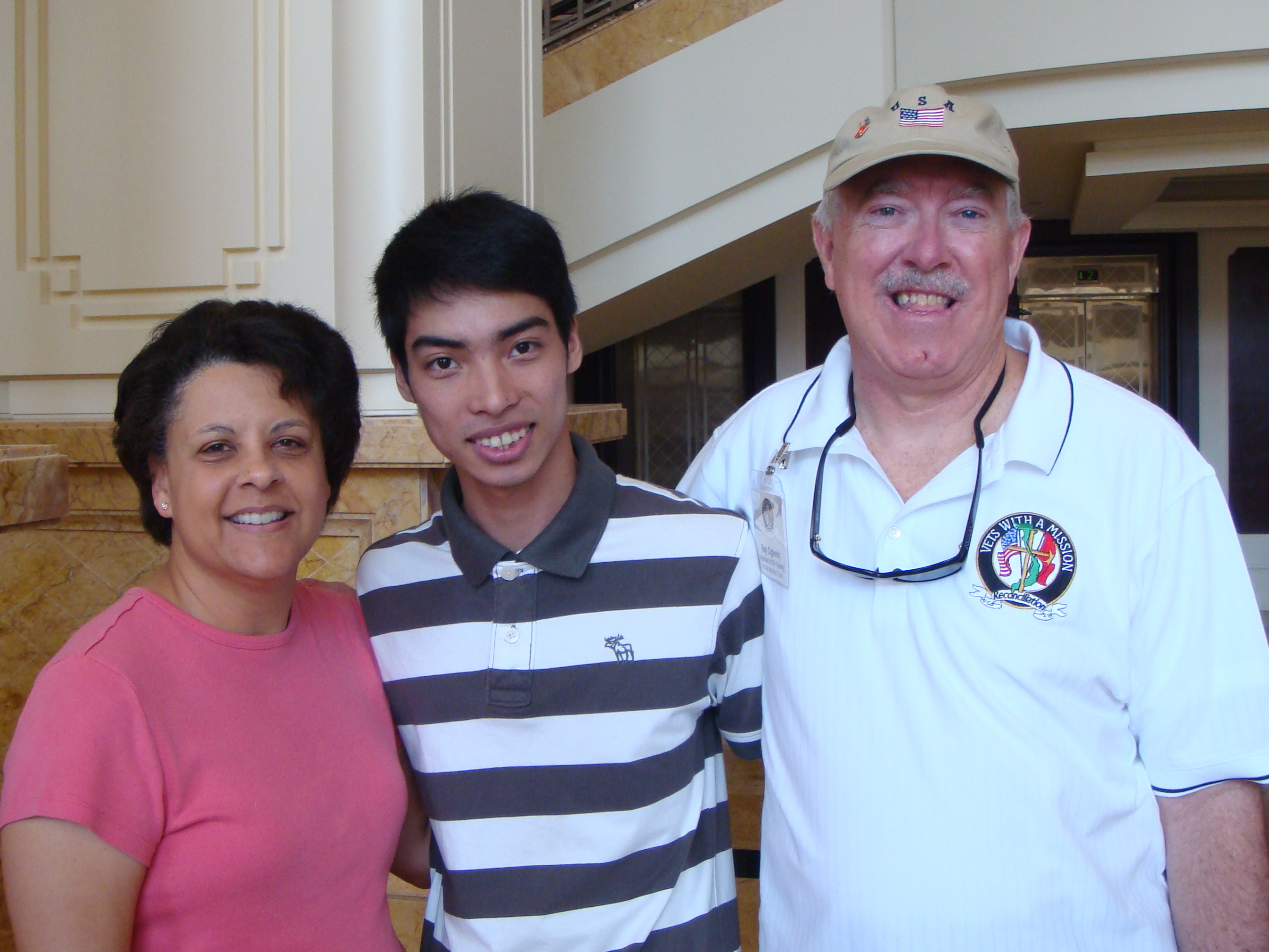
My husband Raymond and I have had the honor and pleasure of knowing Bob Peragallo and his wife for several years. He is the Board Chairman for Vets With a Mission (VWAM) , a faith based humanitarian organization; we have served with them on mission trips to VietNam.
Like my husband, Bob is a veteran of the American war in Vietnam. After his military service, he pastored a church. Here he shares his thoughts on pastoring, leading a service organization, and serving people in need. Words worth sharing
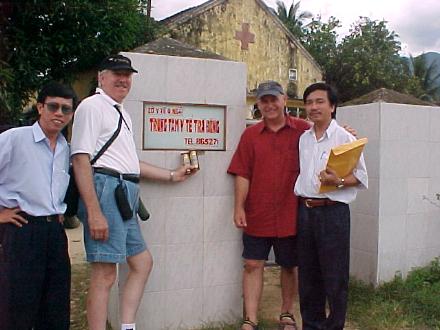
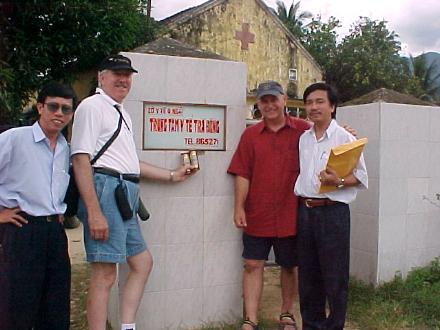
Raymond Oglesby, Bob Peragallo and local officials at Trabong Vietnam
“Often people come to me searching for something deeper than a 500 character religious platitude, something stronger than a scripture icon or soundbyte. Like them, I need something I can touch, see and feel. What we need is love because only love can satisfy us.
When this need happens for me, I never want to have to walk away empty handed or when it is my turn to be the giver of this love, God help me to never give them a substitute.
We all believe in love, but often we love the idea of love, when it needs to be our jobdescription. God declares Himself to be “Love” and He is, but it doesn’t always run in the family. Far too often, our lives become a poor substitute for the Jesus that the world is looking to see. If I lose my focus, I may give a poor substitute for this kind of love.
As someone who has received this love from my heavenly Father, I should always err on the side of loving people.
Dr. Aletha treating a Vietnamese woman
Kids always love bubbles
Raymond making friends and having fun with some Vietnamese boys
VWAM CEO Chuck Ward, VietNam veteran, on a previous trip
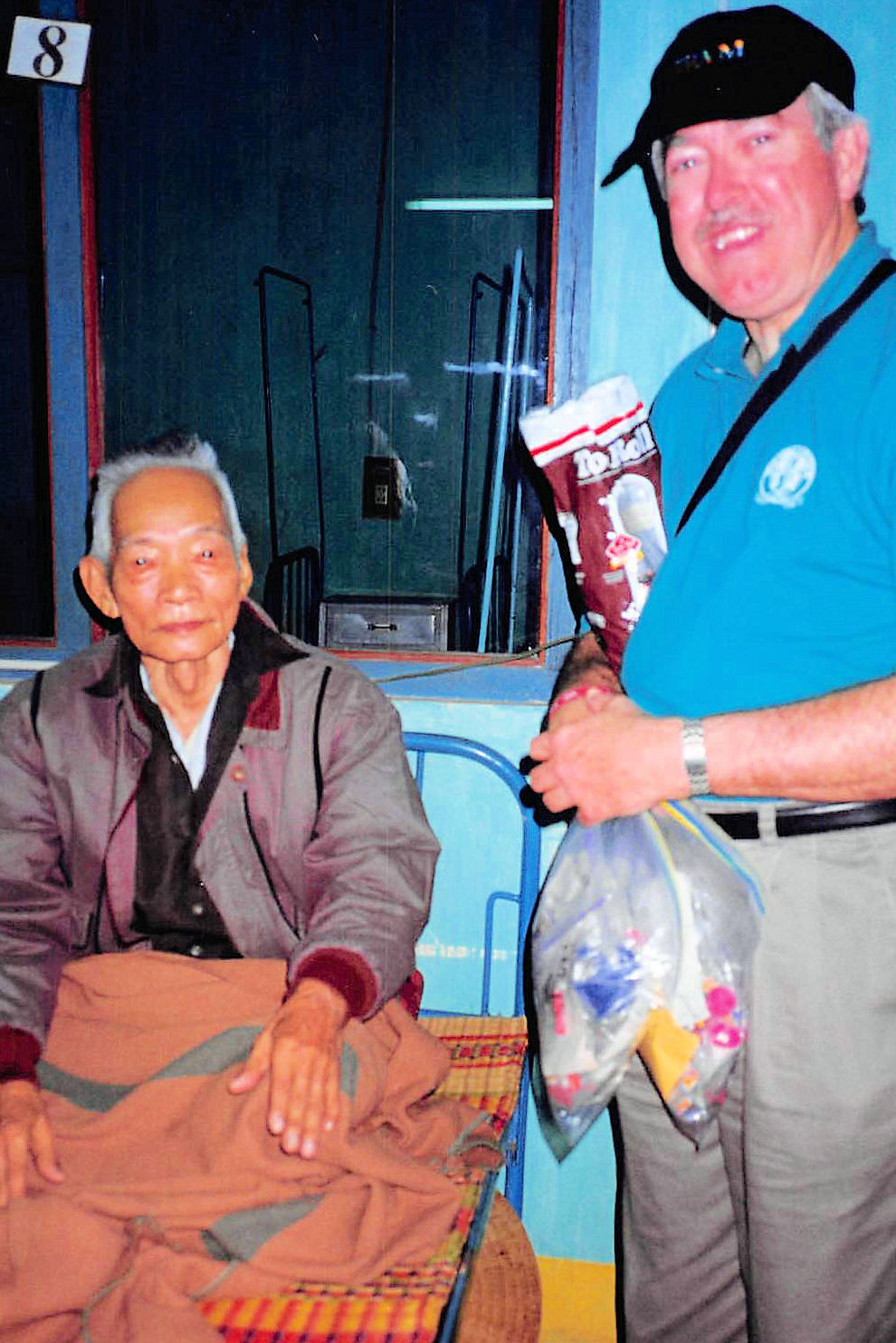
volunteer team members dishing out love in Vietnam
We might give our religious form, our knowledge of God or worst yet, my version of what is right (oh, how I love to be right). We can dish out our political views, judgments and contempt, even silence. We all understand and can relate to this from personal experience…and we know how much it sucks.
The mistake we should never make is to be generous with judgment and stingy with love. The people around us are starving for love and we need to unlock our pantry and see to it that everybody gets a belly full.
That doesn’t mean you always tell them what they want to hear and that they are not accountable. Whenever I find myself in this tension with people, or if you do, always do your best to fill that gap with compassion, kindness and decency. When you need love nothing else will work. My job is to love others, not see to it that others love me. “
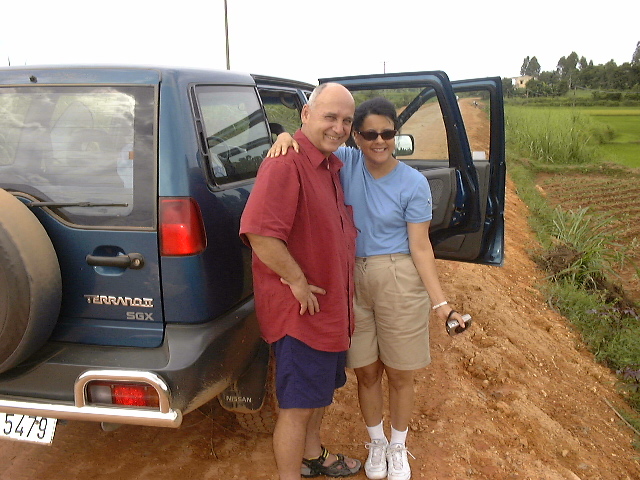
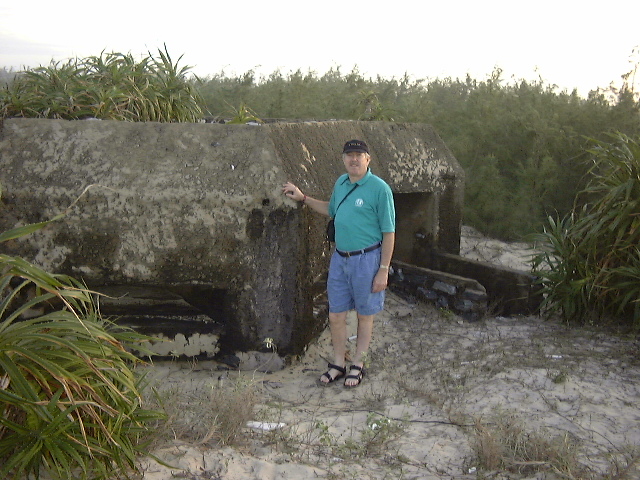
my husband snapped this photo of me with Bob; he went with us to visit the site of Raymond’s firebase during the war
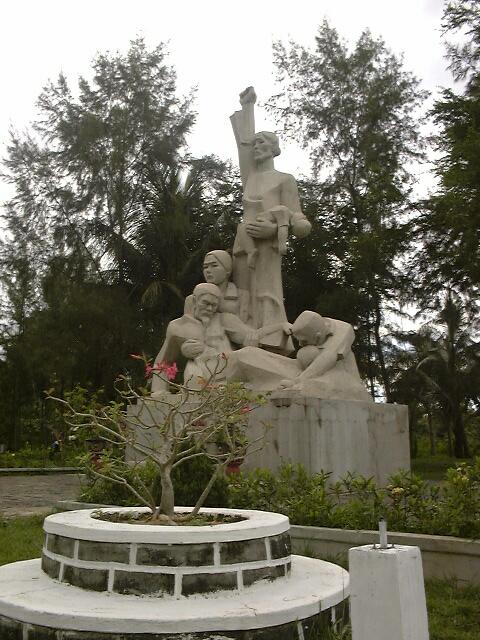
along the way we visited the memorial at Son My, better known to Americans as My Lai, site of the infamous massacre
I didn’t want to ever go to Vietnam again when I came home in 1972 after a one-year tour of duty with the United States Army. I was stationed with the Americal Division, 3/18 Field Artillery Battalion near Tra Bong, a major village located about 25 miles west of Chu Lai, the headquarters of the Americal Division, on “China Beach” at the South China Sea.
On April 30, 1975, the United States withdrew from VietNam after many years of involvement in that country’s war. That conflict remains a part of American history- and also a part of the personal history of the men and women and their families who served the military in any capacity during those years. Here is a perspective on that history from my husband Raymond Oglesby.
Heads up: this story contains strong language you might find offensive; it is used to reflect what was thought at the time, not what is known today.
Finding My Way Back
By Raymond Oglesby
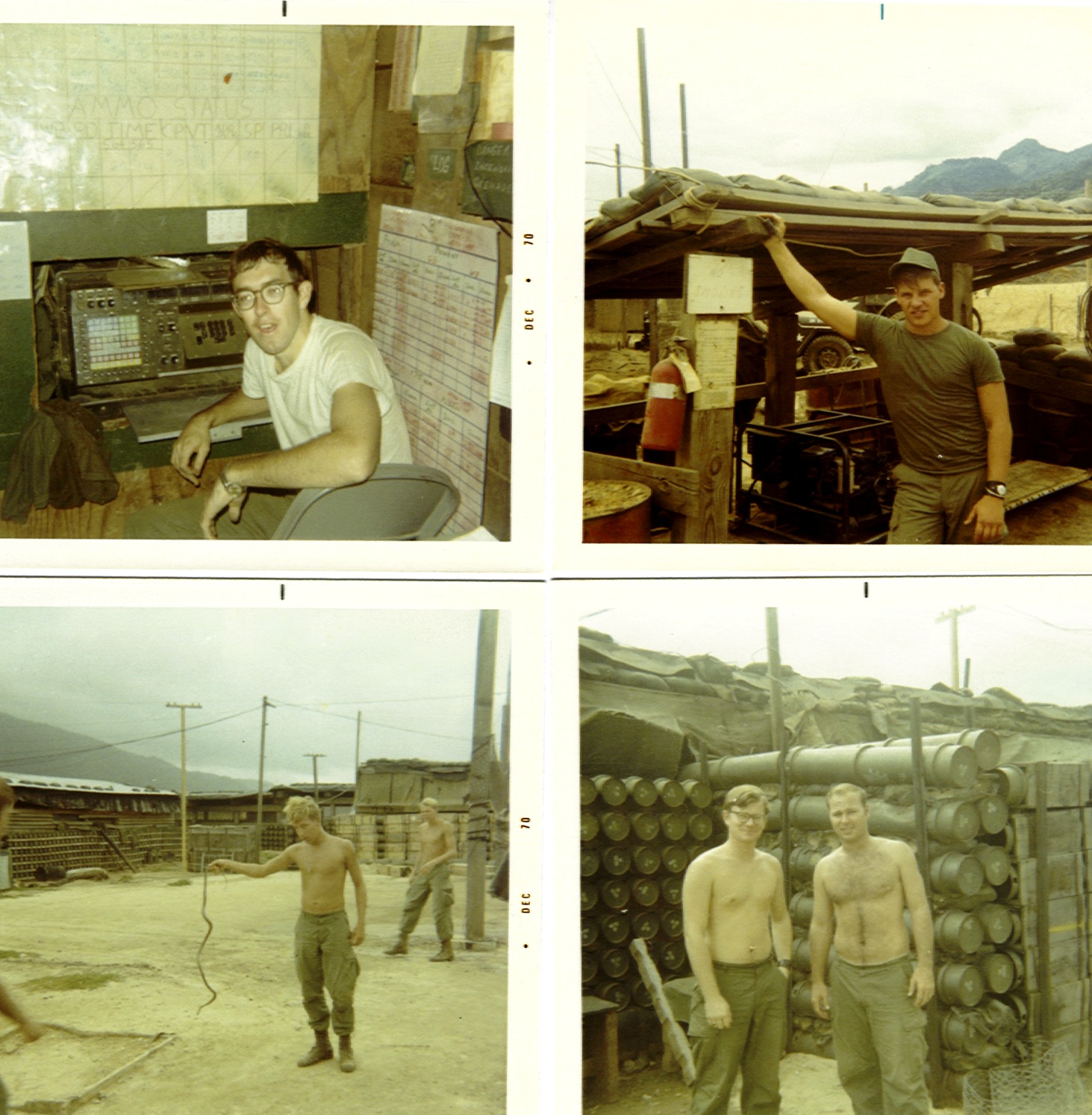
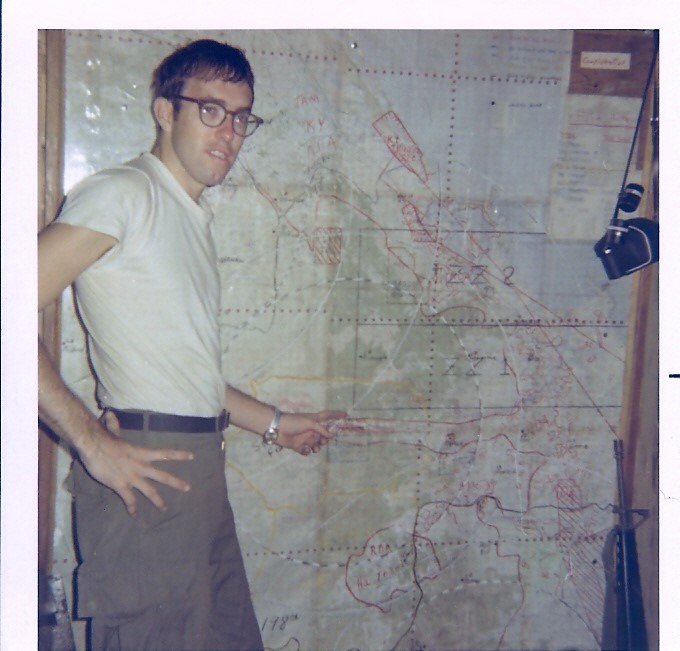
in country, 1970
Going to war
I didn’t want to ever go to Vietnam again when I came home in 1972 after a one-year tour of duty with the United States Army. I was stationed with the Americal Division, 3/18 Field Artillery Battalion near Tra Bong, a major village located about 25 miles west of Chu Lai, the headquarters of the Americal Division, on “China Beach” at the South China Sea.
Tra Bong was an artillery base and housed two 8-inch and two 175 self-propelled howitzers. Each gun was capable of launching a 90 to 100 pound projectile 20 to 30 miles. The “firebase” was home to about 120 soldiers. Day and night, we fired the guns.
The US Army trained enlisted men to use weapons to destroy the enemy. Our mission was to route the NVA (North Vietnam Army) and VC (Viet Cong) from South Vietnam. I served as team leader of Fire Direction Control (FDC). We were responsible for working up fire missions and passing them to the gun crews via radio.
Killing the enemy, Vietnamese soldiers didn’t bother me then because I did not see them as human. They would intercept our radio transmissions and curse us in English. We called them Charlie, VC and gooks. Without real names, they did not exist. Despite our superior air, sea, and land capabilities the United States military lost the war, the first war our country has ever lost.
When I came home, I did not talk about my involvement in the Vietnam War for over fifteen years. I only told two or three people what really happened. I thought only another Vietnam vet could understand.
Missing peace
After the Vietnam Veterans’ Memorial was erected in Washington D.C. (1982), I began reading and watching videos about that time in our nation’s history. In Vietnam, we heard nothing about the anti-war demonstrations back in the States. Now I realized that our country’s involvement there had been a misguided effort. The more I learned, the more I wanted to go back to Vietnam, not to feel sorry for myself but to help the country I tried to destroy.
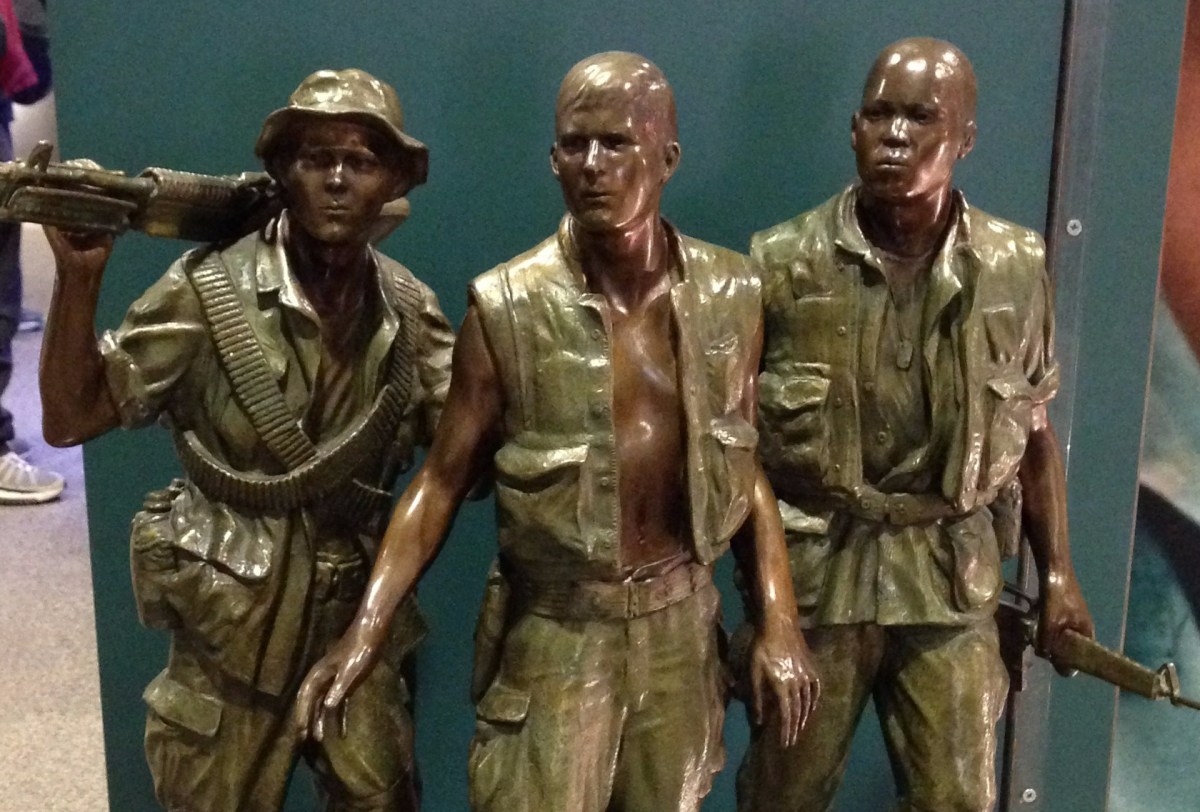
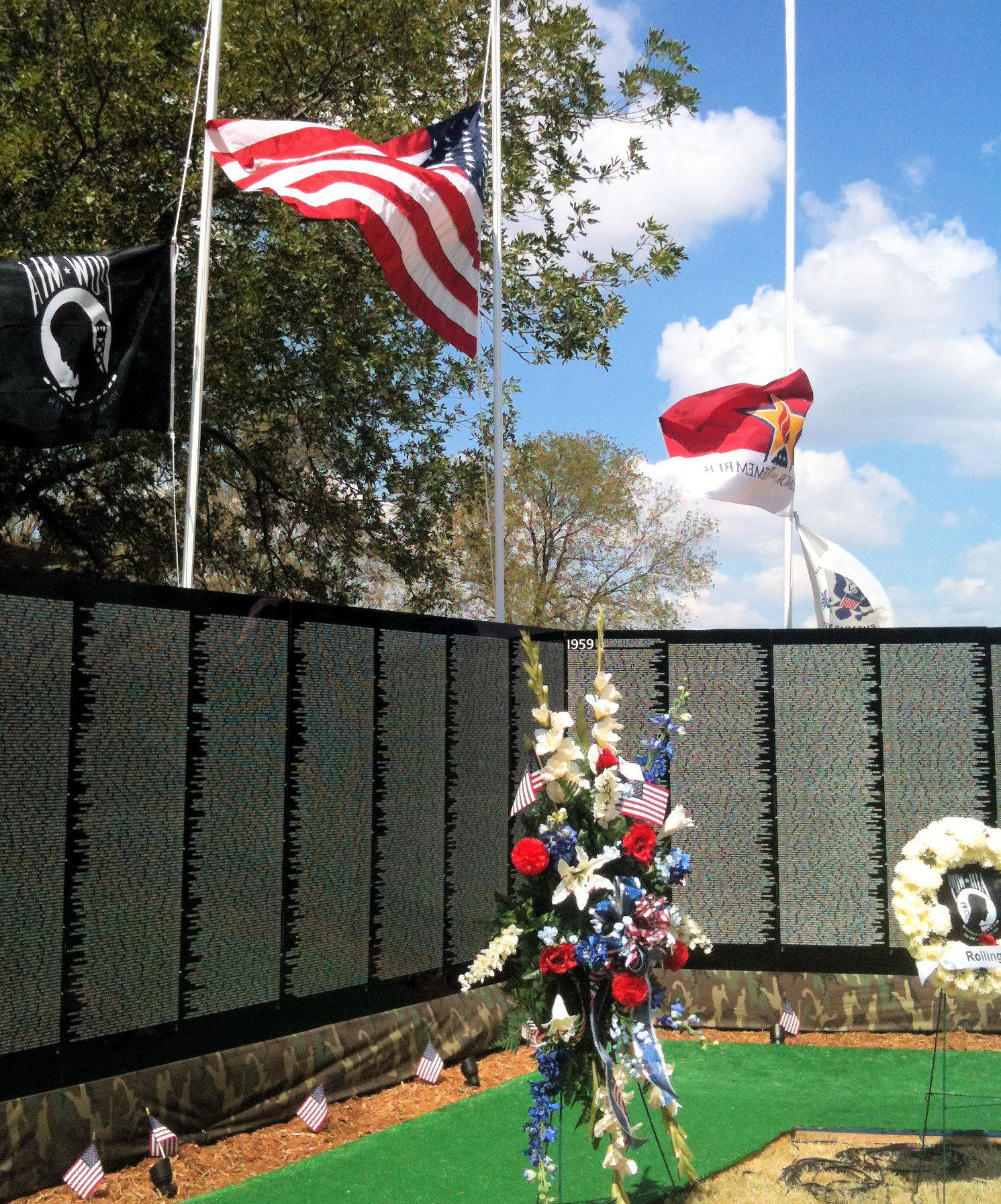
a replica of the Vietnam Memorial Wall in Washington, D.C. visits towns throughout the United States
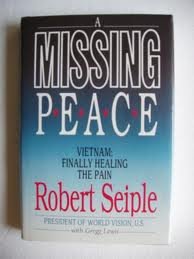
For Christmas, my wife gave me A Missing Peace, a book written by a Vietnam veteran, Robert Seiple. From it, I learned I was not the only veteran haunted by his war experience. Others sought healing from their shame and anger.
And I discovered how much the Vietnamese people had suffered and still did. Unlike other wars, no restitution was made to rebuild the nation so Vietnam steadily declined economically. He described efforts to help rebuild Vietnam and said anyone can make a difference. He issued a call to “reconciliation”, both within ourselves and between the two countries.
I decided to contact Vets with a Mission (VWAM), one of the agencies listed in the book. VWAM is a non-profit, non-political organization that works to bring healing and reconciliation between our countries. Since 1988, VWAM has taken teams of veterans and other volunteers into Vietnam. At their own expense, they travel to Vietnam to build rural medical clinics, support orphanages, care for homeless children, and work with hospitals.
I began planning a trip there myself, wondering what I would find and how I would feel. I did not understand why God was stirring my heart for the people of Vietnam. Was I a traitor for wanting to aid a former enemy? Some of my friends thought so, saying “Since you were dying to get out, why would you go back?”
Finding peace
In January 1994 I arrived in Vietnam for my first visit after twenty-two years. I was so excited I couldn’t sleep. I ran whenever we stopped to visit a site, especially if I had been there during the war. I empathized with the Vietnamese who were still living in poverty. I no longer saw them as enemies but as fellow humans. They treated us kindly and welcomed us wherever we went.
At Tra Bong a crowd of people followed us around, since few Americans have been there since the war. For me the highlight of the trip was a visit to the site of the old firebase.
After walking around the now deserted site, I felt I should kneel to pray for the village people around me. They did not understand what I was doing or saying. Right then, my heart was broken for the Vietnamese people.
As we left, children from the nearby school mobbed our van. My eyes misted with tears as I felt the Lord drawing me back. “You must reach these people for my Kingdom.” I knew then I would go back.
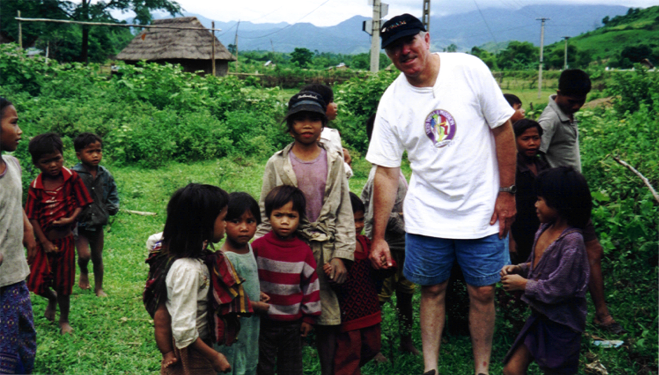
making friends with children during his trip back
Living in peace
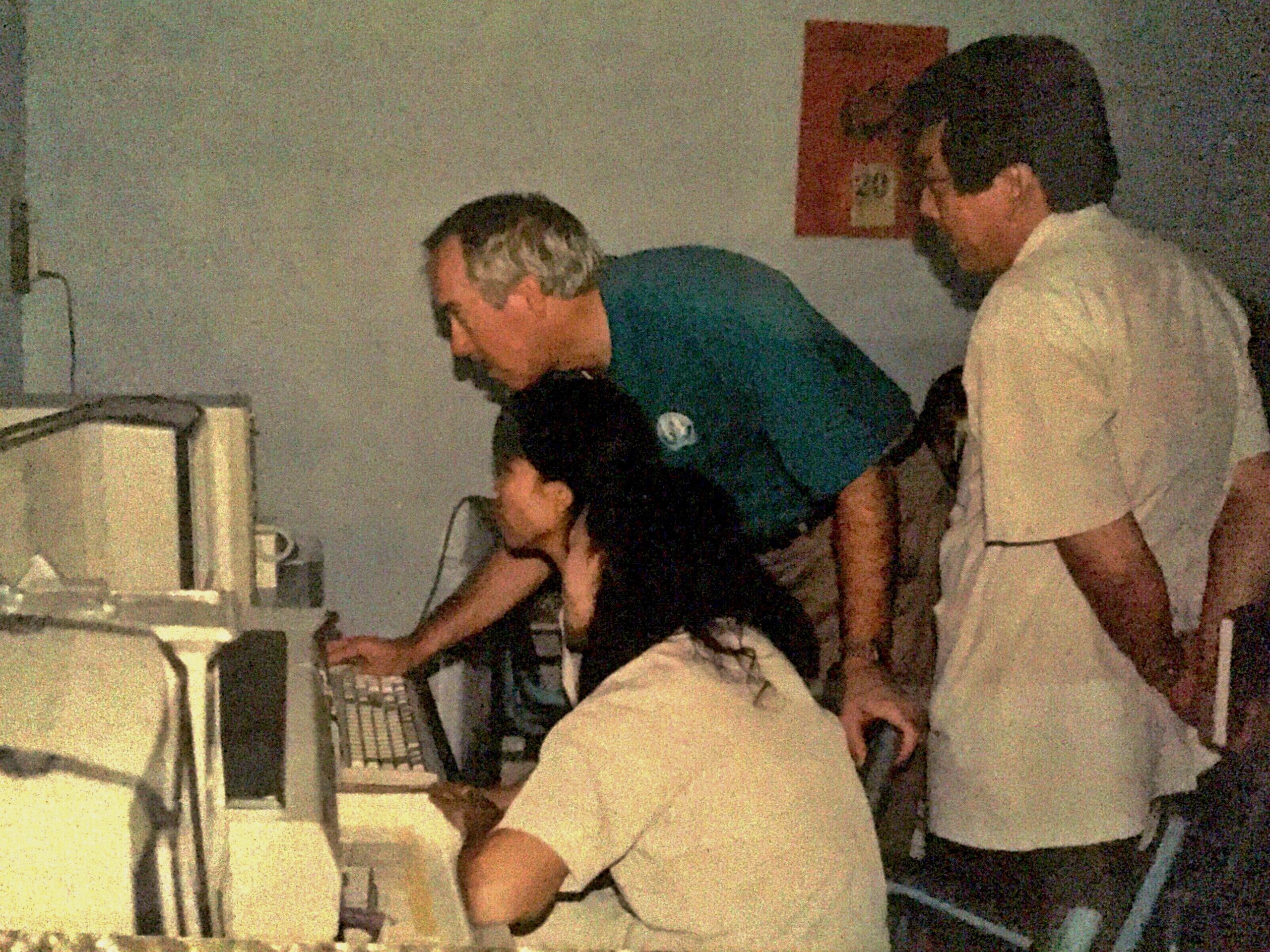
I have served on several Vets with a Mission teams, teaching computer applications in schools and hospitals. I have made Vietnamese friends. Some people think I am a traitor by giving aid to a former enemy. I’m not offended or resentful toward them. I only know that God has given me a burden and compassion for the people of Vietnam.
In 1970, I went on a mission of destruction, now I go on a mission of reconstruction. We failed to win the minds of the Vietnamese by bullets, but we are touching their hearts through the love of God.-Raymond
Battle for TraBong: Events and Aftermath
Raymond has written a detailed account of his service at Fire Support Base (FSB)/Landing Zone (LZ) Cindy near Tra Bong Vietnam. The firebase fought a major battle in September 1970. That battle and how it impacted the war in general and one soldier’s life specifically is the subject of his book.
We who served on LZ Cindy in 1969 and after when the unit left in 1971 did a job that had to be done to save more lives than were taken by the enemy. All of us were there because we were asked or drafted to serve this country and help the people of Vietnam survive.
Those of us who did the job on LZ Cindy did the best we could to survive and help those who served with us. It is unfortunate that some of those did not survive, but in war people die, and there is nothing we can do about it.
Please visit and follow Raymond’s tech blog. Based on his 30+ years in the IT industry as a software developer, programmer, and trouble shoooter, he shares his experience, knowledge, and inside information on all things computer. Find it at





 watercress words by Dr Aletha