Reading-a resolution worth making and keeping

This post shares some medical/health-related books worth reading. ‘The NOTE THROUGH the WIRE’, a story of love amid war; ‘The Orphan Collector’, a novel set during the 1918 Influenza Pandemic. The list includes best books from Amazon, People Magazine, and new titles from Tyndale, appealing to different interests. Check them out.

Every year I find more and more book lists; best books, most popular, best selling, books recommended by a celebrity or other famous person, etc. I can’t possibly read them all, but some of them sound so interesting I wish I could.

In this post I’m listing some books from these lists, all medical/health-related books, a designation I tend to interpret loosely.

(These are affiliate links to sites where you can buy something which pays a small commission to this blog to pay expenses and donate to health-related causes worldwide.)

Here is one book I read recently

The NOTE THROUGH the WIRE

In this true love story that defies all odds, Josefine Lobnik, a Yugoslav partisan heroine, and Bruce Murray, a New Zealand soldier, discover love in the midst of a brutal war.

In the heart of Nazi-occupied Europe, two people meet fleetingly in a chance encounter. One an underground resistance fighter, a bold young woman determined to vanquish the enemy occupiers; the other a prisoner of war, a man longing to escape the confines of the camp so he can battle again. A crumpled note passes between these two strangers, slipped through the wire of the compound, and sets them on a course that will change their lives forever.

Woven through their tales of great bravery, daring escapes, betrayal, torture, and retaliation is their remarkable love story that survived against all odds. This is an extraordinary account of two ordinary people who found love during the unimaginable hardships of Hitler’s barbaric regime as told by their son-in-law Doug Gold, who decided to tell their story from the moment he heard about their remarkable tale of bravery, resilience, and resistance.

Although published in 2020, the author wrote it in 2019, not realizing how timely it would be.

The Orphan Collector

A Heroic Novel of Survival During the 1918 Influenza Pandemic 

In this well researched novel about the influenza pandemic of 100 years ago, Ms. Wiseman takes us into the heartbreak of the thousands of children orphaned by both the pandemic and the world war.

I started reading the book late in the year, by the time the COVID-19 cases and deaths were surging in number. I thought about all the people being left orphaned now, although they are not all children. Some are middle-aged adults losing their elderly parents, while others are older adults losing their young adult children.

(As of January 25, 2021, in the United States 25 million persons have been infected with COVID-19, and 420,000 have died.)

Whatever one’s age, losing loved ones to an out of control disease is heartbreaking. The Orphan Collector does not have a fairytale “happy ending”. But the main character Pia, a 12-year-old immigrant girl in Philadelphia, learns an ending different than one hoped for can be satisfying in unexpected ways.

Best Books from Amazon

Ten Lessons for a Post-Pandemic World 

In Praise of Walking: A New Scientific Exploration

Breath: The New Science of a Lost Art 

Listen to an excerpt at the link.

Best Books from People Magazine

Hidden Valley Road

Inside the Mind of an American Family

Hamnet

Penny who blogs at grownchildren.net wrote this about Hamnet

  The author paints a detailed portrait of Shakespeare’s wife as an herbalist; …he grows and culls her herbs for various ailments and dispenses them as a pharmacist today would do.

But the story is about grief and how the Shakespeares, man and wife, separately worked their way through the immense loss of their son. The portrait of her grief–we don’t learn much about his–is thrilling in its sensitivity. You don’t have to be in the medical or health field to be fascinated by this book.

What Are You Going Through

Notes on a Silencing: A Memoir

New from Tyndale

The Anxiety Reset

A Life-Changing Approach to Overcoming Fear, Stress, Worry, Panic Attacks, OCD and More 

exploring the HEART of health in literature

I’d love for you to follow this blog. I share information and inspiration to help you turn health challenges into health opportunities.

Add your name to the subscribe box to be notified of new posts by email. Click the link to read the post and browse other content. It’s that simple. No spam.

I enjoy seeing who is new to Watercress Words. When you subscribe, I will visit your blog or website. Thanks and see you next time.

Dr. Aletha
Come Read with me-Tyndale Rewards.com
Reader Rewards Club

My Reader Rewards Club is a great way to earn free books and Bibles for yourself, friends, and family! Your journey to earning free faith-based products starts HERE.
(When you sign up through these links, I can earn free books too.)

As a member, you’ll have access to inspiring literature, Bibles, special promotional offers, and much more. Earning points is easy—you’ll receive 25 points just for signing up!

  • Shop at Tyndale.com or NavPress.com
  • Refer a friend
  • Write reviews
  • Take surveys
  • Sign up for e-newsletters and e-devotionals
  • And more!
sign up, earn points- myReader REWARDS CLUB

More recommendations from Smithsonian Magazine.com

The Ten Best Children’s Books of 2020

These top titles deliver history lessons, wordplay and a musical romp through the animal kingdom

The Ten Best Science Books of 2020

New titles explore the mysterious lives of eels, the science of fear and our connections to the stars

Why Walking is the Best Exercise for Heart Health

In today’s world, managing stress is crucial. Regular physical activity, like walking, plays a key role in mental well-being. Walking is easy, safe, low-cost, and suitable for all ages, improving heart health. Incorporating it into daily routines enhances fitness and reduces anxiety, promoting a healthier lifestyle for everyone.

updated September 21, 2025

I published this post during the COVID-19 pandemic. Now, in 2025 we have new stressors to deal with. Fortunately, stress managementt techniques work in many different situations, like regular physical activity.

Coping with stress by walking

We’re all struggling to cope with the stress of upended lives, risk of a new and menacing illness, economic instability, and an unpredictable future. Most of us are actively pursuing ways to take care of our bodies and minds so the stress doesn’t overwhelm us.

The Mayo Clinic reminds us that physical activity is one key way to do that.

Regular physical activity and exercise can help reduce anxiety and improve mood. Find an activity that includes movement, such as dance or exercise apps. Get outside, such as a nature trail or your own backyard.

Let’s go walking

I’ve had to adjust my activity routine since my dance studio is closed, as well as the recreation center, which I had just joined prior to the physical distancing protocol started.

I already liked to walk, so I have increased that to almost daily. I have a treadmill that I can use when the weather is not so nice, but I prefer to walk outside.

So in this post I’m going to share some photos from my walking journeys with reminders about the benefits of walking.

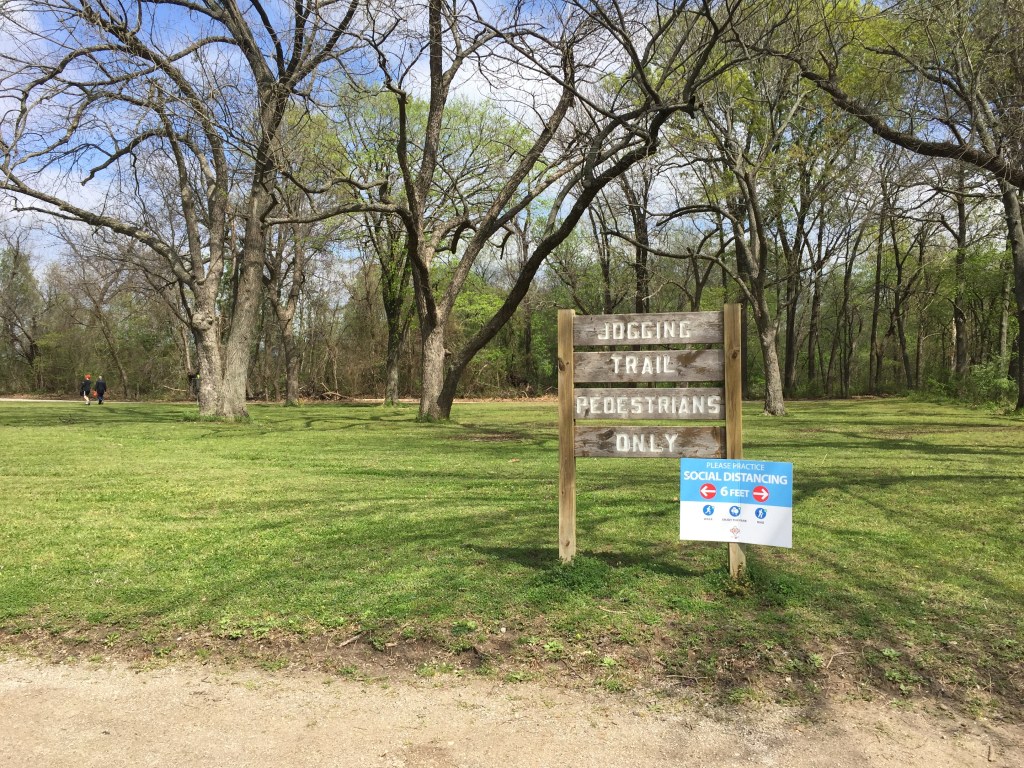
a walking trail at a park, sign advised social distancing
Multiple signs at the park reminded us to stay 6 feet apart, and everyone did.

Walking may be the best exercise

The best type of exercise is one that you will do regularly. Walking is considered one of the best choices because it’s easy, safe, and inexpensive.

Brisk walking can burn as many calories as running, but it is less likely to cause injuries than running or jogging. Walking doesn’t require training or special equipment, except for appropriate shoes.

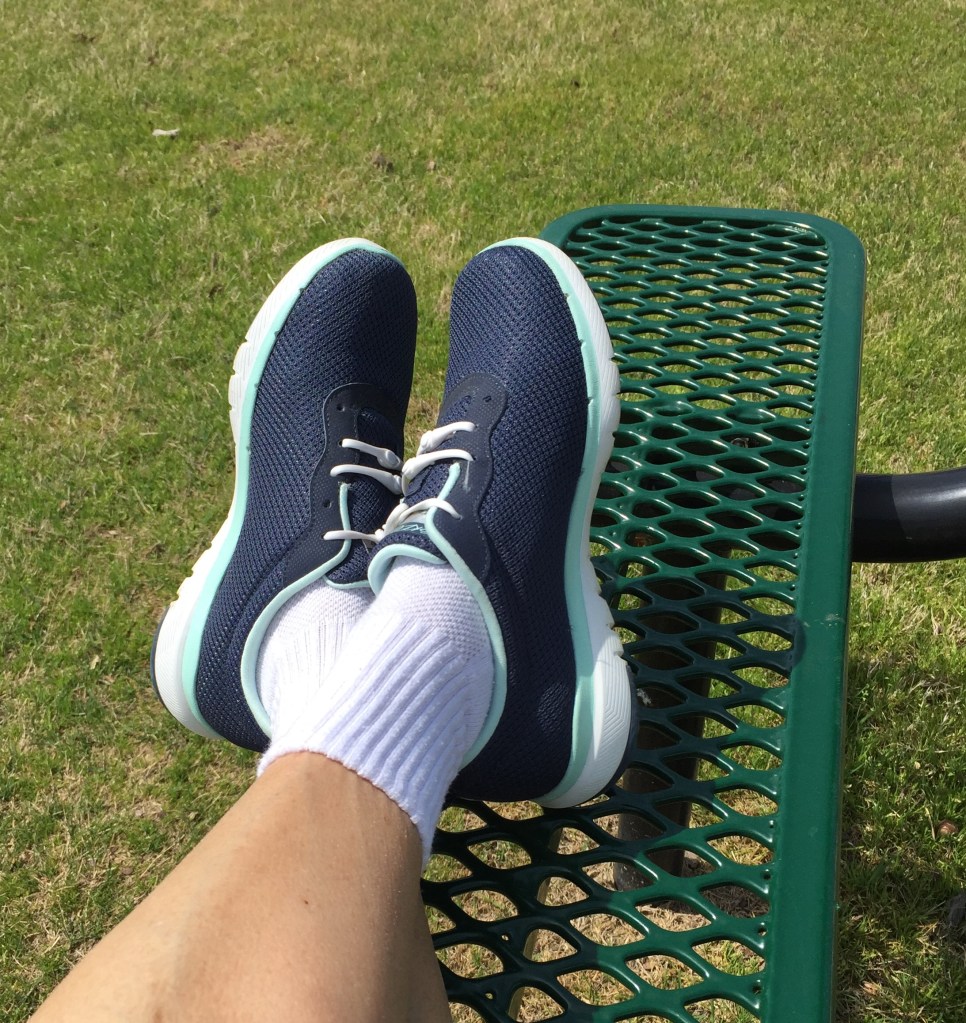
feet in walking shoes, crossed on a bench

Walking is an aerobic and weight-bearing exercise, which is beneficial for your heart and helps prevent osteoporosis.

I like Skechers for walking. My husband is a fan of Hoka.

Whatever brand you wear, choose one that fits well and is comfortable; wear good socks to help prevent blisters.

Read more about taking care of your heart at this previous post.

Walking for Heart Health

7 Keys to a Healthy Heart

February is American Heart Month, highlighting heart health amidst Valentine’s Day. In this post I outline seven major types of heart diseases and risk factors such as smoking and hypertension. Recognizing heart problem symptoms is crucial. Maintaining heart health involves addressing risk factors with healthy lifestyle choices. Share this vital information.

Keep reading

Don’t stop walking

As we get older we may be tempted to walk less. But movement becomes even more import with advanced age.

People age 65 and older should get at least 2.5 hours of moderate aerobic exercise (such as brisk walking) every week. That averages out to about 30 minutes on most days of the week. 

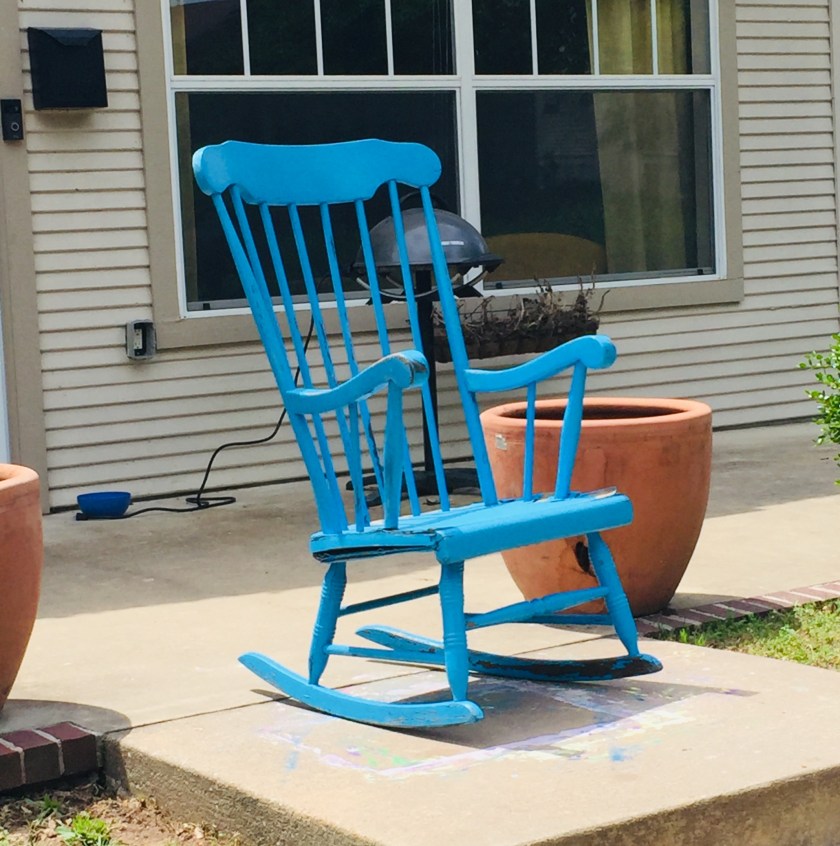
a bright blue wood rocking chair on a porch
This rocker looked inviting but I kept walking.

Low-impact activities such as walking, biking, or swimming generally go easy on your joints.

handlebars of a bicycle, and iris flowers
Dr Aletha in her bicycle helmet

One day I biked instead of walked; a little harder to take photos though.

How to include physical activity in your daily routine.

  • Park the car farther away at work or stores.
  • Get off the bus one stop earlier and walk the rest of the way.
  • Walk to do errands.
a USPS truck parked on a street
The mail carrier was also out walking, part of his daily routine for sure.

Get going and keep going

Everyone can benefit from physical activity. For most people, it is possible to begin exercising on your own at a slow pace.

If you have never exercised before, start with a 10-minute period of light exercise. A brisk walk every day is a good first exercise.

Slowly increase how hard you exercise and for how long.

You can walk outdoors, at home on a treadmill, alone, or with friends and family.

Make it fun. Listen to music or books on tape while you walk or jog. Watch TV or a video while you exercise.

a geometric cat chalked on a sidewalk
chalk rainbow drawn on a sidewalk
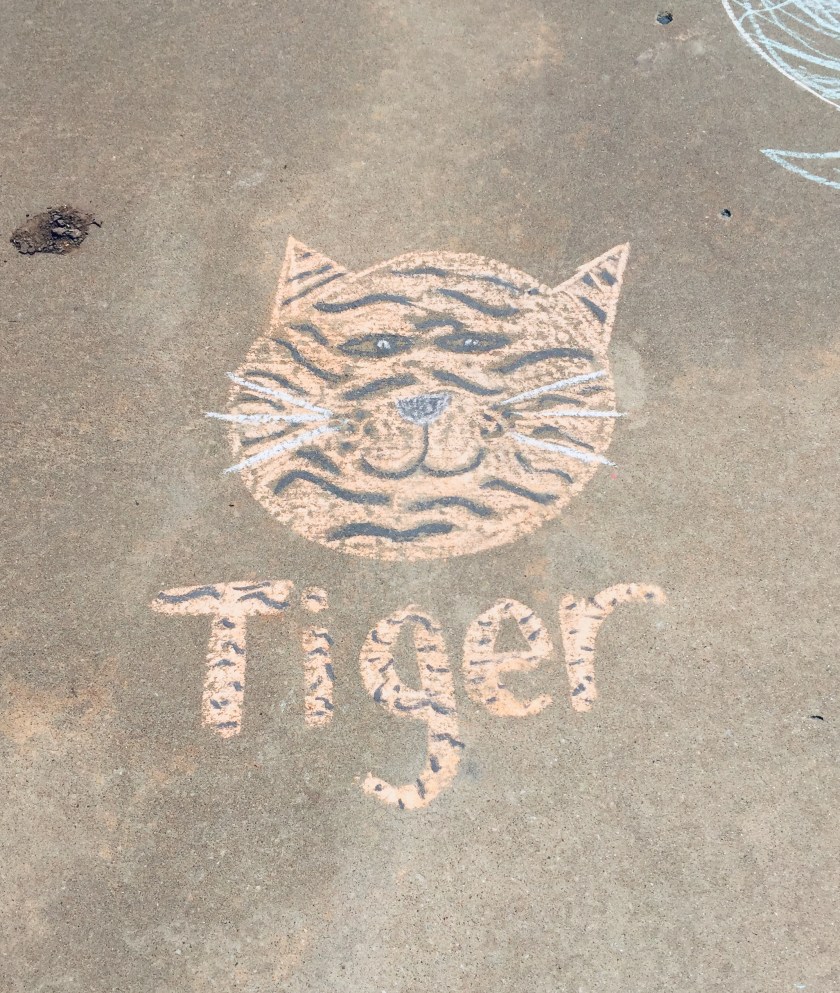
a tiger face drawn with chalk on a sidewalk

The HEART of walking

Aerobic exercise causes you to breathe more deeply. It makes your heart work harder to pump blood. Aerobic exercise also raises your heart rate (which burns calories).

Examples of aerobic exercise include walking, jogging, running, dancing, swimming, and bicycling.

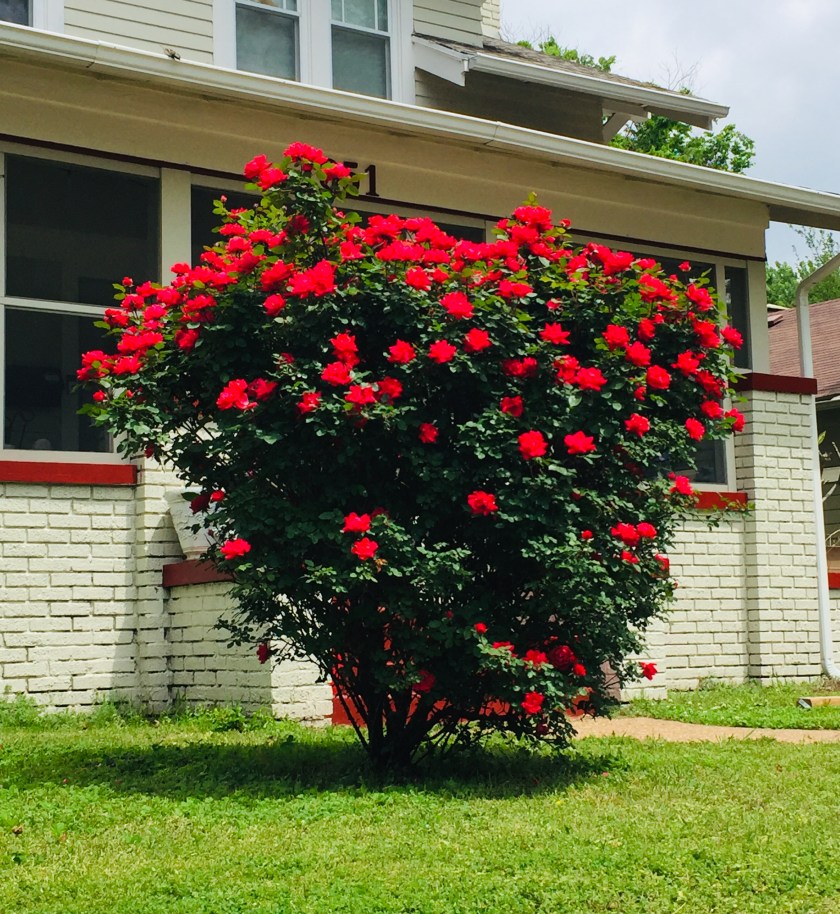
a bush with bright red blooms, shaped like a heart
I posted this photo on Facebook and someone commented that it is shaped like a heart. What do you think?
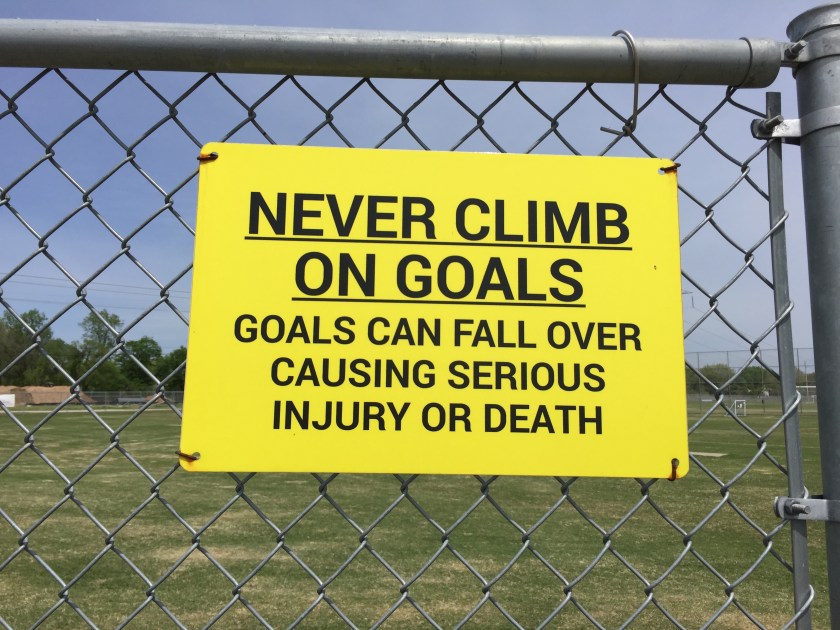
a sign says"never climb on goals"

This sign was on the fence at a soccer field, where it’s good advice.

But in life, I think if we “climb on our goals”, we’ll be more likely to reach them

Sometimes “goals” do fall over, hopefully not causing serious injury or death, but disappointment and discouragement.

If your goals fail, climb back and try again. Just not on the soccer field, please.

Coach’s Corner: Evaluate your fitness goals

As you consider your fitness, where are you compared to where you want to be?

What is keeping you from the fitness level you need and want?

What do you need to do to get you to the next level? When will you start?

Visit FamilyDoctor.org

The fitness advice in this post was taken from FamilyDoctor.org, the patient information site sponsored by the American Academy of Family Physicians, of which I am a member. Please visit the site for more advice about exercise, fitness, and other health concerns.

Exploring the HEART of fitness

I’d love for you to follow this blog. I share information and inspiration to help you turn health challenges into health opportunities.

Add your name to the subscribe box to be notified of new posts by email. Click the link to read the post and browse other content. It’s that simple. No spam.

I enjoy seeing who is new to Watercress Words. When you subscribe, I will visit your blog or website. Thanks and see you next time.

Dr. Aletha