This is the second post in a series helping us understand the federal government’s role in health policy in the United States. In short, its role is extensive and expensive. You can read the first post here.
The Constitution does not specifically say the government controls or provides healthcare. The Preamble hints with “promote the general welfare”.
Considering how basic and unorganized medical science was in the late 18th century, it’s not surprising they did not consider it in the plans for the new government.
I am publishing a series of posts based on
Congress and the Executive Branch and Health Policy
by Julie Jovner at KFF, an independent source for health policy research, polling, and news, an endowed national nonprofit organization.
Ms. Jovner’s article explains how the three branches of government work together, why the Department of Health and Human Services (and therefore its Secretary) is so important, and the budgeting and regulation processes.
This series is nonpartisan and objective. I made minimal edits to improve readability but retain meaning. I insert comments in parentheses to add clarity.
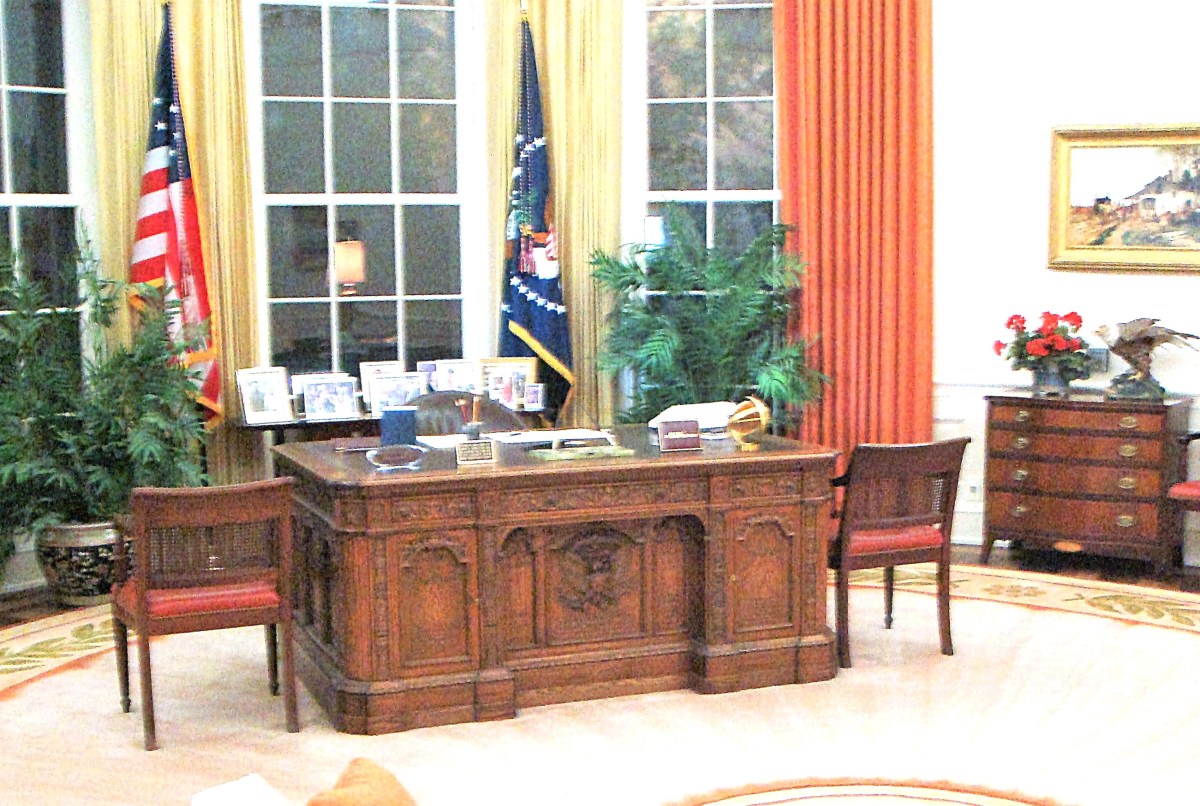
The photos are for illustration only and are not in the KFF article.
The Executive Branch
This post focuses on the executive branch of government, The White House including the President and his Cabinet, especially the Secretary of the Department of Health and Human Services.
The President
The executive branch carries out the laws made by Congress and operates the federal health programs, often filling in details Congress has left out through rules and regulations.
Federal workers in the health arena provide direct patient care, regulate how others provide care, set payment rates and policies, conduct medical or health systems research, regulate products sold by the private sector, and manage the billions of dollars the federal government spends on the health-industrial complex.
Although most of the executive branch’s health policies are implemented by the Department of Health and Human Services (and to a smaller extent, the Departments of Labor and Justice), over the past several decades the White House itself (through the President) has taken on a more prominent role in policy formation.
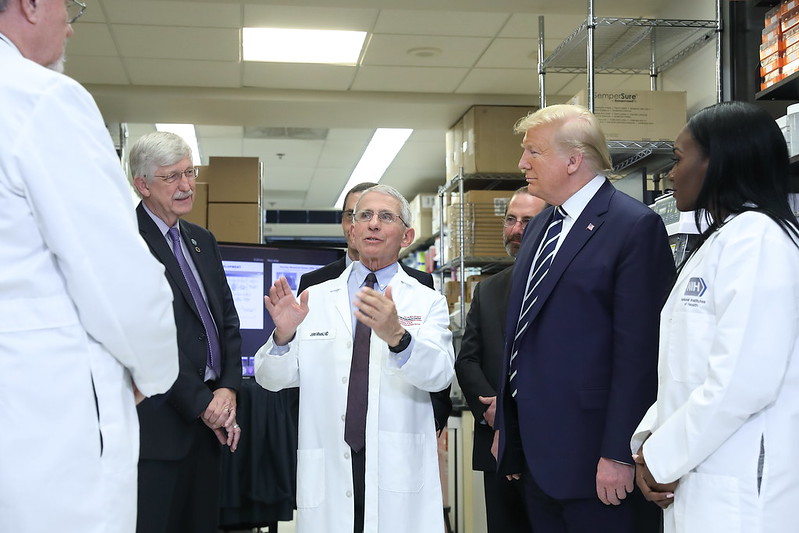
President Donald Trump visited NIH on March 3, 2020 and toured the National Institute of Allergy and Infectious Diseases’ Vaccine Research Center (VRC) to learn about research on a vaccine for the novel coronavirus SARS-CoV-2.
Department of Health and Human Services (HHS)
Most federal health policy is made through the Department of Health and Human Services except for several key areas.
Exceptions include the
- Veterans Health Administration, run by the Department of Veterans Affairs;
- TRICARE, the health insurance program for active-duty military members and dependents, run by the Defense Department; and the
- Federal Employees Health Benefits Program (FEHB), which provides health insurance for civilian federal workers and families and is run by the independent agency the Office of Personnel Management.
The health-related agencies within HHS are roughly divided into the resource delivery, research, regulatory, and training agencies that comprise the U.S. Public Health Service and the health insurance programs run by the Centers for Medicare and Medicaid Services (CMS).

The Surgeon General oversees the U.S. Public Health Service (USPHS) Commissioned Corps, an elite group of over 6,000 uniformed officers who are public health professionals. The USPHS mission is to protect, promote, and advance the health of our nation.
The U.S. Public Health Service
Ten of the 13 operating divisions of HHS are part of the U.S. Public Health Service, which also plays a role in U.S. global health programs. They are:
- The Administration for Strategic Preparedness and Response (ASPR)
- The Advanced Research Projects Agency for Health (ARPA-H)
- The Agency for Healthcare Research and Quality (AHRQ)
- The Agency for Toxic Substances and Disease Registry (ATSDR)
- The Centers for Disease Control and Prevention (CDC)
- The Food and Drug Administration (FDA)
- The Health Resources and Services Administration (HRSA)
- The Indian Health Service (IHS)
- The National Institutes of Health (NIH)
- The Substance Abuse and Mental Health Services Administration (SAMHSA)

CMS
The Centers for Medicare and Medicaid Services (CMS) is by far the largest operating division of HHS. It oversees not just the Medicare and Medicaid programs, but also the federal Children’s Health Insurance Program (CHIP) and the health insurance portions of the Affordable Care Act(ObamaCare).
Together, the programs under the auspices of CMS account for nearly a quarter of all federal spending in fiscal 2023, cost an estimated $1.5 Trillion in fiscal 2023, and served more than 170 million Americans – more than half the population.
KFF’s website content is licensed under a Creative Commons Attribution-NonCommercial-NoDerivatives 4.0 International (CC BY-NC-ND 4.0) license that allows for the sharing of our information with proper attribution and without alteration.
End of KFF article
The President’s Cabinet and other Agency Heads
As you can imagine, the leadership organization of HHS is large and complex. At the top is the Secretary, who is a member of the President’s Cabinet , approved by the Senate.
Other key leadership positions, all of which are appointed by the President include
- U.S. Surgeon General
- Director of the CDC
- Commissioner of Food and Drugs (FDA)
- Director of the NIH
- Director of the National Library of Medicine
- Administrator of CMS

Looking ahead-Congress
In the next post in this series, we will consider Congress’s role in overseeing these agencies and, most importantly, funding them.
“How Congress oversees the federal health care-industrial complex is almost as byzantine as the U.S. health system itself.
KFF
Jurisdiction and responsibility for various health agencies and policies is divided among more than two dozen committees in the House and Senate.”
Exploring the HEART of Health
I took the cover photo for this post at the Reagan Presidential Library in California. It is a replica of the Oval Office during his administration.
Thanks for getting through another post that’s maybe more informative than inspiring. I hope you learned something.
I’d love for you to follow this blog. I share information and inspiration to help you transform challenges into opportunities for learning and growth.
Add your name to the subscribe box to be notified of new posts by email. Click the link to read the post and browse other content. It’s that simple. No spam.
I enjoy seeing who is new to Watercress Words. When you subscribe, I will visit your blog or website. Thanks and see you next time.
Dr. Aletha
- About Dr. Aletha
- How to Use this Site
- Make Your Life Easier
- Search by Category
- Share the HEART of health
- my Reader Rewards Club
- RoboForm Password Manager
Use these links to share the heart of health wherever you connect.


 watercress words by Dr Aletha
Once again, thank you for this information, Aletha. I’m trying to be hopeful the health of US citizens won’t be hurt by the current administration. I worry about Medicare and Medicaid for so many of us.
https://marshainthemiddle.com/
LikeLike
You’re welcome Marsha. I think healthcare is the least partisan of issues. We all agree we want to improve health and pay for it wisely. It wasn’t a major issue to voters in this election, but it may be in two years.
LikeLike