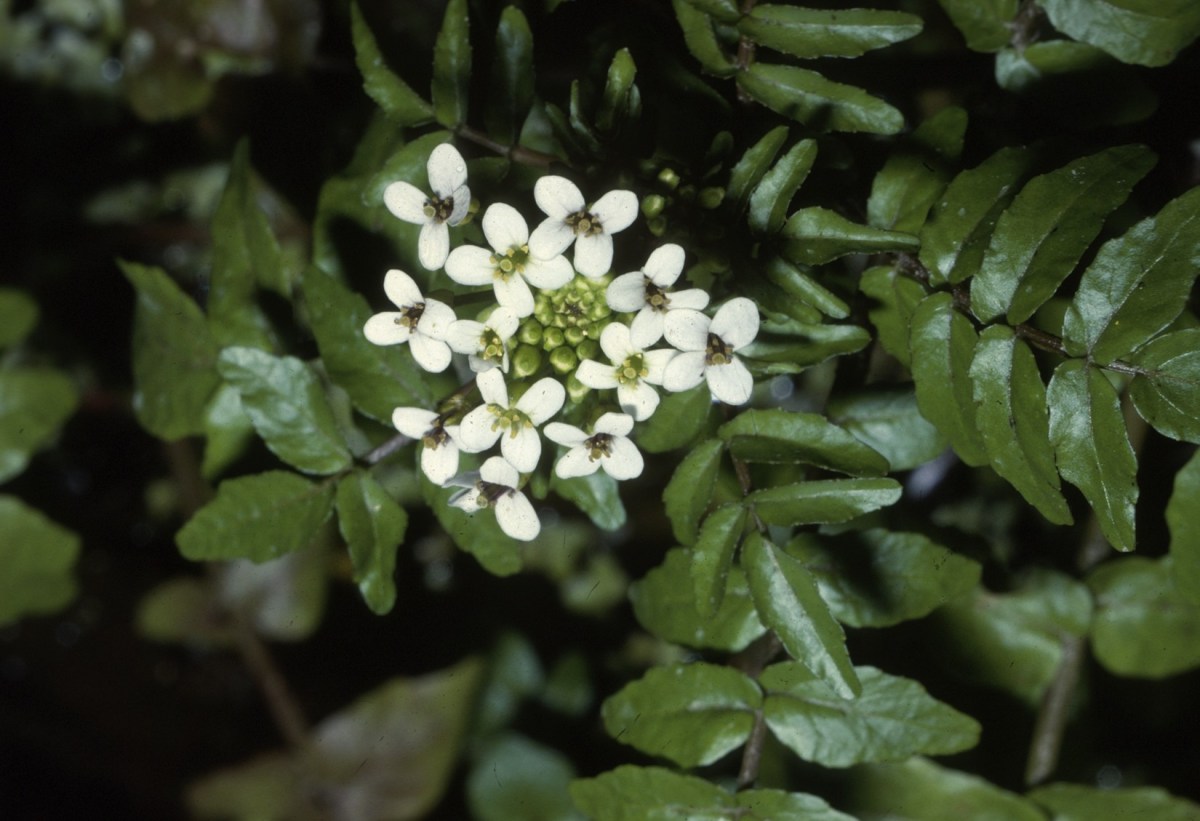
Watercress: Nutrition and Recipes from The Book of Greens

This article explores the health benefits and culinary uses of watercress, a nutrient-rich green, alongside the cookbook “The Book of Greens” by Jenn Louis and Kathleen Squires. It highlights various greens, recipes, and cooking techniques while emphasizing the nutritional value and historical significance of watercress.

Despite the name, this blog isn’t about watercress but is like watercress-unique, peppery, bright, and nutritious. And as a physician blogger, I want to know more about the health benefits (and possible dangers) of watercress.

(I also find watercress intriguing because it is from the plant family Cress- also my family name. )

In my research about watercress, I found an intriguing book,

The Book of Greens-a Cook’s Compendium

“A cook’s compendium of 40 varieties, from Arugula to Watercress, with more than 175 recipes” 

Jenn Louis-co-author

Jenn Louis has competed on Bravo’s “Top Chef Masters,” was named one of Food & Wine’s “Best New Chefs,” and has earned two nominations for the James Beard Foundation Award of Best Chef: Northwest.

Her debut cookbook, Pasta By Hand published in 2015, was nominated for an IACP from the International Association of Culinary Professionals and this, her second book, debuted in April 2017 and won an IACP award. The book was also nominated for a James Beard Award.

She has owned and operated three restaurants and a catering business in Portland, Oregon. Jenn is actively involved with nonprofits including World Central Kitchen, Alex’s Lemonade and Share Our Strength.

Kathleen Squires-co-author

Kathleen Squires is a food and travel writer from New York City. She has coauthored The Coolhaus Ice Cream Book, The Quick Six Fix, and The Journey, which won an IACP award.

The Book of Greens

The Book of Greens is about 40 different varieties of greens; some you probably already know and use-

  • arugula
  • bok choy
  • Brussels sprouts
  • cabbage
  • kale
  • lettuces
  • spinach

Others are less known and used, at least to me-

  • agretti
  • chickweed
  • mache
  • mizuna
  • seaweed
  • succulents
  • wild and foraged greens
Greens are a superfood because they are so nutritious, are inexpensive to grow, and come in many varieties with a broad diversity of flavors and textures. Jenn Louis

green leafy vegetables
image from LIGHTSTOCK.COM, stock photo site, an affiliate link

What’s in The Book of Greens?

This book is a cookbook, not a textbook on greens, so it features recipes, some simple, some complicated, but all incorporating some variety of greens. She starts by covering some cooking basics as it applies to greens-

  • How to buy greens-fresh, in small quantities
  • How to prepare-clean and handle them gently
  • How to cook-which methods work best for each variety
  • Storage of greens
  • Tools to use in prep and cooking
  • Notes on common ingredients used in cooking greens-oils, spices, salts, stocks, vinegars
  • Seasons-when to buy

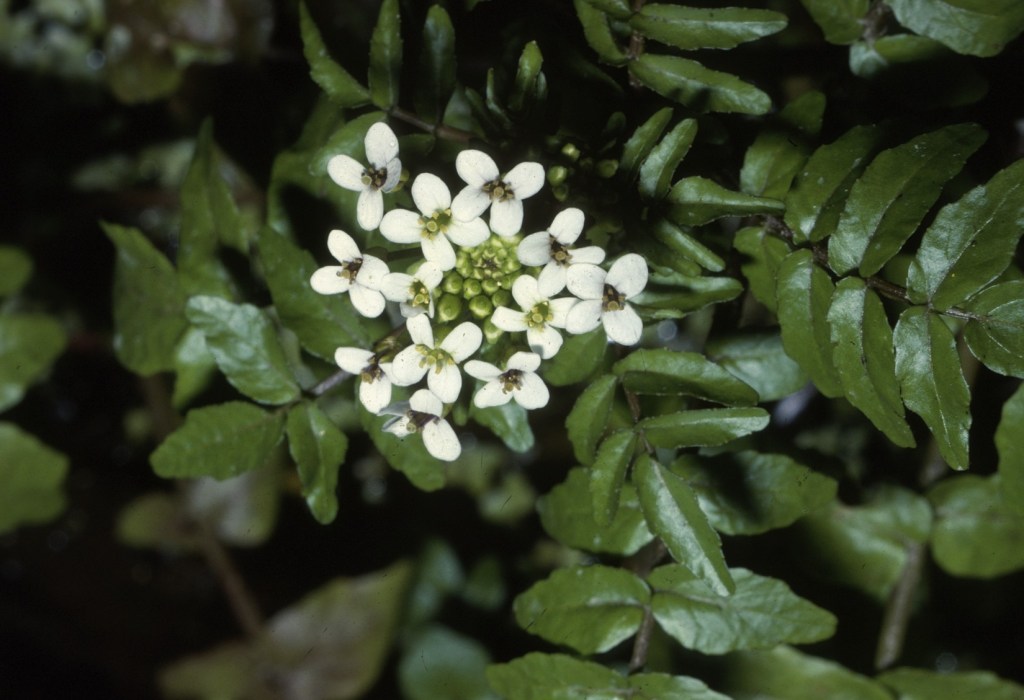
Watercress basics –Nasturtium officinale

an ultrapeppery, strong-stemmed green, one of the oldest documented greens, dating back to ancient Greece, Rome, and Persia page 271
  • most often used in salads and sandwiches, and pureed as a soup
  • used in sandwiches for British afternoon tea
  • prescribed by Hippocrates (an ancient Greece physician, considered the father of medicine)
  • used by Captain Cook’s crew to prevent scurvy

This last point was likely due to its Vitamin C content; a deficiency causes the disease scurvy. It also is rich in other vitamins- A, B, E, K, and the minerals calcium, phosphorus, potassium, and manganese. Some experts call it the most nutrient-rich vegetable.

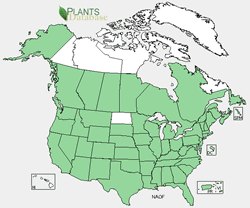
Nasturtium officinale W.T. Aiton - watercress NAOF
Nasturtium officinale W.T. Aiton – watercress NAOF

How to use watercress

Watercress grows in the spring and fall in North America. She calls it a tender green which can be eaten raw or cooked. Best cooking methods are

  • lightly sauteed
  • wilted in soups
  • quickly steamed
  • quickly stir-fried over very high heat

Watercress recipes in this book

  • Chicken and pork belly paella with watercress
  • Slow-roasted pork tonnato with watercress and tomatoes
  • Watercress soup with creme fraiche and za’atar

Wild watercress-Nasturtium microphyllium

This watercress relative grows wild, rather than cultivated. It has a “more intense peppery and piquant flavor.” It grows in any watery terraine-streams, lakes, ponds. (Edible wild greens must be chosen carefully, so as not to confuse them with poisonous plants.)

Photos by Ed Anderson

In addition to the authors, the photographer, Ed Anderson, deserves special recognition. His photos of the greens and the finished recipes make this a “coffee table book”, even if you never try a single recipe.

Another post on this blog that features watercress

Exploring the HEART of Health

I’d love for you to follow this blog and follow me on social media.

I share information and inspiration to help you transform challenges into opportunities for learning and growth.

Add your name to the subscribe box to be notified of new posts by email. Click the link to read the post and browse other content. It’s that simple. No spam.

I enjoy seeing who is new to Watercress Words. When you subscribe, I will visit your blog or website. Thanks and see you next time.

Dr. Aletha

Dr Jane Goodall’s Harvest for Hope- a book review

Jane Goodall wants us to manage stress , not so much our own, but the stress of our planet, by producing, transporting, preparing, and eating our food in ways less harmful and wasteful to us and our planet.

updated October 2, 2025

In Memory, Dr. Jane Goodall

Dr. Jane Goodall, DBE, Founder of the Jane Goodall Institute, UN Messenger of Peace and world-renowned ethologist, conservationist, and humanitarian, has died at the age of 91 of natural causes.

Dr. Jane was known around the world for her 65-year study of wild chimpanzees in Gombe, Tanzania.

In the latter part of her life she expanded her focus and became a global advocate for human rights, animal welfare, species and environmental protection, and many other crucial issues.

(source-Jane Goodall Institute website)

Jane Goodall went to Africa

For Beth- Follow your dreams-and help us to make the world a better place for human and non-human beings.

Dr. Jane

I found a book, In the Shadow of Man, at a used book sale benefiting a local charity. I cannot verify the signature of the note quoted above, but since I found it on the title page of a book by Jane Goodall, I suspect it is authentic.

I’ve wondered who Beth is. Did she need to discard possessions for a move, did she die, or did she just not realize what a treasure she was giving away? If she donated it for charity’s sake, offering it for auction or selling it on eBay might have raised more support. I don’t think the two dollars I paid helped the charity much.

This was not my first almost-close encounter with Jane Goodall. When my son was in elementary school many years ago, she came to his school.

She was in our city for a public event but this was arranged privately by one of the teachers. I believe she had a personal connection with the famous researcher so Dr.Goodall agreed to a private visit, with no news media present.

In anticipation of her visit, the children were asked to write poems about Dr.Goodall. I don’t remember exactly how it came about, but my son’s poem was chosen to present to her as a gift. And he was chosen to go on stage and give it to her.

Dr. Jane Goodall with Dr. Aletha’s son at his elementary school.

This happened long before the days of cell phone cameras and social media; if it happened today, I and the rest of the world would have seen it minutes later.

But thanks to a teacher with a camera, a few weeks later he came home with a photo of him shaking hands with the lady more famous for hanging out with chimpanzees than with 5th graders .

Dr. Goodall’s pandemic warning

Knowing of her concern for animals, humans, and the planet, I suspected Dr. Goodall has opinions about the COVID-19 pandemic. In this July 3, 2020 interview with CBS News she said this,

we brought this on ourselves… the scientists that have been studying these .. zoonotic diseases ( jump from an animal to a human) have been predicting …this . As we chop down at stake tropical rainforest, We’re driving deeper and deeper, making roads throughout the habitat, which … brings people and animals in contact with each other. People are hunting the animals and selling the meat, or trafficking the infants, and all of this is creating environments which are perfect for a virus or a bacteria to cross that species barrier and sometimes, like COVID-19, it becomes very contagious and we’re suffering from it. 

In the Shadow of Man-and chimpanzees

In 1960,26-year-old Jane Goodall went to Tanzania to study chimpanzees. No one had studied chimps before, so little was known about their behavior in the wild. Biologically and genetically, chimps are closer to humans than any other animal, so scientists believe understanding their behavior could shed light on some aspects of human behavior.

Jane roamed the forests of the Gombe Stream Chimpanze Reserve in Tanzania watching the chimps first with binoculars and then with direct observation at close range, even occasionally close enough to touch them. She was accompanied by her mother Vanne, and later joined by a photographer Hugo van Lawick.

After working together with nature and animals as their common interest, she and Hugo fell in love and married. Eventually, she had a staff of research assistants and students involved in observation and reporting about the chimps and other animals.

Title page of the book I bought at a used book sale.

In this book, written 10 years later (and periodically updated; my copy was revised in 1988.) Dr. Goodall details her years of living among the chimps and her detailed observations and conclusions about their behavior. (For which she earned her doctorate degree.)

One of her observations was that “like humans, chimpanzees are omnivores, feeding on vegetables, insects, and meat.” Which brings me to a review of a more recent book by Dr. Goodall.

Harvest for Hope-A Guide to Mindful Eating

Jane Goodall is just as interested in people as she is in chimpanzees. Despite the title, though, this book is not about dining while listening to soothing music by candlelight to relax and de-stress.

Jane Goodall wants us to manage stress , not so much our own, but the stress of our planet, by producing, transporting, preparing, and eating our food in ways less harmful and wasteful to us and our planet. She wants us to

Change one purchase, one meal, one bite at a time

Jane Goodall

Goodall reflected back on her life as a child in England when her family’s food supply was limited by the shortages of a world war. Even in peacetime, they ate what was grown locally and seasonally, rather than food flown in from distant lands. Her nutrition ideas are not new or unique, but she helps us realize our food choices affect the environment as much as the environment affects our diet.

Dr. Goodall recommends buying locally grown, organic foods exclusively. She advocates a meat-free diet. She urges us to waste less. She believes we need to “take back food productions from large corporations.”  We will be healthier and so will our planet

Dr. Jane recommends that we avoid

  • GMO (genetically modified organism) foods
  • meat
  • imported food
  • bottled water
  • fast food
  • refined processed carbs
  • concentrated and synthetic sweeteners
  • commercial oils

Dr. Jane encourages us to

  • Take back food production from large corporations
  • Waste less.
  • Use a filter for drinking water
  • Eat organic locally grown food.
  • Eat fruits, vegetables, legumes
  • Use olive oil, herbs, seasonings

Follow this link to learn about Jane Goodall’s life and work today.

the Jane Goodall Institute

“Dr. Jane Goodall went into the forests of Tanzania to study wild chimpanzees and share their stories. She left the forests to become an activist – to protect those chimpanzees and work with people to improve lives while opening minds and hearts.

Now, she shares her message of hope and inspires people worldwide to take action on behalf of people, other animals, and the planet every single day…”

a final thought about pandemics

But we know if we don’t stop destroying the environment and disrespecting animals — we’re hunting them, killing them, eating them; killing and eating chimpanzees in Central Africa led to HIV/AIDS — there will be another one. It’s inevitable.

Dr. Jane Goodall

exploring the HEART of mindful eating

I’d love for you to follow this blog and follow me on social media.

I share information and inspiration to help you transform challenges into opportunities for learning and growth.

Add your name to the subscribe box to be notified of new posts by email. Click the link to read the post and browse other content. It’s that simple. No spam.

I enjoy seeing who is new to Watercress Words. When you subscribe, I will visit your blog or website. Thanks and see you next time.

Dr. Aletha
Before you go, read another post about healthy, plant-based eating

Surprising health benefits of plant based eating

The post introduces two influential books and associated websites advocating for whole plant-based unprocessed foods. “The China Study” demonstrates the link between nutrition and major diseases, while “How Not to Die” proposes dietary changes to prevent and reverse diseases. These resources recommend whole foods, plant-based diets and provide evidence-based guides and recipes for healthy eating.

Keep reading