3 keys to effective communication with your doctor, part 2

updated October 31, 2022

In part 1, we considered the importance of establishing a connection between doctors and patients before trying to communicate. The goal is to establish effective patient engagement

Now we’re going to look at some practical aspects of exchanging information with doctors- remember, exchange means give something and receive something  in return. 

A failure to communicate

Doctors want to give patients the information they need and most of the time believe they have done so. We are surprised when patients come back and say we didn’t explain their problem and its treatment, or they didn’t understand what we told them about it. I think this happens for 2 reasons.

  • We doctors tell patients what we think is important, but it may not be what you the patient or family considers most important.
  • After patients hear part of what we say, they get saturated and don’t hear the rest, especially when it is emotionally charged.

That’s why it is so important for patients and families to ask questions; don’t just rely on what the doctors volunteer. What is important to them may not be what is most important to you. And the more specific questions you ask, the more detailed the information you receive will be.

The one question you should always ask a doctor at each visit is

“What is the most important problem today, and what is the next step in treating it?”

Urgent vs Important

The most important problem that the doctor finds may not be the one you were admitted for or came to the office for. Or if you came with multiple problems, the most important may not be the one that seemed most urgent to you.

For example, you may go to an emergency facility for an injury that caused a large gash on your leg, one that needs stitches. This is an urgent problem that needs to be treated.

But the doctor finds you have high blood pressure that you are unaware of. High blood pressure can lead to heart failure and stroke  if left untreated. So the doctor is going to instruct you to see your primary care doctor to have this problem addressed. In terms of your long term health, the high blood pressure is your most important problem today.
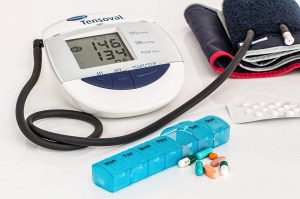
It is important to control blood pressure
High blood pressure can cause a heart attack.

What questions do you have?

You will get more helpful information from your doctor if your questions are as specific as you can ask; always inquire as to how tests and procedures this will affect your treatment and recovery. Here are some examples-

  • What did the xray show and what does mean for my problem?
  • What was the blood test result and will it change my treatment?
  • How will this procedure change my condition?
  • What needs to happen before he can move out of ICU?

Write important things down. Questions that you want to ask. Information that the doctors need. Answers to the questions. Refer to it each time you speak with the doctors.

When you or a loved one is in the hospital, your main concern is going home. When the time comes to be discharged, it is just as important to ask questions and understand the plan as during the illness.

Too many times I have had patients return to my office after a hospital stay  unable to give me any information about their illness and care . Important information to know include

  • What problems were treated during this admission and how did they change?
  • What will we need to do at home to continue the recovery?
  • When do we need to see a doctor and which doctor do we see?
  • What medications will I need to be on when I go home?

Understanding your doctor; what do those words mean?

Doctors are being encouraged and taught to use “plain language” when talking to patients, meaning limiting the use of medical jargon. I agree that a string of highly technical terms of any kind makes communication harder.

But I’m not sure that simply using plain words solves the problem either. Whatever terms you use to exchange information must be understood by both persons. And that is not always the case.

Here’s an example.

If a doctor says that you or a relative has had a Myocardial infarction , do you know that that means a Heart attack? 

But, do you know exactly what heart attack means? Probably not.

What causes heart disease?
A heart attack means the heart muscle is injured from too little oxygen reaching it, usually due to blockage in the arteries.

So,  if the doctor says “heart attack” without adding any additional information, you should ask

  • “I understand a heart attack to mean ________. Is this correct?”
  • “I do not understand what a heart attack is. Please explain.”

You can master medical  terminology . How many new things have you learned in the past 5 years? Each of those had a vocabulary and instructions that you learned and now use regularly. Think of your first smartphone, tablet, digital camera or even a coffee maker . You make the effort to learn what is important to you . 

Make an attempt to learn about your and your family’s medical issues; even if you don’t understand it completely your doctor will appreciate that you are trying.

In addition to  doctors you have nurses, pharmacists, dieticians, physical therapists, social workers who can answer questions. Ask for referrals to community resources.

There are helpful resources on the Internet so anyone with a laptop, tablet, or smartphone has access to medical information anywhere anytime.

Sometimes it is helpful to find accurate definitions of medical terms. Consider using the

Plain Language Dictionary from the University of Michigan

Another resource is the plain language thesaurus for Health Communications

Understanding Medical Words: A Tutorial from the National Library of Medicine 

will help you understand where medical terms come from and how to interpret terms that are new to you. There’s even a test at the end to see how much you learned.

rhinoceros
The rhinoceros helps us remember that “rhino” refers to the nose, as in rhino-sinusitis.


sharing the HEART of health with medical words you can understand

Medical stethoscope and heart on a textured background

Dr Aletha

3 keys to effective communication with your doctor

Effective communication between doctors and patients is crucial for better healthcare outcomes. Patient engagement involves a connection between patients, caregivers, and healthcare providers, with patients actively involved in decisions. Connecting and communicating with empathy and respect, sharing information and feelings, and acknowledging each other’s roles and concerns can improve the healthcare experience.

Do you feel heard after leaving your doctor’s office? Do you feel you understand what the doctor said to you?

Surveys suggest doctors and patients often fail to communicate effectively, so public and private medical organizations have implemented programs to improve “patient engagement”. But what exactly does that mean?

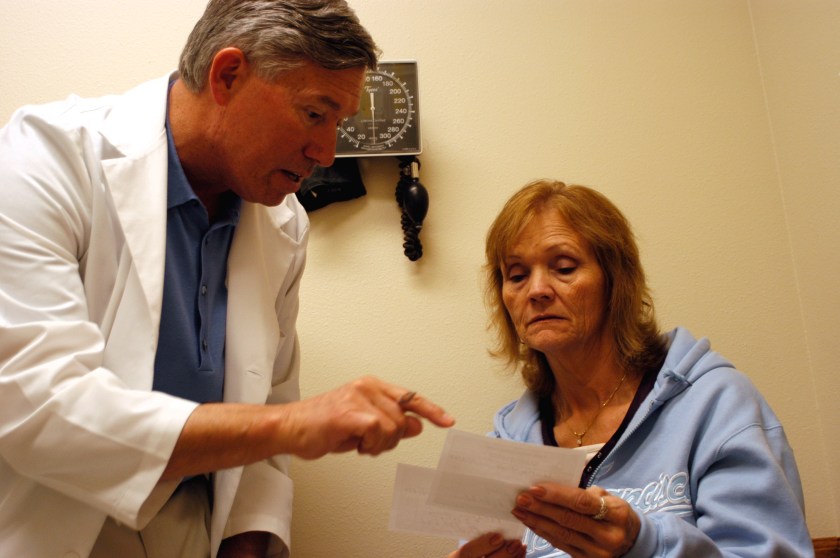
doctor talking to a woman
photo compliments the American Academy of Family Physicians

A failure to communicate

Patients may feel that doctors ignore their questions, dismiss their concerns, don’t listen to them,don’t spend enough time with them, and don’t use language they can understand.

Physicians wonder why patients withhold important health information, fail to follow up with recommendations, and don’t ask questions or express their concerns.

The main problem with health care communication is that it involves people- and people frequently communicate poorly, and sometimes not at all. It never will be perfect. But we can do better.

So what is true patient engagement anyway?

Dr. Rob Lamberts writes

“Engagement is about interaction, listening, and learning in relationship to another person.”

Barbara Ficarra, R.N., puts it this way:

Patient engagement is a connection between patient, caregiver and health care provider.

Patients and their families are empowered and they are active in health care decisions.

Those patients and consumers who choose to be actively involved and in charge of their health work together with their health care providers to successfully rech their health goals and needs. “

Why communicate better?

To make healthcare interactions more effective, efficient, and empowering, doctors and patients need to develop skills that may differ from what they have done in the past.

Communication is a connection allowing access between persons

doctor holds patient's hand
on a mission trip to Mexico; photo by Brian Edgerton

From Connection to Communication

If we try to start exchanging information, thoughts, and feelings before we connect, it is likely to be unsatisfactory.

For example- think about a recent retail service experience – one that worked and one that didn’t. Perhaps it was a call to customer service for a phone service problem. Or maybe you spoke with a salesperson at a car dealership.

Whatever the situation, and outcome, you probably rated it more favorably if you felt connected with the person helping you.

When I called my medical insurance carrier to resolve some unpaid claims I dreaded the call, expecting a difficult unpleasant conversation.

But the representative was professional, efficient, and confident. She started immediately by telling me her name and position, then asked me my name.

Next, she accessed and reviewed my account, giving me feedback about what she found. Then we started working on my problem and continued until it was resolved.

I was surprised to have the situation taken care of efficiently. And in doing so, I felt empowered.

In dealing with others be willing to be frank , flexible, and forgiving.

Connection-who

Customer service depends on connecting, and that usually starts with knowing who you are dealing with. The first item we exchange in any human interaction is usually our name.

Dr. Oglesby nametag

You should learn your doctor’s name and credentials- MD, D.O., and specialty- internal medicine, cardiology, psychiatry, etc., what kind of doctor are they?

What is this doctor’s role in your care? Is this doctor primary or a consultant, and what issues are each managing? (especially in a hospital situation)

Tell your doctor what name you prefer to be called if it’s different than the name on file. Your doctor should know who is your legal next of kin or who has POA (power of attorney if applicable)

Introduce other family and friends and identify the primary contact person; this first level of receiving and giving information, is especially important in the hospital setting. This will create continuity as the doctor speaks to the same person every day.

If you take a friend or relative to your doctor’s office with you, make sure they understand what their role is. Your family’s insights and observations provide helpful information to supplement what your doctor learns from you. They can help you remember and understand answers and instructions. But this isn’t a time for them to discuss their own medical issues with the doctor.

Connection-Where

Where you interact with your doctor is important as interaction may be quite different in a private office setting vs an urgent care clinic vs an emergency room vs in a hospital. But general principles apply to all settings.

Approaching others with generosity, grace, and gratitude makes it easier to connect.

EMERGENCY-sign
Photo by Pixabay

Ideally it should be as comfortable as possible, private, and quiet, so you can hear and see each other well.

Friendly greetings are fine anytime you encounter your doctor, but discussions of personal medical information don’t belong in the hallway, elevator, or cafeteria. Likewise, if you run into your doctor at church or the grocery, just say hello.

Connection-how

Come to an office visit prepared. If you have test results, previous medical records, xrays, etc. bring them with you or request they be sent. With electronic medical records, this is quicker and more efficient for medical offices.

An up-to-date list of all medications you take is a must- include names, dosage, and how often taken; better yet, bring the meds with you. Include non-prescription drugs, supplements, vitamins.

Turn off your phone.

Ask the office how long the appointment is for, realizing that it will only be an estimate; it will depend on what you and the doctor end up discussing and what you need.

Showing up on time helps the office keep to their schedule and shows the doctor you are serious about your care and respectful of other patients’ time.

(If the office is consistently poor at time management, address it respectfully; sometimes it is best to move on if this continues to be an issue that bothers you.)

Most hospitals and clinics have abandoned paper charts for computers, using electronic health or medical records- EHRs or EMRs. I’m not going to dwell on it now, but computer use in the exam room or bedside has changed the dynamic between doctors and patients in ways that were unexpected and challenging. Here is the link to a post I did addressing the issue of

Electronic Health Records- Challenges and Changes

Stethoscope on the keyboard of a laptop

The value of connection

Connecting with your physician depends on acknowledging feelings- worry, fear, despair, hope, relief, anger, resentment, frustration. Give feedback respectfully; if anything about your care is not as expected, or doesn’t seem appropriate, or you just don’t understand something, speak up.

Expressing feelings honestly and respectfully, and listening with empathy and respect can build trust and a connection for effective information exchange – communication.

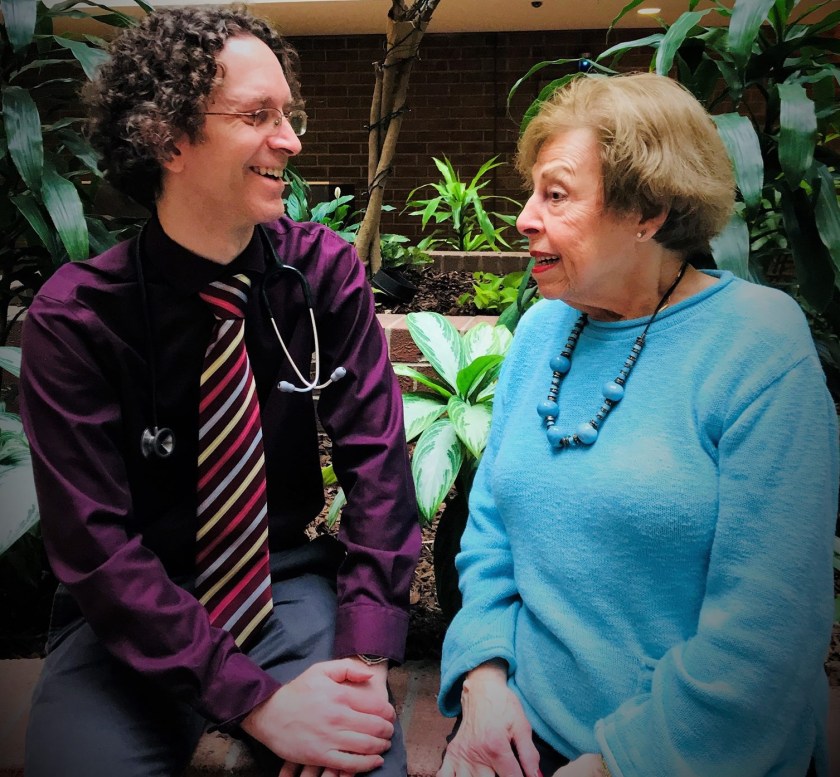
a male doctor talking to a middle aged woman
Dr. Weinkle with a patient

Dr. Jonathan Weinkle discusses connection and relationships in his book

HEALING PEOPLE NOT PATIENTS: Creating Authentic Relationships in Modern Healthcare

which I reviewed at this link.

exploring the HEART of communication

You can connect with me on social media using the links in the sidebar.

I’d love for you to follow this blog. I share information and inspiration to help you transform challenges into opportunities for learning and growth.

Add your name to the subscribe box to be notified of new posts by email. Click the link to read the post and browse other content. It’s that simple. No spam.

I enjoy seeing who is new to Watercress Words. When you subscribe, I will visit your blog or website. Thanks and see you next time.

Dr. Aletha
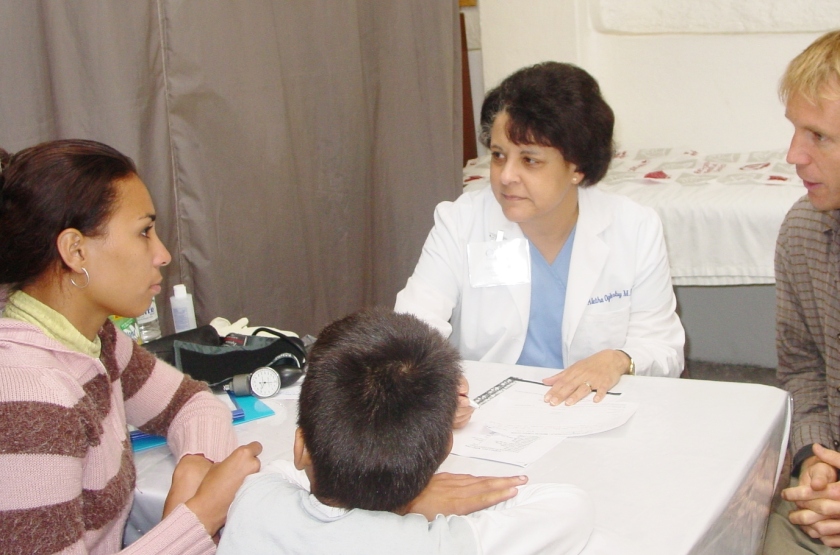
Dr. Aletha talking to a mother and her son
Talking to a patient through an interpreter makes communication extra challenging. (photo from a volunteer medical trip to Ecuador)