How the President Shapes Federal Health Programs

This post, part two of a series, outlines the extensive role of the federal government in U.S. health policy, primarily through the Department of Health and Human Services (HHS). It discusses the executive branch’s involvement in health regulation, funding, and policy formation, emphasizing the significance of HHS programs and leadership roles.

This is the second post in a series helping us understand the federal government’s role in health policy in the United States. In short, its role is extensive and expensive. You can read the first post here.

The Constitution does not specifically say the government controls or provides healthcare. The Preamble hints with “promote the general welfare”.

Considering how basic and unorganized medical science was in the late 18th century, it’s not surprising they did not consider it in the plans for the new government.

I am publishing a series of posts based on

Congress and the Executive Branch and Health Policy

by Julie Jovner at KFF, an independent source for health policy research, polling, and news, an endowed national nonprofit organization.

Ms. Jovner’s article explains how the three branches of government work together, why the Department of Health and Human Services (and therefore its Secretary) is so important, and the budgeting and regulation processes.

This series is nonpartisan and objective. I made minimal edits to improve readability but retain meaning. I insert comments in parentheses to add clarity.

The photos are for illustration only and are not in the KFF article.

The Executive Branch

This post focuses on the executive branch of government, The White House including the President and his Cabinet, especially the Secretary of the Department of Health and Human Services.

The President

The executive branch carries out the laws made by Congress and operates the federal health programs, often filling in details Congress has left out through rules and regulations.

Federal workers in the health arena provide direct patient care, regulate how others provide care, set payment rates and policies, conduct medical or health systems research, regulate products sold by the private sector, and manage the billions of dollars the federal government spends on the health-industrial complex.   

Although most of the executive branch’s health policies are implemented by the Department of Health and Human Services (and to a smaller extent, the Departments of Labor and Justice), over the past several decades the White House itself (through the President) has taken on a more prominent role in policy formation.

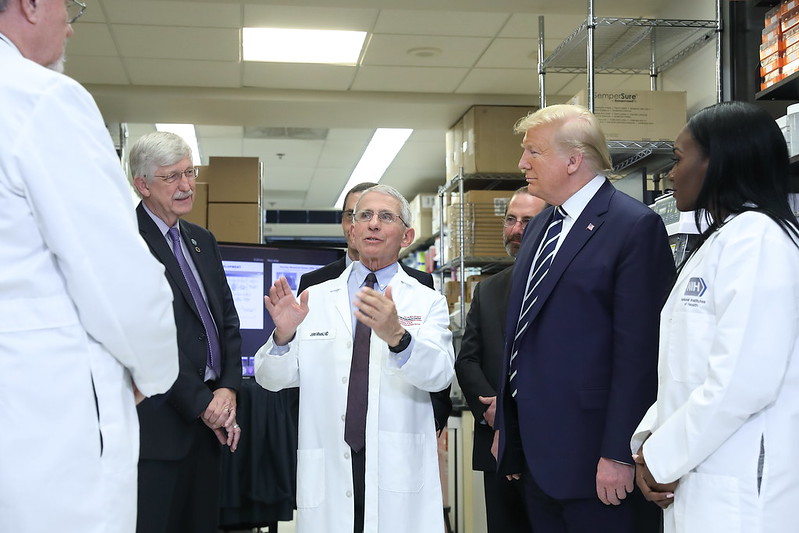
President Donald Trump visited NIH on March 3, 2020 and toured the National Institute of Allergy and Infectious Diseases’ Vaccine Research Center (VRC) to learn about research on a vaccine for the novel coronavirus SARS-CoV-2.

Department of Health and Human Services (HHS)

Most federal health policy is made through the Department of Health and Human Services except for several key areas.

Exceptions include the 

  • Veterans Health Administration, run by the Department of Veterans Affairs;
  •  TRICARE, the health insurance program for active-duty military members and dependents, run by the Defense Department; and the 
  • Federal Employees Health Benefits Program (FEHB), which provides health insurance for civilian federal workers and families and is run by the independent agency the Office of Personnel Management.   

The health-related agencies within HHS are roughly divided into the resource delivery, research, regulatory, and training agencies that comprise the U.S. Public Health Service and the health insurance programs run by the Centers for Medicare and Medicaid Services (CMS).  

The Surgeon General oversees the U.S. Public Health Service (USPHS) Commissioned Corps, an elite group of over 6,000 uniformed officers who are public health professionals. The USPHS mission is to protect, promote, and advance the health of our nation.

The U.S. Public Health Service

Ten of the 13 operating divisions of HHS are part of the U.S. Public Health Service, which also plays a role in U.S. global health programs. They are:  

  • The Administration for Strategic Preparedness and Response (ASPR)
  • The Advanced Research Projects Agency for Health  (ARPA-H)
  • The Agency for Healthcare Research and Quality (AHRQ)  
  • The Agency for Toxic Substances and Disease Registry (ATSDR)  
  • The Centers for Disease Control and Prevention (CDC)  
  • The Food and Drug Administration (FDA)  
  • The Health Resources and Services Administration (HRSA)  
  • The Indian Health Service (IHS)  
  • The National Institutes of Health (NIH)  
  • The Substance Abuse and Mental Health Services Administration (SAMHSA)  

CMS

The Centers for Medicare and Medicaid Services (CMS) is by far the largest operating division of HHS. It oversees not just the Medicare and Medicaid programs, but also the federal Children’s Health Insurance Program (CHIP) and the health insurance portions of the Affordable Care Act(ObamaCare).

Together, the programs under the auspices of CMS account for nearly a quarter of all federal spending in fiscal 2023, cost an estimated $1.5 Trillion in fiscal 2023, and served more than 170 million Americans – more than half the population.  

KFF’s website content is licensed under a Creative Commons Attribution-NonCommercial-NoDerivatives 4.0 International (CC BY-NC-ND 4.0) license that allows for the sharing of our information with proper attribution and without alteration.

End of KFF article

The President’s Cabinet and other Agency Heads

As you can imagine, the leadership organization of HHS is large and complex. At the top is the Secretary, who is a member of the President’s Cabinet , approved by the Senate.

Other key leadership positions, all of which are appointed by the President include

  • U.S. Surgeon General
  • Director of the CDC
  • Commissioner of Food and Drugs (FDA)
  • Director of the NIH
  • Director of the National Library of Medicine
  • Administrator of CMS
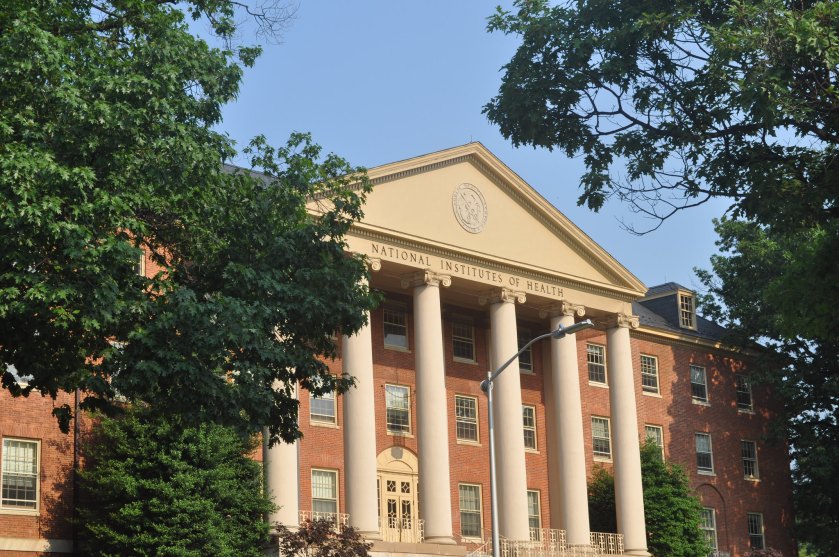
James H. Shannon Building (Building One), NIH campus, Bethesda, MD

Looking ahead-Congress

In the next post in this series, we will consider Congress’s role in overseeing these agencies and, most importantly, funding them.

“How Congress oversees the federal health care-industrial complex is almost as byzantine as the U.S. health system itself.

Jurisdiction and responsibility for various health agencies and policies is divided among more than two dozen committees in the House and Senate.”

KFF

Exploring the HEART of Health

I took the cover photo for this post at the Reagan Presidential Library in California. It is a replica of the Oval Office during his administration.

Thanks for getting through another post that’s maybe more informative than inspiring. I hope you learned something.

I’d love for you to follow this blog. I share information and inspiration to help you turn health challenges into health opportunities.

Add your name to the subscribe box to be notified of new posts by email. Click the link to read the post and browse other content. It’s that simple. No spam.

I enjoy seeing who is new to Watercress Words. When you subscribe, I will visit your blog or website. Thanks and see you next time.

Dr. Aletha

Trump’s Key Health Appointments: HHS, FDA, CDC Leadership Changes

President-elect Trump has appointed key figures for health leadership, including Robert Kennedy Jr. as Secretary of Health and Human Services. Three physicians—Dr. Marty Makary for the FDA, Dr. Dave Weldon for the CDC, and Dr. Janette Nesheiwat as Surgeon General—were also nominated. However, their nominations faced changes and withdrawals.

updated May 25, 2025

President-elect Trump has been busy appointing people to his cabinet and other key leadership positions. He has chosen Robert Kennedy, Jr. to serve in his cabinet as Secretary of the Department of Health and Human Services. HHS is a vast department overseeing multiple areas of health and wellness with a $2.86 trillion budget for 2024.

I’m sharing an article by journalists Jennifer Shutt and Ariana Figueroa,
about three other appointees to key health positions.

Except for Kennedy, these appointees are physicians . I am not familiar with any of them. They appear to have well-established medical careers and solid credentials. I plan to explore their views more thoroughly after reading this article.

3 BRANCHES OF U.S. GOVERNMENT-legislative, executive, judicial
3 BRANCHES OF U.S. GOVERNMENT, FROM usa.gov, public domain

Trump unveils his lineup for FDA, CDC and surgeon general

Oklahoma Voice, November 25, 2024

WASHINGTON — President-elect Donald Trump will appoint three physicians for key government health roles.

Former Florida Congressman Dave Weldon will be tapped to lead the Centers for Disease Control and Prevention, Dr. Marty Makary will be nominated for commissioner of the Food and Drug Administration and Fox News medical contributor Dr. Janette Nesheiwat was put forward as the next Surgeon General.

All three positions require Senate confirmation.

Dr. Makary-Food and Drug Administration

The Food and Drug Administration is responsible for protecting the public health by ensuring the safety, efficacy, and security of human and veterinary drugs, biological products, and medical devices;

and by ensuring the safety of our nation’s food supply, cosmetics, and products that emit radiation.

FDA website

Trump wrote in his announcement for Makary that he would “work under the leadership of Robert F. Kennedy Jr. to, among other things, properly evaluate harmful chemicals poisoning our Nation’s food supply and drugs and biologics being given to our Nation’s youth so that we can finally address the Childhood Chronic Disease Epidemic.”

Makary is a surgeon at Johns Hopkins Hospital in Maryland. His biography says he “has published over 250 peer-reviewed scientific articles and has served on several editorial boards.”

“Dr. Makary served in leadership at the World Health Organization Patient Safety Program and has been elected to the National Academy of Medicine.

Clinically, Dr. Makary is the chief of Islet Transplant Surgery at Johns Hopkins. He received the Nobility in Science Award from the National Pancreas Foundation and has been a visiting professor at over 25 medical schools.”

Makary wrote an op-ed published by The Wall Street Journal in February 2021, sharing his prediction that the COVID-19 pandemic would mostly be over by April 2021.

“Some medical experts privately agreed with my prediction that there may be very little COVID-19 by April but suggested that I not talk publicly about herd immunity because people might become complacent and fail to take precautions or might decline the vaccine,” Makary wrote at the time.

“But scientists shouldn’t try to manipulate the public by hiding the truth. As we encourage everyone to get a vaccine, we also need to reopen schools and society to limit the damage of closures and prolonged isolation. Contingency planning for an open economy by April can deliver hope to those in despair and to those who have made large personal sacrifices.”

In prepared remarks to the House Select Subcommittee on the Covid Pandemic in May 2023, he wrote that

“Nothing speaks more to the intellectual dishonesty of public health leaders than their complete dismissal of natural immunity. They never talked about it.”

Trump wrote in his statement announcing Makary as his pick for FDA that he would “course-correct and refocus the Agency.”

Dr. Martin Adel Makary, was confirmed on March 25, 2025 by the U.S. Senate as the 27th Commissioner of Food and Drugs. In this role, Dr. Makary oversees the full breadth of the FDA portfolio and execution of the Federal Food, Drug, and Cosmetic Act and other applicable laws.Apr 8, 2025

Centers for Disease Control and Prevention (CDC) activated its Emergency Operations Center (EOC) to coordinate with the World Health Organization (WHO), federal, state and local public health partners, and clinicians in response to the coronavirus disease 2019 (COVID-19) outbreak. CDC is closely monitoring the situation and working 24/7 to provide updates.
Centers for Disease Control and Prevention (CDC) activated its Emergency Operations Center (EOC) to coordinate with the World Health Organization (WHO), federal, state and local public health partners, and clinicians in response to the coronavirus disease 2019 (COVID-19) outbreak. CDC is closely monitoring the situation and working 24/7 to provide updates
credit James Gathany, public domain

Dr. Weldon-Centers for Disease Control and Prevention

CDC works 24/7 to protect America from health, safety and security threats, both foreign and in the U.S. Whether diseases start at home or abroad, are chronic or acute, curable or preventable, human error or deliberate attack, CDC fights disease and supports communities and citizens to do the same.

CDC website

Weldon was instrumental in codifying into law the “Weldon Patent Ban,” which makes a permanent prohibition on patenting human embryos, something that Trump noted in his statement.

“Dave has successfully worked with the CDC to enact a ban on patents for human embryos,” Trump said in a statement.

In 2011, the ban was signed into law by former President Barack Obama in the America Invents Act, and made permanent after Weldon left Congress. His colleagues named it after him because of his advocacy on the issue.

“In addition to being a Medical Doctor for 40 years, and an Army Veteran, Dave has been a respected conservative leader on fiscal and social issues,” Trump said in a statement.

Weldon, 71, served in Congress from 1995 until 2009, when he retired. He is a former physician and if confirmed by the Senate, will now head a roughly $17 billion agency that is tasked with responding to emerging health threats.

update

President Trump withdrew Dr.Weldon’s nomination.

As of May 21, 2025, the director of the Centers for Disease Control and Prevention (CDC) is Susan Monarez, PhD. She was nominated by President Trump in March 2025 and confirmed by the Senate in April 2025. 

Dr. Neshwiwat-Surgeon General

The U.S. Surgeon General is the Nation’s Doctor, providing Americans with the best scientific information available on how to improve their health and reduce the risk of illness and injury.

The Surgeon General oversees the U.S. Public Health Service (USPHS) Commissioned Corps, an elite group of over 6,000 uniformed officers who are public health professionals.

The USPHS mission is to protect, promote, and advance the health of our nation.

Trump wrote in his nomination for Nesheiwat that she “is a fierce advocate and strong communicator for preventive medicine and public health.”

“She is committed to ensuring that Americans have access to affordable, quality healthcare, and believes in empowering individuals to take charge of their health to live longer, healthier lives,” Trump added. 

According to her biography, Nesheiwat graduated from the University of Arkansas for Medical Sciences and is a double board-certified medical doctor practicing in New York.

She “brings a refreshingly no-nonsense attitude to the latest medical news, breaking down everything you need to know to keep you- and your family- healthy at all times,” (her website).

Nesheiwat is the medical director at CityMD, a network of urgent care centers in New York and New Jersey. 

update

As of May 25, 2025, Dr. Nesheiwat’s nomination has been withdrawn.

In her place is Dr.Casey Means. Dr. Means is a physician, health entrepreneur, and author who is known for her work on the “Make America Healthy Again” initiative. She has also been a vocal critic of traditional medicine and has promoted alternative health treatments. 

This story is republished under Creative Commons license CC BY-NC-ND 4.0.

Oklahoma Voice is part of States Newsroom, a nonprofit news network supported by grants and a coalition of donors as a 501c(3) public charity. Oklahoma Voice maintains editorial independence. Contact Editor Janelle Stecklein for questions: info@oklahomavoice.com. Follow Oklahoma Voice on Facebook and X.

Exploring the HEART of Health

I’d love for you to follow this blog. I share information and inspiration to help you turn health challenges into health opportunities.

Add your name to the subscribe box to be notified of new posts by email. Click the link to read the post and browse other content. It’s that simple. No spam.

I enjoy seeing who is new to Watercress Words. When you subscribe, I will visit your blog or website. Thanks and see you next time.

Dr. Aletha

Visit my online bookshop at Bookshop.org

Bookshop.org is an online bookstore that financially supports local, independent bookstores.

We believe bookstores are essential to a healthy culture and they are dedicated to the common good.

Bookshop.org donates a portion of every sale to independent bookstores.