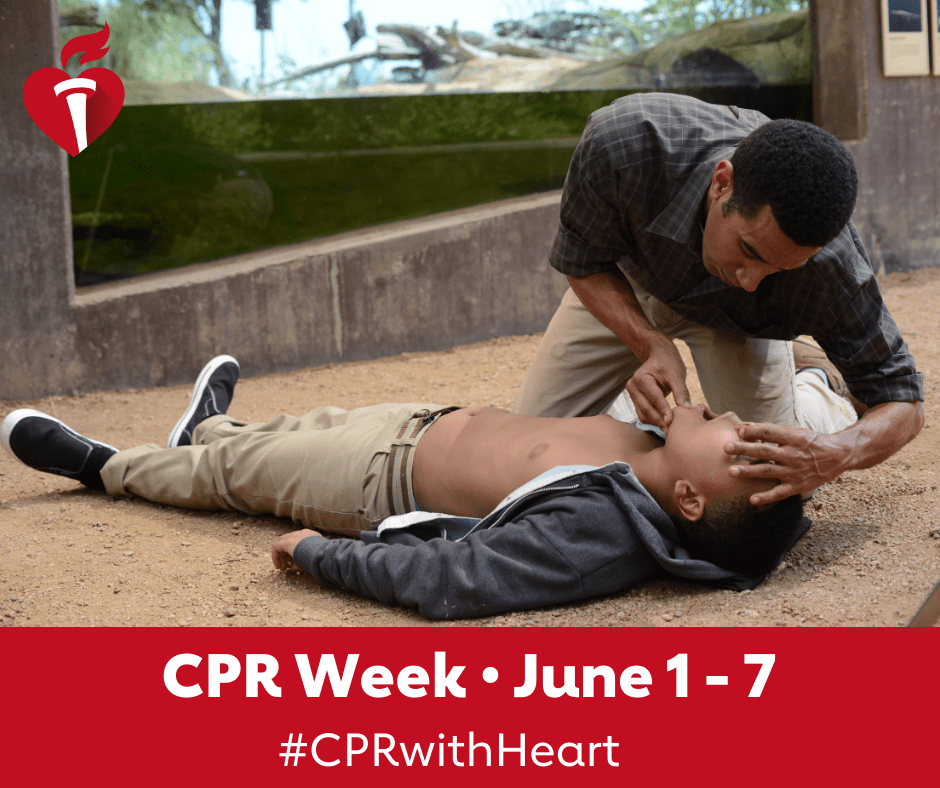
When I was in medical practice, I stayed current in CPR certification. Fortunately, I never had to use it in the office and only once in a public place, a church.
But I have not updated my certification since leaving practice. But after reading this article from KFF, I reviewed CPR in a video.
A video is better than nothing, but if you have never taken a formal CPR class, I recommend it, especially if you are a caregiver for children or people at risk of heart disease, which is everyone.
I’m sharing this article and graphics to explain why CPR knowledge is so vital.
Fast Action From Bystanders Can Improve Cardiac Arrest Survival.
Many Don’t Know What To Do.
Written by Michelle Andrews, April 30, 2025
When a woman collapsed on an escalator at the Buffalo, New York, airport last June, Phil Clough knew what to do. He and another bystander put her flat on her back and checked her pulse (faint) and her breathing (shallow and erratic). Then she stopped breathing altogether.
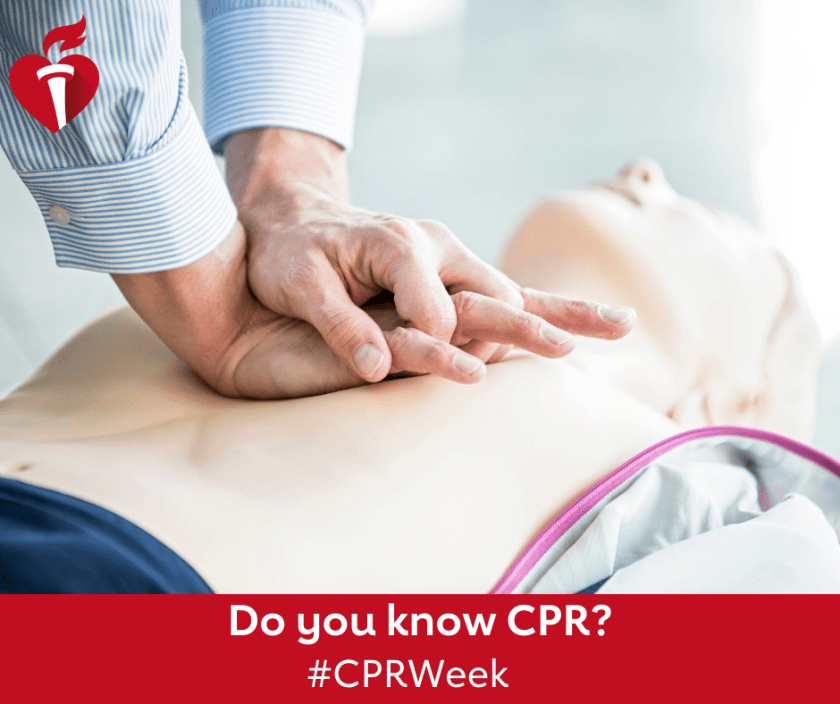
Realizing that she might be having a cardiac arrest, Clough immediately started doing chest compressions, pressing hard and quickly on the center of her chest, while others nearby called 911 and ran to get an AED, automated external defibrillator.
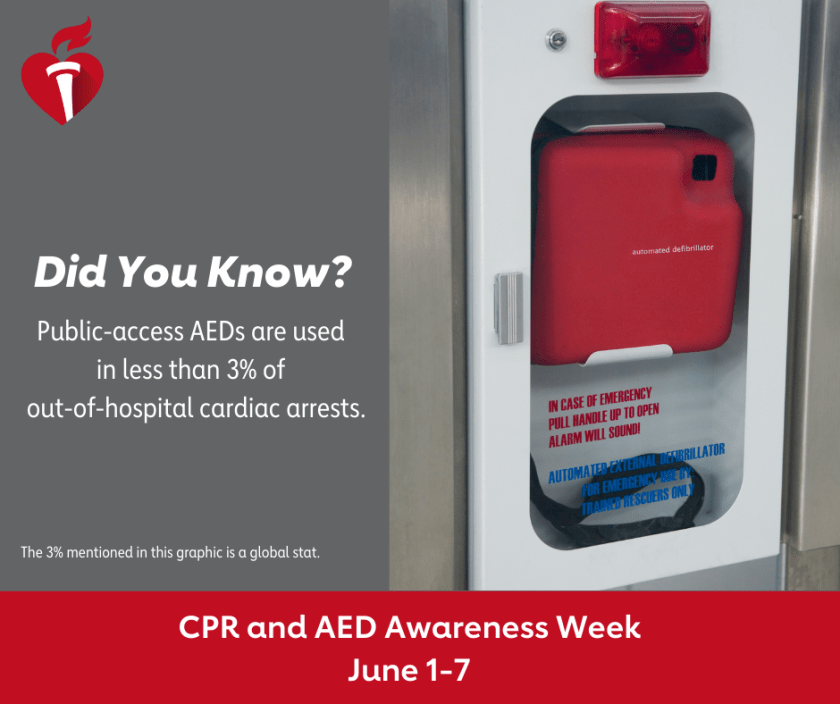
Within seconds of receiving a shock from the AED, the woman opened her eyes. By the time the airport rescue team arrived a few minutes later, she was conscious and able to talk with rescuers.
“I don’t want to ever feel helpless,” said Clough, who had flown to Buffalo that evening on a work trip for his engineering job in Denver. After an incident several years earlier in which he was unsure how to help a woman who collapsed at his gym, he took a college course to get certified as an emergency medical responder, who can provide basic life support interventions.
The woman who collapsed was lucky: She lost consciousness in a public place where bystanders knew how to help her. Most people aren’t so fortunate.
In the United States, a lack of training and readiness to deal with this relatively common medical emergency contributes to thousands of deaths a year.
What is a cardiac arrest?
More than 350,000 cardiac arrests occur outside of a hospital setting in the United States annually, according to the American Heart Association. In 9 of 10 cases, the person dies because help doesn’t arrive quickly enough.
Every minute that passes without intervention reduces the odds of survival by 10%. But if someone immediately receives cardiopulmonary resuscitation and an AED shock, if needed, their survival odds can double or even triple.
Fewer than half of people get that immediate help, according to the AHA. A cardiac arrest occurs when the heart stops suddenly, often because the heart’s electrical system malfunctions. About 70% of cardiac arrests occur at home.
But even if someone collapses in a public place and an ambulance is called immediately, it takes roughly eight minutes, on average, for emergency personnel to arrive. In rural areas it can take much longer.
When someone has a cardiac arrest, they often require an electric shock from an AED to get their heart started again. These portable devices analyze the heart’s rhythm and instruct the user to deliver a shock, if necessary, through pads placed on the victim’s chest.
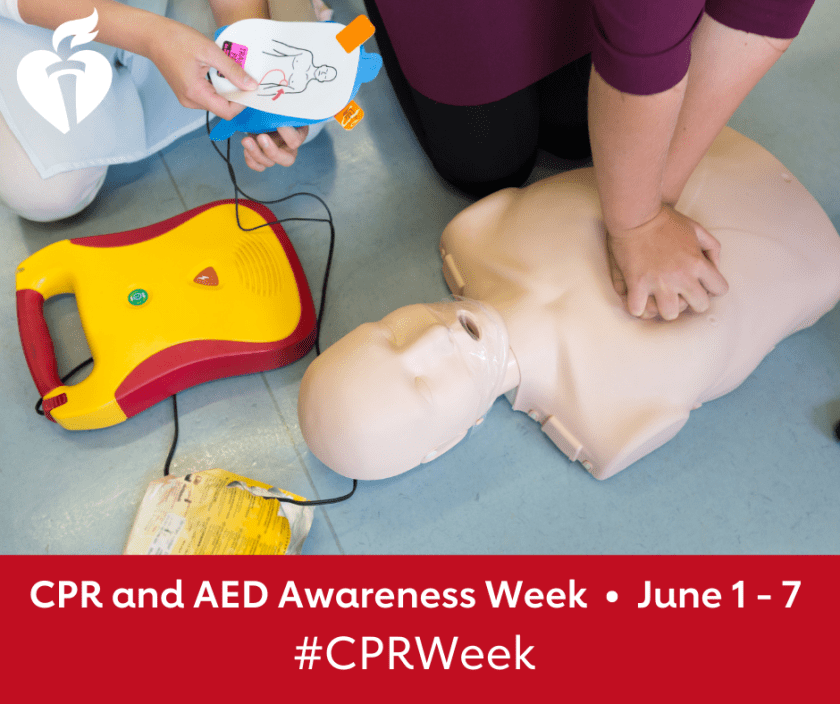
Where are the AEDs ?
But although many states require AEDs in public places such as airports, malls, and schools, they often aren’t easy to spot. A study of data from 2019 to 2022 found that after a cardiac arrest in a public place, bystanders used an AED 7% of the time and performed CPR 42% of the time.
The most comprehensive resource for identifying AEDs is a nonprofit foundation called PulsePoint, which has registered 185,000 AEDs in 5,400 communities in the United States. (Shannon Smith, PulsePoint vice president of communications).
If requested, the organization will help a community build its AED registry and connect it to the area’s 911 service free of charge.PulsePoint recently launched a national AED registry to further this effort.
Through a companion app, users trained in CPR can volunteer to be alerted to potential cardiac arrests within roughly a quarter-mile when calls come into a community’s emergency response dispatch service. The app also identifies registered AEDs nearby.
“PulsePoint is the closest thing we have to a national registry,” said Elijah White, president acute care technology at Zoll, a leading AED manufacturer. The company has provided location information for all its AEDs to PulsePoint. Still, PulsePoint has registered only a fraction of AEDs in the country. “It’s just a start,” White said.
Other factors may also keep bystanders from stepping in to help. They may lack CPR training or confidence, or fear liability if something goes wrong.
What are barriers to CPR?
Liability shouldn’t be a concern, in general. All 50 states and Washington, D.C., have “good Samaritan” laws that protect bystanders from legal liability if they intervene in a medical emergency in good faith.
But training can be a serious barrier. One study found that only 18% of people reported that they’d received CPR training within the previous two years, a key time frame for skills maintenance. Two-thirds of people reported having been trained at some point.
One way to boost training is to make it mandatory, and many states require CPR training for students to graduate.
But even though 86% of high school students reported having received some training, only 58% said they knew how to apply their skills, and a similar proportion said they knew how to use an AED.
“We’ve got some work to do,” said Dianne Atkins, a pediatric cardiologist and longtime AHA volunteer, who said ensuring high school training is a top priority for the AHA.
Other countries have prioritized training their residents in AED use and CPR for many years, with some success.
In Denmark requires training to get a driver’s license, and middle schoolers are trained. A survey found 45% of the population reported having received training through their workplace. In the study, 81% of respondents in the general public reported having been trained in CPR and 54% in how to use an AED.
Norway has provided first-aid training in primary schools since 1961 and mandates CPR training for a driver’s license. Ninety percent of the population reported they are trained in CPR.
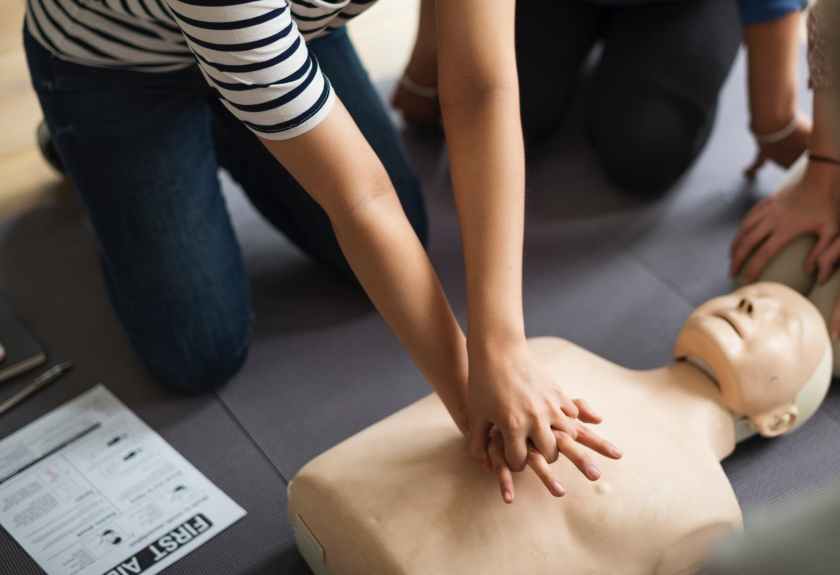
In the United States, many training courses are available, online and in person, that take only a few hours . For someone who’s never learned basic life-support skills, the training can be eye-opening.
This previously untrained reporter was taken aback to discover how forcefully and rapidly someone must press on a mannequin’s chest to do CPR correctly: 100 to 120 compressions a minute to a depth of at least 2 inches.
The most important thing is for ordinary people to know the basics well enough that “they would feel confident to call 911 and push hard and fast on someone’s chest,” said Audrey Blewer, an assistant professor of family medicine and community health at Duke University School of Medicine. She has published numerous studies on bystander CPR and AED use. “That doesn’t require a certification card and recent training.”
The most important thing is for ordinary people to know the basics well enough that “they would feel confident to call 911 and push hard and fast on someone’s chest,” said Audrey Blewer
Audrey Blewer, Professor of Family Medicine and Community Health
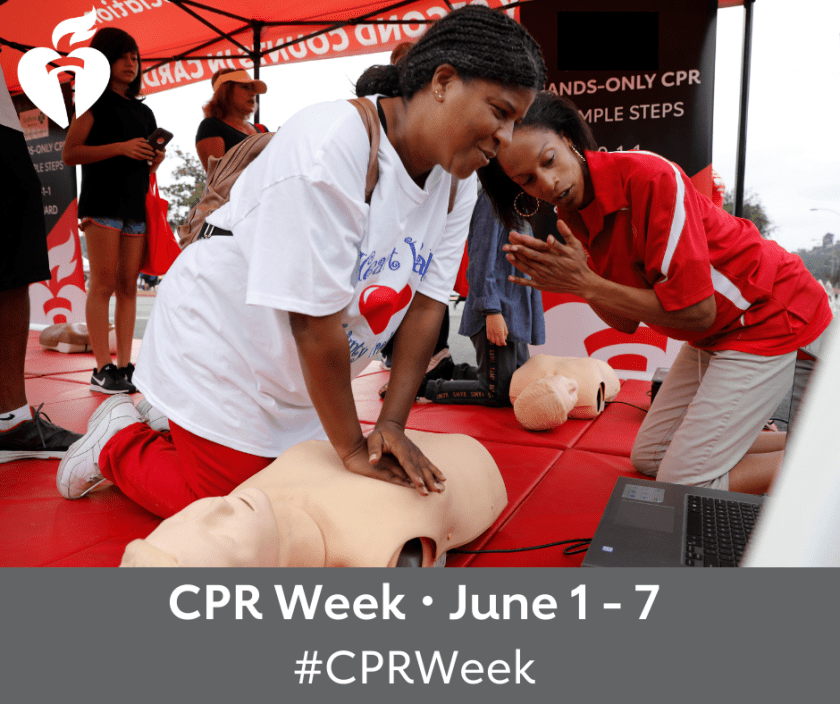
During an emergency, 911 dispatchers can also play a crucial role in walking people through doing CPR and operating an AED, said David Hiltz, volunteer program director of the HeartSafe Communities program at the Citizen CPR Foundation, a nonprofit that works to improve cardiac arrest survival through training and education.
Phil Clough has stayed in touch with Rebecca Sada, the woman who collapsed at the Buffalo airport that June day as she was coming home from a trip to visit her daughter.
Needing an Internal Defibrillator
Sada, who had no history of heart trouble before her cardiac arrest, now has an automated defibrillator implanted in her chest to stabilize a previously undiagnosed electrical problem with her heart. An implantable cardioverter-defibrillator, an ICD, is a small battery-powered device placed in the chest. It detects and stops arrhythmias, irregular heartbeats. An ICD constantly checks the heartbeat. It delivers electric shocks, when needed, to restore a regular heartbeat.
She and her husband invited Clough for dinner, and they are friends for life, she said. One other change that occurred as a result of Sada’s cardiac arrest: She and her husband got certified in CPR and AED.
“Now, if we needed to help someone down the road, we’d be able to,” Sada said.
(Edited for readability and length.)
KFF Health News is a national newsroom that produces in-depth journalism about health issues and is one of the core operating programs at KFF—an independent source of health policy research, polling, and journalism. Learn more about KFF.
Subscribe to KFF Health News’ free Morning Briefing.
This article first appeared on KFF Health News and is republished here under a Creative Commons license.
Find a CPR Class Near You
Post Images
The images in this post are courtesy of the American Heart Association unless stated otherwise.
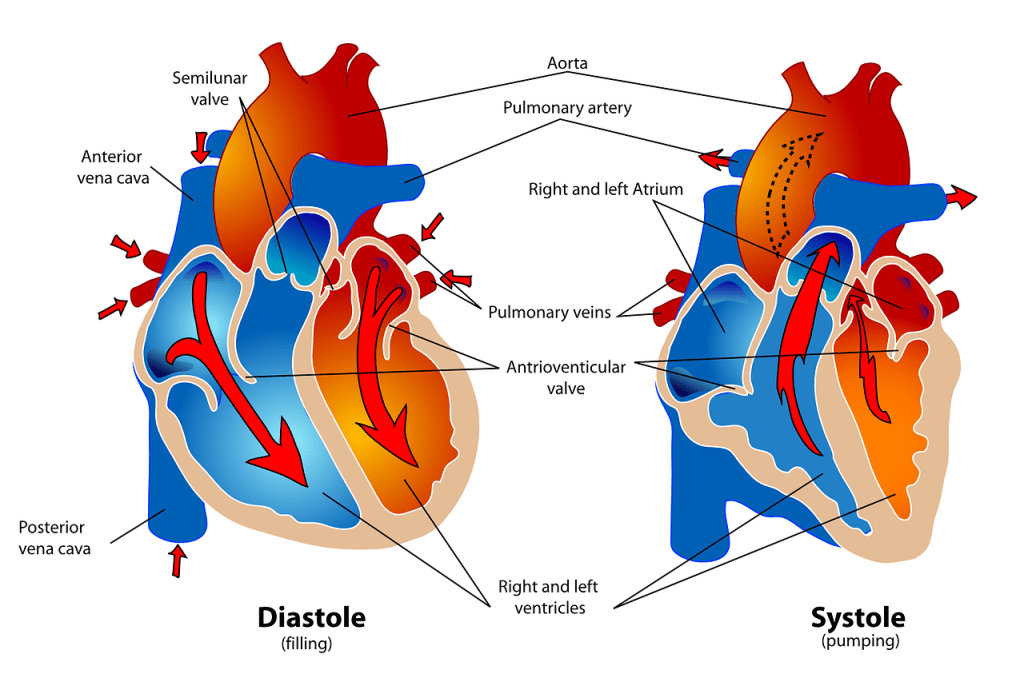
Exploring the HEART of Health
I hope the information in this post gives you inspiration to learn CPR.
Remember, the most important thing to do in any medical emergency is call 911, or your local emergency number. Don’t try to manage a medical crisis by yourself, it takes a team.
Use this link to search for other posts about heart disease, including how to keep your heart healthy. And please share this post wherever you interact socially.
I’d love for you to follow this blog. I share information and inspiration to help you transform challenges into opportunities for learning and growth.
Add your name to the subscribe box to be notified of new posts by email. Click the link to read the post and browse other content. It’s that simple. No spam.
I enjoy seeing who is new to Watercress Words. When you subscribe, I will visit your blog or website. Thanks and see you next time.
Dr Aletha
- About Dr. Aletha
- How to Use this Site
- Make Your Life Easier
- Search by Category
- Share the HEART of health
- my Reader Rewards Club
- RoboForm Password Manager






 watercress words by Dr Aletha