Why you should get ready to die while you live -a book review

“The reason obituaries are so dull to read is that they are so dull to write and that’s precisely why I’m writing my own: To save my family the drudgery in an otherwise stressful time.”

Besides attending church on Sundays, I routinely read the local Sunday newspaper. I never miss the comics, Ask Amy advice column, restaurant reviews, and the obituaries. Sometimes I find an obit of someone I know or know of. But even if I don’t, I usually read one or two.

Sometimes the person’s life is so remarkable I’m surprised I’d never heard of them. Sometimes it’s so intriguing I wish I had known them. That is the case with a recent one, particularly because it was written by the deceased man himself.

I’m sharing this obituary with you with names deleted to protect privacy and some sections paraphrased. I think you will agree this is a man worth knowing.

David B.

“The reason obituaries are so dull to read is that they are so dull to write and that’s precisely why I’m writing my own: To save my family the drudgery in an otherwise stressful time. Following the standard format of obits I’ll start with I was born in 1948. I enjoyed being an only child until my two sisters came along. After that I learned to be an only child with two sisters.

I have to stop here and mention that when my kidneys failed in my forties, my youngest sister unselfishly agreed to transplant one of hers. When it came time much later for another transplant my older sister conveniently developed cancer rendering her ineligible. Fortunately our son jumped at the chance and eagerly agreed to step up for which I was profoundly grateful.”

After high school he “moved on to blast my way through a five year architectural degree in only seven years.” He co-founded an architectural firm which grew into one of the ten largest firms in the U.S. for several years.

“I’m kind of proud of that.”

Following retirement he served as Vice-President of the national board of the American Kidney Fund as well as President of the local chapter. He was President of the state chapter of an architects institute and served on the boards of local arts commissions.

“There is some other stuff but these are the highlights.”

He admitted that the best thing he did was marrying his wife.

“I loved her dearly. She was my lover, partner, confidant and best friend. If not for her, I would have been writing this many years earlier.”

Together they had two wonderful daughters. One is a physcian and the other “spends most of her time helping keep women out of prison”. About his son he pined , “He has yet to have any kids which is regrettable because the gene pool would be greatly improved by his contribution.”

“I guess all that’s left is to say goodbye to the many friends I’ve made over the last seven decades. I’ve kept up with some but lost track of many. Suffice to say that if I wasn’t dead, I’d miss them all.”

Not surprisingly, he requested that in lieu of flowers friends consider donations to two local non-profits-a soup kitchen/food bank and an organization that helps children of incarcerated parents.
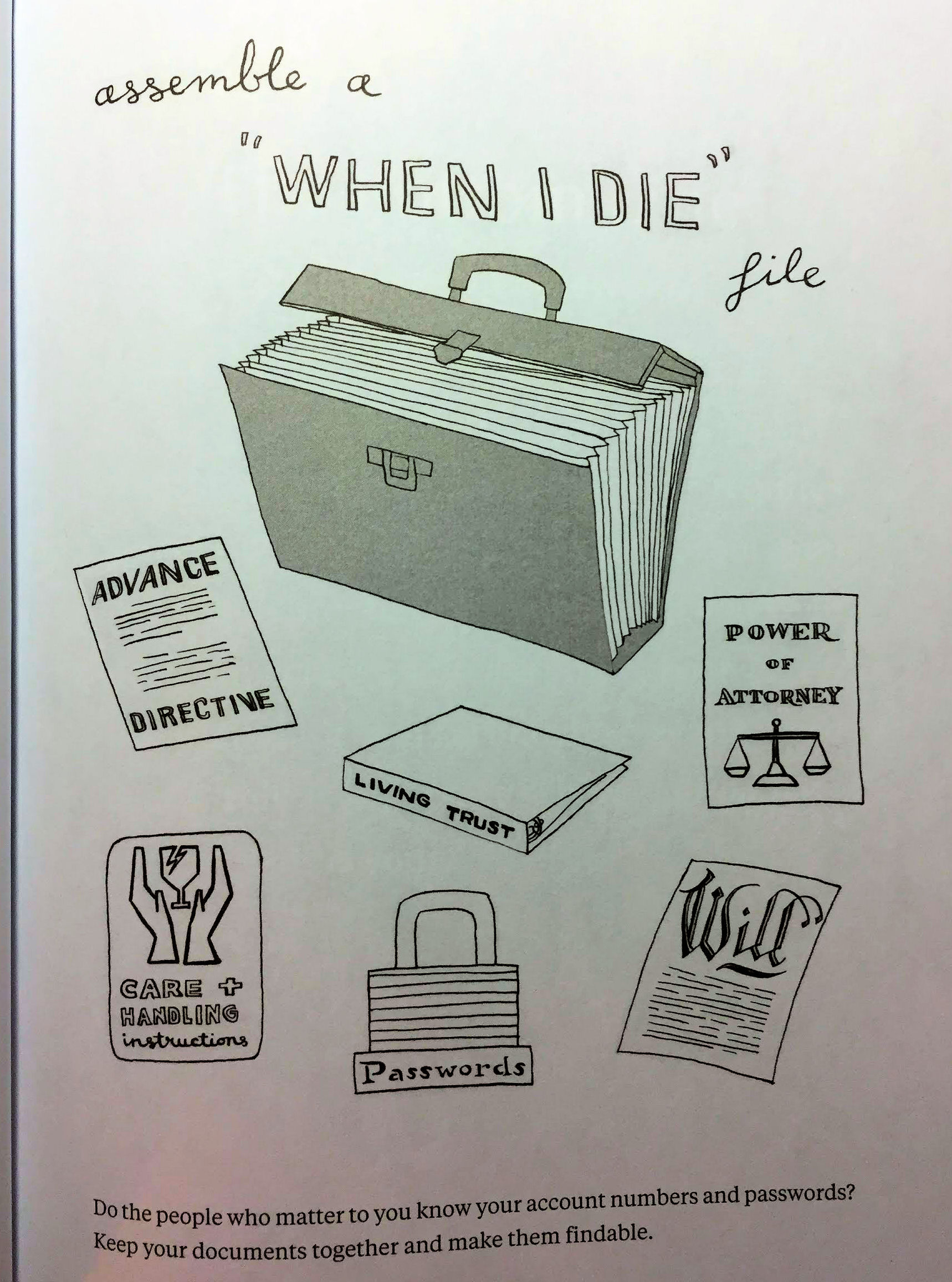
assemble a "when I die" file
a screenshot from the book

How to prepare for the end

I suspect that David prepared for death in other ways besides writing his obituary. He probably wrote a will, arranged burial or cremation, and closed his social media accounts. He likely had a living will or health care proxy. He sounds like a man who navigated his life well and managed his death equally well.

Planning for death seems straight forward but there are numerous details that most of us will miss without help. That’s why I reviewed and recommend a book that walks us through the process.

The book consists of 5 sections that mimic the progression from life to illness to death. Even as a physician, I was surprised at the claim that only 10% to 20% of us will die without warning. The rest of us will know we have something that will likely take our life. And even if we don’t, we all know we will die eventually, although we tend to think and act as if it’s a well kept secret, and maybe it is. The sections are

  • PLANNING AHEAD
  • DEALING WITH ILLNESS
  • HELP ALONG THE WAY
  • WHEN DEATH IS CLOSE
  • AFTER
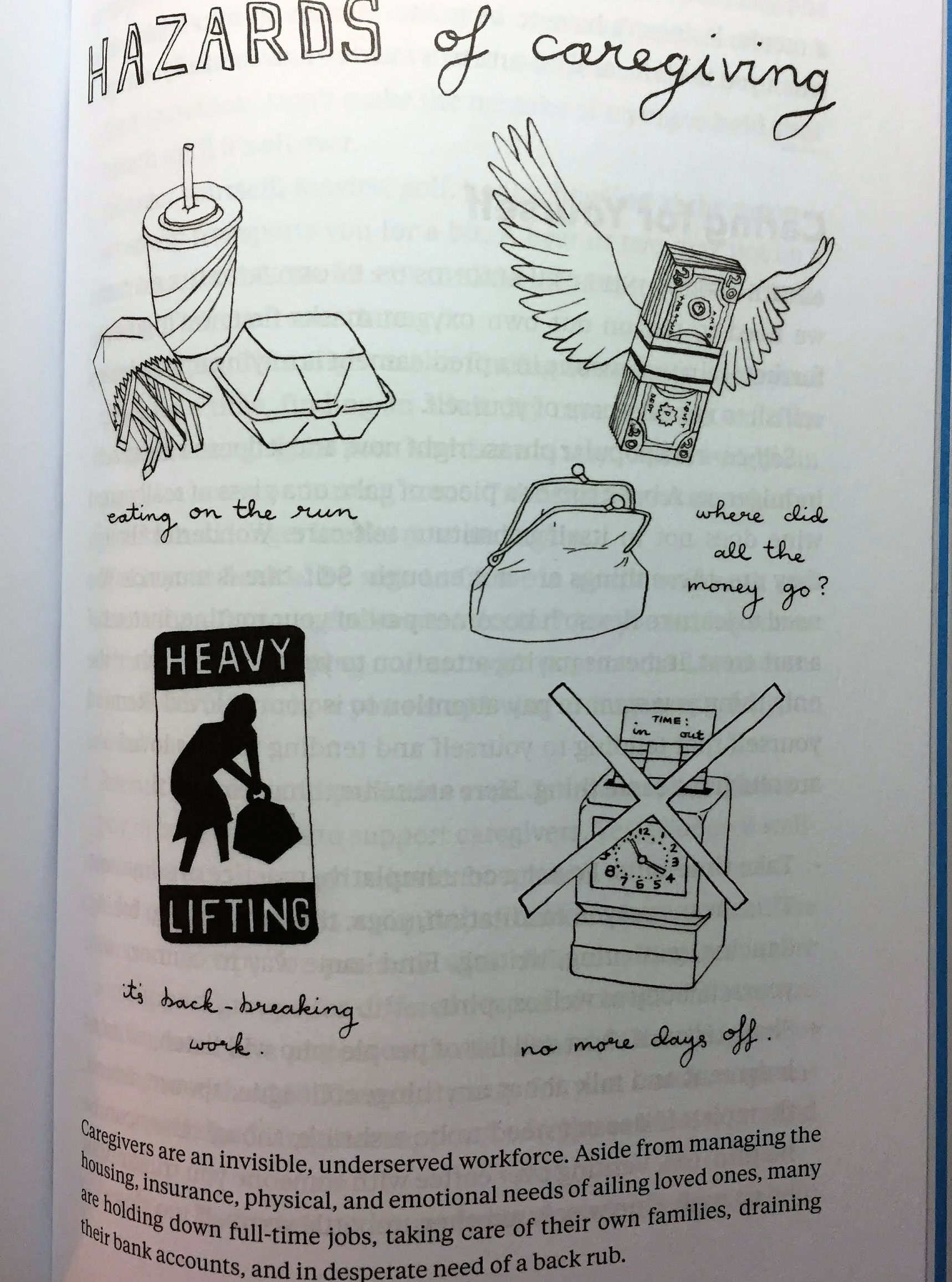
Hazards of caregiving

Chapter titles offer discussion about issues such as

  • Yes, There’s Paperwork.
  • Can I Afford to Die?
  • I’m Sick
  • Love, Sex, and Relationships
  • Hospital Hacks
  • Care for the Caregiver
  • It’s Your Body and Your Funeral
  • Grief
  • How to write a Eulogy and an Obituary
  • Celebrating a Life
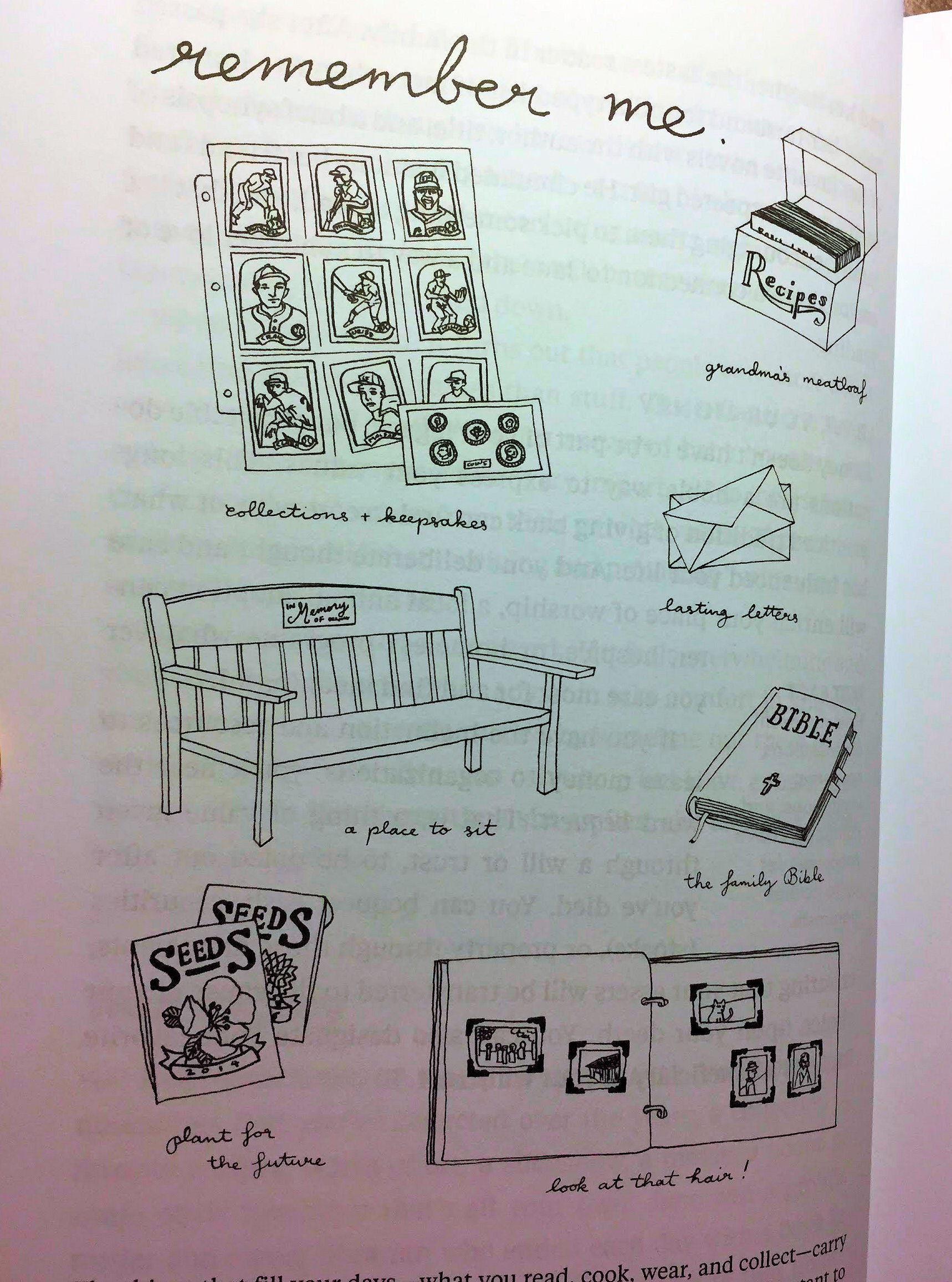
REmember me-collections and keepsakes
I think David’s family has many precious memories of his life.

We should all read this book

As much as I hope you don’t need it right now, unfortunately you do need it right now. So whatever stage of living, or dying, you or a loved one may be in, you will find something helpful here.

Follow this book’s authors on Facebook

exploring the HEART of life and death

Dr. Aletha

A doctor writes about “Being Mortal”

Atul Gawande, M.D., a prominent surgeon, writer, and public health advocate, has made significant contributions to health systems innovation and safer surgery globally. In “Being Mortal,” he discusses the challenges of elderly care and end-of-life care with compassion and insight. His other books offer compelling insights into medicine and human performance.

This post was updated July 10, 2021

Atul Gawande, M.D. , author of Being Mortal, is a surgeon, writer, and public health leader. He is a practicing endocrine surgeon at Brigham and Women’s Hospital and a professor at Harvard Medical School and the Harvard T.H. Chan School of Public Health.

He founded Ariadne Labs, a joint center for health systems innovation, and Lifebox, a nonprofit organization making surgery safer globally. He also co-founded CIC Health, which operates COVID-19 testing and vaccination nationally, and served as a member of the Biden transition COVID-19 Advisory Board.

Dr. Gawande writes for The New Yorker magazine and has written four New York Times best-selling books. He won two National Magazine Awards, AcademyHealth’s Impact Award for highest research impact on healthcare, a MacArthur Fellowship, and the Lewis Thomas Award for writing about science.

In 2021 he delivered the commencement address at Stanford University , from which he had graduated. In his speech he referenced the COVID-19 pandemic, calling it the third highest cause of death in 2020. He also told the graduates,

We are often most energized when we help others express their worth.

Atul Gawande

(This blog post features affiliate links that pay a small commission to this blog from purchases, without additional cost to you)

Being Mortal 

Medicine and What Matters in the End

In Being Mortal, Dr. Gawande explores the way most people now live, age and die and for the most part it’s not a pleasant prospect.

How we care for elderly people

As people age and lose independence due to frailness, illness, mental decline and poverty, they often also lose whatever is most important to them- their home, pets, hobbies, possessions. And these losses often occur to protect them from harm as they progress into assisted living centers, nursing homes and hospice.

Dr. Gawande describes how his  family in India expected  to care for their elderly relatives, which differed from what he saw happen when they immigrated to the United States. After becoming a physician, he recognized that our care of the elderly often robs them of the well-being that he sought to promote in his practice.

He wondered how it can be done differently. To find out, he interviewed people who are developing novel ways to provide care to older people, care that preserves their independence, dignity and choices while still keeping them safe and protected.

Most of us either have relatives or friends facing these decisions, or are facing them ourselves. If not now, we all will eventually. Whichever the case, this book shows

“how the ultimate goal is not a good death but a good life-all the way to the very end.”

Atul Gawande
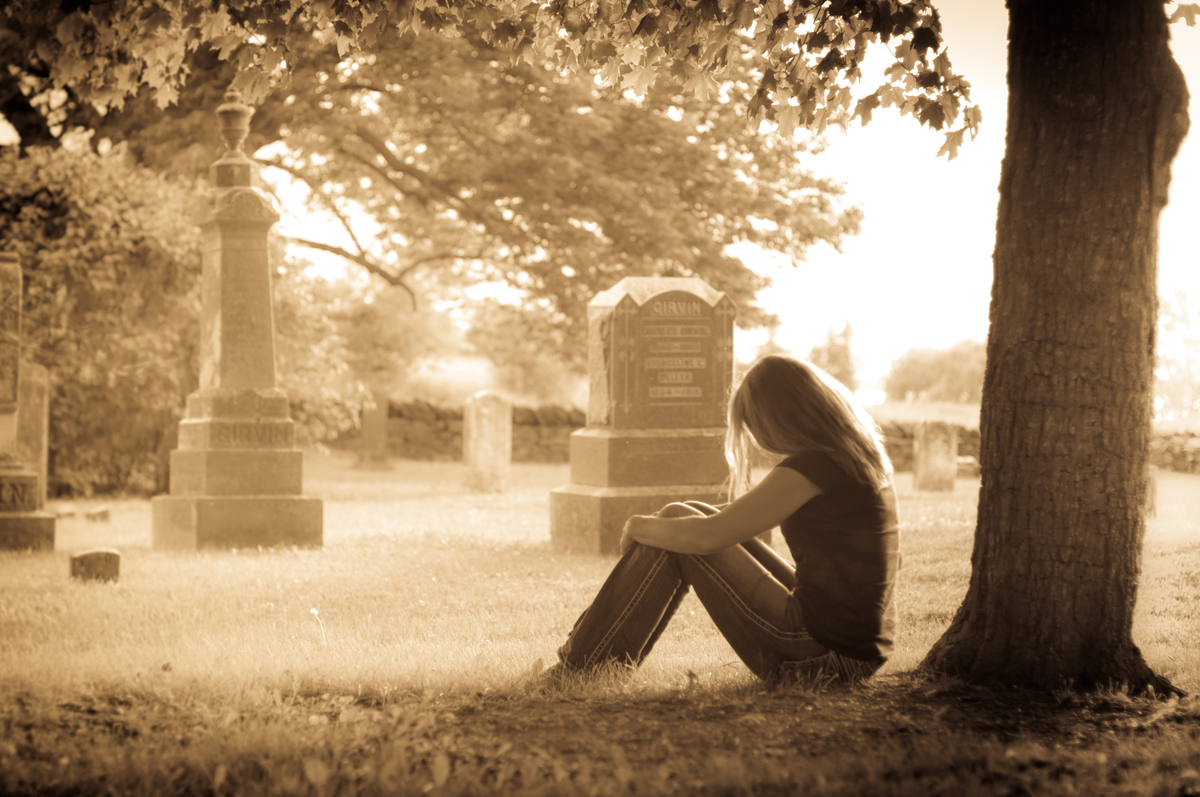
woman sitting in a cemetery
photo from the Lightstock.com collection, an affiliate link

How we care for dying people

Finally, Dr. Gawande discusses end -of -life care- that is, care when a disease has become terminal and a cure is no longer likely. Sometimes it is difficult to determine when that occurs. As he says, it is rare in medicine when there truly is “nothing more we can do”.

However, just because we can do something, doesn’t mean we should. Some treatments, rather  than extending life just prolong the suffering. Still it is heart wrenching for patients and families, along with their doctors, to decide that it is time to forgo treatment and instead opt for palliative care, with or without hospice.

(Palliative care focuses on symptom management and social and emotional support for patients and families.)

Dr. Gawande poignantly describes this process by sharing in detail his  father’s cancer diagnosis, treatment, progression, hospice care and death. He shows how difficult a process this can be, given that even he and his parents, all of whom are physicians, struggled to come to terms with the reality of terminal illness and the dying process. Though they were all familiar with and experienced in dealing with the medical system, they still felt unprepared to face the decisions required at the end of life. But in the end, both he and his father felt at peace with the outcome and Dr. Gawande senior did experience “a good life-all the way to the very end.”

Other books by Dr. Gawande

Complications : A Surgeon’s Notes on an Imperfect Science

In gripping accounts of true cases, surgeon Atul Gawande explores the power and the limits of medicine, offering an unflinching view from the scalpel’s edge. Complications lays bare a science not in its idealized form but as it actually is―uncertain, perplexing, and profoundly human.

Better: A Surgeon’s Notes on Performance 

The struggle to perform well is universal: each of us faces fatigue, limited resources, and imperfect abilities in whatever we do. But nowhere is this drive to do better more important than in medicine, where lives may be on the line with any decision.

Atul Gawande, the New York Times bestselling author of Complications, examines, in riveting accounts of medical failure and triumph, how success is achieved in this complex and risk-filled profession

The Checklist Manifesto:How to Get Things Right

Atul Gawande shows what the simple idea of the checklist reveals about the complexity of our lives and how we can deal with it.

Here is Dr. Gawande’s speech at the Stanford Commencement

sharing the HEART of health from birth to death

I’d love for you to follow this blog. I share information and inspiration to help you turn health challenges into health opportunities.

Add your name to the subscribe box to be notified of new posts by email. Click the link to read the post and browse other content. It’s that simple. No spam.

I enjoy seeing who is new to Watercress Words. When you subscribe, I will visit your blog or website. Thanks and see you next time.

Dr. Aletha