Stopping medical malpractice- how patients can help – Part 3

(previously posted under the title 6 reasons to sue your doctor-and how not to-part 3)

In the article, “YOU’VE BEEN SUED FOR MALPRACTICE-NOW WHAT?” (Medical Economics, March 10, 2015) attorney Richard Baker offers  6 common reasons for malpractice lawsuits, and what physicians can do to prevent them. In this series I look at them from the patient viewpoint- what you can do avoid getting care that makes you want to sue .

3. FAILURE TO KEEP CURRENT WITH STANDARDS AND KNOWLEDGE 

You can’t control  your doctor’s training, CME (continuing medical education), and certifications. But you have a right and responsibility to confirm that the doctor is qualified to perform the services offered. Doctors’ offices have diplomas, licenses, awards displayed on the walls for a reason-they want you to look at them.  Hospitals and other health care facilities make sure  that  the  physicians have the appropriate credentials.  Social media expert Kevin Pho, M.D. explains  how to check out a doctor’s credentials online-

Finding a doctor online and researching your physician on the Internet

Physicians can attend live lectures, watch or listen to lectures online and even view CME activities on a smart phone or other hand held device.

Physicians must have a license for every state where they practice. Most physicians in the United States are board certified .which shows competency in their specialty. They take  a written and sometimes oral exam  and perform the requirements for MOC- maintenance of certification – medical study through lectures, reading, chart reviews and interactive online activities and repeat testing every few years.

Some physicians question the value of MOC. We agree with the idea in principle but believe the current requirements are irrelevant ,expensive, and time consuming without adding anything to knowledge, skill or improved patient care.  A few quit MOC completely and let their certification lapse, or join an alternate board which has less complicated requirements.  I will remain certified by the American Board of Family Medicine but the process needs to be relevant and valuable.

Learn more about certification in Family Medicine and if your family physician is board certified at the website of the American Board of Family Medicine 

Stopping medical malpractice- how patients can help – Part 1

6 ways  to help your doctor avoid a malpractice suit -Part 1


(previously posted under the title 6 reasons to sue your doctor-and how not to-part 1)

“Being sued for malpractice, especially for the first time, can be an unsettling and frustrating experience for a physician.”

(quote from  attorney Richard Baker ,March 2015 issue of Medical Economics)

And stressful and unsettling for a patient, or patient’s family .

A medical malpractice lawsuit follows an adverse medical outcome – a missed or inaccurate diagnosis, an ineffective or harmful treatment, an unsuccessful surgery,   an outcome that left permanent harm or at worst, death. Patients become  upset and often angry, and assume that malpractice has occurred. They want to hold the doctor responsible , and want compensation for medical expenses, lost income, pain and suffering.

I don’t understand all the legal aspects of medical liability. But an unsatisfactory outcome may not mean poor care ;  illness or injury can be so severe  that any treatment is ineffective.  Or  there were multiple possible treatment options so the physician  made a judgement call. But  it may reflect some behavior on the part of the doctor, another healthcare professional, or even the patient that could have been avoided.

an ornate courthouse
Keep your doctor in the office, not the courthouse.


In the article, “YOU’VE BEEN SUED FOR MALPRACTICE-NOW WHAT?” Mr. Baker offers 6 common reasons for malpractice lawsuits, and what physicians can do to prevent them. In this series I look at them from the patient viewpoint- what you can do to avoid getting care that makes you want to sue .

When doctors and patients work together,  patients will get care that is safe, satisfactory and successful. 

1. FAILURE TO COMMUNICATE 

Too often, physicians don’t listen to patient concerns or explain their diagnosis and treatment in terms they can understand.   But it is also important for patients to communicate fully with their doctors.

Doctors know that some issues are  uncomfortable  for patients to discuss, like smoking, alcohol use, eating and  sexual practices. But if you  withhold information  on sensitive subjects , you do yourself a disservice.

When a doctor treats you with incomplete or inaccurate information about your past and current medical history, the advice they offers may be   incomplete or inaccurate also.

As embarrassing or uncomfortable as it may be, be open and honest with your physician about anything that affects your health-  everything in your life, past and current. Your doctor won’t judge and needs all the information necessary to understand your health status.Medical Record


If you don’t understand your diagnosis or treatment, ASK QUESTIONS.

Take notes, or ask your doctor to write down your diagnosis and instructions, or to suggest books or websites where you can get more information. With EHRs, (electronic health records) the office staff can  print out information from your visit.

When available, use a patient portal to access your information online.

Here’s another post about effective communication with your doctor.

2. LACK OF TRULY INFORMED CONSENT 

Informed consent means  health care professionals must explain the benefits as well as the risks of any medical procedure so the patient fully understands it. When you  sign the consent form, you say “I give permission for this procedure and I fully understand what might happen.”  Ask questions before you sign and don’t sign until you are confident that you understand what will or may happen.

Here  are suggestions on questions you should ask before making a decision and giving consent for surgery.

What to Ask Your Surgeon Before an Operation

Please review another post on this blog about communication with your physician. 

“How to tell your doctor what’s wrong with you”.

Book Recommendation on this subject-

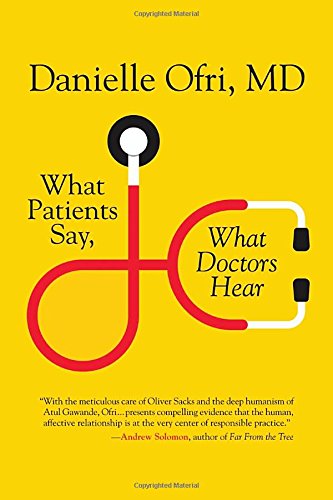
What Patients Say, What Doctors Hear 

What Patients Say, What Doctors Hear by Danielle Ofri, MD- a book

(an affiliate link, using it costs you no more and will support this blog)