Winning on the water-a book review of Boys in the Boat

In Boys in the Boat, the United States Olympic Rowing team of 1936 beat incredible odds to win the gold medal. But the meat of the book explores in detail how each man came to be in that boat, especially Joe Rantz.

We like sports, even if we don’t do sports, we like watching others compete. And we like books, television shows, and movies about sports. Have you noticed how many sports stories there are?

(This post offers multiple affiliate links to sites that offer a commission to this blog for purchases made there.)

Some sports stories are about fictional characters and situations-

  • Rocky
  • Field of Dreams
  • Bleachers
  • Friday Night Lights
  • Million Dollar Baby

But the ones that most catch our attention and our hearts are those about real people.

  • Seabiscuit
  • Chariots of Fire
  • A League of Their Own
  • The Blind Side

Rowing- athletes in a boat

Most of us know something about major sports, like football, basketball, and baseball. We probably know less about horse racing, boxing, track, and ice skating. But we know little about rowing since it is rarely if ever on the sports pages or television broadcasts.


The Boys in the Boat: Nine Americans and Their Epic Quest for Gold at the 1936 Berlin Olympics

by Daniel James Brown.

In Boys in the Boat, the United States Olympic Rowing team of 1936 beat incredible odds to win the gold medal. But the meat of the book explores in detail how each man came to be in that boat, especially Joe Rantz.

Based on interviews with him by the author, we learn about Joe’s painful early family life, struggle to pay for college, and the grueling physical challenges of preparing for competitive rowing.

At that time the sport of rowing was dominated by the sons of wealthy families and the Ivy League colleges they attended. By contrast, the University of Washington athletes who made up the 1936 Olympic rowing team came from working-class families and had to work their way through college. That they did so during a depression makes their achievement even more remarkable.

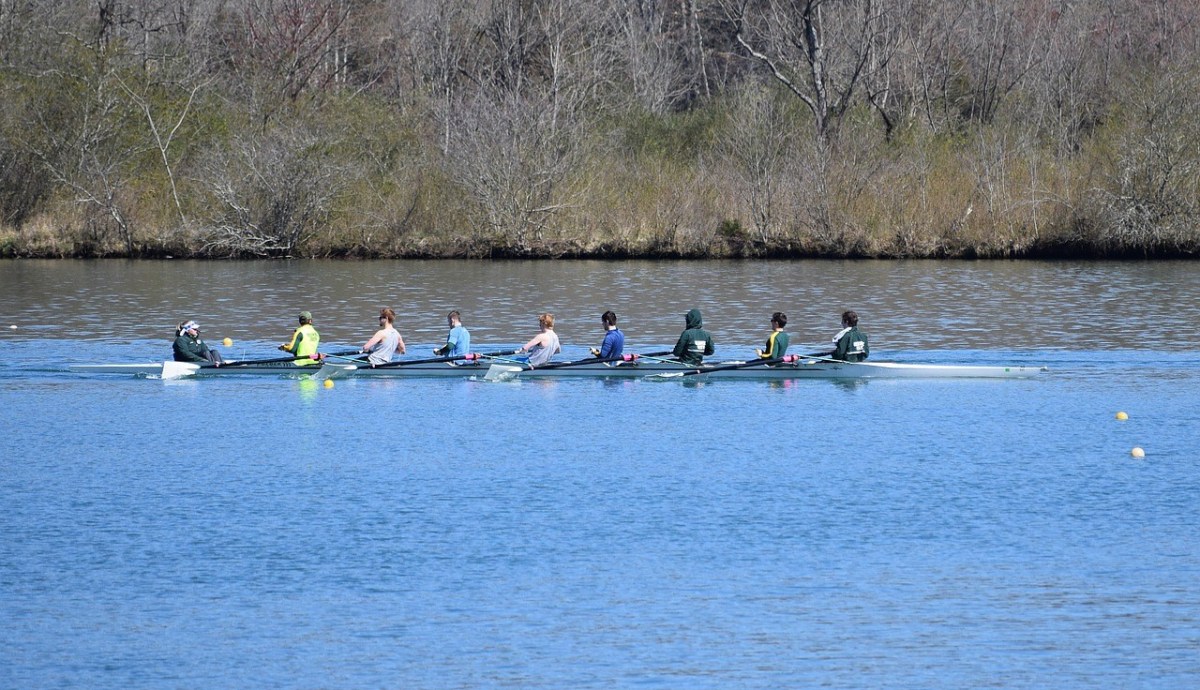
You may be surprised to learn how much the sport of rowing physically and mentally challenges the human body. To be competitive, the crew’s eight rowers must work synchronously as the leader, known as the coxswain, calls out commands to set a pace that is fast enough to win but sustainable for the length of the race.

Germany’s Olympic games

Interspersed in the boys’ stories, Daniel Brown outlines the events unfolding in Germany, as Hitler and the Nazi party rose to power. As part of their plan to dominate Europe and eventually the world, they plan to make the 1936 Olympic games in Berlin a showcase of German wealth, knowledge, power, and athletic ability.

Specifically, Hitler hoped the German rowing team would beat England and Italy, the teams historically likely to win. The story of his reaction to an American team that not only challenged but upset the status quo completes a book worth reading.

What I learned from Boys in the Boat

From reading this book, I gained an appreciation for a sport that I previously knew nothing about. My husband and I listened to the audiobook while on a 12-hour car trip and it kept us interested and entertained. We were inspired by a story where perseverance, courage, loyalty, and commitment were celebrated and rewarded.


This story proves history lessons aren’t dull, boring, or outdated, but can offer us information and inspiration to help us explore the HEART of health

the BOYS OF ’36 documentary

A PBS video documentary American Experience: The BOYS OF ’36 is available on Amazon Video, free with Prime or available to rent.

Exploring the HEART of Health

I’d love for you to follow this blog. I share information and inspiration to help you transform challenges into opportunities for learning and growth.

Add your name to the subscribe box to be notified of new posts by email. Click the link to read the post and browse other content. It’s that simple. No spam.

I enjoy seeing who is new to Watercress Words. When you subscribe, I will visit your blog or website. Thanks and see you next time.

I’d love for you to follow this blog. I share information and inspiration to help you transform challenges into opportunities for learning and growth.

Add your name to the subscribe box to be notified of new posts by email. Click the link to read the post and browse other content. It’s that simple. No spam.

I enjoy seeing who is new to Watercress Words. When you subscribe, I will visit your blog or website. Thanks and see you next time.
Dr. Aletha

How can we safely worship at church in a pandemic?

Many types of gatherings are important for civic and economic well-being; religious worship has particularly profound significance to communities and individuals, including as a right protected by the First Amendment.

in whom the whole structure, being joined together, grows into a holy temple in the Lord.  In him you also are being built together into a dwelling place for God by the Spirit.

Ephesians 2:21-22, ESV

The Holy Bible, English Standard Version. ESV® Text Edition: 2016. Copyright © 2001 by Crossway Bibles, a publishing ministry of Good News Publishers.

(Although this post addresses the Christian faith, I hope other communities of faith find this useful.)

update November 30, 2020

“As an association of Christian healthcare professionals, CMDA urgently requests that churches strongly consider taking their services online and cancel in-person gatherings until this current surge of COVID-19 cases passes.”

quote from “A Plea to Our Churches”, CMDA

IMG_2629.jpg
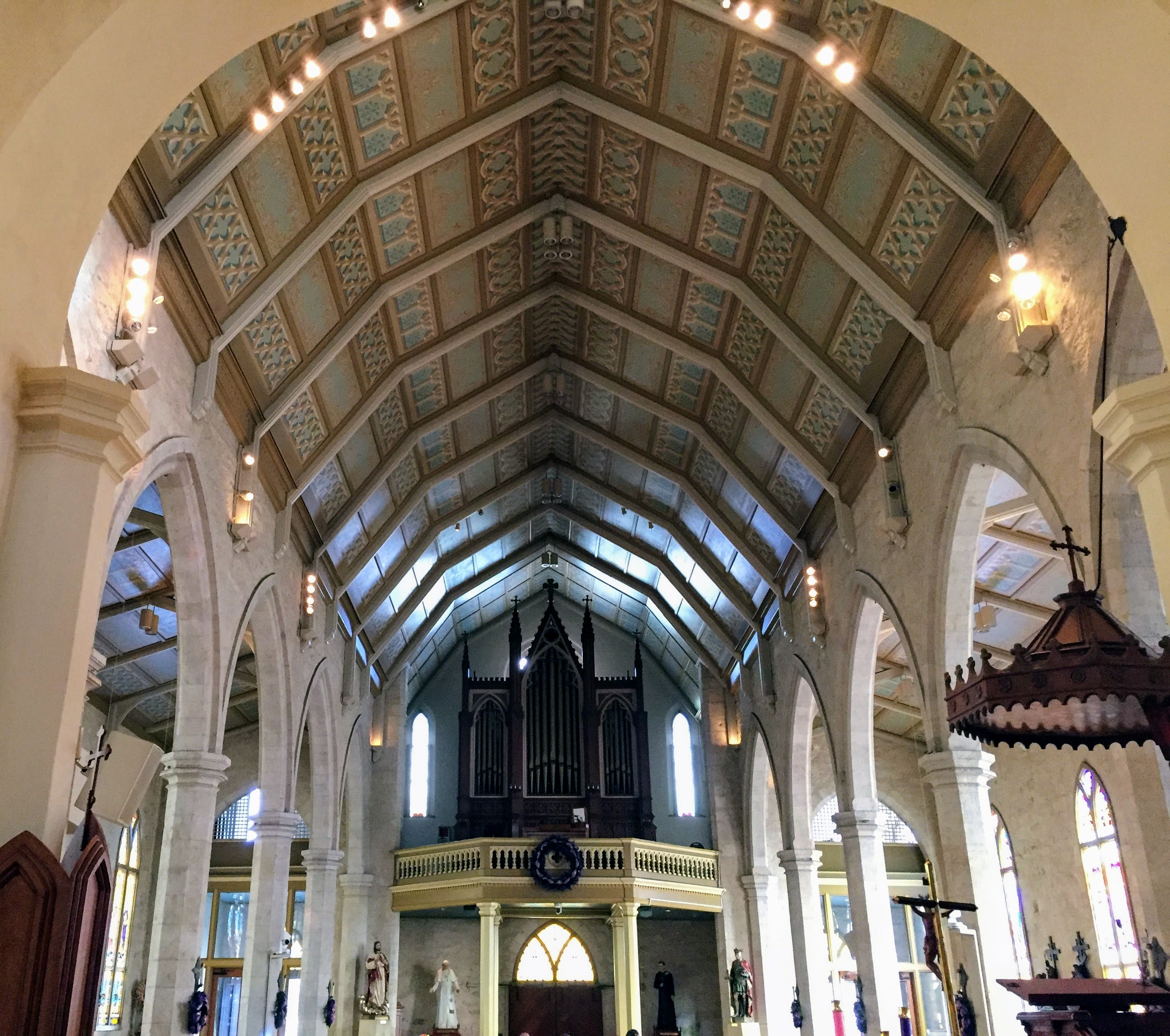
San Fernando Cathedral, San Antonio, Texas

 “Closing” our churches

Many of us have not attended a religious service in person since March, when almost every activity outside our homes ceased in order to limit spread of SARS CoV-2 infection.

Unfortunately churches were lumped into the category of “non-essential”, although we all realize how essential our religious establishments are. But in the context of a serious viral pandemic, our public health professionals believed it was necessary to prohibit all large public indoor gatherings.

Of course, the “Church” never closes; people who consider themselves the Church practice their faith in places other than a designated building-in their homes, in a park, at work, online. My local church already had an online presence so we’ve never missed a week of having teaching and prayer.

My state opened relatively early, and my church reopened soon after. They arranged the sanctuary for social distancing, performed extra cleaning, and now require masks. However, due to our age, my husband and I have chosen to continue worshiping from home.

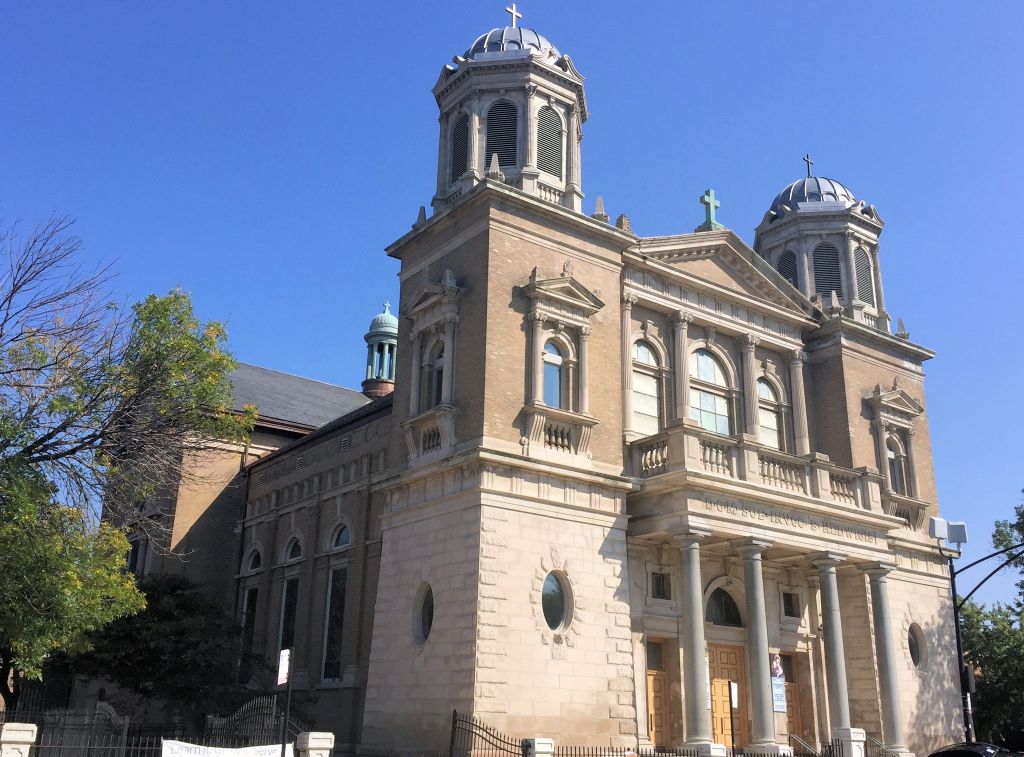
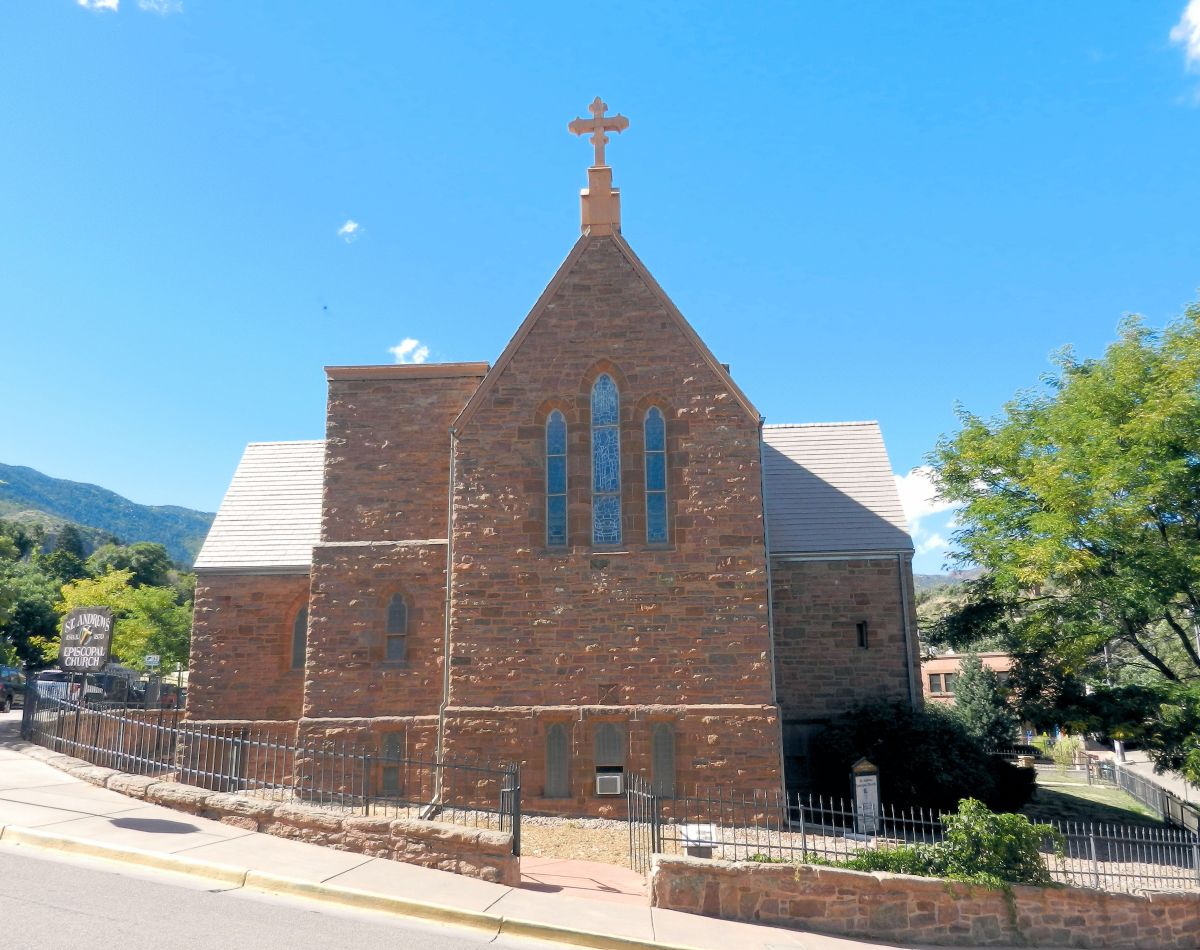
St. Hedwig Church in Chicago Illinois

“Reopening” our churches

The CDC, state, and local health departments have issued guidelines for reopening public facilities of all kinds, including churches, and I encourage you to consult those. A private association of Christian physicians and dentists also developed guidelines specific to the needs of churches. (Although these guidelines are directed toward those who practice the Christian faith, I believe that others can apply them to their worship practices.)

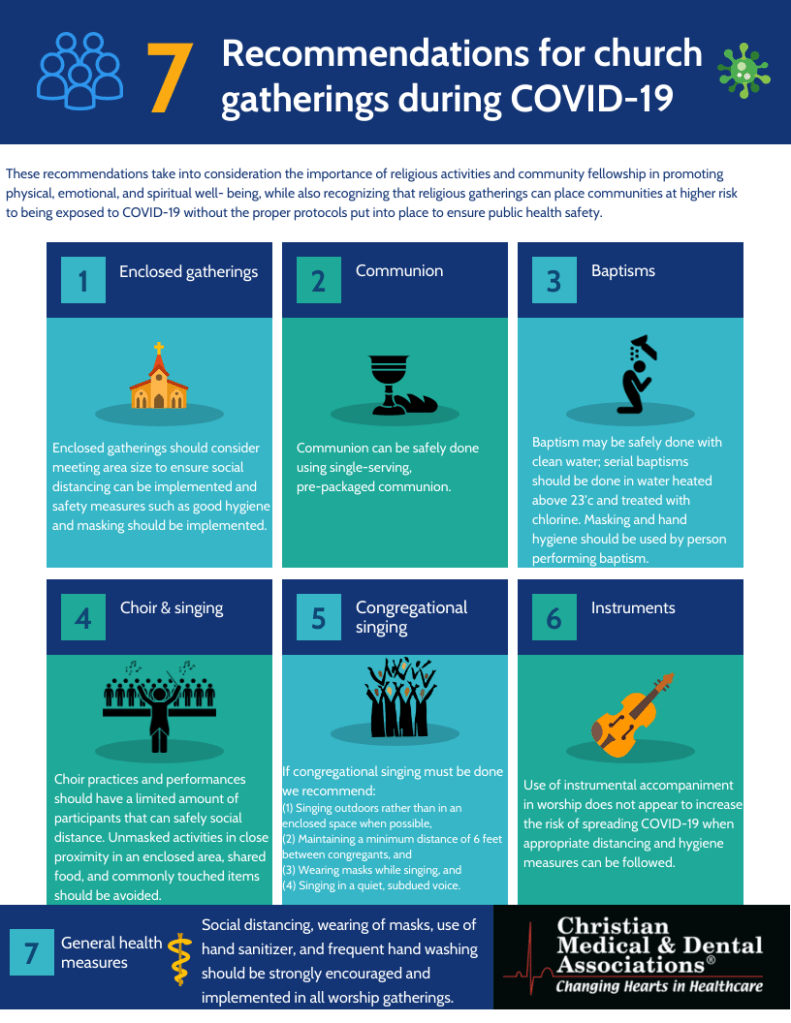
7 recommendations for church gatherings during COVID-19
7 recommendations for church gatherings during COVID-19 from the Christian Medical and Dental Associations

The Christian Medical and Dental Associations, CMDA, had a specific purpose in writing their guidelines. As stated-

Part of the mission of CMDA is to glorify God by caring for all people and advancing Biblical principles of healthcare within the Church and throughout the world.

With that in mind, CMDA has enlisted several expert members to provide guidance to church leaders as they wrestle with the problem of re-opening their services within the ongoing COVID-19 pandemic.

Members of the association are all physicians and dentists-students, residents, clinicians, teachers, missionaries, and retired. And they are active members of churches all over the world. So they are in a unique position to consider both the needs of the Church and the needs of public health and safety.

CMDA Guidelines For Reopening Churches

  • Consider size of the area for enclosed gatherings to accommodate social distancing.
  • Offer communion using single use, prepackaged supplies.
  • For baptism, use heated and disinfected water .
  • Limit choir participants and assure adequate social distance , especially if unmasked.
  • Use extra precautions for congregational singing if not done outdoors.
  • For instruments, ensure social distance and limit sharing of equipment.
  • Social distancing, hand hygiene, and masks are recommended for all attendees.

I encourage you to follow the link to the full document which explains the reasons for the recommendations and includes links to pertinent references.

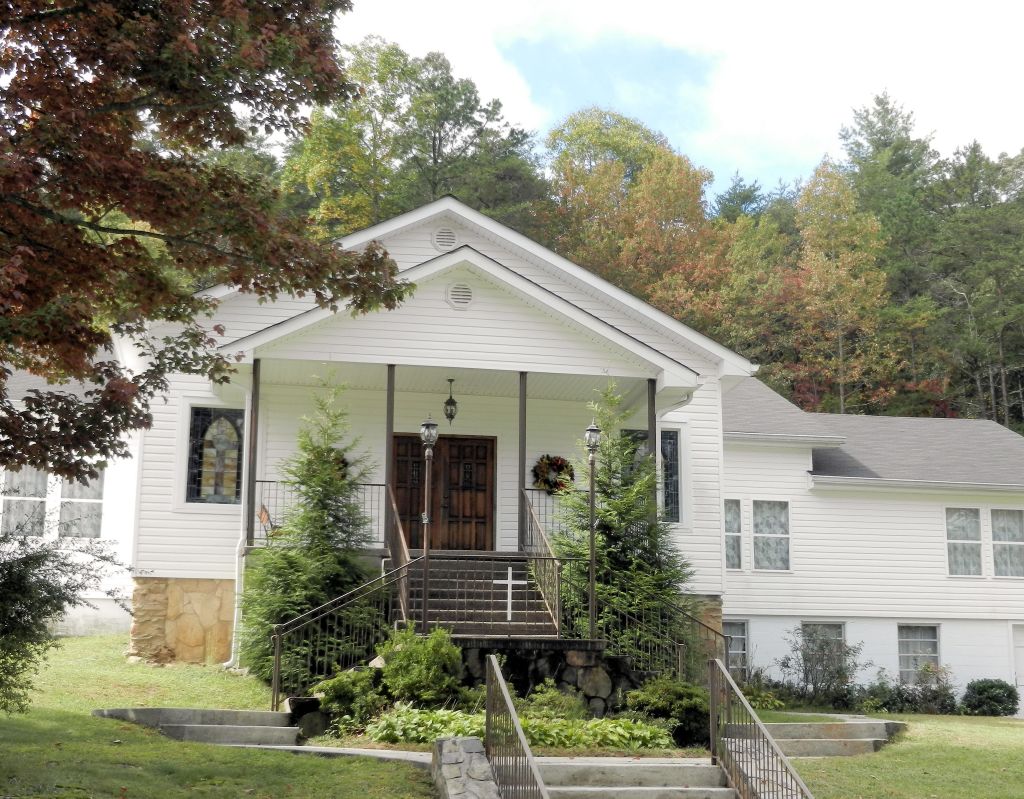
a simple white church flanked by autumn trees
a church in Talulla Falls Georgia

There is no guarantee that even with these measures cases of COVID-19 will not occur due to transmission at a church. Ohio has had several COVID-19 outbreaks recently, many of which the Ohio Department of Health traced to bars, restaurants, churches, and day care centers. Outbreaks in other states have been linked to attendance at church events, including weddings and funerals.

the purpose of these guidelines is to provide evidence-based recommendations for Christian communities who wish to reopen safely.

Though evidence-based, however, these guidelines are not intended to replace government ordinances or health regulations and should be considered in light of local guidance which account for the community prevalence of SARS-CoV-2/COVID-19 and available resources.

CMDA


The Constitution and the CDC

Does closing churches for health reasons violate the Constitution? According to the First Amendment (the first ten amendments are called the Bill of Rights)

Congress shall make no law respecting the establishment of religion, or prohibiting the free exercise thereof; …

Amendment 1, the U.S. Constitution

I suppose it depends on your definition of “the free exercise” thereof.

  • Have we been told to renounce our faith?
  • Are we prohibited from owning or reading our Bibles and other spiritual writings?
  • Can we watch or listen to religious programs on television, radio, and the internet?
  • Can our clergy and teachers continue to preach and instruct?
According to the Centers for Disease Control and Prevention

“This guidance (about church activity during a pandemic) is not intended to infringe on rights protected by the First Amendment to the U.S. Constitution or any other federal law, including the Religious Freedom Restoration Act of 1993 (RFRA).

The federal government may not prescribe standards for interactions of faith communities in houses of worship, and in accordance with the First Amendment, no faith community should be asked to adopt any mitigation strategies that are more stringent than the mitigation strategies asked of similarly situated entities or activities.

while many types of gatherings are important for civic and economic well-being, religious worship has particularly profound significance to communities and individuals, including as a right protected by the First Amendment.

State and local authorities are reminded to take this vital right into account when establishing their own re-opening plans. “

Here’s another post you may enjoy reading

San Fernando Cathedral

San Fernando Cathedral was founded on March 9, 1731 by a group of 15 families who came from the Canary Islands at the invitation of King Phillip V of Spain and is the oldest, continuously functioning religious community in the State of Texas.


sharing the HEART of health, faith, hope, and love

I took all of the photos in this post on vacations over several years. They are for illustration only, and do not represent CMDA or the guidelines described in this post. I am a member of the Christian Medical and Dental Associations but had no part in writing the guidelines,with which I agree.


FAITH LOVE HOPE- words created with letter tiles
These three remain, faith, hope and love, and greatest of these is love. 1 Corinthians 13:13
Dr. Aletha