The Magic of Normal- Book Review

In this post I review Dr. Maky Zanganeh’s memoir, “The Magic of Normal,” which chronicles her journey from fleeing the Iranian Revolution to becoming a successful executive in robotics and cancer research. While the book highlights her professional achievements, it maintains an emotional distance, offering insights into corporate life more than personal struggles. Still, it is a compelling narrative.

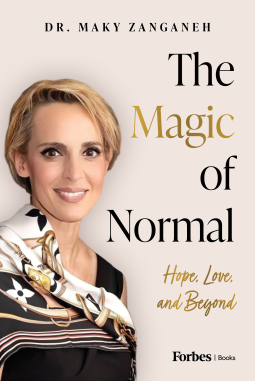
The Magic of Normal

Hope, Love, and Beyond

by Maky Zanganeh

Published by Forbes Books January 2025

2025 Global Book Awards Gold Medalist in Biographies & Memoirs – Women

Thank you, NetGalley and publisher, for sending this book for review consideration.

A Driven Life Told at Arm’s Length: My Take on Dr. Zanganeh’s Memoir
A Story That Begins in Revolution

Dr. Zanganeh describes her book as a chronicle of her private and professional journey, though at times it feels more like a book‑length résumé than a personal memoir. She begins in Iran, which she fled after the Iranian Revolution. (Ironically, while I was reading this, the United States—my own country—was in a military conflict with Iran.)

Her family initially supported the revolution, but the country soon descended into war with Iraq. With the means to do so, her parents sent her and her sisters to France, where they lived with relatives, attended college, and where she eventually trained as a dentist.

From Dentistry to Robotics and Beyond

Then her life pivoted sharply. Instead of practicing dentistry, she entered the business world and rose quickly, becoming a high‑level executive at a budding robotics company. She led the team that created the first long‑distance robotic surgery, and later founded another company that developed a breakthrough cancer drug.

A Personal Life Mostly Offstage

Her personal life stays mostly in the background until, almost abruptly, she mentions becoming pregnant. Because of her demanding career, she sent her son to live with her parents, who raised him while she continued traveling the world for work—a lifestyle that sounded exhausting to me, though she seemed energized by it.

Illness, Resilience, and the Pandemic

Everything shifted when she was diagnosed with breast cancer, a disease she had previously encountered only from the vantage point of a medical business executive. The timing was terrible, arriving just as the COVID‑19 pandemic began. Still, she approached her illness with the same determination that fueled her career, and she survived.

Testimonials, Business Lessons, and a Sudden Genre Shift

Throughout the book, Dr. Zanganeh seems to have a knack for meeting the right people at the right time, many of whom offer glowing testimonials in the final chapter. That chapter also includes a lengthy, detailed guide to starting and running a successful company. It felt like it belonged in a separate book and landed a bit flat after the more personal sections.

Admiration, Achievement, and an Emotional Distance

She speaks with deep affection for her family and credits them with much of her success. She also praises her business partners and colleagues, describing their strengths in detail. As someone who has worked in the medical field, I found her accounts of robotic surgery and cancer‑drug development genuinely interesting.

Still, I finished the book feeling that I didn’t truly know her. She is clearly driven by success, validation, and recognition, without exploring the source of that drive.

Her Most Human Moments

One of the most compelling moments comes when she writes passionately about the assault on women’s rights—especially in Iran—and about the suffering in Gaza following the Hamas attack on Israel. She questions why the world continues to fight wars and what it will take for that cycle to end.

My Thoughts: A Memoir for a Specific Audience

While I found parts of her journey interesting, I wouldn’t call this a universal must‑read. It feels best suited for people who are curious about the corporate world or who want insight into how high‑powered executives build companies and careers. Since it’s a Forbes publication, that audience seems intentional. Readers looking for a more intimate memoir will come away wanting more. You may find such insights in the articles on her website.

A Deeper Look

Dr. Zanganeh addressed several personal, health, and professional issues in her book. Based on this review, what else do you want to know about her and her work?

She experienced

  • political unrest and war
  • separation from family
  • personal illness from COVID-19 and breast cancer
  • Her father’s terminal illness and death
  • high-pressure professional life

Which of these resonates with you? If you read her book, which might be of most help to you?

From the halls of MD Anderson Cancer Center as a patient & care giver to her father battling cancer,
to groundbreaking work in medical research,
she illustrates how science, innovation, and community can illuminate the path to recovery.

From Dr. Zanganeh’s website

Photos of Dr. Maky Zanganeh

The cover image of this post was created by JetPackAI available with WordPress.

Exploring the HEART of Health

Thank you for reading this post. Please follow this blog and me on social media.

I share information and inspiration to help you transform challenges into opportunities for learning and growth.

Add your name to the subscribe box to be notified of new posts by email. Click the link to read the post and browse other content. It’s that simple. No spam.

I enjoy seeing who is new to Watercress Words. When you subscribe, I will visit your blog or website. Thanks and see you next time.

Dr. Aletha

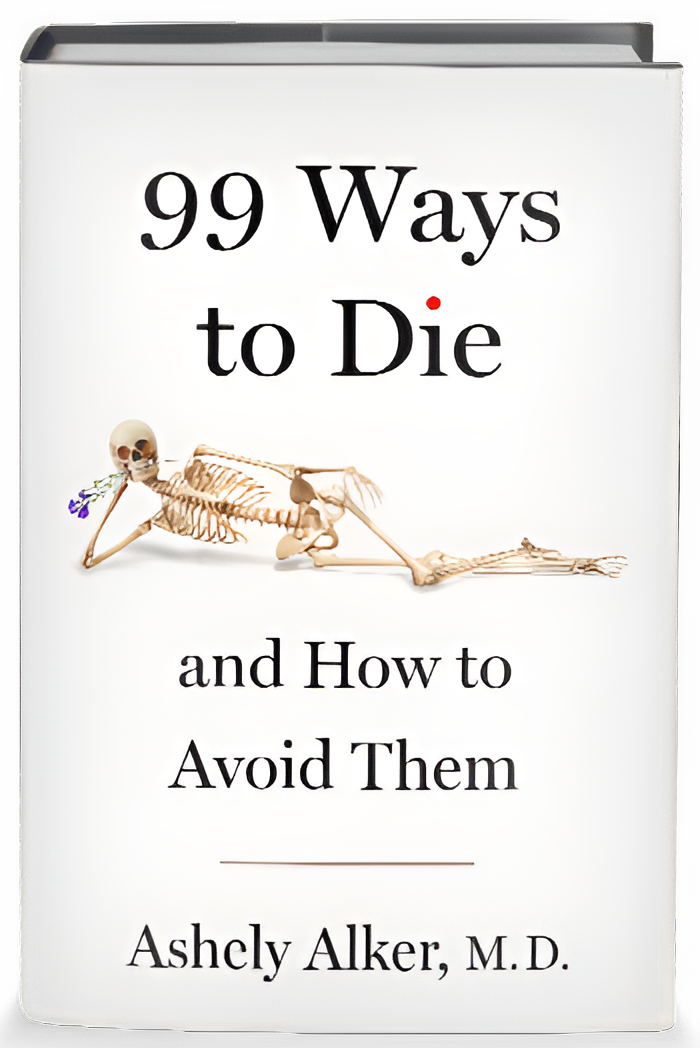
How 99 Ways to Die Might Save Your Life-a book review

In this post I review “99 Ways to Die and How to Avoid Them.” Dr. Ashely Alker, an emergency physician, humorously outlines various health risks and preventive measures. Combining personal anecdotes with medical insights, she emphasizes the importance of awareness in avoiding fatal incidents and advises readers to prioritize health habits over misinformation, and seeking medical care as soon as possible.

99 Ways to Die

And How to Avoid Them

by Ashely Alker, M.D.

Published January 2026 by St. Martin’s Press

Thank you, NetGalley and publisher, for sending this book for review consideration.

Why would a medical doctor write about ways to die? Aren’t they supposed to keep people alive?

Yes, and that’s why Dr. Ashely Alker, a “death escapologist”, wrote 99 Ways to Die. As an emergency medicine specialist, she says this book is bad for business. Reading it, and following her advice, may keep you out of her emergency room. Better yet, it may save your life.

Dr. Adler briefly shares her pre-medical life and education, including overseas study for a master’s degree in public health. She relates personal experiences with illness and the healthcare system, which led her to medical school and residency.

The table of contents reads like a textbook of emergency medicine, in that it includes both illnesses and situations that can lead to illness. Some of them you have no doubt heard of.

  • Heart Attacks
  • Cancer
  • Ebola virus
  • Nuclear blast radiation

But have you heard of

  • Schistosomiasis,
  • Mad Cow disease,
  • Venomous agent X,
  • Takotsubo cardiomyopathy

And you’ve heard of but may not believe can be deadly.

  • Influenza,
  • Measles,
  • High Blood Pressure,
  • Pregnancy,
  • Health Influencers (yes, she really wrote this)

She devotes ample discussion to infections, both bacteria, viral, fungi, and even parasites. One whole chapter is on vaccine-preventable infections (obviously, she advocates vaccination)

One of the top five frequent causes of death is accidental trauma, which is often overlooked in discussions of preventive medicine. Not Dr. Adler. She details the ways things like drugs, animals, vehicle crashes, crime, sports, weather, and war can harm and kill us. And don’t forget the dangers of food and water!

You may be thinking this book must be highly technical. She does use scientific names and terms, which she explains in simple language. Her tone is engaging and conversational. She is blunt, sometimes humorous, but always perfectly serious.

She shares stories of her own patients with these conditions; details changed for privacy. Is some of it gory or scary? Maybe, depending on your comfort level and how much you want to know about the human body and how it can be misused and abused.

Disease and death affect all of life and history, as she points out in discussing the impact of the influenza epidemic of 1918 and the COVID-19 pandemic of 2020. I found her discussion of the atomic bombs dropped on Hiroshima and Nagasaki, Japan in World War II particularly poignant.

The initial blasts killed over 200,000 civilians, with many more dying later from radiation illness. In her review of biological and chemical warfare, she suggests we consider carefully who we put into power.

 From this book, you will learn that health is more than knowing your blood pressure and cholesterol. Our risk of disease is more due to where and how we live, and our socioeconomic status. The most important number for your health may be your zip code in the United States.

None of us expect to die from an automobile collision, hypothermia, homicide, drowning, tornado, poisoning, insect bite, or war, but we might and she explains how to avoid it. Common sense things-wear a seat belt, dress for the weather, apply insect repellent, don’t believe medical misinformation you read online. Learn CPR and save someone else’s life.

I’m a physician and worked in ERs, but I still learned from her book. So, I believe you will also. Her main takeaway is to value and care for your body, you only have one. As she wrote in her dedication

May we all be alive this time next year.

Dr. Ashely Alker

Read an excerpt

Note: She does not intend this book to replace advice from your own personal physician. References to CDC recommendations are to those issued before January 1, 2025.

The Author

Ashely Alker, M.D., M.Sc., is an emergency medicine physician on a mission to improve public health. While completing her master’s degree, Dr. Alker studied at Harvard School of Public Health’s multinational institute in Cyprus. She lived near the United Nations Green Zone and worked in humanitarian affairs at the Unit for the Rehabilitation of Victims of Torture.

After graduating from the George Washington University School of Medicine, Dr. Alker served as a healthcare advisor for a member of the US Congress. During her residency in emergency medicine at the University of California, San Diego, Dr. Alker became a technical consultant and medical screenwriter, improving medical accuracy on over twenty shows, including TV and film for Netflix, Hulu, HBO, and Disney.

Her nonprofit, Meaningful Media, connects writers, artists, and reporters with certified public health experts to develop scientifically accurate messaging.

Images in this Post

The book image and Dr. Alker’s photo are from her website.

What do you think?

What do you think about a physician writing a book about dying?

What is the most unusual, bizarre, or unexpected cause of death that you know about?

How will reading this review and/or the book impact your idea of what will cause your own death?

Exploring the HEART of Health

Thank you for reading this post. Please follow this blog and me on social media.

I share information and inspiration to help you transform challenges into opportunities for learning and growth.

Add your name to the subscribe box to be notified of new posts by email. Click the link to read the post and browse other content. It’s that simple. No spam.

I enjoy seeing who is new to Watercress Words. When you subscribe, I will visit your blog or website. Thanks and see you next time.

Use this search box for related posts on this blog or other topics of interest to you.

Dr. Aletha