Dr. Spiess doesn’t suggest that confronted with terminal illness we refuse treatment and give up. He advocates thinking about and planning for the dying process long before we develop an illness that might be fatal.
This is at least the fouth book about death I have reviewed. I didn’t plan to, but it just happened. Maybe because of what Dr. Atul Gawande wrote in his book Being Mortal, another book I reviewed.
Death may be the enemy, but it is also the natural order of things.
Atul Gawande, M.D.
In this instance, I was approached by the publisher , FSB Associates, asking if I would review the book, and offered a complimentary copy. Otherwise, I was not compensated for my review. The book links in this post are affiliate links which may help support this blog financially.

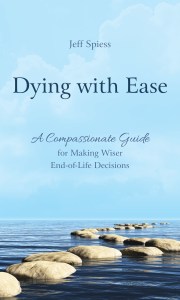
Dying with Ease by Jeff Spiess, M.D.
A Compassionate Guide for Making Wiser End-of-Life Decisions
In the introduction, author Dr. Jeff Spiess explains his purpose for writing this book.
my primary hope is for you, dear reader, to become more informed and at peace regarding your own dying.
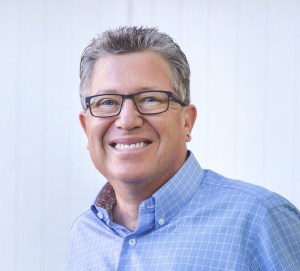
Jeff Spiess, M.D.
Dr. Spiess doesn’t suggest that confronted with terminal illness we refuse treatment and give up. He advocates thinking about and planning for the dying process long before we develop an illness that might be fatal.
His book reviews the challenges of the dying process, and guides us in making choices that make it smoother and with ease.
Let’s review the titles of each chapter with a brief description of what each contains.
1. Dying in America
Here he proposes a definition for what is a “good death”; it’s one that matches the wishes of the dying person and their family.
2. I’m Going to Die? What Can I Do?
In this chapter he explains Advance Care Planning
Advanced Directives
Durable power of attorney for healthcare
Do Not Resuscitate-DNR
Physician Orders for Life Sustaining Treatment
Artificial Nutrition and Hydration
3. Hospice
In this chapter he reviews the history of hospice care care and explains the basics of palliative (rather than curative) care
4. Suffering
Most dying persons want to minimize suffering so Dr. Spiess lists ways to do so, some of which are controversial and even illegal in some states.
Palliative sedation
Voluntary stopping eating / drinking
medical aid in dying
voluntary euthanasia
5. It’s My Life, Isn’t It?
Here he discussed autonomy , bioethics, and the legal system using past high profile cases as illustrations, those being
Karen Ann Quinlan
Brittnany Maynard
Theresa Schiavo
from Ecclesiastes 3
the time of peril, what St. John of the Cross called the “dark night of the soul,” … both tests the validity of one’s faith and initiates that essential process of incarnation
page 109
6. What’s God Got to Do With It?
Here he talks about “Religion, Spirituality, and the End of Life. He finds many people turn to religion when faced with death and sometimes that is not an altogether positive experience. However, he denies being anti-religion saying,
many find religious traditions to be sources of profound comfort and meaning. …it has been so for many friends, relatives, and patients, and also because it is true for me.
page 109
He finds it essential to differentiate religion as primarily a matter of intellectual assent to doctrines and beliefs, or whether the essense of a person’s faith has become understood and embodied in their being.
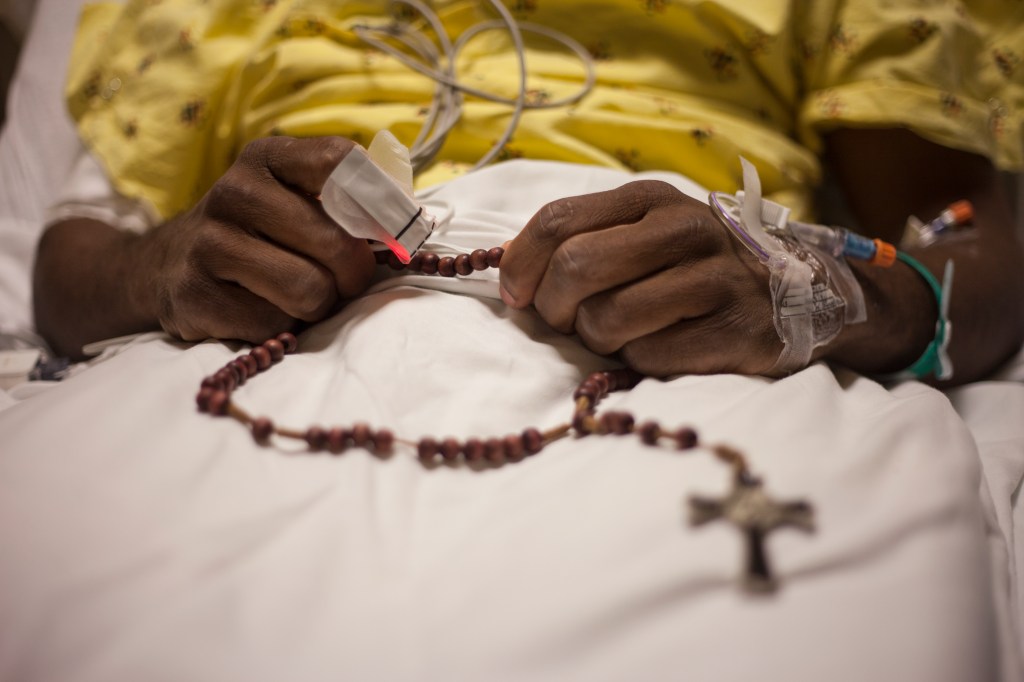
photo by DJ Thomas, Lightstock.com
7. What Does It Feel Like to Die?
In this chapter he invites the reader to do a guided exercise to encounter the inner experience of dying. Putting pen to paper you will answer a series of questions about your life. Then you review it as you finish reading the chapter. I did the exercise and found it enlightening and sobering.
8. Envisioning Your Own Death
Here he expands on the idea of Advanced Care Planning introduced in chapter 2. He adds such steps as
Know the rules (insurance coverage)
Disposition of your body
Disposition of “stuff”, making a will
photo from the Lightstock.com collection, an affiliate link
9. What’s It All About, Anyway?
Dr. Spiess concludes with a true story about a wife’s journey to finding meaning after her young husband’s unexpected death.
living well increases the likelihood of dying well
page 161
Conclusion
After the obligatory Acknowledgments this book has
Discussion Questions which seem most appropriate for personal reflection . There is one question based on each chapter.
Notes, which are chapter specific
An extensive Bibliography
An Index
Brief Author bio
Jeff Spiess, M.D.
Dr. Spiess started in medicine as an oncologist, cancer specialist, then transitioned into palliative and end-of-life care as director of a hospice. His website, https://drjeffspiess.com/, offers a complete bio, audio interviews, his blog posts, social media links, and form to join his email list.
exploring the HEART of life and death
Dr. Aletha
Lightstock-quality photos and graphics site- here.
(This is an affiliate link)
Use these links to share the heart of health wherever you connect.
The new President’s success in confronting and solving problems depends on his choice of capable leaders to assist and guide him.
An incoming President always faces serious challenges. Some years they take on wars, economic downturns, civil unrest, corruption, terrorist acts, natural disasters, unstable foreign affairs, or environmental accidents.
But 2020 beat all expectations with a viral pandemic that the world has not faced for over a hundred years. Add to that
a contentious presidential election
peaceful protests and raucous riots
racism confrontations and reconciliation attempts
health inequities battles and health reform initiatives
post updated January 25, 2021
The Biden-Harris Administration
The Electoral College met and voted on December 14, 2020, affirming the election of President-elect Joe Biden and Vice President-elect Kamala Harris. They were inaugurated on January 20, 2021.
They inherit a country divided in many ways-politically, economically, racially, and even in regards to health and medical care. The new President’s success in confronting and solving problems depends on his choice of capable leaders to assist and guide him.
Our health team will be ready on day one to combat our most pressing health challenges. They will lead with science, expertise, and integrity.
President-elect Joe Biden
In this post I review some of the key government positions that manage the “health and welfare” of the United States and will be critical to getting us through the pandemic and beyond. As more positions are filled, I will update this information.
a replica of the White House Oval Office at the Ronald Reagan Presidential Library , by Dr. Aletha
Office of Science and Technology Policy (OSTP)
The US Office of Science and Technology Policy (OSTP) assists the President on science and technology issues and coordinates science initiatives among other government agencies. Its leader serves as science adviser to the president but President Biden elevated this position to cabinet level.
He appointed Eric Lander, a geneticist, to this job. Mr. Lander studied and earned degrees in mathematics, economics, and molecular biology and participated in the Human Genome Project.
Addressing the COVID-19 CRISIS
President-elect Biden named Jeff Zients as the White House coordinator of the coronavirus reponse. In this role, Mr. Zients will oversee vaccine distribution and direct and troubleshoot supply chain issues.
In a new position, Dr. Marcella Nunez-Smith will direct a task force to identify and address disparities in preventing, diagnosing, and treating COVID-19.
David Kessler, M.D. , Chief Science Officer of COVID Response, serves as a co-chair of the COVID-19 Task Force. He was the Commissioner of the Food and Drug Administration from 1990 to 1997.Mr. Biden wants Dr. Kessler to lead efforts to develop and distribute Covid-19 drugs and vaccines.
Department of Health and Human Services
Most of the health care activities of the federal government fall under the agencies of the Department of Health and Human Services or HHS. The Secretary of HHS serves in the President’s Cabinet.
President-elect Biden has chosen Xavier Becerra, currently the Attorney General of California, as the head of HHS.
Due to the COVID-19 pandemic, we’ve heard more about the HHS in the news than usual; maybe you’ve never heard of these agencies. Generally, management of a pandemic or other public health emergency falls within the work of the CDC, a sub-agency of HHS.
For fiscal year 2020, HHS budgeted $ 1.293 trillion for its services.
public health service
The Public Health Service, PHS, is a division of HHS concerned with, public health, obviously. Within the PHS is the Commissioned Corps, which is one of the uniformed services, like the military. Thus it’s head is known as the Surgeon General.
Assuming this role will be Dr. Vivek Murthy who previously served as Surgeon General under President Obama. Prior to the pandemic, Dr.Murthy authored a book on loneliness and the value of human connection, little imagining how important a topic it would be this year.
The lessons in Together have immediate relevance and application. These four key strategies will help us not only to weather this crisis, but also to heal our social world far into the future. They are
The goal of public health is to avoid or prevent health threats from becoming public health emergencies, like the COVID-19 pandemic. If they accomplish the mission, we hardly notice. But when an outbreak occurs, their work suddenly becomes visible, scrutinized, and debated.
Dr. Rochelle Walensky will take over as Director of the CDC. She is chief of Infectious Disease at Massachusetts General Hospital and teaches at Harvard Medical School.
The National Institutes of Health, part of the Public Health Service,
supports biomedical and behavioral research with the United States and abroad,
conducts research in its own laboratories and clinics,
trains promising young researchers, and
promotes collecting and sharing medical knowledge.
And within the NIH is the NIAID– the National Institutes of Allergy and Infectious Diseases, which has been an invaluable source of guidance as the United States and the world works to understand and manage this new infectious disease.
Dr. Anthony Fauci, who has worked at the NIAID for 50 years and directs it now, will serve the new President as Chief Medical Adviser.
Written and narrated by New Yorker staff writer Michael Specter, Fauci combines Specter’s unparalleled reporting with exclusive new interviews and archival audio of Dr. Fauci; his wife, Christine Grady, RN, PhD; key colleagues; and peers. Listeners will hear Dr. Fauci speak firsthand about the harassment and death threats he has received as a result of his leadership and about the stress of simultaneously combating the COVID-19 pandemic and an information war waged by his boss, the president of the United States.
Specter has covered Dr. Fauci – and global public health – for more than three decades. In Fauci, Specter traces the doctor’s life from his childhood as a basketball-loving kid in Brooklyn through his leadership during the AIDS epidemic in the 1980s to today, when the response to the COVID-19 pandemic and the future of viral research are shaping humanity. With its chorus of voices, archival recordings, and original score, Fauci brings the immediacy and energy of the best documentary podcasts to the audiobook format.(review from Amazon for this affiliate link)
This scanning electron microscope image shows SARS-CoV-2 (orange)—also known as 2019-nCoV, the virus that causes COVID-19—isolated from a patient in the U.S., emerging from the surface of cells (green) cultured in the lab.
Credit: National Institute of Allergy and Infectious Diseases-Rocky Mountain Laboratories, NIH
Dr. Francis Collins, Director of the NIH, will serve on President Biden’s Science team.
NIH director Dr. Francis Collins speaks with Dr. Idowu Aimola of Nigeria, one of 10 fellows participating in a new program, the African Postdoctoral Training Initiative (APTI). Fellows spend 2 years in the lab of an NIH senior investigator, learning cutting-edge science while working on a research project of mutual interest. The immersion is intended to give the fellows the expertise to become research leaders when they return home and to foster collaborations between NIH scientists and institutions in Africa.
Credit: National Institutes of Health, public domain
This sub-agency of HHS administers three government healthcare programs- Medicare , Medicaid , and the Health Insurance Exchanges. President Biden will appoint a new CMS administrator.
Medicaid provides insurance coverage for adults and children who are unemployed or low-income.
Medicare covers disabled children,adults, and persons 65 years and older.
The Health Insurance Exchanges work with the states to provide health insurance as established by the Affordable Care Act.
reviewing and approving diagnostic tests for the coronavirus
protecting consumers from fraudulent products for COVID-19.
issuing Emergency Use Authorizations (EUAs) for ventilators
sampling and testing of respirators for importation
The FDA’S current challenge is to review, and ultimately approve a safe and effective SARS-CoV-2 vaccine to the American people.
Mr. Biden will name a new FDA Commissioner to replace Dr. Stephen Hahn; the Senate must approve his choice.
‘We are committed to expediting the development of COVID-19 vaccines, but not at the expense of sound science and decision making. We will not jeopardize the public’s trust in our science-based, independent review of these or any vaccines. There’s too much at stake.”
Stephen M. Hahn, M.D., FDA Commissioner, and Peter Marks, M.D., Ph.D., Director, Center for Biologics Evaluation and Research
FDA Commissioned Corps officer RADM Estella Jones, DVM, OCET Deputy Director and Co-Chair of the FDA Animal Welfare Council, oversees Commissioned Corps officers as they practice proper fitting of protective items. Healthcare workers testing patients for COVID-19 novel coronavirus infection must wear specific protective gowns, gloves, ventilation masks, and full facial shields as shown, and must replace these items after each patient is tested. credit FDA, public domain
investing in healthy communities
Besides the ones I’ve already mentioned, other executive departments’ roles contribute to our health and welfare-Education, Homeland Security, Energy, and Transportation.
Social determinants of health are conditions in the places where people live, learn, work, and play that affect a wide range of health and quality-of risks and outcomes. We broadly characterize these as
The President-elect has selected one of his opponents for the Democratic presidential nomination to be Secretary of Transportation. Former mayor of South Bend, Indiana Pete Buttigieg, a veteran, made infrastructure and internet access a focus during his campaign for the nomination.
Mr. Biden plans to appoint Ohio Representative Marcia Fudge as Secretary of HUD. She was elected to Congress in 2008 and has served on several committees focusing on agriculture, education, nutrition, civil rights, health, and employment.
US government photo
Biden’s choice for Energy Secretary is former Michigan Governor Jennifer Granholm. She served two terms as the first female governor of Michigan.
For Agriculture Secretary, Biden’s choice is Former Iowa Governor Tom Vilsack. Mr. Vilsack served as Agriculture Secretary from 2009-2017.
Keep an appliance thermometer in your refrigerator to check the temperature. The temperature in the refrigerator should be set at 40 °F or below. USDA Photo. public domain
The President-elect will name Miguel Cardona as Secretary of Education. Mr. Cardona became the top education official in Connecticut in 2019 after being an assistant superintendent in Meriden, Conn., which serves nearly 9,000 students. Cardona attended school and taught elementary education there. Serving as a principal for 10 years, he was named the state’s principal of the year in 2012.
ensure safe and healthful working conditions for working men and women by setting and enforcing standards and by providing training, outreach, education and assistance.
For the pandemic response, OSHA offers guidance on
returning to work
preparing workplaces for COVID-19
worker exposure risk to COVID-19
for specific industries including airlines, farms, retail, corrections
Military healthcare serves more than 9.6 million active-duty personnel, military retirees, and their families. The VA is responsible for caring for some 9 million veterans nationwide, including some 800,000 aging Vietnam War veterans, as well as some dependents.
Mr. Biden intends to nominate retired general Lloyd Austin to head the DOD and Denis McDonough for the VA position.
at a VA medical clinic, photo by Dr. Aletha
The other Cabinet positions, though less directly involved with health issues, can impact health through policies and actions. The appointees are
State-Anthony Blinken
Treasury-Janet Yellen
Commerce- Gina Raimondo
Justice (Attorney General)- Merrick Garland
Homeland Security-Alejando Mayorkas
Interior- Deb Haaland
Energy -Jennifer Granholm
Read more about the Biden-Harris healthcare team at this link
The United States government invests heavily in its citizens’ health, both directly and indirectly. Congress, the legislative branch, makes laws and approves funding for the services delivered by the executive branch. Here is a link to help you understand exactly the responsibilities of the executive departments.
The United States’ healthcare system combines public health efforts with mostly private delivery of health care. Usually, they coexist side by side with some but infrequent interaction.
The public health emergency created by the pandemic forced them into a “union” that quickly became politicized, and unfortunately diminished the effectiveness of the response.
But despite the lack of coordination and cooperation between all levels of government and private citizens, our healthcare professionals, in both public health and private medical practice stayed true to their calling.
Many risked their own lives to care for COVID-19 victims. Others sacrificed time and finances to lead the pandemic response in their communities and on social media- maybe not perfectly, but definitely UNITED in resolve to lead, help, and heal their fellow citizens through this unprecedented health emergency.
exploring the HEART of healthcare
I’d love for you to follow this blog. I share information and inspiration to help you transform challenges into opportunities for learning and growth.
Add your name to the subscribe box to be notified of new posts by email. Click the link to read the post and browse other content. It’s that simple. No spam.
I enjoy seeing who is new to Watercress Words. When you subscribe, I will visit your blog or website. Thanks and see you next time.