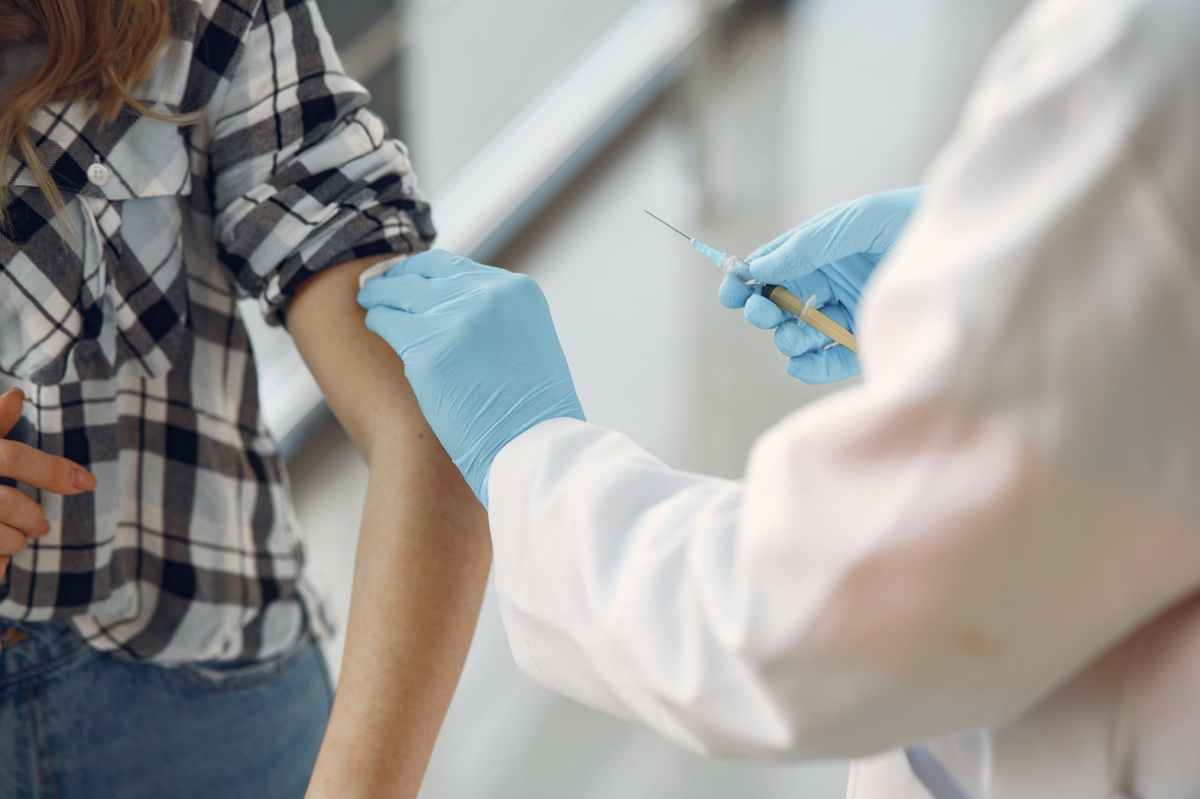
Vital questions you should ask about immunization

This coronavirus pandemic is serious. We don’t yet have a vaccine or effective treatments. To protect ourselves, our familes, and our entire communities we should all be practicing social distancing and other hygiene measures as we wait for a safe, effective vaccine and treatments.

View post to subscribe to site newsletter.

The sickness and deaths COVID-19 has caused makes immunization more important than ever. While social distancing, hand hygiene, and a clean environment are vital, a safe and effective vaccine will bolster those measures. Around the world, scientists are working on a vaccine for this novel coronavirus.

Fewer and fewer people have had experience with serious infectious diseases like measles, rubella, polio, and diphtheria, so maybe that explains why in recent years immunization rates for many diseases have plummeted. Also due to misinformation about the value and risk of immunization, some people lost confidence in vaccines to protect us against disease without causing significant side effects or adverse events.

As a result, we still have outbreaks of measles and whooping cough (pertussis) and seasonal influenza disease and deaths. The threat of a new virulent disease due to a novel coronavirus highlights the value of immunization.

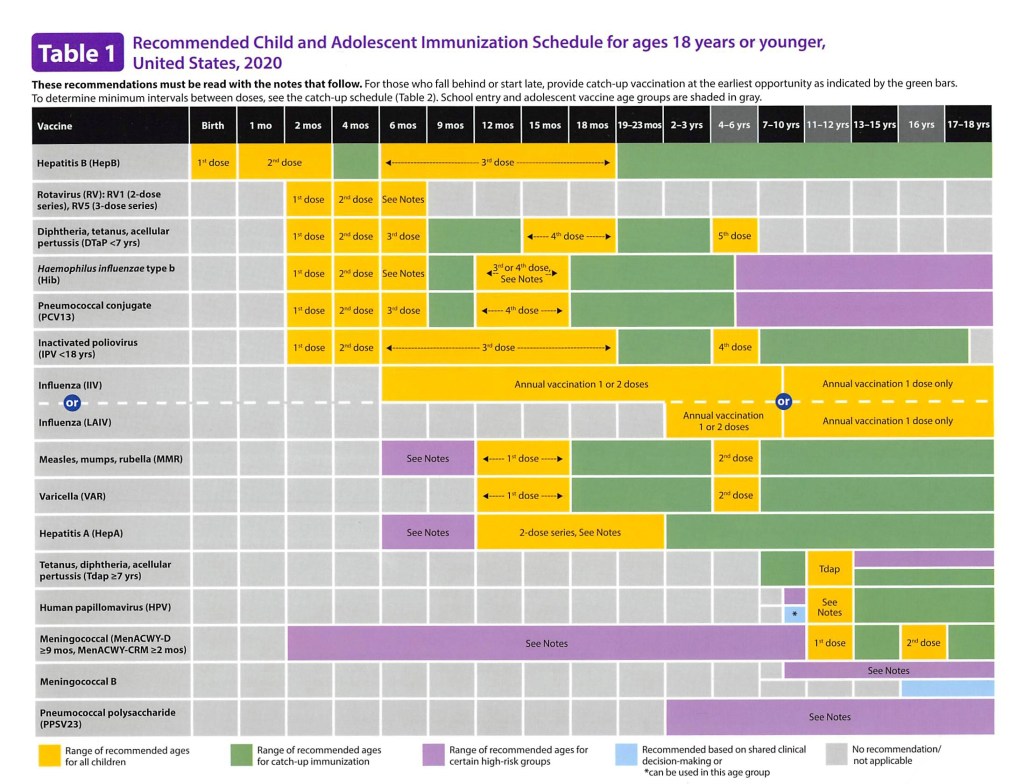
immunizations by age

On the first two charts, vaccines are listed on the far left column. On the top row, find your age, then scroll down to find the vaccines appropriate for you.
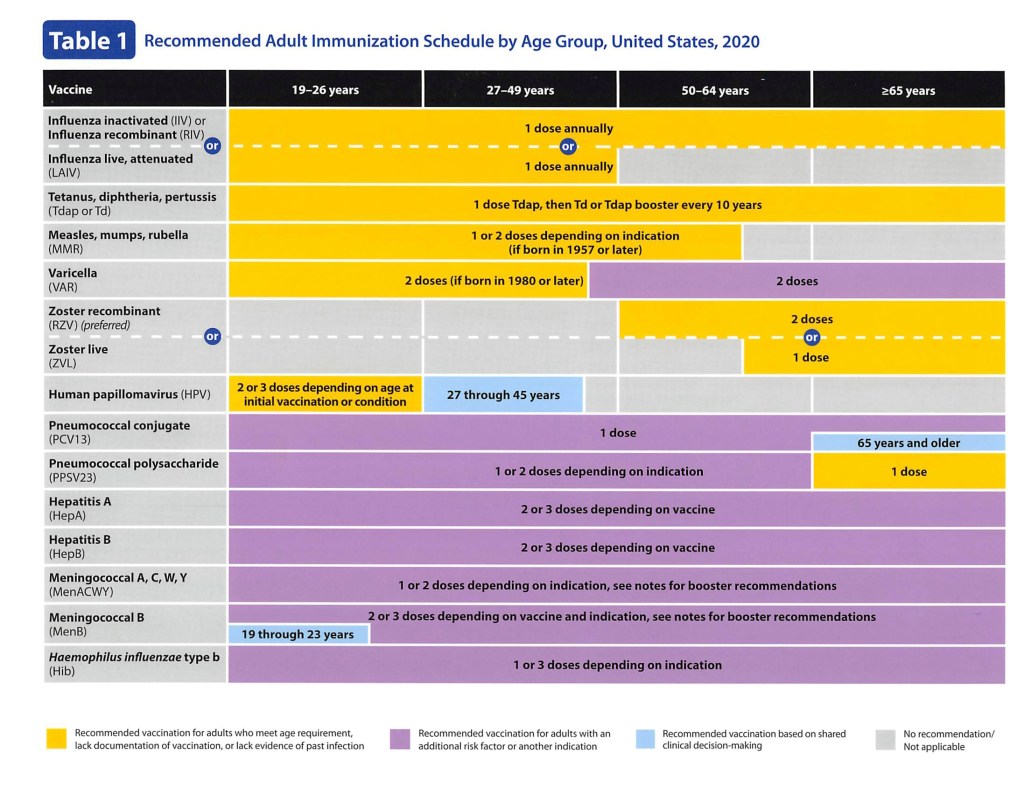
RECOMMENDED ADULT IMMUNIZATIONS 2020
RECOMMENDED CHILD AND ADOLESCENT IMMUNIZATIONS 2020

questions to ask about vaccines and the immunization process include.

  • What contagious diseases am I likely to be exposed to or at risk for?
  • What are the risks of those diseases?
  • What are the risks of a particular vaccine for me?
  • What are the risks versus benefits of immunization?
  • What else can we do to prevent an infection?

vaccines by medical condition

On these charts vaccines are also listed on the far left column. Across the top row are various medial conditions that should be considered along with age in recommending a particular vaccine. It’s just as important to know what vaccines you should not receive as those that you should.
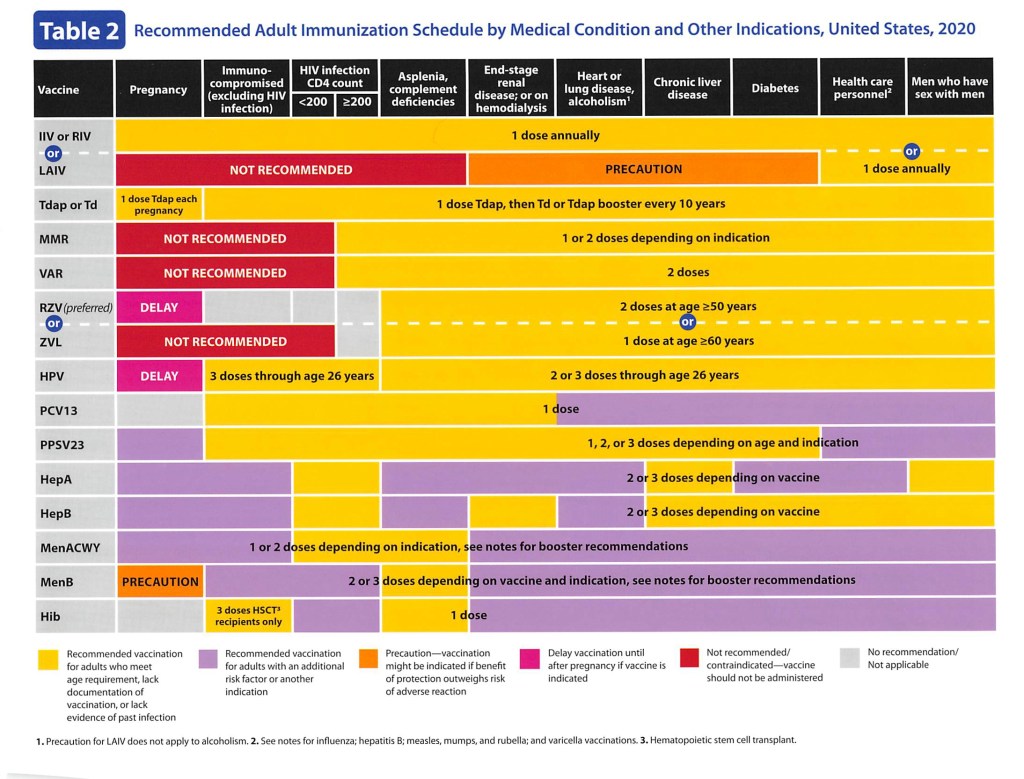
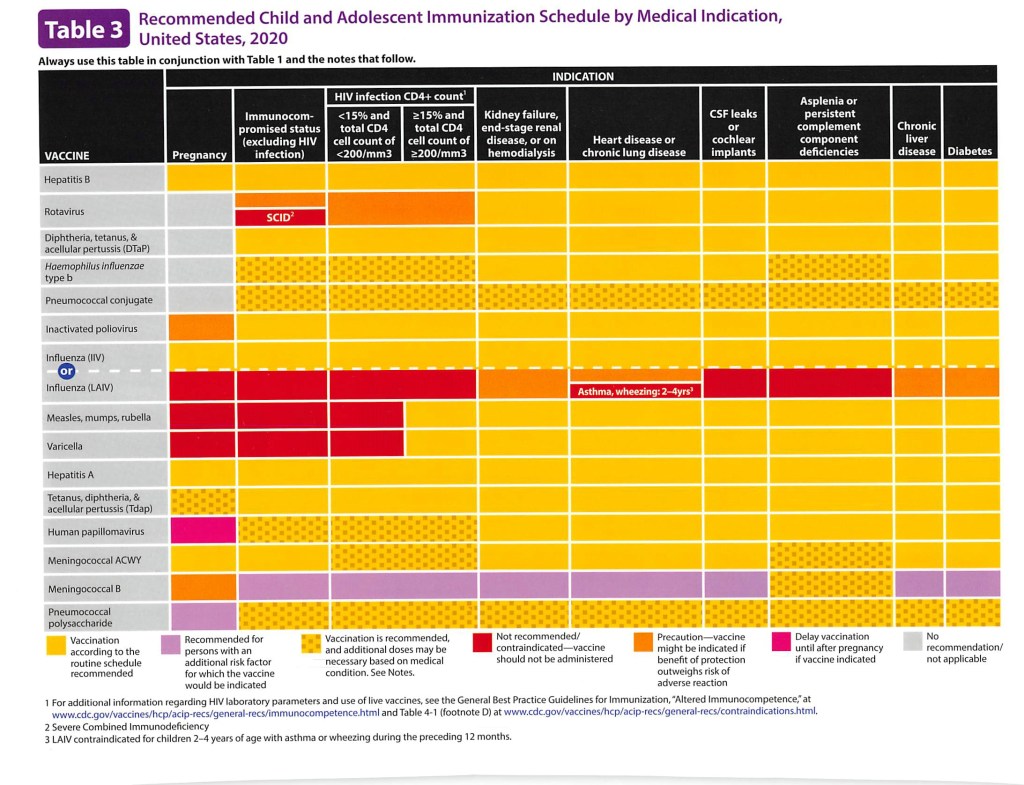
2020 vaccination recommendations from the CDC

Please visit the CDC website for complete details about the various vaccines and discuss your need for immunizations with your and your children’s physicians.
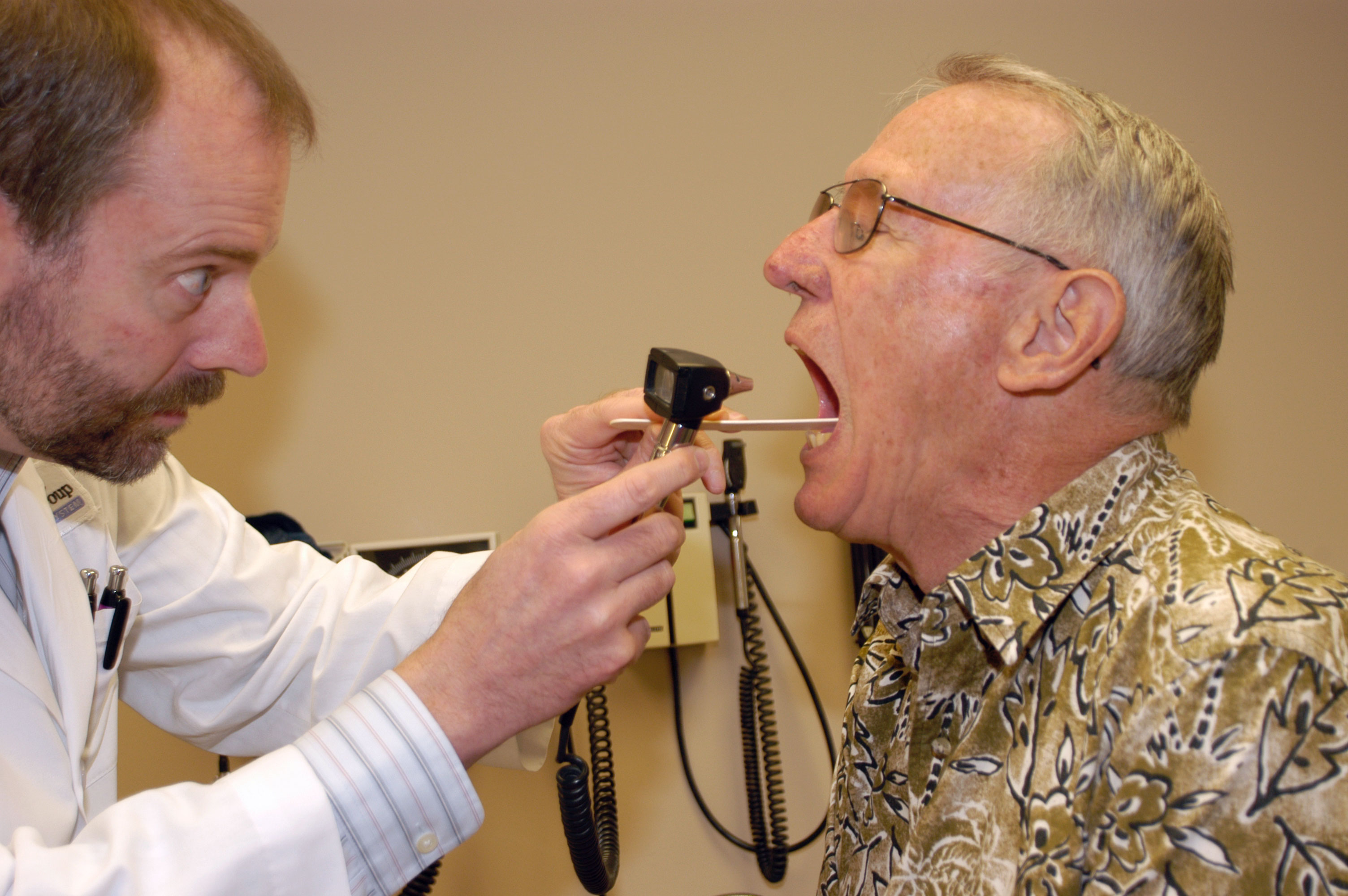

“Am I contagious?”

Most of us have gone to work, school or social events with symptoms suggestive of infection- a cough, runny nose, upset stomach- putting our friends and colleagues at risk. Isolation of sick people and quarantine of their contacts slows the spread of infectious disease and is helping to contain the COVID-19 pandemic.

Even before COVID-19, patients visit me with new onset symptoms, or symptoms that have been present several days, and ask “am I contagious?” Most of the time I can’t tell them definitely whether they are or not. When in doubt, it’s best to not expose other people unnecessarily, especially those who are most susceptible.

This coronavirus pandemic is serious. We don’t yet have a vaccine or effective treatments. To protect ourselves, our familes, and our entire communities we should all be practicing social distancing and other hygiene measures as we wait for a safe, effective vaccine and treatments.

RESOURCES FOR understanding COVID-19
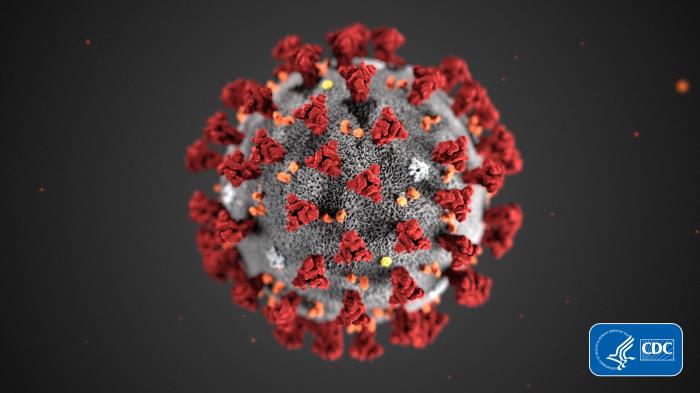
an electron microscope image of the coronavirus
used with permission, CDC.GOV

Tips from your Family Doctor

CDC-Coronavirus Disease 2019

exploring and sharing the HEART of health

Thanks for reading and sharing this important information about protecting the HEART of health.

Dr.  Aletha 

These may be good options as long as we need to stay in our homes.

a way to exercise at home

a way to get medical supplies delivered

a source for food if you don’t have local delivery

homeschool resources

Easy tips you can use to avoid insect bites and stings

For infections spread by insect bites and stings, avoiding exposure is the best way to prevent disease.

We have an influenza vaccine and scientists are hard at work developing one for coronavirus. For infections spread by insect bites and stings, avoiding exposure is the best way to prevent disease.


Insect bites and stings cause 3 types of problems-

local skin reaction

A local reaction at the site of the bite. This can range from mild redness, swelling and itching to a deep wound that may get infected.

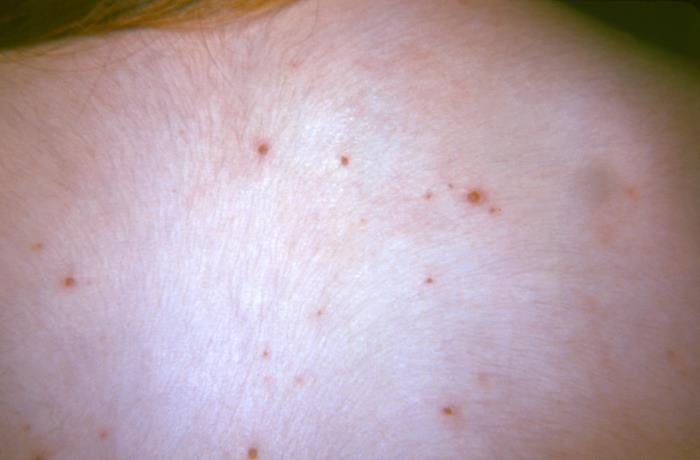
The young girl depicted here, sustained a number of insect bites about her upper back. Note how these vesicular lesions resembled what was initially thought to be a case of chickenpox, caused by the varicella zoster virus (VZV). credit CDC/ K.L. Herrmann,public domain

systemic reaction

A systemic reaction means symptoms in multiple organs of the body. This could include nausea, vomiting, trouble breathing, dizziness, muscle aches , headache and anaphylaxis (life-threatening  allergic reaction). Bee and wasp stings can cause both local and systemic reactions.

An insect transmitted infection

We worry most about this one  (other than an anaphylaxis.) World wide, this is the most serious result of insect bites, leading to millions of illnesses and deaths. Malaria alone infects 200 million people, causing almost 500,000 deaths yearly.

Mosquitoes– bites can transmit malaria; Zika , chikungunya, dengue, West Nile,and yellow fever viruses

Ticks-bites transmit Lyme disease, Rocky Mountain Spotted Fever, ehrlichiosis, and tularemia.


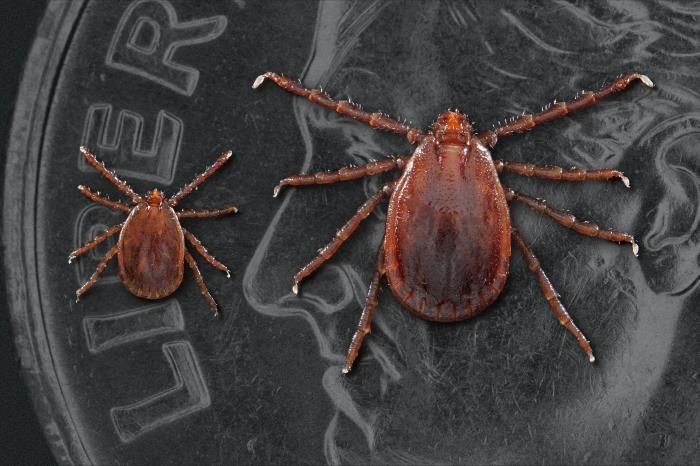
This photograph depicted two, Haemaphysalis longicornis  ticks, commonly known as the longhorned tick. The smaller of the two ticks on the left, was a nymph. The larger tick was an adult female. Males are rare. This tick can reproduce asexually. Note that the ticks had been placed atop a United States dime, in order to provide you with some sense of scale, as to the size of these small creatures. credit James Gathany/CDC
This image is in the public domain and thus free of any copyright restrictions


Preventing insect bites

  • wear long sleeve shirts and jackets
  • sleep under nets
  • be cautious when eating out of doors
  • remove sources of standing water
  • keep doors and windows closed, or install screens
  • apply insect repellents to skin or clothing


Insect repellents shown effective in  scientific studies.

(This section contains several affiliate links. They are here for your convenience and to support this blog. However, they do not indicate endorsement or advice to use.)

DEET- N, N-diethyl-m-toluamide

  • best documented effectiveness against mosquitoes and also repels ticks, chiggers, fleas, gnats ,and flies.
  • Safe for children over 2 months old
  • Considered safe in pregnancy
  • Apply sunscreen first, then apply DEET

Ultrathon Insect Repellent 2 oz (Pack of 2)

Picaridin

  • Protects against mosquitoes, ticks, flies, fleas, and chiggers
  • Safe for children
  • Safe in pregnancy
  • Better tolerated than DEET

Avon SSS Bug Guard Plus Picaridin Aerosol Spray 4 Oz.

IR3535

  • Works against mosquitoes, deer ticks, flies
  • Safe in pregnancy

Avon SKIN-SO-SOFT Bug Guard PLUS IR3535® Insect Repellent Moisturizing Lotion – SPF 30 Gentle Breeze, 4 oz


 Oil of Lemon Eucalyptus – p-menthane-3,8-diol (PMD)

  • Repels mosquitoes, flies, gnats
  • Less effective than DEET for ticks
  • Not for children less than 3 years old
  • Safe in pregnancy

Coleman Oil of Lemon Eucalyptus, Deet Free Insect Repellent Spray Pump, 4 fl oz

 Permethrin

  • Repels and kills mosquitoes and ticks
  • Is applied to clothing, nets, tents and sleeping bags
  • No evidence of harm to children or in pregnancy

Coleman Gear and Clothing Permethrin Insect Repellent Aerosol, 6 Ounce

Citronella

  • Only effective against mosquitoes, not against ticks
  • Less effective than DEET


Essential oils

  • Obtained from clove, geraniol, patchouli
  • Limited and variable protection against mosquitoes


How we’re fighting malaria around the world

You can help the victims of malaria by donating to the Malaria Medicine Fund. Blessings International gives malaria medicine to medical teams free of charge to use while treating malaria patients all over the world. 100% of donations go to this cause.

Read more and donate at this link

Blessings is working to fight malaria, and you can help!

(Watercress Words endorses Blessings International but has no direct financial interest or connection. This is not a sponsored or affiliate link.)


Listen to an Apple Podcast where 2 Docs Talk about

Emerging Vector Borne Disease

A vector is an organism that carries and transmits disease. The term usually refers to insects, but humans and other animals can also be vectors.

exploring the HEART of disease prevention

"faith, hope, love" each word written on a card, strung on a line with clothes pins
Lightstock.com graphic; find it at this link

Megan Briggs from Blessings International shares