Remembering D-Day through Art

In 1943, as a 20 year old, Bill joined the Army, deployed to England, and prepared for the invasion. What he thought would be a grand adventure turned into a nightmare which he vividly captured in his book.

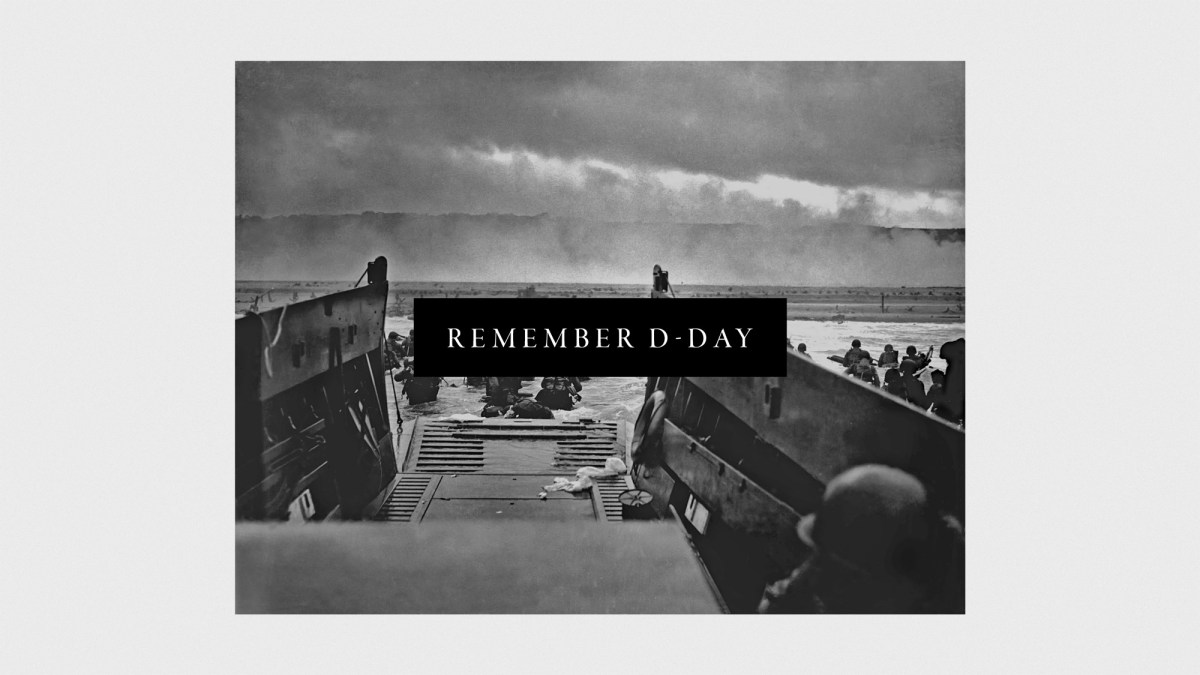
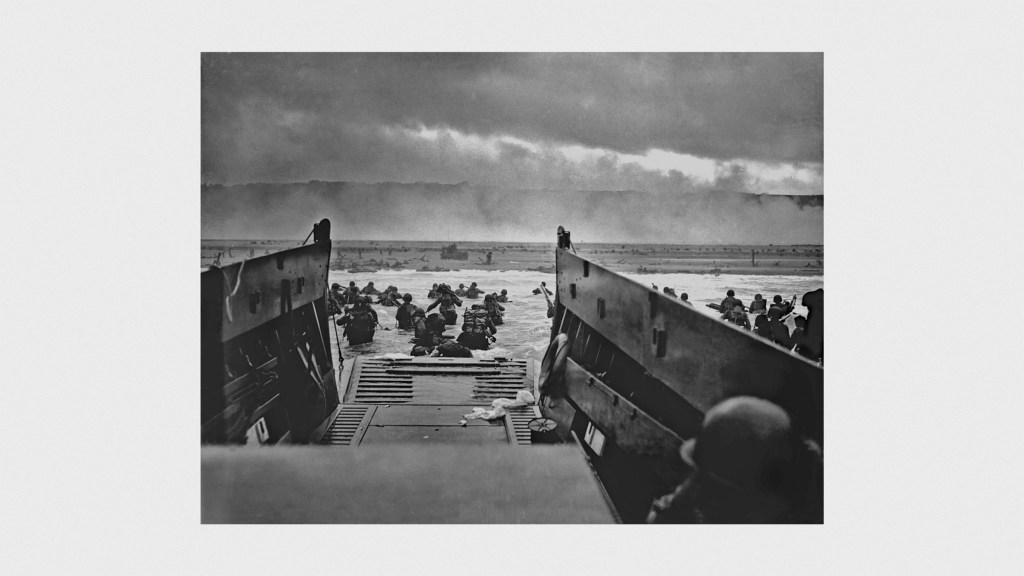
In the United States and in Europe, people observe June 6 as D-Day, when in 1944 Allied troops invaded Normandy, liberating France from Nazi occupation and ultimately end World War II. Special observances are planned every year there and in the United States to observe the anniversary of that historic event. 

Remembering D-Day by the Numbers
  • 156,000 troops from Allied nations, including the United States, the United Kingdom, Canada, France, Norway, and others 
  • 5 beaches along 50 miles of Normandy coast 
  • 6000 ships
  • 50,000 vehicles
  • 11,000 planes
  • 12,004 killed, wounded, missing or captured 

(source-The American Legion Magazine) 
How one man remembered D-Day

I learned about D-Day from my late friend Bill Hart, who died in 2014. Bill served in the U.S. Army during World War II , and his unit was part of the force that invaded Normandy.

Bill wrote an illustrated memoir about his military experiences. Through his written and visual account, he left us a first hand account of an experience that changed his life and changed the world. I want to share some of his memories with you here.
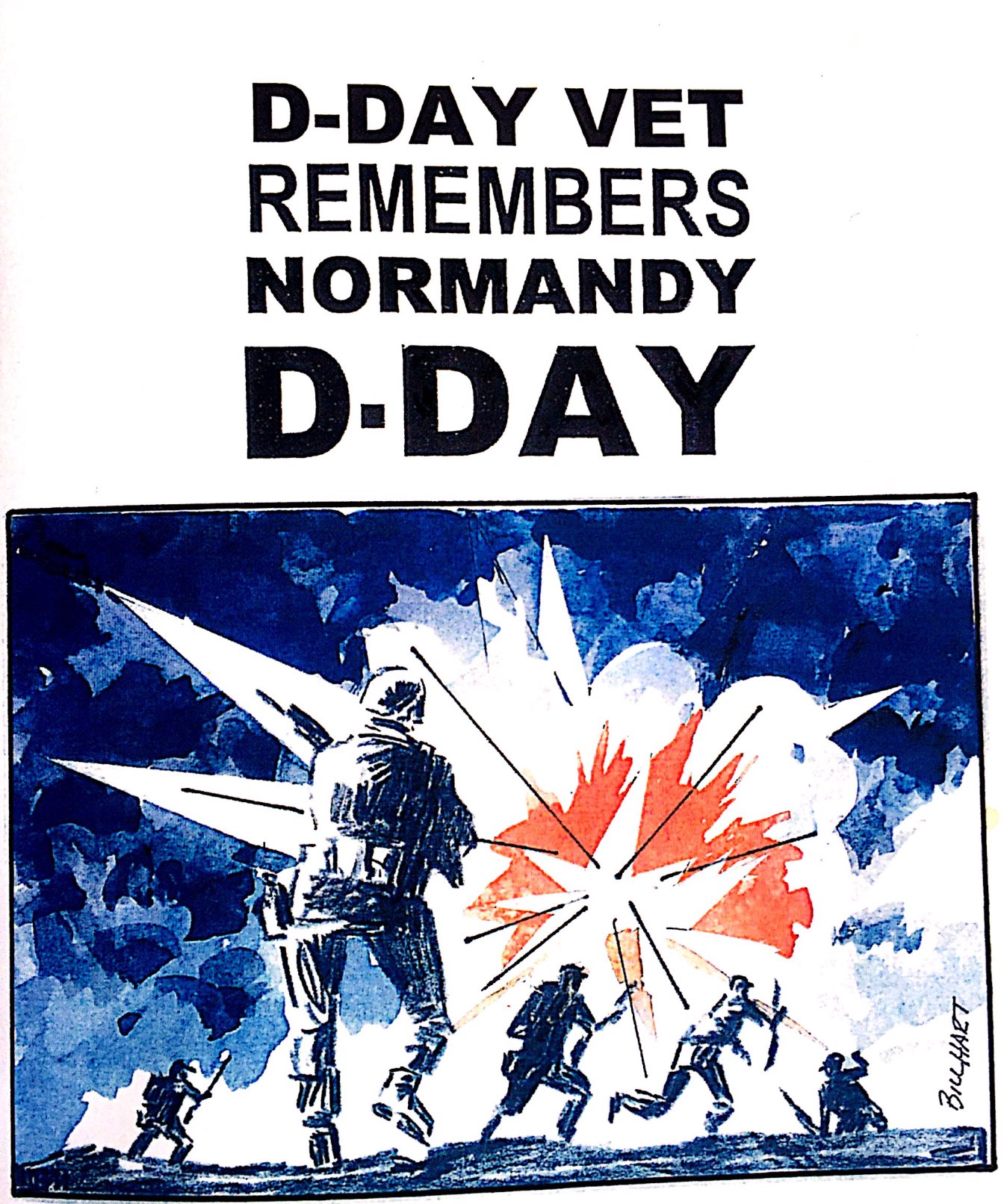
D-DAY VET REMEMBERS NORMANDY

Fighting the war in Europe

In 1943, as a 20 year old, Bill  joined the Army, deployed to England, and prepared for the invasion. What he thought would be a grand adventure turned into a nightmare which he vividly captured in his book.

Several days into the fighting on the beaches at Normandy, he was assigned to pick up and transport the bodies of fallen soldiers. Thereafter, as he worked his way across France and Belgium into Germany, he found himself dodging enemy soldiers, liberating concentration camps, dealing with angry and defeated POWs, and famished, humiliated civilians struggling to survive.  Bill described what he saw and felt this way.
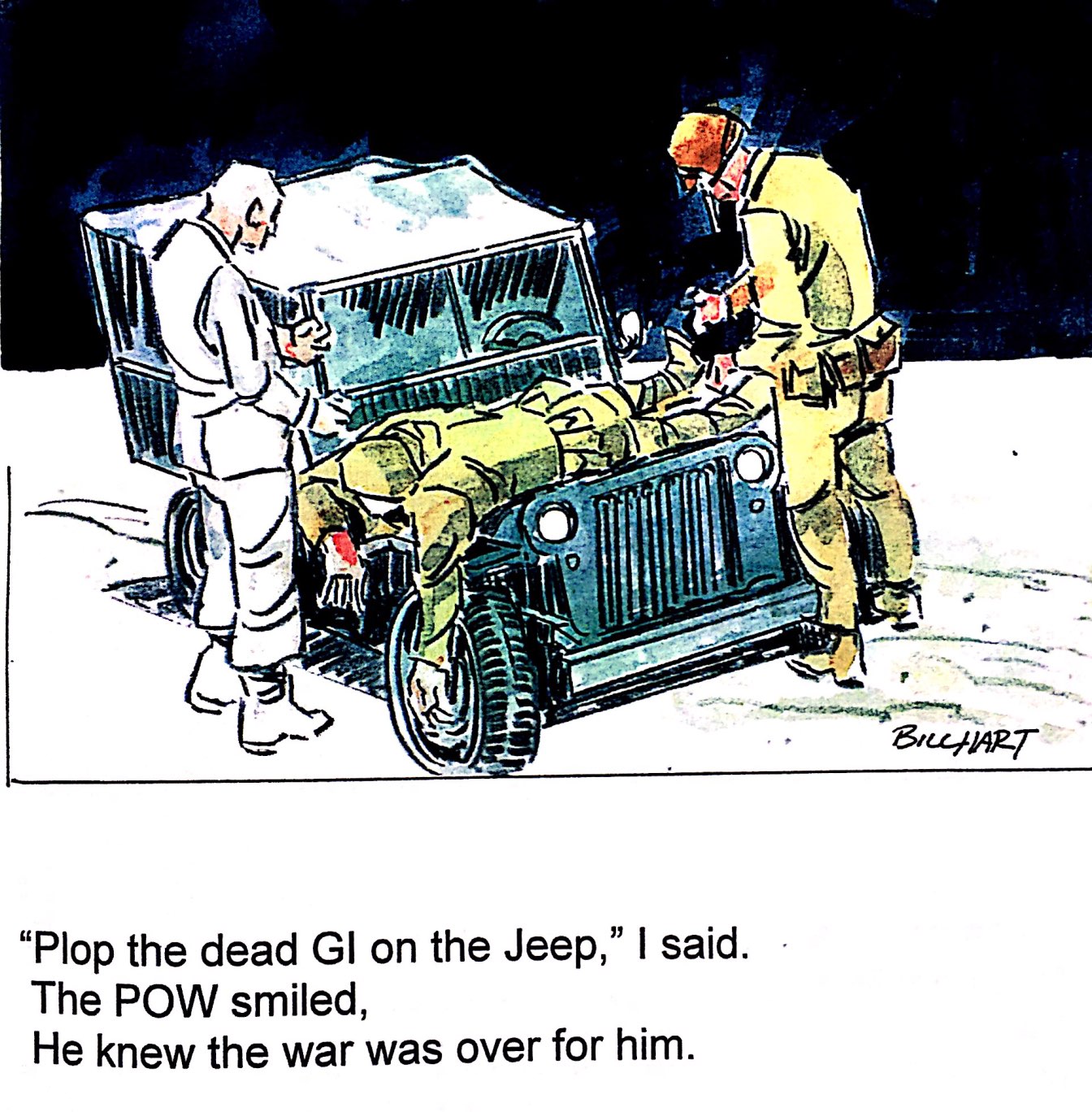
2 SOLDIERS AND A JEEP

“At night I would think about the poor GI’s family when they got the news of his death. I tried not to think too much about this “dead guy” job. It seemed to go on forever.

For the next month and a half I was really alone, not attached to any outfit. I found my own food, water, gas for the Jeep and slept alone beside the Jeep in an open field. I shaved with cold water in my helmet and used my Jeep mirror to see.

The Germans were always near. I was scared I would be killed or captured. “Who knows where I am? Who would tell my mother if I died?”

In the beginning it had been exciting being alone with the invasion action all around me. But now I have panic attacks and nightmares of the dead bodies waking me as I sleep in the open field alone.

Most GI’s have other soldiers around them to feel safety in numbers. I had no one. I can’t get their dead faces out of my mind. I wait for the bright morning sun to erase the terrible images.”

Fighting a war at home

After the war, Bill established a career as a commercial artist. Art provided not only a living for him and his family but also an outlet for dealing with the distressful memories of the war.

He created an extensive portfolio of drawings and paintings depicting  images of what he saw and experienced.  By expressing his feelings on canvas, he released some of their distress.
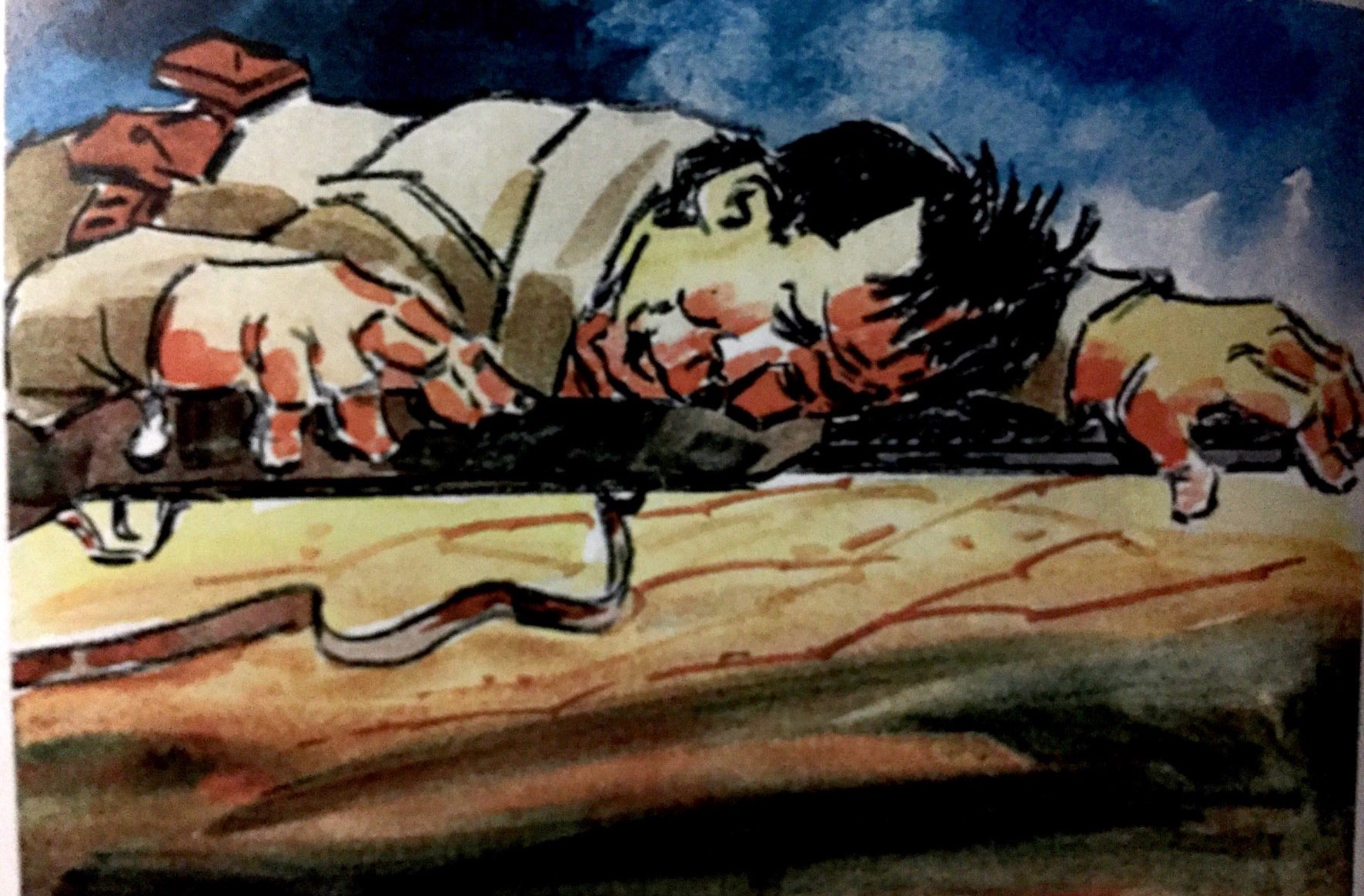
SOLDIER LYING ON THE GROUND

“Later I forced myself to stop thinking about the “dead guys” experience and eventually forgot it.

62 years later, in 2006, when I applied for compensation for war injury during the Battle of the Bulge, the woman who interviewed me kept telling me I was leaving something out, something from my past.

I finally remembered after much writing about my remembered events in the 1944 and 1945 war period and was diagnosed with PTSD.

I believe, the greatest event of the 20th century took place during the June 1944 D-Day Normandy Invasion. I am very proud of being a small part of that great historical event that will always be remembered.”

Quotes and drawings from Bill’s memoir, D-DAY VET REMEMBERS NORMANDY (copyright) used by permission of his wife

Bill was proud to be a World War II veteran and I count it a privilege to know him. He was a kind, gentle man who loved God, his family and friends. He is missed by all of us who love him.
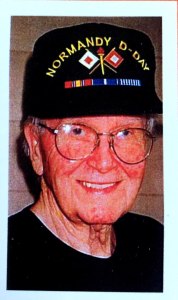
MAN IN A NORMANDY D-DAY HAT
Bill Hart, World War II veteran


Bill also drew other subjects.  Every year he and his wife sent out a Christmas card which he illustrated.
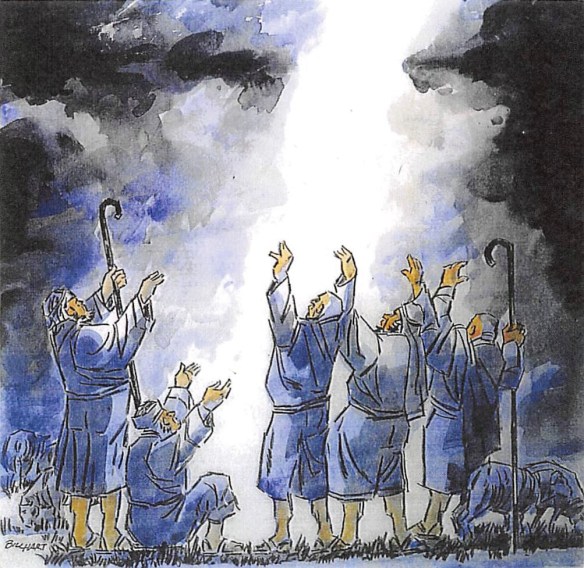
shepherds raising arms to the sky
one of Bill’s Christmas card drawings

Bill’s artwork and copies of his book are available to purchase from his wife. If you are interested, contact me here and I will put you in touch with her.


POST-TRAUMATIC STRESS DISORDER-PTSD

Once known as “shell shock” or “battle fatigue”, post-traumatic stress disorder, PTSD, has become the most common post-military service disorder. Although it also occurs in civilians who experience severe trauma, it has  been defined, studied, and treated among current and former service members.

PTSD develops after exposure to or experiencing significant traumatic events such as interpersonal violence, death or  threat of death, serious accidents, disasters and combat.

There are 4 types of symptoms-

  • Intrusions, such as flashbacks, nightmares
  • Avoidance- isolating oneself from people and/or certain situations
  • Negative mood changes, such as irritability, anger and depression
  • Hypervigilance- being easily startled, always on edge

PTSD can also lead to depression, anxiety, alcohol and substance abuse and suicide.

It is also frequently associated with traumatic brain injury (TBI)  and chronic pain.

The National Center for PTSD (Veterans Administration)  is dedicated to research and education on trauma and PTSD, working to assure that the latest research findings help those exposed to trauma. They offer extensive information and resources at this link

PTSD: National Center for PTSD

exploring the HEART of veterans’ health

Dr. Aletha

Hell and Back-a breast cancer story

Hell & Back is a memoir by pediatric ENT (ear, nose, throat) physician Tali Lando Aronoff, M.D. who finds her perfect life upended in ways she never imagined would happen to her.


The sorrows of death compassed me, and the pains of hell gat hold upon me: I found trouble and sorrow.


Psalm 116:3, KJV, public domain


Wife and mother

Just based on the title, you know this isn’t a happy story.

The main character, Tali, seems to have the perfect life. She is a pregnant young woman with a husband who adores her and two beautiful children. They have good jobs, a nice house, a nanny who is good with the kids. She has a loving and supportive extended family.

Then her father is diagnosed with an incurable brain tumor. She develops life threatening preeclampsia. She has an emergency caesarean section, delivering her baby prematurely.

Then she finds a lump in her breast. It is cancer- that has already spread.

Oh, did I tell you she is a physician with a busy surgical practice?

Hell & Back: Wife & Mother, Doctor & Patient, Dragon Slayer

by Tali Lando Aronoff, M.D.

Hell & Back is not a novel. It is a memoir by pediatric ENT (ear, nose, throat) physician Tali Lando Aronoff, M.D. who finds her perfect life upended in ways she never imagined would happen to her.

(By way of disclosure, I have never met Dr. Aronoff. After reading about her, I asked for a complimentary copy (PDF) of her book in exchange for a review. This blog post has affiliate links which will help fund this blog if a purchase is made. )

Doctor and patient

A physician’s illness can be awkward, both for us and for those who take care of us. Other doctors may assume we know more about our diseases than we do and fail to give us the same information they would give to “real” patients. We, on the other hand, often try to help them out by diagnosing ourselves, or minimizing our symptoms because we don’t want to bother them, or seem like complainers. Either approach impacts our care negatively.

But being a physician can be an advantage and it certainly was for Dr. Aronoff since she had friends who specialized in breast surgery, oncology (cancer), radiation therapy, and plastic surgery, all of which she would need. Recently out of training,  they had the most up to date knowledge in their fields. They helped her get to the right doctors, including getting appointments quickly.

But being a physician didn’t spare Dr. Aronoff pain from her mastectomy and the expanders (used to make room for eventual breast reconstruction). She still had to cope with  the debilitating side effects of chemo- fatigue, nausea,appetite loss, and hair loss- all the while caring for 3 small children.

A physician’s friends and family may assume that because we are healers, we are brave, strong, and can take care of ourselves. Dr. Aronoff found her closest friends understanding and supportive, and many went above and beyond, driving her to appointments, taking her kids to activities, and bringing meals.

“The naked truth”

When she lost her hair, she tried wearing wigs and found them uncomfortable so opted for scarves instead. This made her illness obvious, so when she went out in public people noticed her. She described becoming a “Synagogue Celebrity”, with people in her community posting sightings of her on Twitter because she “looked so good”.


“I smiled at praises..inside though, I was slipping, retreating into myself. But I didn’t dare let them see. With time and practice, I learned to navigate and embrace the dichotomy. I realized that projecting courage may not reveal the whole truth, but it’s not always a lie either.
Eventually, as the months passed, I regained my courage, I still had fight in me. So, I saved the naked truth for a handful of my trusted few.”

Daughter and doctor


Dr. Aronoff shared a poignant yet humorous moment celebrating Chanukah with her extended family while in the middle of chemotherapy that made her nauseated and weak.  She knew this would be the last time they would celebrate with her father, who had a terminal malignant brain tumor, so she made the 3 hour car trip to her parents’ home.


“In the glow of candlelight, I watched my father from the corner of my eye, burning his image onto my brain. I knew in my gut it would be the last year we’d celebrate together. We sang the ancient chant Hanerot Halalu about the miracle of the small jug of oil that burned for eight days. My family sure as hell needed some miracles these days too.”  

When the evening was over, they loaded the kids into the car for the long ride home.


“Alex (her husband) and I smiled at each other optimistically, anticipating a smooth ride back home with sleeping children. I hugged everyone goodbye and kissed my father lightly on the cheek. And just when I thought I was in the clear…(her daughter) Scarlett leaned over and vomited all over me!”


Who should read this book and why

Despite pieces of levity, this book is serious and hard hitting at times. Dr. Aronoff does not mince words, nor does she shy away from frank talk about intimate issues and raw emotions. If 4-letter words offend you, you may not want to read this book.

Dr. Aronoff’s book outlines the basics of diagnosis, staging, and treatment of breast cancer but I don’t think she intends it as a definitive patient guide. She does not imply that her experience is what other breast cancer patients should expect; rather she emphasizes that every patient’s journey may be different.

If you have had breast cancer, you may or may not identify with her experience. If you have not had cancer, her experience may motivate you to get a screening mammogram, explore your genetic risk, and consider what you can change in your lifestyle to decrease your  risk of getting breast cancer. (I’ll include some references for this at the end.)

“Dragon Slayer”

I won’t leave you hanging; this story has a happy ending. Dr. Aronoff is now disease free, and back working at her practice.She is a “survivor” but the threat of a recurrence will always loom over her. She may never know for sure if she is “cured”.

I invite you to visit her website to see photos of her before, during, and after treatment, and to read a sample chapter of her book.

Interlude-Women’s Cancer Stories

Dr. Eleonora Teplinsky talked to Dr. Aronoff for her podcast series Interlude. Listen to the interview at the above links.

Check out these breast cancer resources

Breast cancer screening

Understanding your breast cancer risk


Breast cancer is not exclusively a women’s disease, it happens to men also.

Risk factors for breast cancer in men

The Susan G. Komen Foundation offers this printable resource

Coping with a Breast Cancer Diagnosis


Informacion en espanol- Cáncer de mama

Shop To Fight Breast Cancer! Every Purchase Helps Give Free Hospital Mammograms To Women In Need!

Again thanks to Dr. Aronoff for giving me her book and sharing her story with all of us. I think we all have learned something that might help us or someone we know.

Dr. Aletha