Longfellow’s Christmas Bells

On December 25, 1863, Henry Wadsworth Longfellow, a grief-stricken father, wrote “Christmas Bells” to express his inner turmoil during the Civil War. He faced personal tragedies, including the death of two wives and his son’s injuries. The poem contrasts despair with hope, ultimately affirming faith in peace and goodness.

updated December 11, 2025

On Friday, December 25, 1863, Longfellow—as a 57-year-old widowed father of six children, the oldest of which had been nearly paralyzed as his country fought a war against itself—wrote a poem seeking to capture the dissonance in his own heart and the world he observes around him that Christmas Day.

Justin Taylor

Christmas Bells

"I heard the bells on Christmas Day"
Henry Wadsworth Longfellow, American poet-Graphic from LIGHTSTOCK.COM, an affiliate link

Henry Wadsworth Longfellow

Henry Wadsworth Longfellow wrote prolifically, creating one of the greatest collections of American poetry, depicting the history of the United States in the 18th and 19th centuries. He published his first poem at 13 years old.

Henry’s first marriage ended tragically with his wife Mary’s death from complications of a miscarriage. He sank into suicidal depression after her death.

He found happiness with his second wife, Fanny, with whom he had six children. Again, tragedy struck when she was severely burned by candle wax and died soon after. Henry was burned trying to help her and may have grown his well-known beard to hide the scars on his face.

During the American Civil War, his son Charley fought for the Union; he suffered severe wounds, and his father cared for him until he recovered. During this time, Henry wrote Christmas Bells, which laments that “hate is strong and mocks the song of peace on earth” but then concludes with

Then pealed the bells more loud and deep:
“God is not dead; nor doth he sleep!
     The Wrong shall fail,
     The Right prevail,
With peace on earth, good-will to men!”

Henry W Longfellow

Despite, and perhaps due to his family’s medical challenges, Henry Wadsworth Longfellow wrote poetry that touched people’s hearts and minds then and now.

Go here to read The True Story of Pain and Hope behind this beloved Christmas carol.
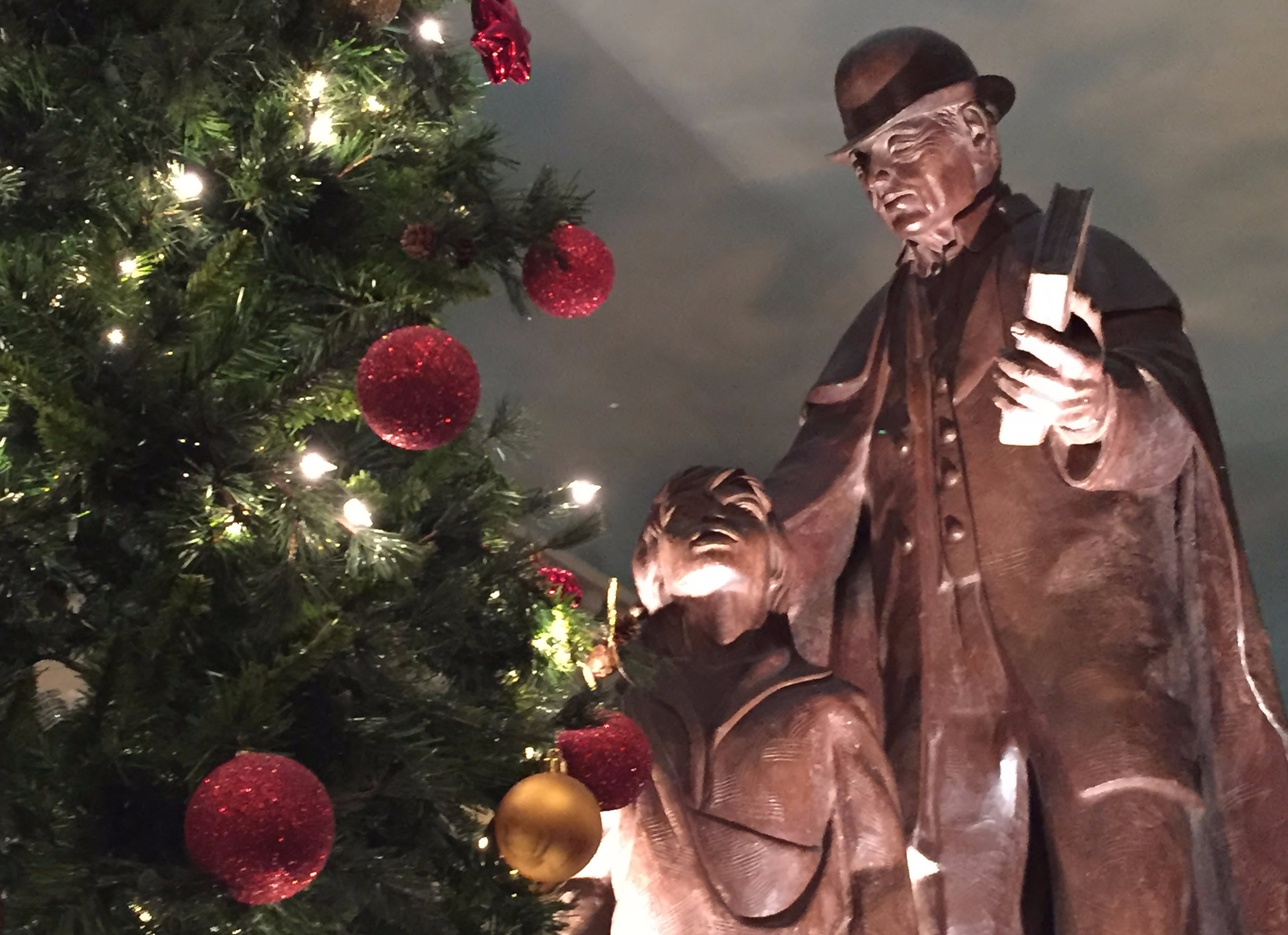
Christmas tree, statues of old man and a boy
photo by Dr. Aletha

What is Advent?

The season of Advent, which comes from the Latin word adventus meaning “coming” or “visit,” begins four Sundays before Christmas and ends on Christmas Eve. Advent is the beginning of the liturgical year for Christians. [Liturgical — from liturgy, which means the forms and functions of public worship.]

Many families observe Advent with Bible readings, lighting candles, songs, and stories to remind them of the events leading up to the birth of Christ as told in the New Testament. (these are affiliate links for you to consider and help support this blog with a commission on any purchases you make while reviewing)

sharing the HEART of health

I’d love for you to follow this blog. I share information and inspiration to help you transform challenges into opportunities for learning and growth.

Add your name to the subscribe box to be notified of new posts by email. Click the link to read the post and browse other content. It’s that simple. No spam.

I enjoy seeing who is new to Watercress Words. When you subscribe, I will visit your blog or website. Thanks and see you next time.

Thank you for considering the affiliate links in this post, which fund this blog.

Dr. Aletha

Many people find using their phones a convenient way to read and meditate on the Bible. And it’s easy to do so with the Dwell Bible App.

With Dwell you can listen to and read the Bible and special devotional offerings for Advent, Lent, and throughout the year.

Using this affiliate link helps support this blog and my mission to share the heart of health wherever needed all over the world. Please join me.

Words about government and a president

The COVID-19 pandemic has devastated the city of New York other major U.S. cities. Government response to the pandemic, both nationally and locally, has created both reassurance and resentment by citizens. And a series of incidents involving police brutality and private attacks against black citizens set off protests, riots, looting, and more violence.

Romans 13      English Standard Version (ESV)

Submission to the Authorities

Let every person be subject to the governing authorities. For there is no authority except from God, and those that exist have been instituted by God.

 Therefore whoever resists the authorities resists what God has appointed, and those who resist will incur judgment.

For rulers are not a terror to good conduct, but to bad. Would you have no fear of the one who is in authority? Then do what is good, and you will receive his approval,for he is God’s servant for your good.

But if you do wrong, be afraid, for he does not bear the sword in vain. For he is the servant of God, an avenger who carries out God’s wrath on the wrongdoer.

 Therefore one must be in subjection, not only to avoid God’s wrath but also for the sake of conscience.

For because of this you also pay taxes, for the authorities are ministers of God, attending to this very thing.

 Pay to all what is owed to them: taxes to whom taxes are owed, revenue to whom revenue is owed, respect to whom respect is owed, honor to whom honor is owed.

from BibleGateway.com

The Holy Bible, English Standard Version. ESV® Text Edition: 2016. Copyright © 2001 by Crossway Bibles, a publishing ministry of Good News Publishers.

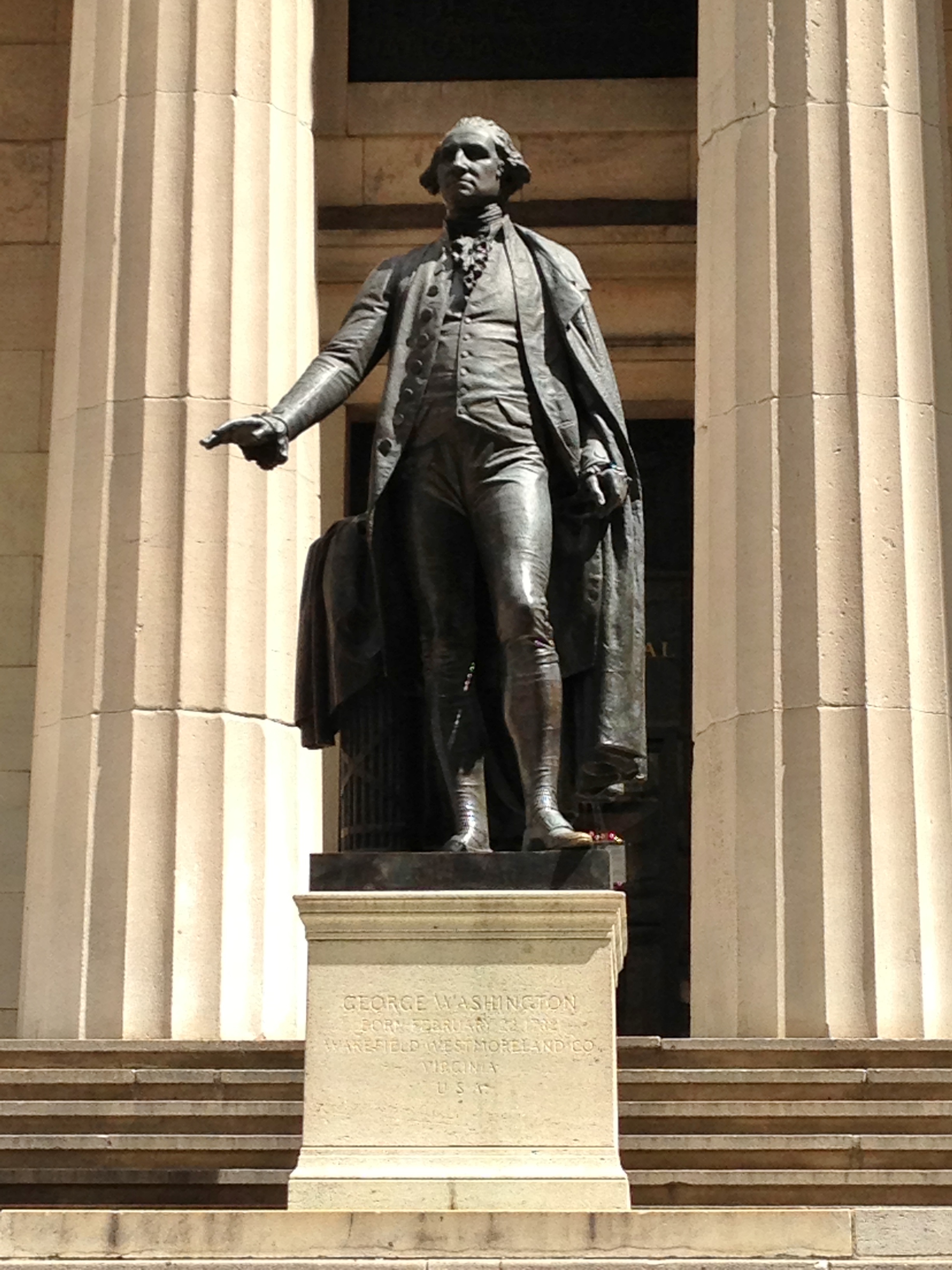
statue of George Washington in Manhattan
General George Washington, first President of the United States of America- a photo I took on my only visit to New York City

This post was edited May 31, 2020
George Washington, President of the United States

“This impressive bronze equestrian portrait of George Washington (1732-1799), the first president of the United States, is the oldest sculpture in the New York City Parks collection. It was modeled by Henry Kirke Brown (1814-1886) and dedicated in 1856.”

George Washington was the first president of the U.S.; we will elect the 46th president in November 2020.

The COVID-19 pandemic has devastated the city of New York and other major U.S. cities. Government response to the pandemic, both nationally and locally, has created both reassurance and resentment by citizens. And a series of incidents involving police brutality and private attacks against black citizens set off protests, riots, looting, and more violence.

President Washington, as Commander of the Continental Army, led the colonies in a revolt against rule by England, and in numerous conflicts since the United States has fought back against rule by any foreign power again.

But what of our own government? How much rule is too much? How much control, even for our own good, is enough or too much? That is a question we may be grappling with long after the virus goes away.

George Washington died at 67 years old, making him someone who today would have higher risk of dying of COVID-19. His physicians called his condition quinsy, a term we in the U.S. don’t use today. Quinsy means an abscess in the throat and/or tonsils. Today doctors would treat it with antibiotics and surgery, but neither were available in 1799.

“In the aftermath of the attacks on the World Trade Center on September 11, 2001, the George Washington sculpture served as a touchstone for collective grieving and public expression, and became the central focus of a massive around-the-clock community vigil and a provisional shrine. These events reaffirmed the symbolic power of New York City’s most venerable outdoor work of art.”

Union Square Parks Monuments, copyright The City of New York

more thoughts about New York City at this link

Weekend Words to remember 9/11

exploring the HEART of health and history

Dr. Aletha