Reflecting on a memorable trip to New York City, motivated by a visit to their son. They describe the city’s transformation post-coronavirus, highlighting its safety and community cooperation. Reviews of notable memoirs and books related to NYC, including those by Carole King and Dr. Judy Melinek, enhance the narrative.
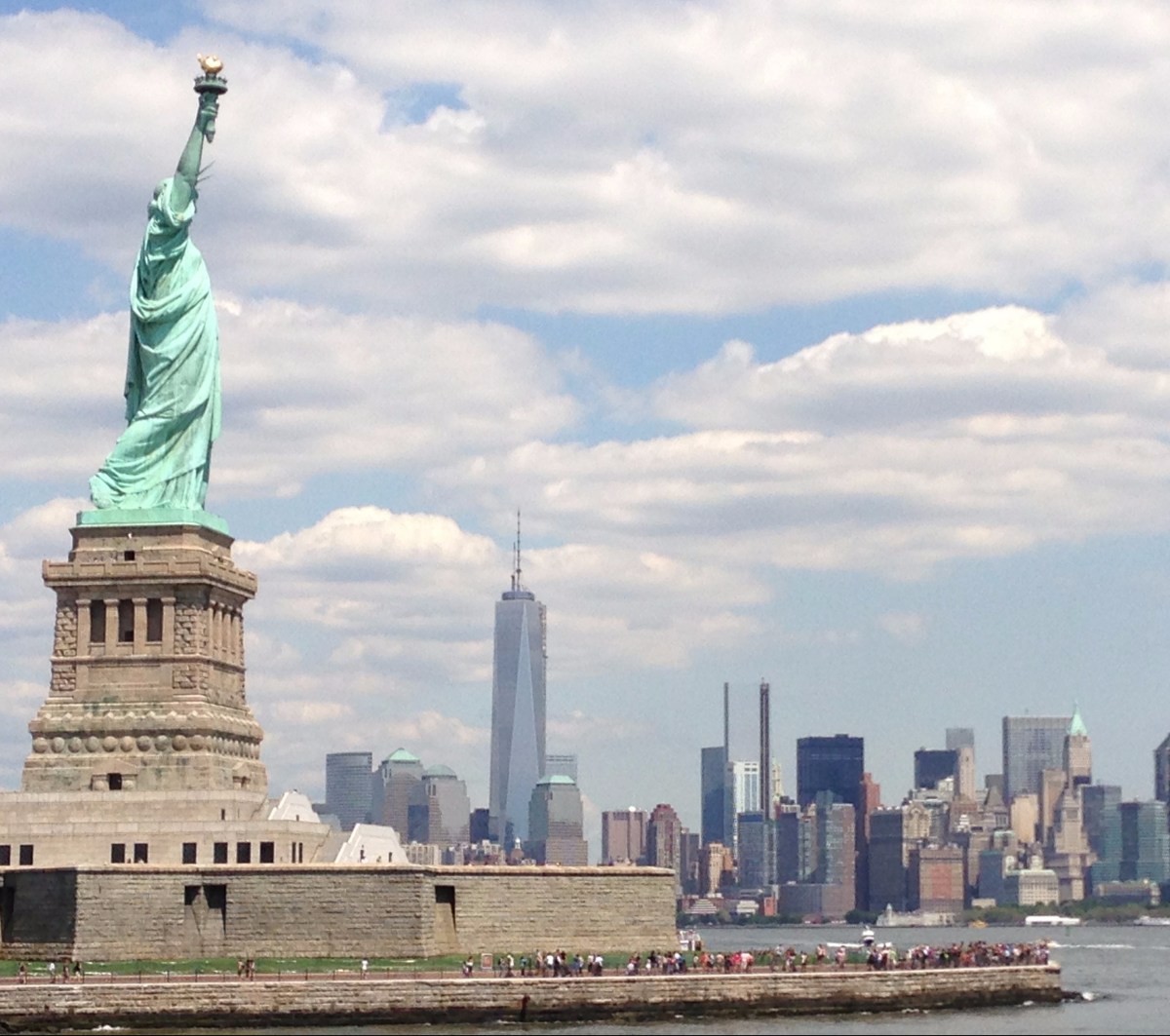
One of my favorite vacations ever was to New York City. I was curious about it but not sure I wanted to go there. But when my son’s work took him there for a year, I decided it was time to visit him and the city. And I am so glad I went. It was magical.
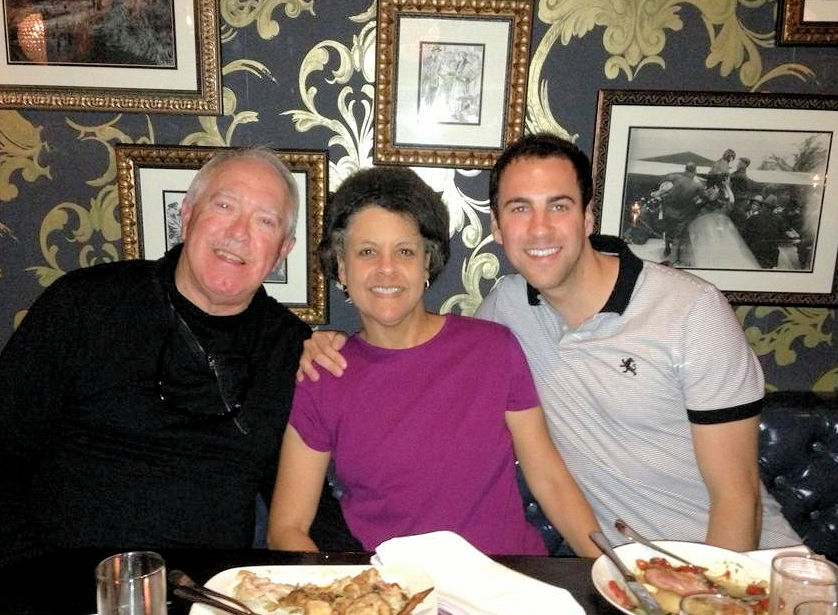
good food, great company, grand city
Safest big city: After its horrors, New York City is (for now) a coronavirus success story
Deaths are rare now. Some days there are none, as the hospital ICUs scale down. And a network of scaled-up clinics and hospitals administer tens of thousands of daily tests,…
Credit the collective discipline of staying apart and wearing masks, and leadership decisions holding off on opening bars and indoor dining.
For generations, we cooperated to live in this small space. Now cooperation has helped us keep living.
New York Daily News
“A Natural Woman “
I reviewed Carole King’s memoir, A Natural Woman. Carole was born in Manhattan, attended school in New York City, and started her musical career there. A musical about her life, Beautiful, plays on Broadway. (I saw Beautiful in Tulsa.)
Another memoir, Working Stiff, happened in New York City. Dr. Judy Melinek and her husband T.J. Mitchell chronicled her work as a medical examiner with the NYC Medical Examiner’s office following the Trade Center attacks on 9/11.
New York City by night from the Empire State Building
I read this book in which Dr. Elizabeth Ford reviewed her career as a psychiatrist at Bellevue Hospital, where she cared for mentally ill patients in the criminal justice system of New York City.
When the hospital flooded and lost power during Hurricane Sandy she and the dedicated staff fought to get permission to evacuate the prisoner patients who languished for days in a ward without running water or hot food.
Dr. Danielle Ofri has a special interest in and writes about the patient- physician relationship . She is an attending physician at Bellevue Hospital, Associate Professor of Medicine at New York University School of Medicine, and writes for The New York Times.
Medical writer Sonia Shah reviews the history of the cholera epidemic of NYC among others in her book Pandemic.
window shopping
Exploring the HEART of health
Thank you for reading this post. Please follow this blog and me on social media.
I share information and inspiration to help you transform challenges into opportunities for learning and growth.
Add your name to the subscribe box to be notified of new posts by email. Click the link to read the post and browse other content. It’s that simple. No spam.
I enjoy seeing who is new to Watercress Words. When you subscribe, I will visit your blog or website. Thanks and see you next time.
As a physician, I am intrigued and inspired knowing Dr. Krauthammer completed medical school and residency after and despite sustaining a spinal cord injury which caused quadriplegia (paralysis from the neck down, preventing use of his arms and legs).
I don’t remember the first time I read an article by Charles Krauthammer but once I did, I never missed a chance to read more. Dr. Krauthammer passed away from cancer in 2018 and I among many mourn his passing.
His Washington Post syndicated column appeared in my local newspaper on Saturdays; I would read it aloud at breakfast so my husband and I could discuss it. Invariably, there would be one or two words or phrases we didn’t understand so I would look up the definition- this despite both of us having graduate degrees. We were alternately entertained, enlightened, and enthralled by his way with words.
As a physician, I am intrigued and inspired knowing Dr. Krauthammer completed medical school and residency after and despite sustaining a spinal cord injury which caused quadriplegia (paralysis from the neck down, preventing use of his arms and legs). (This no doubt made his treatment and recovery from cancer surgery all the more difficult.) In his memoir, he explained how a caring professor did whatever it took to help him get through medical school after his injury, including lectures at his bedside while he was still hospitalized.
He did not use “M.D.” or the title “Dr.” after he changed his career from psychiatry to journalism, but I think he should have, he earned it. He mostly wrote about politics and social issues but occasionally would address medical issues. (These and others in this post are affiliate links to Dr. Krauthammer’s books and others. )
Here are excerpts from a sampling of articles that deal with medical topics; I encourage you to read them in their entirety.
After watching videos in which The price of fetal parts was discussed over lunch, Dr. Krauthammer wrote
“Abortion critics have long warned that the problem is not only the obvious — what abortion does to the fetus — but also what it does to us. It’s the same kind of desensitization that has occurred in the Netherlands with another mass exercise in life termination: assisted suicide. It began as a way to prevent the suffering of the terminally ill. It has now become so widespread and wanton that one-fifth of all Dutch assisted-suicide patients are euthanized without their explicit consent.
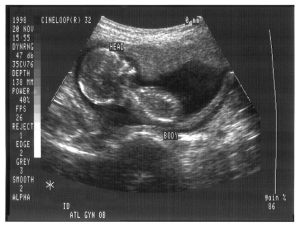
a prenatal ultrasonographic image of fetus at the four-month point in its gestation; public domain image used courtesy of the CDC/ Jim Gathany
There is more division about the first trimester because one’s views of the early embryo are largely a matter of belief, often religious belief. One’s view of the later-term fetus, however, is more a matter of what might be called sympathetic identification — seeing the image of a recognizable human infant and, now, hearing from the experts exactly what it takes to “terminate” its existence.
The role of democratic politics is to turn such moral sensibilities into law. This is a moment to press relentlessly for a national ban on late-term abortions.”
“So with the Roseburg massacre in Oregon. Within hours, President Obama takes to the microphones to furiously denounce the National Rifle Association and its ilk for resisting “common-sense gun-safety laws.” His harangue is totally sincere, totally knee-jerk and totally pointless. At the time he delivers it, he — and we — know practically nothing about the shooter, nothing about the weapons, nothing about how they were obtained.
In the final quarter of his presidency, Obama can very well say what he wants. If he believes in Australian-style confiscation — i.e., abolishing the Second Amendment — why not spell it out? Until he does, he should stop demonizing people for not doing what he won’t even propose.”
In this tongue-in-cheek (pardon the pun) post Food fads: Make mine gluten free he “preaches skepticism” about most current dietary advice.
“Exhibit A for medical skepticism, however, remains vitamin C. When Linus Pauling, Nobel laureate in chemistry (not nutrition), began the vitamin-C megadose fad to fend off all manner of disease, the whole thing struck me as bizarre. Yes, you need some C to prevent scurvy if you’re seven months at sea with Capt. Cook and citrus is nowhere to be found. Otherwise, the megadose is a crock. Evolution is pretty clever. For 2 million years it made sure Homo erectus, neanderthalensis, sapiens, what have you, got his daily dose without having to visit a GNC store.
Sure enough, that fashion came and went. But there are always new windmills to be tilted at. The latest is gluten.
Photo by Pixabay on Pexels.com
Now, if you suffer from celiac disease, you need a gluten-free diet. How many of us is that? Less than 1 percent. And yet supermarket shelves are groaning with products proclaiming their gluten-freedom. Sales are going through the roof.”
Exploring the HEART of health with Dr. Charles Krauthammer
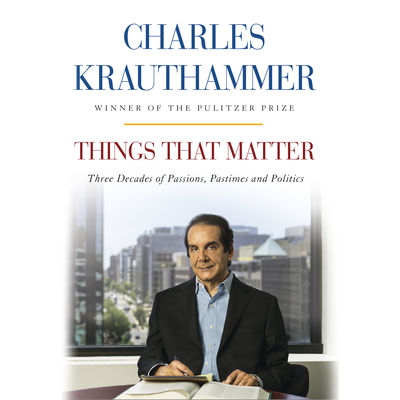
His book is a collection of his more memorable opinion pieces as well as a memoir of his life, including medical school, his life-changing injury, psychiatric medical practice, his journalism career, hobbies (chess and baseball) and life with his family.
“I leave this life with no regrets. It was a wonderful life — full and complete with the great loves and great endeavors that make it worth living. I am sad to leave, but I leave with the knowledge that I lived the life that I intended.”
I am sad he left, but grateful that he shared his “intelligence, erudition, and wit” with the world. May we all find the loves and endeavors that make life worth living and live intentional lives as well as he did.