Remembering the Oklahoma City bombing April 19, 1995

April 19  is the anniversary of the 1995 bombing of the Alfred P. Murrah Federal Building, in Oklahoma City, Oklahoma, which remains the deadliest domestic “homegrown” terrorist incident in the United States.

I lived there in the 1970s while in medical school and residency at the University of Oklahoma Medical Center and visit frequently. These are my memories of that day.

I will never forget April 19, 1995

On April 19, 1995 I was seeing patients in my family practice office in Tulsa Oklahoma when my medical assistant told me a bomb had exploded in Oklahoma City, 90 miles away. We didn’t have computers, smartphones, or internet so I turned on a radio and heard news reports that shocked and saddened me.

A massive bomb had exploded at the Federal building in downtown Oklahoma City , something I thought only happened overseas. Who would bomb a building in Oklahoma?  we all asked ourselves. Several employees heard from friends or relatives who lived in or near OKC, as we call it; some said they felt their homes shake several miles away from the blast site.
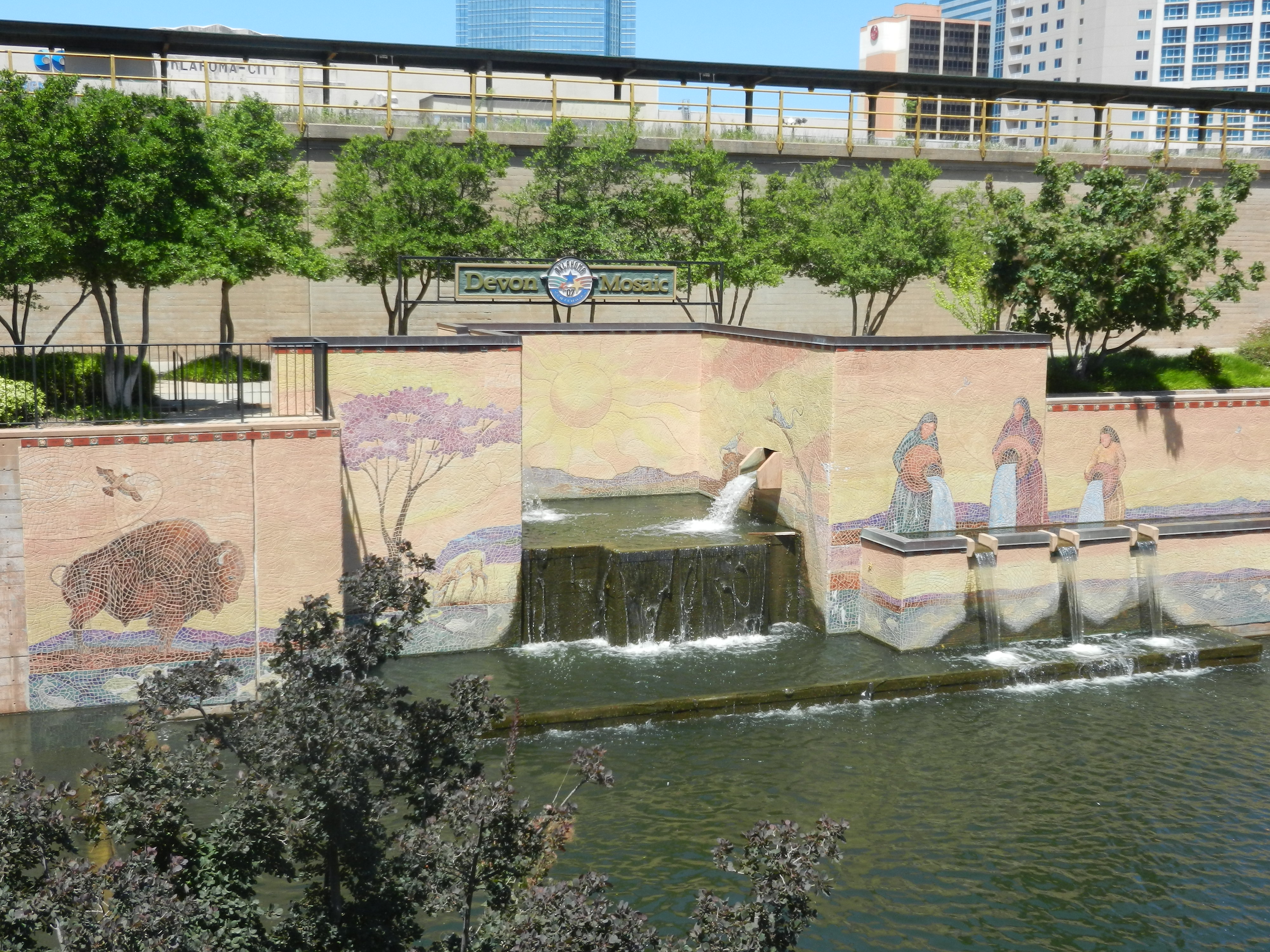
Oklahoma mural
A mural representing Oklahoma culture decorates downtown Oklahoma City today

As I drove home from work that afternoon I encountered a traffic jam on a usually easy drive; I assumed a car wreck was  tying up traffic. Instead, the cars of people trying to get into the local Red Cross blood donation facility created the backup; when I finally drove past I saw a long line of people waiting to enter.

I picked up my 10-year-old son from school and realized the teachers had not told the students. I explained to him what had happened, as well as you can explain something so horrible to a child.

He looked at me and said, “Mom, the 5th graders went to Oklahoma City today.” I remembered seeing the charter bus parked at the school that morning for the annual field trip to the science museum in OKC. Since I knew the museum was not downtown, I assured him the children from his school were safe.
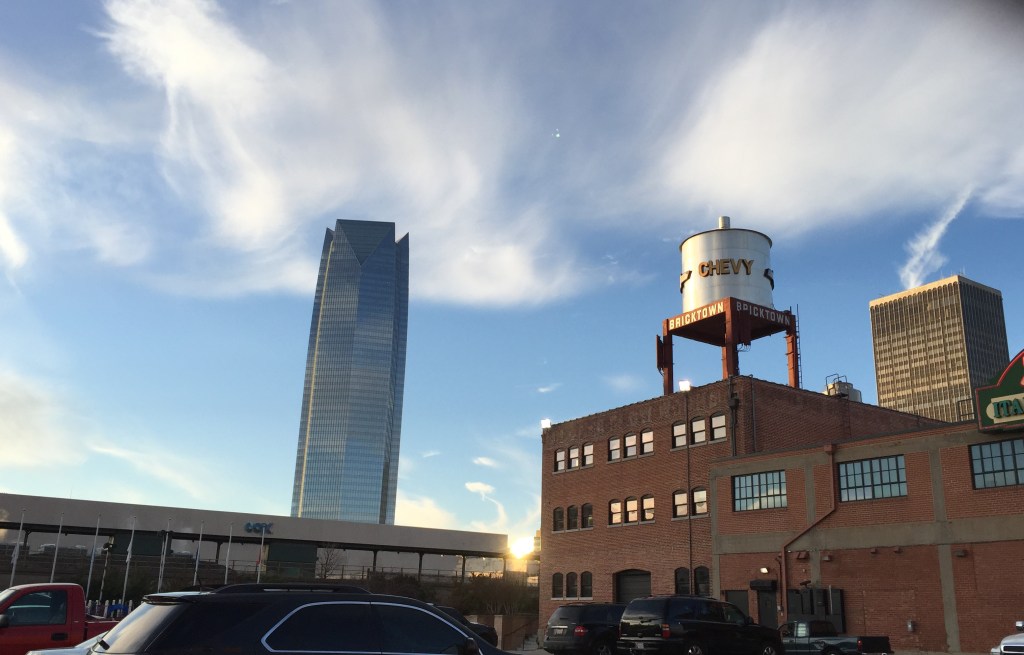
Bricktown in Oklahoma City
Bricktown area of OKC with Cox Convention Center and Devon Energy Center tower behind
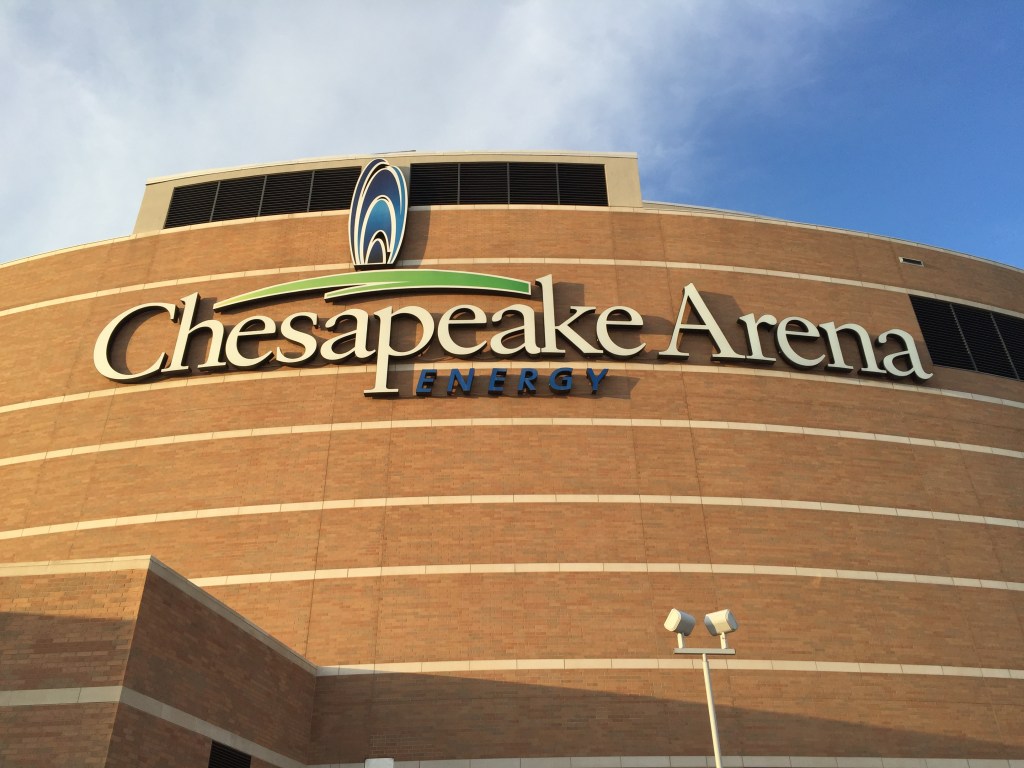
Chesapeake Arena
Chesapeake Arena, home of our popular Thunder Basketball team

The day after, April 20, 1995

They next morning as usual I turned on the television to watch the morning news while I dressed for work. I can’t believe now that I wondered if there would be any news of the bombing on national television; it had dominated our local news the evening before.

I turned to the Today show and found that it was broadcasting from OKC, as were all the major networks, and devoted the entire broadcast to the bombing. I think that was my first inkling what a momentous event it was.

They interviewed a doctor from St Anthony Hospital, just down the street from the Murrah Building- he was one of my medical school professors. I couldn’t believe someone I knew was on national television.
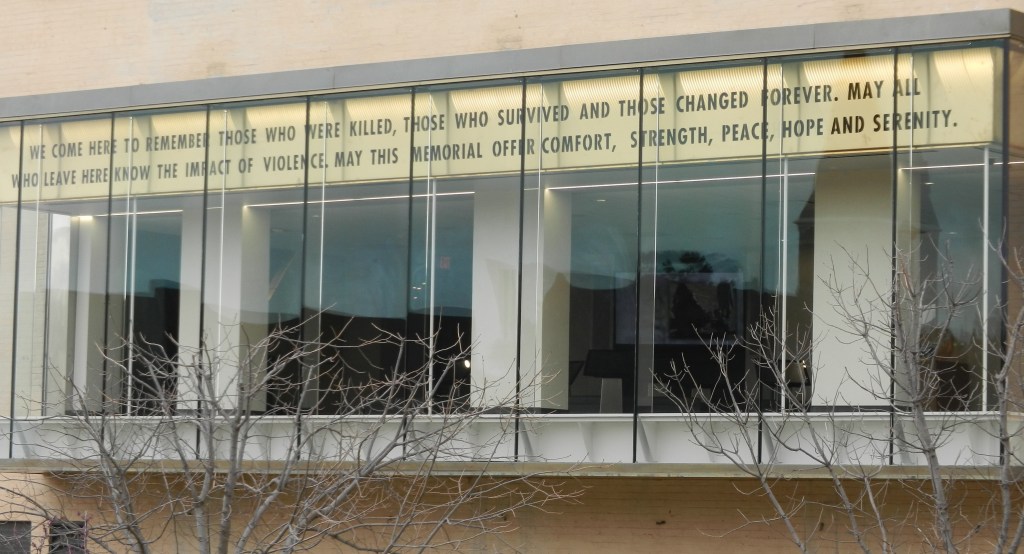
window at the museum
window from the museum overlooking the outdoor memorial
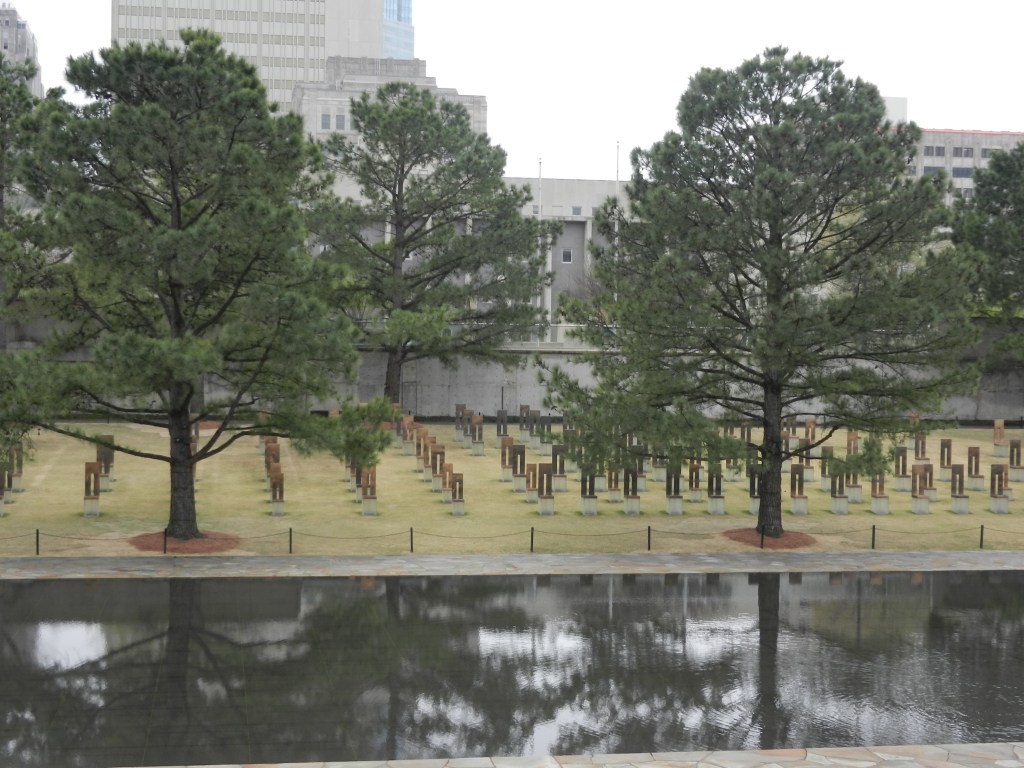
Memorial pool and chairs
Field of Empty Chairs beside the Reflecting Pool – Each gold chair represents a deceased victim.

The following months

In the following days, weeks and months we learned all the details about the bombing- the perpetrators, the victims, the rescuers, the survivors.

168 Oklahomans lost their lives there that day, including 19 children.

My first visit to the bombing site

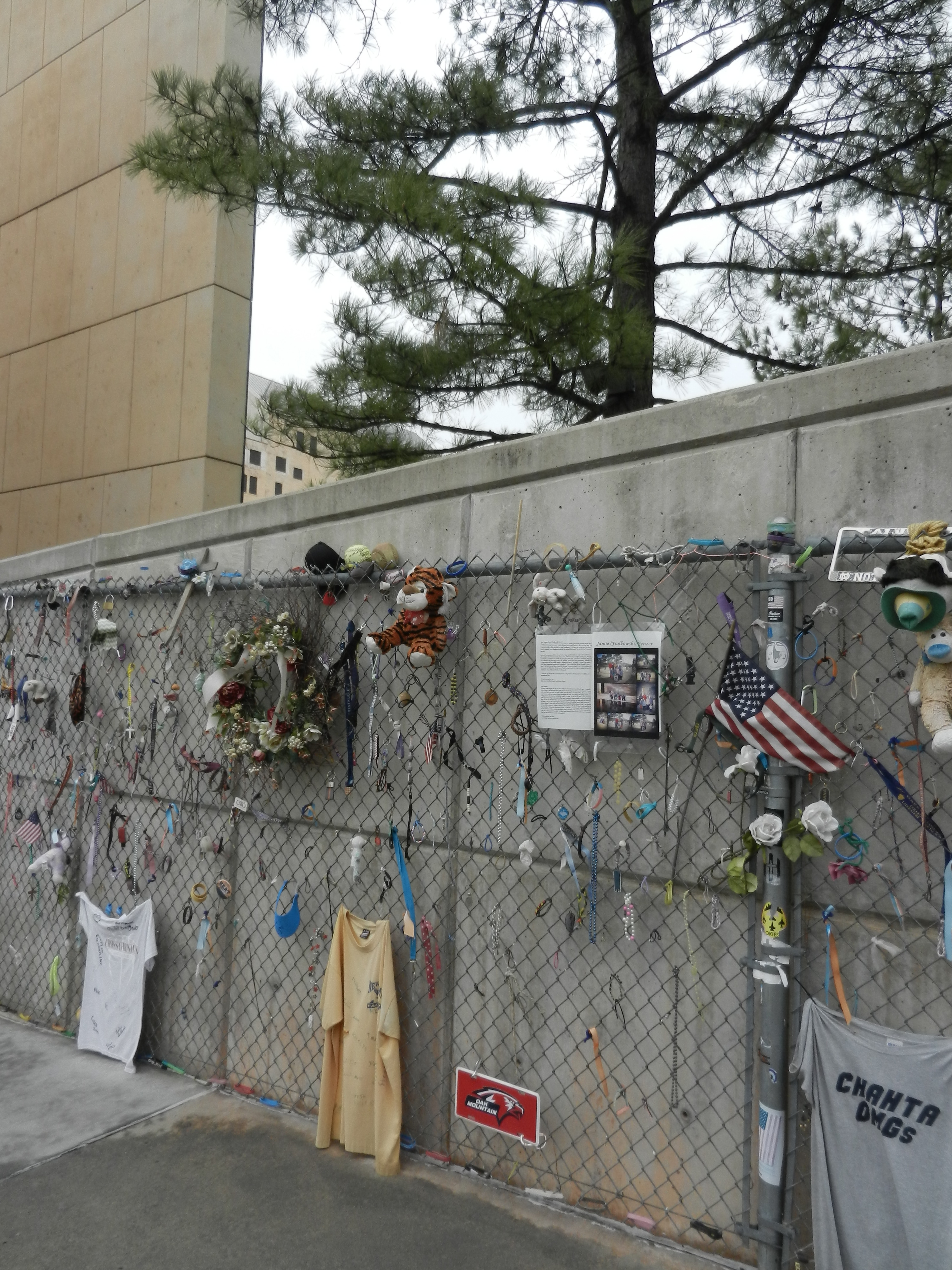
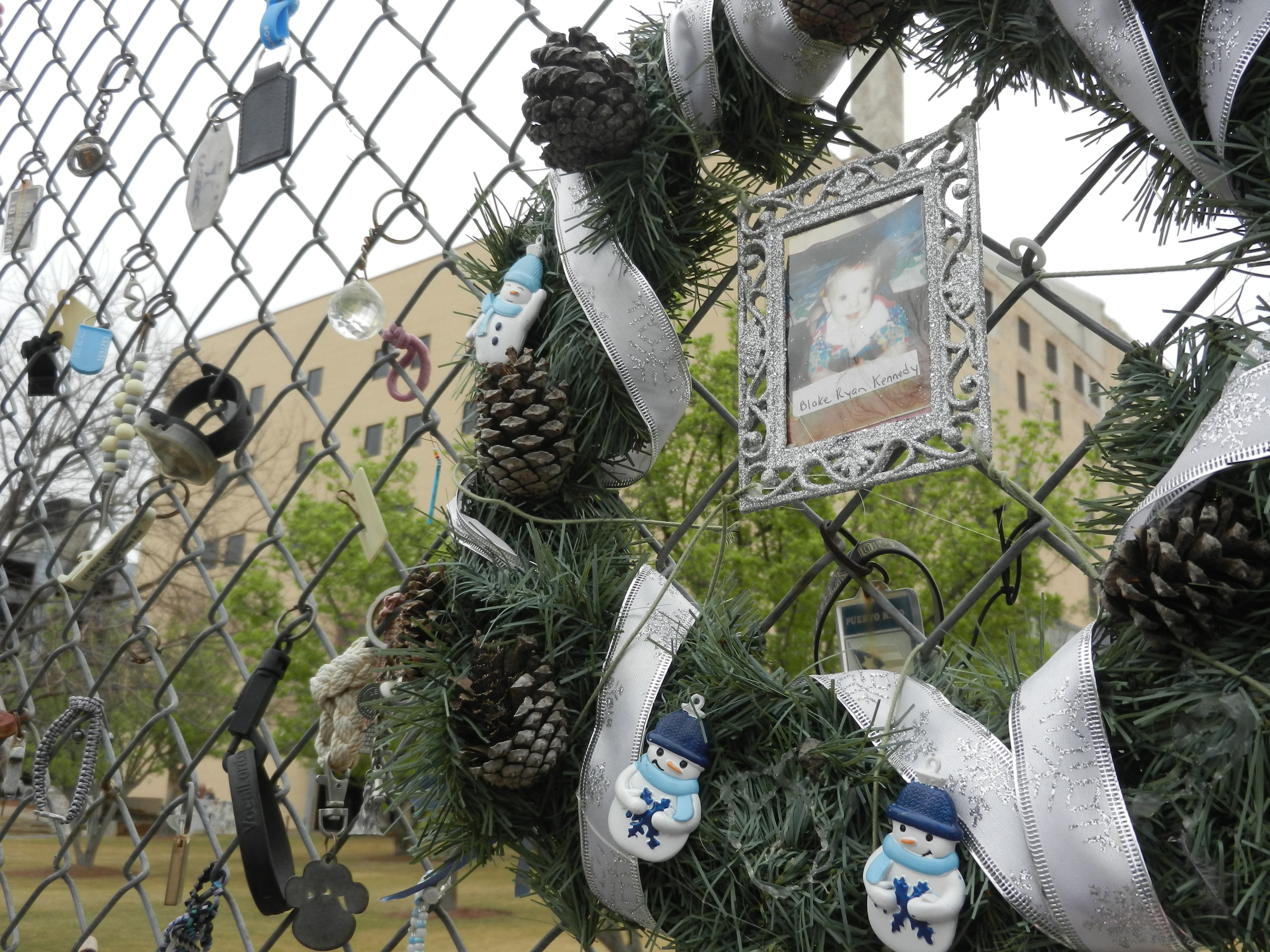
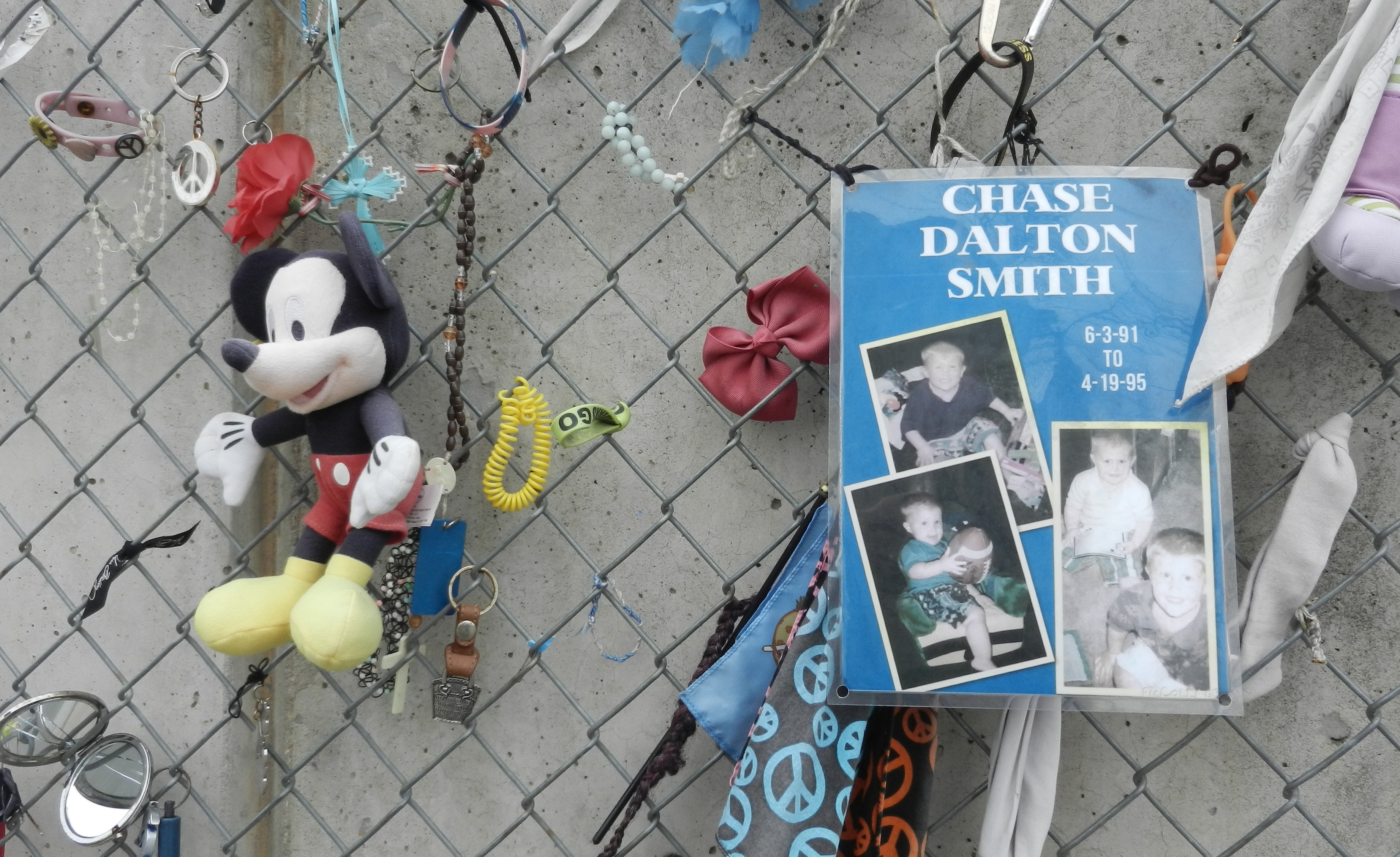
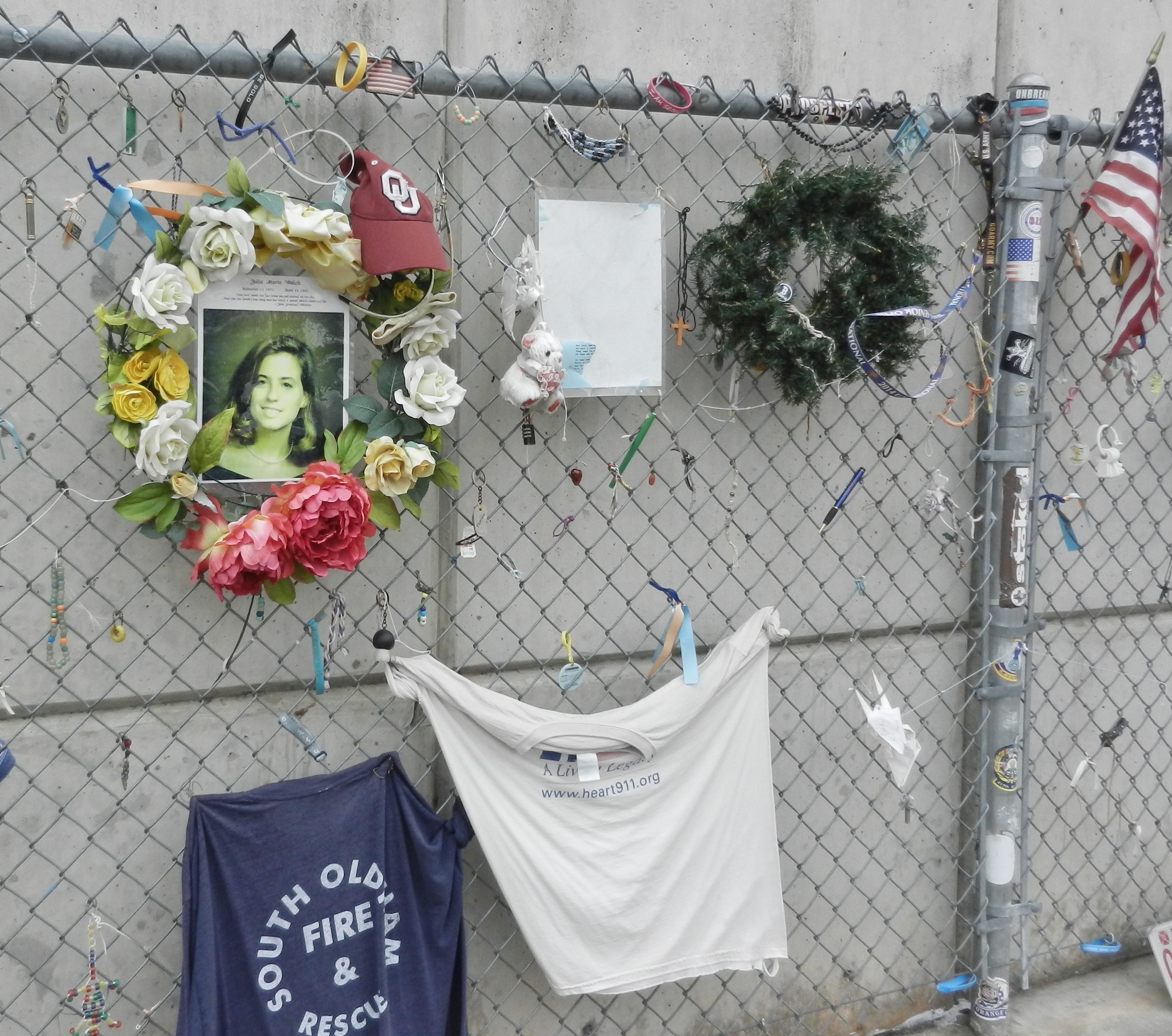
My husband and I visited the site after the building was imploded, when the grounds were fenced off.  The fence had become a makeshift memorial, as people left mementos of all kinds- dolls, stuffed animals, photos, pictures, flowers, crafts, flags, shirts, and letters.  We visited again when the official memorial  and the museum were established on April 19, 2000.
2016-03-07 12.05.50
2016-03-07 12.08.17
2016-03-07 12.12.19
2016-03-07 12.11.04

a long section of the original fence has been left intact, as well as parts of the original federal building wall.
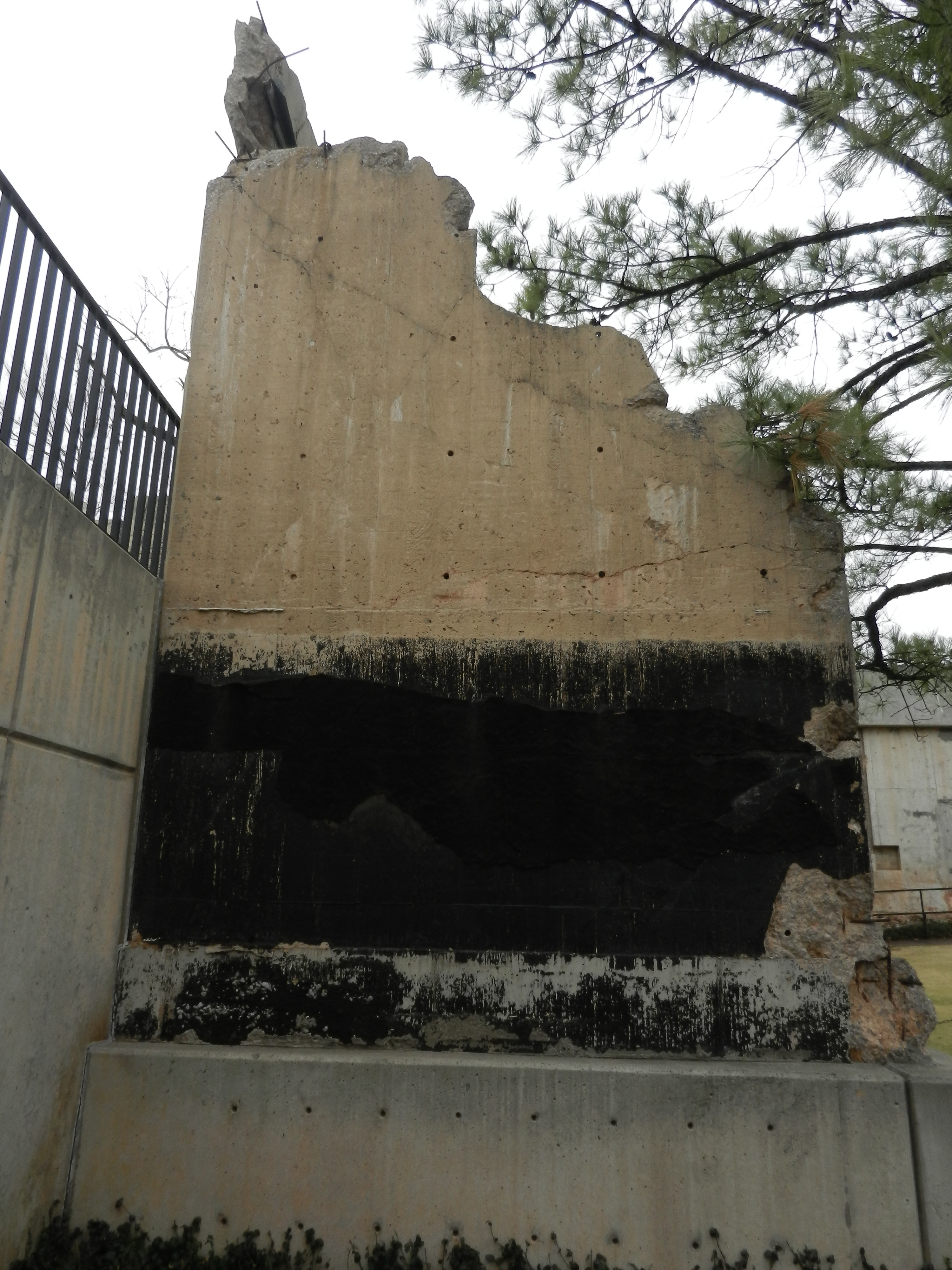
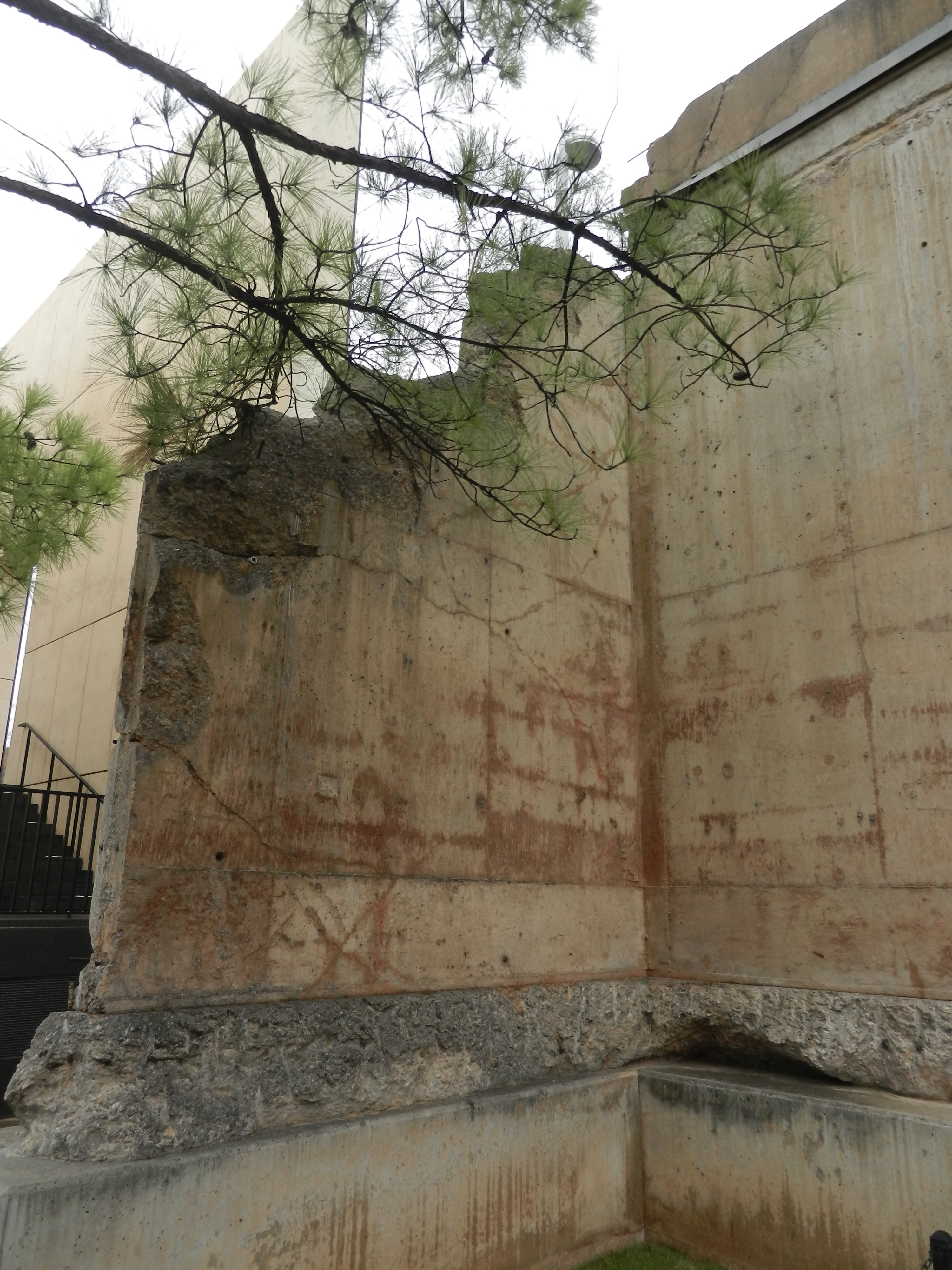
sections of damaged wall

Until 9/11, it was the deadliest act of terrorism on United States soil.
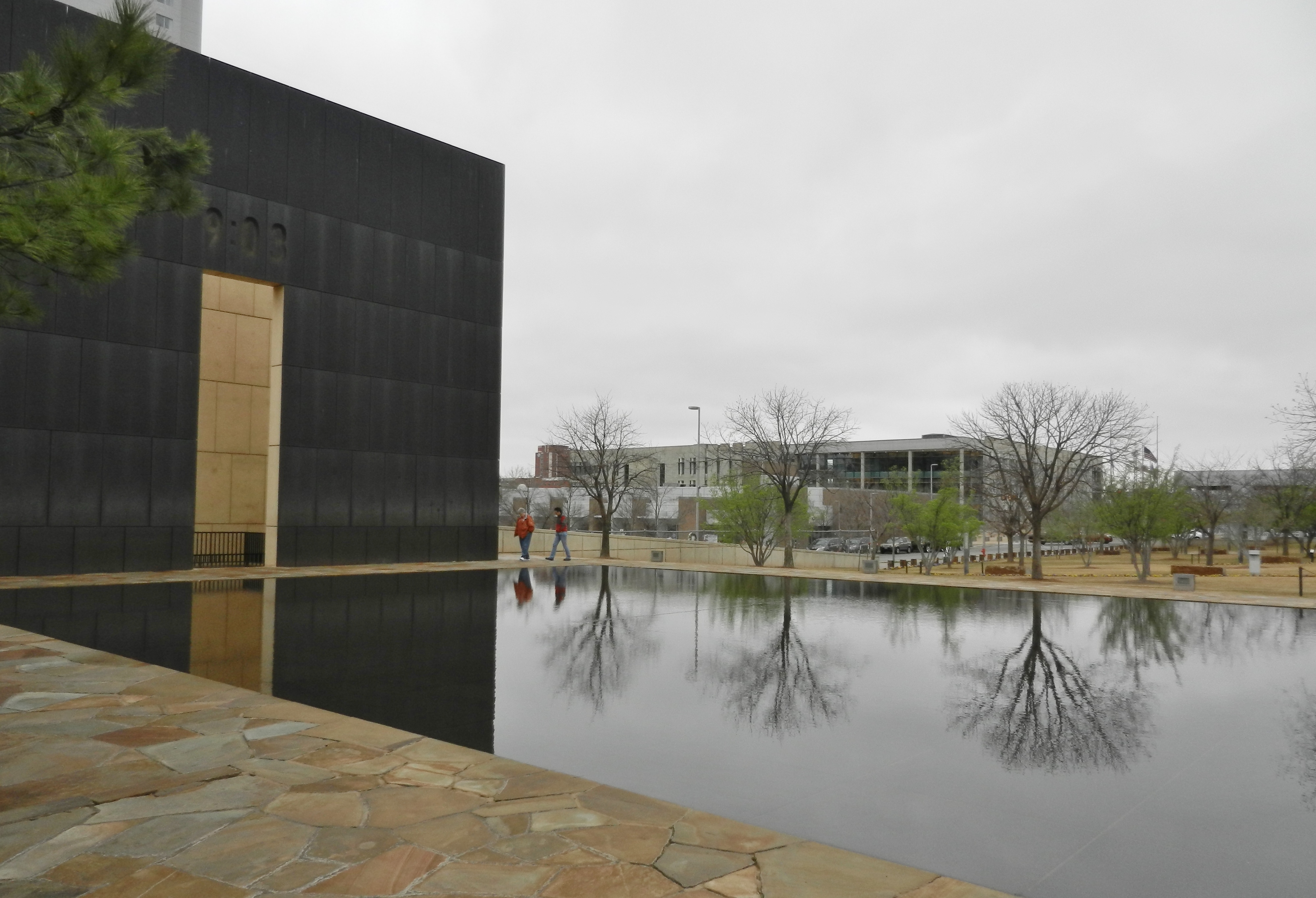
OKC memorial and federal building in the distance
The West Gate of Time. the Reflecting Pool  and looking  northwest toward the new federal building in the distance

Remembering April 19, 1995

That day in Oklahoma City showed the best in our state and our country as people, some with no training, risked their lives to help rescue people who were injured and trapped inside. Firefighters and police came from all over the United States to help. People donated food and first aid supplies.
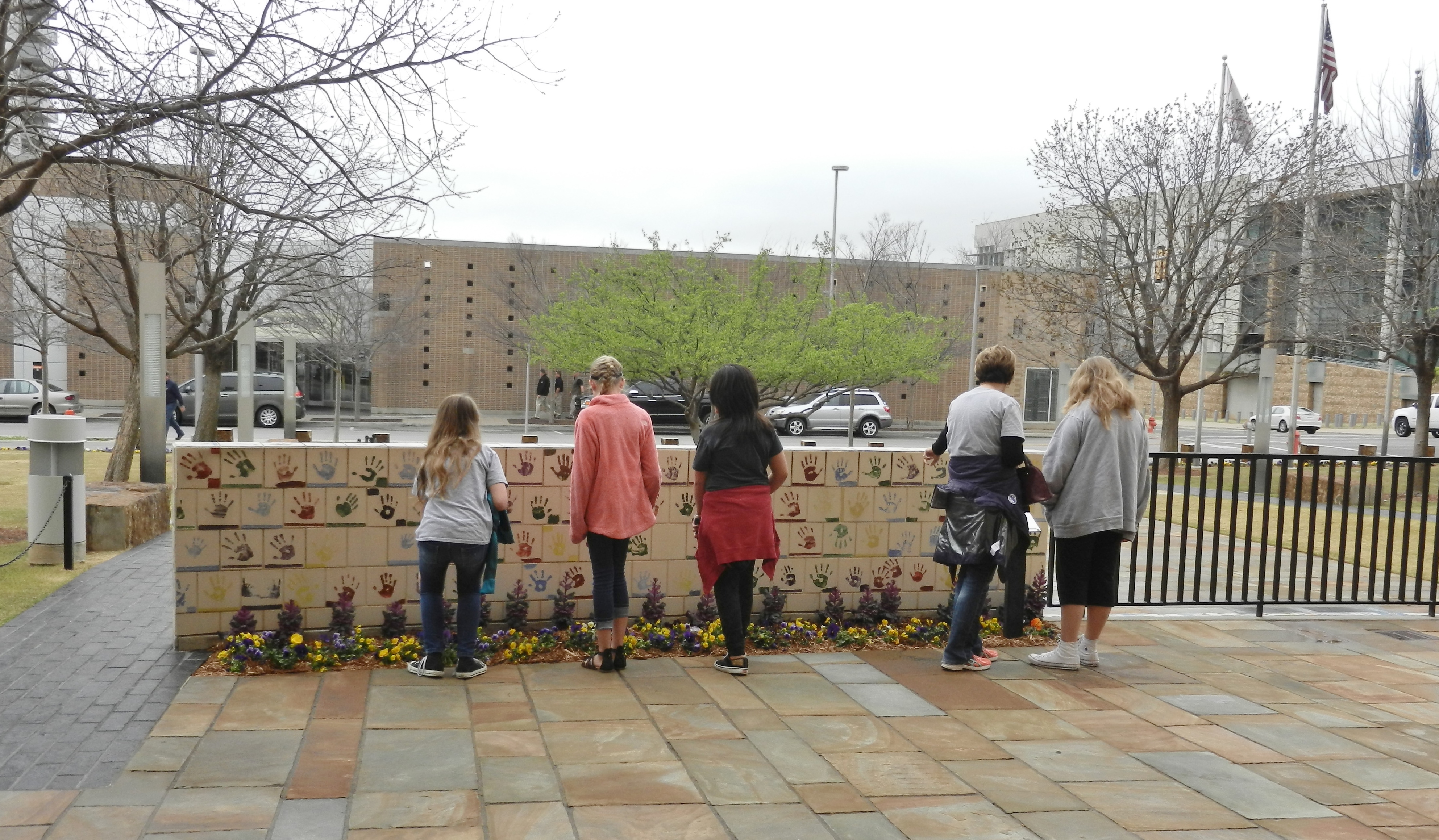
children and adults visiting a wall decorated with handprints
Schools regularly bring students to visit the memorial and museum; these are visiting the children’s area
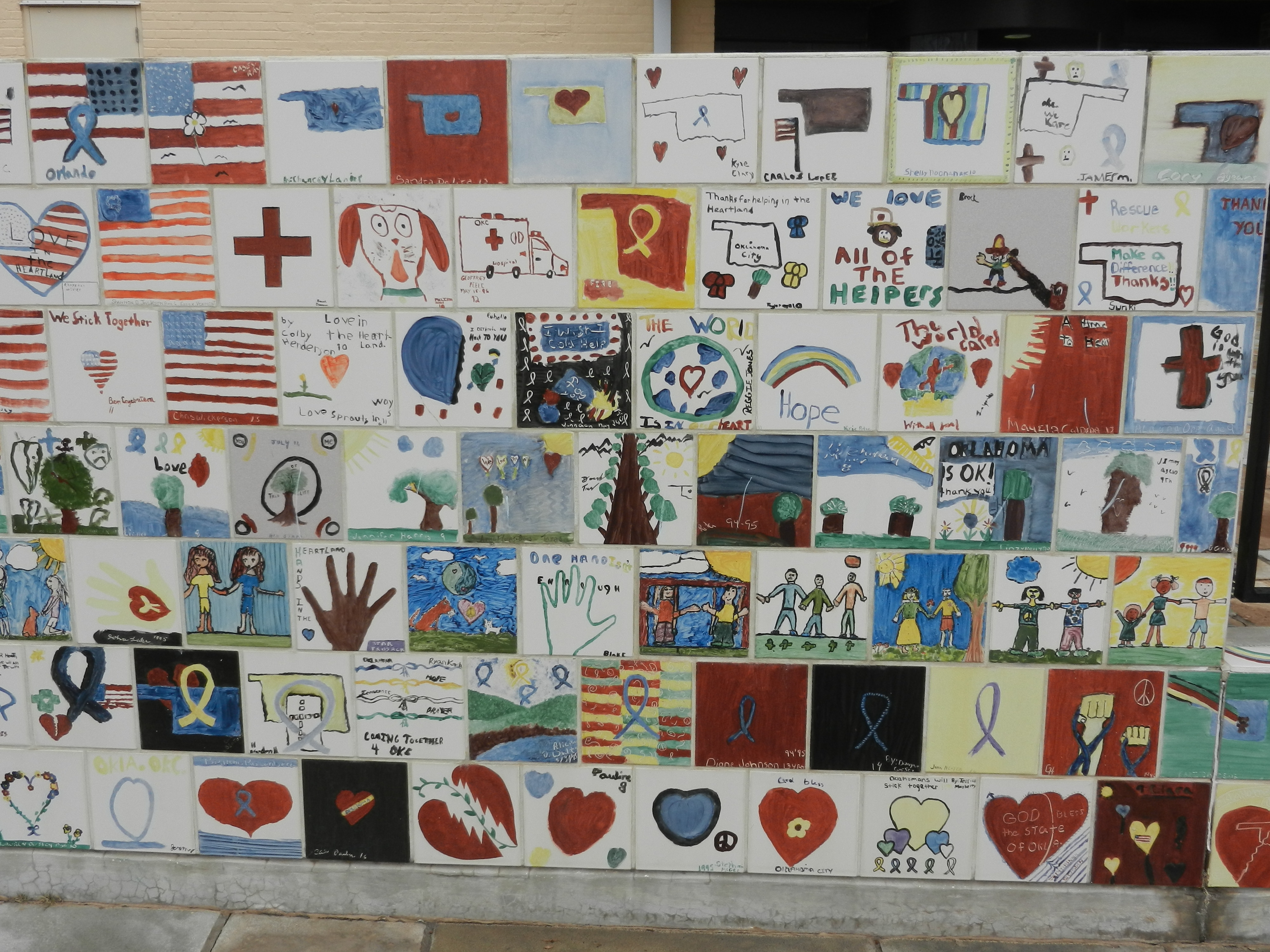
colorful hand painted tiles from children
Hand-painted tiles by children were sent to the city as a show of support and sympathy.

I was proud to be an Oklahoman then and now, and still grieve for the lives we lost that day.
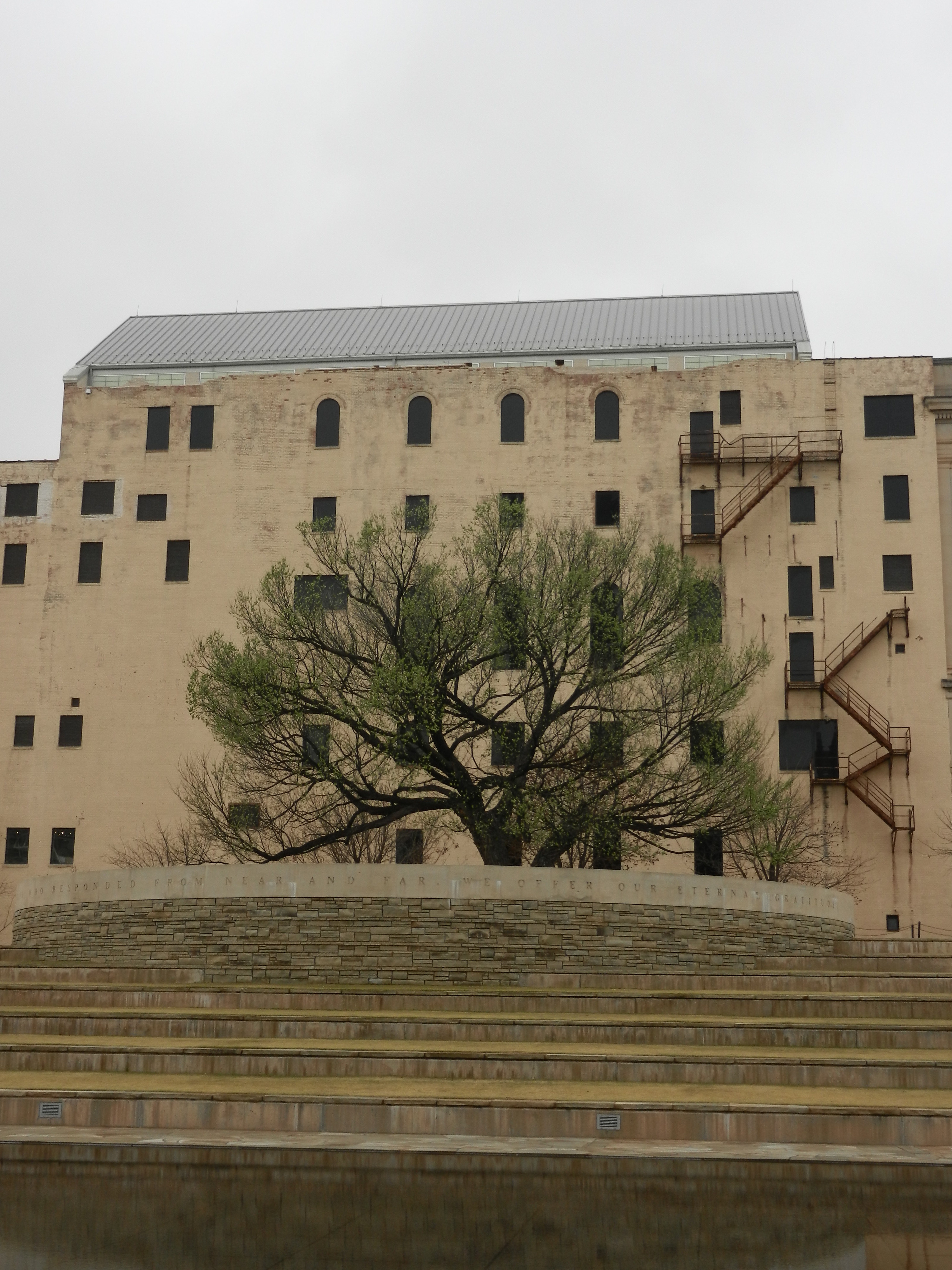
The Survivor Tree
The Survivor Tree, an American Elm, survived the blast

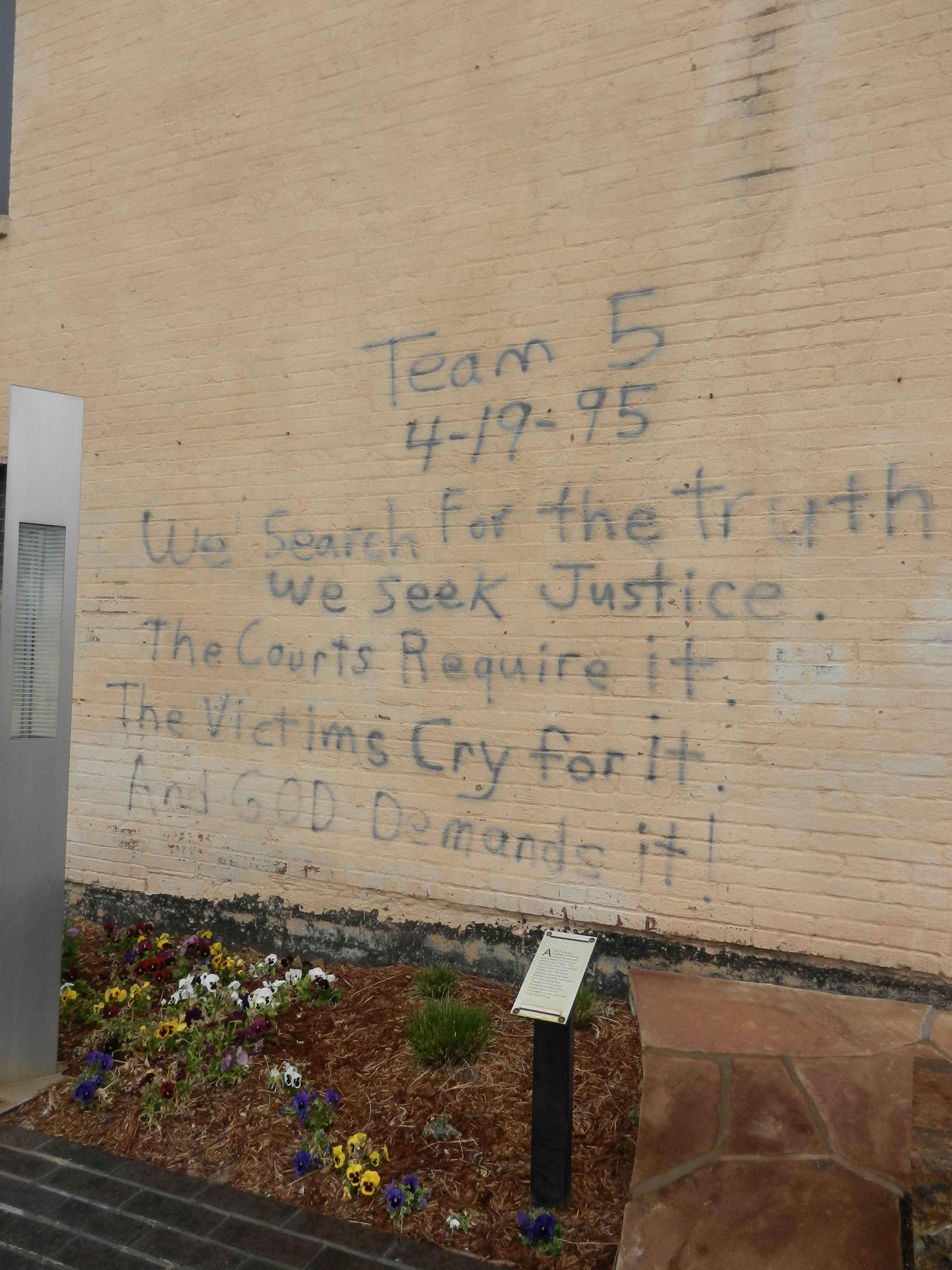
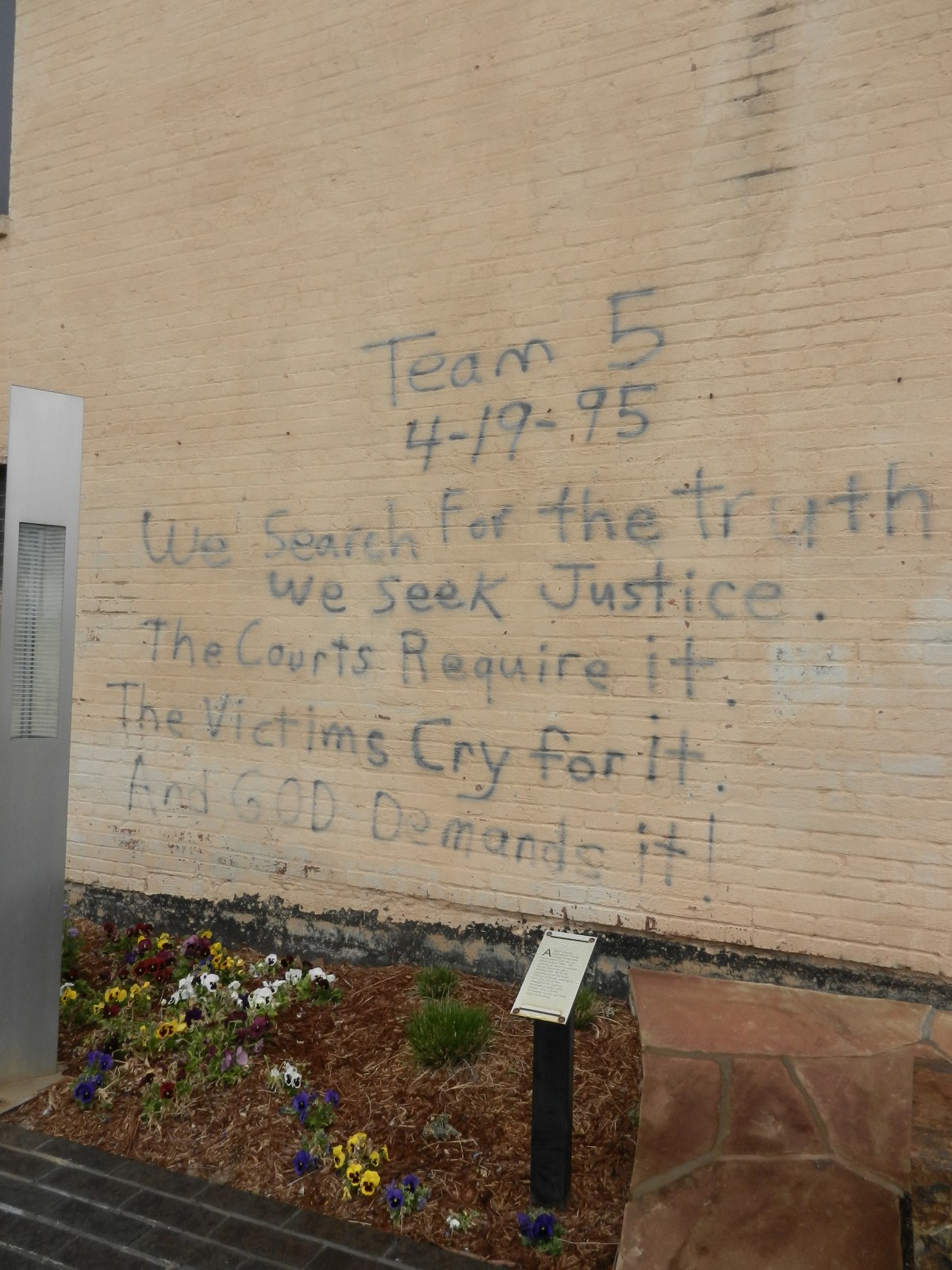
"We search for the Truth" written on a wall.
On the wall of the Journal Record Building which was also damaged by the blast; the museum now occupies part of it.
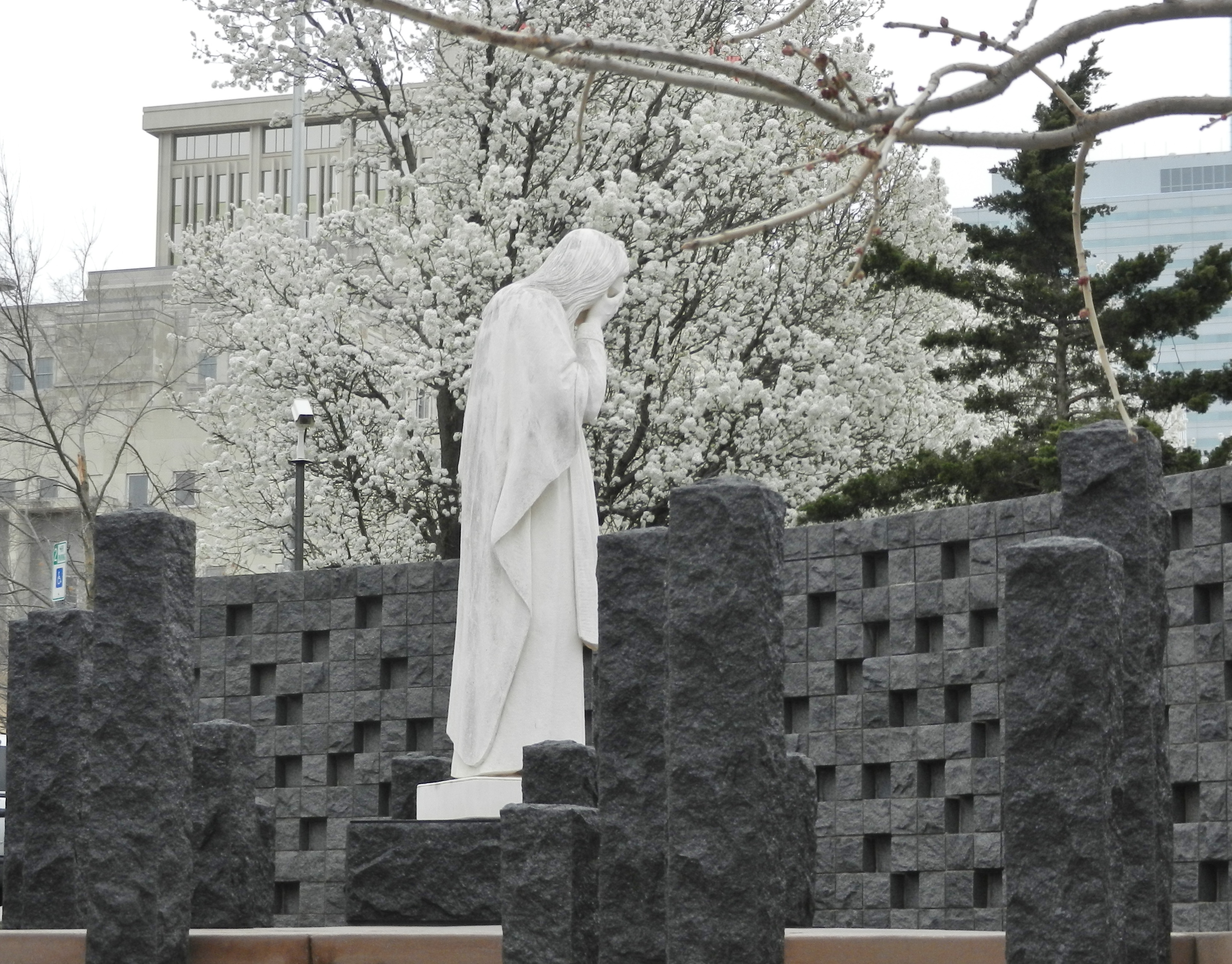
statue of Christ with head bowed
statue of a grieving Christ, in the courtyard of a church across the street from the memorial

The Oklahoma City National Memorial and Museum

The Oklahoma City National Memorial and Museum is privately funded. The memorial is free and open to the public. Admission is charged to tour the museum. According to the website-

“The Oklahoma City National Memorial Foundation is a private 501(c)(3) organization which owns and operates the Oklahoma City National Memorial & Museum. The Foundation is the caretaker of both the Outdoor Symbolic Memorial and the Memorial Museum. It does not receive any annual operating funds from the federal, state or local government. Museum admissions, store sales, the Memorial Marathon, private fundraising and earnings from an endowment allow the Memorial and Museum to be self-sustaining.”


exploring the HEART of remembering

Thank you for joining me to remember and honor those injured and killed in the Murrah Building and the heroes who rescued them.

                                               Dr. Aletha 

Dr. Bonhoeffer and a visit to Berlin- Tuesday Travels

Dietrich Bonhoeffer may have passed his life quietly in Christian service and scholarly pursuits had it not been for the rise of Nazism in Germany and the resulting  second world war.

View post to subscribe to site newsletter.

I feel an instant connection whenever I meet another physician or someone related to a physician.  You will recognize it as the way you feel when you meet someone from your hometown, or high school, or previous job, after being away a long time.

People who share a common bond  with you best understand where you’re coming from, what you’ve been through, and what it’s like being you .

My patients who have physician relatives tend to be the most respectful of my knowledge, time, and privacy.  Anytime a physician’s  relative asks me a medical question in a social setting, I know it’s something important.

Many well-known people, past and present, come from physician families and I discovered one in my reading recently. About that time my son returned from a trip to Germany and posted beautiful photos online. Those two discoveries provided the idea for this blog post.

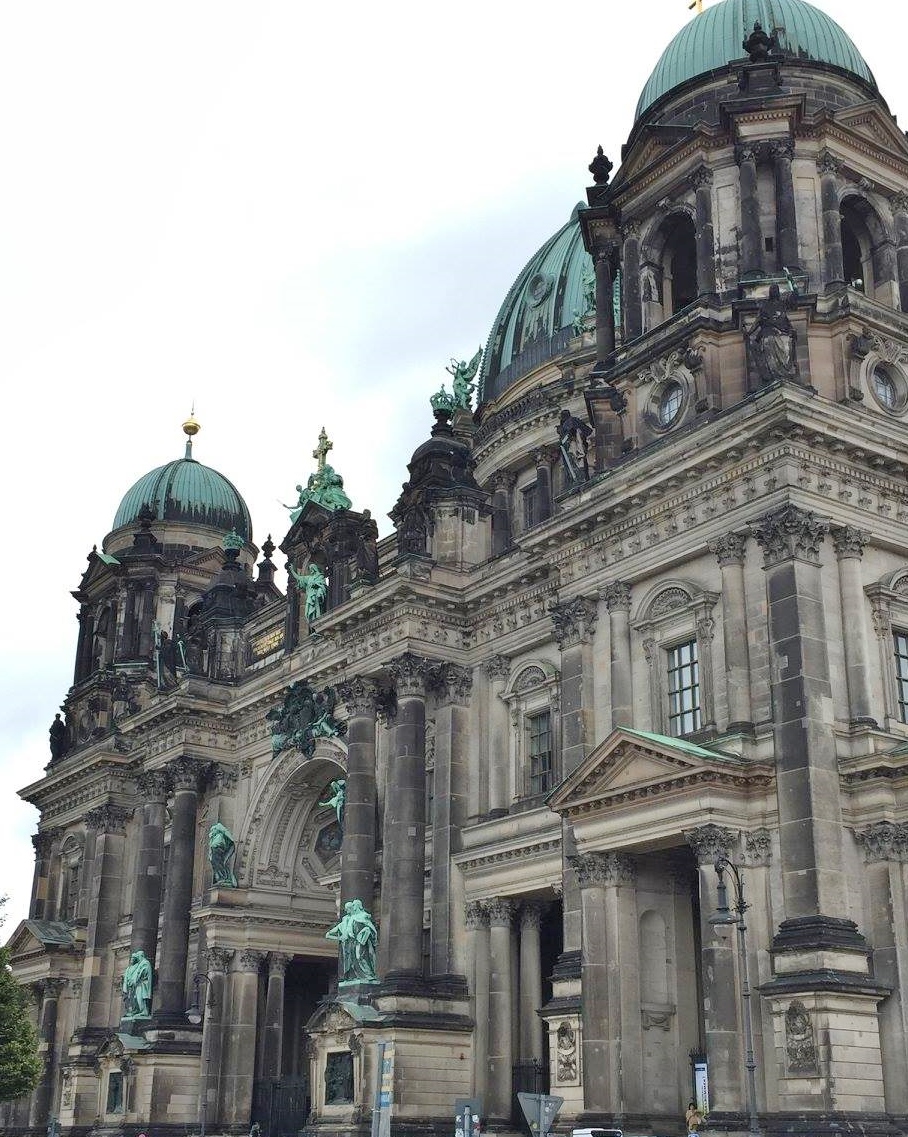
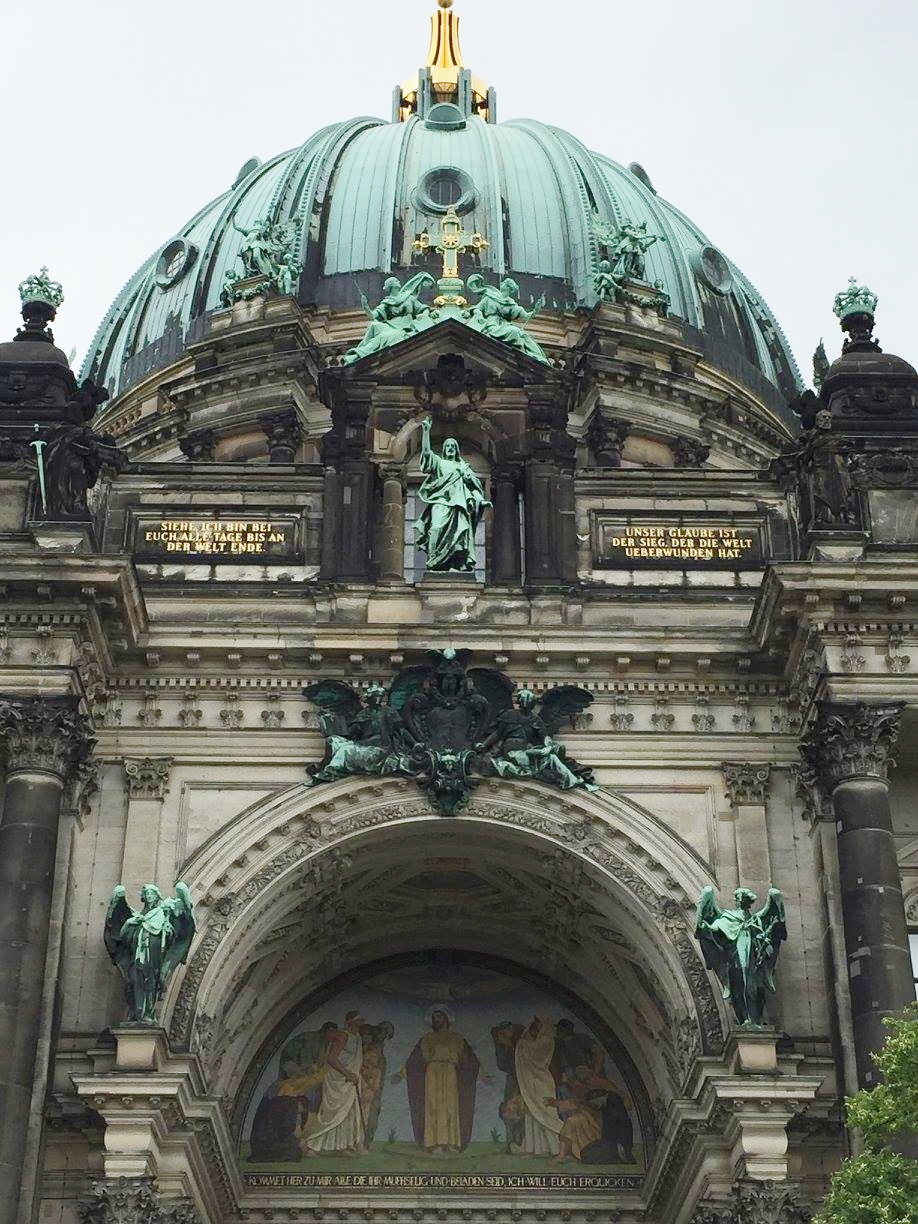
ornate building in Berlin
Dr. Bonhoeffer, psychiatrist

Dr. Karl Bonhoeffer started a medical practice in 1893 in what is now Wroclaw Poland, where he met and married his wife Paula Von Hase. He was a neurologist/psychiatrist at a time when both of those specialties were young. They had 8 children, including a set of boy/girl twins.

In 1912 they moved to Berlin where he was appointed head of psychiatry at Charite Hospital. There he taught and conducted research in brain disease; he worked with Dr. Carl Wernicke who became famous himself, having a disorder named after him- Wernicke encephalopathy, a brain disease caused by thiamine (vitamin B1) deficiency, usually due to long term alcoholism. His name is also assigned to an area of the brain which helps us understand and produce meaningful speech, Wernicke center.

Dr. Bonhoeffer had two other famous physician colleagues- Dr.Sigmund Freud and Dr. Carl Jung.

One of the Bonhoeffers’ sons became a physicist, another a linguist (before dying in military service in the war), another entered law school. But the fourth son, brother to the twin girl, chose a different path, one his family did not heartily approve of. That son, Dietrich, pursued theology, a choice that would ultimately determine his unfortunate fate.

Reverend Bonhoeffer, theologian and pastor

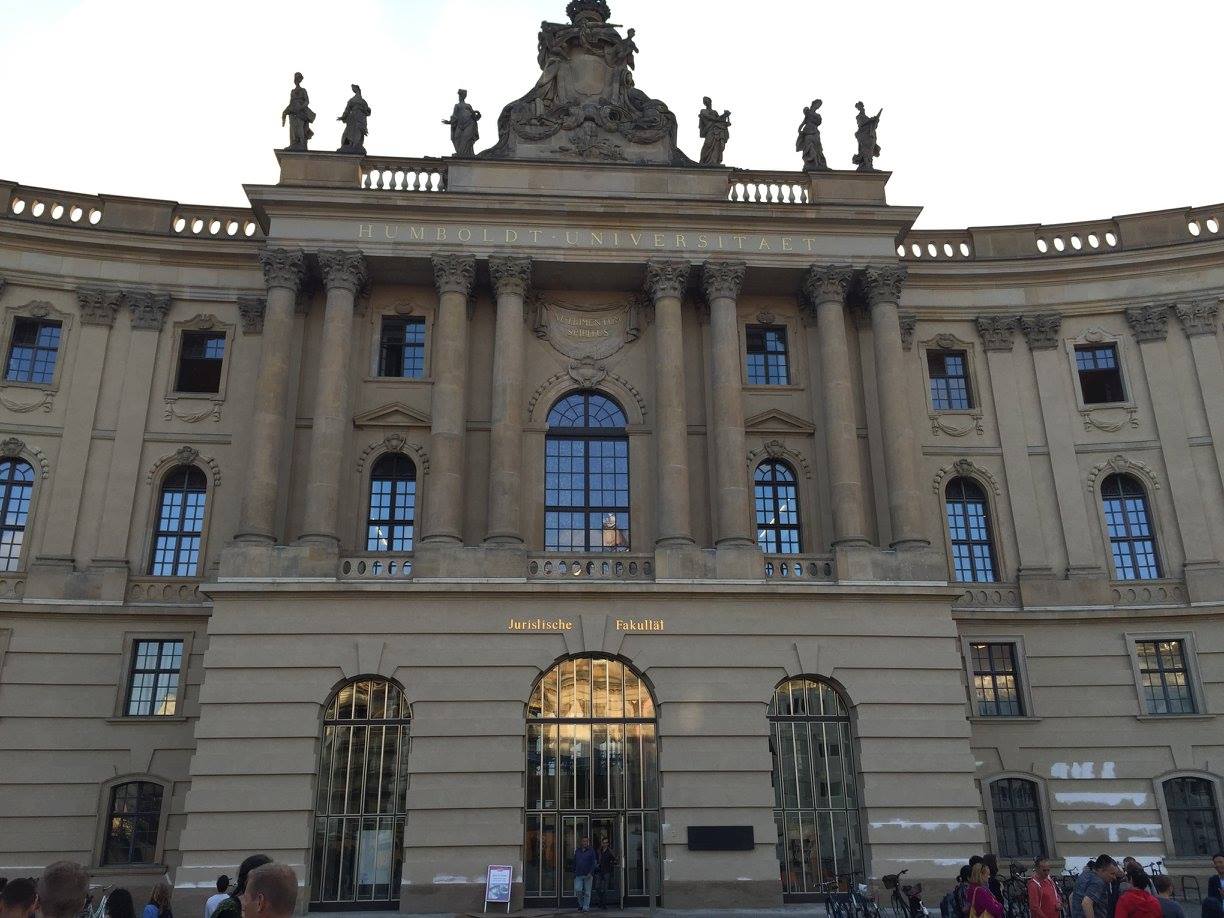
Dietrich Bonhoeffer first attended Tubingen University and finished at Humboldt University. He traveled extensively abroad, including the United States and India and returned to Germany to serve the Church as pastor and preacher. He may have passed his life quietly in Christian service and scholarly pursuits had it not been for the rise of Nazism in Germany and the resulting  second world war.

Humboldt University, Berlin ,Germany
Humboldt University, Berlin, Germany

Bonhoeffer believed that Germany’s political and military goals were not compatible with Christian beliefs, so he clandestinely entered the resistance movement, including working as a confidential agent of military intelligence. He helped Jews escape Germany. He also was aware of and possibly  involved in plots to assassinate Hitler.

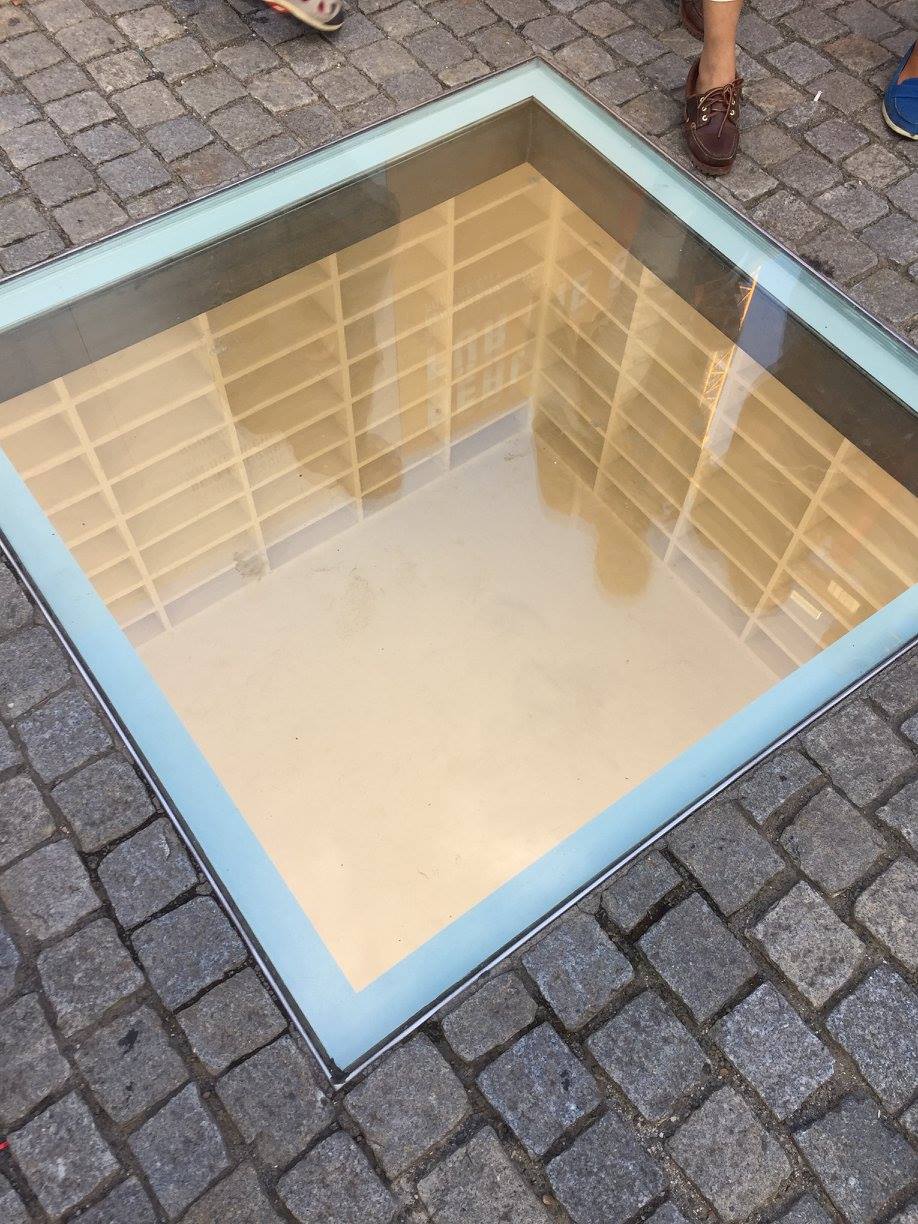
The burned books memorial in Berlin
memorial to burned books in Berlin
Reverend Bonhoeffer, the martyr

Unfortunately, he eventually came under suspicion and was arrested. After 18 months in a prison, he was transferred to a concentration camp where he was sentenced to death.

On April 9, 1945 he was executed by hanging, and his body was cremated. He was 39 years old. His brother Klaus and two brothers-in-law were also executed by the Nazis for their involvement in the resistance. Their father, Dr. Bonhoeffer, died in Berlin in 1948.

Bonhoeffer, the writer

Fortunately, Dietrich Bonhoeffer’s prolific writing survived and inspires us  to live the way he did. Writing in Bonhoeffer for Armchair Theologians, the authors quote the concentration camp doctor who said about him ,

“I was most deeply moved by the way this unusually lovable man prayed, so devout and so certain that God heard his prayer. In my fifty years …as a doctor, I have hardly ever seen a man die so entirely submissive to the will of God.”

BONHOEFFER for Armchair Theologians

Here are a few quotes from his many books and sermons which were published both before and after his death.

“God wants to lead us. Not all the ways of humans are God’s leading. For a long time we can walk our own paths. On those we are pawns of coincidence, whether they bring good luck or misfortune. Our own ways always lead in a circle back to ourselves. But when God leads our ways, they guide us to him. God’s ways guide us to God. God leads us through happiness and unhappiness always and only towards God. In this we recognize god’s way.”

The mystery of Easter.

“Do and dare what is right not swayed by the whim of the moment. Bravely take hold of the real not dallying now with what might be. Not in the flight of ideas but only in action is freedom. Make up your mind and come out into the tempest of living. God’s command is enough and your faith in him to sustain you. Then at last freedom will welcome your spirit among great rejoicing.”

Ethics

One of many murals on the east Berlin Wall


“To go one’s way under the sign of the cross is not misery and desperation, but peace and refreshment for the soul ,it is the highest joy”

The Cost of Discipleship

church in Berlin

Photos used courtesy of Ryan Oglesby 

exploring the HEART of health

Dr. Aletha