Fighting COVID-19 in 2021-it’s not over yet

In this post, I’m offering a graphic review of COVID-19 and what we can still do to prevent infections IN ADDITION TO getting vaccinated. Until we achieve wide spread immunity through vaccination the risk of infection and death are still present and still just as real.

IMPORTANT NOTE: This post was written and published 9 months ago and much has been learned and changed since. However, the basics have not changed and are perhaps more important than ever. I hope seeing this again will remind you of what’s important and prompt you to carefully follow reputable sources for updates.

This time a year ago, no one in the United States, or even anywhere in the world, knew about a novel coronavirus, except a handful of physicians and scientists. Perhaps not even they knew we were facing a viral pandemic that would turn our lives upside down.

That unknown virus, SARS-CoV-2, has sickened 90 million people world wide and caused almost 2 million deaths. In the United States it has infected 22 million people, killing 370,000.

UPDATE: as of September 5,2021 there have been

221 million worldwide cases with with 4.5 million global deaths

40 million U.S.A. cases with 650,000 deaths

In the United States, the healthcare systems in many places, including our most populous states, are overwhelmed with COVID-19 patients, so much so that it impairs their ability to care for them and other patients. Cases are at an all time high across the entire country.
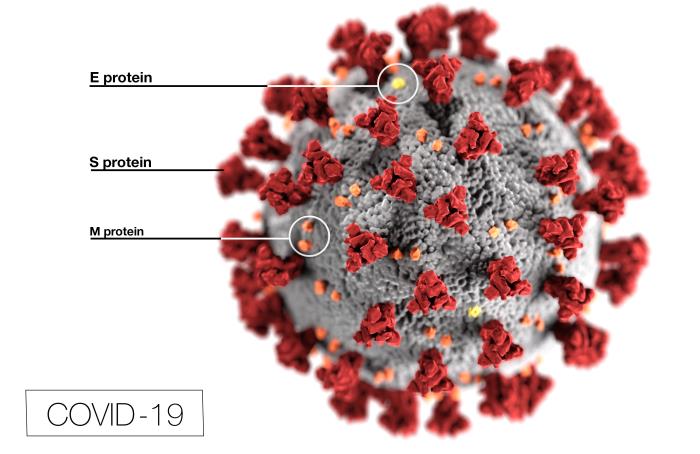
illustration showing the coronavirus which causes COVID-19
a model of the structure of the SARS_CoV-2

This illustration, created at the Centers for Disease Control and Prevention (CDC), reveals ultrastructural morphology exhibited by coronaviruses.

Note the spikes that adorn the outer surface of the virus, which impart the look of a corona surrounding the virion, when viewed electron microscopically. In this view, the protein particles E, S, and M, also located on the outer surface of the particle, have all been labeled as well.

A novel coronavirus, named Severe Acute Respiratory Syndrome coronavirus 2 (SARS-CoV-2), was identified as the cause of an outbreak of respiratory illness first detected in Wuhan, China in 2019. The illness caused by this virus has been named coronavirus disease 2019 (COVID-19). CDC/ Alissa Eckert, MS; Dan Higgins, MAMS, public domain.

Finally, a vaccine for SARS-CoV-2

There is hope for an end to this nightmare now that two vaccines are available and being dispensed. I feel fortunate to have received my first dose of the Pfizer-BiONTech vaccine but I know for many others it will be weeks if not months before they will be vaccinated.
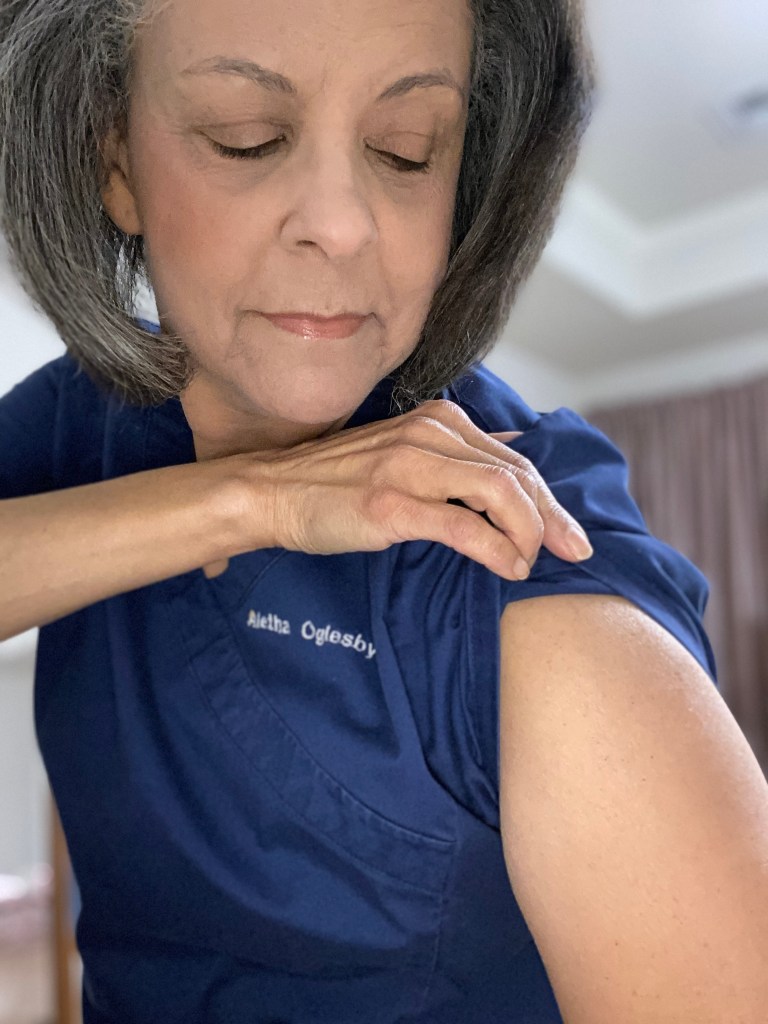
Dr. Aletha inspecting her arm after a COVID-19 shot
Three days after my first vaccination the soreness in my arm is almost gone, and I had no redness or swelling.

Let’s review COVID-19

In this post, I’m offering a graphic review of COVID-19 and what we can still do to prevent infections IN ADDITION TO getting vaccinated. Until we achieve wide spread immunity through vaccination the risk of infection and death are still present and still just as real.

Please note I am not addressing management of COVID-19 in this post. Your best source of information for treatment of symptomatic COVD-19 is from a physician familiar with your symptoms and underlying health.
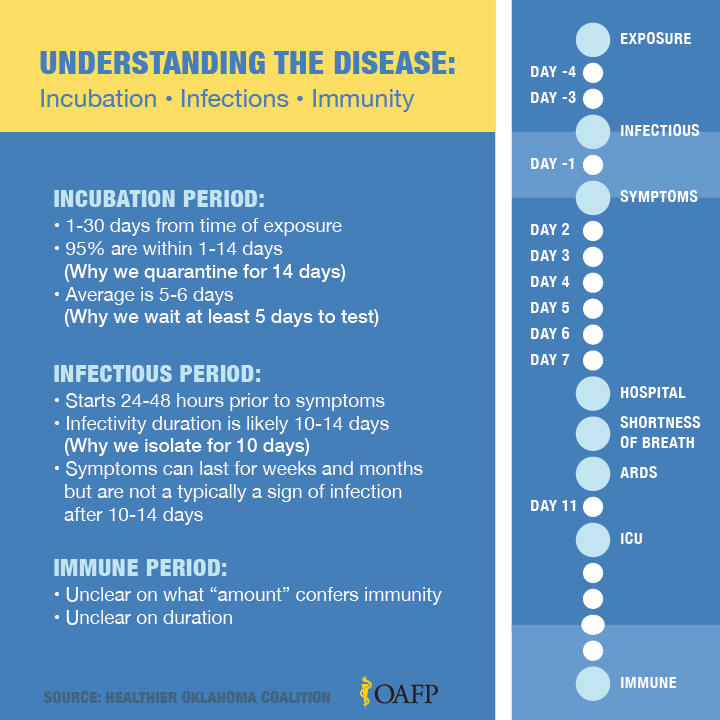
The timeline of a COVID-19 infection-from exposure to immunity
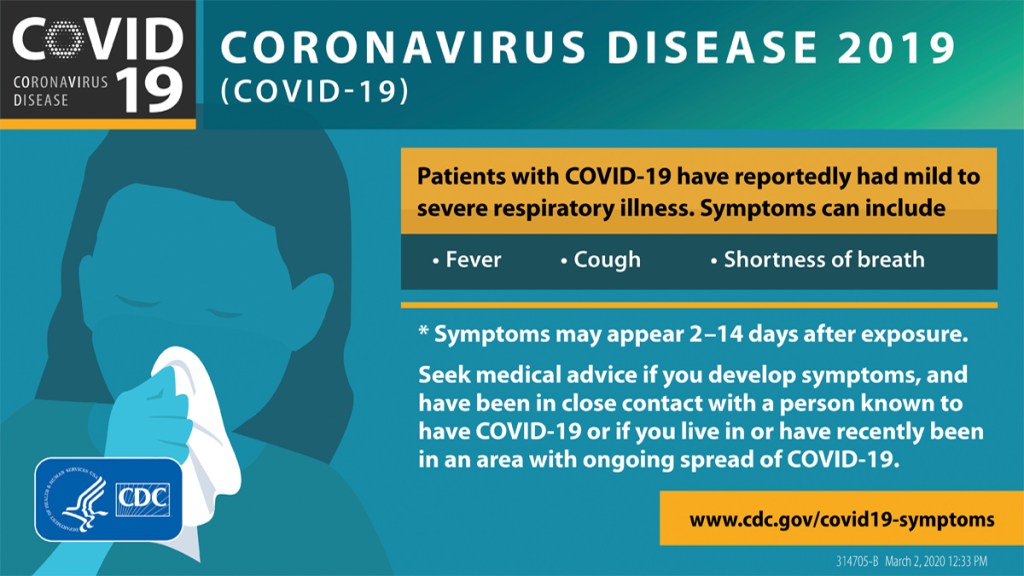
Other common symptoms include
  • headache
  • muscle and/or joint aches
  • nasal congestion and drainage
  • sore throat
  • nausea/vomiting/diarrhea
  • loss of taste or smell-this almost always means you are infected
  • fatigue
  • there may be no symptoms at all

Steps to prevent infection from coronavirus-

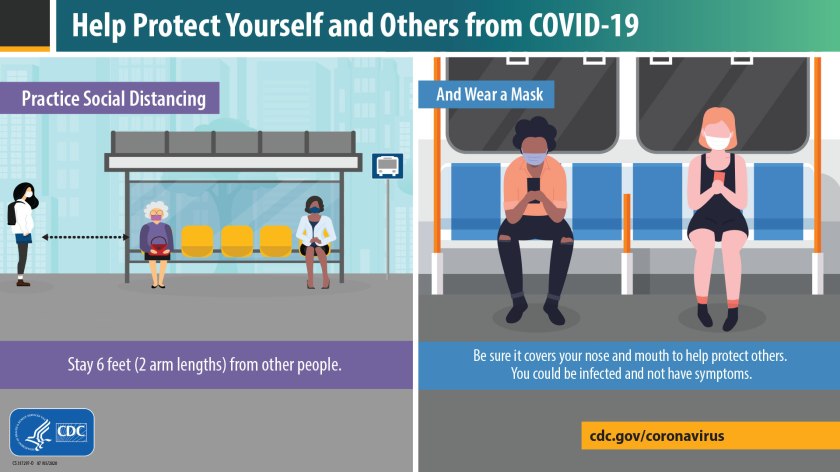
Wash your hands, Wear a mask, Watch your distance
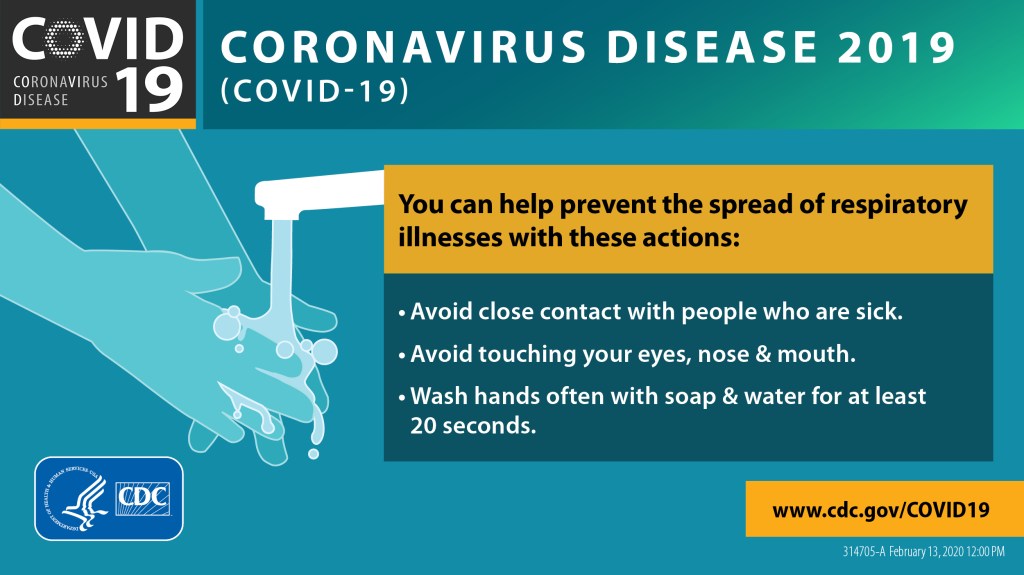
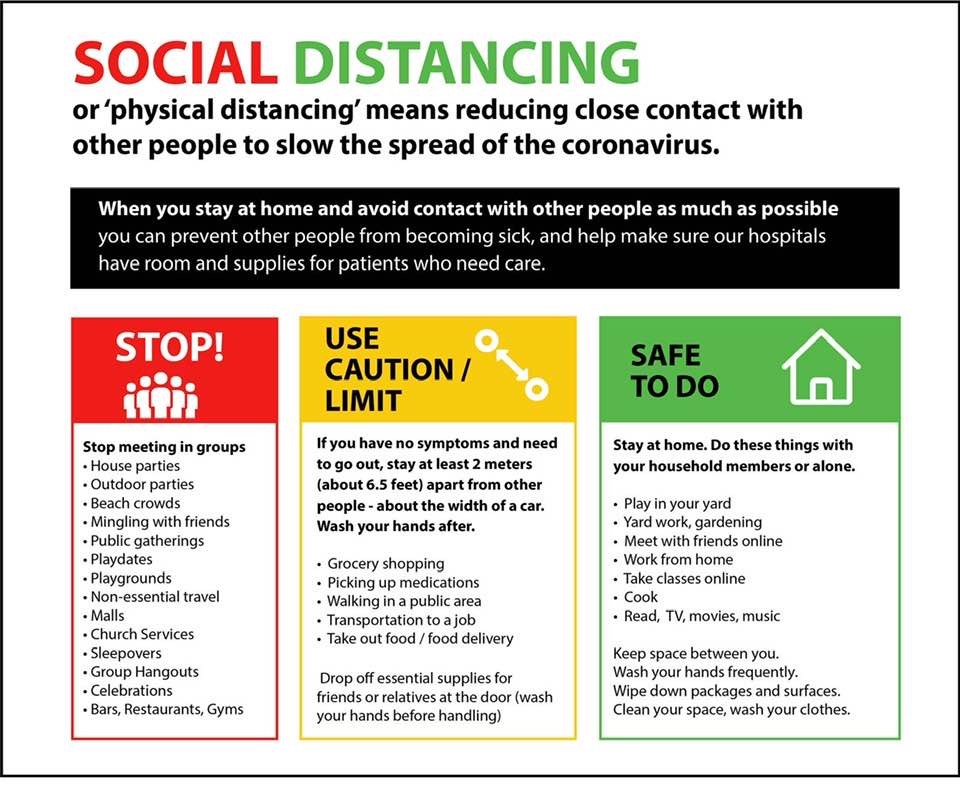
Practice social distancing and wear a mask.
What to do if you think you have COVID-19 or have been exposed
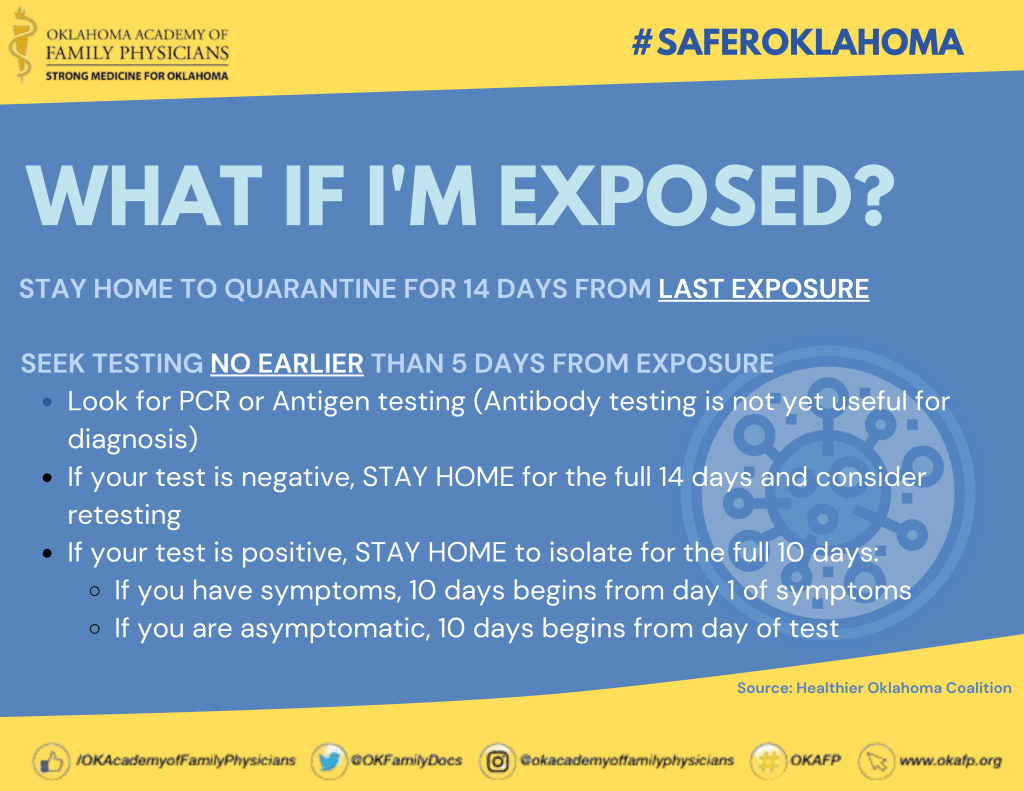
You should also contact your physician for advice, especially if you have chronic medical conditions which might make you at greater risk of severe disease.

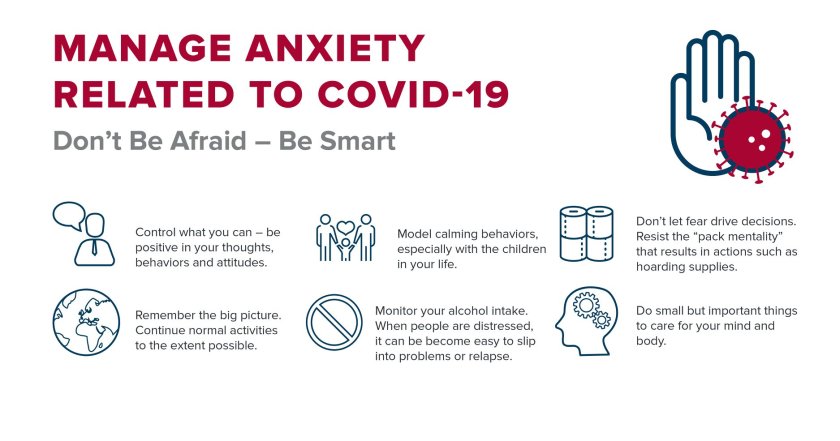
Base your actions on FACTS, not FEAR

MANAGE ANXIETY-DON'T BE AFRAID-BE SMART

Learn about the vaccines from Dr. Gupta and Dr. Fauci

Throughout the pandemic, I have depended on the reports from Dr. Sanjay Gupta, neurosurgeon and medical correspondent for CNN. I don’t miss his daily podcasts called Coronavirus: Fact vs Fiction.

In this episode, Dr. Gupta interviewed Dr. Anthony Fauci about the coronavirus vaccine. I suggest you listen to this 12 minute podcast, as well as the others in this series.


A Q&A on vaccines with Dr. Anthony Fauci

exploring the HEART of controlling a pandemic

Dr. Aletha

What you should know about COVID-19 exposure notification apps

There will not be a national app for contact tracing. There are many options available now, and it is up to each state and individual to decide which tools best fit their needs. It is up to you to decide if you download an exposure notification app for COVID-19.

Recently several friends on social media posted about settings on their phones for COVID-19 exposure notification. I checked and found it on my phone also. Early in the pandemic I read that this software was being developed for possible use in contact tracing but did not know it was now a reality.

I mentioned it to my computer guru husband Raymond who writes a tech blog Tech Savy Life and he researched and wrote an in-depth post about it. So I’m tapping into his knowledge to share with you.

What is contact tracing?

According to the CDC, contact tracing “helps protect you, your family, and your community” by

  • Letting people know they may have been exposed to COVID-19 and should monitor their health for signs and symptoms of COVID-19.
  • Helping people who may have been exposed to COVID-19 get tested.
  • Asking people to self-isolate if they have COVID-19 or self-quarantine if they are a close contact.

Manual contact tracing done by humans is labor intensive and sometimes inefficient, requiring time on the phone trying to reach people, physically tracking them down, and then depending on their memory of where and with whom they have been. Using technology to do this speeds the process and improves accuracy, making it far more valuable and helpful.

Using case management tools

Local health departments may use digital case management tools to help make the contact tracing process more efficient. If you choose to provide information through one of these tools, your information is secure and stored with the health department. These tools help health departments quickly receive and analyze information about COVID-19.

Case management tools are under the same laws and regulations for all sensitive health information use (e.g. HIPPA). You must provide consent for the health department to collect information using a case management tool. Just like traditional contact tracing, digital tools will not collect information regarding money, Social Security numbers, bank account information, salary information, or credit card numbers.

Using exposure notification tools
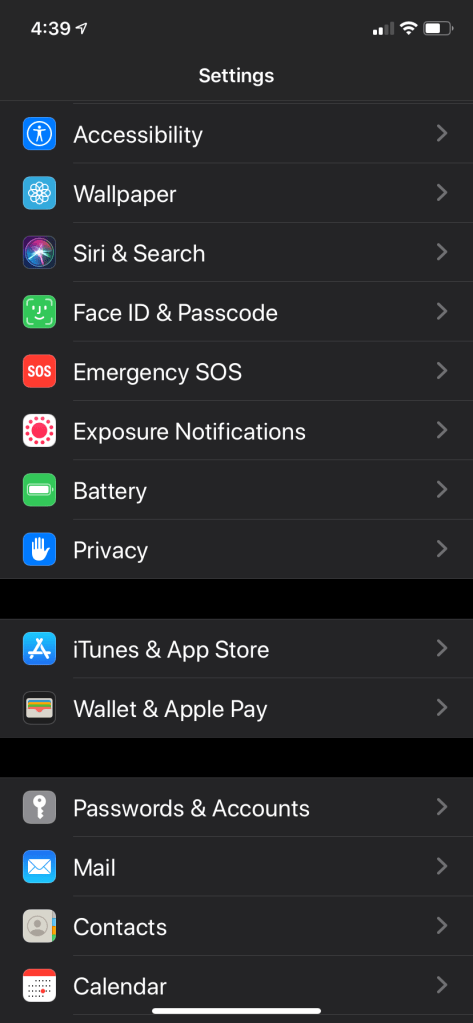
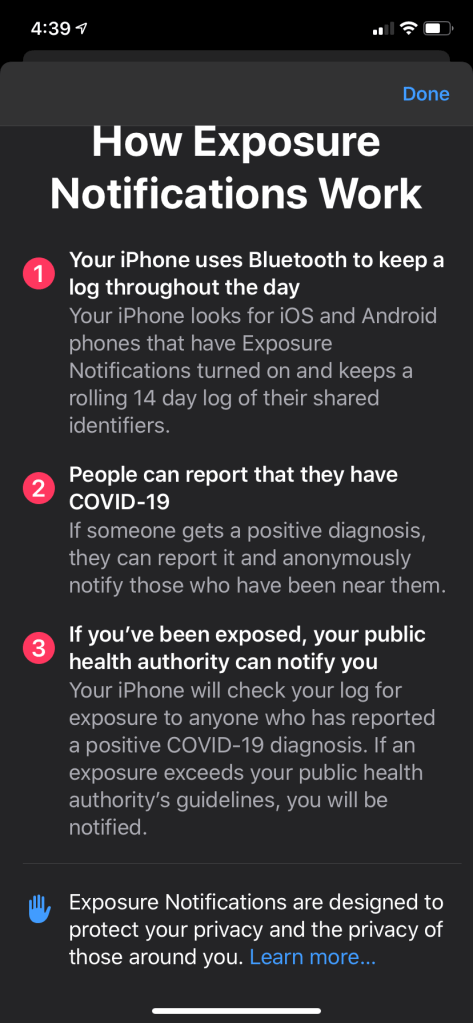
a phone screen shot of Settings

Exposure notification tools may be an app that you can download on your personal cell phone. If you choose to download an exposure notification app for COVID-19, your information is secure.

Exposure notification apps are developed in collaboration with or endorsed by health departments. These apps undergo rigorous testing to determine their trustworthiness, security, and ability to protect people’s privacy. Until you give consent to share information with your local health department, any information you have entered into the app is stored only on your personal phone and is not sent to the health department or any other third party. The app and your information can be deleted any time.

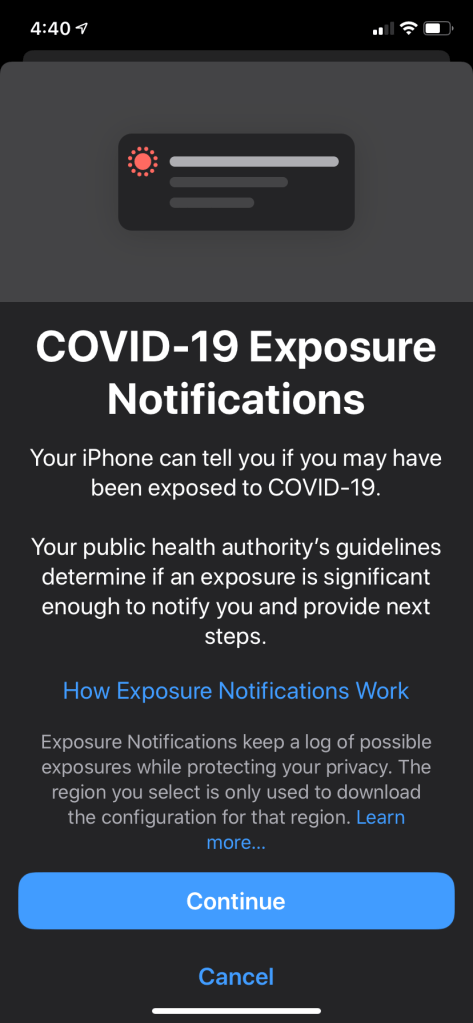
Exposure notification on the iPhone 11 iOS 13.7

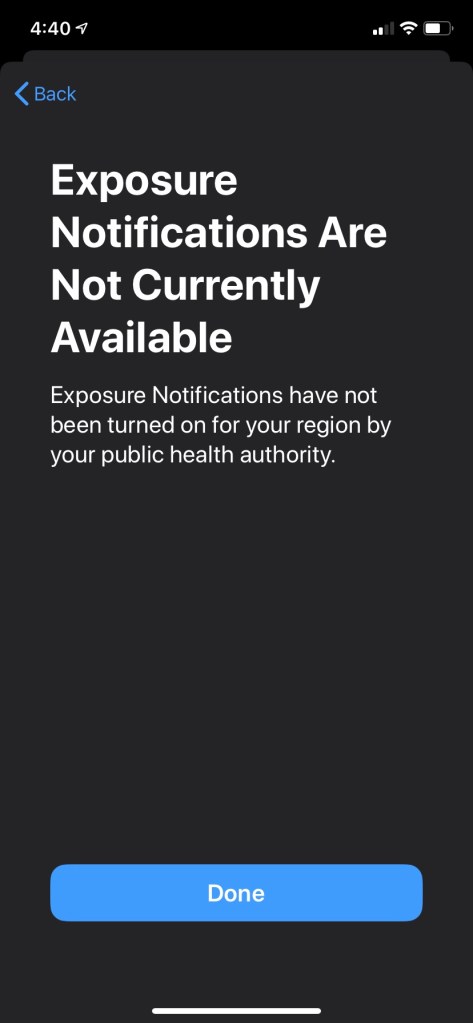
By clicking Continue, I went to a screen where I entered my country, the United States, and then my state, Oklahoma, where exposure notifications are not currently available.

Privacy and civil liberty issues

Again, according to the CDC,

There will not be a national app for contact tracing. There are many options available now, and it is up to each state and individual to decide which tools best fit their needs. It is up to you to decide if you download an exposure notification app for COVID-19.

Tech Savy Life

Raymond’s article was written before the iOS update, but I recommend you read it for a more detailed explanation of how contact tracing works. And check out some of his other posts while you’re there.

Raymond Oglesby, an Information Technology (IT) specialist with 30 years in the field. I have taught Microsoft Applications and troubleshot computers in 15 countries and many States. My career was focused on mainframes and desktops from application development to implementation. I have written hundreds of programs for various architectures. I decided to start a blog to share my knowledge and experiences with you.

Contact tracing is coming on your smartphone

man looking at a phone screen

exploring the HEART of health with technology

Even though computers and smart phones aren’t so “smart” sometimes (or maybe it’s just me) I’m glad we can harness the power of technology to help us explore and share the HEART of health. You may enjoy this post about how technology has changed the way we document healthcare for better and for worse.

Dr. Aletha

an update

Several states have now adopted use of contact tracing apps, but usefulness has been hampered by reluctance to use them.This article from Kaiser Health News explains why

People Proving to Be Weakest Link for Apps Tracking COVID Exposure