
Alert: This article discusses sexual abuse and trauma so may be distressing for some persons to read. Resources for help is available at the end.
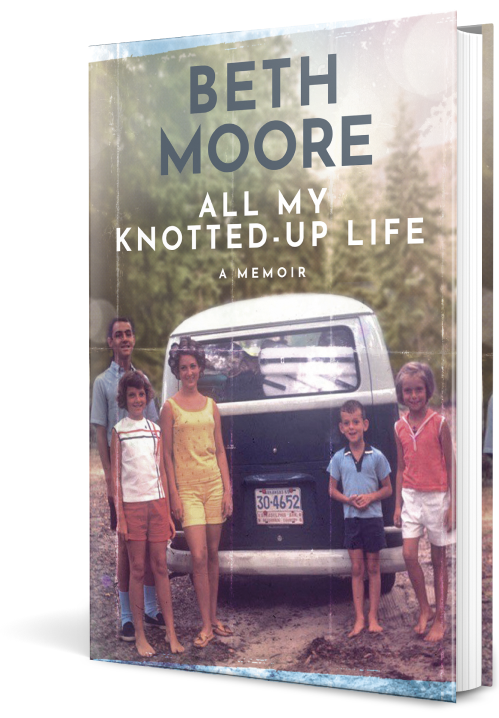
ALL MY KNOTTED-UP LIFE
A MEMOIR
By Beth Moore
I had never heard of Beth Moore when I signed up for one of her Bible studies at my church. In these studies, written specifically for women, there is a workbook that participants use to read and study the Bible at home, answer questions, and then take part in a group session where we watch her teach the lesson on video.
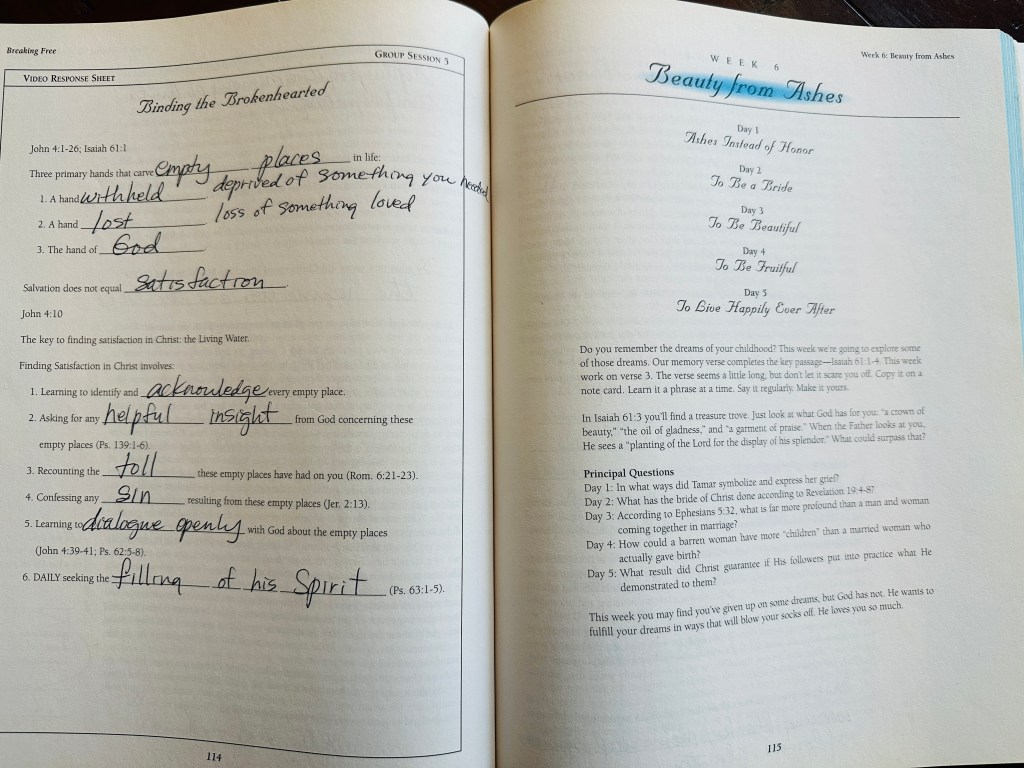
This Bible study, Breaking Free-Making Liberty in Christ a Reality in Life, was drawn from Isaiah and other Old Testament books. This is not an easy section of the Bible to understand. But what I found even more puzzling was the mention of what she called “my victimization”, with no detail other than
scars from being a childhood victim of someone else’s problems
Foreword from Breaking Free
Eventually, my women’s group moved on to other Bible teachers. I didn’t hear much about her until a few years ago. She made news for her social media posts about politics and her denomination.
Recently I learned that she had released a memoir. Since I wanted to know more about her, I read it and review it here. Whether or not you like Beth Moore or even know who she is, you will learn something from this review about her and maybe about yourself.
Note: The photos in this post are for illustration only, and are not in the book nor affiliated with the author.
Beth, the Southerner
Beth Moore is a Southerner, born and raised in Arkadelphia, Arkansas, and the Houston, Texas area where she still lives. Even without knowing that, I would know she’s southern by the way she talks, and she writes the way she talks. (And it helps that my home state borders both of those.)
Even without her Southern vernacular, she has a unique way with words when she speaks and writes that you might find off-putting but is part of her appeal, making her down-to-earth and relatable.
The first chapters are about her family of origin- “river people”, the Greens- her parents Aletha and Albert, Nanny, her maternal grandmother who always lived with them, and two brothers and two sisters, with Beth being next to the youngest. (No, I did not know that her mother’s name was Aletha and yes, I was surprised.)
We get a glimpse into Beth’s victimization. No, we don’t get an anatomically detailed description of what happened but like I said, Beth has a way with words, so we certainly get the gist of what happened.
“Somewhere stuffed deep inside a drawer of my mind, I’d always known. A child doesn’t pull chunks of her hair and chunks of her memory out of her head over nothing.”
Beth’s Call to “vocational ministry”
She continues to narrate her life as a teenager in Houston, finishing high school, and going away to college where she met and married “her man” Keith Moore, who had his own painful family history. They had two daughters, attended church, and tried to unpack their joint baggage.
“Each heart knows its own bitterness.”
Proverbs 14:10, NIV
As a teenager, Beth had felt a definite call to “vocational ministry” but was unsure what form that would take. But the other women at her church heard from God for her and begged her to start a ministry for them. Thus, Beth Moore’s first ministry position was teaching aerobics- yes, aerobics with a Christian flare.
For better and for worse, imagination happens to be one of my strong suits. With a baby on a blanket beside me kicking her little legs to the beat, I started choreographing aerobic exercises to Christian contemporary music. We announced a kickoff in the church bulletin and on posters in the halls and women’s restrooms.

Her introduction to teaching Bible lessons came when she was asked to substitute for a Sunday school teacher on maternity leave. She had taught children in Sunday school but never adults. She used a five-message repertoire to speak at women’s events. Preparing a new lesson every Sunday was new for her and didn’t go well.
The end of the year couldn’t come quickly enough. I resolved never to darken the door of another Sunday school class in a teaching capacity.
Which didn’t happen. A few years later as she sat in a Bible doctrine class “God struck a match against a stone and lit a torch in my heart for the Scriptures that has never been quenched.”
That class and three mentors who “remain unrivaled in influence” in her life, birthed her teaching ministry which she named Living Proof.
Beth and the Southern Baptists
In the next chapters we follow Beth as she builds her ministry of writing and teaching Bible studies at her church, First Baptist of Houston, partnering with Lifeway Christian Resources ( the publishing arm of the Southern Baptist Convention) to publish her studies and create a traveling speaking ministry called Living Proof Live. Her meetings outgrew churches and moved into arenas of thousands.
But no amount of training could have prepared us for what was ahead. The Bible studies were picking up momentum and we’d just published Breaking Free, the series I’d written after emerging from the abyss where I’d faced down my past.
But as she puts it, “with visibility came scrutiny.”
Beth admits she is self-taught as far as the Bible is concerned. Despite no seminary training, her in-depth Bible studies are not light reading or study. She references authoritative theological commentaries and quotes the original Hebrew and Greek scriptures.
Nevertheless, she was scrutinized by men who questioned how someone without a college degree in theology could teach the Bible. Not only was she scrutinized-she was criticized, ostracized, marginalized, and ridiculed publicly.
The situation took a dramatic turn in 2016 when recordings of a presidential candidate revealing sexual misconduct became public. She was shocked and angered to read evangelical leaders minimizing, excusing, and defending his behavior.
So, after praying, she posted a series of Tweets.
Wake up Sleepers to what women have dealt with all along in environments of gross entitlement and power. Are we sickened? Yes. Surprised? NO.
I’m one among many women sexually abused, misused, stared down, heckled, talked naughty to. Like we liked it. We didn’t. We’re tired of it.
Between this, and other personal and family issues, Beth experienced a complete upheaval of her ministry, her home, and her faith.
“I’d known my comments would cause a backlash, but I couldn’t wrap my mind around the enormity.”

Family, Fishing, and Faith
Throughout this turmoil, the Moores stayed grounded with their family- two married daughters and three grandchildren- their beloved dogs, Keith’s fishing- and faith. She found new ways to continue her ministry and even has a new “home in the woods”, complete with a photo.
The voice of Christ on the God-breathed page would become distinct enough to hear over the others.
My response to Beth’s story
I’m glad Beth Moore “broke free “and writes and speaks so others can too. She provides a voice for women, for abuse victims, for dysfunctional families, for anyone whose life is knotted-up.
Maybe you need to break free of something too. Whether you do or not, read this and her other books. You may find release from your knots too.
Come to me, all of you who are weary and burdened, and I will give you rest.” Matthew 11:28
Beth Moore’s Bible Studies and Books
Beth Moore’s books and studies are sold by many major booksellers, including Lifeway and Tyndale.
Those of you who have done the Breaking Free study, won’t be surprised she calls it the study “closest to my life’s message. I didn’t break free from the bondage of my past. I was broken free.”
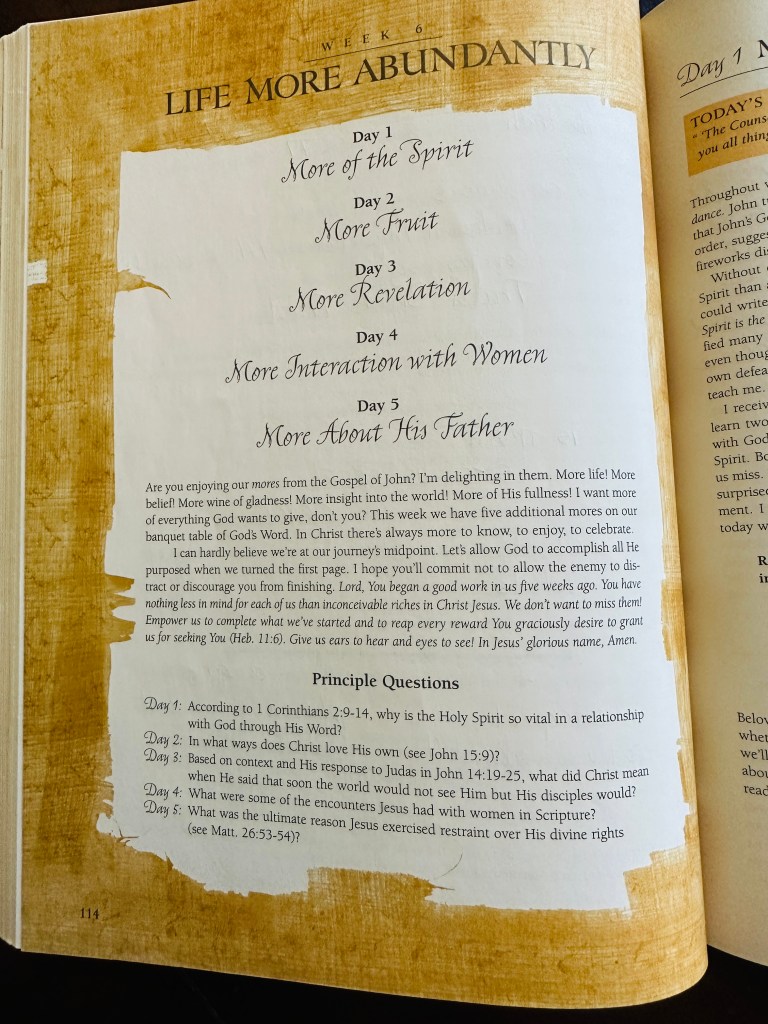
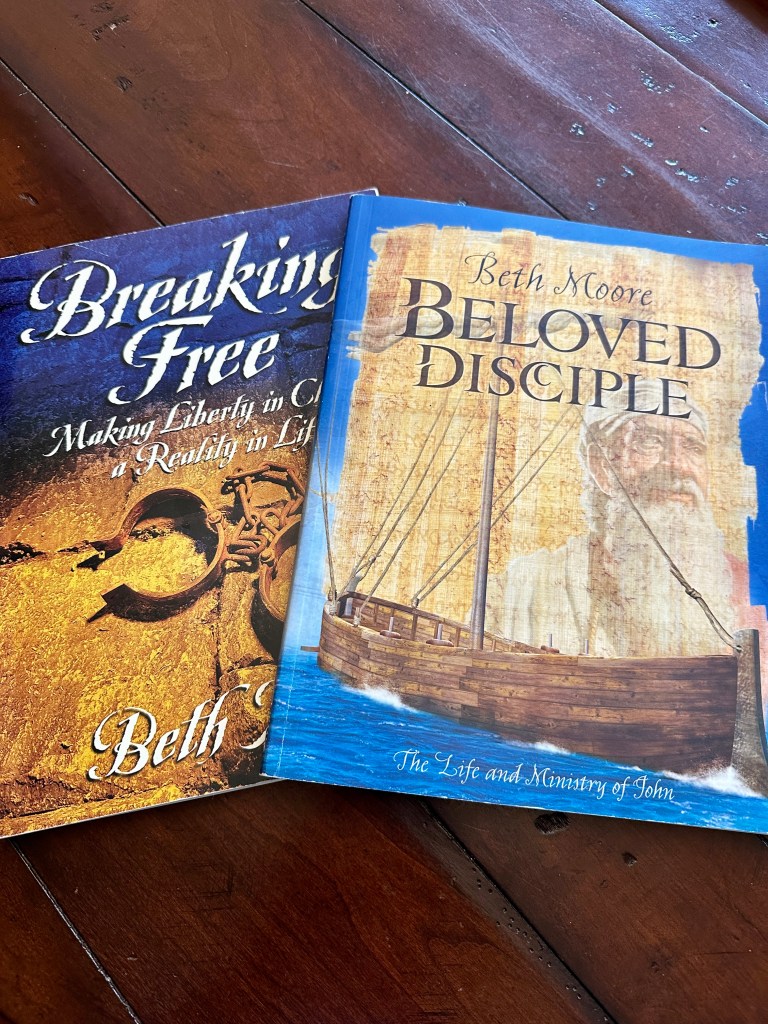
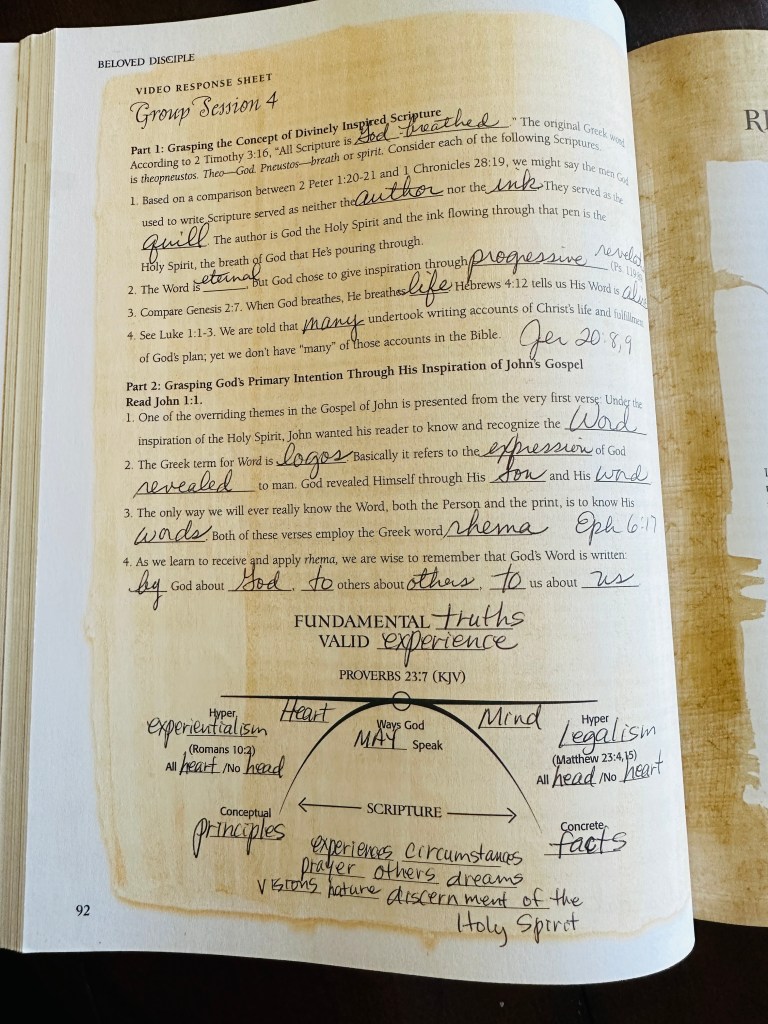
I also did Beloved Disciple, a study about the Apostle John.
And I read her novel, The Undoing of Saint Silvanus
Exploring the HEART of health
If you are or have been exposed to abuse, neglect, violence, or any type of trauma that has affected you adversely, please do not suffer alone. Talk to a trusted professional-physician, counselor, therapist, or clergy -and start the road to recovery today.
Call 1-800-799-SAFE (7933) OR text START to 88788
Thank you for reading this post. Please follow this blog and me on social media.
I share information and inspiration to help you transform challenges into opportunities for learning and growth.
Add your name to the subscribe box to be notified of new posts by email. Click the link to read the post and browse other content. It’s that simple. No spam.
I enjoy seeing who is new to Watercress Words. When you subscribe, I will visit your blog or website. Thanks and see you next time.

Dr Aletha
- About Dr. Aletha
- How to Use this Site
- Make Your Life Easier
- Search by Category
- Share the HEART of health
- my Reader Rewards Club
- RoboForm Password Manager