Surprising lessons you will learn waiting at an emergency room

This post explores the universal experience of waiting for health care, highlighting both patient and physician perspectives on delays for appointments, lab results, and approvals. It emphasizes that waiting can be difficult but may lead to valuable lessons. A biblical perspective encourages trust and hope during these times of waiting.

Vietnamese people with bicycles, standing outside a clinic
People waiting to enter a medical clinic in vietnam.


I have waited for medical care too, from both sides, as a patient and as a doctor. Physicians wait-

  • for lab results
  • for xray and scan reports
  • for consultants to call or send evaluation findings
  • for insurance companies to pay claims
  • for prior authorizations for surgery and medications to be approved


We all have to wait and it usually isn’t by choice. Or pleasant.

clinicsign
People waiting at a medical clinic in Panama.


The Bible talks about waiting

But those who wait  on the Lord shall renew their strength;
They shall mount up with wings like eagles,
They shall run and not be weary,
They shall walk and not faint.
 
Isaiah 40:31, NKJV


I think it’s easier to wait when you expect, hope for, and trust that waiting will lead to a good outcome, that your problem will be solved, your illness will be successfully treated, your pain eased, and your sorrow resolved.


Sometimes waiting teaches us valuable lessons that we might otherwise not know.

those who hope in the Lord will renew their strength, they will soar like eagles Isaiah 40:31
Isaiah 40:31 graphic from the Lightstock.com collection


Martin Wiles wrote a poignant piece on how a visit to a hospital emergency room changed his perspective on waiting. 


“Waiting rooms have taught me life is unfair.

When I see people who don’t have and can’t afford insurance.

When I see people who’ve been abused by others or who’ve had crimes committed against them.

And when I see people addicted to drugs who are making a visit to get a pain fix.

Or when I see bodies mangled by wrecks.”

Continue reading at this link

Lessons from a Waiting Room  by Martin Wiles

group of people sitting under a tree
People waiting at a clinic in Zanzibar.


 I took the photos in this post on medical volunteer trips to several countries. On these trips, people sometimes waited hours to see a healthcare professional, something they often have little or no access to.

No one ever complained about the wait, and they always thanked me. I felt both honored and humble.


Exploring the HEART of Health

I’d love for you to follow this blog. I share information and inspiration to help you transform challenges into opportunities for learning and growth.

Add your name to the subscribe box to be notified of new posts by email. Click the link to read the post and browse other content. It’s that simple. No spam.

I enjoy seeing who is new to Watercress Words. When you subscribe, I will visit your blog or website. Thanks and see you next time.

Dr. Aletha


Why women physicians are good for health care

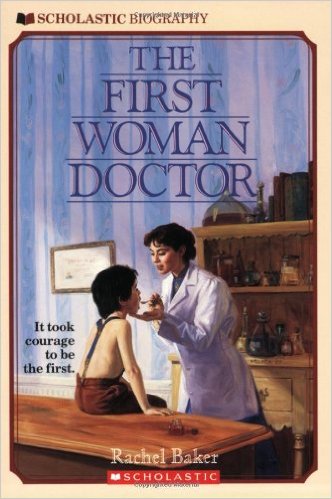
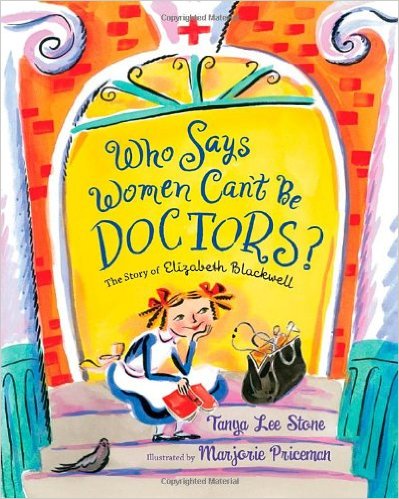
The first woman graduate of a United States medical school was born in Bristol England in 1821. Elizabeth Blackwell came to this country as a child and originally had no interest in medicine. But when a dying friend told her, “I would have been spared suffering if a woman had been my doctor”, she found her calling.

By the most recent statistics published by  the Kaiser Family Foundation, 48% of United States medical school graduates  are women; in some states, over 50% are women. If that trend continues, eventually at least half of all practicing physicians in the United States will be women. Currently about one third are female.

class reunion
My medical school graduating class at our 30th reunion; the original class was larger, 150 students, but the percentage of women was the same as in this photo. (I’m in the pink dress)

(This post contains commission earning affiliate links to help fund this blog)

Dr. Elizabeth Blackwell

The first woman graduate of a United States medical school was born in Bristol England in 1821. (thank you, UK readers). Elizabeth Blackwell came to this country as a child and originally had no interest in medicine. But when a dying friend told her, “I would have been spared suffering if a woman had been my doctor”, she found her calling.

She was denied admission to multiple medical schools. The Geneva Medical College of New York submitted her application to the student body for a vote, and, as a joke, they voted to admit her. Well, the joke was on them as she enrolled, completed medical school and graduated in 1849.

Read more detail about How Elizabeth Blackwell became the first woman doctor in the United States

With her sister, Emily Blackwell , who also  graduated from medical school, and a German physician, Marie Zakrzewska, they opened and ran the New York Infirmary for Women and Children in 1857.

Dr. Emily Blackwell  managed the Infirmary for 40 years. Dr. Marie Zakrzewska moved to Boston when she founded the New England Hospital for Women and Children, which trained  women physicians and cared for the poor.

Due to failing health, Dr. Elizabeth Blackwell retired from practice in the 1870s.

The Physicians Mom Group (PMG) declared Dr. Blackwell’s birthday February 3 as National Women Physicians Day. This day celebrates all the significant contributions that women physicians make daily, none of which would have been possible without Elizabeth Blackwell.

Dr. Blackwell embodied the ABC characteristics of extraordinary women physicians-

Attentive, Brave, Compassionate

Women physician members of CMDA providing medical care in Ecuador

Dr.Rebecca Lee Crumpler

Prior to founding her hospital, Dr.Zakrzewska served as professor at the New England Female Medical College. That school produced another notable women physician, Dr. Rebecca Lee Crumpler.

Dr. Crumpler graduated in 1864, becoming the first African-American woman to earn the M.D. in the United States.  After practicing in Boston, she moved to Virginia where she and other black physicians cared for freed slaves, who otherwise would have had no access to medical care. In 1883 Dr. Crumpler wrote a book of medical advice for women and children, titled Book of Medical Discourses, one of the earliest medical publications by an African American.

Dr. Virginia Apgar

More recently, a woman physician’s work has impacted the lives of countless babies and their families. If you have had a baby, or been born within the past 60 years, you benefited from the work of Virginia Apgar, M.D.

She was neither an obstetrician or a pediatrician, but an anesthesiologist. As she observed deliveries of infants she proposed a scale to rate how well a newborn was adapting to life outside the mother.

crying baby
courtesy Pixabay

She considered 5 factors:

  1. heart rate
  2. respiratory (breathing) rate,
  3. muscle tone,
  4. reflexes, and
  5. color-pink (warm) or blue(cold)

And assigned each a score- 0, 1, or 2, at 1 minute of age, and again at 5 minutes.

So a newborn had a potential score as low as 0 and as high as 10.

The higher the score, referred to as the Apgar score, the more likely the baby was healthy and would do well. The lower the score meant the baby was in trouble, and needed intensive medical attention.

After testing the use of the rating scale over several years, doctors starting using it routinely; so for the past 50-60 years almost all babies have been “graded” with an Apgar score at birth. The Apgar score  is used widely throughout the world.

Dr. Apgar, who played violin and cello in her college orchestra, was appointed the first full professor of medicine at Columbia University and also was a director for the March of Dimes.

The National Library of Medicine profiles

these and many other women physicians at

 Changing the face of Medicine –

celebrating America’s women physicians.

exploring the HEART of women physicians

Dr. Aletha