The doctor will NOT see you NOW

Why doctors run behind-could it be their patients? #WhyIsMyDoctorAlwaysLate

Among the things about medical practice that both patients and physicians dislike, probably the most annoying is tardiness. We have all (and I mean me also) waited much too long in doctors’ waiting rooms and/or exam rooms. Sometimes I don’t mind waiting, at a doctor’s office or anywhere else. It may be the only few minutes of the day I get to sit, relax, read a magazine, or catch up on Words With Friends on my phone. But no one likes having their time wasted.

There are probably as many reasons why doctors run late as there are doctors. Sometimes it’s patient load, practice style, support staff, interruptions, electronic medical records, hospital rounds, emergencies, scheduling pattern.

In this engaging article , Dr. Sanaz Majd describes  a typical family physician’s day- running late of course.

via House Call Doctor : Why Is My Doctor Always Late? :: Quick and Dirty Tips ™.


I once worked with a physician who was habitually late; but his patients didn’t seem to mind, they were loyal, and he always had a full schedule. He took his time and patients knew that when it was their turn, they had his full attention for however long it took.

Ultimately you have to decide how important punctuality is to you and choose your physician accordingly. And if your usually prompt doctor occasionally runs behind, I hope you will be understanding, knowing next time you may be the patient who caused the delay.

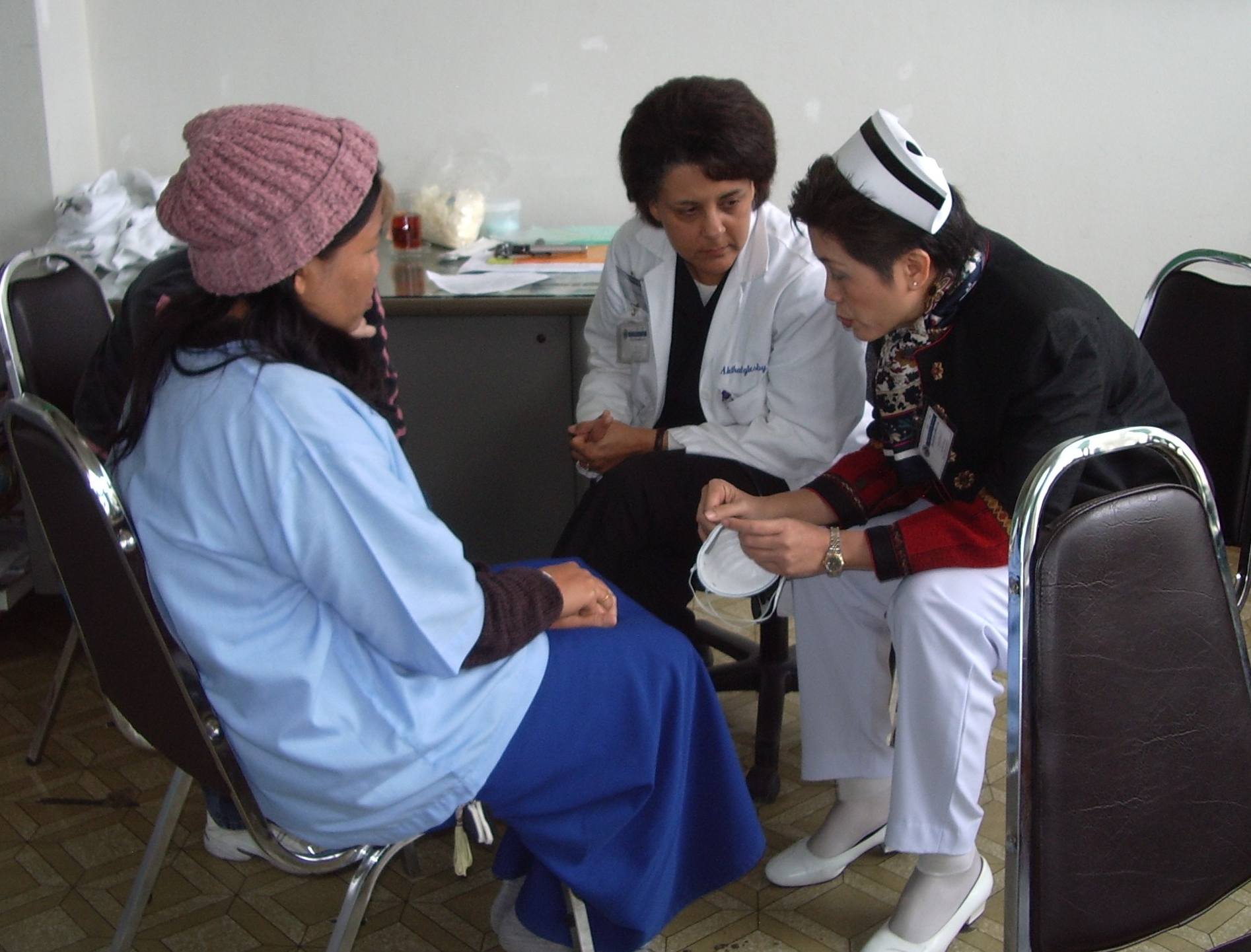
Some of the Vietnamese people who waited to see our medical team who travelled there  as volunteers with Vets with a Mission 

How American medical practice has changed since 1975

Since the late 1970s, the medical profession has transformed considerably, largely due to government interventions and technological advancements. These changes, which were initially predicted by Dr. Jeffrey Singer in 2013, include the integration of technology via electronic medical records (EMR), linkages of compensation to medical coding, and the shift toward 3rd party payors like insurance companies. Furthermore, the profession has seen a surge in nurse practitioners and physician‐​assistants, limiting the role of traditional physicians. However, a small market for cash‐​only, personalized, private care remains resilient amidst these transformations.

updated February 1, 2022

“Since the late 1970s, I have witnessed remarkable technological revolutions in medicine, from CT scans to robot-assisted surgery. But I have also watched as medicine slowly evolved into the domain of technicians, bookkeepers, and clerks.”

Jeffrey Singer, MD, 2013
a female physician talking to a male patient
photo from Prixel Creative at LIGHTSTOCK.COM, affiliate link

How Government Killed the Medical Profession | Cato Institute

Since Dr. Jefferyh Singer wrote this article in 2013, most of the changes he predicted had or were in the process of occurring.

By 2013

  • Medicare imposed price controls based on codes for the diagnosis and the doctor’s service.
  • Private insurers linked compensation to coding and diagnosis, not the service the doctor performed.
  • Change from patients paying for their care to 3rd party payors, usually insurance companies.
  • Health maintenance organizations, HMOs, required in-network care only, restricting patient choice (these largely have gone away)
  • Practicing by evidence based medicine, treatment protocols, and guidelines, sometimes enforced with financial penalties

But some of what he wrote was yet to come-and it did.

  • Trend toward replacement of physicians by nurse practitioners and physician‐​assistants
  • All physicians and hospitals converted to electronic medical records (EMR) by 2014 or faced Medicare reimbursement penalties. 
  • Doctors more often selling their practices to hospitals, thus becoming hospital employees. 
  • Growth of a small but healthy market for cash‐​only, personalized, private care. 
doctor talking to a woman
photo compliments American Academy of Family Physicians

What patients should know

(according to Dr. Singer)

The increased regimentation and regularization of medicine is a prelude to the replacement of physicians by nurse practitioners and physician‐​assistants.

It is true that, in many cases, routine medical problems can be handled cheaply and efficiently by paraprofessionals. But these practitioners are limited by depth of knowledge, understanding, and experience. Patients should be able to decide for themselves if they want to be seen by a doctor. It is increasingly rare that patients are given a choice about such things.

Medicare continues to demand that specific coded services be redefined and subdivided into ever‐​increasing levels of complexity. Harsh penalties are imposed on providers who accidentally use the wrong level code to bill for a service. Sometimes the penalty can even include prison.

A small but healthy market exists for cash‐​only, personalized, private care. For those who can afford it, there will always be competitive, market‐​driven clinics, hospitals, surgicenters, and other arrangements—including “medical tourism,” whereby health care packages are offered at competitive rates in overseas medical centers. Similar healthy markets already exist in areas such as Lasik eye surgery and cosmetic procedures. The medical profession will survive and even thrive in these small private niches.

In 2011, The New England Journal of Medicine reported that fully 50 percent of the nation’s doctors had become employees—either of hospitals, corporations, insurance companies, or the government. Just six years earlier, in 2005, more than two‐​thirds of doctors were in private practice. As economic pressures on the sustainability of private clinical practice continued to mount, this trend continued and grew

exploring the HEART of physicians practicing medicine

I am more optimistic than Dr. Singer. I see doctors of my generation still actively practicing, many still in their own practices. And I see the younger generation of physicians entering practice with new skills, tech savvy, influencers, and just as dedicated to taking care of patients as we were 40 years ago.

I’d love for you to follow this blog. I share information and inspiration to help you turn health challenges into health opportunities.

Add your name to the subscribe box to be notified of new posts by email. Click the link to read the post and browse other content. It’s that simple. No spam.

I enjoy seeing who is new to Watercress Words. When you subscribe, I will visit your blog or website. Thanks and see you next time.

images from Lightstock.com, affiliate link

Dr. Aletha

The surprising new doctors caring for you

Who will be your next doctor? What will your future doctor look like?

Your doctor within the next 10-20 years is likely in medical school or a residency program in a United States medical center right now. Within 1-10 years, they will join the ranks of practicing physicians, while some currently in practice will change…

Keep reading