Beth Moore is “broken free”-a book review

Beth Moore, a Southern writer, teacher, and ministry leader, shares her journey in “All My Knotted-Up Life.” From her roots in the South to her ministry’s growth and the challenges she faced, including confronting sexual abuse and leaving her Southern Baptist church, Moore’s memoir offers insight and inspiration for those wrestling with their own struggles.

 ALL MY KNOTTED-UP LIFE

A MEMOIR

By Beth Moore


I had never heard of Beth Moore when I signed up for one of her Bible studies at my church.  In these studies, written specifically for women, there is a workbook that participants use to read and study the Bible at home, answer questions, and then take part in a group session where we watch her teach the lesson on video.

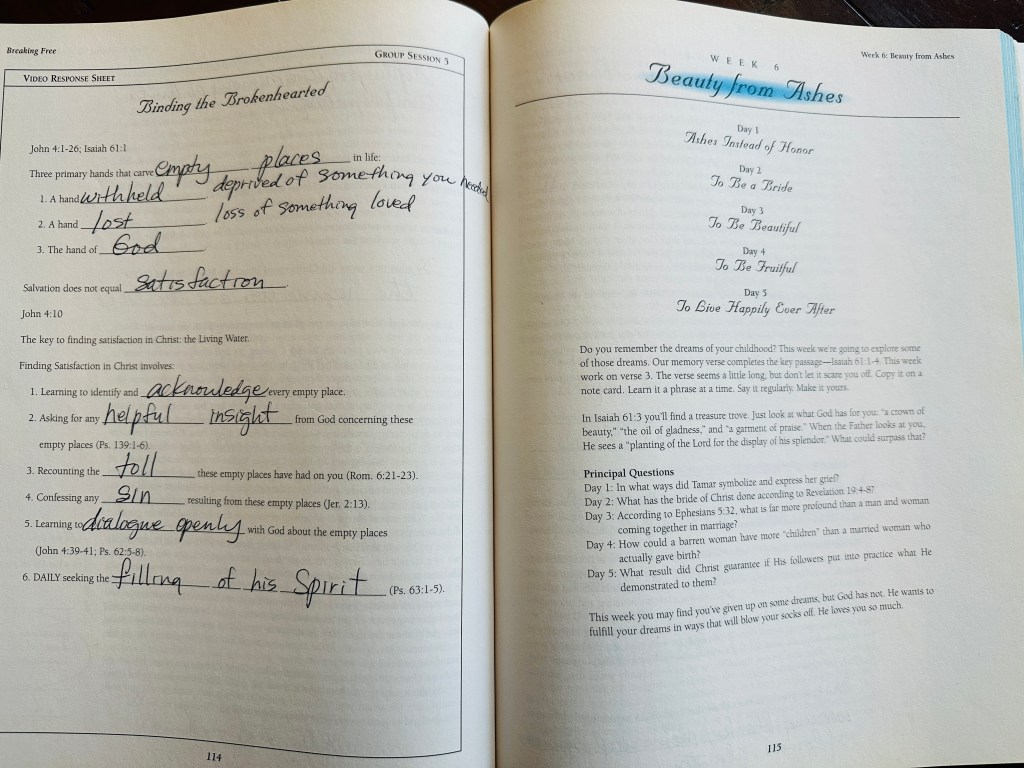
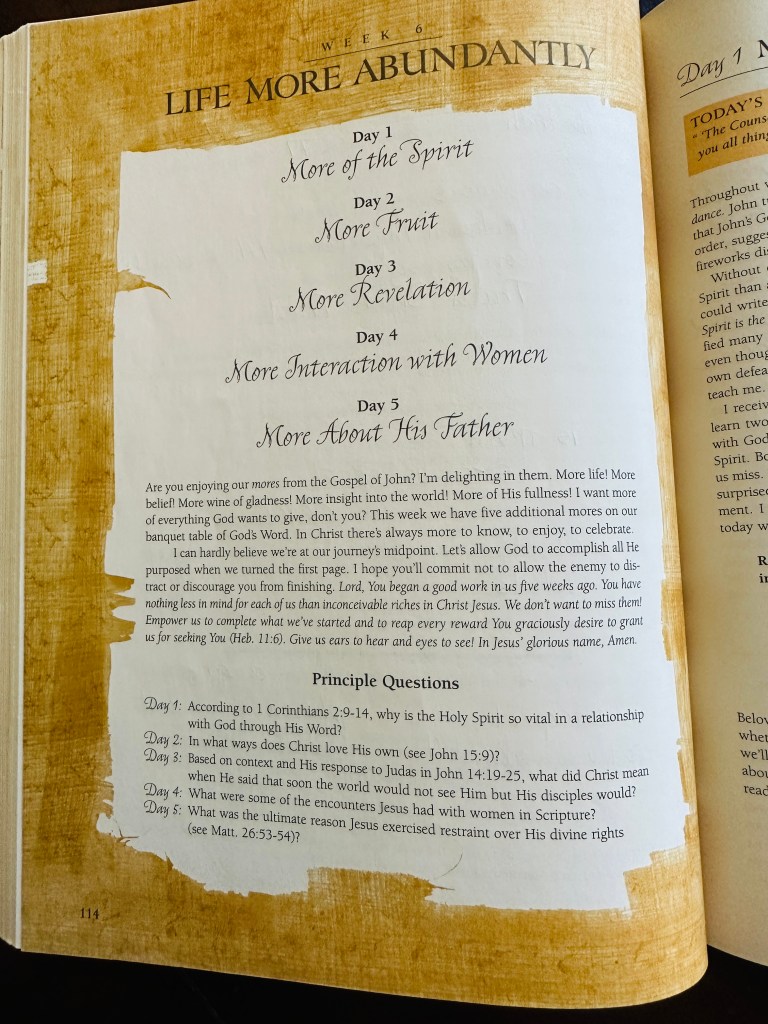
pages from my Breaking Free workbook-video response sheet from Binding the Brokenhearted and first page of week 6, Beauty from Ashes

This Bible study, Breaking Free-Making Liberty in Christ a Reality in Life, was drawn from Isaiah and other Old Testament books. This is not an easy section of the Bible to understand. But what I found even more puzzling was the mention of what she called “my victimization”, with no detail other than

scars from being a childhood victim of someone else’s problems

Foreword from Breaking Free

After a few more of Moore’s studies, my women’s group moved on to other Bible teachers and I didn’t hear much more about her until a few years ago when she was in the news for her social media posts about politics and her denomination. 

Recently I learned that she had released a memoir and read a brief review.  I wanted to know more about her, so I read it and review it here.   Whether or not you like Beth Moore or even know who she is you will learn something from this review about her and maybe about yourself.

Note: The photos in this post are for illustration only, and are not in the book nor affiliated with the author.

Beth, the Southerner

Beth Moore is a Southerner, born and raised in Arkadelphia, Arkansas, and Houston, Texas area where she still lives. Even without knowing that, I would know she’s southern by the way she talks, and she writes the way she talks. (And it helps that my home state borders both of those.)

Even without her Southern vernacular, she has a unique way with words when she speaks and writes that you might find off-putting but is part of her appeal, making her down-to-earth and relatable.

The first chapters are about her family of origin- “river people”, the Greens- her parents Aletha and Albert, Nanny, her maternal grandmother who always lived with them, and two brothers and two sisters, with Beth being next to the youngest. (No, I did not know that her mother’s name was Aletha and yes, I was surprised.)

We get a glimpse into Beth’s victimization. No, we don’t get an anatomically correct detailed description of what happened but like I said, Beth has a way with words, so we certainly get the gist of what happened.

“Somewhere stuffed deep inside a drawer of my mind, I’d always known. A child doesn’t pull chunks of her hair and chunks of her memory out of her head over nothing.”

Beth called to “vocational ministry”

She continues to narrate her life as a teenager in Houston, finishing high school, and going away to college where she met and married “her man” Keith Moore, who had his own painful family history. They had two daughters, attended church, and tried to unpack their joint baggage.

“Each heart knows its own bitterness.”

Proverbs 14:10, NIV

As a teenager, Beth had felt a definite call to “vocational ministry” but was unsure what form that would take.  But the other women at her church heard from God for her and begged her to start a ministry for them. Thus, Beth Moore’s first ministry position was teaching aerobics- yes, aerobics with a Christian flare.

For better and for worse, imagination happens to be one of my strong suits. With a baby on a blanket beside me kicking her little legs to the beat, I started choreographing aerobic exercises to Christian contemporary music. We announced a kickoff in the church bulletin and on posters in the halls and women’s restrooms.

Image by Andrzej Rembowski from Pixabay

Her introduction to teaching Bible lessons came when she was asked to substitute for a Sunday school teacher on maternity leave. She had taught children in Sunday school but never adults. She used a five-message repertoire to speak at women’s events but preparing a new lesson every Sunday was new for her and didn’t go well.

The end of the year couldn’t come quickly enough. I resolved never to darken the door of another Sunday school class in a teaching capacity.

Which didn’t happen. A few years later as she sat in a Bible doctrine class “God struck a match against a stone and lit a torch in my heart for the Scriptures that has never been quenched.”

That class and three mentors who “remain unrivaled in influence” in her life, birthed her teaching ministry which she named Living Proof.

Beth and the Southern Baptists

In the next chapters we follow Beth as she builds her ministry of writing and teaching Bible studies at her church, First Baptist of Houston, partnering with Lifeway Christian Resources ( the publishing arm of the Southern Baptist Convention) to publish her studies and create a traveling speaking ministry called Living Proof Live. Her meetings outgrew churches and moved into arenas of thousands.

But no amount of training could have prepared us for what was ahead. The Bible studies were picking up momentum and we’d just published Breaking Free, the series I’d written after emerging from the abyss where I’d faced down my past.

But as she puts it, “with visibility came scrutiny.”

Beth admits she is self-taught as far as the Bible is concerned. Despite no seminary training, her in-depth Bible studies are not light reading or study. She references authoritative theological commentaries and quotes the original Hebrew and Greek scriptures.

Nevertheless, she was scrutinized by men who questioned how someone without a college degree in theology could teach the Bible. Her Southern Baptist denomination disapproved of women ministers, expecting women to always be in submission not only to their husbands but to all men in the church. They scrutinized her marriage since her husband attended but was not involved in church. Not only was she scrutinized-she was criticized, ostracized, marginalized, and ridiculed publicly.

The situation took a dramatic turn in 2016 when she returned home from a speaking engagement and read news reports of the released recordings of a presidential candidate revealing sexual misconduct. She was shocked and angered to read evangelical leaders minimizing, excusing, and defending his behavior.

She could not believe they took sexual harassment and assault so lightly or just ignored it. As a victim herself, she was not willing to keep silent. So, after praying, she posted a series of Tweets.

Wake up Sleepers to what women have dealt with all along in environments of gross entitlement and power. Are we sickened? Yes. Surprised? NO.

I’m one among many women sexually abused, misused, stared down, heckled, talked naughty to. Like we liked it. We didn’t. We’re tired of it.

And the response? Many in the Christian community attacked HER, asked her to retract, and even apologize for her position. But she stood her ground as she watched her Bible studies pulled out of churches, burned, and women throwing their workbooks away.

“I’d known my comments would cause a backlash, but I couldn’t wrap my mind around the enormity.”

Next was the scandal in the Southern Baptist denomination over rampant sexual abuse in churches that had been ignored, mishandled, excused, and covered up. And there was more institutional angst over women ministering in the church.

It was the final blow-Beth and Keith Moore left their Southern Baptist church.

Photo by Onur Uslu on Pexels.com

Family, fishing, and faith

Throughout this professional turmoil, the Moores had a mountain of personal issues to deal with-deaths, serious illness, extended family drama, and wrestling with the past. What kept them grounded was family- their two married daughters and three grandchildren- their beloved dogs, Keith’s fishing- and faith.

The voice of Christ on the God-breathed page would become distinct enough to hear over the others.

She ends with a happily ever after story of finding a different denomination church that welcomed them warmly. She tells us the charming story of their new “home in the woods”, complete with a photo.

I’m glad Beth Moore broke free and writes and speaks so others can. She provides a voice for women, for abuse victims, for dysfunctional families, for anyone whose life is knotted-up.

Maybe you need to break free of something too. Whether you do or not, read this and her other books. You may find release from your knots too.

Come to me, all of you who are weary and burdened, and I will give you rest.” Matthew 11:28

Beth Moore’s studies and books

Beth Moore’s books and studies are sold by many major booksellers, including Lifeway and Tyndale.

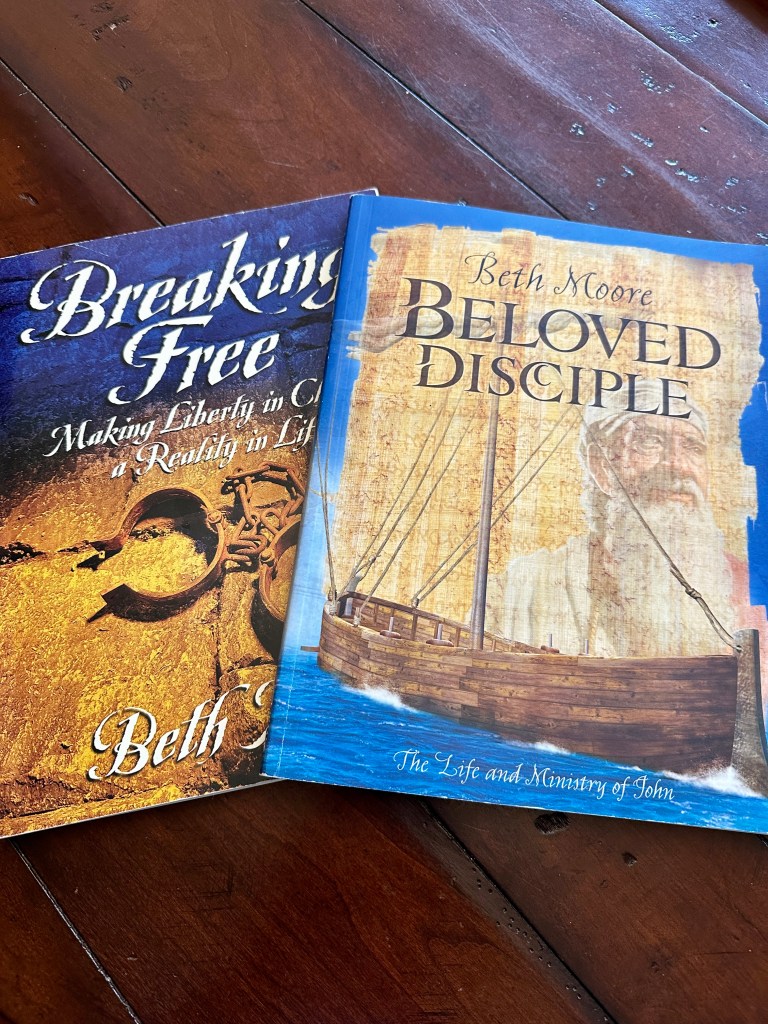
Those of you who have done the Breaking Free study, won’t be surprised she calls it the study “closest to my life’s message. I didn’t break free from the bondage of my past. I was broken free.”

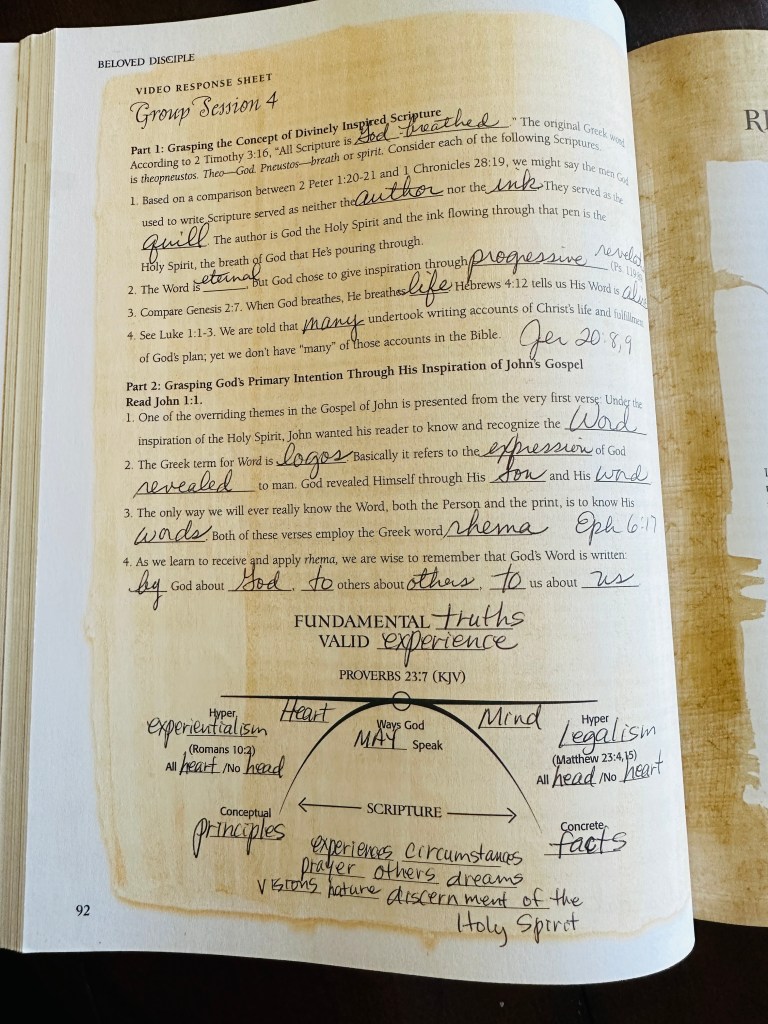
I also did the study about the Apostle John, Beloved Disciple.

And I read her novel, The Undoing of Saint Silvanus

exploring the HEART of health

If you are or have been exposed to abuse, neglect, violence, or any type of trauma that has affected you adversely, please do not suffer alone. Talk to a trusted professional-physician, counselor, therapist, or clergy -and start the road to recovery today.

Call 1-800-799-SAFE (7933) OR text START to 88788

I’d love for you to follow this blog. I share information and inspiration to help you transform challenges into opportunities for learning and growth.

Add your name to the subscribe box to be notified of new posts by email. Click the link to read the post and browse other content. It’s that simple. No spam.

I enjoy seeing who is new to Watercress Words. When you subscribe, I will visit your blog or website. Thanks and see you next time.

Medical stethoscope and heart on a textured background

Dr Aletha

Understanding Postpartum Depression: A Personal Journey

A true story about Natalie and her challenging journey into motherhood, highlighting her battle with postpartum depression after an emergency cesarean delivery. Initially, she felt disconnected from her baby, failing to bond as expected. With time, support, and medication, Natalie learned to cherish motherhood, emphasizing the importance of acknowledging and addressing mental health struggles during this transition.

updated March 16, 2025

Most people expect parenthood to be the most exciting and fulfilling experience of their lives. Even though they realize (or soon find out) that babies bring challenges, they expect to overcome those and raise a happy, healthy family.

But for some unfortunate couples, difficulties arise early on, before they have had time to savor even a moment of joy. My friend Natalie has graciously agreed to share the story of how her introduction to motherhood was far from what she expected, an experience shared by too many women. She calls her account

A Mother’s Sorrow: Battling Postpartum Depression

(I have interspersed questions and answers about childbirth and depression throughout her story, to add context. You’ll recognize these by the ? marks. )
Natalie writes.

From the moment a woman sees those two thin blue stripes on a pregnancy test, her world is turned upside down. There’s joy and panic rushing through her mind as she struggles to come to terms with what’s happening.

Photo by C Technical on Pexels.com

When the time is right, she calls and texts her friends and family and there’s congratulations all around. Some offer advice and make tongue-in-cheek jokes about parenthood, but in the end assure her mostly joy awaits .

Appointments come and go as she gradually gets to know the life growing inside, kicking and dancing to the sound of her voice. The nursery comes together, and she and her spouse feel the deepest excitement for the approaching arrival of their little girl, Emma.

ultrasound image of a 4 month old fetus
a prenatal ultrasonographic image of fetus at the four-month point in its gestation; public domain image used courtesy of the CDC/ Jim Gathany

This was the beginning of my journey into motherhood and the foundation of the most excruciating part of my existence to date.

at the hospital for labor …

I woke up one December morning feeling my water break as I stood up from bed. Within the hour my husband came home from work to take me to the hospital where I underwent an uneventful labor up until the last few hours.

Then the nurses realized Emma’s heart rate was dropping with each contraction. They did everything they could to speed things up without putting further stress on her, but when they asked me if I would consent to an emergency cesarean operation I didn’t hesitate. I wanted them to save her, no matter what.

What is a cesarean birth?

Cesarean delivery, also called c-section, is surgery to deliver a baby. The baby is taken out through the mother’s abdomen. Most cesarean births result in healthy babies and mothers. But c-section is major surgery and carries risks. Healing also takes longer than with vaginal birth.

Most healthy pregnant women with no risk factors for problems during labor or delivery have their babies vaginally. Still, the cesarean birth rate in the United States has risen greatly in recent decades. Today, nearly 1 in 3 women have babies by c-section in this country. The rate was 1 in 5 in 1995.

and delivery

Further numbing agents were administered and I felt the immediate fatigue from the anesthetics, but I was still conscious during the operation. From the moment the blue curtain was draped over my chest, I felt like half of my body was in a separate room. I couldn’t feel or see anything other than a constant tugging.

It was early evening two days later when my doctor announced her birth, offering a brief glimpse of her before they whisked her off to the nursery.  

My husband was still with me at that point and I remember vividly asking him and everyone around me how much she weighed and what color her eyes were. Nobody would answer me. Eventually a nurse asked my husband to follow her and I was left alone with the nurses who still wouldn’t answer my questions. To this day, my husband denies I said word, but I did mumble. Evidently the anesthetic kept me from communicating.

meeting my baby-but no “magic”

Back in the recovery room they formally introduced me to my little girl, but the drugs were still in my system, so I needed help holding her. And this is where my struggle began. For the longest time, my doctor believed it to just be a case of the baby blues, but I knew at that moment…what was meant to be a magical moment…that something was amiss.

The little girl in my arms was beautiful, listened to my voice, had my eyes, but somehow felt like an uninvited guest to me. After 36 hours of labor, I expected there to be more pomp and circumstance behind our special meeting. That’s how my own mother and all my friends had described it. I knew nothing of what was going on in my head, but I was deeply repulsed by my lack of affection towards her.

Mothers-to-be often spend so much time in anticipation of labor, they don’t think about or even know what to expect during the first hours after delivery.

womenshealth.gov
“failing at being a mother”

During the next few weeks things worsened for me. The sleepless nights and chaos of welcoming a newborn into our home took its toll on my emotional state. The stress combined with the surgical delivery made it difficult for me to produce enough milk to breastfeed – something I had set my heart on months before.

Delivering around the holidays complicated getting assistance from lactation consultants who were on leave. I felt my world was crumbling around me and each day I was failing more and more at being a mother.

I addressed this at each follow up appointment with my doctor, who decided to monitor things further before introducing me to the chemical-altering world of antidepressant medication. I was told it could be a severe case of the baby blues, which could take up to a couple of months to pass.

Natalie with her newborn baby; did anyone else suspect her struggle?

What are baby blues?

Many new mothers feel blue after giving birth, feeling sad, weepy, and overwhelmed for a few days. Changing hormones, anxiety about caring for the baby, and sleep loss all can affect emotions.

Doctors consider these feelings normal and expect them to disappear in a couple of weeks. If they persist longer than two weeks, or suddenly become more severe, the new mom should see her doctor for evaluation. It may be something more serious, as it turned out to be for Natalie.

“I can’t”

I lost my appetite. My parents came over to offer words of wisdom and comfort and allowed me to spend the night to get rest several times, but I would still cry through our talks and cry myself to sleep at their house. Each time I heard someone say, “it gets better” or “you’ll develop a bond with her”, I felt empty, numb, and hopeless.

I felt a grief that I can’t fully describe. I felt an agonizing sorrow in the pit of my stomach as though I had lost a loved one. I would try to feed Emma only to end up frustrated, so my husband would take her and tell me to rest. It was in these moments that I would cry uncontrollably, for hours and hours with voices in my head constantly telling me “I can’t”.

the crisis-contemplating suicide

It was these feelings of uselessness which drove me to call my doctor telling her I contemplated suicide. I had already told my husband to hide my gun and assured all my loved ones that I never considered harming anyone other than myself.

My doctor finally agreed that this was not the baby blues and had me come in the next day for an evaluation, where I overwhelmingly passed the indicators for PPD- postpartum depression.

What is postpartum depression?

In postpartum depression, a mother feels such intense feelings of sadness, anxiety, and despair that she has difficulty taking care of herself and her infant. It usually starts within three weeks of delivery but can be anytime up to a year after delivery.

Multiple factors contribute to the development of postpartum depression including a prior history of depression, hormone changes, fatigue due to lack of sleep or a caesarean delivery, and stress such as an infant with medical problems, financial difficulties, lack of family support, marital discord, or recent family death.

receiving a medication- and hope

I received a prescription for escitalopram, the fastest acting antidepressant on the market, and was told to come in every two weeks until I had reached the target dosage for treatment. Within the first 72 hours of treatment my family noticed a difference in my behavior.

It was the first time in months they’d seen me smile and laugh. I finally felt a glimmer of hope as I was able to feed and change Emma without breaking down in tears. A month went by and life became enjoyable for the first time since my baby’s birth.

What are antidepressants?

Escitalopram is one of several medications called SSRIs, selective serotonin reuptake inhibitors, that are effective for all kinds of depression. They work by increasing the levels of the hormone serotonin in the brain, which regulate mood. After starting an antidepressant, a woman should feel better within 3-4 weeks.

a setback quickly resolved

Then the four-month sleep regression came. After weeks of Emma sleeping in her own crib through the night, she suddenly began screaming for hours on end and I felt that familiar sense of darkness creep back into my life. Yet again, I had to rely on my husband’s resolve to make it through the night.

Again, I felt incapable and less than what they both deserved. Knowing that I was already getting assistance from my new medication, this seemed to hit me even harder than before. I felt as though I would never get the help I needed to keep my mind focused on the positive.

I thank God I had the self-awareness to contact my doctor immediately, who prescribed twice the dosage within 12 hours of me sending the email. Though the sleep regression was difficult, the stronger medication allowed me to act as the mother I was meant to be.

I no longer had to sit idly by and watch my husband rock her to sleep and feed her most of the time. I developed confidence in myself and began to kindle a bond to my daughter for the first time.

a young woman feeding a baby
Natalie feeding Emma
relishing the joy of motherhood

As she cried in the dark at 3 am one morning, I could see the world through her eyes. She simply wanted warmth and love – something I was unable to provide those first four months. I could have fallen into yet another bout of despair over how I neglected her but instead I simply lived in the moment and held her close.

Feeling her tiny hand caress my cheek as she drifted back to sleep and listening to her breath whispering from between her pursed lips, I made myself comfortable and sat there for hours taking in her scent and relishing my ability to enjoy our time together when I would rather be in bed.

healing painful memories

Months have passed and Emma is now approaching her first birthday. I’ve delayed finishing this story since I’ve wished to put this all behind me, having no desire to relive those memories. That I’m now able to finish what I started is a sign of healing.

The memories of my so-called “failures” are what I now hold dear as my greatest triumphs. I can overcome the stigmas of being unable to breastfeed and unwilling to care for my own child in her first few weeks of infancy.

rejecting the stigma of post partum depression

While society’s norms lead us to believe this is unacceptable with no exceptions, I pray that this story makes its way to a few young women who desperately need to know that it is more than okay to feel these emotions after bringing a life into the world.

Doctors and therapists could go on for hours drowning you in information as to what goes on both physically and chemically postpartum, and they would all agree with me that it is completely acceptable to experience these stigmas I mentioned.

a young woman holding a small child on a beach
Enjoying happy times on a beach outing.
Natalie’s advice to new moms

Know that just because you were taught from a young age that an infant needs love and attention from her mother does not mean that mother is not allowed to adjust, to rest, and to mourn her old life.

Know that it is your very right to feel these emotions plowing through your head, just as it is your right to expect support from those around you to b e the amazing mother you already are.

Know that your baby will hold nothing against you and that nature has a majestic way of developing a bond between mother and child, no matter the obstacles.

Know that you are not alone, and that help is everywhere.

a new treatment option

As of January 1, 2025, intravenous brexanolone was discontinued and is no longer commercially available.

Zuranolone is the only medication approved by the FDA for treatment of postpartum depression.

resources for help

ACOG, the American College of Obstetricians and Gynecologists offers this information about

Postpartum Depression

The Office on Women’s Health from the U.S. Department of Health and Human Services published this resource on

Common Breastfeeding Challenges

Postpartum Support International

Postpartum Support International (PSI) is the world’s leading non-profit organization dedicated to helping women suffering from perinatal mood and anxiety disorders, including postpartum depression, the most common complication of childbirth. PSI was founded in 1987 to increase awareness among public and professional communities about the emotional difficulties that women can experience during and after pregnancy. The organization offers support, reliable information, best practice training, and volunteer coordinators in all 50 U.S. states and more than 30 other countries around the world. Working together with its volunteers, caring professionals, researchers, legislators and others, PSI is committed to eliminating stigma and ensuring that compassionate and quality care is available to all families. To learn more about PSI, call 800-944-4PPD or visit www.postpartum.net.

(listed for your information only, does not imply affiliation or endorsement by this blogger)

exploring the HEART of reproductive health

Thank you for reading Natalie’s story. We belong to a national women’s service organization which sponsors a yearly essay contest; Natalie entered this story in the health category. You won’t be surprised to learn it won on the state, regional, and national level. She read her essay during the national convention in 2020, done virtually due to the pandemic.

I’d love for you to follow this blog. I share information and inspiration to help you transform challenges into opportunities for learning and growth.

Add your name to the subscribe box to be notified of new posts by email. Click the link to read the post and browse other content. It’s that simple. No spam.

I enjoy seeing who is new to Watercress Words. When you subscribe, I will visit your blog or website. Thanks and see you next time.

Dr. Aletha
some previous posts to review

Books about having babies

  Taking Charge of your Fertility The Definitive Guide to Natural Birth Control, Pregnancy Achievement, and Reproductive Health by Toni Weschler   This new edition for the twentieth anniversary of the groundbreaking national bestseller provides all the information you need to monitor your menstrual cycle–along with updated information on the latest reproductive technologies. Are you…