October Celebration and Commemoration

October encompasses significant events such as Columbus Day and Indigenous Peoples’ Day, acknowledging both Christopher Columbus’ exploration and the legacy of Native Americans. Other key occurrences include the Great Chicago Fire in 1871, a mass shooting in Squirrel Hill, Pennsylvania in 2018, and Halloween. The month invites a mix of celebration, commemoration, and history recognition.

updated October 7, 2025

October is a fun month, not too demanding. It’s the first full month of spring/fall, depending on where you live, and the month before the annual Thanksgiving/Christmas holiday season starts.

I’m sharing some October topics with you in this post.

The Halloween Season

Pumpkins are everywhere . Halloween and fall decor and displays get bigger and more outlandish every year. And almost every food or drink has a variation flavored with pumpkin.

a bunch of pumpkins

Football and other Sports

And football season is in full swing. Whether kids, high school, college, or pro, fans are in the stadiums or in front of televisions cheering their favorite team. Some folks just show up for the food as tailgating has become a sport in itself

Whether you like football or not, this is good advice.

Columbus Day, October 13

The United States has one federal holiday this month, Columbus Day, the second Monday of October. This day commemorates October 12, 1492, the day Christopher Columbus, an Italian explorer, reached the Americas. (Although he never landed in what is now the United States.)

Christopher Columbus was an Italian explorer and navigator. In 1492, he sailed across the Atlantic Ocean from Spain in the Santa Maria, with the Pinta and the Niña ships alongside, hoping to find a new route to India.

Between 1492 and 1504, he made a total of four voyages to the Caribbean and South America and has been credited – and blamed – for opening up the Americas to European colonization.” from Biography.com

Indigenous Peoples’ Day-October 14

Before Columbus and other Europeans arrived in the Americas, indigenous people already lived in North America. I’m not going to recount the long history of their interactions, but by presidential proclamation, we now commemorate them on the second Monday in October-Indigenous Peoples Day.

 NOW, THEREFORE, I, JOSEPH R. BIDEN JR., President of the United States of America, do hereby proclaim October 10, 2022, as Indigenous Peoples’ Day.  I call upon the people of the United States to observe this day with appropriate ceremonies and activities.  I also direct that the flag of the United States be displayed on all public buildings on the appointed day in honor of our diverse history and the Indigenous peoples who contribute to shaping this Nation. 

I wrote about Native Americans in this post about watercress and in another about my trip to New Mexico.

The Rich History of Watercress in Native American Culture

In 1889, the Locvpokv Muscogee Creeks established the village of Talasi near the Arkansas River, later called Tulsa. The Council Oak remains a cultural landmark, where Native Americans hold ceremonies. This article explores watercress and its culinary uses, highlighting its significance to local indigenous communities and the environment.

Keep reading

The Art and Science of New Mexico

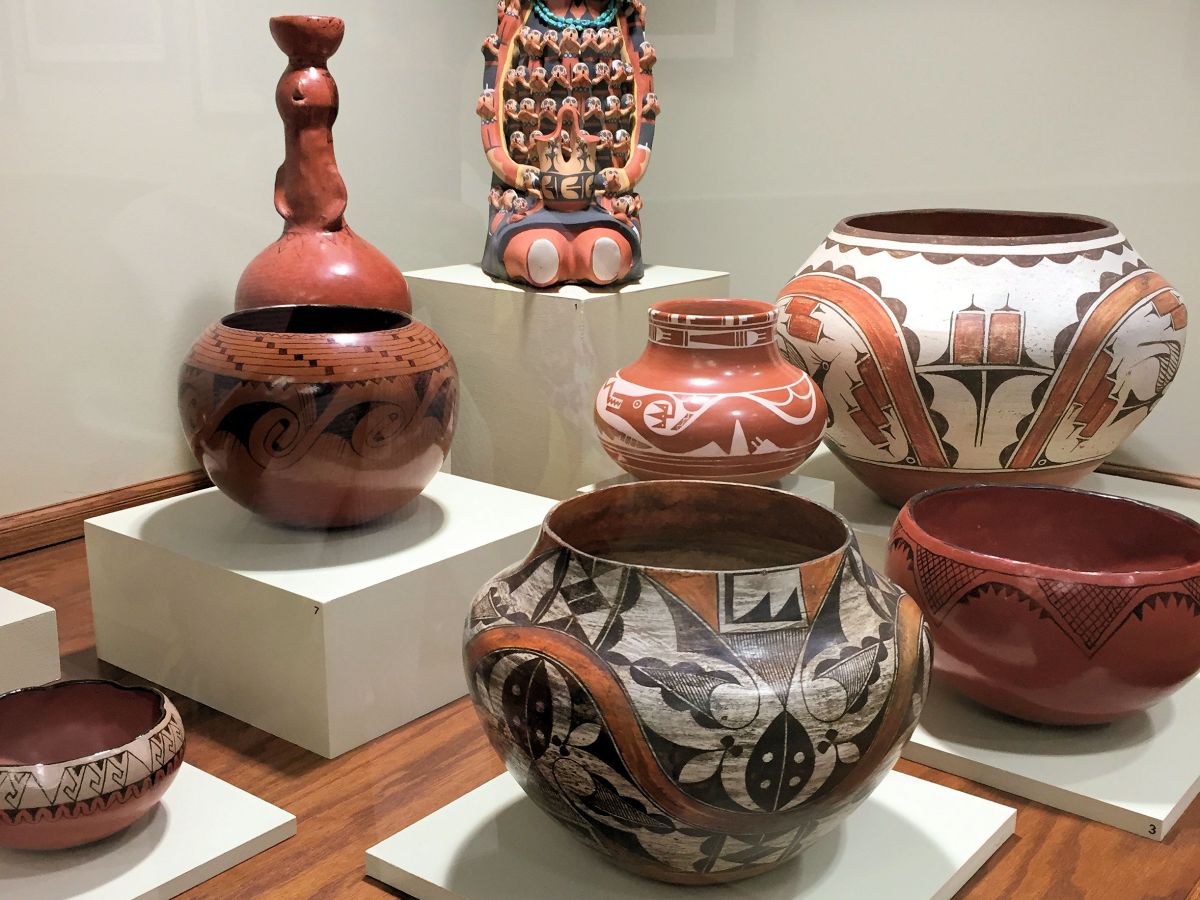
Taos is an art mecca both within the town and at the Taos Pueblo, which is also a must see for those interested in  Native American history and culture. At the pueblo, tribe members display and sell handmade arts and crafts.

Keep reading

The Great Chicago Fire

On the night of October 8, 1871, fire spread across Chicago, Illinois. While the cause of the blaze is unknown, its origin was at what today is home to a Chicago Fire Department training facility.

An estimated 300 people died and 100,000 were left homeless by the three-day inferno that erased 2,100 acres of the city. The center of Chicago and the heart of the business district were wiped out. Yet, just 20 years after the fire, the city’s population had grown from 300,000 to 1 million people. from architecture.org

Today Chicago is the third largest city in the United States. (2022 stats) See my photos of Chicago in this post.

Tuesday Travels- Chicago Illinois

Chicago, now the third largest United States city, was once destroyed by a fire of uncertain origin. It hosts an annual St. Patrick’s Day parade and offers tourists multiple attractions and experiences.

Keep reading

Squirrel Hill Pennsylvania-October 27

We will never get used to hearing and reading about mass shootings but some are particularly heinous, those that happen in a school, healthcare facility, or house of worship. That happened on October 27, 2018, with which I had an unexpected connection. I wrote about it here.

Halloween-October 31

Whether you like it or not, October is known for Halloween. While some reject it as pagan or evil, others find a way to make it fun and enjoyable without dark overtones.

Halloween, contraction of All Hallows’ Eve, a holiday observed on October 31, the evening before All Saints’ (or All Hallows’) Day. The celebration marks the day before the Western Christian feast of All Saints and initiates the season of Allhallowtide, which lasts three days and concludes with All Souls’ Day.

from brittanica.com

We helped at our church’s carnival dressed as a country duet, the rhinestone cowboy.

exploring the HEART of health

Whatever ways you choose to observe the “holidays” of October, have fun, stay safe, respect others, and please follow and share Watercress Words.

I’d love for you to follow this blog. I share information and inspiration to help you transform challenges into opportunities for learning and growth.

Add your name to the subscribe box to be notified of new posts by email. Click the link to read the post and browse other content. It’s that simple. No spam.

I enjoy seeing who is new to Watercress Words. When you subscribe, I will visit your blog or website. Thanks and see you next time.

a world globe with two crossed bandaids

Doctor Aletha

featured affiliate link –Steve Spangler Science
SAVE 20% OFF New Science Kits Using Code: NEWKITSSAVE20 At SteveSpanglerScience.com! Great Educational Products For Kids! SHOP NOW!

Learning Humility-a book review

Richard J. Foster, known for his spiritual writings, delves into humility in a timely book. Exploring the Native American connection and Lakota virtues, he offers insights on humility as a transformative virtue. Celebrating the legacy of Dr. Charles Eastman, Foster’s intimate and introspective approach makes “Learning Humility” a compelling read grounded in scripture.

updated January 24, 2024

Learning Humility

A Year of Searching for a Vanishing Virtue

By Richard J. Foster

If anyone can make a book about humility interesting, Richard Foster does. You may already know his work on spiritual disciplines, prayer, spiritual formation, and classical Christian writings, so you will find his latest offering similar but with an unexpected twist. Anyone can appreciate his lack of self-promotion a refreshing change from other “influencers”.

You could argue that devoting an entire book to humility is a step down from his previous spiritual works- even humbling you might say. But the topic and title are timely and telling, as we now see little humility in the public arena, both in secular and religious thought and behavior.

Why humility?

Foster’s essay-style book examins humility, why we should be humble, and how to be humble, without telling us to be humble. Rather, humility cannot be forced or acquired, it requires a transformation of our heart and mind.

Foster decided to explore the topic of humility as he considered New Year’s resolutions, which he doesn’t typically do. He considered journaling about it, but he doesn’t do that either.

Instead, he decided to study what the Bible and classical and modern Christian writers teach about humility and ponder its meaning as he went about his daily life at the rural Colorado home he shares with his wife.

Celebrating Lakota virtues

There is a photo of him on the jacket of my copy of his book Celebration of Discipline. He is wearing a suit and tie, with short, neatly trimmed hair.

So, I was surprised when I had a chance to hear him speak in person; he had long hair, pulled back into a ponytail. He explained it was in deference to his Native American ancestry. Foster’s grandmother was Native American, of the Ojibwa (Chippewa) tribe.

He decided to follow the calendar year, recording observations and musings for each month. However, because it is “rooted in the natural world” he chose to use a Native American calendar, specifically the Lakota Moon calendar.

He named each chapter for one of the thirteen Lakota moons (13 months of 28 days). He also incorporates the twelve Lakota virtues- humility, perseverance, respect, honor, love, sacrifice, truth, compassion, bravery, fortitude, generosity, and wisdom giving thought to how each complements humility.

Dr. Charles Eastman

I found an unexpected medical connection in this book on humility. Keeping with his Native American theme, Foster introduced us to Charles Eastman, M.D., the first Native American to graduate from medical school in the United States

Dr. Eastman, who started life as Ohiyesa, born in 1858, belonged to the Santee Lakota tribe. Dr. Eastman was raised in the traditional Dakota way by his maternal grandparents, believing his father was dead.

But as a teenager, his father found him and took him home to live as a white man. He attended white schools, eventually graduating from Dartmouth College and Boston University Medical School.

Dr. Eastman worked at the Pine Ridge Reservation Indian clinic and soon found himself caring for survivors of the massacre at Wounded Knee in 1890. He later worked at the Crow Creek Reservation, ran his own private practice, served as an adviser to the Boy Scouts, founded children’s summer camps, and served in national government positions.

He was most successful at writing and speaking. He published thirteen books, including The Soul of the Indian in which he reconciled the Christian faith he had adopted with traditional Lakota spirituality. Foster comments on this position in his book.

Richard J. Foster

Richard J. Foster (DThP, Fuller Theological Seminary) founded Renovaré

He has written several other books, including Streams of Living WaterPrayerFreedom of SimplicitySanctuary of the Soul, and Celebration of Discipline, which sold over two million copies worldwide. He and his wife, Carolynn, make their home near Denver, Colorado.

Those who have read Foster’s other books, especially Celebration of Discipline, will find Learning Humility more intimate and introspective, yet still firmly grounded in scripture. If this is a first for you, consider reading the others for practical guidance on the spiritual practices of prayer, meditation, service, and study. I include affiliate links to them here.

Thank you NetGalley and InterVarsity Press for sending this book for review consideration. All opinions are my own.

Professional Reader 25 Book Reviews

Learning Humility is available on

Exploring the HEART of Health

I’d love for you to follow this blog. I share information and inspiration to help you transform challenges into opportunities for learning and growth.

Add your name to the subscribe box to be notified of new posts by email. Click the link to read the post and browse other content. It’s that simple. No spam.

I enjoy seeing who is new to Watercress Words. When you subscribe, I will visit your blog or website. Thanks and see you next time.

Dr. Aletha

And please continue exploring Watercress Words at these pages-