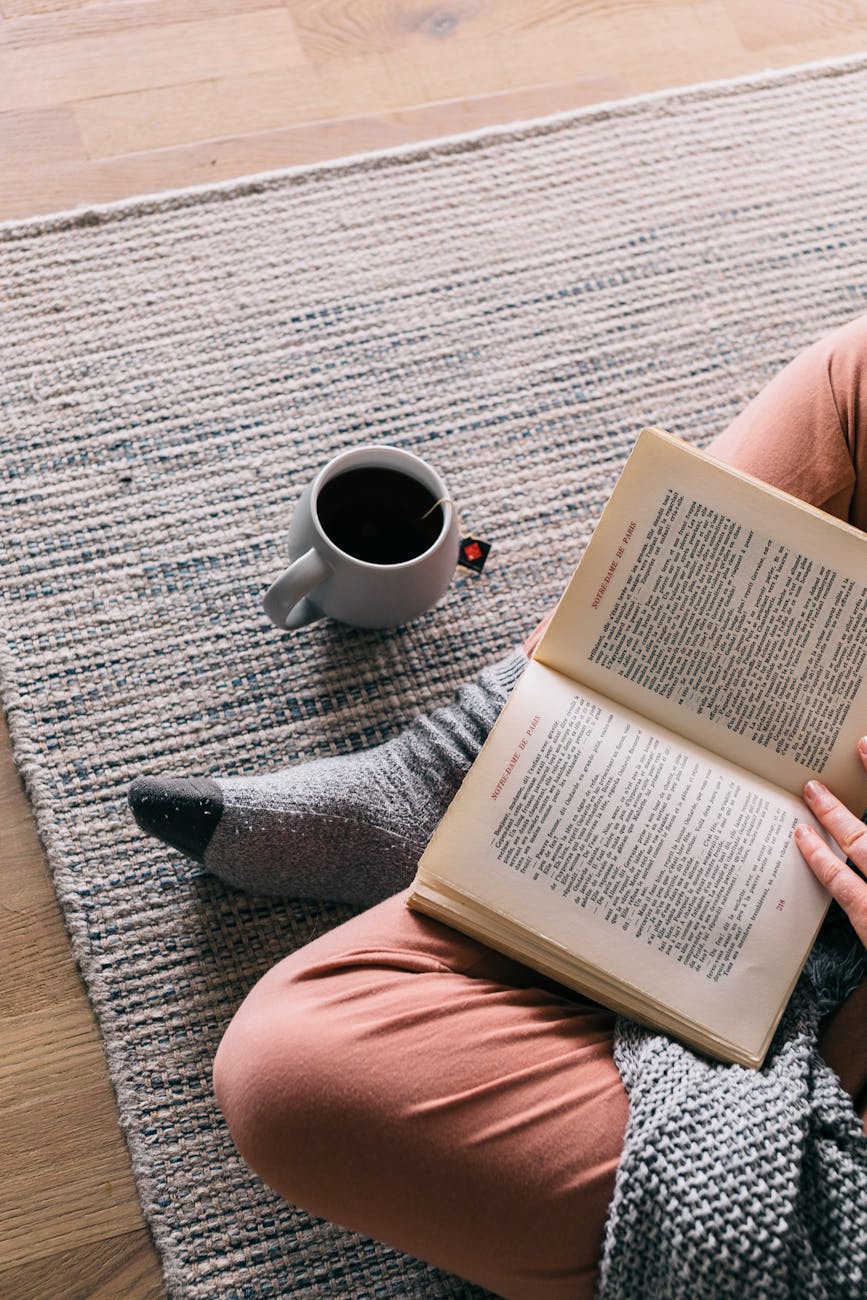
In a TIME magazine article, A literary feast, authors Bruner, Gutterman, and Lang wrote
This year, the warmest months bring more than sun: crowds are back. And surrounded by people, the solitude of reading feels somehow richer.
TIME, June 21/28, 2021
The article offers brief reviews of 36 new books which they say “will provide entertainment, distraction and comfort.” I read through the list looking for books with a medical, health, wellness connection; I’m suggesting these 7.
Like many of my book posts, these links lead to affiliate sites, which if you use for a purchase, can provide funding for this blog. Or you can check them out from your local library.
We Are What We Eat: A Slow Food Manifesto
by Alice Waters
In We Are What We Eat, Alice Waters urges us to take up the mantle of slow food culture, the philosophy at the core of her life’s work.
When Waters first opened Chez Panisse in 1971, she did so with the intention of feeding people good food during a time of political turmoil. Customers responded to the locally sourced organic ingredients, to the dishes made by hand, and to the welcoming hospitality that infused the small space—human qualities that were disappearing from a country increasingly seduced by takeout, frozen dinners, and prepackaged ingredients.
Waters came to see that the phenomenon of fast food culture, which prioritized cheapness, availability, and speed, was not only ruining our health but also dehumanizing the ways we live and relate to one another.
Working with regional farmers, Waters and her partners learned how geography and seasonal fluctuations affect the ingredients on the menu, as well as about the dangers of pesticides, the plight of fieldworkers, and the social, economic, and environmental threats posed by industrial farming and food distribution.
So many of the serious problems we face in the world today—from illness, to social unrest, to economic disparity, and environmental degradation—are all, at their core, connected to food. Fortunately, there is an antidote.
Waters argues that by eating in a “slow food way,” each of us—like the community around her restaurant—can be empowered to prioritize and nurture a different kind of culture, one that champions values such as biodiversity, seasonality, stewardship, and pleasure in work.
The Ugly Cry: A Memoir
by Danielle Henderson
Abandoned at ten years old by a mother who chose her drug-addicted, abusive boyfriend, Danielle was raised by grandparents who thought their child-rearing days had ended in the 1960s. She grew up Black, weird, and overwhelmingly uncool in a mostly white neighborhood in upstate New York, which created its own identity crises.
Under the eye-rolling, foul-mouthed, loving tutelage of her uncompromising grandmother—and the horror movies she obsessively watched—Danielle grew into a tall, awkward, Sassy-loving teenager who wore black eyeliner as lipstick and was struggling with the aftermath of her mother’s choices.
But she also learned that she had the strength and smarts to save herself, her grandmother gifting her a faith in her own capabilities that the world would not have most Black girls possess.
With humor, wit, and deep insight, Danielle shares how she grew up and grew wise—and the lessons she’s carried from those days to these. In the process, she upends our conventional understanding of family and redefines its boundaries to include the millions of people who share her story.
This Is Your Mind on Plants
by Michael Pollan
Of all the things humans rely on plants for – sustenance, beauty, medicine, fragrance, flavor, fiber – surely the most curious is our use of them to change consciousness: to stimulate or calm, fiddle with or completely alter, the qualities of our mental experience.
Take coffee and tea: People around the world rely on caffeine to sharpen their minds. But we do not usually think of caffeine as a drug, or our daily use as an addiction, because it is legal and socially acceptable.
So, then, what is a “drug”? And why, for example, is making tea from the leaves of a tea plant acceptable, but making tea from a seed head of an opium poppy a federal crime?
In This Is Your Mind on Plants, Michael Pollan dives deep into three plant drugs – opium, caffeine, and mescaline – and throws the fundamental strangeness, and arbitrariness, of our thinking about them into sharp relief.
Exploring and participating in the cultures that have grown up around these drugs while consuming (or, in the case of caffeine, trying not to consume) them, Pollan reckons with the powerful human attraction to psychoactive plants. Why do we go to such great lengths to seek these shifts in consciousness, and then, why do we fence that universal desire with laws and customs and fraught feelings?
In this unique blend of history, science, and memoir, as well as participatory journalism, Pollan examines and experiences these plants from several very different angles and contexts, and shines a fresh light on a subject that is all too often treated reductively – as a drug, whether licit or illicit.
But that is one of the least interesting things you can say about these plants, Pollan shows, for when we take them into our bodies and let them change our minds, we are engaging with nature in one of the most profound ways we can.
Fox and I: An Uncommon Friendship
by Catherine Raven
When Catherine Raven finished her PhD in biology, she built herself a tiny cottage on an isolated plot of land in Montana. She was as emotionally isolated as she was physically, but she viewed the house as a way station, a temporary rest stop where she could gather her nerves and fill out applications for what she hoped would be a real job that would help her fit into society.
In the meantime, she taught remotely and led field classes in nearby Yellowstone National Park. Then one day she realized that a mangy-looking fox was showing up on her property every afternoon at 4:15 p.m.
She had never had a regular visitor before. How do you even talk to a fox? She brought out her camping chair, sat as close to him as she dared, and began reading to him from The Little Prince.
Her scientific training had taught her not to anthropomorphize animals, yet as she grew to know him, his personality revealed itself and they became friends. From the fox, she learned the single most important thing about loneliness: we are never alone when we are connected to the natural world. Friends, however, cannot save each other from the uncontained forces of nature.
Fox and I is a poignant and remarkable tale of friendship, growth, and coping with inevitable loss—and of how that loss can be transformed into meaning. It is both a timely tale of solitude and belonging as well as a timeless story of one woman whose immersion in the natural world will change the way we view our surroundings—each tree, weed, flower, stone, or fox.
Goldenrod: Poems
by Maggie Smith
With her breakout bestseller Keep Moving, Maggie Smith captured the nation with her “meditations on kindness and hope” (NPR). Now, with Goldenrod, the award-winning poet returns with a powerful collection of poems that look at parenthood, solitude, love, and memory.
Pulling objects from everyday life—a hallway mirror, a rock found in her son’s pocket, a field of goldenrods at the side of the road—she reveals the magic of the present moment. Only Maggie Smith could turn an autocorrect mistake into a line of poetry, musing that her phone “doesn’t observe / the high holidays, autocorrecting / shana tova to shaman tobacco, / Rosh Hashanah to rose has hands.”
Slate called Smith’s “superpower as a writer” her “ability to find the perfect concrete metaphor for inchoate human emotions and explore it with empathy and honesty.” The poems in Goldenrod celebrate the contours of daily life, explore and delight in the space between thought and experience, and remind us that we decide what is beautiful.
The Family Firm: A Data-Driven Guide to Better Decision Making in the Early School Years (The ParentData Series Book 3)
by Emily Oster
In The Family Firm, Brown professor of economics and mom of two Emily Oster offers a classic business school framework for data-driven parents to think more deliberately about the key issues of the elementary years: school, health, extracurricular activities, and more.
Unlike the hourly challenges of infant parenting, the big questions in this age come up less frequently. But we live with the consequences of our decisions for much longer.
What’s the right kind of school and at what age should a particular kid start? How do you encourage a healthy diet? Should kids play a sport and how seriously? How do you think smartly about encouraging children’s independence?
Along with these bigger questions, Oster investigates how to navigate the complexity of day-to-day family logistics.
Making these decisions is less about finding the specific answer and more about taking the right approach. Parents of this age are often still working in baby mode, which is to say, under stress and on the fly. That is a classic management problem, and Oster takes a page from her time as a business school professor at the University of Chicago to show us that thoughtful business process can help smooth out tough family decisions.
The Family Firm is a smart and winning guide to how to think clearly–and with less ambient stress–about the key decisions of the elementary school years.
Seeing Ghosts: A Memoir
by Kat Chow
Kat Chow has always been unusually fixated on death. She worried constantly about her parents dying—especially her mother. A vivacious and mischievous woman, Kat’s mother made a morbid joke that would haunt her for years to come: when she died, she’d like to be stuffed and displayed in Kat’s future apartment in order to always watch over her.
After her mother dies unexpectedly from cancer, Kat, her sisters, and their father are plunged into a debilitating, lonely grief. With a distinct voice that is wry and heartfelt, Kat weaves together a story of the fallout of grief that follows her extended family as they emigrate from China and Hong Kong to Cuba and America.
Seeing Ghosts asks what it means to reclaim and tell your family’s story: Is writing an exorcism or is it its own form of preservation? The result is an extraordinary new contribution to the literature of the American family, and a provocative and transformative meditation on who we become facing loss.
Look for these books at BOOKSHOP.ORG and Amazon.com
Exploring the HEART of health through reading
I’d love for you to follow this blog. I share information and inspiration to help you transform challenges into opportunities for learning and growth.
Add your name to the subscribe box to be notified of new posts by email. Click the link to read the post and browse other content. It’s that simple. No spam.
I enjoy seeing who is new to Watercress Words. When you subscribe, I will visit your blog or website. Thanks and see you next time.

Dr. Aletha
- About Dr. Aletha
- How to Use this Site
- Make Your Life Easier
- Search by Category
- Share the HEART of health
- my Reader Rewards Club
- RoboForm Password Manager
Check out more books that explore the HEART of health at this link
Exploring health in fiction
Most fiction is based on real life, which is full of twists and turns related to our health and well being. Our state of health, good or bad, directs much of what we do, and can change suddenly and unexpectedly, and turn our lives upside down. Consider how many TV dramas are based in hospitals,…
Keep reading




 watercress words by Dr Aletha