Beautiful- Remembering the Music of Carole King

In this post I remember a date night at the theater watching “Beautiful: The Carole King Musical,” highlighting King’s journey as a songwriter with Gerry Goffin. Despite their success in music, their marriage struggled due to infidelity and mental health issues. I have slso reviewed her memoir.

updated June 30, 2025

“You’ve got to get up every morning

With a smile on your face

And show the world all the love in your heart

Then people gonna treat you better

You’re gonna find, yes you will

That you’re beautiful as you feel.”

Beautiful by Carole King

My husband and I enjoyed a date night at the theater watching Beautiful- The Carole King Musical. The play covers the start of Ms. King’s career as a songwriter, including meeting and marrying her songwriting partner Gerry Goffin.
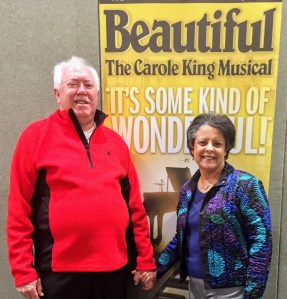
husband-wife couple holding hands in front of poster for Beautiful The Carole King Musical
My husband and I at the theater for Beautiful The Carole King Musical

Together they wrote some of the most successful and memorable songs of the 1960s-1970s including

I Feel the Earth Move 

Will you Love Me Tomorrow?

Up On The Roof 

You’ve Got a Friend 

A Natural Woman: A Memoir

Sadly, their marriage was not as successful as their careers due to his infidelity and mental instability, culminating in hospitalization and divorce.

As I watched and heard the story portrayed on stage, I remembered her memoir A Natural Woman which I reviewed here. The memoir included this part of her life as well as subsequent years, which were as turbulent as the ones in the musical.

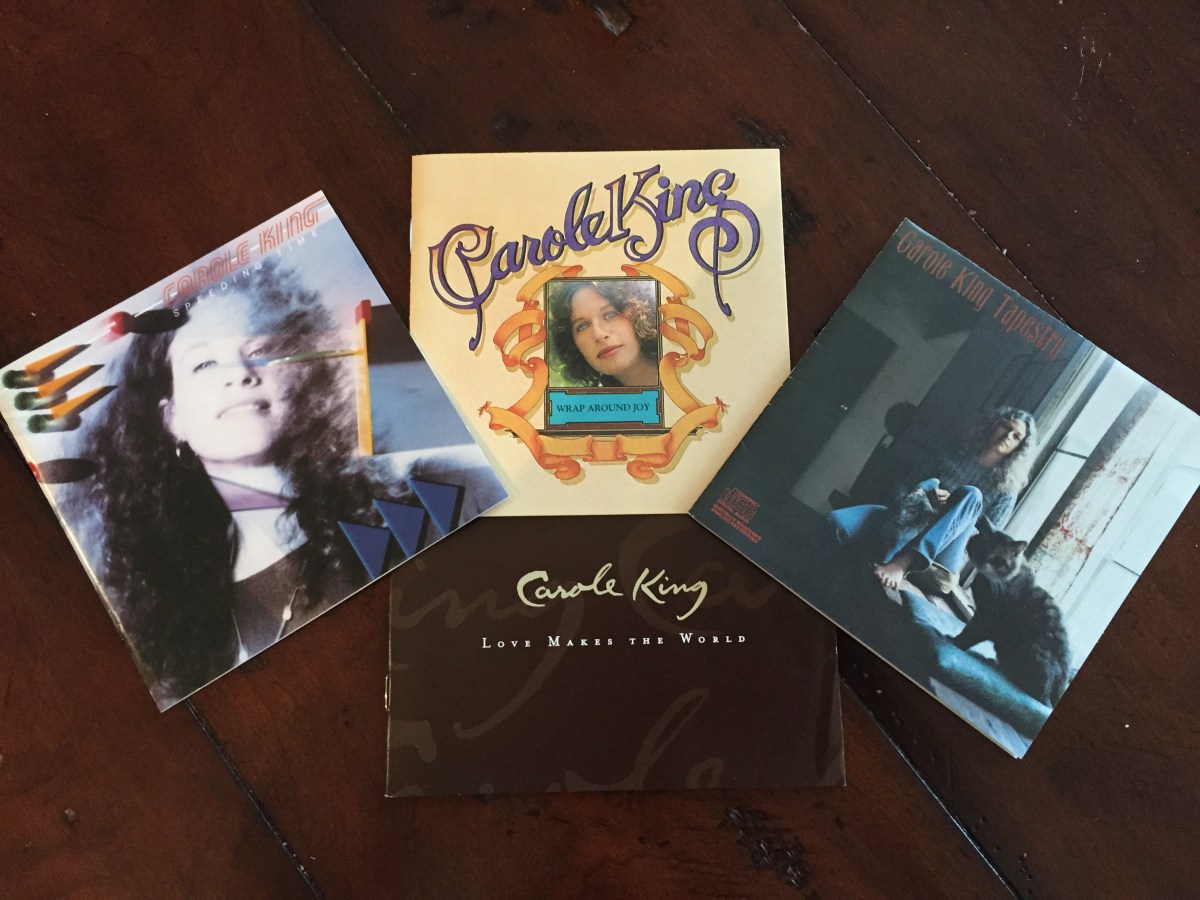
inserts from our Carole King music CD collection
the inserts from our Carole King music CD collection

As she wrote in the book, Carole King insists she never wanted to be a star or diva, and she zealously guarded her privacy. She valued most her family, relationships, writing songs, and sharing her music. I am glad she decided to share this side of her life and the lessons it teaches.    
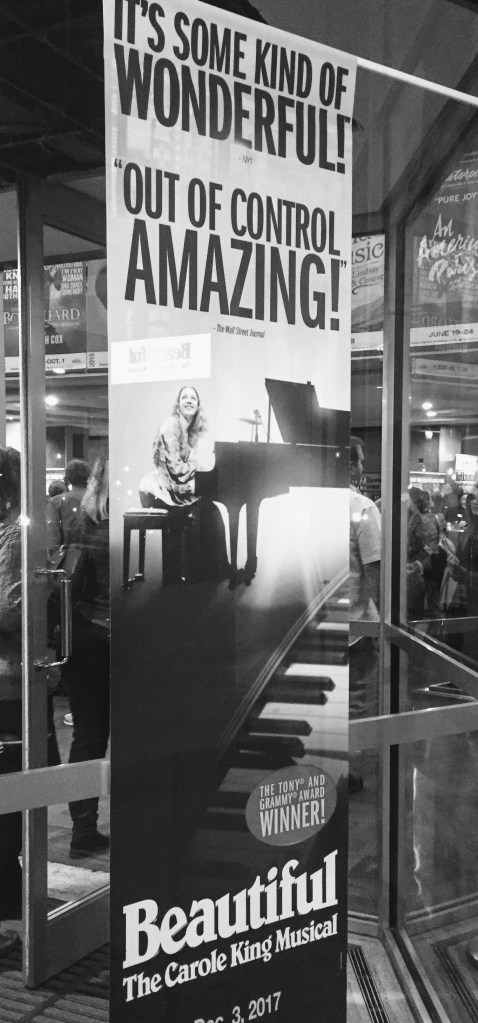
It's some kind of wonderful! Beautiful The Carole King Musical- poster on window at theater


Here is a selection of Carole King’s music

(these are affiliate links)

Tapestry  Carole King’s first and most successful album

Beautiful: The Carole King Musical  the story of Carole’s life and career

Live at the Troubadour Carole King singing with her friend James Taylor, another favorite artist of ours

The Carnegie Hall Concert (Live) June 1971 

Listen  to Carole King on Apple Music 

Exploring the HEART of Health in Music

Read my review of her memoir at the link below. Be sure you enjoy some music today, whatever makes you feel BEAUTIFUL.
A Natural Woman- Carole King shares a lifetime of music, a season of pain

Carole King’s memoir, “A Natural Woman,” delves into her remarkable life as a Grammy Award-winning singer/songwriter. Despite her musical success, she faced profound personal challenges, including turbulent marriages and traumatic experiences. King’s resilience and candid account offer a powerful reminder of the complexities behind public personas and the importance of seeking help in times of…

Keep reading

I’d love for you to follow this blog. I share information and inspiration to help you turn health challenges into health opportunities.

Add your name to the subscribe box to be notified of new posts by email. Click the link to read the post and browse other content. It’s that simple. No spam.

I enjoy seeing who is new to Watercress Words. When you subscribe, I will visit your blog or website. Thanks and see you next time.

Dr. Aletha

Watercress Words Bookstore

Please visit my shop at Bookshop.org to find A Natural Woman and other books I recommend.

Bookshop.org is an online bookstore that financially supports local, independent bookstores.

We believe bookstores are essential to a healthy culture and they are dedicated to the common good.

Bookshop.org donates a portion of every sale to independent bookstores.

What Patients Say, What Doctors Hear- a book review

What Patients Say, What Doctors Hear helps patients understand the complexity of what physicians do in our encounters with patients and how that impacts our subsequent decision making and treatment decisions.

What Patients Say, What Doctors Hear

by Danielle Ofri, M.D. , an associate professor of medicine at the New York University School of Medicine and staff physician at New York’s Bellevue Hospital .  The book is published by Beacon Press

“What patients say and what doctors hear can be two very dissimilar things. The reverse is also quite true: what doctors say and what patients hear can be radically different. ”

I am so convinced of the truth of these two statements, that I have written several blog posts about physician-patient communication. So when I learned of a book that delves into this subject in detail, I knew I needed to read it; I was not disappointed.

As a physician, this was not an easy book to read; Dr. Ofri does not hesitate to tell us physicians what we need to do better in our communication with our patients.

But she also makes it plain to patients that you have a role and a vested stake in communicating your concerns, questions, and even grievances to the physicians who care for you; that without such information, your physicians cannot provide optimal diagnosis and treatment for you.

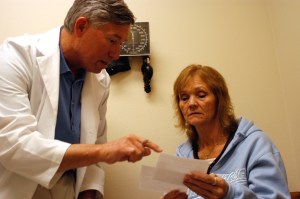
doctor talking to a woman
photo compliments American Academy of Family Physicians

Dr. Ofri bases her conclusions on her own encounters with patients over 20+ years of practice, interviews with other doctors and patients, and published research on communication. In her book she explains

  • How the uniqueness and complexity of the physician-patient relationship impacts their communication
  • Why patients’ less satisfactory encounters with the medical system are often due to poor communication, rather than lack of caring and competence, but can lead to lawsuits
  • Why patients’ unfamiliarity of medical terms can hinder communication , and how differences in use of words between doctors and patients, and even between doctors can lead to misunderstanding

For example, Dr. Ofri relates an incident when she was still a medical student working in the hospital and came across the term “expired” to refer to a patient who had died. She had never heard the word used this way. Then years later, when she was an attending physician, she was confused when an intern from a southern state reported to her that a patient had passed during the previous night. Passed what?, she thought. In some areas of our country,  “passed” is commonly used to mean someone has died, but Dr. Ofri had never heard this.

Dr. Ofri discusses the placebo effect of medicines and treatments, and how expectations affect response to treatment. (The placebo effect means responding to  a treatment that contains no active medical substance.  Interestingly, placebo treatments “work”.)

She details the many reasons patients have difficulty adhering to doctors’ recommended treatment plans, such as cost, inconvenience, distance, and other factors unrelated to not understanding the seriousness of their condition, as one might suppose.

I was intrigued by the story of a hospital in The Netherlands which hired a woman to be the “Chief Listening Officer.” Her only duty was to listen to patients talk about their complaints or grievances  about their care, not to fix or solve problems, but just to listen. And it was successful; once patients felt they had been heard, they had no desire to pursue legal action and felt more satisfied with their care.

She also relates a program called Sorry Works!, a way to handle medical errors with mediation rather than lawsuits, also a successful program.

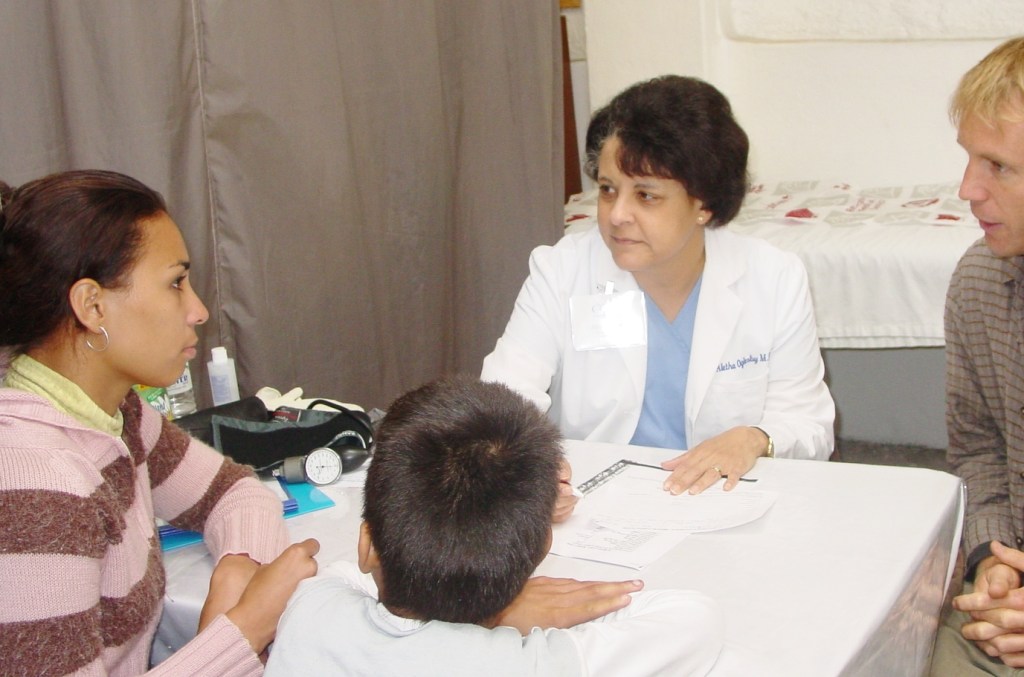
Dr. Aletha talking to a mother and her son
Talking to a patient through an interpreter makes communication extra challenging. (photo from a volunteer medical trip to Ecuador)


What Patients Say, What Doctors Hear  helps  patients understand the complexity of what physicians do in our encounters with patients and how that impacts our subsequent decision making and treatment decisions.

This book illustrates there are multiple detailed steps between

  • A patient’s problem and the best solution
  • The patient’s and family’s questions and the correct answers
  • The final (or sometimes current) diagnosis and the definitive,  best available ,or least toxic treatment.

 “The biggest take-home message is that both doctors and patients need to give communication its just due. Rather than the utilitarian humdrum of a visit, the conversation should be viewed as the single most important tool of medical care..a highly sophisticated technology. “


In this previous blog post I offer suggestions on physician-patient communication based on my years in practice:

Do you know the best questions to ask about your healthcare?

You know it’s important to tell us details of your symptoms, medical history, family history, habits, and other medical facts.   But besides medical information about you , we need to know

Your expectations about your care,

Your concerns about your care,

Your obstacles to getting care,


sharing the HEART of health and communication


Dr. Aletha