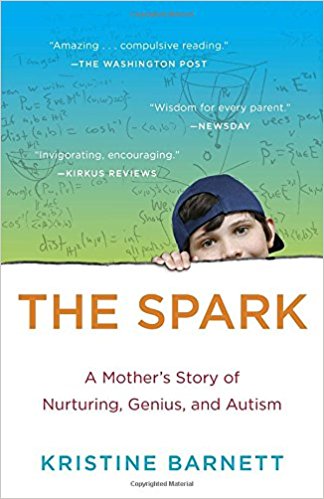
THE SPARK by Kristine Barnett. When her son Jake was diagnosed with autism at 2 years old, doctors told her he would never attend school for “normal’ children. Undeterred, she taught him herself, building on his strengths. By 16, he was attending college- and helping to teach classes in quantum physics.
Every year people around the world observe April 2 as World Autism Awareness Day (WAAD) and April as World Autism Awareness Month. What’s it all about? Why observe such a day?
World Autism Awareness Day, established in 2007, is one of only three official health related United Nations Days.
to bring the world’s attention to autism, a pervasive disorder that affects tens of millions.
to raise awareness about autism throughout society and
to encourage early diagnosis and early intervention.
“Autism is a brain disorder that often makes it hard to communicate with and relate to others. With autism, the different areas of the brain fail to work together.”
A few months ago I reviewed two books that gave me much needed information and hope about autism. I believe they will help other autism families and anyone who wants to know more about this condition.
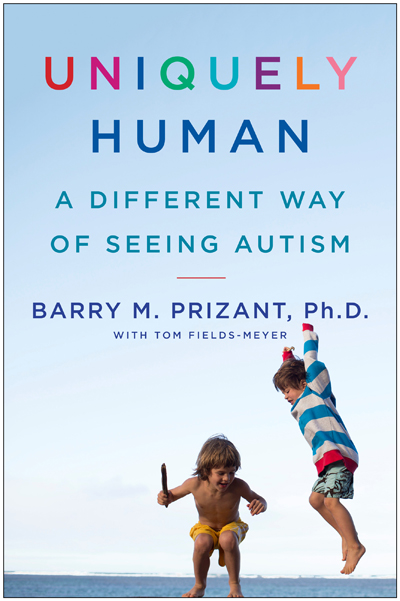
As soon as I started reading Uniquely Human: A Different Way of Seeing Autism, I knew I had found answers to many of my questions and ,more importantly ,fears about autism. The structure of the book parallels my journey with autism.
Part 1- understanding autism:
For the majority of my adult life I have understood autism as a physician, which means I understood little. My training and experience as a family physician taught me the basics of autism, but little of the treatment and of the condition. My few autistic patients went to developmental pediatricians , neurologists, psychiatrists,or psychologists so my involvement was limited to their physical needs.
From my limited exposure to autistic persons, I saw autism as a life altering, disabling , untreatable condition that disrupted families as they struggled to cope and manage.
“Uniquely Human: A Different Way of Seeing Autism” by Barry M. Prizant, PhD, CCC-SLP offers insights into understanding and living with autism. The book promotes a person-centered approach, emphasizing the importance of engaging, building self-esteem, and fostering joyful experiences for individuals with autism. Dr. Prizant advocates for working with their strengths rather than focusing on…
Another book that encouraged me is THE SPARK by Kristine Barnett. When her son Jake was diagnosed with autism at 2 years old, doctors told her he would never attend school for “normal’ children. Undeterred, she taught him herself, building on his strengths. By 16, he was attending college- and helping to teach classes in quantum physics.
I don’t know if Mrs. Barnett knew of Dr. Prizant’s methods, but it certainly sounds as if she used them. Or maybe she just followed her motherly instincts. Here’s how she says it in the introduction.
“This book is the story of how we got from there to here, the story of a mother’s journey with her remarkable son…it is about the power of hope and the dazzling possibilities that can occur when we keep our minds open and learn how to tap the true potential that lies within every child. “
I highly recommend this book to anyone who needs or wants to know more about autism.
Exploring the HEART of Health
Use these links to share the heart of health wherever you connect.
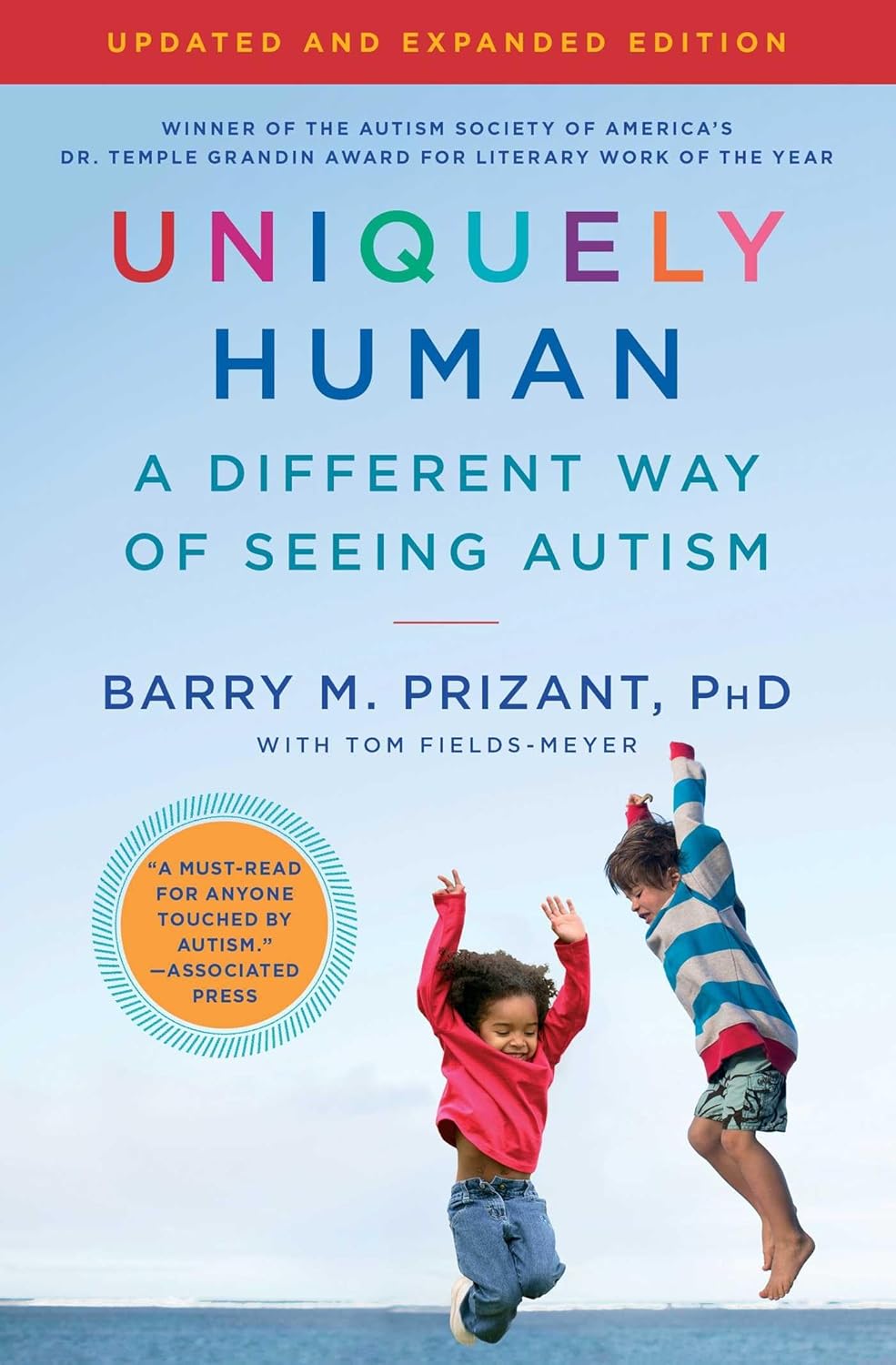
“Uniquely Human: A Different Way of Seeing Autism” by Barry M. Prizant, PhD, CCC-SLP offers insights into understanding and living with autism. The book promotes a person-centered approach, emphasizing the importance of engaging, building self-esteem, and fostering joyful experiences for individuals with autism. Dr. Prizant advocates for working with their strengths rather than focusing on weaknesses.
updated March 12, 2026
This review discusses the original 2016 version of this book. However, the affiliate links connect to the updated and expanded edition of 2022.
This authoritative book was written by Barry M. Prizant, PhD, CCC-SLP, among the world’s leading authorities on autism, and innovator of respectful, person- and family-centered approaches for individuals with autism and neurodevelopmental disabilities.
I have understood autism as a physician, which means I understood little. My training and experience as a family physician taught me the basics of autism, but little of the treatment.
My few autistic patients went to developmental pediatricians, neurologists, psychiatrists, or psychologists so my involvement was limited to their physical needs.
From my limited exposure to autistic persons, I saw autism as a life altering, disabling , untreatable condition that disrupted families as they struggled to cope and manage.
In his book, Uniquely Human, Dr. Prizant approaches autism from a perspective gained from studying about and treating children with autism for 50 years.
About Dr. Prizant
According to his bio, Dr. Prizant is recognized internationally as a scholar in autism spectrum disorders and childhood disabilities.
He is an Adjunct Professor of Communication Disorders at University of Rhode Island.
Barry lives in Cranston, Rhode Island, with his wife, Dr. Elaine Meyer, a clinical psychologist and nurse, and Associate Professor in the Harvard Medical School.
Barry is a performing percussionist and has a specific interest in the impact of the arts on enhancing the quality of life for individuals with disabilities and their families. He sits on the boards of two inclusive theatre companies co-founded by and including autistic actors.
He approaches autism more “how to” than “what or why”. He recommends working with the child’s strengths rather than trying to change or cure their weakness.
Much of the “treatment” of autism centers on controlling so-called autistic behaviors. He believes that these behaviors are the way autistic children cope with the challenges of “sensory dysregulation.” We should address the triggers of this dysregulation rather than trying to manipulate the behavior, he says.
“The central challenge of autism is a disability of trust”
Trusting their body
Trusting the world
Trusting other people.”
“The best way to help them (autistic children) progress toward fulfilling meaningful lives is
Find ways to engage them
Build a sense of self
Foster joyful experiences”
In his book, Dr. Prizant outlines ways to help autistic people.
“Welcome them into your world.”
Include them in family and social activities to whatever extent they can and will participate.
“Don’t label them – high-functioning vs low -functioning”
I was pleased to read that Dr. Prizant does not use those terms. As he says,
“People are infinitely complex and development is multidimensional and cannot be reduced to such a simple dichotomy. “
He calls these labels “terribly inaccurate and misleading ” and that using them is “disrespectful.” The label low-functioning can become a self-fulfilling prophesy.
He concludes,
“Instead of focusing on vague and imprecise labels, it’s better to focus on the child’s relative strengths and challenges, and to identify the most beneficial supports. “
Dr. Prizant
He discusses this in more detail in this article from 2012.
Not all autistic people are verbal; but they all communicate in some way. We just need to understand how and work with that.
“Give choices”
“Treat respectfully, with empathy and sensitivity.”
“Meltdowns are a common occurrence with autism but are not “temper tantrums”. They usually reflect a need or want that isn’t being met, or a situation that is overwhelming or too stimulating.
“Humor”
Sometimes you just need to laugh.
“Offer to help but no unsolicited advice or criticism”
I ask a lot of questions. Whenever I meet someone who has an autistic child or relative, a special education teacher or therapist, I try to learn something from them.
“Be positive; use tenderness with your honesty.”
“Celebrate with us”
Don’t be afraid to ask how things are going, as long as you don’t mind sometimes hearing the bad as well as the good.
“Trust- be dependable, clear and concrete”
RECOMMENDATION
Families, friends, teachers, or anyone who wants to understand autism will find expert, experiential, and practical information and advice in this book.
When her son Jake was diagnosed with autism at 2 years old, doctors told her he would never attend school for “normal’ children. Undeterred, she taught him herself, building on his strengths. By 16, he was attending college- and helping to teach classes in quantum physics.
I don’t know if Mrs. Barnett knew of Dr. Prizant’s methods, but it certainly sounds as if she used them. Or maybe she just followed her motherly instincts. Here’s how she says it in the introduction.
“This book is the story of how we got from there to here, the story of a mother’s journey with her remarkable son…it is about the power of hope and the dazzling possibilities that can occur when we keep our minds open and learn how to tap the true potential that lies within every child. “
I highly recommend this book to anyone who needs or wants to know more about autism.
exploring the HEART of health
I’d love for you to follow this blog. I share information and inspiration to help you transform challenges into opportunities for learning and growth.
Add your name to the subscribe box to be notified of new posts by email. Click the link to read the post and browse other content. It’s that simple. No spam.
I enjoy seeing who is new to Watercress Words. When you subscribe, I will visit your blog or website. Thanks and see you next time.
Thanks for considering the affiliate links in this post-any purchases made at the links help support this blog’s mission of sharing the heart of health.
Dr. Aletha
And another way to support this blog, visit my shop at Bookshop.org.





 watercress words by Dr Aletha