Exploring the Multifaceted Nature of Health

Exploring health involves understanding it as a complex, multifaceted concept beyond merely the absence of disease. Authors Dr. David Agus emphasizes the importance of embracing technological advancements and personal agency in managing health. The interplay between diet, environment, and metabolism is vital, reflecting the continual adaptation required for well-being.

What does “health” mean to you?

Maybe you think of something like the World Health Organization definition of health.

“a state of complete physical, mental, and social well-being and not merely the absence of disease or infirmity”

2 bandaids crossed on a world globe
photo from the Lightstock collection (affiliate link)

But do you know

There’s a Lot More to Health than Not Being Sick
There's a Lot More to Health than Not Being Sick by Bruce Larson

So, what is “a lot more”? 

I’m introducing you to two medical writers who believe  health is multifaceted and not centered around the presence or absence of disease.

Health- flux and adaptation

(Note: this post uses affiliate links to sites where you might make a purchase which will help fund this blog; your help is appreciated. )
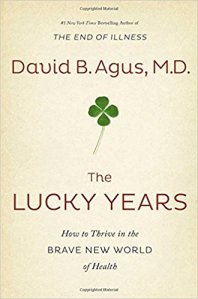
book cover- The LUCKY YEARS by David B. Agus, M.D.

Enjoying life to the fullest

Despite the author’s impressive credentials, I was skeptical about a health book called The Lucky Years , as if health is just a matter of the luck of the draw or throw of the dice.  

The author is David B. Agus, M.D. , Professor of Medicine and Engineering at the University of Southern California , , author of bestselling books and a CBS News contributor.

In The Lucky Years- How to Thrive in the Brave New World of Health Dr. Agus covers some hefty topics including

  • how the human body ages
  • Innovative cancer treatments with immunotherapy , DNA sequencing, and molecular targeting
  • The use of clinical trials to study new treatments for cancer and other diseases
  • How cancers metastasize (spread)
  • Potential uses for stem cells
  • New insights into the development of antibiotic resistance
  • Proteomics- study of the body’s proteins
  • The relationship of antibodies to common viruses to onset of chronic diseases

Rather than highly technical detail he offers a broad overview of these new technologies and how they may help treat and potentially prevent the main causes of death, that is cancer and chronic diseases like heart disease and diabetes.

He recommends patients understand and use technology to maintain and improve their health and not rely solely on their doctor to do so and to actively participate in the healthcare system.

He believes that health data will be used to prevent, detect and treat disease and to prolong life.

Large quantities of such data, organized in a secure database, will help us predict risk and recommend preventive measures, such as already done with

  • Colonoscopy to prevent deaths from colon cancer
  • Aspirin and statin use to prevent cardiac deaths
  • Management of low grade cancers conservatively, avoiding the use of surgery or chemotherapy

The body is an incredible self-regulating machine. You don’t need to do much to support its health and optimal wellness.”

Health is in perpetual flux. 

I agree with Dr. Agus’ views on what health is, or rather what it is not.

“I don’t know what true health is, particularly on an individual basis.

For person A, health can be living totally free of illness and disability.

For person B, however, perhaps health means managing a condition well and enjoying life to the fullest despite some disability.

While we can certainly try to measure health in a variety of ways- weight, cholesterol, blood sugar, blood cell count, hormone levels, markers of inflammation, how you look, and how well you sleep, for example- none of those figures or generalizations will tell the whole picture.

And they won’t reveal how many years and days you might have left on this planet.”

He offers this advice –

“I encourage you to view your total health as a complex network of processes that cannot be explained by looking at any one pathway or focal point. Health is in perpetual flux.
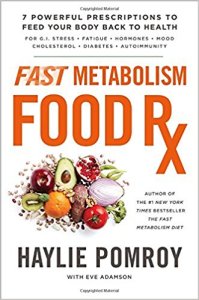
book cover- FAST METABOLISM FOOD RX BY HAYLIE POMROY

A constant state of healthy adaptation

Nutritionist Hailey Pomroy, author of Fast Metabolism Food Rx, recommends using food as “metabolic medicine.”  

“Food integrates with your body to create health in a powerful way.”

She explains health using the formula E + M = H which means

Eating, Exercise, Environment  plus

Metabolism, Metabolic pathways, Me  equals

Health, Homeostasis, Harmony

In this formula, E stands for everything we put into our bodies and everything around us, including people, our jobs, and the weather.

M is what is inside of you, including your genetic makeup, and what happens when your body processes (or metabolizes) food, nutrients, toxins, and medications.

“Health doesn’t always mean you are disease free, It means your body has created a homeostasis or internal balance, …is a constant state of healthy adaptation or flux.”

So, what does HEALTH mean to you?

Considering their advice, think about what health means to you.

Use these questions to get started.

  1. Do you use any technology to manage your health and medical care? If so, is it helpful, or just more busy work?
  2. What is your relationship with your personal physician? Do you rely on your doctor to tell you what you should do, or recommend what you should do to stay healthy and treat ailments?
  3. Do you know what medical conditions you are at risk for, and what you can do to prevent them?
  4. What health measures are important to you, like blood pressure, cholesterol, weight, BMI, mammogram, and why?
  5. Are you “living life to the fullness” and if not, why not? What could you change to make that happen?
  6. How do you use food?
  7. What factors make up your E and your M? Do they add up to the Health that you want to create?

exploring the HEART of health

I’d love for you to follow this blog. I share information and inspiration to help you transform challenges into opportunities for learning and growth.

Add your name to the subscribe box to be notified of new posts by email. Click the link to read the post and browse other content. It’s that simple. No spam.

I enjoy seeing who is new to Watercress Words. When you subscribe, I will visit your blog or website. Thanks and see you next time.

Dr. Aletha

Driving Miss Norma- why saying yes to life matters

When faced with death, Norma chose living. And in doing so, she and her family learned what really matters at the end. Through this book, they share what they learned with us.

View post to subscribe to site newsletter.

a review of Driving Miss Norma

By Tim Bauerschmidt and Ramie Liddle

When I first reviewed this book the tag line was

One Family’s Journey Saying “Yes” to Living

the most recent edition now calls it

An Inspirational Story About What Really Matters at the End of Life

And it’s both of those. When faced with death, Norma chose living. And in doing so, she and her family learned what really matters at the end. Through this book, they share what they learned with us.

(This post contains affiliate links.)

I first learned about Norma Bauerschmidt on Facebook when a friend shared a video about her. She was a 90 year old woman who decided to spend the last months of her life “on the road” travelling with her son in a motorhome. She was diagnosed with cancer but decided to forgo treatment so she could enjoy her remaining time.

I didn’t learn more about her until I saw this book.  I decided to read it, expecting a feel good entertaining read. The story turned out to be far more complex than the little I knew.

Driving Miss Norma tells the story of Norma Bauerschmidt, a WWII WAVE veteran, wife, and mother. She was still in good health at 90 years of age, until she was diagnosed with cancer.

Her doctor recommended surgery to be followed by chemotherapy, and warned her the treatment and recovery would be long and difficult. She told him no, she would rather “hit the road” with her son and daughter-in-law and enjoy her life, seeing and doing things she had not had a chance to do before. And her doctor agreed, saying that is just what he would do.

Tim, her son, and Ramie, his wife, had already been living a nomadic life, travelling the country with their standard poodle Ringo in an Airstream travel  trailer they parked in campgrounds and  Walmart parking lots. They enjoyed travelling, seeing new places, meeting new people. They wondered how adding a 90 year old woman to their wandering lifestyle would work.

By the time they completed arrangements for Norma to join them, she was already frail, and as her illness progressed she needed even more attention and care. Tim and Ramie soon realized that this might be more difficult and complex than they imagined.

In the book, co-written by Tim and Ramie, they tell their stories also; the mid-life challenge of caring for aging parents, making end of life decisions and plans, and coping with parents’ death and  their subsequent grief. Having chosen not to have children, the role of caregivers was foreign to them, and one they had to painstakingly embrace and navigate.

By coincidence, Ramie had recently read the book Being Mortal  “a critical examination of end-of-life medical care.” Until then she had not thought much about the subject. But when she finished the book

“I knew my life had changed. The way I looked at the end of life had been flipped upside down and backward. I knew now it was time to have those tough conversations.”

(I reviewed this book at this link)

As they travelled, Ramie began writing about their adventures and posting on Facebook to close friends and family. She thought that other people might also be interested so she started a Page, Driving Miss Norma. They attracted a handful of followers initially, as she expected.

up close look at a hot air balloon
Norma went on her first and only hot air balloon ride (complimentary stock photo from Pixabay)

But after Norma’s story was reported on the Good News Network, followed by a CBS Evening News Story , the Page began adding  followers by the thousands.

The were alarmed, even fearful, of what they perceived as an intrusion on their privacy. Until now, they had deliberately avoided media in their isolated lifestyle. Then they began noticing how Norma’s story was resonating with people in a way they had not expected.

“We had suddenly and dramatically found ourselves in the middle of an international conversation about the meaning of life, illness, dying and love. We were learning on the fly how to open ourselves to holding so much raw emotion.”

Her story opened their lives to new people and situations they never imagined would happen. Rather than being a burden, Norma’s growing fame became the vehicle for them to grow closer to her, each other, and a whole new set of friends all over the country and the world.

“We had the support of people all over the world and that was breathing new energy into our days. Here were so many people pouring out their deepest fears, losses, and desires to us. They told us of their caregiving struggles. They shared with us their innermost desires- to make peace with their recently deceased father, to tell someone “I love you.”

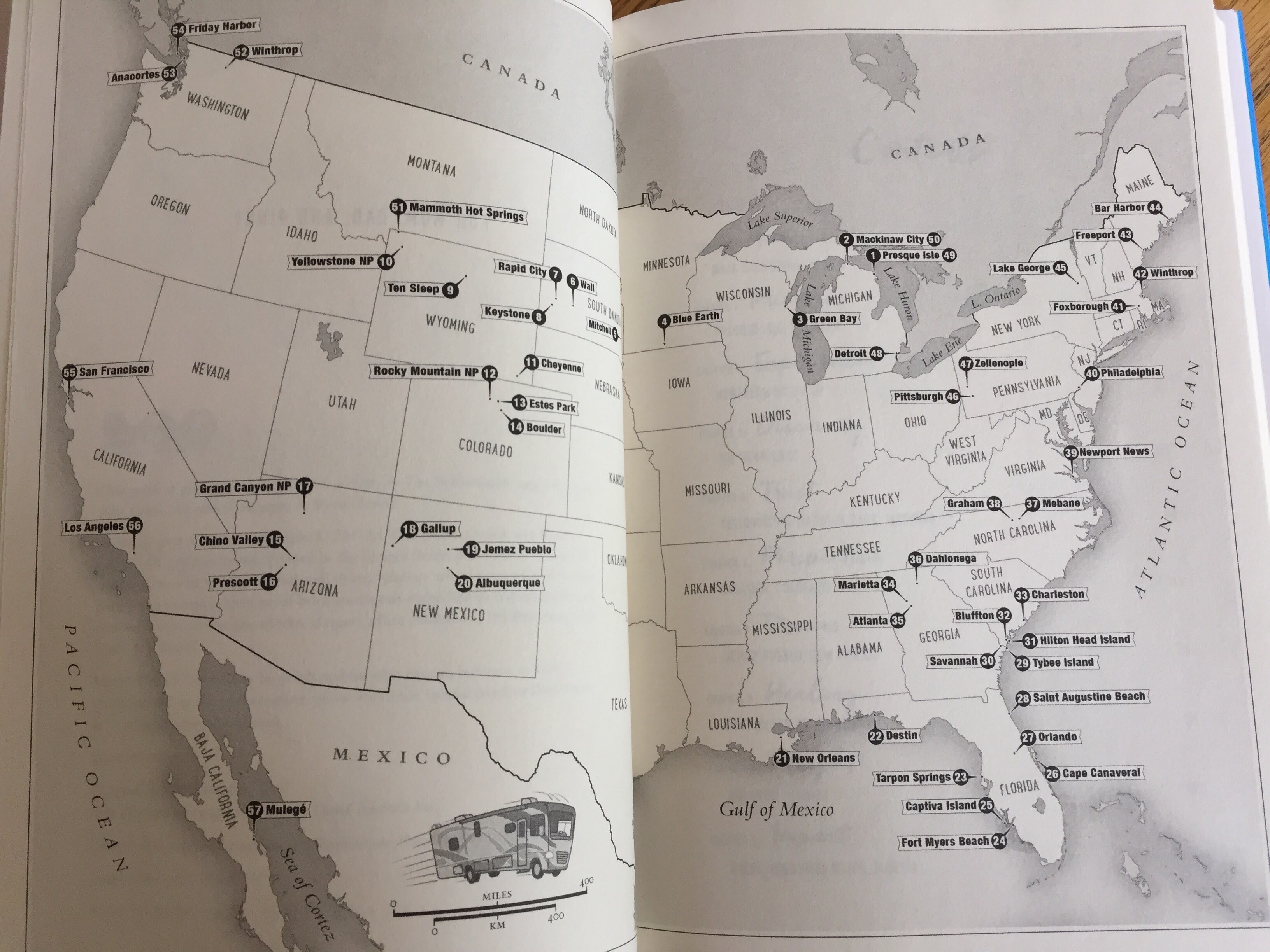
Throughout the story Tim and Ramie share about the places Norma visited (see map), people she met, from the common to famous, the foods she tried, sometimes for the first time, and activities she tried, also many for the first time, like riding a horse. They and the new friends they made shared food, fun, love, and laughter.

map of the United States
Norma visited all the sites marked on this map

But they also touch on the serious issues we all deal with sooner or later- aging, frailty, complex illness, terminal illness, end of life decisions, palliative care, death, and grief. They learned some important lessons about human relationships which they illustrate beautifully in their transparent writing.

“We learned how to greet people with open minds and open hearts…the lines that separate people into different boxes-religion and politics and race and age-blurred and faded and eventually disappeared. We got to see the truth in people, including in Norma: her glow, her tenacity, her joy, and her confidence.”

Tim and Ramie wrote the book after Norma’s death. They each took turns writing different chapters, and Ramie took all the photographs that illustrate it. But in a way Norma herself wrote the book, since it was the way she faced the final months of her life that produced the lessons her family learned and share with us in this book.

Norma kept a journal during their travels and after she died Tim and Ramie, with close friends, read it, and were somewhat surprised at what she wrote. Or rather, what she didn’t write.

“She did not write about cancer or fame- the two big themes of the trip for us. She did not write about the fear of dying or illness at all. Instead, she talked about life, living, and the things that brought her happiness:a sturdy wheelchair, mama and baby goats, a good hair perm, and her trusty sidekick Ringo.”

I feel sad that Norma’s trip did not bring her though my town so I could have met her. But there will be “Normas” in my life that I will meet, and perhaps someday I will be a Norma myself. When that happens I hope I remember the lessons this book teaches.

“Joy begets joy, love begets love, peace begets peace.”

Continue to follow Norma’s family at the web site Driving Miss Norma

sharing the HEART of living well

I hope you enjoyed this look at Norma’s book and will share this post on the social sites you meet up with friends. Please check out some of my other book reviews. Links are in the menu on the side bar (may be below if on a phone or tablet).Or just search.

Dr. Aletha