Life, Liberty, and the Pursuit of Health Care

update January 1, 2026

Since writing this post almost 10 years ago, I have done several updates and related posts. I recommend you read this more recent version and the one that follows. Keep exploring the Heart of health.

from 1776 to 2020-a vision for a “more perfect Union”

The United States’ healthcare system combines public health efforts with mostly private delivery of health care. Usually they coexist side by side with some but infrequent interaction. The public health emergency created by the pandemic forced them into a “union” that quickly became politicized, and unfortunately diminished the effectiveness of the response.

Keep reading

Even though the United States does not officially have “socialized” health care, a large proportion of our medical care is funded by the federal government. Even though I know that, I was still surprised by statistics in a recent article, which stated that  the federal government accounts for

  • 40% of healthcare  spending
  • $1.3 trillion /year

(stats from 2016)

Through 4 federal agencies

  • Department of Health and Human Services 
  • Department of Defense
  • Veterans Administration
  • Department  of Homeland Security

(JAMA (Journal of the American Medical Association), June 21, 2016)

The  United States Congress passed the Patient Protection and Affordable Care Act (ACA) in 2010 to guarantee basic health insurance to all citizens.  People who oppose the ACA ,aka Obama Care, dislike or even fear government involvement in medical care; they consider it interference, control, or even nationalization of the United States healthcare system.

a Veterans Administration clinic
a Veterans Administration clinic (photo by Dr. Aletha)

I think many people, even physicians, don’t realize or forget, how involved the government already is in healthcare. As far back as the American Revolution the fledgling government extended health care benefits to the soldiers and veterans of that war; that system evolved into the current military health care system which covers service members and the Veterans’ Administration system for veterans.

American soldiers serving in Afghanistan

2015 marked the 50th anniversary of two other government healthcare programs- Medicare and Medicaid.

Medicaid provides insurance coverage for adults and children who are unemployed or low income.

Medicare covers disabled children and adults  and persons 65 years and older.

wheelchair-749985_1280
Disabled children and adults may qualify for Medicare.

The numbers are rather staggering.

  • Together these programs cover at least 30% of Americans.
  • Together they comprise 25% of all federal spending.
  • Together they pay 40% of total U.S. health care spending.

An infographic from the Kaiser Family Foundation and JAMA explains this further.

hospital-79605_1280
Children may be eligible for Medicaid if their families cannot obtain health insurance for them.

You may not be eligible for either of these programs now, but chances are eventually you or someone close to you will.

  • Anyone can become disabled from a serious illness or freak accident.
  • You or your spouse may lose your job and your employer sponsored health insurance.
  • Your child may have a disability that will prevent them from working when they grow up.
  • We may all live long enough to qualify for Medicare on the basis of age alone.  Your parents or grandparents are near or already at Medicare age.
Senior adults age 65 and older use Medicare.

It’s important to understand how Medicare works, since it’s not automatic; even if you qualify, you need to sign up to be covered (with a few exceptions). The rules are summarized here. Or consider an easy to understand book here. 

Several government agencies regulate, monitor, promote and/or support  both public and private healthcare through the Deparment of Health and Human Services and other agencies.

Food and Drug Administration- FDA
Centers for Disease Control and Prevention- CDC
National Institutes of Health- NIH
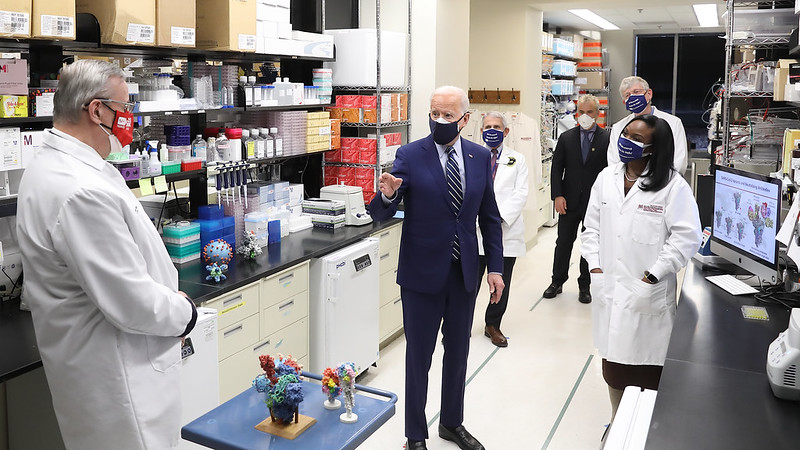
President Joe Biden visited the NIH
Occupational Safety and Health administration-OSHA
Drug Enforcement Agency-DEA

Congressional laws that regulate health care

 The Affordable Care Act- ACA
Health Insurance Portability and Accountability Act-HIPPA
Emergency Medical Treatment and Labor Act- EMTALA
Health Information Technology  for Economic and Clinical Health- HITECH
Americans with Disabilities Act-ADA
Family Medical Leave Act-FMLA
LIFE, LIBERTY AND THE PURSUIT OF HEALTHCARE

Sharing the HEART of health

In the Declaration of Independence, the founders of the United States created a nation based on the “self-evident truths”  of  “Life ,Liberty, and the pursuit of Happiness” as well as to promote “Safety and Happiness” . 

In the Constitution they vowed to “promote the general Welfare”.

I wonder if they envisioned that government would eventually spend so much timet and money providing and regulating health care, most of which was not imagined at that time? 

I’d love for you to follow this blog. I share information and inspiration to help you transform challenges into opportunities for learning and growth.

Add your name to the subscribe box to be notified of new posts by email. Click the link to read the post and browse other content. It’s that simple. No spam.

I enjoy seeing who is new to Watercress Words. When you subscribe, I will visit your blog or website. Thanks and see you next time.

Dr. Aletha

Key Predictions about 2026 Health Policy from an Expert

In this post I review some 2026 healthcare predictions for likely continuation of partisan gridlock, minimal congressional action, and increased focus on health care affordability amid midterm elections. Key issues to watch include ACA enrollment responses, Medicaid work requirements, rising insurance costs, and the impact of AI on consumer health care navigation.

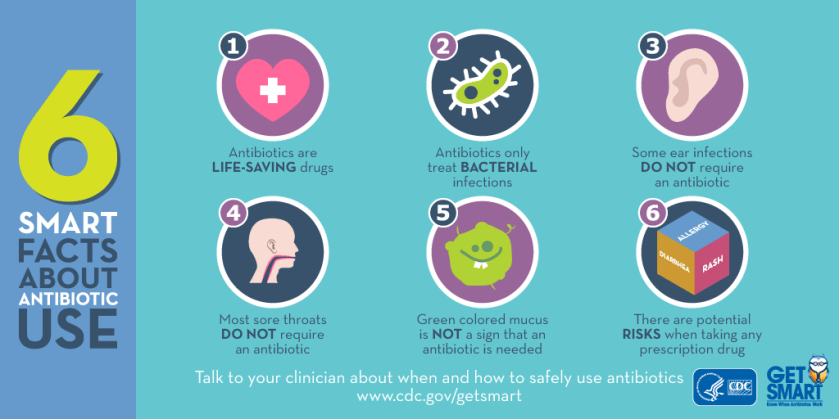
6 smart facts about antibiotics

You may think of antibiotics as safe, harmless drugs with no potential for serious effects. Usually antibiotics are well tolerated and safe. But serious side effects are possible and dangerous, though rare.

Antibiotics save lives.

“The discovery of penicillin in 1928 by Alexander Fleming was one of the greatest scientific achievements of the 20th century. It’s hard to imagine a world before the development of what many consider to be miracle drugs; however, just 90 years ago antibiotics weren’t available.”

CDC website

Prior to the discovery of penicillin, infectious diseases frequently caused death, probably the most common cause prior to the mid-20th century.  Now they have been surpassed by heart disease, cancer and trauma.

We are less likely to from an infectious disease because of immunization, improved hygiene, sanitation, safe food and water, improved nutrition, and antibiotics. However, changes in our environment and genetic changes in bacteria and viruses create opportunity for infectious diseases to become new and deadly threats.

digitally colorized photomicrograph, of a number of Streptococcus pneumoniae bacteria
This digitally colorized photomicrograph, reveals the presence of a number of Streptococcus pneumoniae bacteria in cerebrospinal fluid (CSF) after the patient had begun treatment with 5 units of penicillin. public domain courtesy CDC/ Dr. M.S. Mitchell

Antibiotics are used to treat infections caused by bacteria.

In a broad sense, the word antibiotic could refer to any drug that kills or stops germs, or in other words, organisms that cause disease. But we usually reserve it to refer to bacteria type organisms. There are many families of bacteria; two of the most common are the Streptococci, or Strep and the Staphylococci, or Staph (pronounced staff). There are different drugs that work on other infections caused by viruses, fungus, and parasites.

Prevalence of High Level Penicillin Resistance in Streptococcus pneumoniae, United States.
This image was produced, by the Centers for Disease Control and Prevention (CDC) in 1997, It lists the percentages of penicillin resistant S. pneumoniae infections, during 1987, 1991, and 1993-94, based on data collected by both the Morbidity and Mortality Weekly Report (MMWR), The Journal of Infectious Diseases. Note how over this 8-year period, there was a steady increase in the occurrence of high level penicillin resistance. public domain

Ear infections may or may not need treatment with an antibiotic.

Ten years ago we thought all ear infections must be treated with antibiotics. Now we know that some resolve spontaneously, so antibiotic prescribing is not automatic. In some circumstances, they are still recommended

  • Infants less than 6 months old
  • Toddlers under 2 years old with both ears infected
  • A ruptured ear drum (perforated tympanic membrane) with pus draining

In other cases, it may be safe to wait 2-3 days before giving an antibiotic if symptoms have not resolved.

6 smart facts about antibiotic use
graphic created by the Centers for Disease Control, http://www.cdc.gov

A sore throat usually gets better without an antibiotic.

Unless it is due to an infection with the Streptococcus bacteria, “Strep throat”. Greater than 90% of sore throats are caused by viruses, including those which cause colds and influenza. Mono, the “kissing disease”, (infectious mononucleosis) is also caused by a virus called Epstein-Barr. None of these are treatable with antibiotics, although influenza symptoms can be lessened with an anti-viral drug.

Strep throat is usually treated with penicillin but symptoms may not get better any faster than without. The goal in using an antibiotic is to prevent rheumatic fever, a complication of strep which is now rare in the United States.

a man taking his temperature
Photo credit Lauren Bishop-CDC/ National Center for Emerging and Zoonotic Infectious Diseases (NCEZID)

 The color of mucus, pus, or drainage does not determine the need for an antibiotic.

Some infections may cause characteristic colors or odors, but that alone is not used to diagnose or treat bacteria. If there is pus or other drainage, a sample may be collected and sent to a lab for a culture- attempting to grow any bacteria present. Sometimes this is misleading, since our bodies harbor lots of bacteria normally.

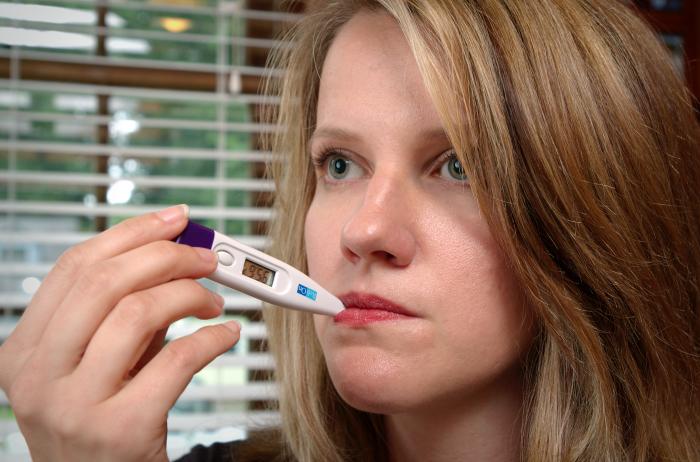
a woman taking her temperature
This photograph depicted a woman who was using a modern, battery-powered oral thermometer, in order to measure her body temperature. In order to return an accurate reading, this particular type of thermometer needed to be placed beneath the user’s tongue, for a set amount of time, beeping when the ambient, sublingual temperature was reached. Photo credit-James Gathany, CDC, public domain

Like all drugs, antibiotics have potential risks.

You may think of antibiotics as safe, harmless drugs with no potential for serious effects.  Usually antibiotics are well tolerated and safe. But serious side effects are possible and dangerous, though rare.

Here are some of the potential serious risks of popular frequently used antibiotics

  • Penicillin- anemia (loss of red blood cells), injury to kidneys and nerves
  • Cephalexin- seizures, liver problems leading to yellow jaundice
  • Sulfa- increased sensitivity to sunlight, inflammation of the pancreas
  • Azithromycin (Z-Pak) irregular heart rhythm, injury to liver and pancreas
  • Ciprofloxacin- seizures, depression, rupture of tendons

exploring the HEART of using antibiotics wisely

Dr. Aletha