Observing Domestic Violence Awareness

October marks Domestic Violence Awareness Month, highlighting the need for awareness and action against domestic violence. It is vital to recognize signs of abuse and offer support to victims. Resources like the National Domestic Violence Hotline are crucial for safety and recovery. Community involvement and education play key roles in prevention efforts. Get educated and involved by reading and sharing this post.

If you know or suspect you are in a domestic violence situation, and this page is visible to your abuser right now, continue reading this post only if you can do so privately. If not, close the device and clear your browser.

Health issues are usually not the major concerns when it comes to elections, but they are related to the major issues, like the cost of living, taxes, and crime.

Among the major campaign issues are health-related concerns, including women’s reproductive care, gun violence, opioid addiction and deaths, mental health crises, and the cost of healthcare.

So it is appropriate that we highlight awareness of two major health issues, one I reviewed earlier this month and one in this post.

Domestic Violence Awareness Month

Domestic violence is a pattern of behaviors used by one partner to maintain power and control over another partner in an intimate relationship.

thehotline.org

A Day of Unity

First observed in October 1981 as a national “Day of Unity,” Domestic Violence Awareness Month (DVAM) is held each October as a way to unite advocates across the nation in their efforts to end domestic violence.

Communities and advocacy organizations across the country connect with the public and one another throughout the month to raise awareness about the signs of abuse and ways to stop it, uplift survivor stories and provide additional resources to leaders and policymakers.

What is Domestic Violence?

Also called intimate partner violence, domestic abuse, or relationship abuse, It can happen to anyone at any point in a relationship. Domestic violence includes behaviors that physically harm, cause fear, prevent a partner from doing what they wish, or force them to behave in ways they do not want.

Domestic violence is a global problem. According to WHO, the World Health Organization,

  • Over a quarter of women aged 15–49 years have been subjected to physical and/or sexual violence by their intimate partner at least once in their lifetime.
  • The prevalence estimates of lifetime intimate partner violence range from 20% in the Western Pacific, 22% in high-income countries and Europe,25% in the WHO Regions of the Americas to over 30% in the WHO African region, Eastern Mediterranean Region, and the South-East Asia region.
  • Globally as many as 38% of all murders of women are committed by intimate partners and 6% of women report having been sexually assaulted by someone other than a partner, although data are more limited.
  • Intimate partner and sexual violence are mostly perpetrated by men against women.

(WHO info edited for length)

(Please note that PDF embeds will display on a computer, but most phone and tablet browsers won’t display embedded PDFs.)

How to identify abuse

  • One feature shared by most abusive relationships is that the abusive partner tries to establish or gain power and control through many different methods at different moments. Examples include, but are not limited to
  • Telling you that you never do anything right.
  • Showing extreme jealousy of your friends or time spent away from them.
  • Preventing or discouraging you from spending time with others, particularly friends, family members, or peers.
  • Insulting, demeaning, or shaming you, especially in front of other people.
  • Preventing you from making your own decisions, including about working or attending school.
  • Controlling finances in the household without discussion, such as taking your money or refusing to provide money for necessary expenses.
  • Pressuring you to have sex or perform sexual acts you’re not comfortable with.
  • Pressuring you to use drugs or alcohol.
  • Intimidating you through threatening looks or actions.

What to do if you are in an abusive situation

The most immediate need is to ensure your safety and the safety of your children or other dependents.

The National Domestic Violence Hotline

The Hotline is a 501(c)(3) organization supported by grants from the Department of Health and Human Services and the Justice Department. Available 24/7 you can

Also search for Local Resources on the website.

The website has detailed instructions for creating a personal safety plan.

safety plan is a personalized, practical plan to improve your safety while experiencing abuse, preparing to leave an abusive situation, or after you leave.

How to help victims and survivors

Even after escaping an abusive situation, those affected need time and help to heal and move forward. If you are not a victim or survivor, you likely know someone who is, or will be. Here are suggestions on how to help.

Educate yourself about the forms of abuse and about your local resources to help victims.

Listen without judgment, be supportive of their decisions, be a trusted friend. Be willing to listen without giving advice unless requested. Don’t assume you would have acted differently in their situation.

Encourage professional support. There should be no stigma to seeking help from trained professionals, just like any other health condition.

Advocate for change in your community, support local resources, fundraisers, and education. Consider volunteering at a shelter. Support local officials who make domestic violence prevention a priority.

An easy way to help is to donate your old electronics like cell phones, laptops, and video game systems for resale.  The National Domestic Violence Hotline receives a portion of the funds furthering The Hotline’s programming and projects that support victims and survivors of domestic violence and the advocates and allies that support them.

Here is another shareable resource written with a faith-based perspective.

Exploring the HEART of Health

Thank you so much for taking the time to read and share this post. By sharing this vital information, you may be saving someone’s life.

Please share in the comments your experiences helping domestic abuse victims or your own experience at surviving abuse, but only if you can do so safely without revealing personal information that might endanger someone’s safety.

I’d love for you to follow this blog. I share information and inspiration to help you turn health challenges into health opportunities.

Add your name to the subscribe box to be notified of new posts by email. Click the link to read the post and browse other content. It’s that simple. No spam.

I enjoy seeing who is new to Watercress Words. When you subscribe, I will visit your blog or website. Thanks and see you next time.


Dr. Aletha

Beth Moore is “broken free”-a book review

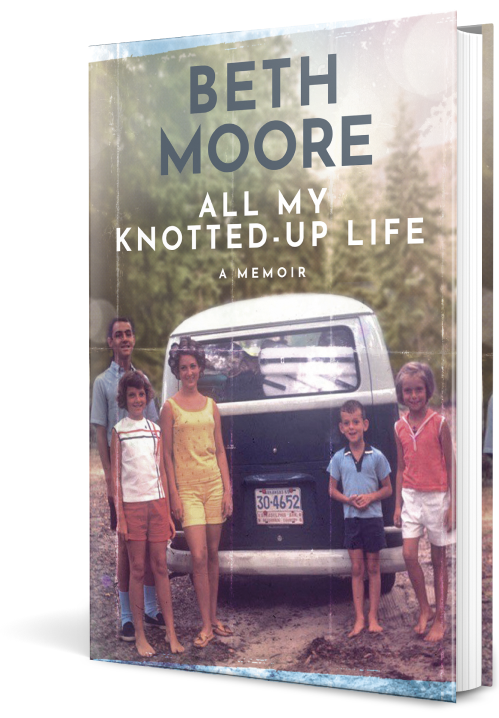
Beth Moore, a Southern writer, teacher, and ministry leader, shares her journey in “All My Knotted-Up Life.” From her roots in the South to her ministry’s growth and the challenges she faced, including confronting sexual abuse and leaving her Southern Baptist church, Moore’s memoir offers insight and inspiration for those wrestling with their own struggles.

 ALL MY KNOTTED-UP LIFE

A MEMOIR

By Beth Moore


I had never heard of Beth Moore when I signed up for one of her Bible studies at my church.  In these studies, written specifically for women, there is a workbook that participants use to read and study the Bible at home, answer questions, and then take part in a group session where we watch her teach the lesson on video.

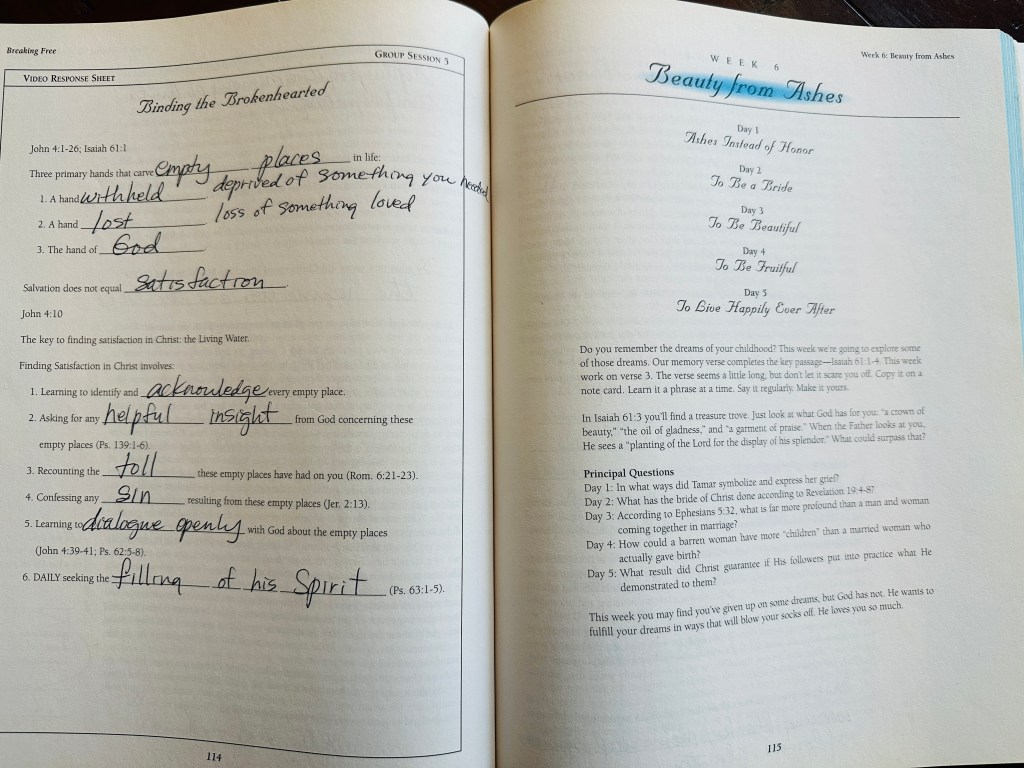
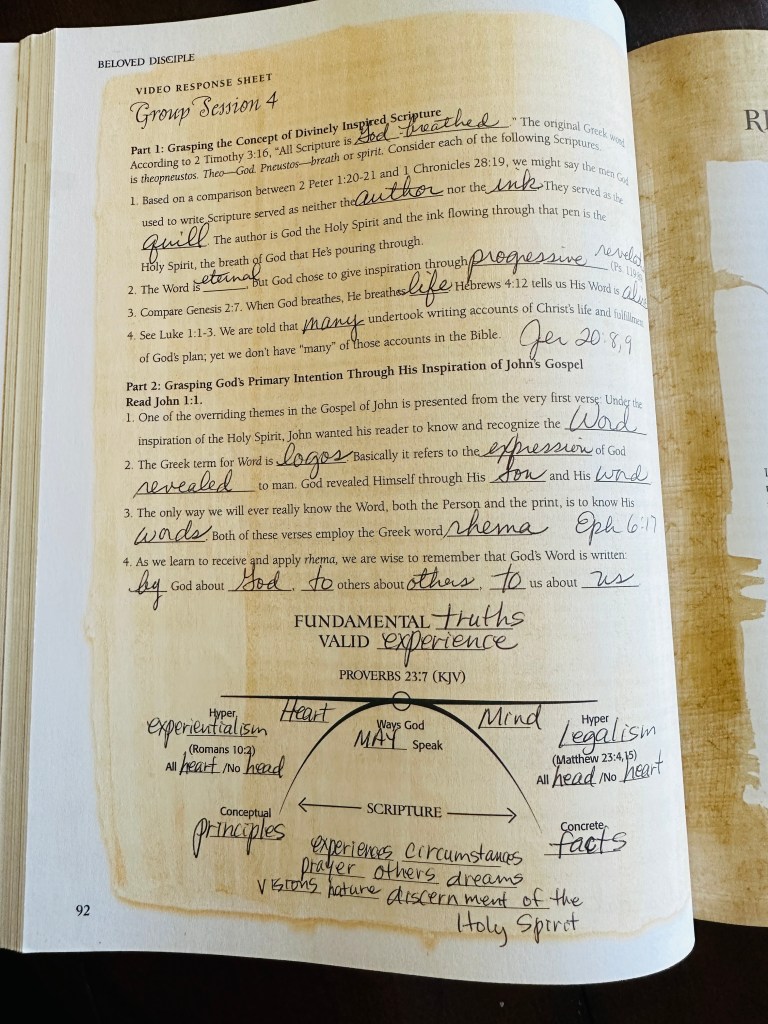
pages from my Breaking Free workbook-video response sheet from Binding the Brokenhearted and first page of week 6, Beauty from Ashes

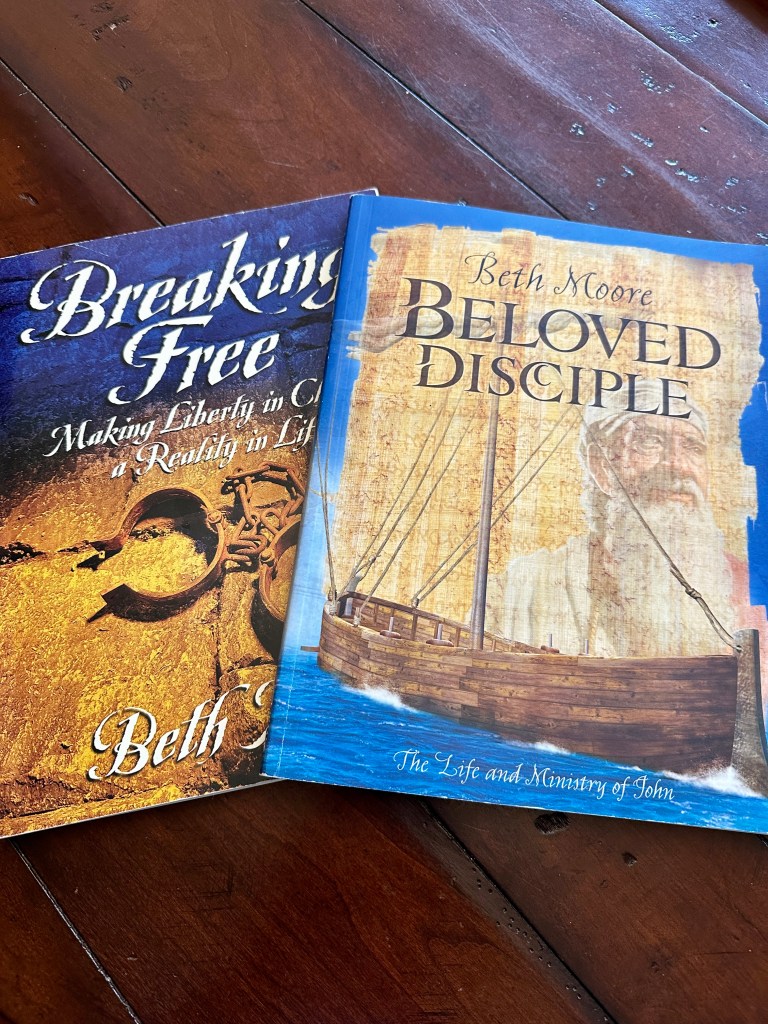
This Bible study, Breaking Free-Making Liberty in Christ a Reality in Life, was drawn from Isaiah and other Old Testament books. This is not an easy section of the Bible to understand. But what I found even more puzzling was the mention of what she called “my victimization”, with no detail other than

scars from being a childhood victim of someone else’s problems

Foreword from Breaking Free

After a few more of Moore’s studies, my women’s group moved on to other Bible teachers and I didn’t hear much more about her until a few years ago when she was in the news for her social media posts about politics and her denomination. 

Recently I learned that she had released a memoir and read a brief review.  I wanted to know more about her, so I read it and review it here.   Whether or not you like Beth Moore or even know who she is you will learn something from this review about her and maybe about yourself.

Note: The photos in this post are for illustration only, and are not in the book nor affiliated with the author.

Beth, the Southerner

Beth Moore is a Southerner, born and raised in Arkadelphia, Arkansas, and Houston, Texas area where she still lives. Even without knowing that, I would know she’s southern by the way she talks, and she writes the way she talks. (And it helps that my home state borders both of those.)

Even without her Southern vernacular, she has a unique way with words when she speaks and writes that you might find off-putting but is part of her appeal, making her down-to-earth and relatable.

The first chapters are about her family of origin- “river people”, the Greens- her parents Aletha and Albert, Nanny, her maternal grandmother who always lived with them, and two brothers and two sisters, with Beth being next to the youngest. (No, I did not know that her mother’s name was Aletha and yes, I was surprised.)

We get a glimpse into Beth’s victimization. No, we don’t get an anatomically correct detailed description of what happened but like I said, Beth has a way with words, so we certainly get the gist of what happened.

“Somewhere stuffed deep inside a drawer of my mind, I’d always known. A child doesn’t pull chunks of her hair and chunks of her memory out of her head over nothing.”

Beth called to “vocational ministry”

She continues to narrate her life as a teenager in Houston, finishing high school, and going away to college where she met and married “her man” Keith Moore, who had his own painful family history. They had two daughters, attended church, and tried to unpack their joint baggage.

“Each heart knows its own bitterness.”

Proverbs 14:10, NIV

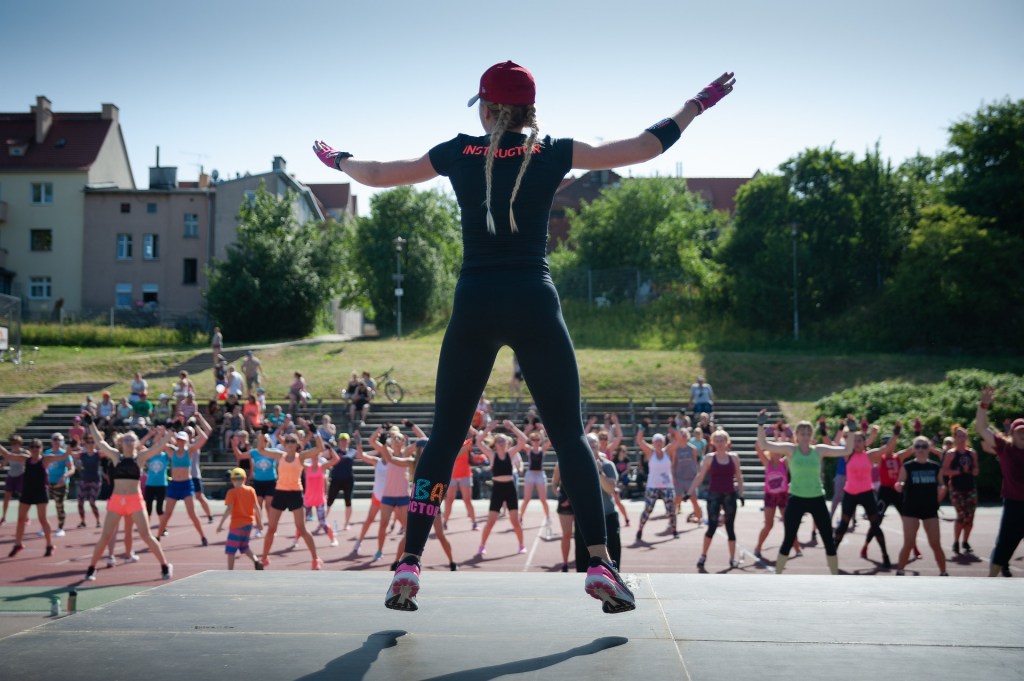
As a teenager, Beth had felt a definite call to “vocational ministry” but was unsure what form that would take.  But the other women at her church heard from God for her and begged her to start a ministry for them. Thus, Beth Moore’s first ministry position was teaching aerobics- yes, aerobics with a Christian flare.

For better and for worse, imagination happens to be one of my strong suits. With a baby on a blanket beside me kicking her little legs to the beat, I started choreographing aerobic exercises to Christian contemporary music. We announced a kickoff in the church bulletin and on posters in the halls and women’s restrooms.

Image by Andrzej Rembowski from Pixabay

Her introduction to teaching Bible lessons came when she was asked to substitute for a Sunday school teacher on maternity leave. She had taught children in Sunday school but never adults. She used a five-message repertoire to speak at women’s events but preparing a new lesson every Sunday was new for her and didn’t go well.

The end of the year couldn’t come quickly enough. I resolved never to darken the door of another Sunday school class in a teaching capacity.

Which didn’t happen. A few years later as she sat in a Bible doctrine class “God struck a match against a stone and lit a torch in my heart for the Scriptures that has never been quenched.”

That class and three mentors who “remain unrivaled in influence” in her life, birthed her teaching ministry which she named Living Proof.

Beth and the Southern Baptists

In the next chapters we follow Beth as she builds her ministry of writing and teaching Bible studies at her church, First Baptist of Houston, partnering with Lifeway Christian Resources ( the publishing arm of the Southern Baptist Convention) to publish her studies and create a traveling speaking ministry called Living Proof Live. Her meetings outgrew churches and moved into arenas of thousands.

But no amount of training could have prepared us for what was ahead. The Bible studies were picking up momentum and we’d just published Breaking Free, the series I’d written after emerging from the abyss where I’d faced down my past.

But as she puts it, “with visibility came scrutiny.”

Beth admits she is self-taught as far as the Bible is concerned. Despite no seminary training, her in-depth Bible studies are not light reading or study. She references authoritative theological commentaries and quotes the original Hebrew and Greek scriptures.

Nevertheless, she was scrutinized by men who questioned how someone without a college degree in theology could teach the Bible. Her Southern Baptist denomination disapproved of women ministers, expecting women to always be in submission not only to their husbands but to all men in the church. They scrutinized her marriage since her husband attended but was not involved in church. Not only was she scrutinized-she was criticized, ostracized, marginalized, and ridiculed publicly.

The situation took a dramatic turn in 2016 when she returned home from a speaking engagement and read news reports of the released recordings of a presidential candidate revealing sexual misconduct. She was shocked and angered to read evangelical leaders minimizing, excusing, and defending his behavior.

She could not believe they took sexual harassment and assault so lightly or just ignored it. As a victim herself, she was not willing to keep silent. So, after praying, she posted a series of Tweets.

Wake up Sleepers to what women have dealt with all along in environments of gross entitlement and power. Are we sickened? Yes. Surprised? NO.

I’m one among many women sexually abused, misused, stared down, heckled, talked naughty to. Like we liked it. We didn’t. We’re tired of it.

And the response? Many in the Christian community attacked HER, asked her to retract, and even apologize for her position. But she stood her ground as she watched her Bible studies pulled out of churches, burned, and women throwing their workbooks away.

“I’d known my comments would cause a backlash, but I couldn’t wrap my mind around the enormity.”

Next was the scandal in the Southern Baptist denomination over rampant sexual abuse in churches that had been ignored, mishandled, excused, and covered up. And there was more institutional angst over women ministering in the church.

It was the final blow-Beth and Keith Moore left their Southern Baptist church.

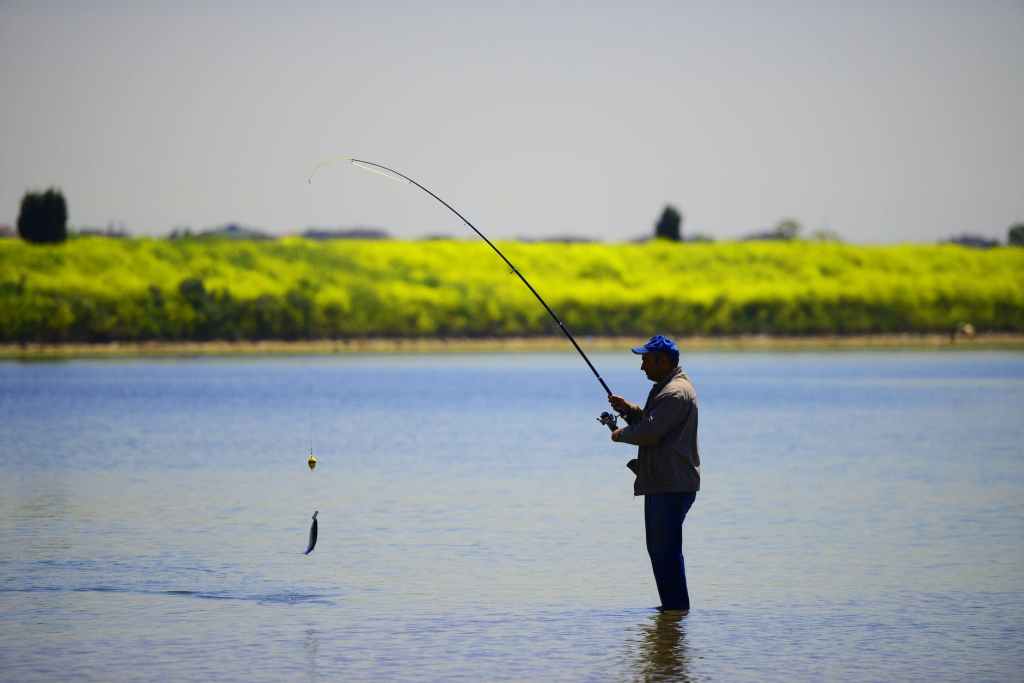
Photo by Onur Uslu on Pexels.com

Family, fishing, and faith

Throughout this professional turmoil, the Moores had a mountain of personal issues to deal with-deaths, serious illness, extended family drama, and wrestling with the past. What kept them grounded was family- their two married daughters and three grandchildren- their beloved dogs, Keith’s fishing- and faith.

The voice of Christ on the God-breathed page would become distinct enough to hear over the others.

She ends with a happily ever after story of finding a different denomination church that welcomed them warmly. She tells us the charming story of their new “home in the woods”, complete with a photo.

I’m glad Beth Moore broke free and writes and speaks so others can. She provides a voice for women, for abuse victims, for dysfunctional families, for anyone whose life is knotted-up.

Maybe you need to break free of something too. Whether you do or not, read this and her other books. You may find release from your knots too.

Come to me, all of you who are weary and burdened, and I will give you rest.” Matthew 11:28

Beth Moore’s studies and books

Beth Moore’s books and studies are sold by many major booksellers, including Lifeway and Tyndale.

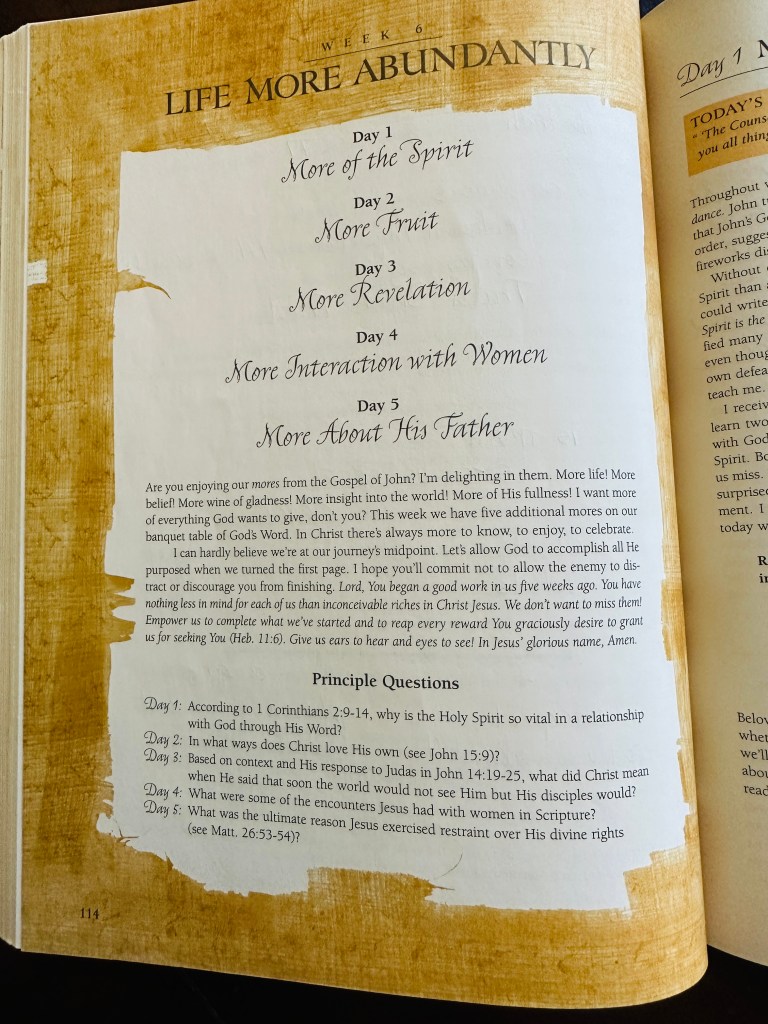
Those of you who have done the Breaking Free study, won’t be surprised she calls it the study “closest to my life’s message. I didn’t break free from the bondage of my past. I was broken free.”

I also did the study about the Apostle John, Beloved Disciple.

And I read her novel, The Undoing of Saint Silvanus

exploring the HEART of health

If you are or have been exposed to abuse, neglect, violence, or any type of trauma that has affected you adversely, please do not suffer alone. Talk to a trusted professional-physician, counselor, therapist, or clergy -and start the road to recovery today.

Call 1-800-799-SAFE (7933) OR text START to 88788

I’d love for you to follow this blog. I share information and inspiration to help you turn health challenges into health opportunities.

Add your name to the subscribe box to be notified of new posts by email. Click the link to read the post and browse other content. It’s that simple. No spam.

I enjoy seeing who is new to Watercress Words. When you subscribe, I will visit your blog or website. Thanks and see you next time.
Medical stethoscope and heart on a textured background

Dr Aletha