exploring the State of the Heart – a book review

Our brain controls the actions of the body’s other organs, but the heart supplies the power that keeps everything working smoothly, including the brain.

Since my blog’s tag line is “exploring the HEART of health”, I couldn’t pass up the chance to read a book about exploring the heart.

State of the Heart by cardiologist Dr. Haider Warraich explores the history, science, and future of cardiac disease.

Most people recognize the seriousness of heart disease and want to know how to maintain heart health, it’s hard to believe that in ancient times people did not consider the heart a vital organ. The liver was revered as the driving force of circulation responsible for maintaining life. Even now, the heart is sometimes thought of as just a pump and not the complex organ that it is.

Dr. Warraich weaves the heart’s story with threads of medical history, explanations of basic cardiac anatomy and physiology, and stories about real patients he has treated for a variety of heart conditions.

  • The congestive heart failure patient who didn’t know he had heart failure
  • The woman who had a heart attack but whose coronary arteries were clear
  • The man who needed a heart transplant to stay alive but couldn’t afford the anti-rejection drugs
  • The man who couldn’t die until his mechanical heart (LVAD) was turned off
the heart and COVID-19

Dr. Warraich explains why coronavirus is especially threatening for people with heart disease.

“Of COVID-19 patients who develop serious heart complications, most don’t see this problem until late in the disease’s progression. However, some are turning up with extensive heart inflammation at the outset.”

Dr. Haider, The Washington Post

Dr. Haider reports that 59% of COVID-19 patients who died had heart damage vs. only 1% of survivors, reminding us that heart disease is still the No. 1 cause of death in the U.S.

“heart disease is not ready to give up that distinction any time soon. With the right precautions and with heightened vigilance, we can try to ensure that COVID-19 doesn’t help increase that toll.”

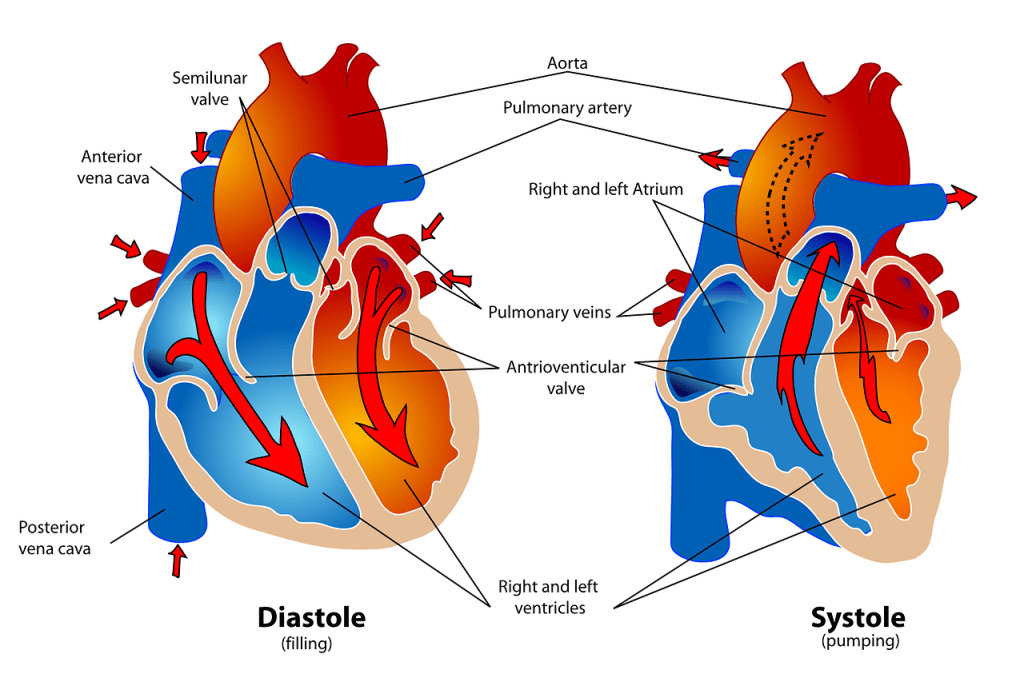
diagram of the human heart
Heart diseases affect any and sometimes multiple parts of the heart- the atria, ventricles, the valves, the aorta, the pulmonary artery and veins, the walls and the coronary arteries (not shown in this diagram. )
advances and stumbles in the medical treatment of heart disease.

Our brain controls the actions of the body’s other organs, but the heart supplies the power that keeps everything working smoothly, including the brain. Using the intricate “highway” system of arteries and veins, the heart pumps blood carrying oxygen, water, and nutrients to every cell in the body. Learn more in this post.

Although we use the term HEART DISEASE , there are many diseases that involve the heart.  HEART conditions affect people from birth to death. Find out more in this post.

Our modern lifestyles are particularly harsh on the heart-our diets, our lack of exercise, and the stress we expose ourselves to-

Dr. Warraich in State of the Heart

7 Keys to a Healthy Heart

February is American Heart Month, highlighting heart health amidst Valentine’s Day. In this post I outline seven major types of heart diseases and risk factors such as smoking and hypertension. Recognizing heart problem symptoms is crucial. Maintaining heart health involves addressing risk factors with healthy lifestyle choices. Share this vital information.

Expedition HEALTH exhibit at the Denver Science Museum

Health is a lifelong expedition

Thanks for joining me to explore the heart, heart disease, and this new book by Dr. Warraich. Find it at your local public library or consider purchasing at one of these affiliate links which help me fund this blog.

Dr. Aletha

Bookshop.org is an online bookstore that financially supports local, independent bookstores.

We believe bookstores are essential to a healthy culture and they are dedicated to the common good.

Bookshop.org donates a portion of every sale to independent bookstores.

Women’s health-choosing and using hormones

Studies and reviews have found no long term increased risk of death from hormone use, although the risk of cardiovascular disease is increased while taking the drugs.

Our bodies make the sex hormones-estrogen, progesterone, and testosterone- naturally, but sometimes doctors prescribe synthetically-made ones therapeutically. Like any drug, we should only use them when the benefit clearly outweighs the risks, after considering issues of safety, effectiveness, side effects, ease of use, and cost.

post updated January 11, 2023

This information is current as of the date of original publication or update. It may have changed by the time you read this. I invite you to fact-check what you read here.

This information is not intended for diagnosis or treatment. Before making health decisions, discuss with your physician or other qualified healthcare provider to decide what is right for you.

taken at the Tulsa Performing Arts Center

Hormone Pills for birth control 

Most oral contraceptives, OCPs, or birth control pills consist of two hormones, an estrogen, usually ethinyl estradiol and a progestin-norethindrone,levonorgestrel, desogestrel, norgestimate, or drospirenone.

For women who cannot or prefer not to take estrogen, norethindrone can be used alone. The FDA has approved another progestin-only pill.

The new pill contains drospirenone . It prevents pregnancy effectively although was not specifically tested opposite norethindrone. Another benefit of the drug is controlling acne. As with other new drugs, Slynd, brand name, is more expensive than generic norethindrone.

Homones through the skin

Hormonal birth control can be delivered by patches applied to the skin, that is transdermal. These also contain an estrogen-ethinyl estradiol and a progestin-levonorgestrel, or norelgestromin, 1 patch every 3 weeks with 1 week off.

Vaginal hormone birth control

Women have had the option of using an estrogen/progestin vaginal ring, kept in place for 3 weeks, then removed and replaced with a new ring 7 days later. (Nuvaring, ethinyl estradiol/etonogestrel) .

Now there is a new option- a ring that contains a different progestin. Annovera is a silicone elastomer device containing ethinyl estradiol and segesterone. The cost, $2000, (per GoodRx) sounds excessive, but this ring can be reused for 13 4-week cycles,unlike Nuvaring which is replaced every 4 weeks. Both rings effectively prevent pregnancy.

photo by Dr. Aletha, taken at the Santa Fe New Mexico airport

Three LARCs –Long-acting reversible hormone contraception 

Three forms of long-acting reversible hormone contraception (birth control) are available to women in the United States.

The birth control injection (shot) is a progestin, depot medroxyprogesterone acetate (Depo Provera). Women who use this method receive an injection every 90 days which effectively prevents pregancy.

Etonogestrel, a contraceptive implant, slowly releases the hormone progestin and does not have estrogen. It can be used in women who cannot take estrogen. The small device is implanted under the skin of the upper arm and replaced every 3 years. Brand names are Nexplanon and Implanon.

Hormonal intrauterine devices, IUDs, contain the progestin levonorgestrel. The newest version (2023) named Liletta is effective for 8 years. Earlier brands could be left in place from 3 to 8 years.

Here is a link to facts about other forms of contraception from the Department of Health and Human Services

Reproductive Health

at the New York Metropolitan Museum of Art

Hormone therapy and heart disease

A 2015 Cochrane review of 40,410 postmenopausal women examined the use of oral hormone therapy (estrogen with or without progesterone) taken for at least six months, compared with placebo (no real drug), to determine the effect on death from any cause, and deaths caused by heart disease, stroke, and blood clot in a leg or lung.

The review found no benefits for preventing heart attack (fatal or nonfatal), or death due to any cause. And other studies and reviews have found no long term increased risk of death from hormone use, although the risk of cardiovascular disease is increased while taking the drugs.

Here is a link to a review of hormone therapy benefits and risks.

Menopausal Hormone Therapy

at the New York Metropolitan Museum of Art

Vaginal estrogen and heart health

While oral estrogen replacement after menopause can decrease night sweats, hot flashes, and vaginal dryness, it potentially increases the risk of developing cardiovascular disease-heart attacks and stroke, and some cancers-breast and uterine. But does estrogen given vaginally carry the same risk?

No, according to the results of the Nurses Health Study. Statistics over 18 years showed no increase in these complications in women who used vaginal estrogen, suggesting this is a safe option for women who choose to use estrogen to improve quality of life after menopause. (from the journal Menopause)

Controlling fibroids that bleed

Fibroids are a non-cancerous tumor of the uterus. They often cause no symptoms but can cause heavy and/or painful periods. Now a hormone combination can stop that.

Marketed as Oriahnn, two capsules daily taken morning and evening can decrease menstrual blood loss by 50% or more. One capsule contains 3 hormones-elagolix, estradiol, and norethindrone. The other contains only elagolix. Treatment should not exceed 2 years due to a risk of bone loss, similar to that seen after menopause occurs.

exploring the HEART of women’s health

I hope you enjoyed the photos. I took them all on various travels.

Dr. Aletha

a statue of a woman holding a child, "CROSSING THE PRAIRIE"
“CROSSING THE PRAIRIE” by Glenna Goodacre, Broken Arrow, Oklahoma

please help support this blog; consider starting with the cost of a beverage

Choose an amount

$5.00
$25.00
$50.00

Or whatever works for you

$

I welcome and appreciate your support, it helps fund this blog and share the HEART of health all over the world.

Excess funds are donated to health related charities.
Dr. Aletha

Donate