How New Pain Drugs May Prevention Addiction

I’m glad to learn that states are mandating insurance coverage for non-opioid pain medications. Advocates push for laws that eliminate higher copayments for non-opioids. Despite challenges, bipartisan support is growing, driven by healthcare concerns regarding opioid dependence and addiction.

This information is current as of the date of original publication or update. It may have changed by the time you read this. I invite you to fact-check what you read here.

Please do not use this information for diagnosis or treatment purposes. Before making health decisions, discuss with your physician or other qualified healthcare provider.

Pain Treatment: A Problem for Doctors and Patients

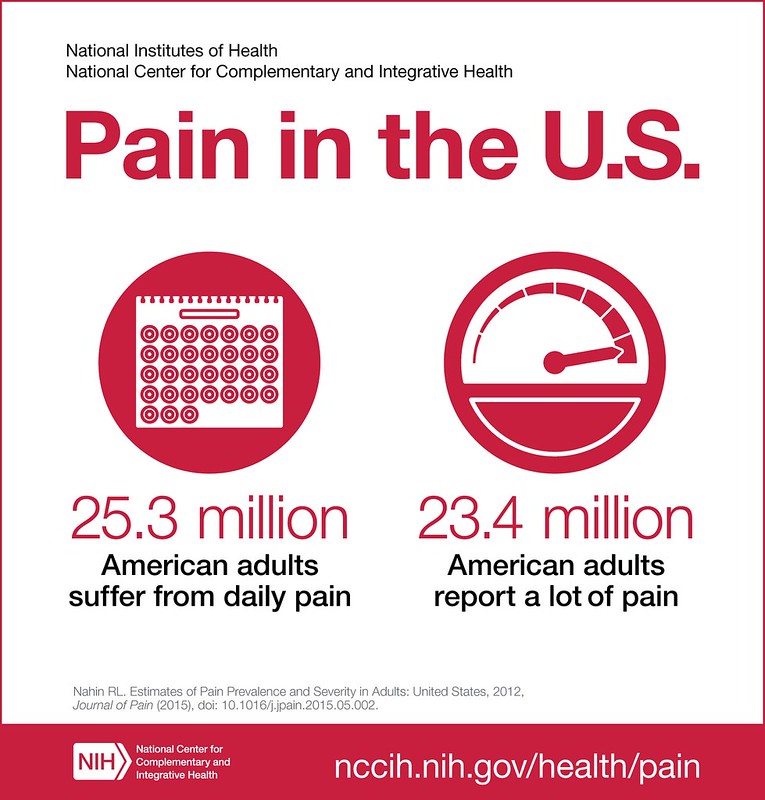
When I was practicing medicine, pain was one of the most difficult problems to manage. I had to balance the need to relieve a person’s pain while not creating dependence or addiction.

Sometimes patients came to me already on chronic opioids for pain. I had to decide whether to continue them or change the person to another treatment, which can be hard to do. Sometimes patients came to me requesting “something” for pain. Only by checking the state pharmacy database did I learn they were already receiving prescriptions for opiates from other physicians, sometimes several.

In my long medical career, there have been few non opiate alternatives for severe pain. So I am pleased to learn of a new drug which is exactly that. Unfortunately, its use may be limited due to cost. This article explains how states are trying to circumvent that problem.

(For the purpose of this article, consider the terms narcotic, opiate, and opioid as referring to the same type of drug.)

More states are requiring insurers to cover non-opioid pain meds

by Nada Hassanein, Oklahoma Voice
February 16, 2026

(edited for readability and clarity, no change to content)

More states are requiring their Medicaid programs and health insurance companies to cover non-opioid pain medications as an alternative to opioids, which can be cheaper for insurers but also more addictive for patients.

Advocates, providers, medical associations, and state lawmakers are pushing for parity in coverage. That means prohibiting insurers from charging higher copayments for non-opioids than they do for opioids, and barring them from requiring prior authorization or step therapy — mandating that patients try other medications first — before they will cover non-opioid drugs.

At least eight states have enacted such laws: Arkansas, Illinois, Louisiana, Maine, Massachusetts, Oklahoma, Oregon, and Tennessee. In states that are still considering legislation, the efforts have been bipartisan, pushed by lawmakers in some Democratic-controlled states, Colorado and New York, and some Republican-leaning states, Kentucky and Missouri.

The issue has gained momentum in recent years, as leading medical associations such as the American Society of Regional Anesthesia and Pain Medicine have urged providers not to prescribe opioids as the first-line treatment for pain.

Meanwhile, bipartisan legislation introduced in Congress last year aims to increase Medicaid Part D enrollees’ access to non-opioid pain medications. It’s been referred to a committee.

Dr. Patrick Giam, president of the American Society of Anesthesiologists, said the organization “believes it is important that insurance plans make non-opioid therapies as accessible to patients as opioid-based therapies.”
drugs to treat pain

The U.S. Food and Drug Administration has encouraged non-opioid pain relief alternatives.

Non-opioid pain medications include

  • prescription-strength non-steroid anti-inflammatory NSAIDs such as naproxen and ibuprofen,
  • nerve-blocking injections,
  • certain antidepressants,
  • anticonvulsant medications,
  • acetaminophen , such as Tylenol and other brands, and
  • other medications.

(affiliate links)

Opioids include

  • oxycodone,
  • codeine,
  • morphine and
  • fentanyl.

suzetrigine-Journavx

Last year, the agency approved a new drug called suzetrigine, under the brand name Journavx, the first non-opioid pain relief medication in a new class of analgesic drugs. The drug, which is available in tablets, can be prescribed for acute pain after surgery or injury. Vertex Pharmaceuticals, the manufacturer, is one of the funders of Voices for Non-Opioid Choices, which has been lobbying for the bills.

In Missouri, where GOP-sponsored legislation would prohibit insurance companies from denying coverage of a prescribed non-opioid or requiring a higher copayment for a non-opioid, the Missouri Insurance Coalition has argued that the measure would increase health care costs and effectively create “a monopoly” for Journavx. Each tablet can cost around $15 per tablet out-of-pocket. But lawmakers pointed to non-opioid alternatives.

Why non-opioids often cost more

Newer non-opioid drugs entering the market are more expensive than opioids because there isn’t yet a generic alternative, explained Sterling Elliott, an Illinois clinical pharmacist and lecturer at Northwestern University’s Feinberg School of Medicine and a board member of Voices for Non-Opioid Choices.

Generic opioids are amongst the cheapest medications that you’ll find flowing through the American pharmaceutical supply,

Sterling Elliott, clinical pharmacist

“The price is so high for a lot of things because the price for generic opioids is so low. Generic opioids are amongst the cheapest medications that you’ll find flowing through the American pharmaceutical supply,” Elliott said. “When you get a new entrant into the pain market, the marketplace factors are set up to drive the price up.”

Elliott added that some insurance plans don’t cover prescription-strength NSAIDs such as ibuprofen because they’d rather people pay out-of-pocket for lower strength, over-the-counter versions of those drugs.

In New York, Democratic Assembly member Phil Steck, the cosponsor of a bipartisan bill that hasn’t received a hearing, said challenging the insurance companies isn’t easy.

“You’re trying to tell insurers what to do,” Steck said. “Those are usually difficult undertakings. … Our experience is that the [legislature’s] insurance committee is very difficult to deal with, and so it hasn’t been pursued as much as we would like.”

Coverage of non-opioids can vary widely across insurance plans, explained clinical pharmacist Emma Murter, who co-chairs the advocacy committee of the Society of Pain and Palliative Care Pharmacists.

“There are so many [non-opioid] medications that can be used for chronic pain,” Murter said. “It isn’t gut-instinct obvious, what is and isn’t covered. It’s very Wild West, chaotic.”

When it comes to filling prescriptions, Murter said, she often has to “fight and appeal for some of these non-opioid therapies” with insurance companies.

Dima Qato, associate professor of clinical pharmacy at the University of Southern California, said non-opioid pain prescription meds are less common on insurance companies’ “preferred” drug lists. Because insurers may favor the less expensive opioids, that can result in higher copayments or consumers paying more out-of-pocket.

That was the case for Chris Fox, the Washington lobbyist who serves as executive director of Voices for Non-Opioid Choices. Fox has traveled to state capitals around the country to lobby for the bills. Recently, he had a personal experience with pain medications following oral surgery.

“For everything but the non-opioid, my out-of-pocket expectation was $0,” he said. He was charged $30 out-of-pocket for the non-opioid.

His oral surgeon wasn’t familiar with the availability of the new first-in-class non-opioid suzetrigine, Fox added. When he asked the doctor for a prescription for it, the surgeon wrote it but also prescribed an opioid along with an antibiotic.

“He prescribed me hydrocodone to go along with it, just in case, because he wasn’t as familiar with [suzetrigine],” Fox said.
Preventing addiction

As he spoke with Stateline by phone, Fox was driving to the local sheriff’s office to drop off the hydrocodone, which he didn’t take following his surgery.

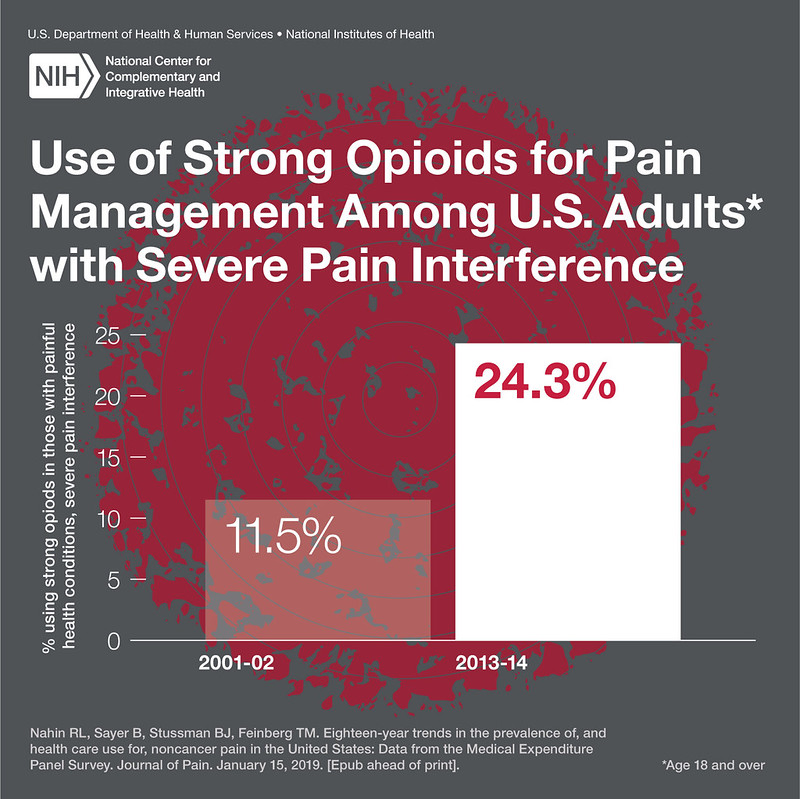
“We’ve neglected the opportunity, I would say, to prevent opioid addiction where we can, which is in those patients that will develop a newly persistent opioid use pattern following exposure to an opioid that they get for medical reason,” Fox said.

Although opioid overdose deaths have declined, the drugs still kill about 200 Americans a day.

Health care professionals at hospitals also run into issues with lower reimbursement rates for some non-opioids.

Dr. Joseph Smith, an anesthesiologist at a Virginia surgical center who has practiced for three decades, pointed to a nerve-block pain pump as an example. Administering a brand-name version of the drug could cost up to $400 for all the equipment, he said. Smith, like Elliott, sits on the board of Voices for Non-Opioid Choices.

“So the hospital is like, ‘Well, I can spend $400 or I can spend 25 cents on a narcotic pill,’” Smith said.

Smith treats many young teen athletes with sports injuries. Research has shown post-surgery narcotic use can increase risk of addiction.

“My goal when I get a 14-year-old or 15-year-old in here is to never have them try a narcotic, never have them exposed to narcotics,” he said.

Stateline reporter Nada Hassanein can be reached at nhassanein@stateline.org.

This story was originally produced by Stateline, which is part of States Newsroom, a nonprofit news network which includes Oklahoma Voice, and is supported by grants and a coalition of donors as a 501c(3) public charity.

It is shared here under a Creative Commons License.

Tolerance vs. Dependence vs. Addiction

Long-term use of prescription opioids, even as prescribed by a doctor, can cause some people to develop a tolerance, which means that they need higher and/or more frequent doses of the drug to get the desired effects.

Drug dependence occurs with repeated use, causing the neurons to adapt so they only function normally in the presence of the drug. The absence of the drug causes several physiological reactions, ranging from mild in the case of caffeine, to potentially life threatening, such as with heroin. Some chronic pain patients are dependent on opioids and require medical support to stop taking the drug.

Drug addiction is a chronic disease characterized by compulsive, or uncontrollable, drug seeking and use despite harmful consequences and long-lasting changes in the brain. The changes can result in harmful behaviors by those who misuse drugs, whether prescription or illicit drugs.

Source:

NIDA. Prescription Opioids DrugFacts. National Institute on Drug Abuse website. https://nida.nih.gov/publications/drugfacts/prescription-opioids. June 1, 2021 Accessed February 19, 2026.

Images in this Post

The infographics in this post were created by the NIH, National Institutes of Health, and used with permission.

The cover photo is by Towfiqu Barbhuiya and used courtesy of Pexels.com.

Get Help with Substance Use at FindTreatment.gov

While the initial choice to use a drug is often voluntary, the powerful effects of addiction makes it very hard to stop, even if someone wants to.

When drugs or alcohol are used so often that they have significant negative effects on your life, this is called a substance use disorder.

It causes intense cravings for alcohol or drugs, and can include:

  • Using illegal drugs like heroin or cocaine, or excessive alcohol drinking.
  • Using prescription drugs in ways other than prescribed, or using someone else’s prescription.

Using drugs repeatedly changes the brain, including the parts that help exert self-control. That’s why someone may not be able to stop using drugs, even if they know the drug is causing harm, or want to stop.

FindTreatment.gov lists facilities across the country. It gives guidance on what to expect from treatment,  different kinds of treatment, and how to pay for treatment.

If you live outside the United States, contact your local source of medical care or search online for substance use treatment in your country.

Exploring the HEART of Health

I’d love for you to follow this blog. I share information and inspiration to help you transform challenges into opportunities for learning and growth.

Add your name to the subscribe box to be notified of new posts by email. Click the link to read the post and browse other content. It’s that simple. No spam.

I enjoy seeing who is new to Watercress Words. When you subscribe, I will visit your blog or website. Thanks and see you next time.

Search this blog for related posts on this topic or other issues you care about.

Dr. Aletha

Understanding Kratom: Effects, Risks, and Regulations

In this post I discuss Kratom, a psychoactive herbal substance, gaining attention for its potential use in managing opioid withdrawal, pain, and anxiety. Despite its popularity, it is not FDA-approved, with growing scrutiny due to concerns over safety and increased regulation at state levels.

This information is current as of the date of original publication or update. It may have changed by the time you read this. I invite you to fact-check what you read here.

Please do not use this information for diagnosis or treatment purposes. Before making health decisions, discuss with your physician or other qualified healthcare provider.

What is Kratom?

Before I read the following article, I knew little about kratom, other than it is a psychoactive drug that is popular with young people. I was thinking along the lines of the substances used in vaping.

But this article made me pause and realize I needed to learn more.

According to NIDA, the National Institute on Drug Abuse, an agency of the NIH, National Institutes of Health,

“Kratom” commonly refers to an herbal substance that can produce opioid- and stimulant-like effects. Kratom and kratom-based products are currently legal and accessible in many areas of the world.

While there are no uses for kratom approved by the U.S. Food and Drug Administration, people report using kratom to manage drug withdrawal symptoms and cravings (especially related to opioid use), pain, fatigue, and mental health problems.

 NIDA supports and conducts research to evaluate potential medicinal uses for kratom and related chemical compounds.

NIDA also supports research towards better understanding the health and safety effects of kratom use. Rare but serious effects have been reported in people who use kratom, including psychiatric, cardiovascular, gastrointestinal and respiratory problems.

 Compared to deaths from other drugs, few deaths have been linked to kratom products and nearly all cases involved other drugs or contaminants.

More info from NIDA at this link

Kratom (Mitragyna speciosa) Mitragynine. Drugs and Narcotics

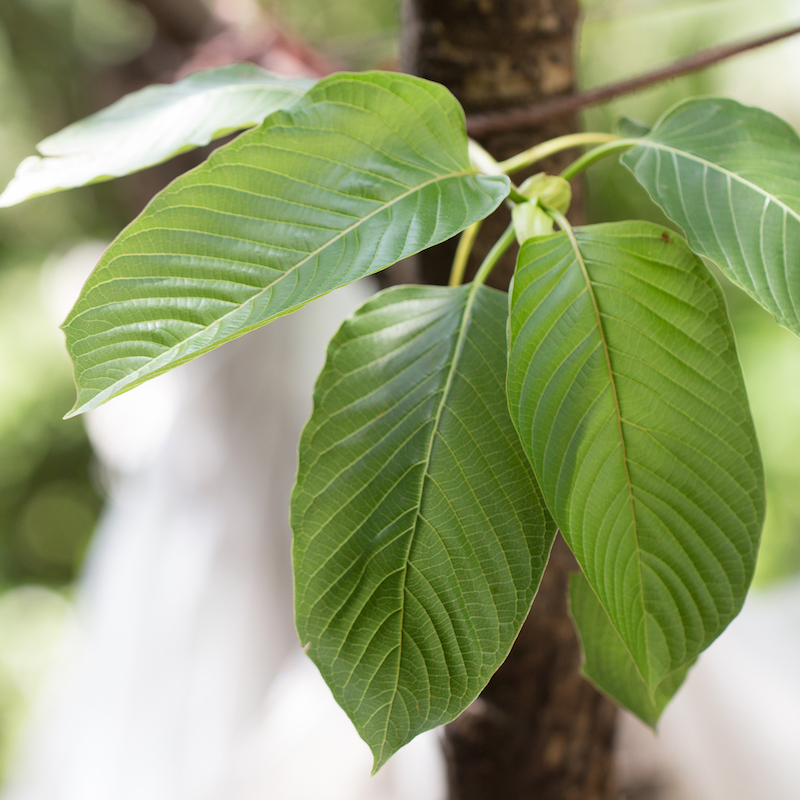
Kratom (Mitragyna speciosa) is a tree in the coffee family, found in Thailand and neighboring countries. Traditionally, in Southeast Asia, people have chewed its leaves or made them into a tea that is used to fight fatigue and improve work productivity

Kratom faces increasing scrutiny from states and the feds

by Amanda Hernández, Oklahoma Voice
August 11, 2025

For years, state lawmakers have taken the lead on regulating kratom — the controversial herbal supplement used for pain relief, anxiety and opioid withdrawal symptoms. Some states have banned it entirely. Others have passed laws requiring age limits, labeling, and lab testing.

At least half of the states and the District of Columbia have enacted some form of regulation on kratom or its components — building a patchwork of policies around a product largely unaddressed by the federal government.

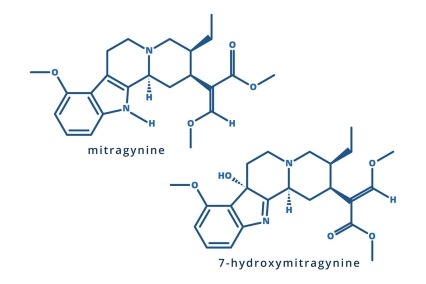
But that may soon change. The U.S. Food and Drug Administration is pushing to ban 7-hydroxymitragynine, or 7-OH — a powerful compound found in small amounts in kratom and sometimes concentrated or synthesized in products sold online, at smoke shops, or behind gas station counters.

Federal health officials announced last month that the compound poses serious public health risks and should be classified as a Schedule I controlled substance, alongside heroin and LSD.

The move marks a significant shift in how federal regulators are approaching kratom, which they attempted to ban in 2016. It has sparked debate about how the change could impact the growing 7-OH industry and its consumers.

This year, at least seven states have considered bills to tighten kratom regulations, including proposals for bans, age restrictions, and labeling requirements.

Kratom and 7-OH differences

Kratom, which originates from the leaves of a tree native to Southeast Asia, can have a wide range of mental and bodily effects, according to federal officials, addiction medicine specialists, and kratom researchers. Reports of fatal kratom overdoses have surfaced in recent years, though kratom is often taken in combination with other substances.

Kratom and 7-OH are distinct products with separate markets, but they are closely connected. 7-OH is a semi-synthetic compound derived from kratom and only emerged on the market in late 2023, while kratom itself has been available for decades.

Leading kratom researchers say more research is needed to fully understand the long-term effects of using both substances.

“There’s much we don’t know, unfortunately, on all sides,” said Christopher R. McCurdy, a professor of medicinal chemistry at the University of Florida. McCurdy is a pharmacist and has studied kratom for more than 20 years.

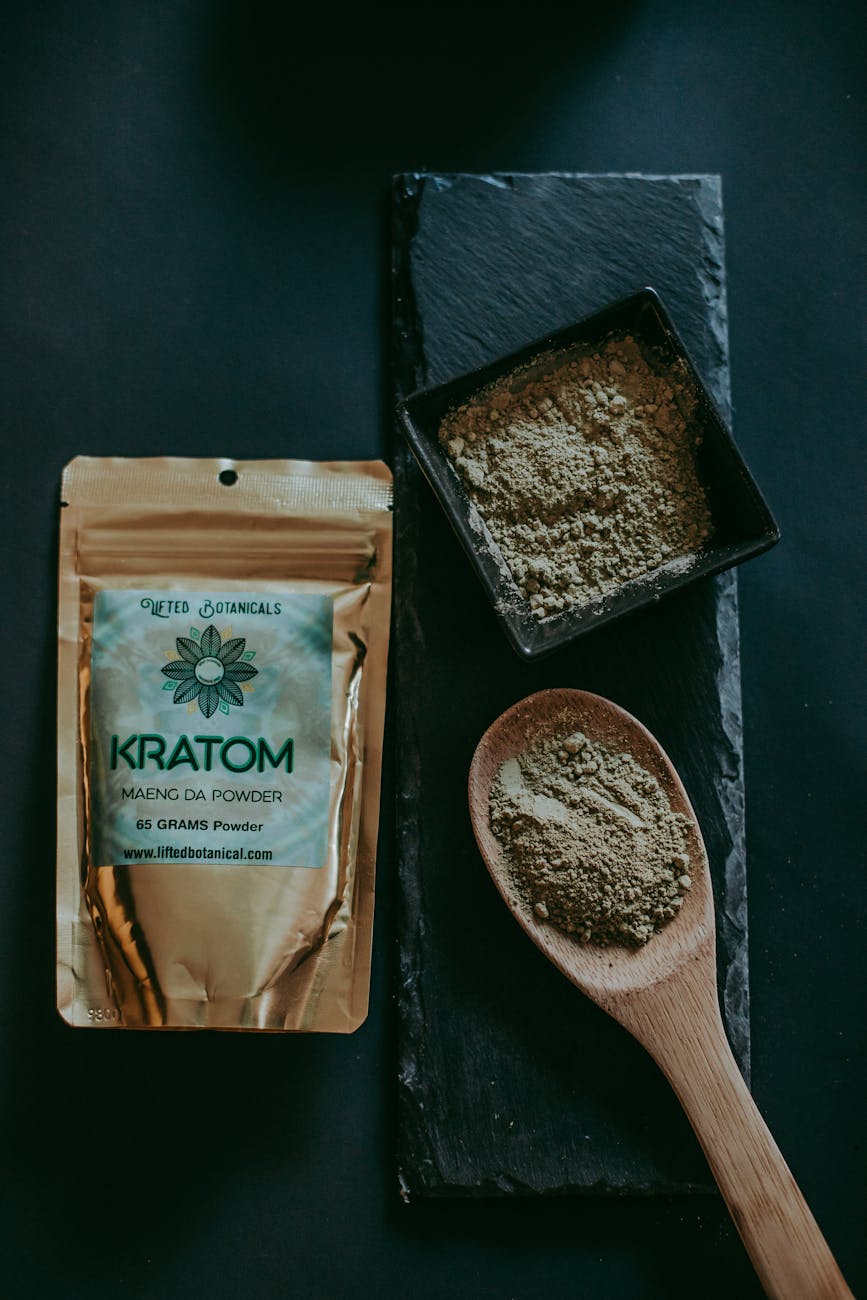
Research suggests kratom may help with opioid withdrawal and doesn’t seem to cause severe withdrawal on its own. Smaller amounts seem to act as a stimulant, while larger doses may have sedative, opioidlike effects.

Very little is known about the risks of long-term use in humans, according to McCurdy.

As for 7-OH, it shows potential for treating pain, but hasn’t been studied in humans, and may carry a high risk of addiction. Researchers don’t yet understand how much is safe to take or how often it should be used, McCurdy told Stateline.

While some leading kratom experts agree that kratom and 7-OH should be regulated, they caution that placing 7-OH under a strict Schedule I classification would make it much harder to study — and argue it should instead be classified as Schedule II as are other opioids.

A federal survey from 2023 estimated that about 1.6 million Americans age 12 and older used kratom in the year before the study. The American Kratom Association, an industry lobbying group, estimated in 2021 that between 11 million and 16 million Americans safely consume kratom products each year.

Since gaining popularity in recent years, 7-OH is in a larger number of products. Some researchers and addiction medicine specialists say many consumers, especially those new to kratom, sometimes don’t understand the difference between products.

“It’s a pure opioid that’s available without a prescription, so it’s akin to having morphine or oxycodone for sale at a smoke shop or a gas station,” McCurdy said. “This is a public health crisis waiting to happen.”

Photo by Laryssa Suaid on Pexels.com

FDA targets 7-OH, not kratom

In late July, the U.S. Department of Health and Human Services recommended that the federal Drug Enforcement Administration place 7-OH in Schedule I, citing a high potential for abuse. The classification would not apply to kratom leaves or powders with naturally occurring 7-OH.

“We’re not targeting the kratom leaf or ground-up kratom,” FDA Commissioner Marty Makary said at a news conference. “We are targeting a concentrated synthetic byproduct that is an opioid.”

Makary acknowledged that there isn’t enough research or data to fully understand how widespread 7-OH’s use or impact may be. Still, he said the Trump administration wants to be “aggressive and proactive” in addressing the issue before it grows into a larger public health problem.

The Trump administration wants to be aggressive and proactive before the issue grows into a larger public health problem.

FDA head Marty Makary

While only small amounts of 7-OH occur naturally in the kratom plant, federal officials have raised concerns about U.S. products containing synthetic or concentrated forms of the compound because it’s more potent than morphine and primarily responsible for kratom’s opioidlike effects

the chemical formula for kratom products; credit NIDA

What will the DEA do with 7-OH?

The FDA’s recommendation to schedule 7-OH will now go to the DEA, which oversees the final steps of the process — including issuing a formal proposal and opening a public comment period.

If finalized, the rule could affect both companies selling enhanced kratom products and consumers in states where those products are currently legal.

The DEA backed off scheduling kratom compounds in 2016 after widespread public opposition.

Kirsten Smith, an assistant professor of psychiatry and behavioral sciences at Johns Hopkins University who is studying kratom’s effects in humans, said she was surprised by the FDA’s push to schedule 7-OH.

“We don’t really have a public health signal of a lot of adverse events for either kratom or for 7-OH at this time,” she told Stateline. “I was, frankly, always surprised that kratom was pushed toward scheduling at an earlier time point. … I don’t know that we have data to support scheduling even now.”

Pushback from advocacy groups

Still, some advocacy groups, including the Holistic Alternative Recovery Trust, argue the push to schedule 7-OH is driven more by corporate interests than public health, suggesting the kratom industry is trying to sideline competition from 7-OH products.

“We think that this is just happening because of the legacy kratom manufacturers losing market share and wanting to gin up a crisis with this,” said Jeff Smith, the national policy director for the group, who said he has used 7-OH for sleep and pain management.

While his organization supports regulation and safe consumption, members worry the federal government’s move could drive people to riskier substances or push the market underground.

“It’s made a profound difference in my life,” Smith said. “We think it would be tragic to cut it off based on such a paucity of data when there’s so much potential for this product to help people.”

Public health concerns 

Federal health officials say a key concern is the growing use of kratom and 7-OH products among teens and young adults.

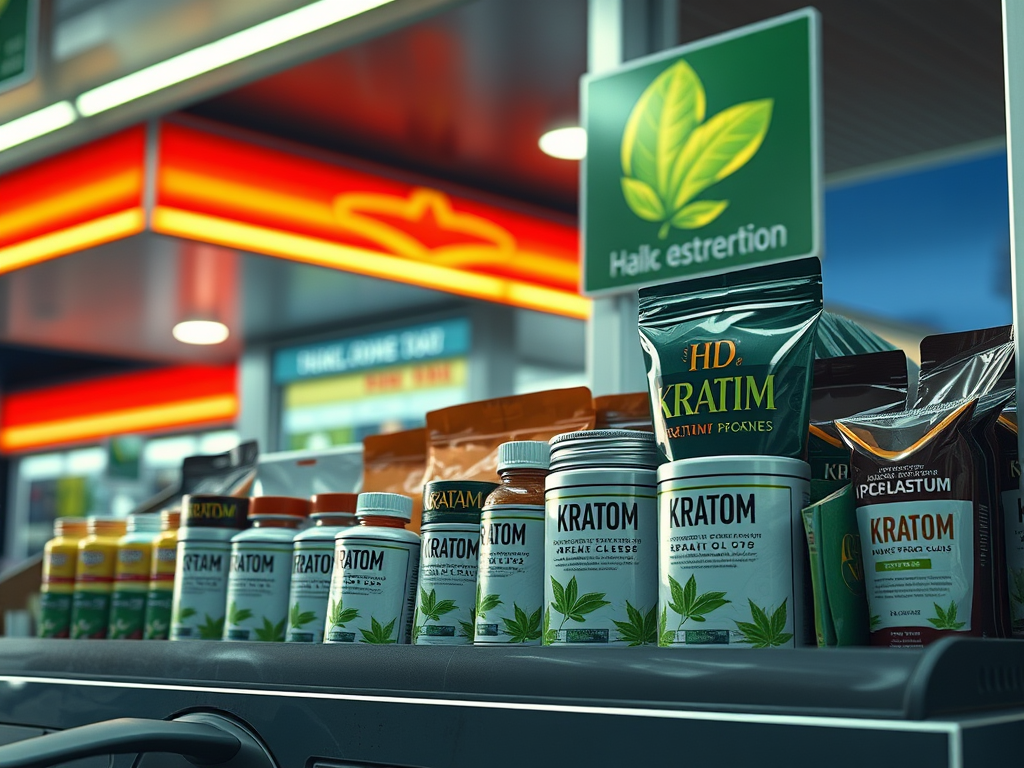
Some officials and addiction medicine specialists have pointed out that these products often come in flavors and packaging designed to appeal to younger buyers, with few controls over where or how they’re sold. In some states without clear regulations, kratom and 7-OH products are available at gas stations or online, sometimes without any age verification.

“Whenever you go into a gas station and even though it’s behind the glass, it’s of eye level, and it has all of these bright colors — it has all of these things that really attract the visual of a kiddo,” said

Socorro Green, a prevention specialist with Youth180, a nonprofit focused on youth substance use prevention in Dallas.

Green added that kratom and 7-OH products may be even more accessible to young people in rural communities, where gas stations and convenience stores are often among the few available retailers.

Some researchers and experts say that certain products may not clearly or accurately disclose their 7-OH content and are sometimes marketed or mistaken for traditional kratom.

Some cities, counties and states have responded by banning kratom or raising the minimum purchase age to 18 or 21. But in many areas, enforcement remains inconsistent, and some addiction specialists say clearer federal and state guidance is needed — especially as more people are using kratom and 7-OH to manage pain, anxiety or withdrawal symptoms on their own.

“There needs to be some kind of oversight, including some way of maybe helping to ensure that people know what they’re getting,” said Terrence Walton, the executive director and chief executive officer of NAADAC, the Association for Addiction Professionals.

State regulations

At least seven states have considered or enacted legislation this year related to kratom — ranging from age restrictions and labeling requirements to outright bans.

In New York, lawmakers passed two bills: one requiring warning labels and prohibiting kratom products from being labeled as “all natural,” and another raising the minimum purchase age to 21. Neither has been sent to the governor.

In Colorado, a new measure, which was signed into law in May, prohibits kratom from being sold in forms that resemble candy or appeal to children, increases labeling requirements, limits concentrations of 7-OH, and bans the manufacture and distribution of synthetic or semi-synthetic kratom.

In Mississippi, a new law that took effect in July raised the minimum purchase age for kratom to 21. It also bans synthetic kratom extracts and products with high concentrations of 7-OH.

Lawmakers in Montana and Texas introduced similar legislation this year, but neither proposal advanced.

Louisiana is the latest state to enact a kratom ban.

Rhode Island became the first state to reverse its ban. The new law establishes a regulatory framework for the manufacturing, sale, and distribution of kratom products, set to take effect in April 2026.

As of this year, Washington, D.C., Alabama, Arkansas, Indiana, Louisiana, Vermont, and Wisconsin have banned kratom. At least half of U.S. states now regulate kratom or its components in some way.

Oklahoma Voice is part of States Newsroom, a nonprofit news network supported by grants and a coalition of donors as a 501c(3) public charity. Oklahoma Voice maintains editorial independence. Contact Editor Janelle Stecklein for questions: info@oklahomavoice.com.


This story is republished under Creative Commons license CC BY-NC-ND 4.0.

Learn more about kratom products marketed as herbal supplements from the National Institutes of Health (NIH) National Center for Complementary and Integrative Health (NCCIH).

How will you respond to this information?

  1. Who do you need to share this information with?
  2. What more do you need to know about kratom?
  3. How do you feel generally about psychoactive drugs?
  4. What should our local governments do about kratom, if anything?

Images in this Post

The images of kratom are from the NIH website and in the public domain. The cover image was generated by AI on WordPress.

Exploring the HEART of Health

I’d love for you to follow this blog. I share information and inspiration to help you transform challenges into opportunities for learning and growth.

Add your name to the subscribe box to be notified of new posts by email. Click the link to read the post and browse other content. It’s that simple. No spam.

I enjoy seeing who is new to Watercress Words. When you subscribe, I will visit your blog or website. Thanks and see you next time.

Dr. Aletha

Here is a related post for you to review

“Full Recovery” from addiction to recovery-book review

This post reviews Brian McAlister’s “Full Recovery” . It outlines a personal action plan for overcoming addiction through self-discovery and empowerment. Using personal anecdotes and principles from s successful figures, he emphasizes a moral foundation based on n a Higher Power. The book serves as a guide for transformation, encouraging positive life changes.