Finding Hope for PTSD

Veterans Day honors those who served in the U.S. military, including persons like the late Bill, a World War II veteran. His memoir recounts his grim role in Normandy and his struggle with post-traumatic stress disorder (PTSD), a common issue among military personnel. After the war, Bill used art to cope with traumatic memories, and was eventually diagnosed with PTSD. The National Center for PTSD is dedicated to PTSD research and education to help trauma victims.

The United States celebrates November 11 as Veterans Day, designated to recognize and honor people who have served in our armed forces. (This is historically Armistice Day, the end of World War I.) I remember the veterans in my life- my late father, my husband, cousins and many friends.

I especially remember my late friend Bill.  Bill served in the Army during World War II , part of the force that invaded Normandy France in June 1944. I recently read a memoir he wrote about his military experiences.
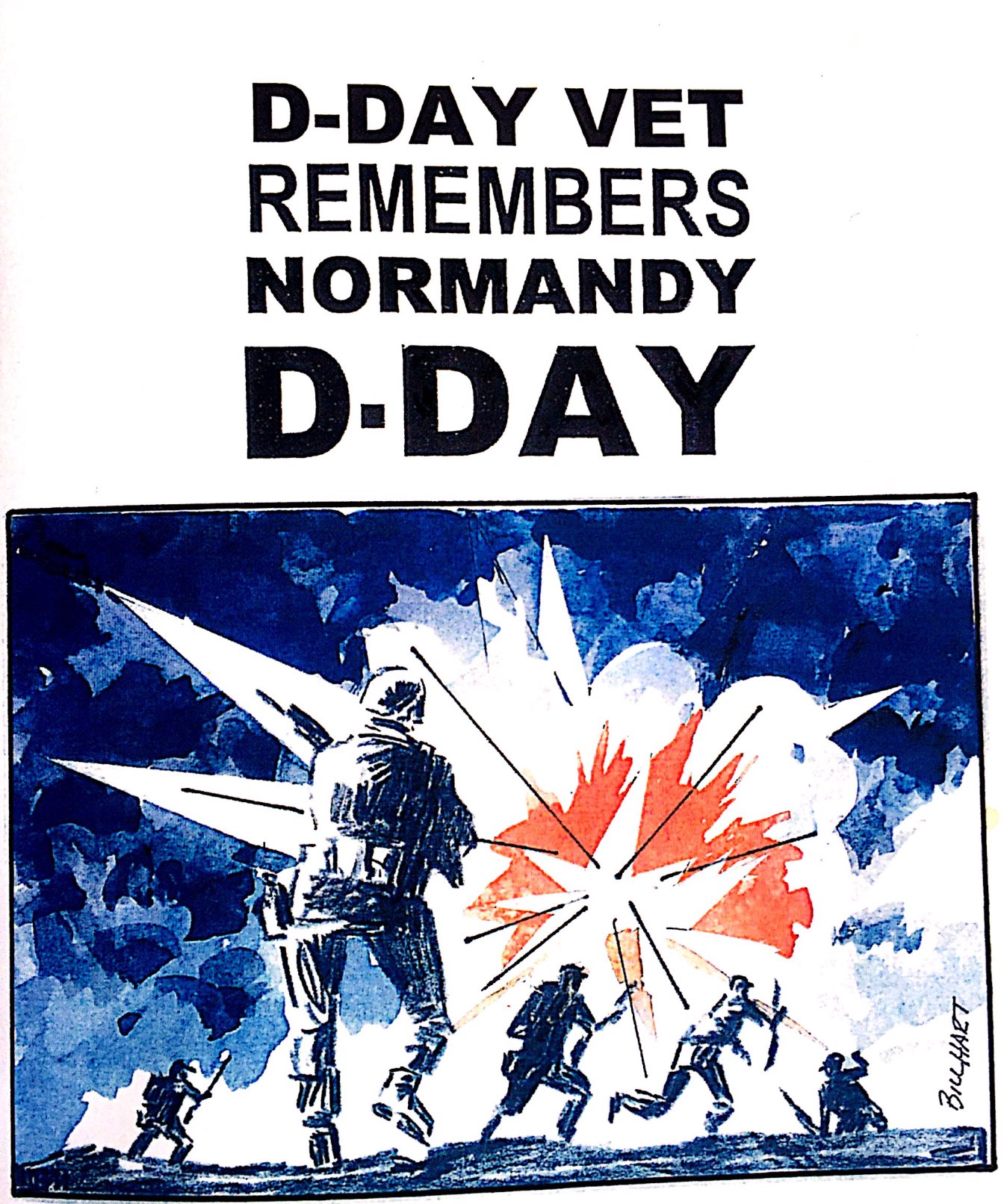
D-DAY VET REMEMBERS NORMANDY

As a 20-year-old he joined the Army in 1943, deployed to England and prepared for the invasion. What he thought would be a grand adventure turned into a nightmare which he vividly captured in his book.

Several days into the fighting on the beaches at Normandy, he was assigned to pick up and transport the bodies of fallen soldiers. Thereafter, as he worked his way across France and Belgium into Germany, he found himself dodging enemy soldiers, liberating concentration camps, dealing with angry and defeated POWs, and famished, humiliated civilians struggling to survive.  Bill described what he saw and felt this way.
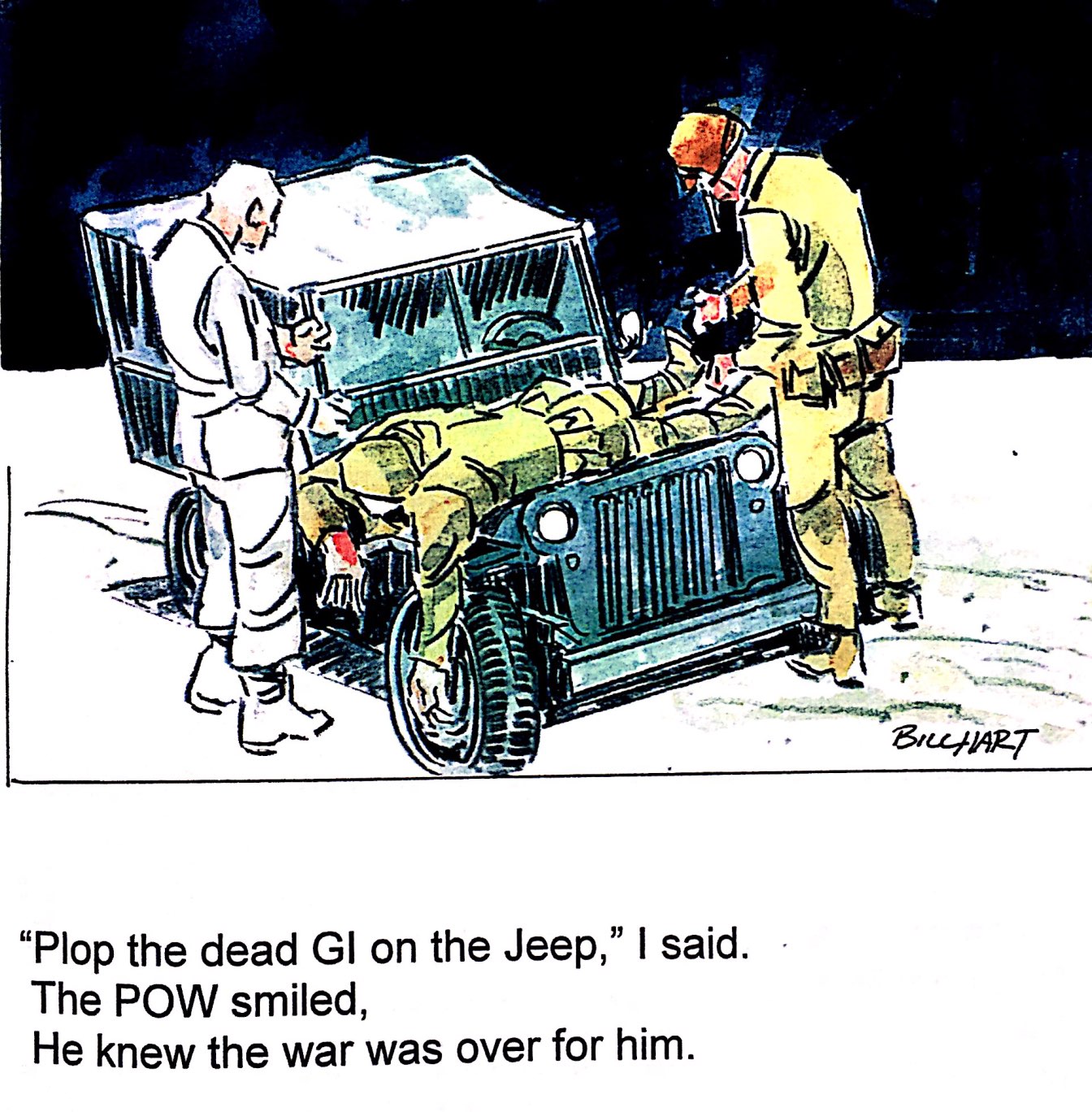
2 SOLDIERS AND A JEEP

“At night I would think about the poor GI’s family when they got the news of his death. I tried not to think too much about this “dead guy” job. It seemed to go on forever. For the next month and a half I was really alone, not attached to any outfit. I found my own food, water, gas for the Jeep and slept alone beside the Jeep in an open field. I shaved with cold water in my helmet and used my Jeep mirror to see.

The Germans were always near. I was scared I would be killed or captured. “Who knows where I am? Who would tell my mother if I died?”

In the beginning it had been exciting being alone with the invasion action all around me. But now I have panic attacks and nightmares of the dead bodies waking me as I sleep in the open field alone. Most GI’s have other soldiers around them to feel safety in numbers. I had no one. I can’t get their dead faces out of my mind. I wait for the bright morning sun to erase the terrible images.”

After the war, Bill established a career as a commercial artist. Art provided not only a living for him and his family but also an outlet for dealing with the distressful memories of the war. He created an extensive portfolio of drawings and paintings depicting images of what he saw and experienced.  By expressing his feelings on canvas, he released some of their distress.
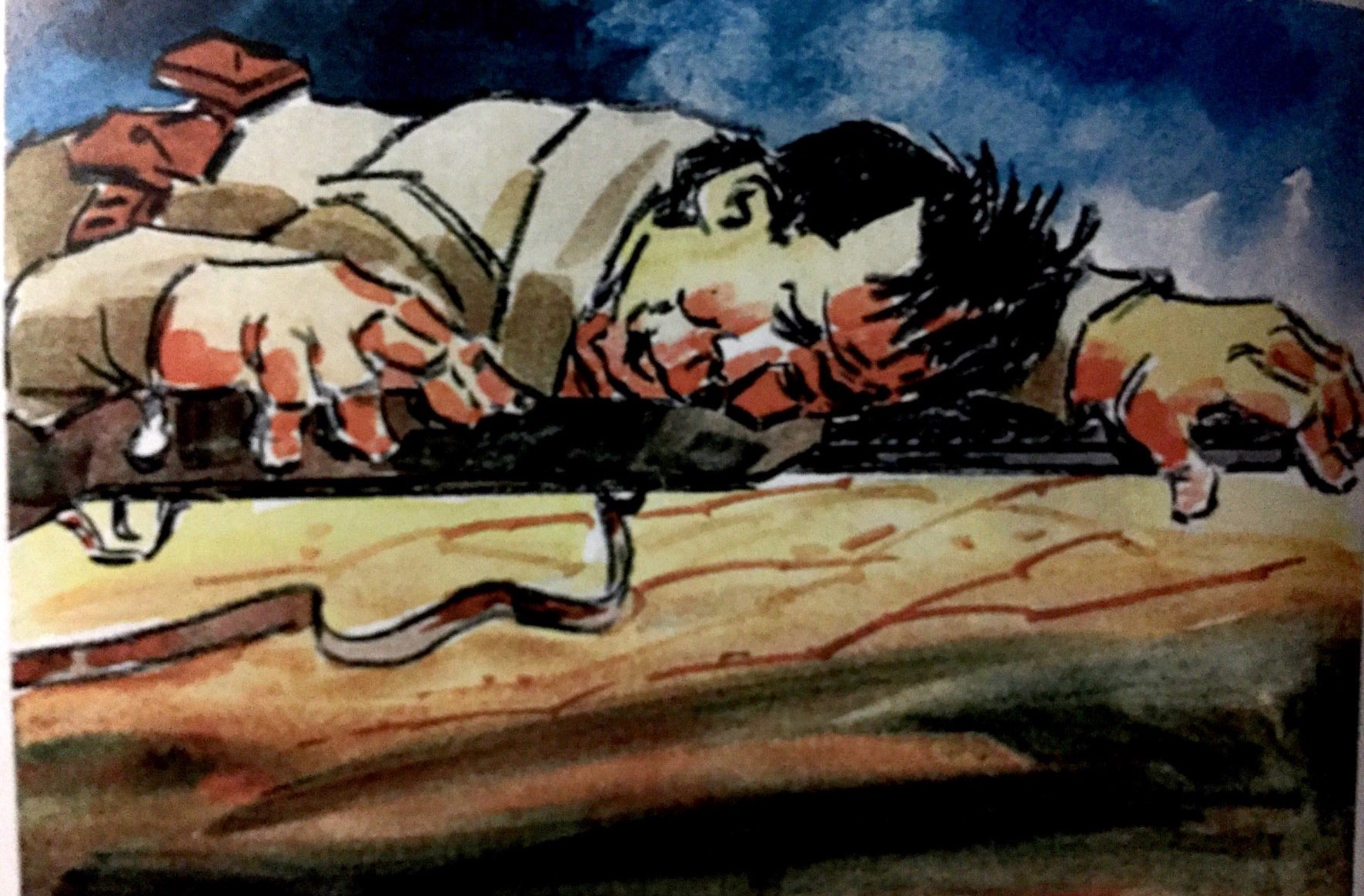
SOLDIER LYING ON THE GROUND

“Later I forced myself to stop thinking about the “dead guys” experience and eventually forgot it. 62 years later, in 2006, when I applied for compensation for war injury during the Battle of the Bulge, the woman who interviewed me kept telling me I was leaving something out, something from my past. I finally remembered after much writing about my remembered events in the 1944 and 1945 war period and was diagnosed with PTSD.

I believe, the greatest event of the 20th century took place during the June 1944 D-Day Normandy Invasion. I am very proud of being a small part of that great historical event that will always be remembered.”

Quotes and drawings from Bill’s memoir, D-DAY VET REMEMBERS NORMANDY (copyright) used by permission of his late wife Greta

Bill was proud to be a World War II veteran and I count it a privilege to know him. He was a kind, gentle man who loved God, his family and friends. He is missed by all of us who love him.
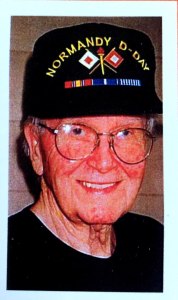
MAN IN A NORMANDY D-DAY HAT
Bill Hart, World War II veteran


POST-TRAUMATIC STRESS DISORDER-PTSD

Once known as “shell shock” or “battle fatigue”, post-traumatic stress disorder, PTSD, has become the most common post-military service disorder. Although it also occurs in civilians who experience severe trauma, it has been defined, studied, and treated among current and former service members.

PTSD develops after exposure to or experiencing significant traumatic events such as interpersonal violence, death or threat of death, serious accidents, disasters, and combat.

There are 4 types of symptoms-

  • Intrusions, such as flashbacks, nightmares
  • Avoidance- isolating oneself from people and/or certain situations
  • Negative mood changes, such as irritability, anger and depression
  • Hypervigilance- being easily startled, always on edge

PTSD can also lead to depression, anxiety, alcohol and substance abuse and suicide.

It is also frequently associated with traumatic brain injury (TBI)  and chronic pain.

The National Center for PTSD (Veterans Administration)  is dedicated to research and education on trauma and PTSD, working to ensure that the latest research findings help those exposed to trauma. They offer extensive information and resources at this link

PTSD: National Center for PTSD

 Here is another story about a veteran who confronted PTSD- my husband Raymond
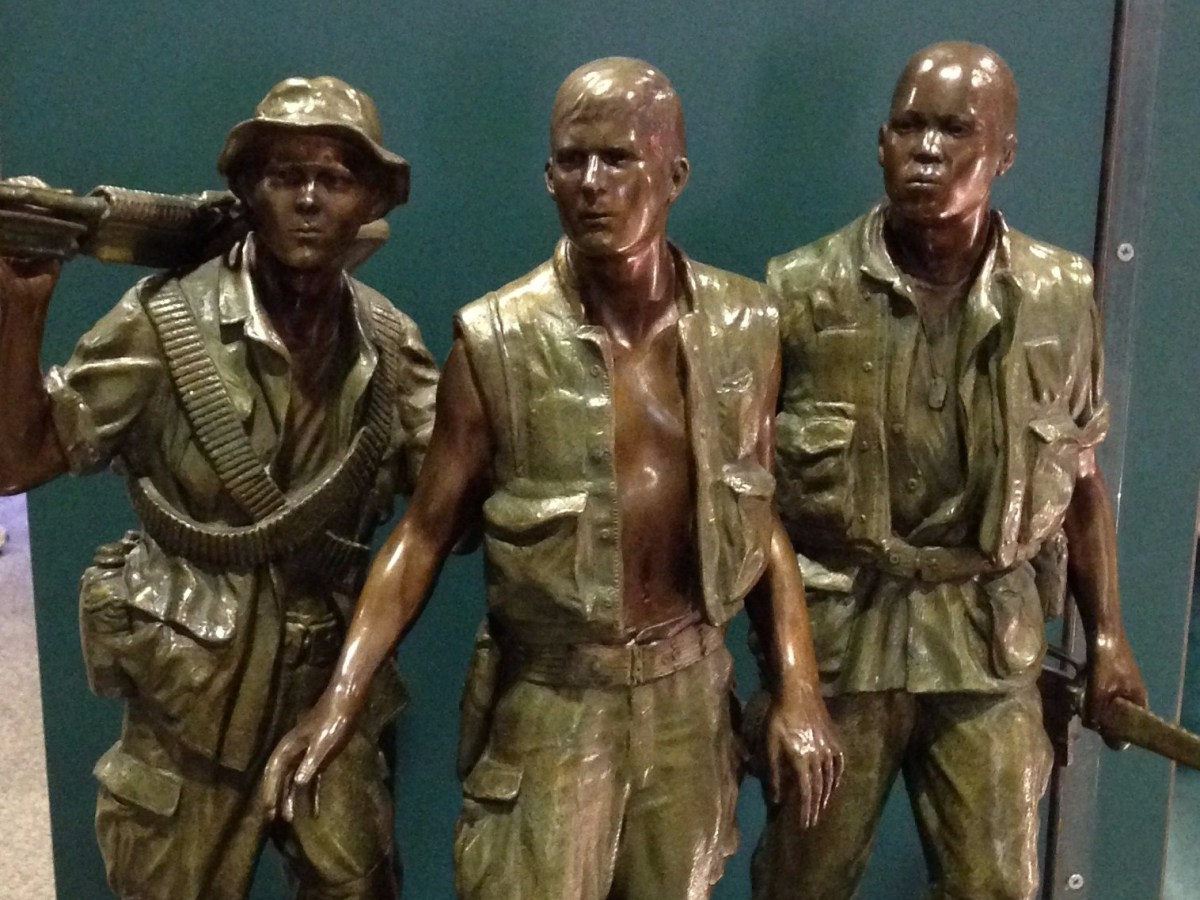
From bullets to blessings-one man’s journey to recovery from war

I didn’t want to ever go to Vietnam again when I came home in 1972 after a one-year tour of duty with the United States Army. I was stationed with the Americal Division, 3/18 Field Artillery Battalion near Tra Bong, a major village located about 25 miles west of Chu Lai, the headquarters of the…

exploring the HEART of health

If you know someone affected by trauma, you may find this helpful.

I’d love for you to follow this blog. I share information and inspiration to help you turn health challenges into health opportunities.

Add your name to the subscribe box to be notified of new posts by email. Click the link to read the post and browse other content. It’s that simple. No spam.

I enjoy seeing who is new to Watercress Words. When you subscribe, I will visit your blog or website. Thanks and see you next time.

Dr. Aletha

Two Words That Changed My Life

This was 1972 and  the American war in Vietnam was raging. The United States government needed soldiers to carry out the engagement, and was drafting young men. The war was unpopular and divided our country.

View post to subscribe to site newsletter.

Dear Readers,

I’ve created a special updated version of this post. You can find it at this link


 TWO WORDS THAT CHANGED MY LIFE

By Aletha Cress Oglesby, M.D.

In college I participated in a faith-based campus group. I dated a young man of a different faith, but he enjoyed coming to the gatherings with me and my friends liked him.  We were fond of each other, but his feelings grew stronger and more serious than mine.

I felt it only fair to end the relationship. We parted amicably but he left our group; it was awkward for both of us. Although I felt the breakup was necessary, I grieved for the loss of our friendship.

One evening several of us were talking together when a new member of our group joined us. We knew little about him other than he had recently left the Army and started attending our college. He looked at me and said, “Where is John tonight?” (not his real name) Everyone became silent and looked from me to him and back to me. Apparently he was the only one who didn’t know we had broken up.

Finally, one of the girls softly explained, “They aren’t dating anymore.”

Everyone remained silent, I suppose assuming that I was upset at the reminder. I wasn’t upset but I realized everyone else was uncomfortable. I didn’t want our new friend to feel bad about the mistake, so I tried to make light of it. I blurted out the first thing that popped into my head.

“That’s right,” I said smiling.  “I’m available.”

With that, everyone, including me, laughed. Thinking back now, I puzzle why I said that. It was out of character for me, a confirmed introvert, and besides, I did not need or want another romantic relationship . I was planning to attend medical school, and romance did not fit into that plan.

However, the new young man took me seriously, calling me a few days later to ask for a date. And despite my reluctance to become involved, I said yes.

“What harm could it do?” I thought. Why sit in the dorm alone on Friday night?

That night I learned about Raymond’s past. He separated from the Army after serving for three years. He had already earned a bachelor’s degree and was attending graduate school with his veteran’s benefits. I casually asked if he had been stationed overseas. He said yes- in Germany and in Vietnam. I did not realize those words also would change my life.

This was 1972 and  the American war in Vietnam was raging. The United States government needed soldiers to carry out the engagement, and was drafting young men. The war was unpopular and divided our country. We watched the course of the conflict nightly on television news (no Internet then).

Raymond was the first person I knew personally who had served in Vietnam. The media portrayed service members and veterans of that war  as fighting an unnecessary, unjustified war at best and as baby killers at worst.

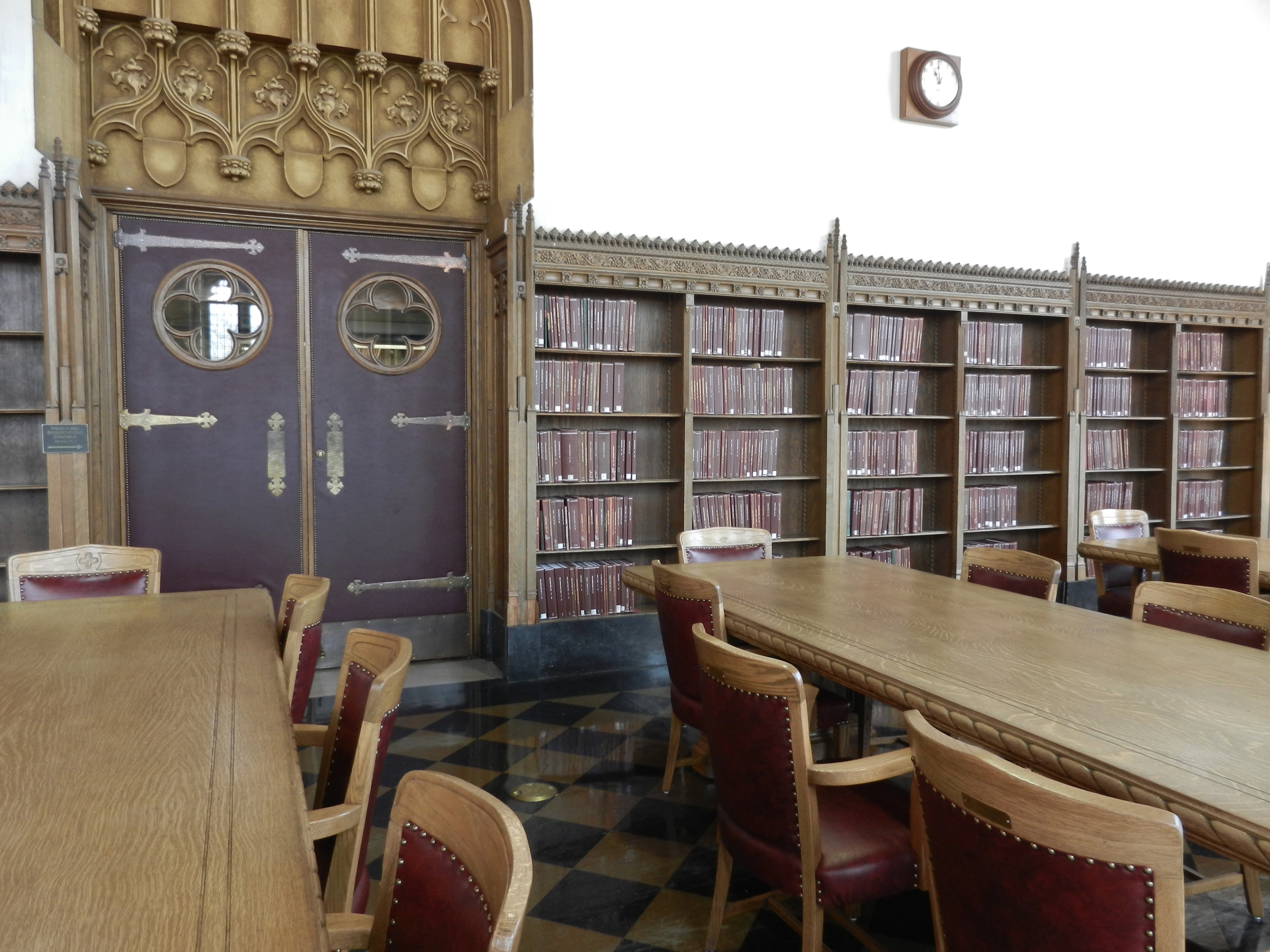
library interior
The reading room of the library looks the same as it did 40 years ago.
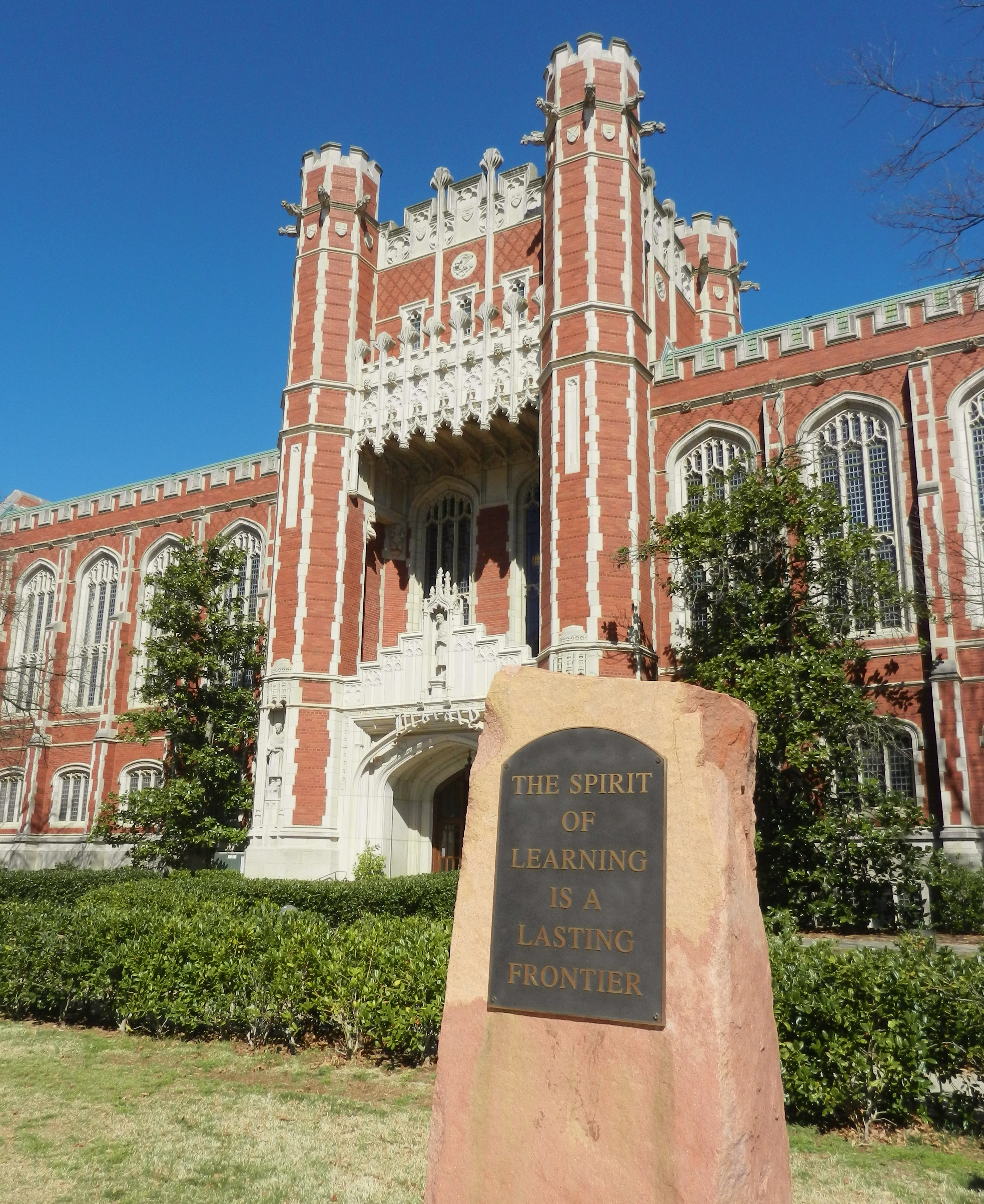
campus library
The campus library where we studied


And so over football games, church, social events and study dates our feelings for each other grew. He asked me to marry him a few weeks later, but I couldn’t commit so soon. We married about 2 years later, as he completed his master’s degree.

Soon after our wedding I started medical school, graduated and started practicing.  He pursued a career in the Information Technology industry. We raised two sons, travelled, attended church.

But our marriage was tense, unsatisfying, and distant at times, and we did not understand why. We could not communicate well. He felt I was demanding and controlling. I felt he was insensitive and selfish. We had to look to the past to find the reason for the pain in our present.

family skiing on mountain
one of many family ski trips


Unlike the case in 1974, today military service members and veterans are honored and considered heroes .  Today’s veterans feel proud of what they do; not so for those who served in Vietnam.

Military medicine now recognizes post-traumatic stress disorder (PTSD) as a common result of service in combat; 40 years ago it was unrecognized and untreated. There were no support groups, counselling or rehabilitative services available.

My husband spoke little about his military service, so for years we both suffered the effects of unrecognized PTSD. By the mid-1980s veterans’ groups pushed to recognize the service of Vietnam veterans and encouraged discussion about the psychic trauma many of them dealt with; and with that came opportunities for treatment and healing.

Through counselling and a support group my husband faced the past and gained a will to move forward starting with a trip to visit Vietnam; by touring the country and meeting the people, he moved past the painful memories and created a new history. He found a country still suffering from the after effects of many years of war, and found a new purpose for his life- to help the very country that had caused us so much pain.

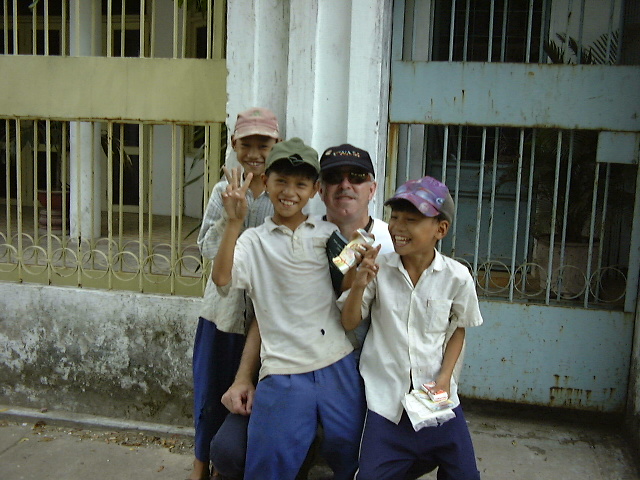
man with Vietnamese boys laughing
Raymond making friends and having fun with some Vietnamese boys


That trip led to another, and another, and another- thirteen trips thus far to serve on humanitarian aid teams to Vietnam. He served by teaching the computer technology he spent years honing and mentored Vietnamese professionals as they developed skill like his.


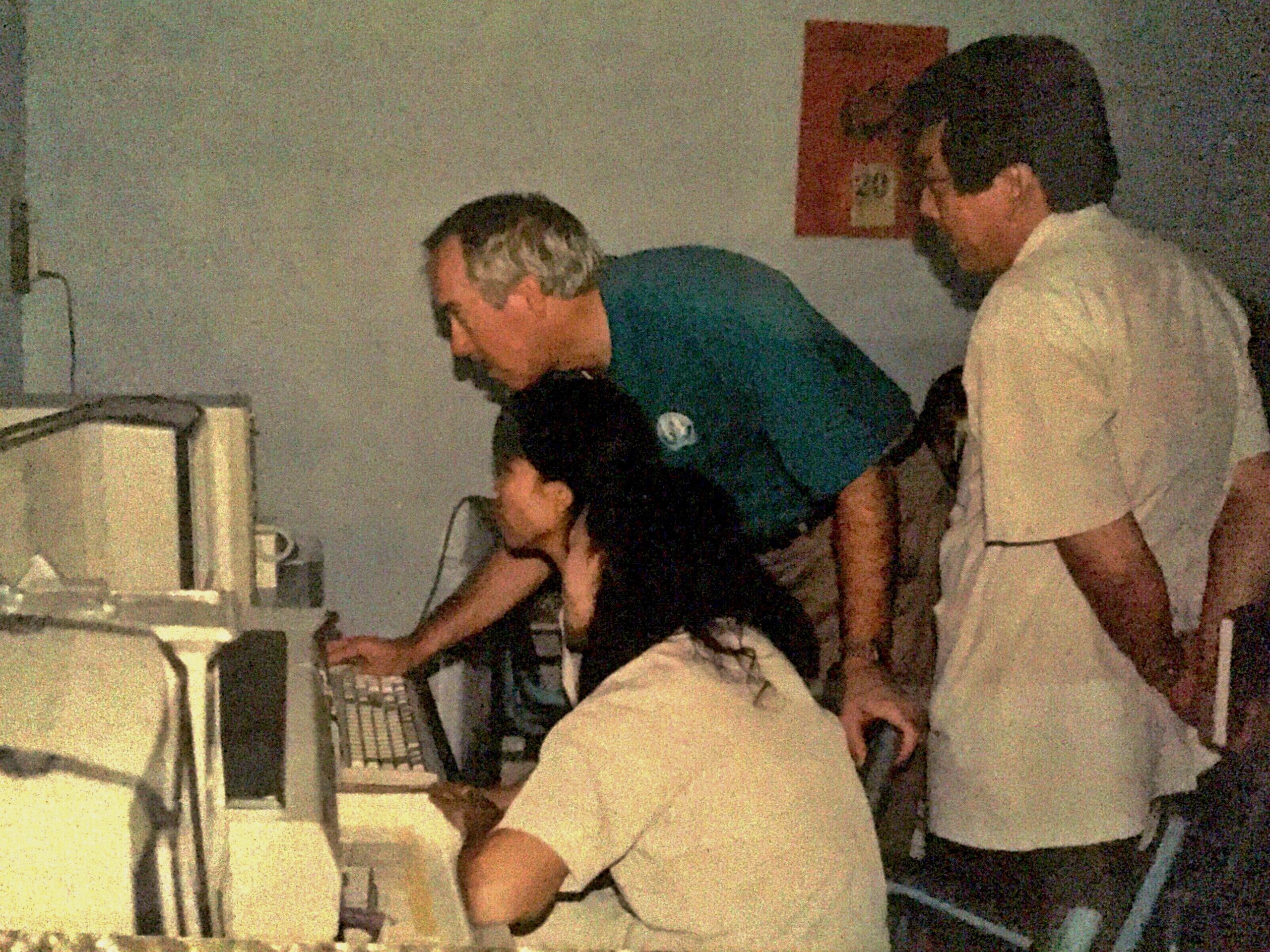
people looking at computers
Raymond teaching hospital staff about using computers in 1995


I accompanied him on many of these trips, serving as physician on medical teams, treating poor Vietnamese citizens in free clinics. We made friends with other veterans and their families, and with Vietnamese people, who often respected American Vietnam veterans more than Americans do.  Giving back healed him as well as our marriage.

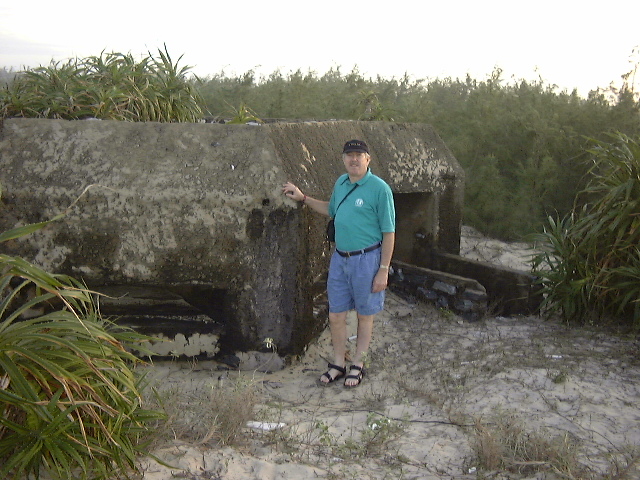
man next to concrete bunker
visiting an old war bunker on China Beach


I remembered as a pre-teen I read a book about an American doctor who treated poor people in a foreign country. I learned about health care through that and other books, and decided to become a doctor. I dreamed of someday traveling overseas and treating people like he did.

I didn’t remember anything else about him except his name. I did an Internet search and found information about him- the late Dr. Tom Dooley. He had served as a physician in the United States Navy and in the 1950s he was assigned to direct the care of refugees- in Vietnam.

When I watched  the war in Vietnam on TV news,  I didn’t realize the doctor I had read about had worked there. I never imagined I would ever go there. And I never imagined that war would indirectly help me meet my husband, and create a family who bring me joy every day.  When I said, “I’m available” I had no idea how true that would be.


What words have changed your life? I would love for you to tell me; I might even share your answer here (anonymously). Contact me here. 


Battle for Tra Bong Vietnam Effects and Aftermath (Kindle Edition)

Raymond published a book about his combat experience in Vietnam. You can read it on any Amazon Kindle E-reader or a free Kindle app on any device.

Dr. Aletha