This information is current as of the date of original publication or update. It may have changed by the time you read this. I invite you to fact-check what you read here.
Please do not use this information for diagnosis or treatment purposes. Before making health decisions, discuss with your physician or other qualified healthcare provider.
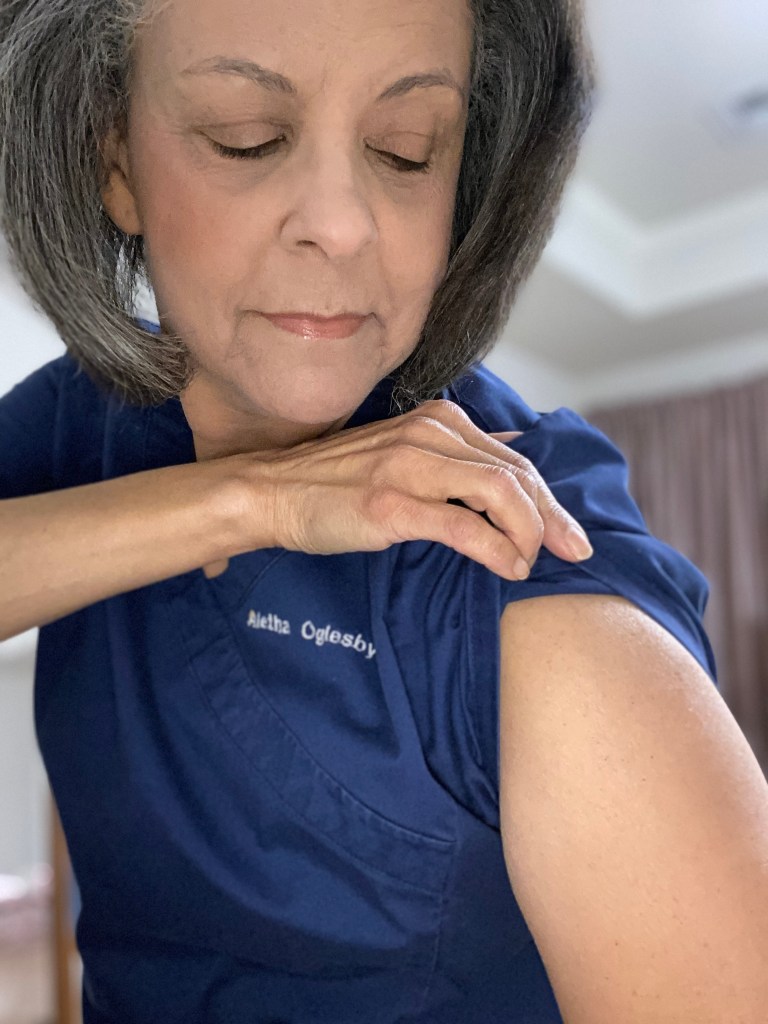
I received my first COVID-19 vaccination on January 6, 2021, a date that is easy to remember for the wrong reason.
(On that day, the United States Capitol was attacked by a crowd, attempting to stop the certification of the 202 Presidential election. The Capitol sustained significant damage and the lives of Congress members and the Vice President were threatened.)
Since then I have received all recommended boosters. And I have never had COVID-19, even when my husband had it. He had been fully vaccinated and had a mild case.
Information and misinformation
There has been much of both in the past year, some deliberate, some well intentioned, some valuable, some just plain wrong. Whenever possible, get your information directly from the source, not “a friend of a friend’s second cousin”. Here are some tips for finding reliable information
The post emphasizes the importance of responsible social media usage by highlighting various resources and strategies to combat misinformation. It discusses how emotional responses can be manipulated by disinformation and urges readers to critically evaluate content before sharing. We all have a responsibility to research claims and ensure truthfulness online.
Exploring the HEART of health
I’d love for you to follow this blog. I share information and inspiration to help you transform challenges into opportunities for learning and growth.
Add your name to the subscribe box to be notified of new posts by email. Click the link to read the post and browse other content. It’s that simple. No spam.
I enjoy seeing who is new to Watercress Words. When you subscribe, I will visit your blog or website. Thanks and see you next time.
The most common form of diffuse hair loss is telogen effluvium which occurs during the telogen or resting phase. Stress can cause hair loss, it is not a myth . Any type of physical, mental, or emotional stress can cause hair to fall out.
post updated March 13, 2021
My Sister’s Keeper– a novel
I enjoyed reading My Sister’s Keeper ,a novel by Jodi Picoult, which touched on several medical themes – cancer, genetic engineering, organ donation ethics, and medical autonomy.
Kate, an adolescent who as a toddler developed a rare form of leukemia, has spent the majority of her life either in the hospital getting treatment or recovering from them. After yet another chemotherapy regimen, she lost her hair.
One day her mother, Sara, offers to take Kate and her younger sister Anna to the mall for a day out. Kate refuses.
“Don’t say it. Don’t tell me that nobody’s going to stare at me, because they will. Don’t tell me it doesn’t matter because it does. And don’t tell me I look fine because that’s a lie.” Her eyes, lash-bare, fill with tears. “I’m a freak, Mom. Look at me.”
Sara looks at her and says, “Well, we can fix this.”
“She walks out of the room followed by Kate and Anna. She finds a pair of ancient electric grooming clippers, plugs them in, and cuts a swath right down the middle of her own scalp.
“Mom”, Kate gasps.
With another swipe of the razor, Kate starts to smile. She points out a spot Sara missed. Anna crawls onto Sara’s lap. “Me next,” she begs.”
As Sara later remembers:
“An hour later, we walk through the mall holding hands, a trio of bald girls. We stay for hours. Everywhere we go, heads turn and voices whisper. We are beautiful, times three.”
Also a movie
My Sister’s Keeper by Jodi Picoult was also made into a major motion picture starring Cameron Diaz, Abigail Breslin, and Joan Cusack.
(These, and other links in this post are affiliate links, used to generate revenue to fund this blog. )
Alopecia- hair loss
You’ve known people who lost their hair due to cancer chemotherapy-you may even be that person. The medical term is anagen effluvium, which means hair loss during the anagen, or active phase of hair growth. 65% of people who receive chemotherapy will lose their hair.
Fortunately, anagen effluvium is reversible; the hair usually grows back in 1-6 months. While waiting, sometimes women wear wigs, while others wear colorful scarves and turbans on their heads. And some simply do as Kate, her mother and sister did- show their heads proudly.
Stress and hair loss
The most common form of diffuse hair loss is telogen effluvium which occurs during the telogen or resting phase. Stress can cause hair loss, it is not a myth . Any type of physical, mental, or emotional stress can cause hair to fall out. Probably the most common stress that precipitates this is pregnancy. Others include
major surgery
serious illness
disorders of the thyroid, kidneys, or liver
Vitamin D deficiency
anemia due to iron deficiency
malnutrition or rapid weight loss
This hair loss is also reversible with the hair usually growing back within 2-6 months after the condition resolves or is treated.
Hair loss can occur at any age and with any type of hair. (Lightstock)
Genes and gender
The most common type of hair loss in both men and women is considered a “normal physiologic variant”- that being androgenetic alopecia. It tends to run in families, hence the “genetic” connotation. As many as 50% of men and 30%-40% of women may experience hair loss with increasing age.
There are two forms. (click on the links to see an illustration.)
Minoxidil- a topical solution applied daily to the scalp, causing increased hair growth within 6-12 months, and is used indefinitely. This is effective for both men and women.
Finasteride is a pill approved for use in men only, if minoxidil does not work. It can have undesirable side effects which limit its use.
Trichotillomania results from repeatedly pulling, twisting, or twirling the hair. Treatment is difficult.
Trichorrhexis nodosa results from trauma to the hair, including excessive brushing, tight hairstyles, and use of heat and chemical products on the hair.
What to do if you are losing hair
If you experience unexplained hair loss, see your doctor for an evaluation. It’s best not to assume that it is just a hair issue.
It is especially important to determine if there is some underlying condition, such as a thyroid disorder, that needs treatment.
Consider your family history. Have your grandparents, parents, or siblings experienced hair loss?
Evaluate your lifestyle to see if there are nutritional, traumatic, or stress factors that may contribute to hair loss. Remember, these may have happened as long as 6 months ago.
Tightly braiding hair can lead to damage if done often enough. (Lightstock)
Consider the way you care for, style, and wear your hair; do these traumatize your hair frequently or excessively?










 watercress words by Dr Aletha