AI in Healthcare: Enhancing Patient Understanding

Although many patients find AI helpful for understanding medical information, experts caution about potential inaccuracies and privacy risks, urging careful use and verification of AI-generated responses.

This information is current as of the date of original publication or update. It may have changed by the time you read this. I invite you to fact-check what you read here.

This information is not intended for diagnosis or treatment. Before making health decisions, discuss with your physician or other qualified healthcare provider to decide what is right for you.

I recently had a medical procedure and when the results came into my patient portal, I logged in to read the results. The diagnosis was something I don’t have much professional experience with, so I did what many patients to with their medical information. I went online and searched for information.

Although this time I didn’t stop with a search engine. I used an AI assistant and was amazed at how easy it was not only to read information but also to ask questions and receive an answer. It even suggested additional resources and next steps.

Then I found this article on KFF indicating that I am not alone. And probably many of you have already used AI for this and other purposed. So I am sharing it here.

An AI Assistant Can Interpret Those Lab Results for You

(Edited for readability and length.)

written by Kate Ruder, September 15, 2025

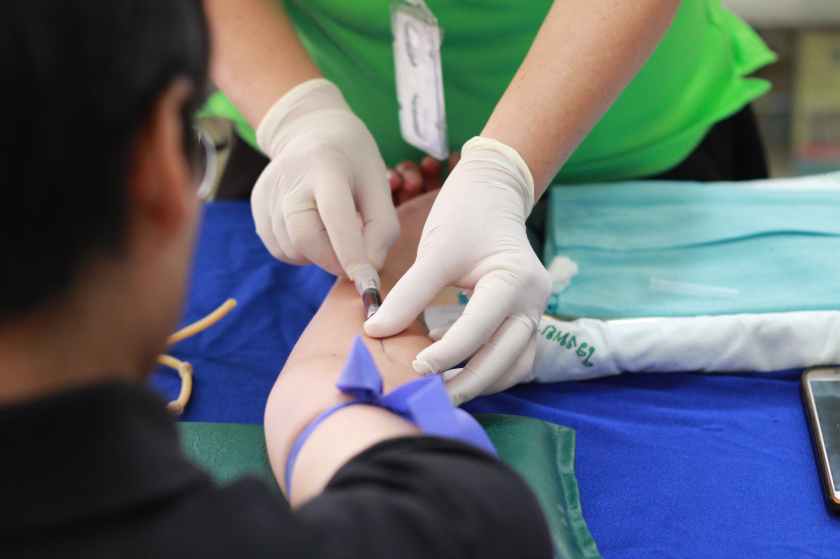
When Judith Miller had routine blood work done in July, she got a phone alert the same day that her lab results were posted online. So, when her doctor messaged her the next day that her overall tests were fine, Miller wrote back to ask about the elevated carbon dioxide and low anion gap listed in the report.

While the 76-year-old Milwaukee resident waited to hear back, Miller did something patients increasingly do when they can’t reach their health care team. She put her test results into Claude and asked the AI assistant to evaluate the data.

Medical Records plus AI equals Understanding

“Claude helped give me a clear understanding of the abnormalities,” Miller said. The generative AI model didn’t report anything alarming, so she wasn’t anxious while waiting to hear back from her doctor, she said.

Patients have unprecedented access to their medical records, often through online patient portals such as MyChart. Federal law requires health organizations to immediately release electronic health information, such as notes on doctor visits and test results.

Screenshot of the MyChart app

A study published in 2023 found that 96% of patients surveyed want immediate access to their records, even if their provider hasn’t reviewed them.

And many patients are using large language models, or LLMs, like OpenAI’s ChatGPT, Anthropic’s Claude, and Google’s Gemini, to interpret their records.

Use AI for Health Cautiously

That help comes with some risk, though. Physicians and patient advocates warn that AI chatbots can produce wrong answers and that sensitive medical information might not remain private.

Yet, most adults are cautious about AI and health. Fifty-six percent of those who use or interact with AI are not confident that information provided by AI chatbots is accurate, according to a 2024 KFF poll. (KFF is a health information nonprofit that includes KFF Health News.)

“LLMs are theoretically very powerful and they can give great advice, but they can also give truly terrible advice depending on how they’re prompted,”

Adam Rodman, internist at Beth Israel Deaconess Medical Center

Adam Rodman Is an internist at Beth Israel Deaconess Medical Center in Massachusetts and the chair of a steering group on generative AI at Harvard Medical School.

Justin Honce, a neuroradiologist at UCHealth in Colorado, said it can be very difficult for patients who are not medically trained to know whether AI chatbots make mistakes.

“Ultimately, it’s just the need for caution overall with LLMs. With the latest models, these concerns are continuing to get less and less of an issue but have not been entirely resolved,” Honce said.

Rodman has seen a surge in AI use among his patients in the past six months. In one case, a patient took a screenshot of his hospital lab results on MyChart then uploaded them to ChatGPT to prepare questions ahead of his appointment.

Rodman said he welcomes patients’ showing him how they use AI, and that their research creates an opportunity for discussion.

Roughly 1 in 7 adults over 50 use AI to receive health information, according to a recent poll from the University of Michigan, while 1 in 4 adults under age 30 do so, according to the KFF poll.

Photo by Beyzaa Yurtkuran on Pexels.com

Should AI Give Medical Advice?

Using the internet to advocate for better care for oneself isn’t new. Patients have traditionally used websites such as WebMD, PubMed, or Google to search for the latest research and have sought advice from other patients on social media platforms like Facebook or Reddit.

But AI chatbots’ ability to generate personalized recommendations or second opinions in seconds is novel.

Liz Salmi, communications and patient initiatives director at OpenNotes, an academic lab at Beth Israel Deaconess that advocates for transparency in health care, had wondered how good AI is at interpretation, specifically for patients.

In a proof-of-concept study published this year, Salmi and colleagues analyzed the accuracy of ChatGPT, Claude, and Gemini responses to patients’ questions about a clinical note. All three AI models performed well, but how patients framed their questions mattered, Salmi said

For example, telling the AI chatbot to take on the persona of a clinician and asking it one question at a time improved the accuracy of its responses.

Are Medical Records Private with AI?

Privacy is a concern, Salmi said, so it’s critical to remove personal information like your name or Social Security number from prompts. Data goes directly to tech companies that have developed AI models, Rodman said, adding that he is not aware of any that comply with federal privacy law or consider patient safety

Sam Altman, CEO of OpenAI, warned on a podcast last month about putting personal information into ChatGPT.

“Many people who are new to using large language models might not know about hallucinations,” Salmi said, referring to a response that may appear sensible but is inaccurate.

For example, OpenAI’s Whisper, an AI-assisted transcription tool used in hospitals, introduced an imaginary medical treatment into a transcript, according to a report by The Associated Press.

Using generative AI demands a new type of digital health literacy that includes asking questions in a particular way, verifying responses with other AI models, talking to your health care team, and protecting your privacy online, said Salmi and Dave deBronkart, a cancer survivor and patient advocate who writes a blog devoted to patients’ use of AI.

Photo by Anna Shvets on Pexels.com

Can AI help physicians communicate results?

Patients aren’t the only ones using AI to explain test results. Stanford Health Care has launched an AI assistant that helps its physicians draft interpretations of clinical tests and lab results to send to patients.

Colorado researchers studied the accuracy of ChatGPT-generated summaries of 30 radiology reports, along with four patients’ satisfaction with them. Of the 118 valid responses from patients, 108 indicated the ChatGPT summaries clarified details about the original report.

But ChatGPT sometimes overemphasized or underemphasized findings, and a small but significant number of responses indicated patients were more confused after reading the summaries, said Honce, who participated in the preprint study.

Meanwhile, after four weeks and a couple of follow-up messages from Miller in MyChart, Miller’s doctor ordered a repeat of her blood work and an additional test that Miller suggested. The results came back normal.

Miller was relieved and said she was better informed because of her AI inquiries.

“It’s a very important tool in that regard,” Miller said. “It helps me organize my questions and do my research and level the playing field.”

KFF Health News is a national newsroom that produces in-depth journalism about health issues and is one of the core operating programs at KFF—an independent source of health policy research, polling, and journalism. Learn more about KFF.

Subscribe to KFF Health News’ free Morning Briefing.

This article first appeared on KFF Health News and is republished here under a Creative Commons Attribution-NoDerivatives 4.0 International License.

This article also appeared on NPR.ORG.

AI in Medical Education

I graduated from college, medical school, and residency without using a computer for training or patient care. When computers and the internet came into widespread use, medical education and medical practice changed to embrace that new technology.

Now AI is doing the same thing. Here you can learn how Harvard Medical School is building artificial intelligence into the curriculum to train the next generation of doctors.

Reader Reflection and Response

I hope you have learned something new in this post, or it confirms something you already knew.

How are you using technology to manage your healthcare? Do you use options such as

  • health record portals
  • online scheduling
  • video visits
  • internet search for medical information, with or without AI

Were you aware that doctors are using AI to create office notes and result summaries?

What concerns do you have about the value and safety of using AI in healthcare? What else do you need to know or want to learn about AI use ?

Cover Image

The cover image was created by the Jetpack AI Assistant from Automatic, Inc.

Exploring the HEART of Health

I hope the information in this post gives you inspiration.

I’d love for you to follow this blog. I share information and inspiration to help you turn health challenges into health opportunities.

Add your name to the subscribe box to be notified of new posts by email. Click the link to read the post and browse other content. It’s that simple. No spam.

I enjoy seeing who is new to Watercress Words. When you subscribe, I will visit your blog or website. Thanks and see you next time.

Medical stethoscope and heart on a textured background

Dr Aletha

Understanding Kratom: Effects, Risks, and Regulations

In this post I discuss Kratom, a psychoactive herbal substance, gaining attention for its potential use in managing opioid withdrawal, pain, and anxiety. Despite its popularity, it is not FDA-approved, with growing scrutiny due to concerns over safety and increased regulation at state levels.

This information is current as of the date of original publication or update. It may have changed by the time you read this. I invite you to fact-check what you read here.

This information is not intended for diagnosis or treatment. Before making health decisions, discuss with your physician or other qualified healthcare provider to decide what is right for you.

What is Kratom?

Before I read the following article, I knew little about kratom, other than it is a psychoactive drug that is popular with young people. I was thinking along the lines of the substances used in vaping.

But this article made me pause and realize I needed to learn more.

According to NIDA, the National Institute on Drug Abuse, an agency of the NIH, National Institutes of Health,

“Kratom” commonly refers to an herbal substance that can produce opioid- and stimulant-like effects. Kratom and kratom-based products are currently legal and accessible in many areas of the world.

While there are no uses for kratom approved by the U.S. Food and Drug Administration, people report using kratom to manage drug withdrawal symptoms and cravings (especially related to opioid use), pain, fatigue, and mental health problems.

 NIDA supports and conducts research to evaluate potential medicinal uses for kratom and related chemical compounds.

NIDA also supports research towards better understanding the health and safety effects of kratom use. Rare but serious effects have been reported in people who use kratom, including psychiatric, cardiovascular, gastrointestinal and respiratory problems.

 Compared to deaths from other drugs, few deaths have been linked to kratom products and nearly all cases involved other drugs or contaminants.

More info from NIDA at this link

Kratom (Mitragyna speciosa) Mitragynine. Drugs and Narcotics

Kratom (Mitragyna speciosa) is a tree in the coffee family, found in Thailand and neighboring countries. Traditionally, in Southeast Asia, people have chewed its leaves or made them into a tea that is used to fight fatigue and improve work productivity

Kratom faces increasing scrutiny from states and the feds

by Amanda Hernández, Oklahoma Voice
August 11, 2025

For years, state lawmakers have taken the lead on regulating kratom — the controversial herbal supplement used for pain relief, anxiety and opioid withdrawal symptoms. Some states have banned it entirely. Others have passed laws requiring age limits, labeling, and lab testing.

At least half of the states and the District of Columbia have enacted some form of regulation on kratom or its components — building a patchwork of policies around a product largely unaddressed by the federal government.

But that may soon change. The U.S. Food and Drug Administration is pushing to ban 7-hydroxymitragynine, or 7-OH — a powerful compound found in small amounts in kratom and sometimes concentrated or synthesized in products sold online, at smoke shops, or behind gas station counters.

Federal health officials announced last month that the compound poses serious public health risks and should be classified as a Schedule I controlled substance, alongside heroin and LSD.

The move marks a significant shift in how federal regulators are approaching kratom, which they attempted to ban in 2016. It has sparked debate about how the change could impact the growing 7-OH industry and its consumers.

This year, at least seven states have considered bills to tighten kratom regulations, including proposals for bans, age restrictions, and labeling requirements.

Kratom and 7-OH differences

Kratom, which originates from the leaves of a tree native to Southeast Asia, can have a wide range of mental and bodily effects, according to federal officials, addiction medicine specialists, and kratom researchers. Reports of fatal kratom overdoses have surfaced in recent years, though kratom is often taken in combination with other substances.

Kratom and 7-OH are distinct products with separate markets, but they are closely connected. 7-OH is a semi-synthetic compound derived from kratom and only emerged on the market in late 2023, while kratom itself has been available for decades.

Leading kratom researchers say more research is needed to fully understand the long-term effects of using both substances.

“There’s much we don’t know, unfortunately, on all sides,” said Christopher R. McCurdy, a professor of medicinal chemistry at the University of Florida. McCurdy is a pharmacist and has studied kratom for more than 20 years.

Research suggests kratom may help with opioid withdrawal and doesn’t seem to cause severe withdrawal on its own. Smaller amounts seem to act as a stimulant, while larger doses may have sedative, opioidlike effects.

Very little is known about the risks of long-term use in humans, according to McCurdy.

As for 7-OH, it shows potential for treating pain, but hasn’t been studied in humans, and may carry a high risk of addiction. Researchers don’t yet understand how much is safe to take or how often it should be used, McCurdy told Stateline.

While some leading kratom experts agree that kratom and 7-OH should be regulated, they caution that placing 7-OH under a strict Schedule I classification would make it much harder to study — and argue it should instead be classified as Schedule II as are other opioids.

A federal survey from 2023 estimated that about 1.6 million Americans age 12 and older used kratom in the year before the study. The American Kratom Association, an industry lobbying group, estimated in 2021 that between 11 million and 16 million Americans safely consume kratom products each year.

Since gaining popularity in recent years, 7-OH is in a larger number of products. Some researchers and addiction medicine specialists say many consumers, especially those new to kratom, sometimes don’t understand the difference between products.

“It’s a pure opioid that’s available without a prescription, so it’s akin to having morphine or oxycodone for sale at a smoke shop or a gas station,” McCurdy said. “This is a public health crisis waiting to happen.”

Photo by Laryssa Suaid on Pexels.com

FDA targets 7-OH, not kratom

In late July, the U.S. Department of Health and Human Services recommended that the federal Drug Enforcement Administration place 7-OH in Schedule I, citing a high potential for abuse. The classification would not apply to kratom leaves or powders with naturally occurring 7-OH.

“We’re not targeting the kratom leaf or ground-up kratom,” FDA Commissioner Marty Makary said at a news conference. “We are targeting a concentrated synthetic byproduct that is an opioid.”

Makary acknowledged that there isn’t enough research or data to fully understand how widespread 7-OH’s use or impact may be. Still, he said the Trump administration wants to be “aggressive and proactive” in addressing the issue before it grows into a larger public health problem.

The Trump administration wants to be aggressive and proactive before the issue grows into a larger public health problem.

FDA head Marty Makary

While only small amounts of 7-OH occur naturally in the kratom plant, federal officials have raised concerns about U.S. products containing synthetic or concentrated forms of the compound because it’s more potent than morphine and primarily responsible for kratom’s opioidlike effects

the chemical formula for kratom products; credit NIDA

What will the DEA do with 7-OH?

The FDA’s recommendation to schedule 7-OH will now go to the DEA, which oversees the final steps of the process — including issuing a formal proposal and opening a public comment period.

If finalized, the rule could affect both companies selling enhanced kratom products and consumers in states where those products are currently legal.

The DEA backed off scheduling kratom compounds in 2016 after widespread public opposition.

Kirsten Smith, an assistant professor of psychiatry and behavioral sciences at Johns Hopkins University who is studying kratom’s effects in humans, said she was surprised by the FDA’s push to schedule 7-OH.

“We don’t really have a public health signal of a lot of adverse events for either kratom or for 7-OH at this time,” she told Stateline. “I was, frankly, always surprised that kratom was pushed toward scheduling at an earlier time point. … I don’t know that we have data to support scheduling even now.”

Pushback from advocacy groups

Still, some advocacy groups, including the Holistic Alternative Recovery Trust, argue the push to schedule 7-OH is driven more by corporate interests than public health, suggesting the kratom industry is trying to sideline competition from 7-OH products.

“We think that this is just happening because of the legacy kratom manufacturers losing market share and wanting to gin up a crisis with this,” said Jeff Smith, the national policy director for the group, who said he has used 7-OH for sleep and pain management.

While his organization supports regulation and safe consumption, members worry the federal government’s move could drive people to riskier substances or push the market underground.

“It’s made a profound difference in my life,” Smith said. “We think it would be tragic to cut it off based on such a paucity of data when there’s so much potential for this product to help people.”

Public health concerns 

Federal health officials say a key concern is the growing use of kratom and 7-OH products among teens and young adults.

Some officials and addiction medicine specialists have pointed out that these products often come in flavors and packaging designed to appeal to younger buyers, with few controls over where or how they’re sold. In some states without clear regulations, kratom and 7-OH products are available at gas stations or online, sometimes without any age verification.

“Whenever you go into a gas station and even though it’s behind the glass, it’s of eye level, and it has all of these bright colors — it has all of these things that really attract the visual of a kiddo,” said

Socorro Green, a prevention specialist with Youth180, a nonprofit focused on youth substance use prevention in Dallas.

Green added that kratom and 7-OH products may be even more accessible to young people in rural communities, where gas stations and convenience stores are often among the few available retailers.

Some researchers and experts say that certain products may not clearly or accurately disclose their 7-OH content and are sometimes marketed or mistaken for traditional kratom.

Some cities, counties and states have responded by banning kratom or raising the minimum purchase age to 18 or 21. But in many areas, enforcement remains inconsistent, and some addiction specialists say clearer federal and state guidance is needed — especially as more people are using kratom and 7-OH to manage pain, anxiety or withdrawal symptoms on their own.

“There needs to be some kind of oversight, including some way of maybe helping to ensure that people know what they’re getting,” said Terrence Walton, the executive director and chief executive officer of NAADAC, the Association for Addiction Professionals.

State regulations

At least seven states have considered or enacted legislation this year related to kratom — ranging from age restrictions and labeling requirements to outright bans.

In New York, lawmakers passed two bills: one requiring warning labels and prohibiting kratom products from being labeled as “all natural,” and another raising the minimum purchase age to 21. Neither has been sent to the governor.

In Colorado, a new measure, which was signed into law in May, prohibits kratom from being sold in forms that resemble candy or appeal to children, increases labeling requirements, limits concentrations of 7-OH, and bans the manufacture and distribution of synthetic or semi-synthetic kratom.

In Mississippi, a new law that took effect in July raised the minimum purchase age for kratom to 21. It also bans synthetic kratom extracts and products with high concentrations of 7-OH.

Lawmakers in Montana and Texas introduced similar legislation this year, but neither proposal advanced.

Louisiana is the latest state to enact a kratom ban.

Rhode Island became the first state to reverse its ban. The new law establishes a regulatory framework for the manufacturing, sale, and distribution of kratom products, set to take effect in April 2026.

As of this year, Washington, D.C., Alabama, Arkansas, Indiana, Louisiana, Vermont, and Wisconsin have banned kratom. At least half of U.S. states now regulate kratom or its components in some way.

Oklahoma Voice is part of States Newsroom, a nonprofit news network supported by grants and a coalition of donors as a 501c(3) public charity. Oklahoma Voice maintains editorial independence. Contact Editor Janelle Stecklein for questions: info@oklahomavoice.com.


This story is republished under Creative Commons license CC BY-NC-ND 4.0.

Learn more about kratom products marketed as herbal supplements from the National Institutes of Health (NIH) National Center for Complementary and Integrative Health (NCCIH).

How will you respond to this information?

  1. Who do you need to share this information with?
  2. What more do you need to know about kratom?
  3. How do you feel generally about psychoactive drugs?
  4. What should our local governments do about kratom, if anything?

Images in this Post

The images of kratom are from the NIH website and in the public domain. The cover image was generated by AI on WordPress.

Exploring the HEART of Health

I’d love for you to follow this blog. I share information and inspiration to help you turn health challenges into health opportunities.

Add your name to the subscribe box to be notified of new posts by email. Click the link to read the post and browse other content. It’s that simple. No spam.

I enjoy seeing who is new to Watercress Words. When you subscribe, I will visit your blog or website. Thanks and see you next time.

Dr. Aletha

Here is a related post for you to review

“Full Recovery” from addiction to recovery-book review

This post reviews Brian McAlister’s “Full Recovery” . It outlines a personal action plan for overcoming addiction through self-discovery and empowerment. Using personal anecdotes and principles from s successful figures, he emphasizes a moral foundation based on n a Higher Power. The book serves as a guide for transformation, encouraging positive life changes.